“Den is my favorite restaurant in Tokyo — you absolutely have to go.”
That’s a line I filed away in my head a long time ago, over fries and burgers at a friend’s place.
Den’s chef Hasegawa Zaiyu is a Tokyo native who entered the culinary trade right after high school. He went independent in 2007 at age 29, and within three years had earned two Michelin stars. By 2018, Den had already claimed No.2 on Asia’s 50 Best and No.17 on The World’s 50 Best.
But standing in sharp contrast to these summit-level honors is the spirit behind his cooking.
At Den’s counter, the more important memory comes from a warmth you can feel, body heat and all — the gentle, meticulous, thorough way guests are looked after, the almost tirelessly patient dish-by-dish introductions, and the way guests at the counter are encouraged to talk to one another. It feels like sitting at the edge of a friend’s kitchen, a special kind of home dinner.
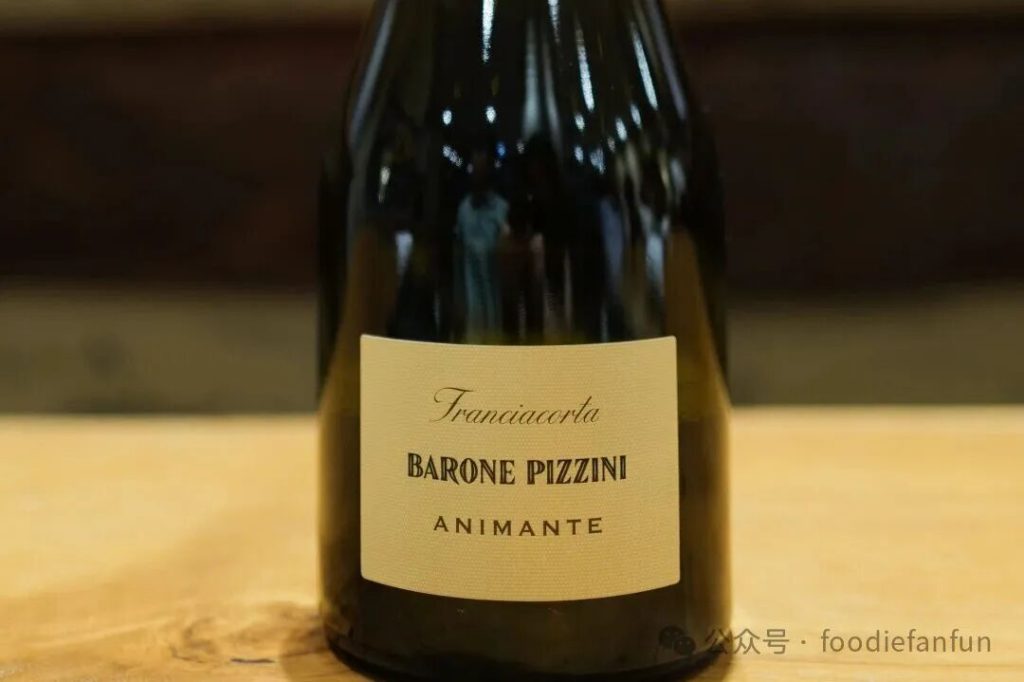
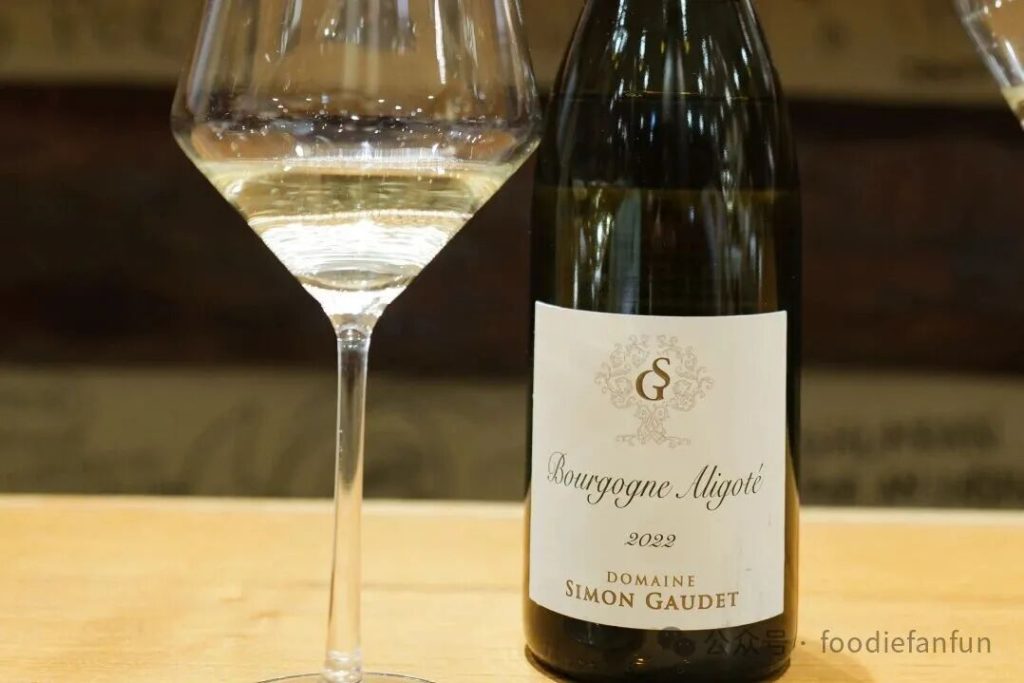
“What would you like to drink? If you’re drinking, we have white wine, champagne, and sake.” There’s no wine list at the restaurant, but the drinks are anything but lacking — they’re prepared with real thoroughness.
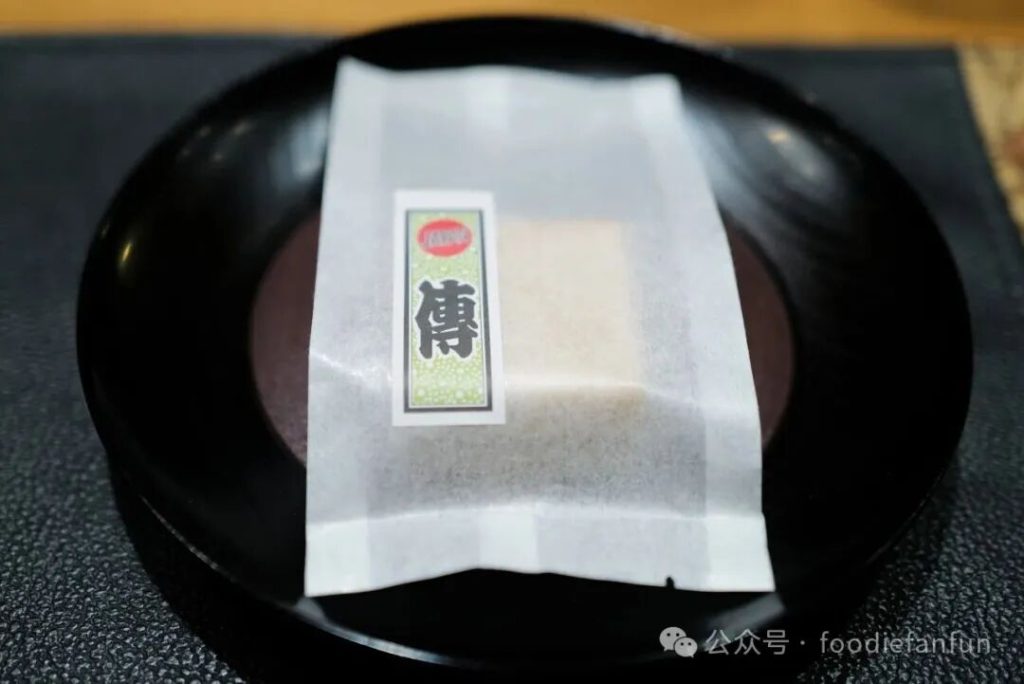
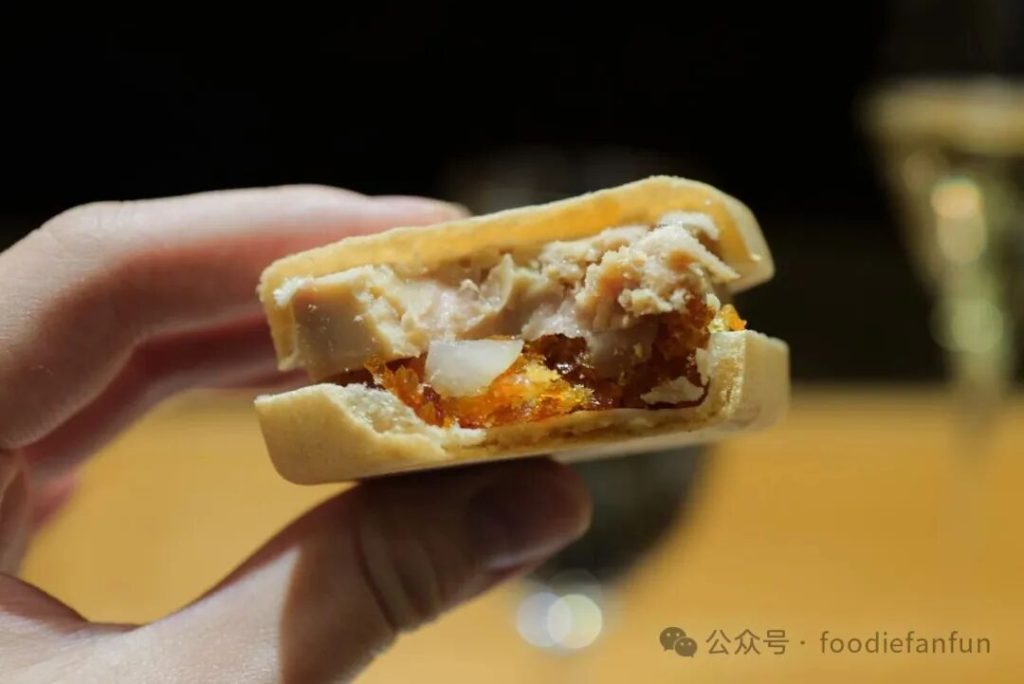
Dinner opens with a monaka as the welcoming gesture, carrying both formality and warmth.
This season’s filling is dried kumquat and daikon. Foie gras is tucked inside, giving off a light, milky richness. The kumquat’s flavor is concentrated and bright, standing right up front, and then the daikon jumps out from within, gently pulling the overall flavor toward something cleaner and fresher.
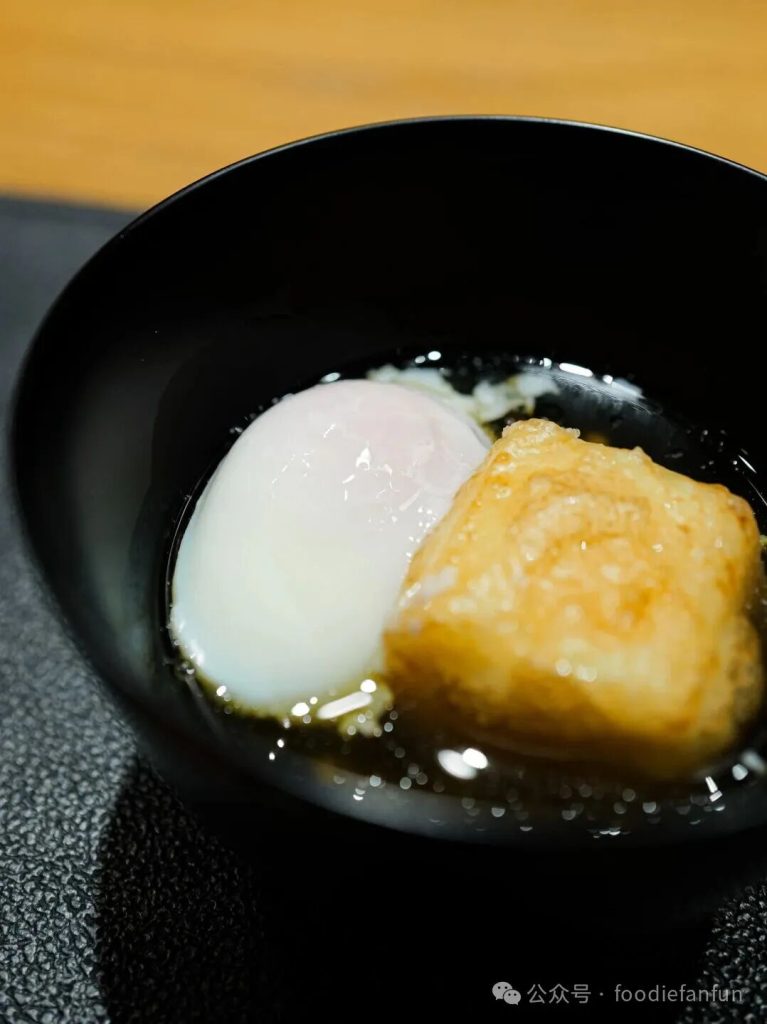
The traditional washoku “egg course” is presented these days with onsen tamago and dashi, paired with a white asparagus cake that carries the feel of April. Several layers of silkiness and richness intertwine, gentle on entry, slowly revealing the umami from the dashi. The white asparagus brings out the fresh sweetness particular to this season’s vegetables.
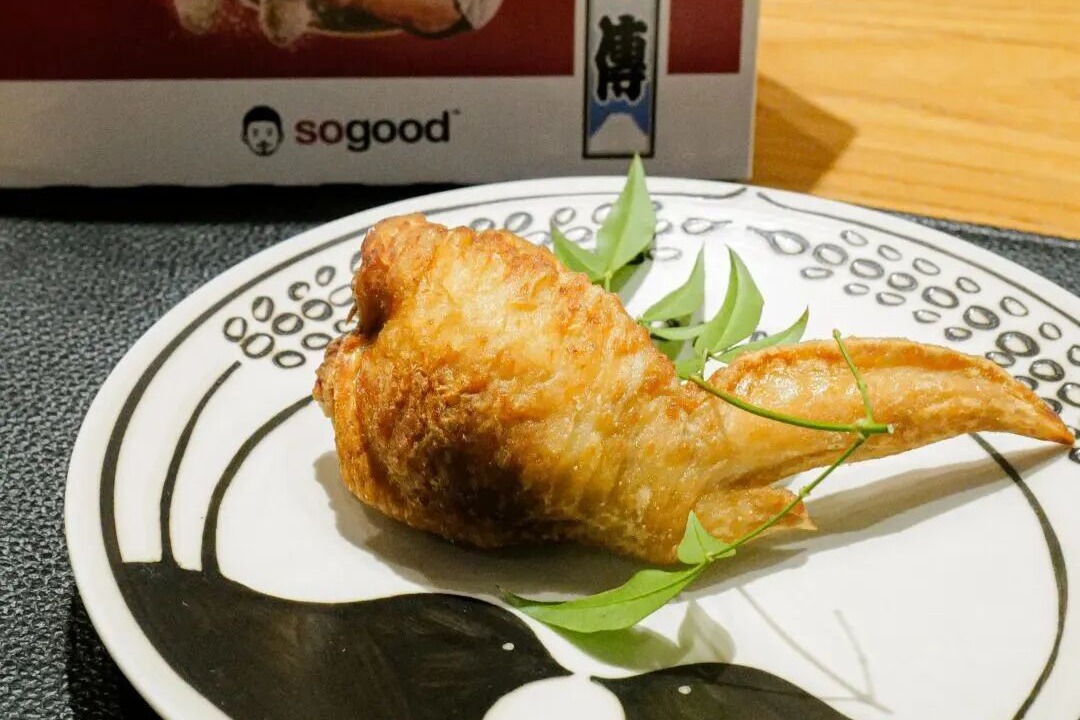
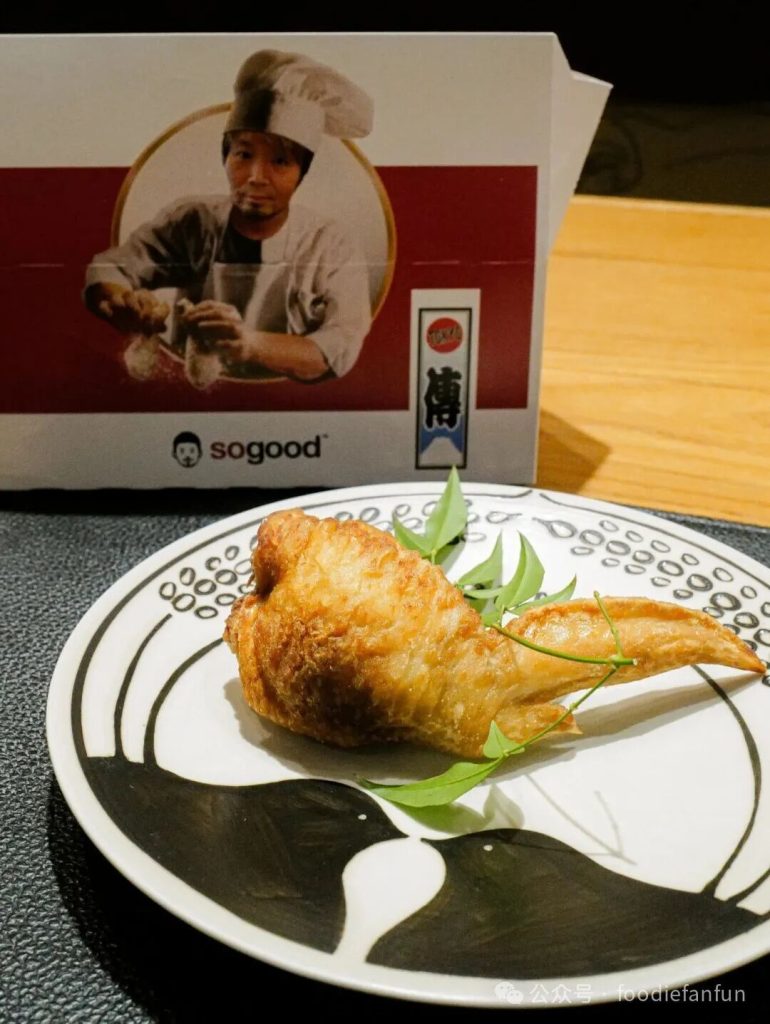
Den Takki is the restaurant’s own signature “DFC” fried chicken, its box printed with a photo of the chef himself cosplaying as Colonel Sanders. This season’s filling uses fuki (butterbur) and whitebait, nearly unavoidable flavors of spring. It carries the sheer joy of fried chicken itself, alongside a grown-up umami and a faint bitterness.
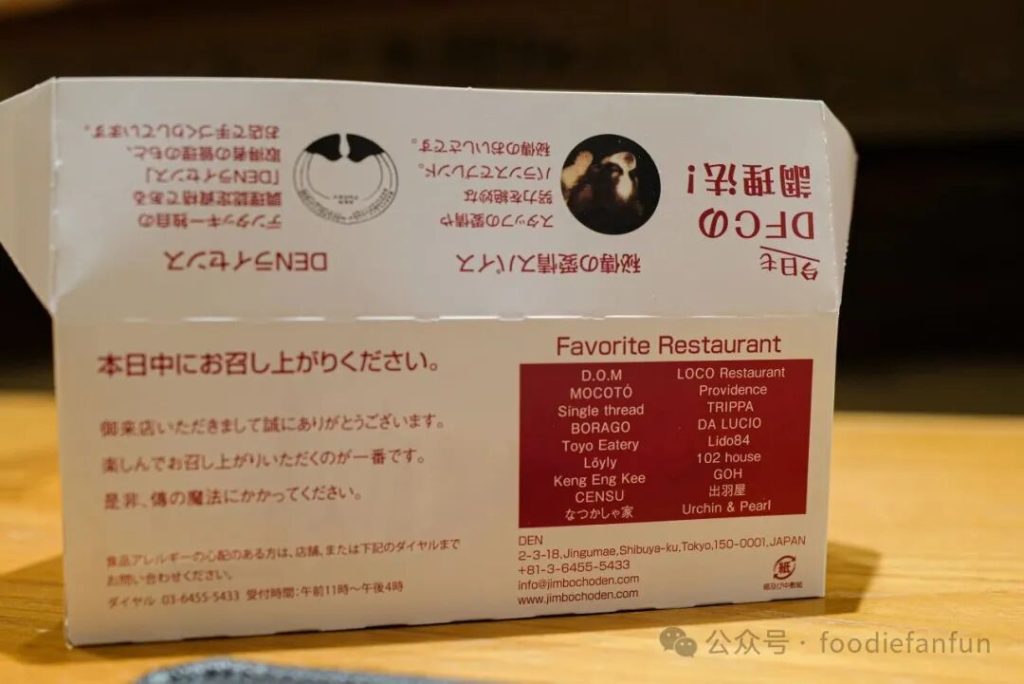
Flip the fried chicken box over, and on the back you’ll find chef Hasegawa’s recently favorite restaurants, updated in real time — like a miniature restaurant ranking that belongs to Den alone.
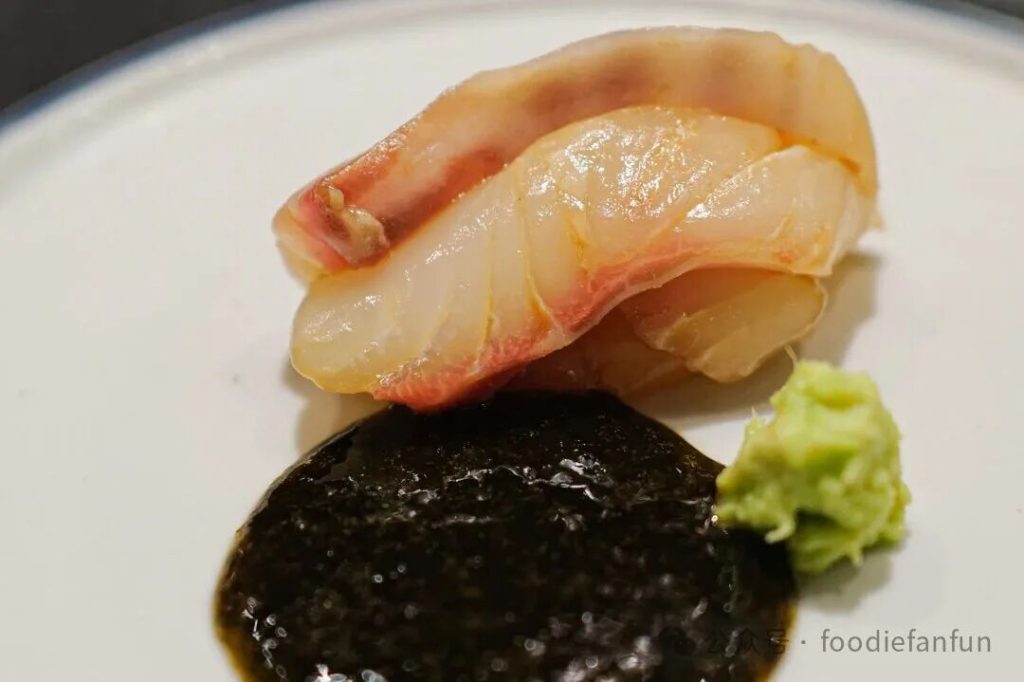
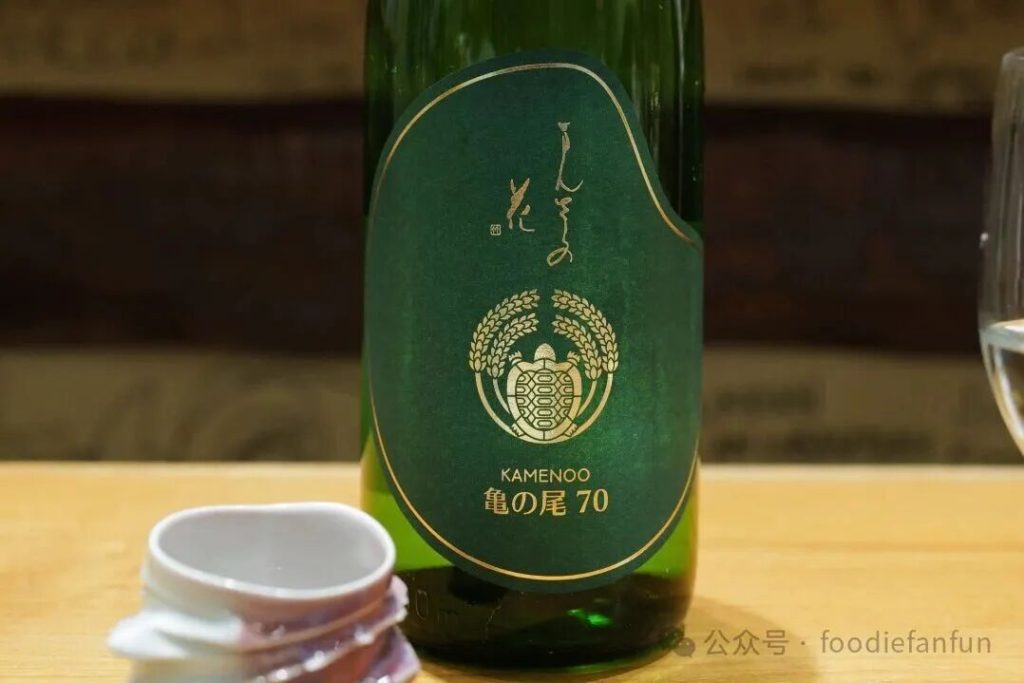
“Next up is ishidai — how about some sake?”
Ishidai aged for two weeks, cut in a thick slice, its texture already approaching a sticky softness. A kelp sauce pulls the fish flavor that’s melted into the flesh back out again. The umami isn’t sharp — it takes the slow, clinging route, laying itself across the tongue, quiet yet powerful.
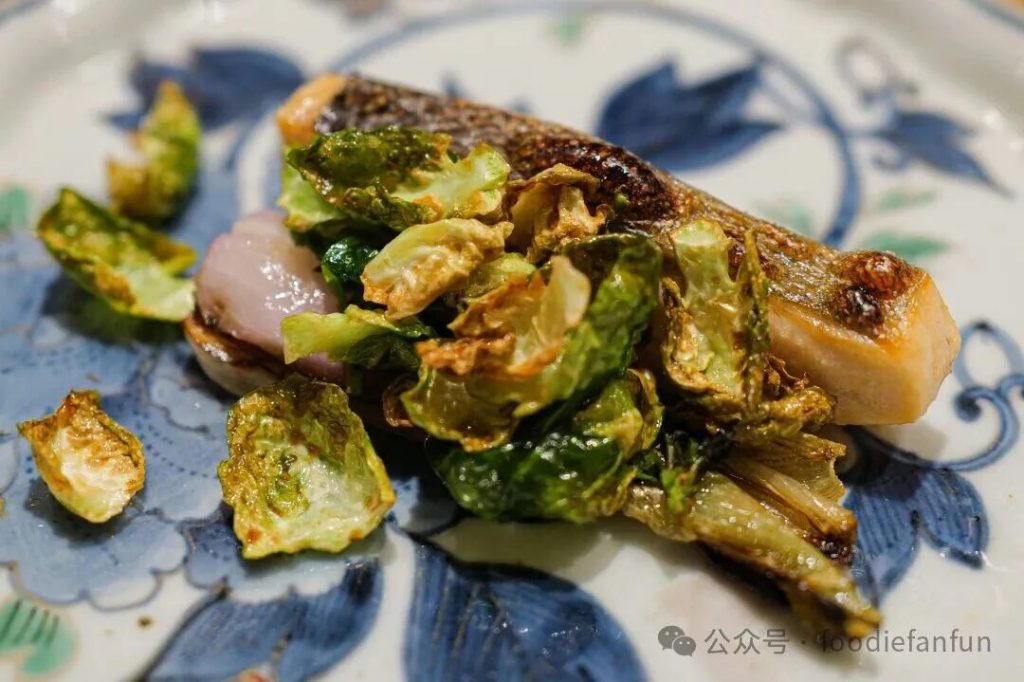
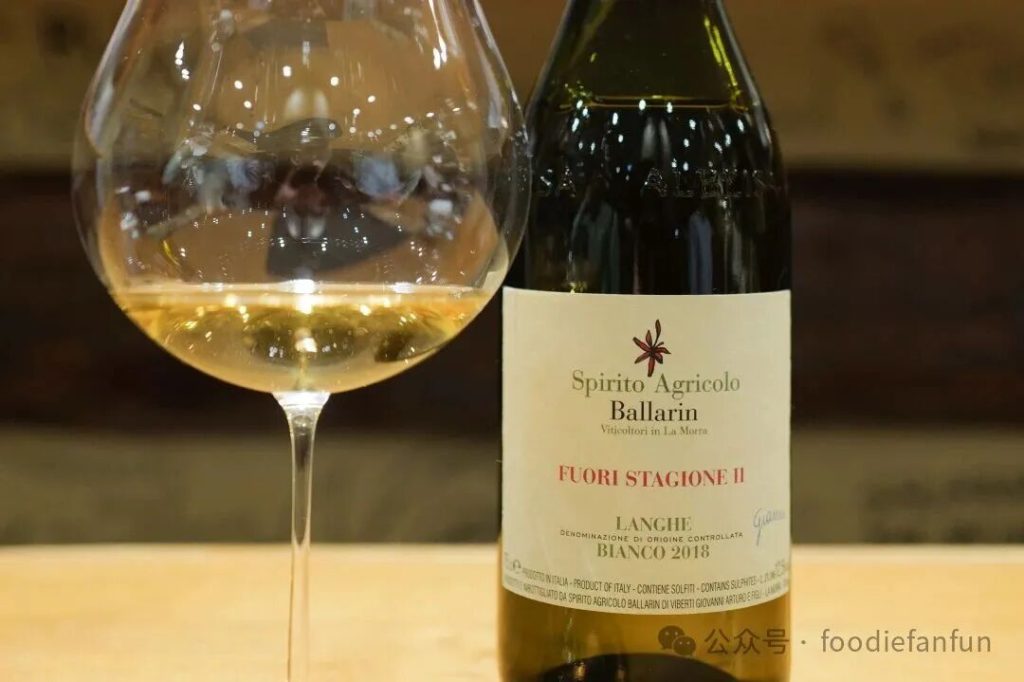
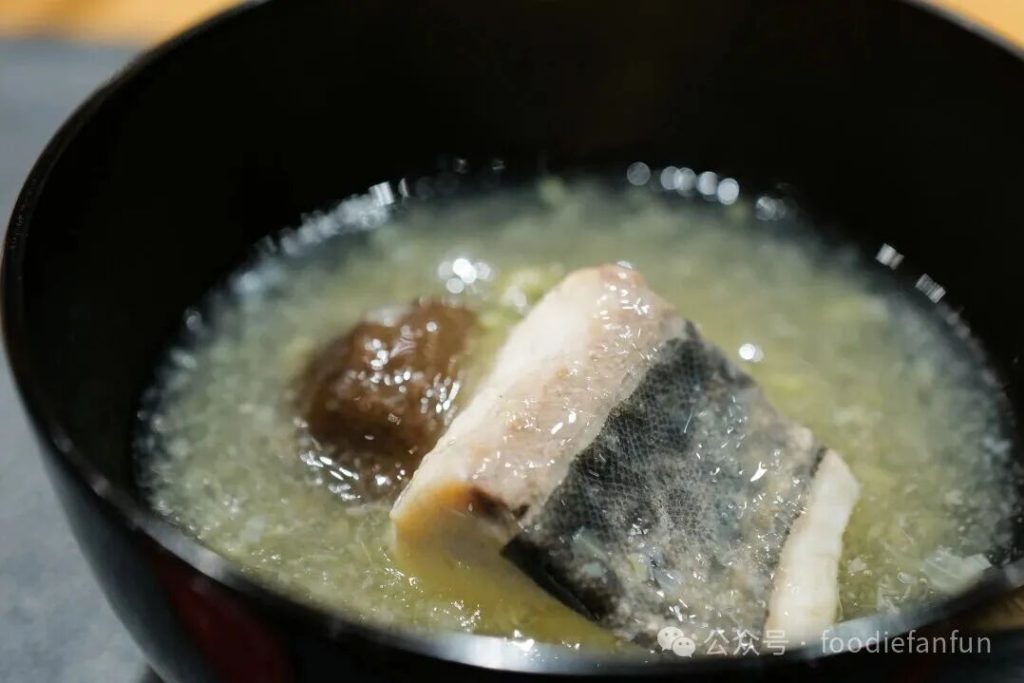
“The trout is lightly smoked — want to try this Italian white?” What to drink is never something a guest has to worry about; it’s all laid out with complete clarity.
Crisp skin, fatty flesh — the eating is pure and direct.
The salt hides in the leafy greens laid on top. The Brussels sprouts look casually grilled, yet every part that should be tender and every part that should be crisp is held distinctly in place. Within a single plate, both texture and the mood of spring feel completely full.
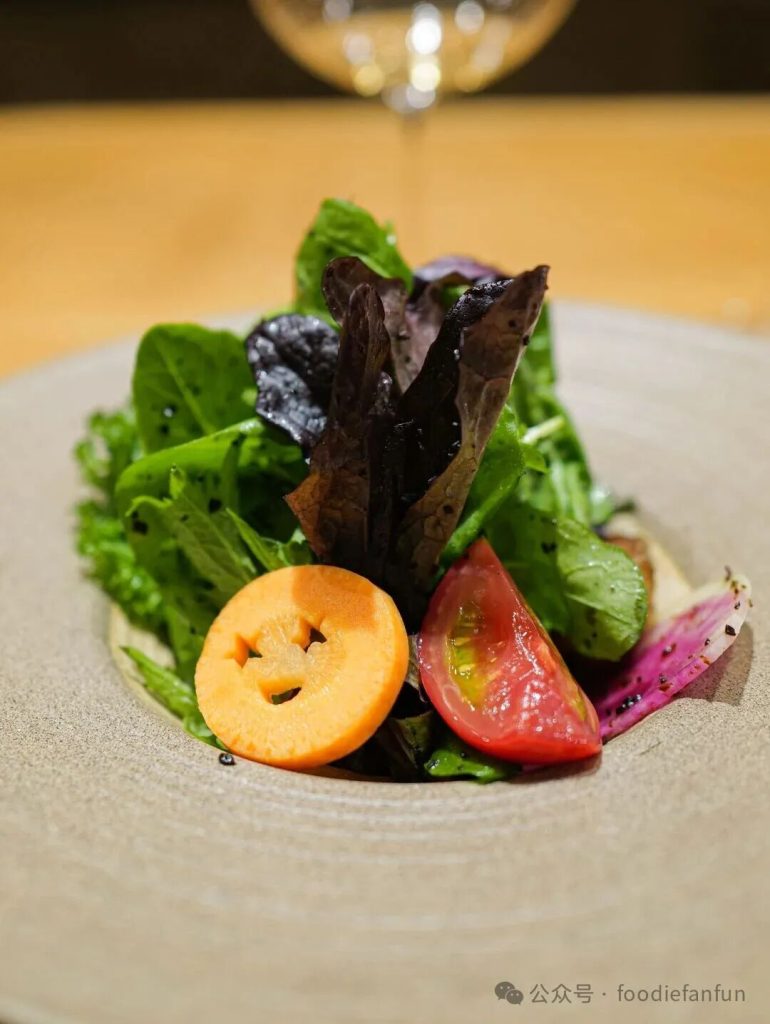
A salad that’s absolutely spectacular.
The variety of vegetables is so wide it feels like walking into a garden, and the seasoning methods so numerous you keep stopping just to identify them. The freshness of pickled carrot, the dashi-laced umami in the sweet peas, the sweet-tartness of the tomato, the delicacy of the sweet potato, the sweetness of burdock. Each green thing carries its own flavor too, every piece standing on its own rather than relying on being tossed together to exist. What gently ties it all together in the end is a light sprinkle of something like preserved mustard greens on top.
Truly simple, yet not simple at all.
The carrot’s little star-shaped eyes said, on my behalf, just how much I’m already looking forward to eating it again.
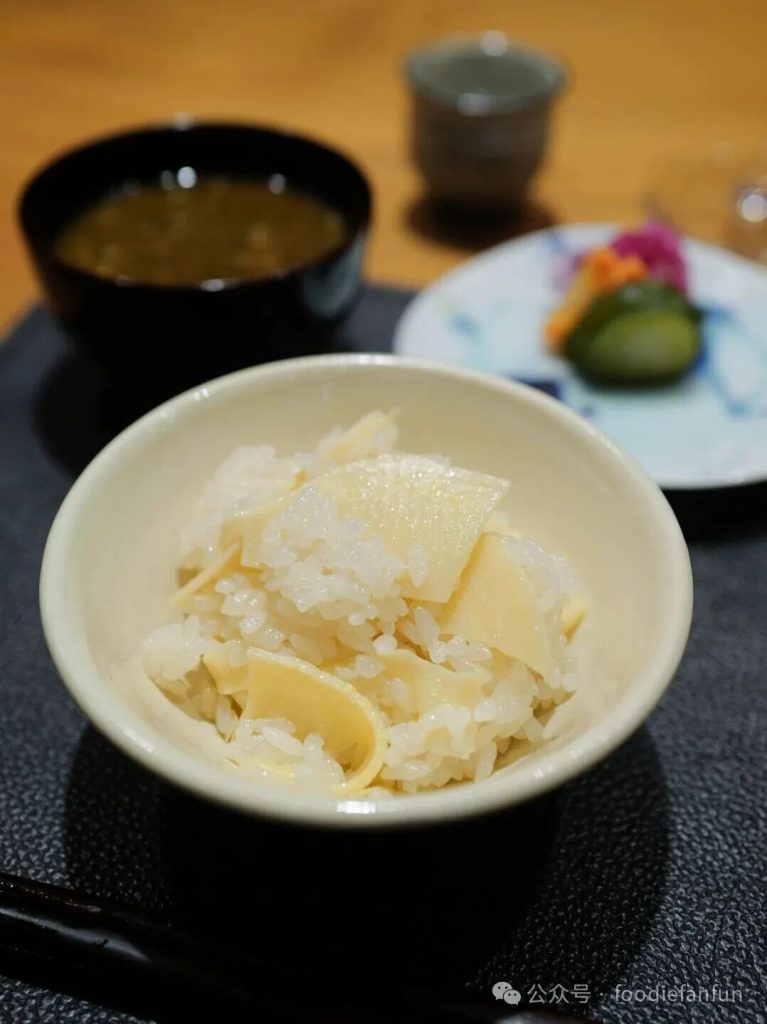
Bamboo shoot takikomi gohan, full of the feeling of spring. Duck fat coats each grain of rice until it glistens, yet every grain still stands distinct on entry. The aroma takes a warm, substantial route, setting off the bamboo shoot’s crispness even more crisply.
“Want a bite of the crispy bottom rice? Let me get you a small piece.”
In that firmer, more charred bite, a scattering of pepper tightens the flavor at once, and the satisfaction lands more directly with it.
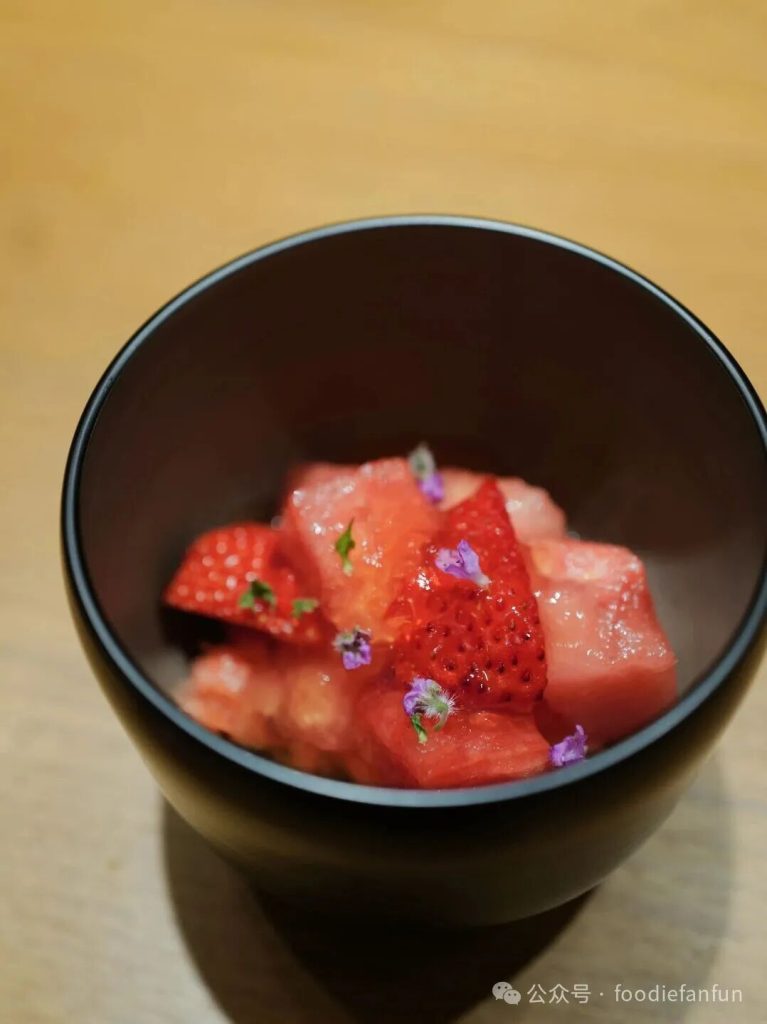
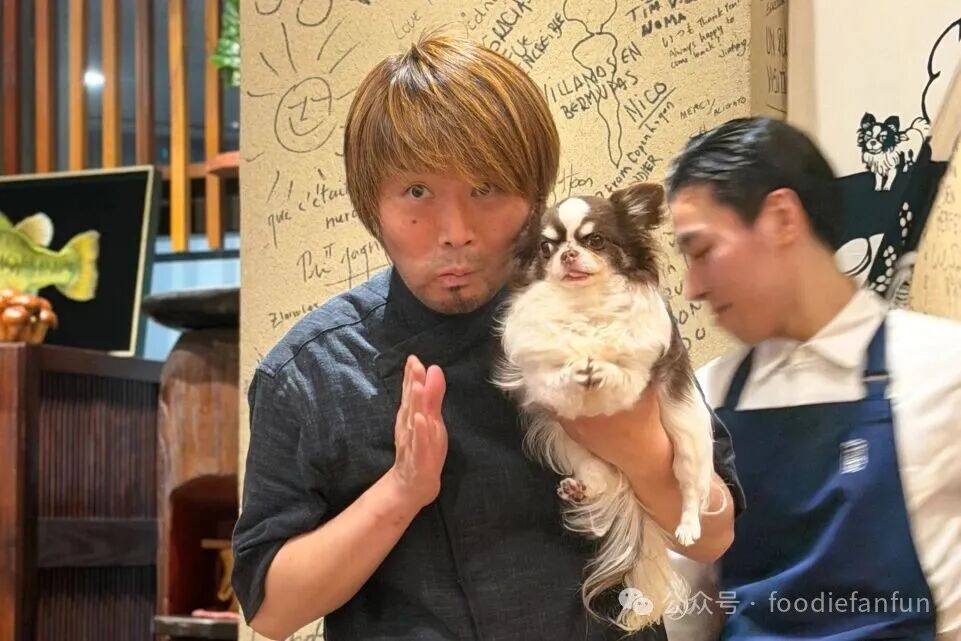
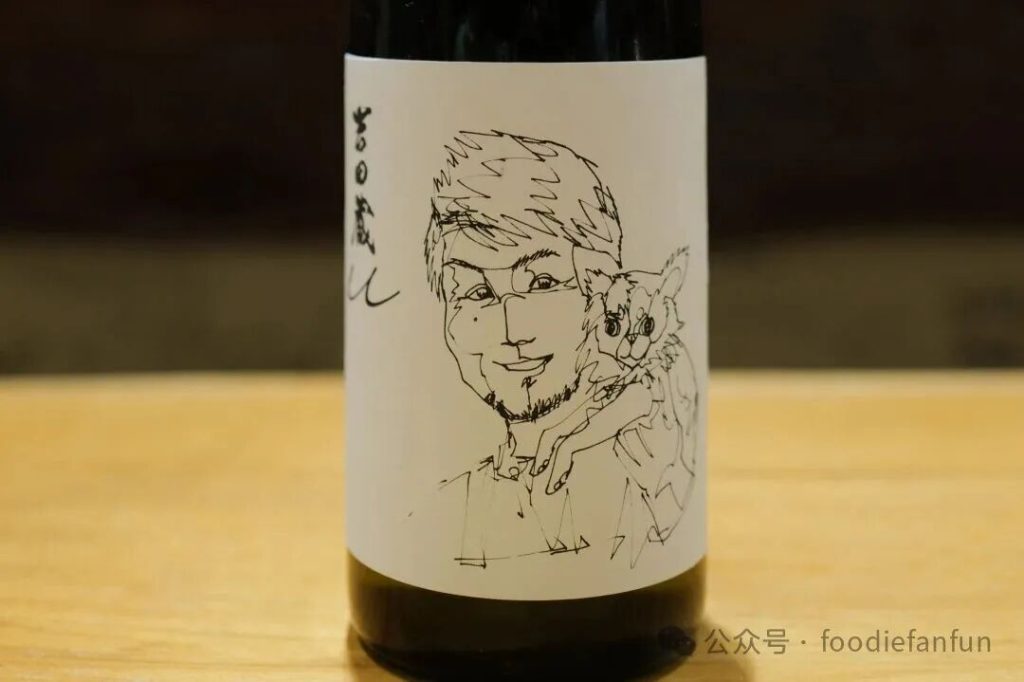
For dessert, out comes sake custom-brewed for Den by a sake maker, its label a single-stroke drawing of Pucci alongside chef Hasegawa. Pucci himself, finally well-rested, comes out to greet everyone, setting off a wave of “kawaii 😍!!!” from all around the counter.
“This is when the restaurant is at its liveliest all day~”
Finishing this meal, I genuinely understood why friends, whenever they’d described it before, always ranked it as their “favorite restaurant.”
It doesn’t rely on being “expensive” to prove its worth, yet every single dish is made with care, delicious, with a clear sense of season. The enthusiasm from both dining room and kitchen never feels showy, balanced just right between well-trained professionalism and a family-like warmth toward guests.
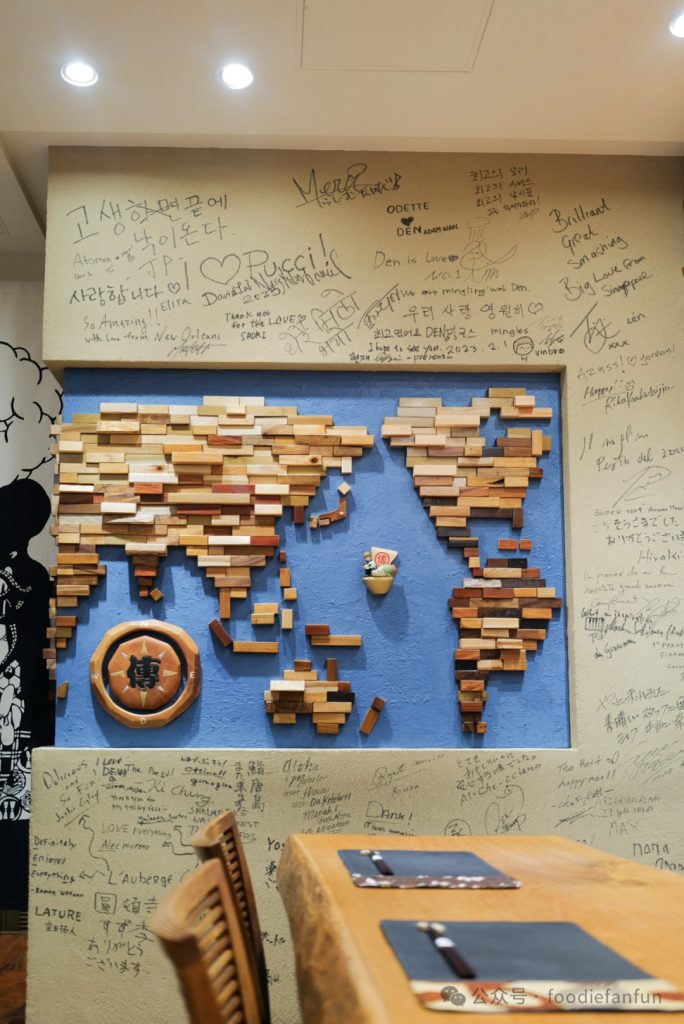
Surrounded by walls full of messages and signatures, it feels less like a restaurant and more like a space filled entirely with “affection” — the chef’s own love for what he does, friends’ praise, and the happiness that guests carry away with them, staying in memory long after.
Hasegawa translates “washoku” into a language that guests from anywhere in the world can more easily understand. The ingredients, the culture, the flavor patterns — all of it lets you in gently, growing richer in layers the more you eat. Happiness comes first, and memorable moments build up step by step from there. It stirs up curiosity for the next visit too — “What will the mood be like next time? What will we eat next time?” That pull to keep exploring is, I think, exactly Den’s magic.
For real. Have fun.
Den (伝)
Monday – Saturday
6:00 PM -11:30 PM
www.restaurant-den.com
Chef’s Menu ¥36,000 (includes beverages)
Leave a Reply