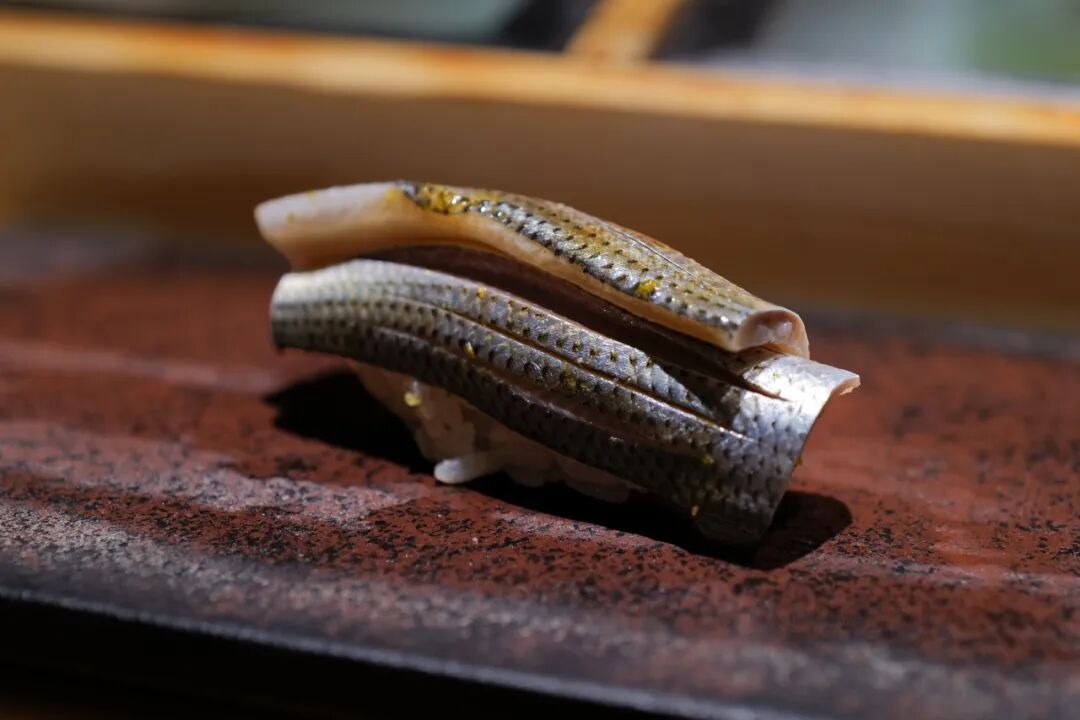
Yotsuya Sushi Sho is, by any measure, one of Tokyo’s defining, legendary old-guard sushi counters.
Never mind that founder Keiji Nakazawa’s restaurant in New York earned three Michelin stars last year. Yuichi Arai, head chef of Ginza Sushi Arai, and Koto Yukimen, head chef of Azabu-juban Sushi Meino — both trained here.
You could say this restaurant has “raised” many of the defining legends and figures in both Tokyo’s and New York’s sushi culture.
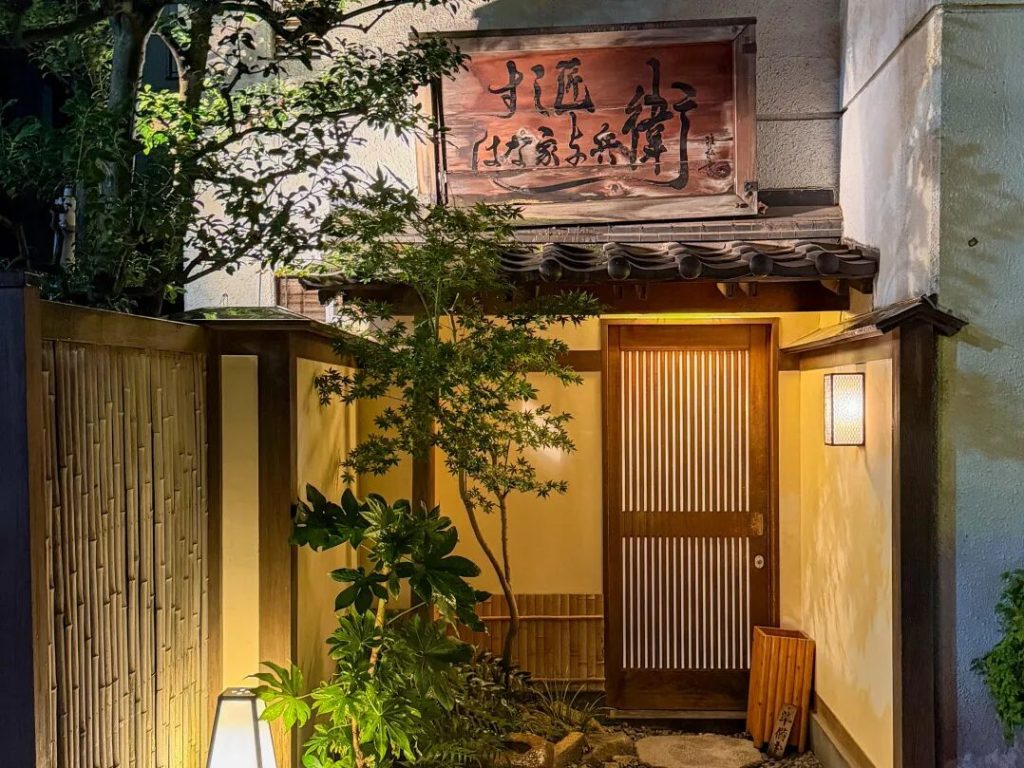
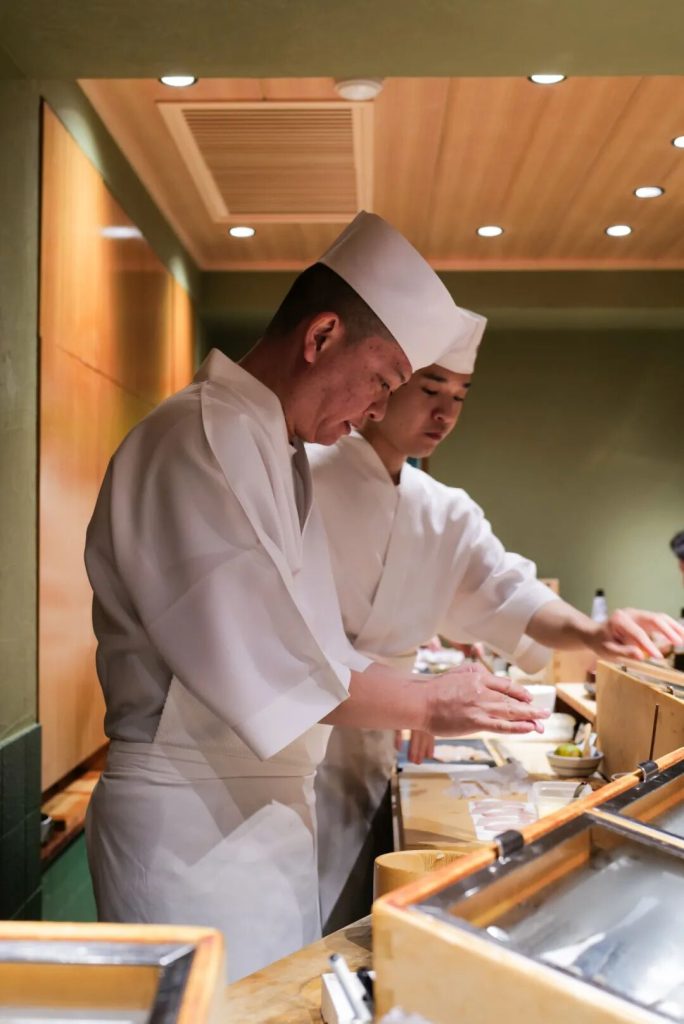
The Yotsuya shop has been open for over thirty years, helmed since 2016 by second-generation chef Keita Katsumata.
The decor still looks like an old-school sushi shop — fish laid out in weathered wooden boxes behind the counter, seats packed close together, always buzzing. Chef Katsumata loves chatting with guests, and mid-conversation, with a laugh, he’ll pick up a fish, drop the knife, shape the sushi, and hand it across the counter — a sequence of motions, fast and precise. Beside him, the next piece is already underway; several people moving constantly through a small space, yet somehow never in disorder, occasionally punctuated with some deliberately “exaggerated” expressions and showmanship.
A counter this “lively,” almost market-like, is genuinely rare in Tokyo.
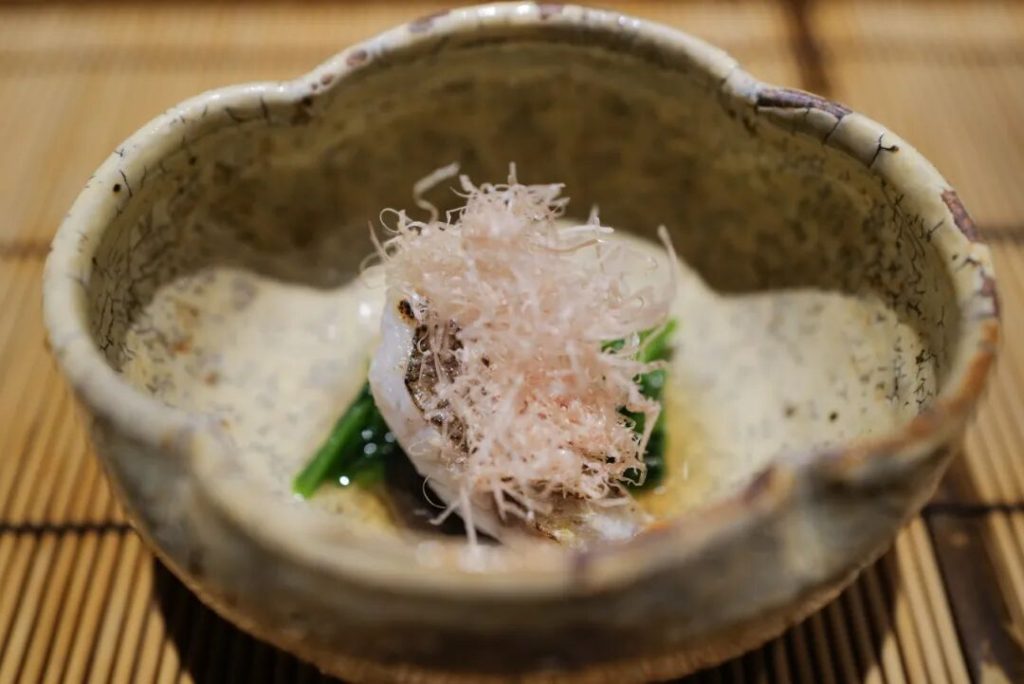
It opens with a small piece of barracuda, paired with fried tofu and scallion. The fish has entered its slightly fattier season, and pairs nicely with the tofu.
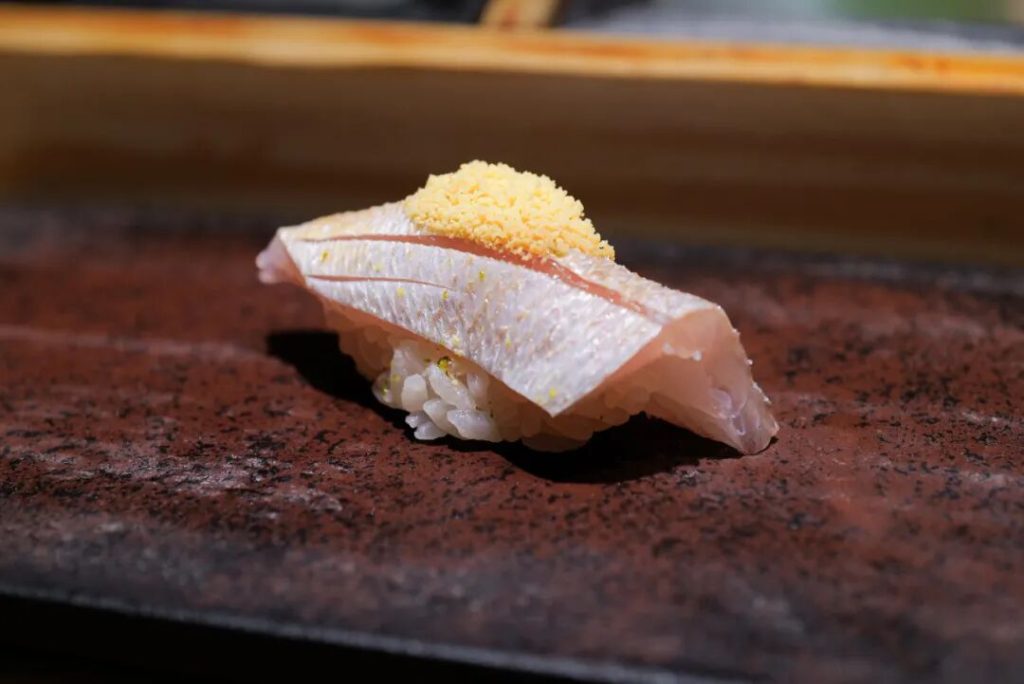
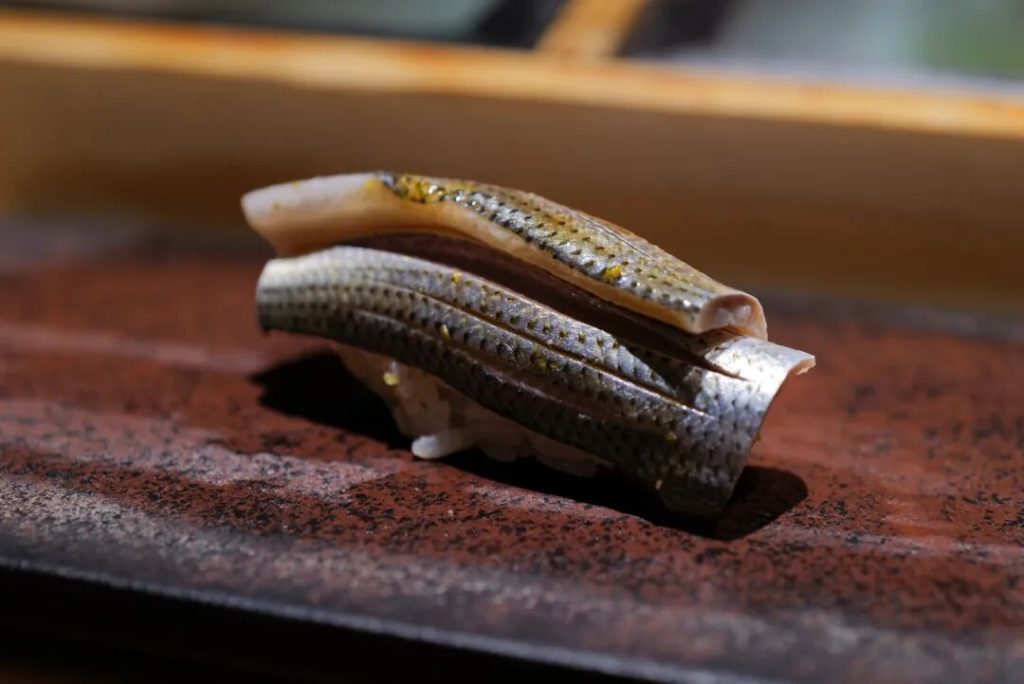
Sushi pieces arrive in alternation. Baby red sea bream topped with dried shrimp floss — the aged fish leans soft, trailing a thin, delicate sweetness. The gizzard shad shows clear aging marks, its silvery skin’s flavor coming through distinctly, the fish itself holding a strong presence.
Both show clear signs of aging, yet both are handled with exactly the right restraint.
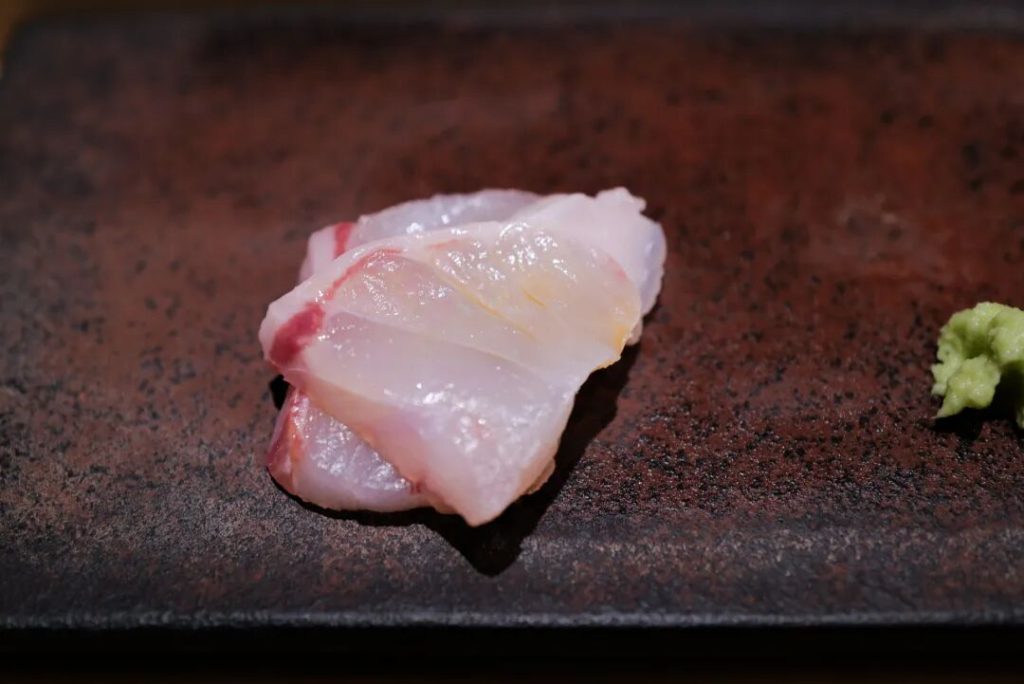
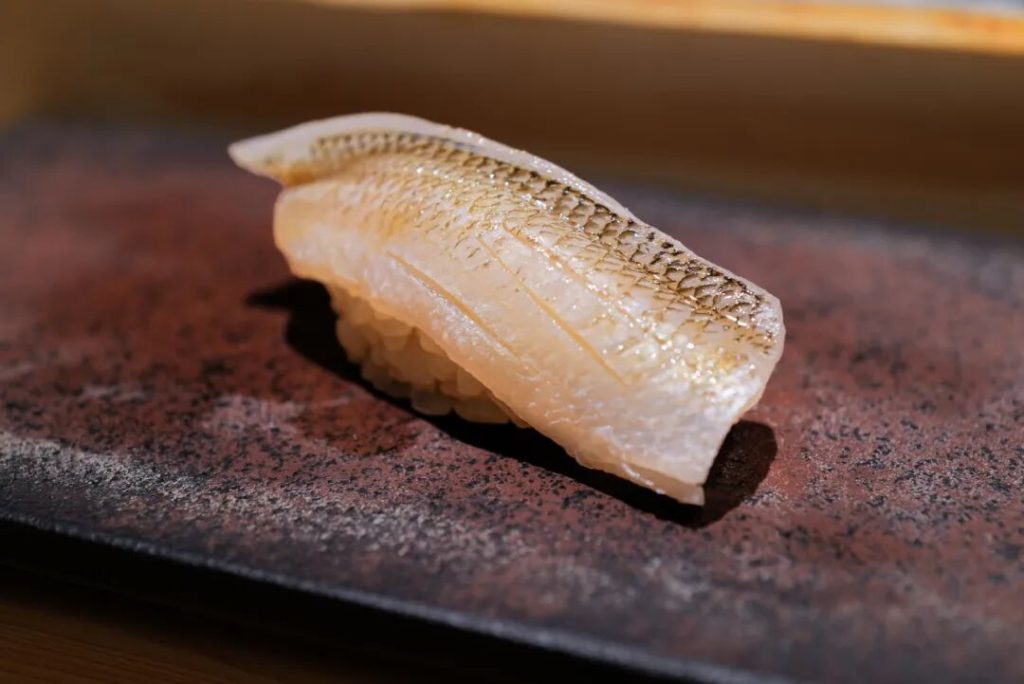
About ten kilograms of ara — the pink flesh’s translucent fat is visibly tempting. My favorite moment was the crisp bite into the fattier side, the white fish’s aroma slowly unfolding as I chewed.
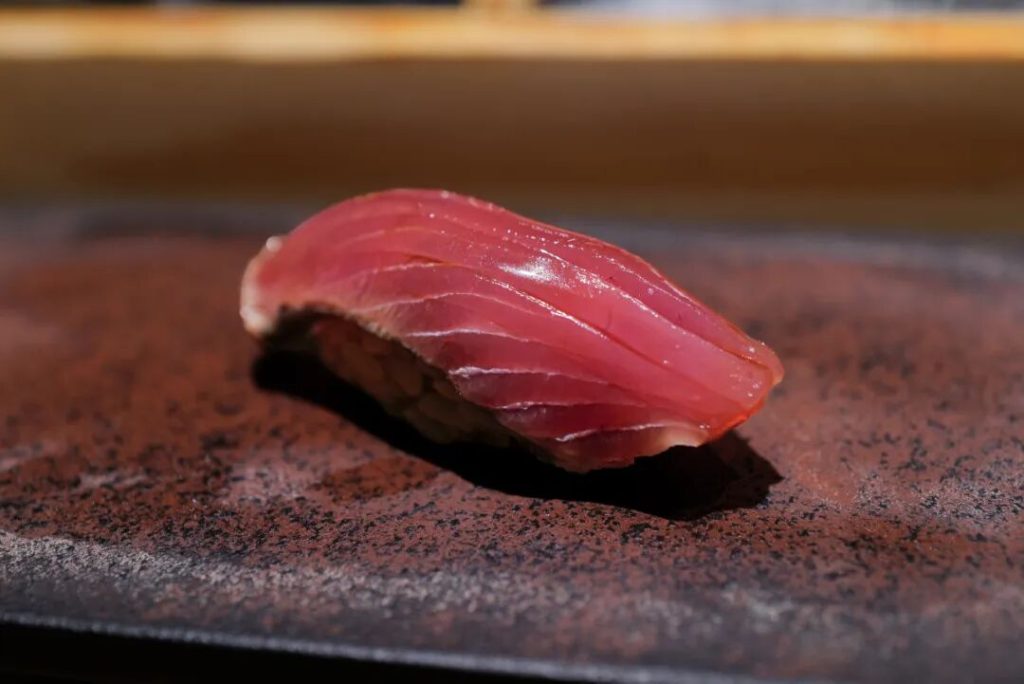
On the cutting board, the bonito was a beautiful ruby; shaped into sushi, it carried a great aroma, and the high-acid rice here matched it especially well.
The sillago was kelp-cured, its aging clearly present, the acidity more three-dimensional — a touch of citrus pressed against the tip of the tongue, subduing the aged white fish’s aroma and leaving behind a bright fragrance in its place.
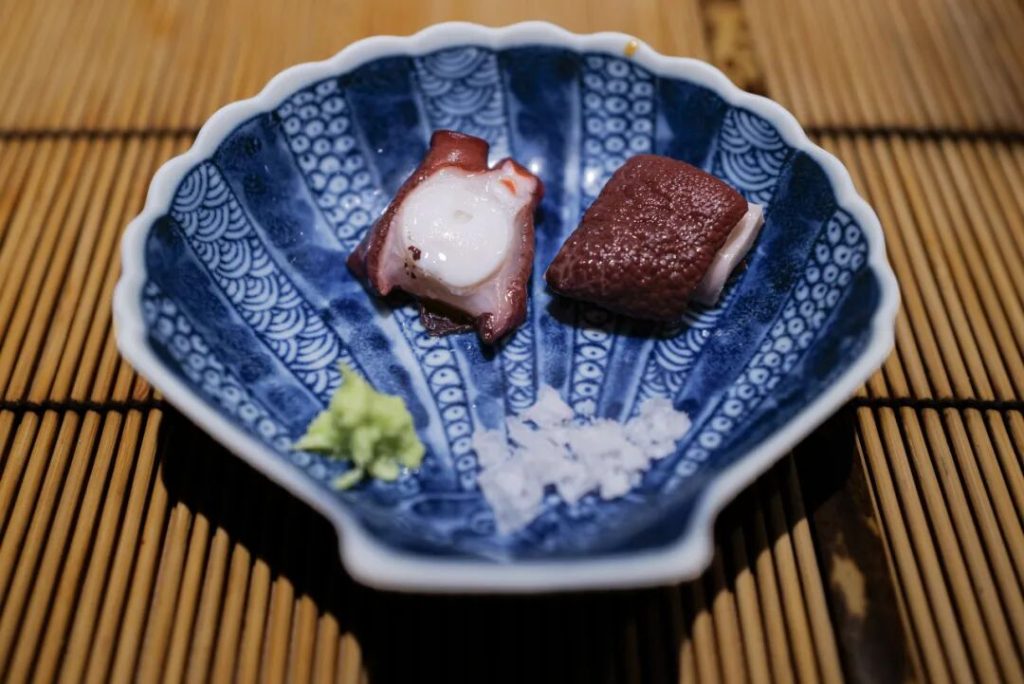
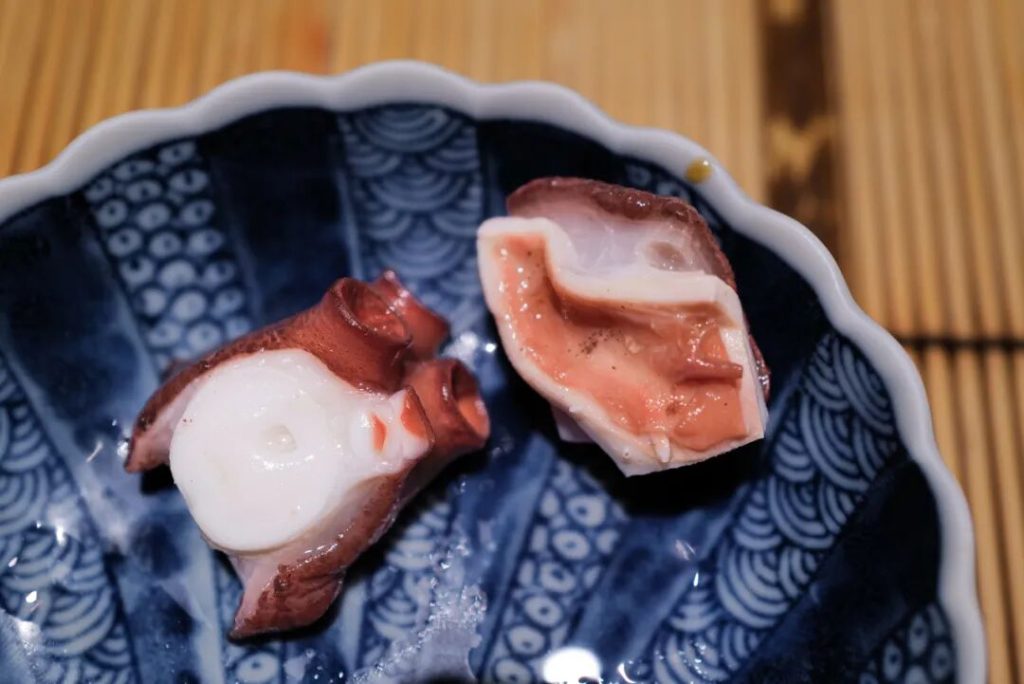
The octopus was a genuine standout.
Simmered until especially soft, a thick piece of skin with a gelatinous texture — the more you chew, the more umami keeps building in the mouth.
Rich and fatty, without ever feeling heavy on the palate.
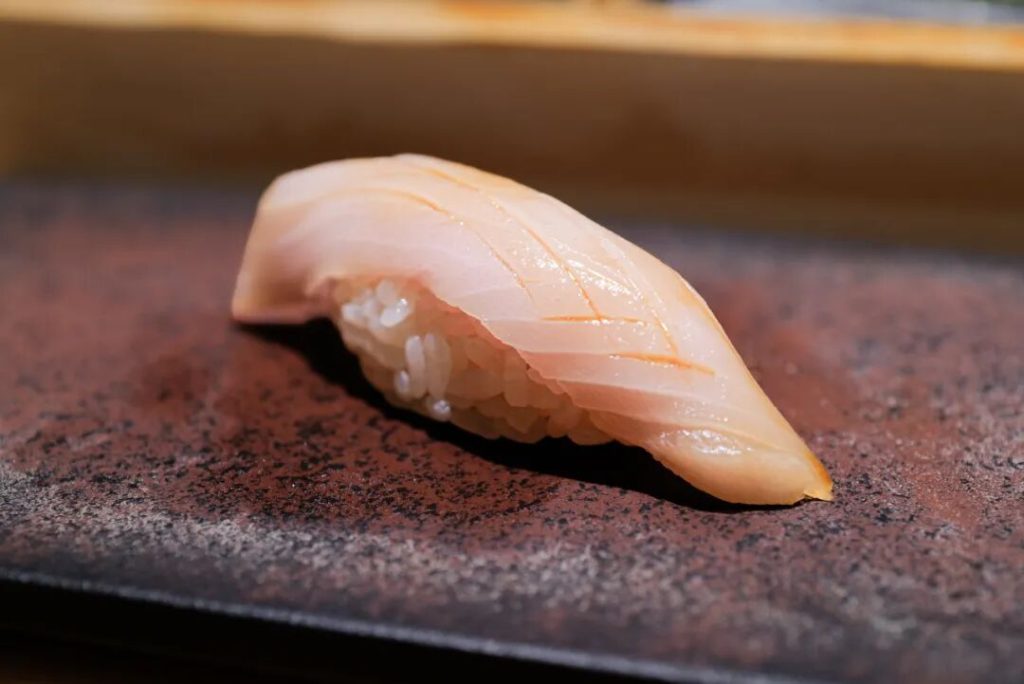
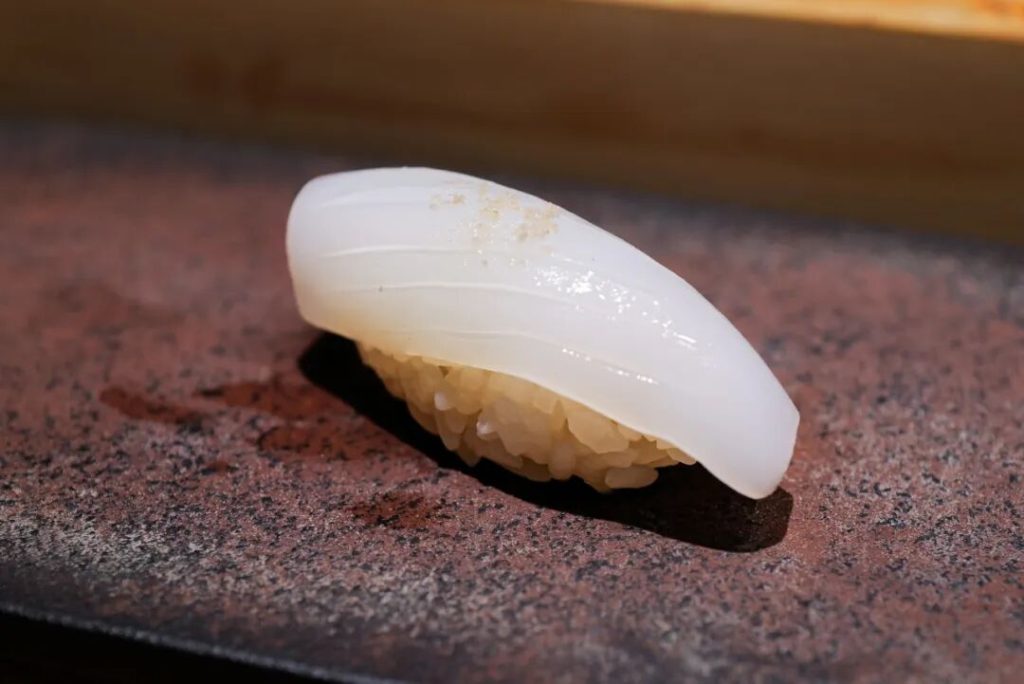
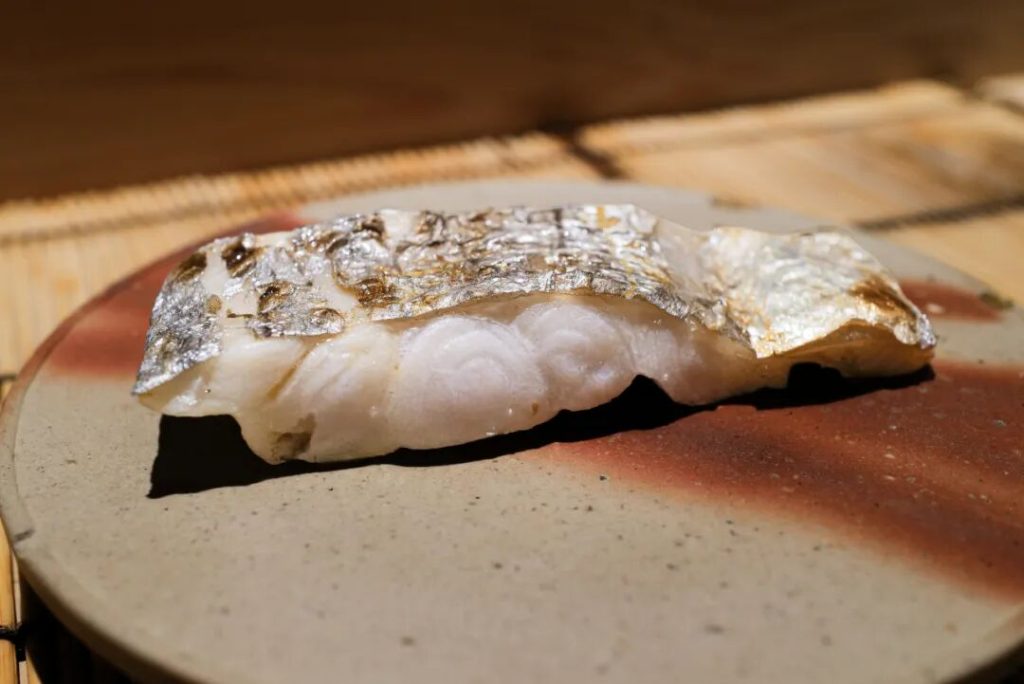
When it came to Spanish mackerel, the chef called for white rice instead. The fish was just as soft, but what came through on the bite was a sweetness drawn out by its richness. Next, cuttlefish — sweet, chewy, and the more you chewed, the sharper the contrast grew between the rice’s sour-salty edge and the squid’s own sweetness.
Then, grilled hairtail arrived, finally delivering the mouthful of fatty aroma the meal had been building toward.
The small bites and sushi arrived in what seemed like a casual rotation — hard to pin down a sequence at first. Only later did it become clear: everything echoed something earlier, intensity and lightness carefully staggered, the pacing under control the whole time.
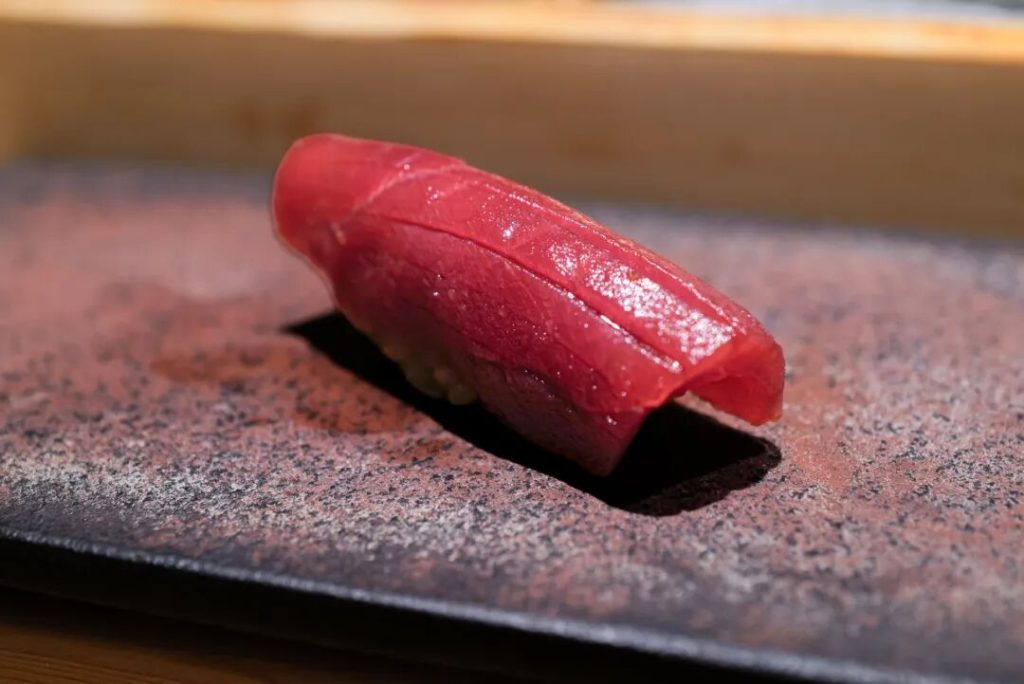
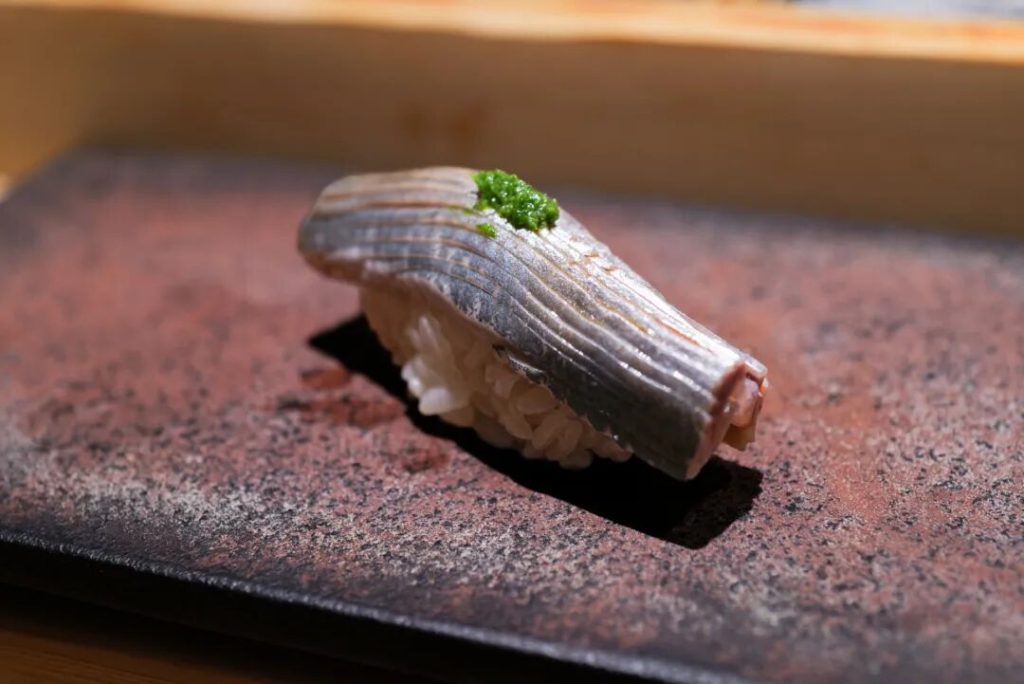
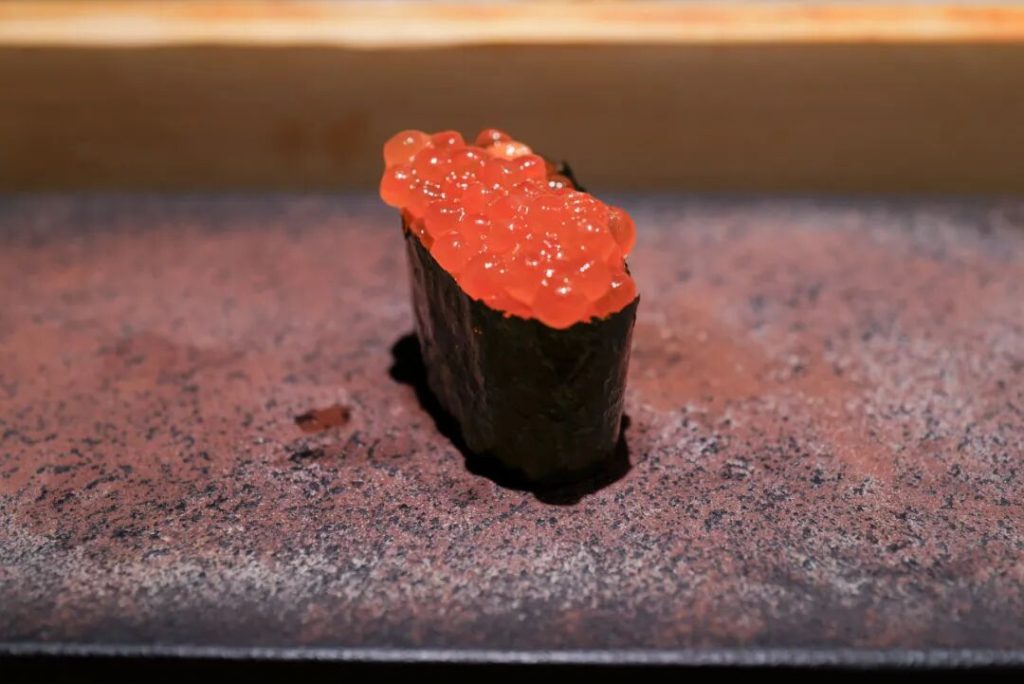
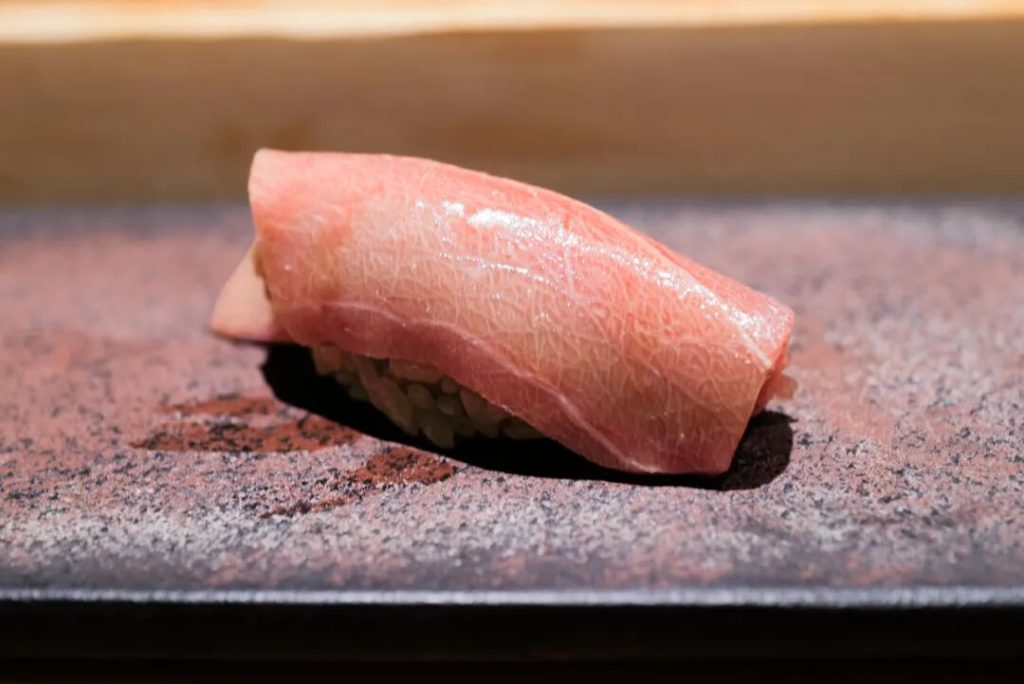
Tuna and sardine were two extremes, each distinctly expressive. The marks of aging and curing were clear, yet against the rice, the fish’s own aroma still came through unmistakably.
Both the lean cut and the medium-fatty belly had been aged for some time — the former, a bright red flesh retaining just the last bit of firmness, brought out slowly by soy sauce and wasabi; the latter, almost melting on the tongue, with a beautiful acidity.
The sardine released both its silver-skin fragrance and fat at once, the flesh dissolving quickly on entry, its aroma clinging to the rice long after.
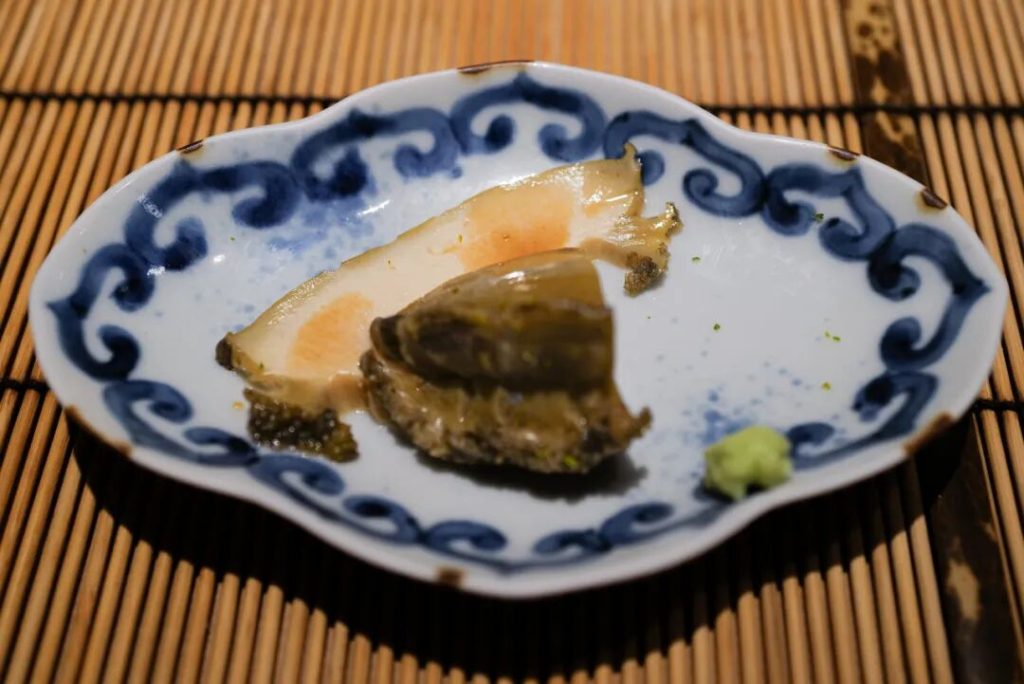
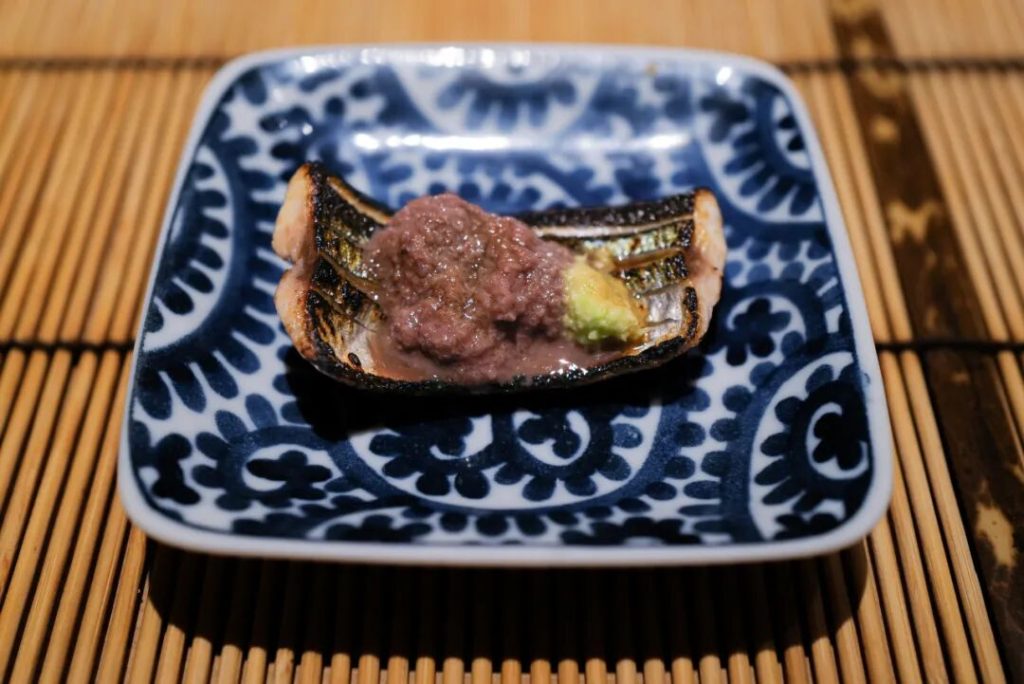
Objectively, the abalone and the pacific saury felt a touch conventional and unexciting.
As a guest, it’s hard not to expect a certain standard of ingredients at a restaurant averaging ¥60,000 a head. Sho felt comparatively thin in this portion of the otsumami course.
Fortunately, the next two pieces with rice brought the flavor right back.
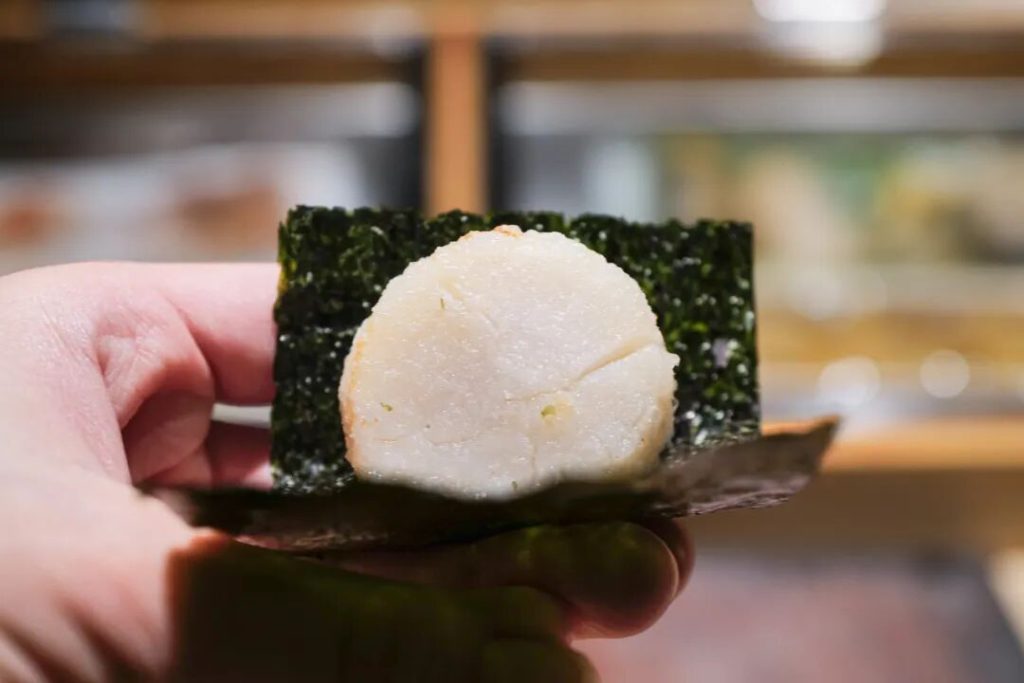
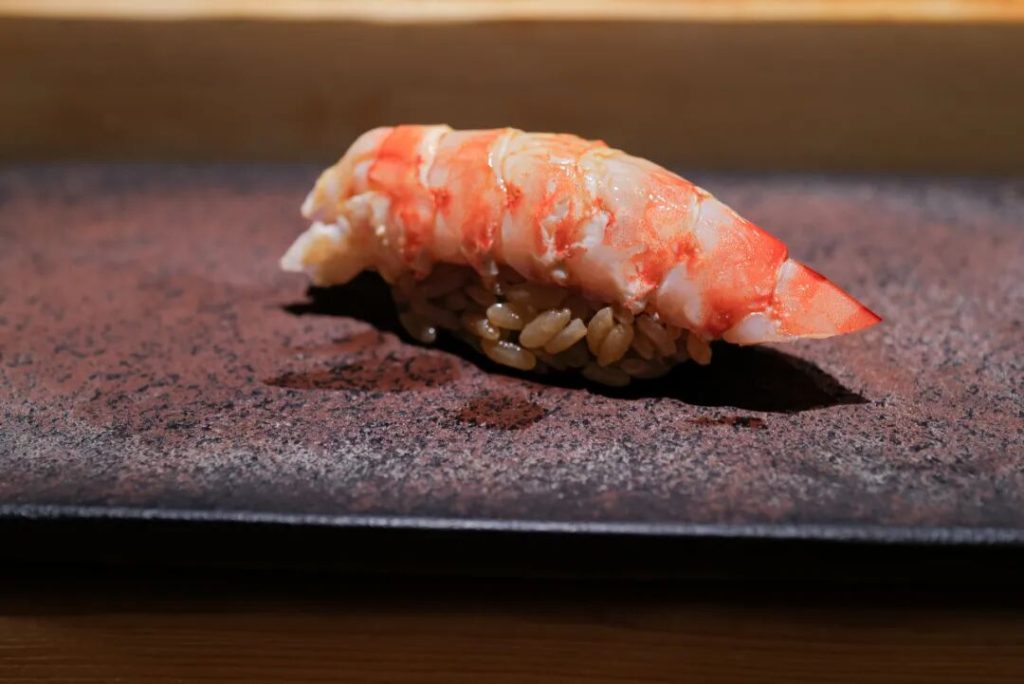
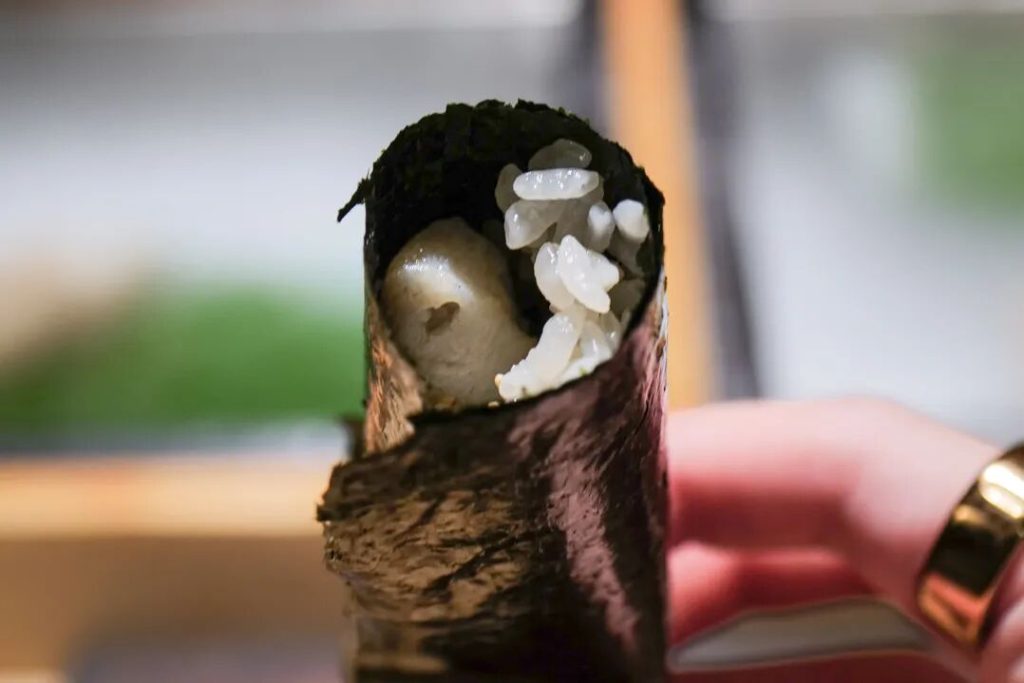
The head of the shiba shrimp still carried a bit of roe, full of freshness, paired with firm, tight shrimp meat — sweet, crisp, and clean. The hand roll of rosy seabass already carried a faint richness, early autumn fat beginning to show, and it brought a real sense of satisfaction.
Nineteen pieces of sushi and otsumami later, I checked the time — only 70 minutes had passed.
It’s hard to imagine what level of coordination behind the counter makes every single course arrive this smoothly, busy without ever feeling chaotic, each piece connecting seamlessly into the next.
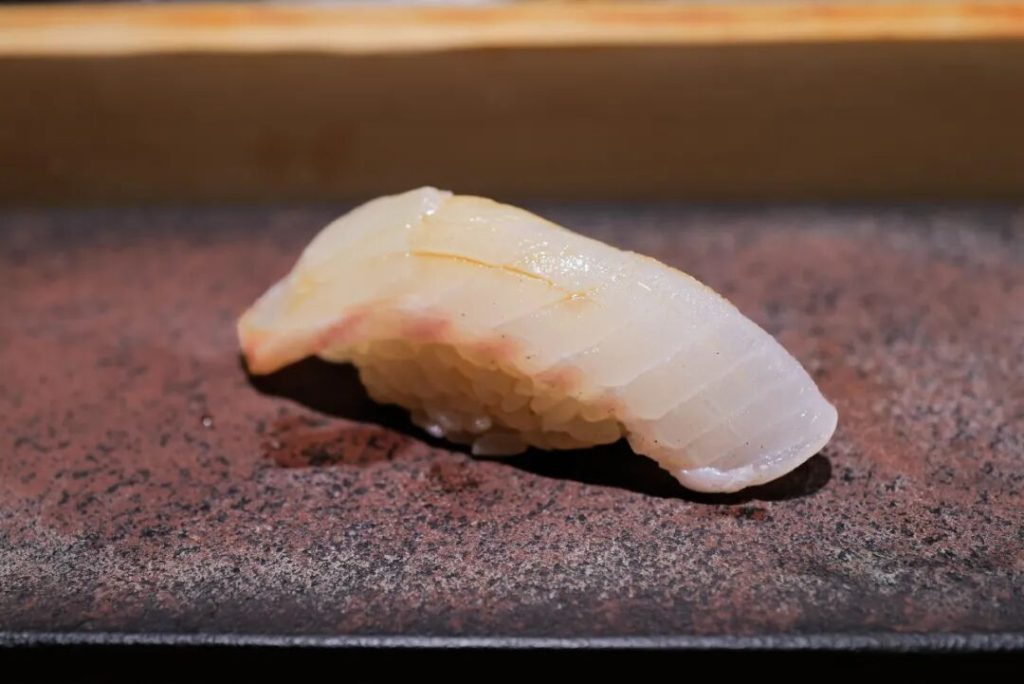
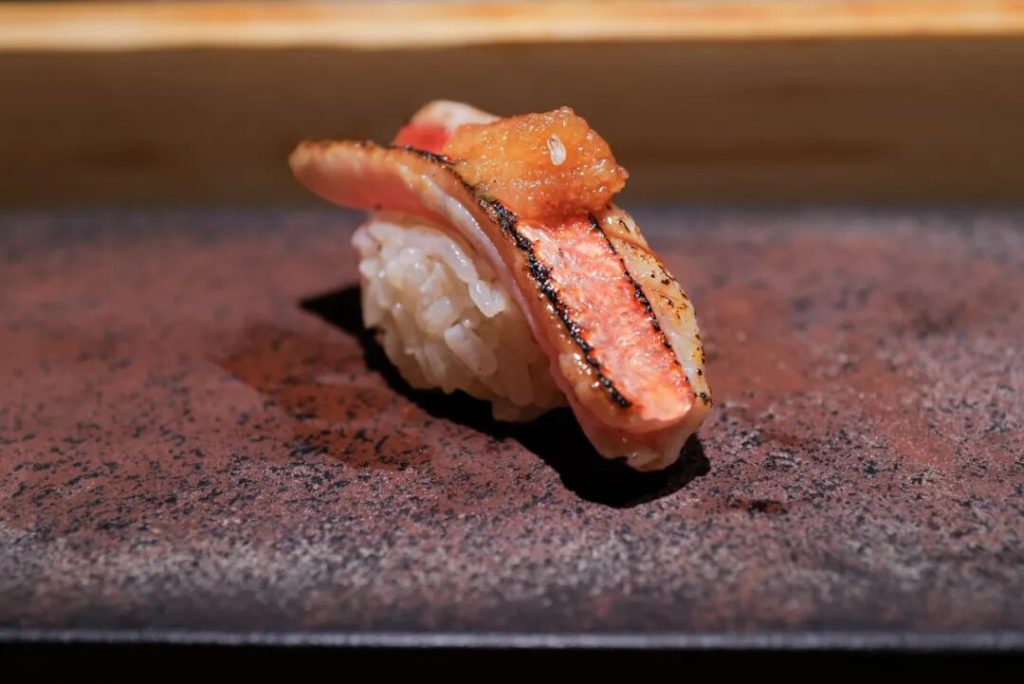
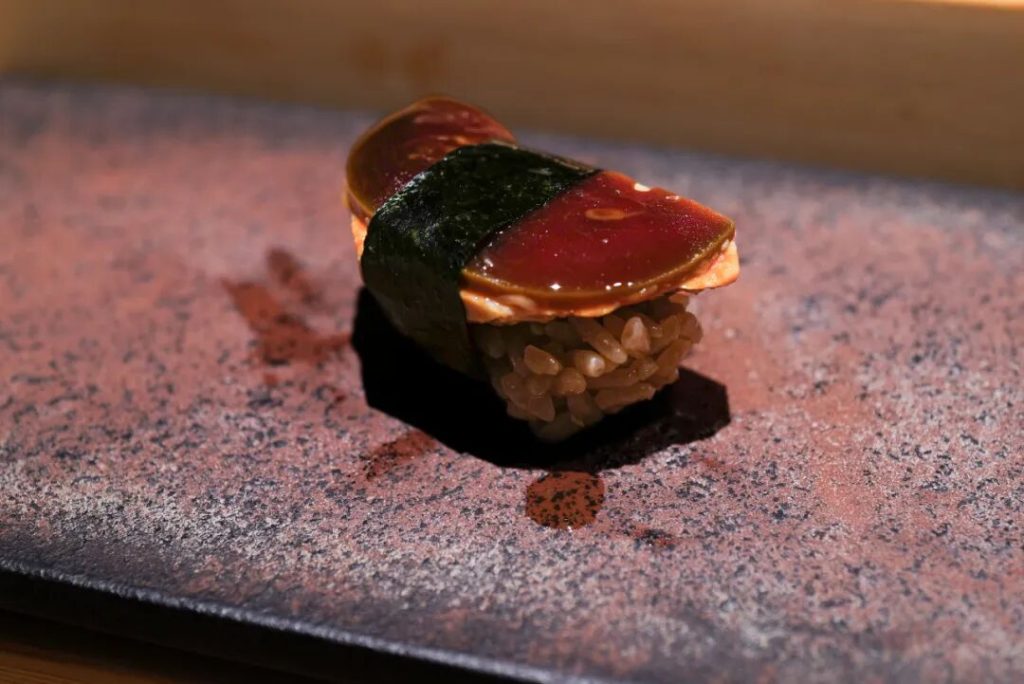
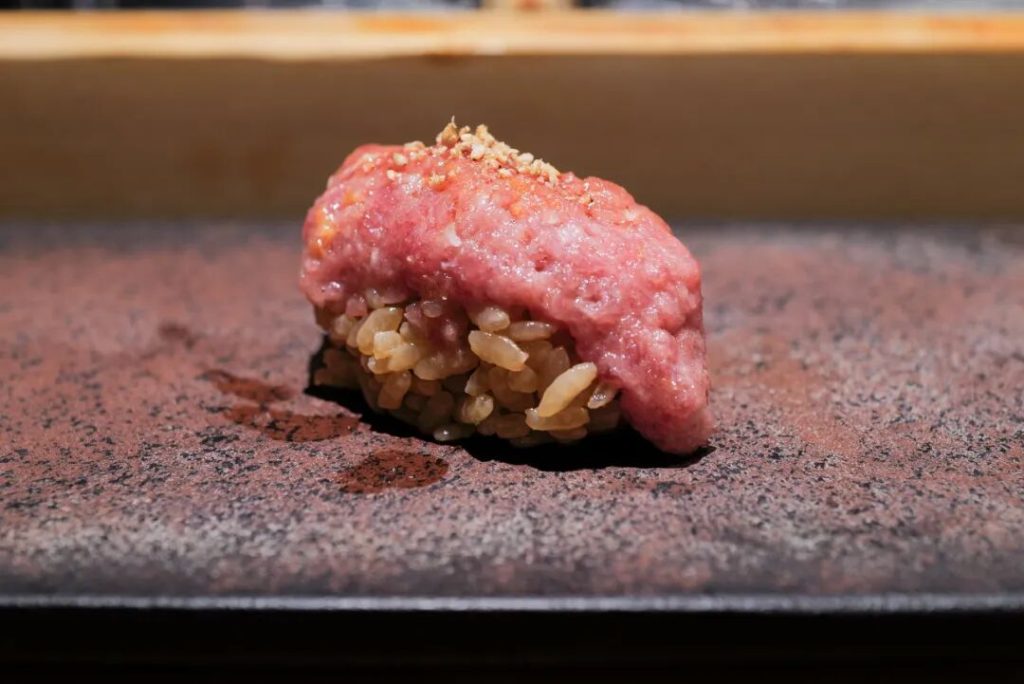
Sushi Sho’s famous “three essentials” were hidden deep in the extra-long supplementary menu.
Seared-skin golden eye snapper, monkfish liver with watermelon-rind Nara-zuke, and “ohagi.”
I was stunned by the house’s own monkfish liver. As Sho’s signature dish, I’ve already had countless reproductions of it at the restaurants of former apprentices and others. I never expected the original to still be this striking.
The liver was dense and velvety, its sweetness pronounced without apology. The watermelon-rind Nara-zuke on top was extremely crisp, instantly opening up the texture. What would normally be a heavy, dense combination was made balanced, satisfying, and still refreshing.
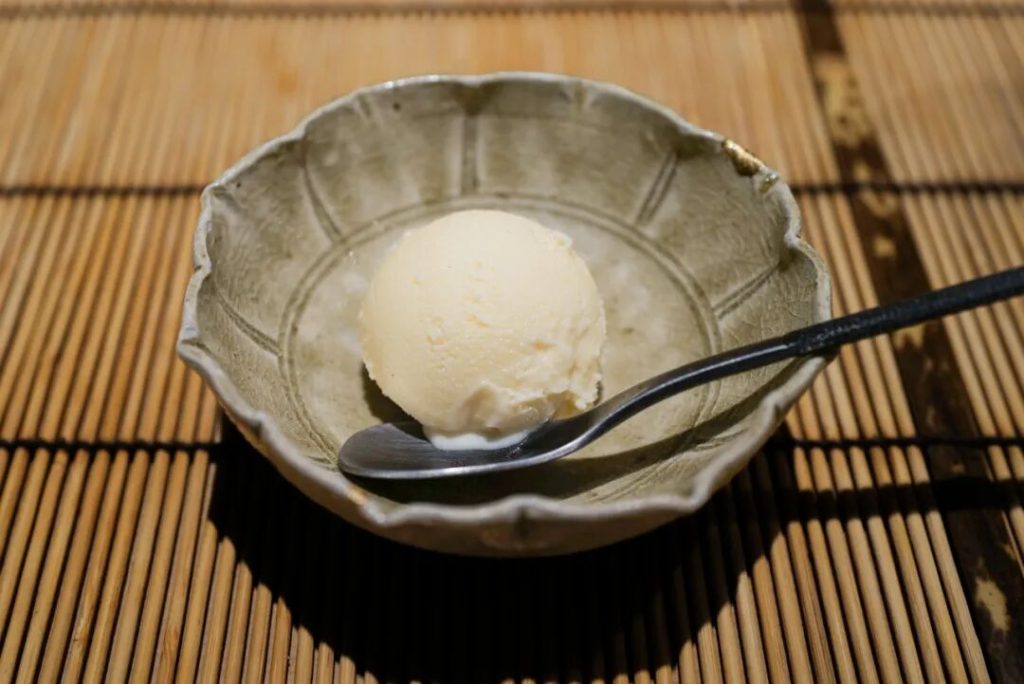
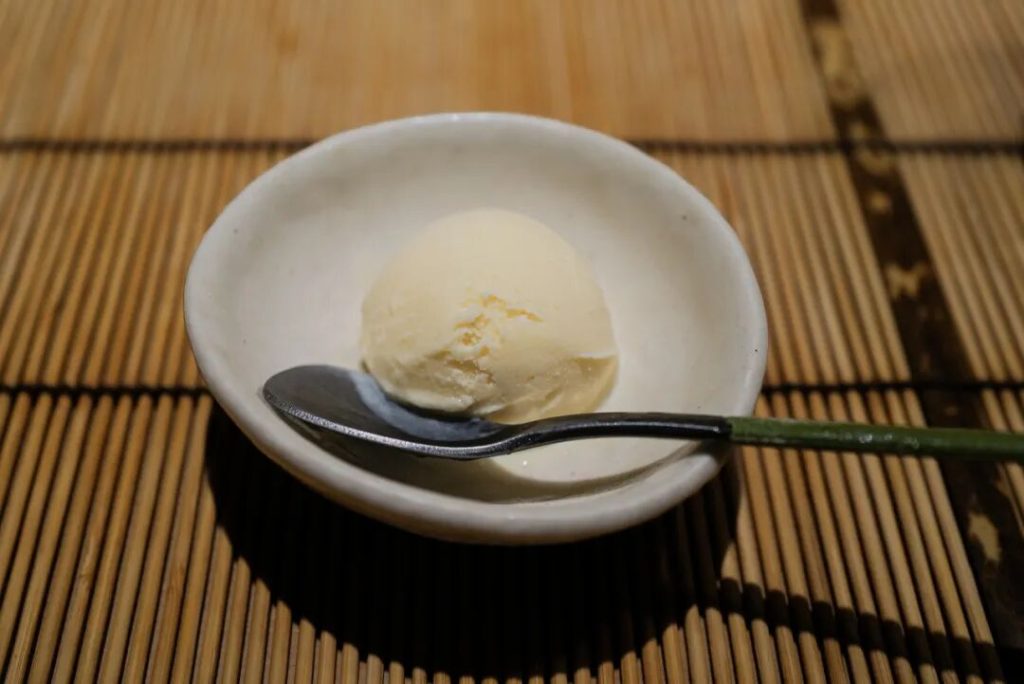
When the meal ended, the counter instantly turned into an ice cream shop — over a dozen flavors wheeled out for guests to choose from. Full on food and a few rounds of sake in, the chef was visibly more relaxed by this point. I agonized between the Satsuma-imo and mint flavors.
“You can have more than one, you know.”
In an era where everyone emphasizes modern aesthetics, elegant artisanship, and superlative fish — Sho stands out for offering a genuinely distinctive experience built on traditional theater.
The chef’s loose, easygoing manner behind the counter stands in sharp contrast to the orderliness of the operation itself.
It feels like a charm carried forward by sheer persistence — a relic of the old-school sushi experience.
An old Ferrari is still a Ferrari!
Worth digging into the archives. (Not literally.)
Sushi Sho
Monday – Saturday 18:00 / 21:00
(Monday, Wednesday & Friday additionally at 11:30)
Omakase Course ¥50,000++
Leave a Reply