A trip out to Shizuoka, once you’ve made it, always leaves you feeling it was worth it — and puts the next visit straight onto the calendar.
So a month after visiting Nishi Kenichi, we once again took the shinkansen, transferred to a local train, then a taxi, to reach Yaizu in Shizuoka.
The destination: 🏅Tabelog-gold tea-kaiseki restaurant, Onjaku.
“I want to make something better, right here in Yaizu.”
Chef Sugiyama Noko is a third-generation cook, born and raised in Yaizu. Back in high school he was already learning to handle fish at Sasue Maeda Fish Store, one of the town’s most important seafood shops. After graduating, he trained at the celebrated Tokyo restaurant Wako. Returning home, he took over his family’s old restaurant Onjaku, converted it from private rooms to a counter format in 2019, and has held Tabelog-gold status every year since 2023.
On sitting down, a small laminated card waits on the table, explaining in careful Japanese the “table manners” specific to Onjaku’s counter.
It really is an extremely quiet counter — the knife falls without a sound, every movement behind the counter is impossibly light, and aside from asking about drinks, there’s almost no talking or clatter anywhere in the room.
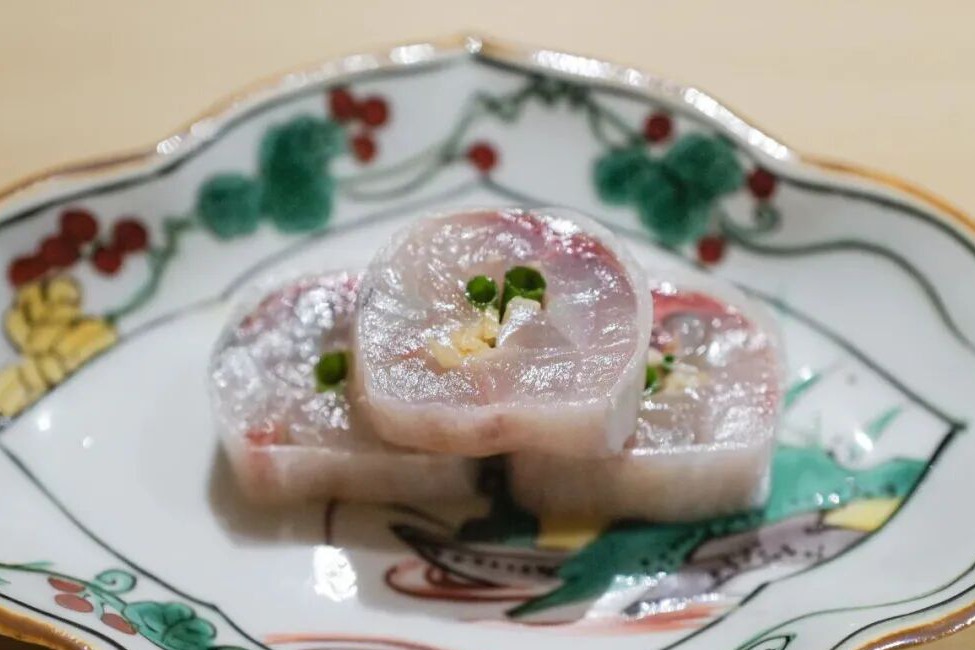
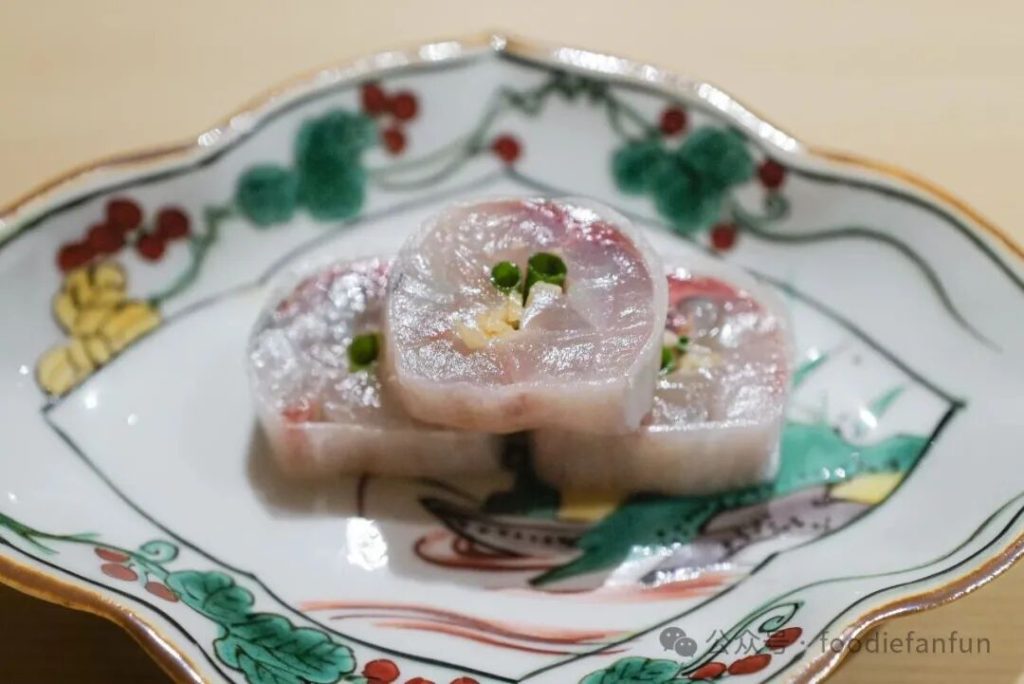
Daikon-wrapped aji roll — the texture and freshness of the fish come through in real dimension. Daikon, shiso, and scallion just lightly support it from within, keeping the flavor tight and clean. Three small rolls, and each bite grows more satisfying.
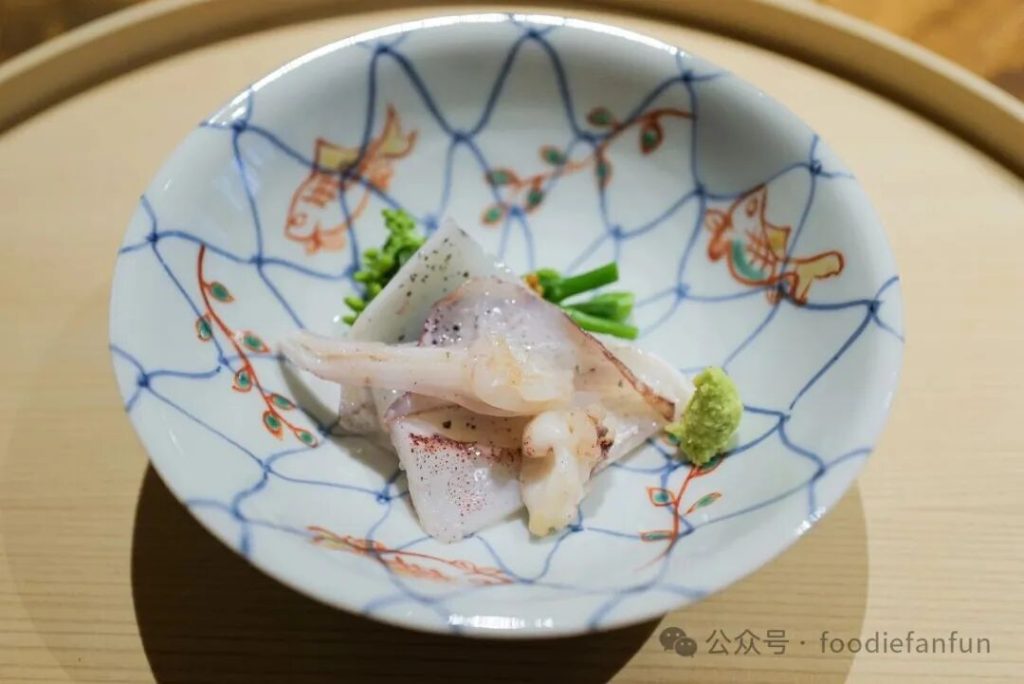
Jindou squid, just barely seared over the flame. Crisp on first bite, then it melts into a sticky softness, unfolding its umami in the mouth bit by bit, carrying a fine sweetness too. The freshness is intense, yet the aroma never overreaches. The seasoning is a light touch, leaving plenty of gentleness behind.
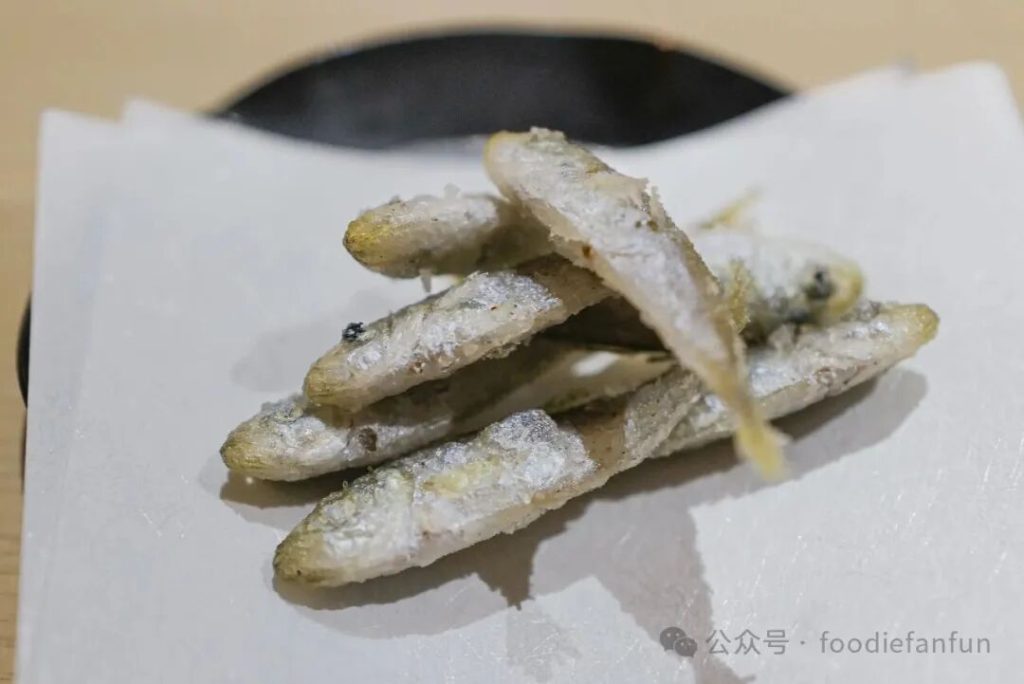
“This is aji that was just landed this morning.”
At 12:50 in the afternoon, eating a plate of steaming, crisp little aji like this, the happiness practically wells up on its own. The batter is thin, adding just the right amount of fragrance on top; the fish itself is tender enough, with a straightforward sweetness and umami that’s fully saturated. With flavor and richness this good, you really want a drink to go with it.
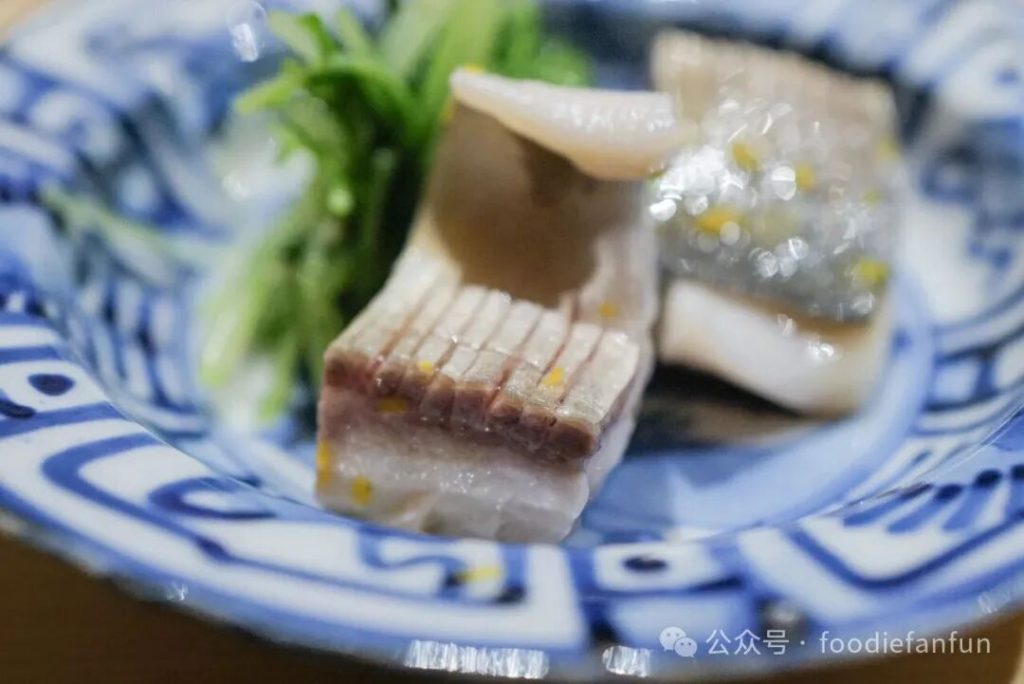
“This is also aji — hiraaji.”
The counter is so quiet that everyone’s eyes naturally fall on Sugiyama’s motion as he slices the fish open, its pink flesh almost dazzlingly bright. The seasoning uses only the lightest touch of yuzu, its aroma delicate, keeping the flavor clean. Freshness is pushed to the very front, carrying a restrained kind of refinement.
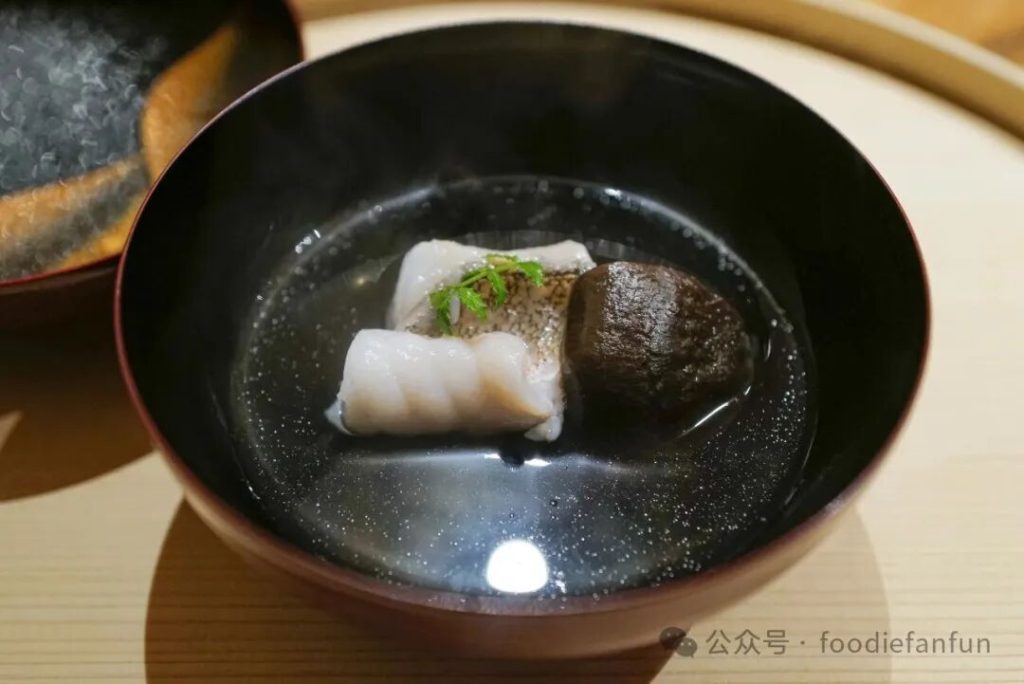
White amadai as a soup course. The fish’s firmness and high sweetness, gliding through the mouth almost like jelly, is a texture I could talk about endlessly. Here just a touch of salt lands on the surface, brightening the fish’s own sweetness and umami another notch.
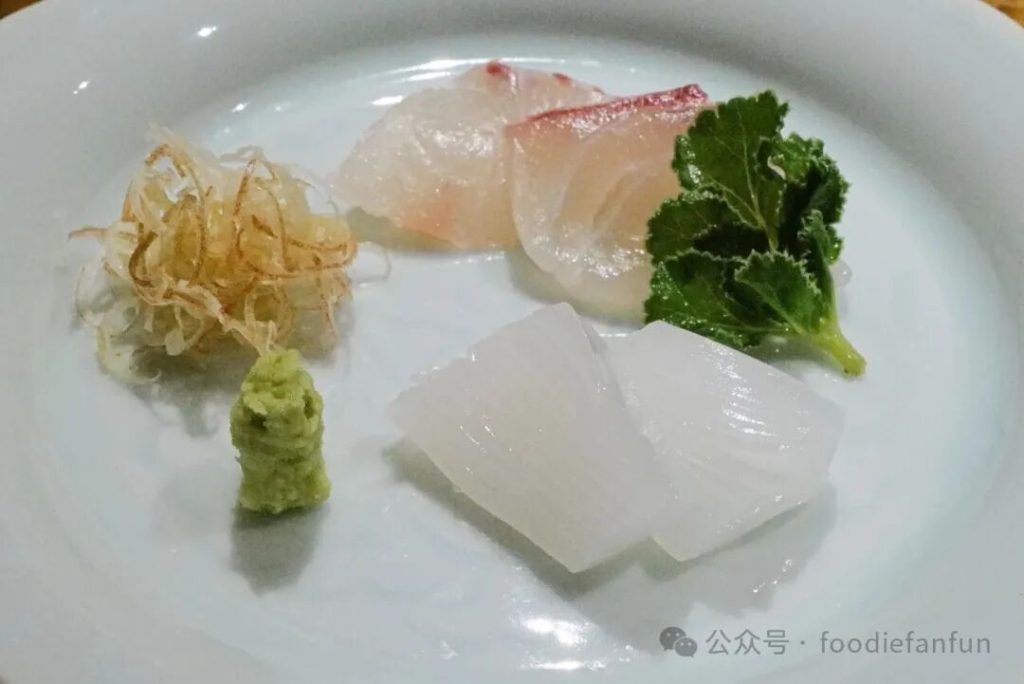
Sashimi of aori-ika and sea bream — the high sweetness and softness coming straight from the ingredient itself is almost visible at a glance. Once in the mouth, both the quality and the way it’s handled are equally beautiful: clean, precise.
The fish is excellent, and the cooking skill behind it is every bit as strong.
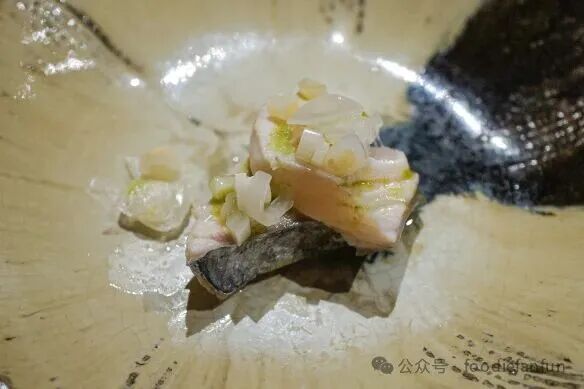
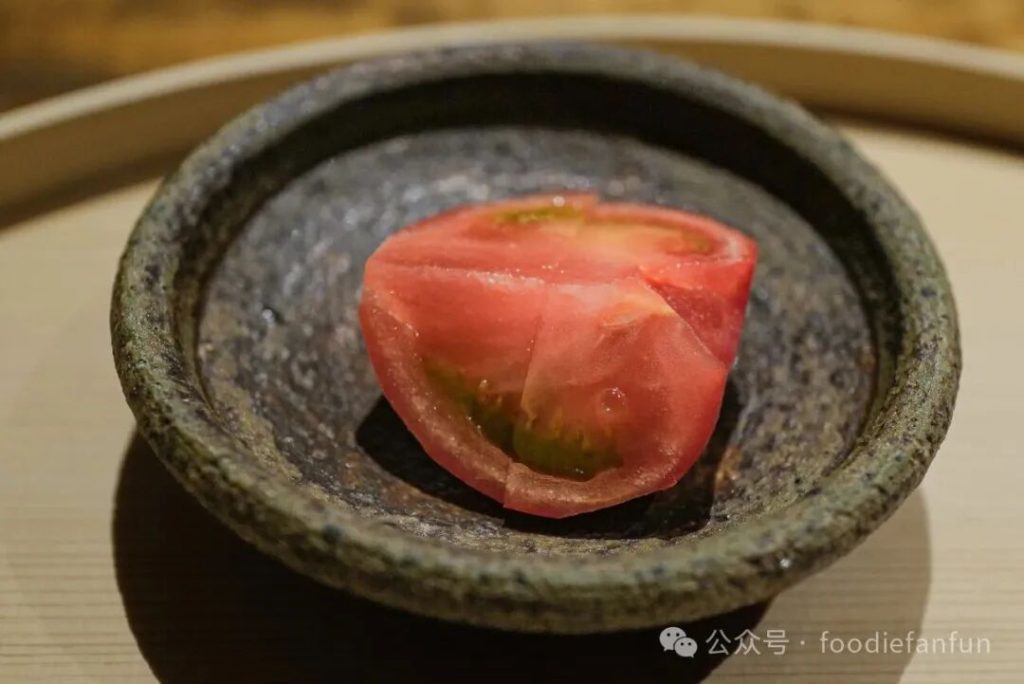
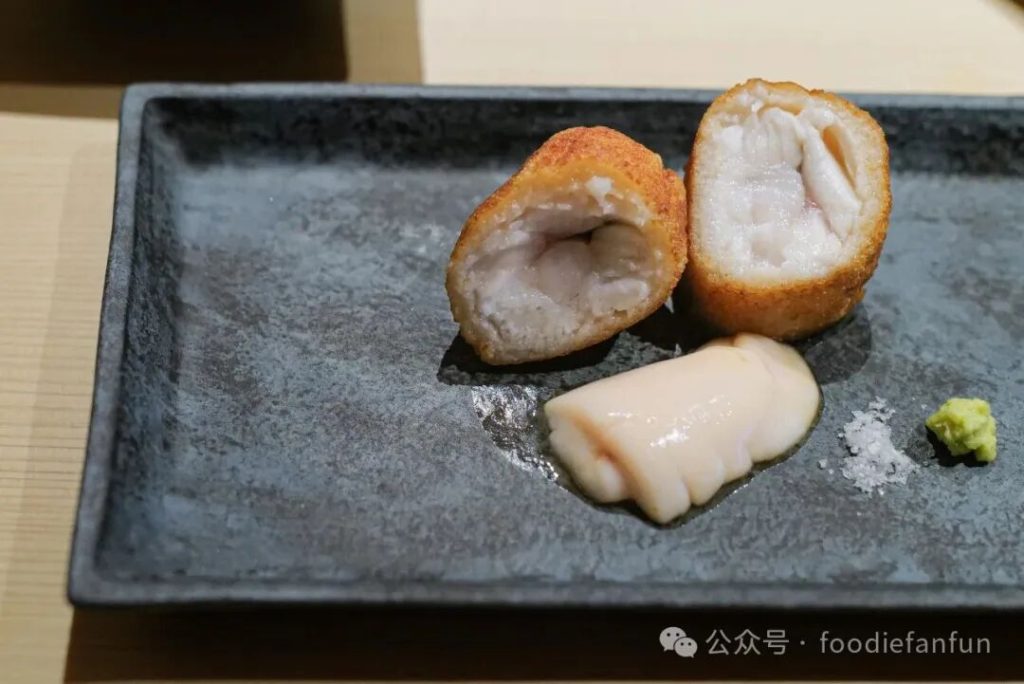
Spanish mackerel is, as always, wonderfully tender and sweet, its delicate fattiness turned even gentler by the charcoal. A layer of fermented scallion laid on top carries an extremely fine allium fragrance, tightening up the fish’s fattiness while adding a clean, sharp, vegetal note — rounding out the dish’s aroma and texture into a more complete layer.
For a moment it brings to mind Cantonese ginger-and-scallion fish balls — a similar combination, expressed in a completely different style.
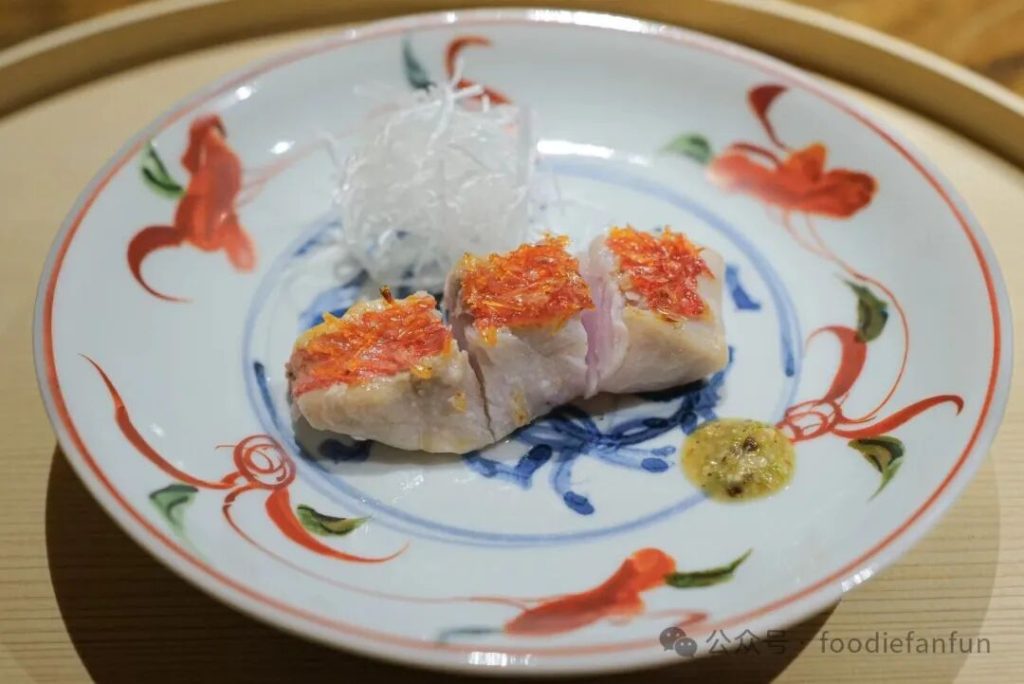
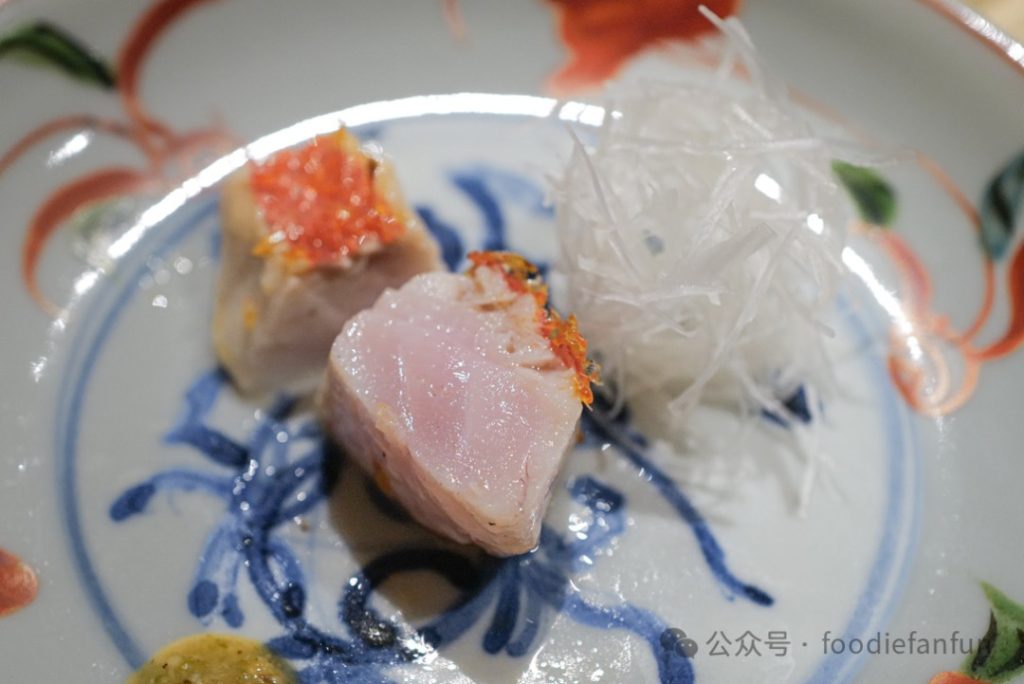
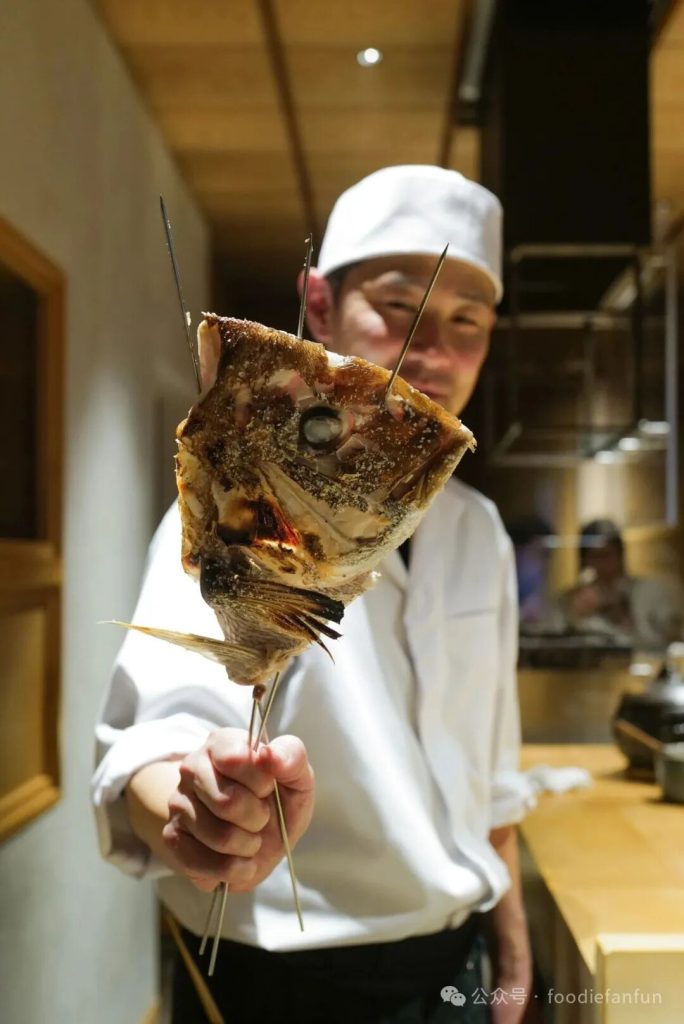
Scale-grilled kinmedai is one of Onjaku’s most representative dishes.
At the counter you can watch Sugiyama’s technique — after grilling it over charcoal, he holds the fish right up close to the flame, almost “cheek to cheek” with it, to force out the excess fat.
The skin is crisp but never hard, the standing scales flashing past in the mouth like a brief spark. The flesh inside stays half-raw, astonishingly tender, its umami fine, with a lingering sweetness that stays slowly in the mouth.
Eating it plain is already complete on its own. Dipped in shiraga negi and sansho-pepper soy sauce, it becomes something else entirely — an extra layer of clean, sharp aroma that only makes the kinmedai’s own tenderness and sweetness stand out more.
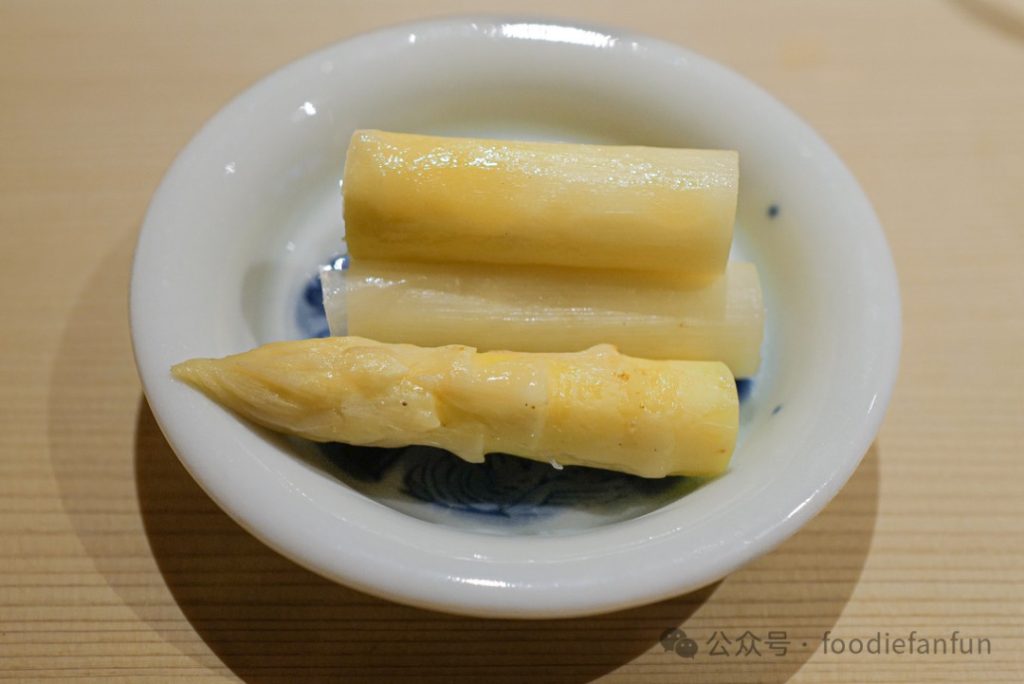
Then an ordinary-looking little asparagus spear turns out to be judged just as precisely — the heat stopped at exactly the right point, letting fragrance, crunch, freshness, and softness all exist at once.
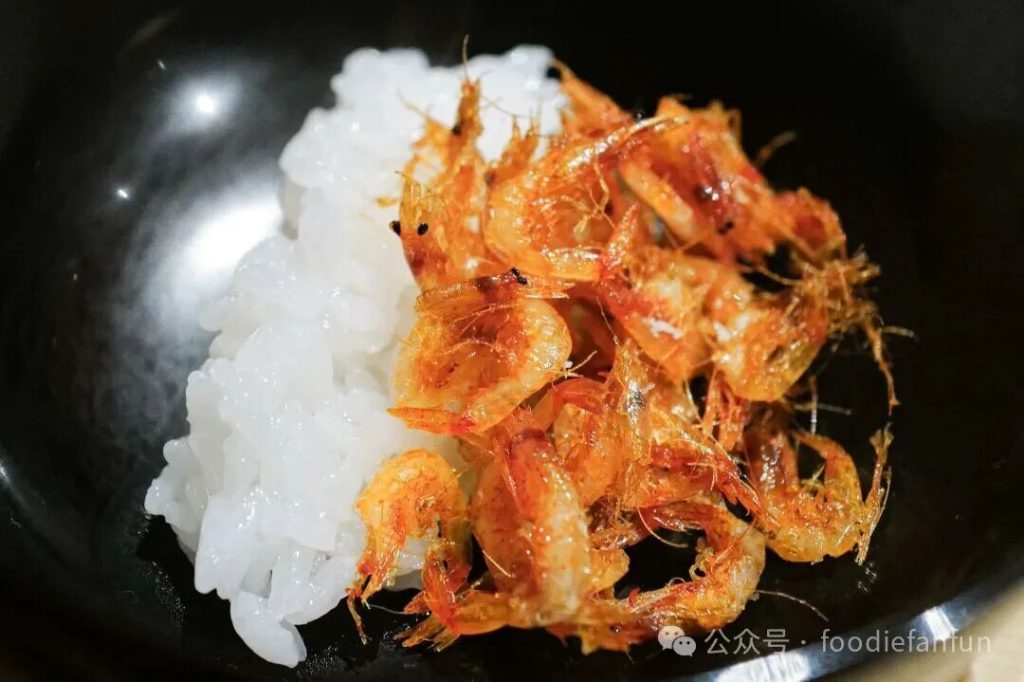
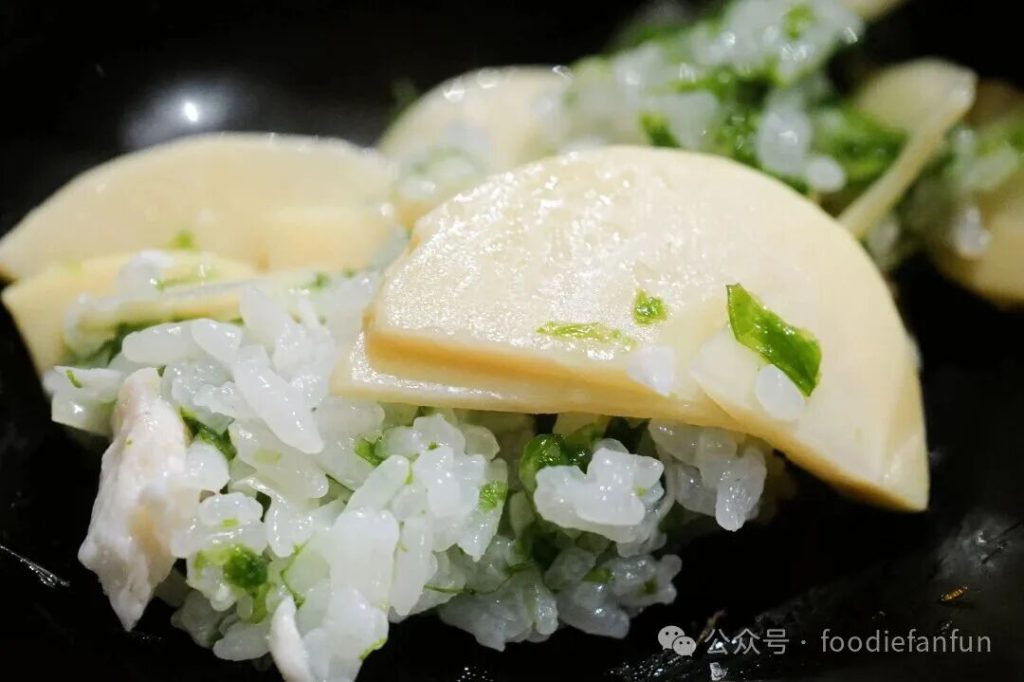
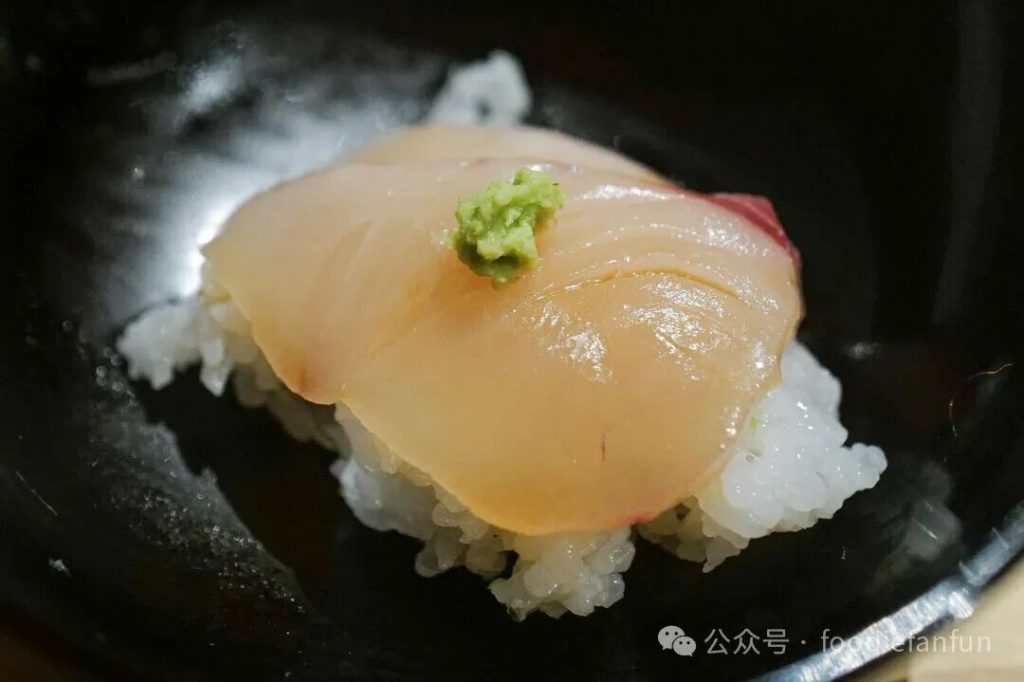
Onjaku’s “rice course” could quietly stuff you to bursting.
First comes sakura shrimp rice. The fried sakura shrimp are crisp and fragrant, noticeably larger than what you’d see at most restaurants, with a fuller aroma too. The rice beneath stands up grain by grain, plump with something like a spring-water clarity, matching the shrimp’s own sweetness perfectly.
The formal main course is takikomi gohan with silver pomfret and spring bamboo shoot. The pomfret, grilled over high heat until charred, has melted its sweet fattiness slowly into the rice, giving the whole pot a rounder layer of umami. The bamboo shoot lifts the flavor gently upward, sending up a burst of clear, bright fragrance.
There’s a diverse range of add-ons too. In the end we went with the marinated Spanish mackerel donburi. The fish carries an almost jelly-like smoothness, melting gently between the teeth, with fine umami and high sweetness.
It’s no exaggeration to call it a top-tier Spanish mackerel don.
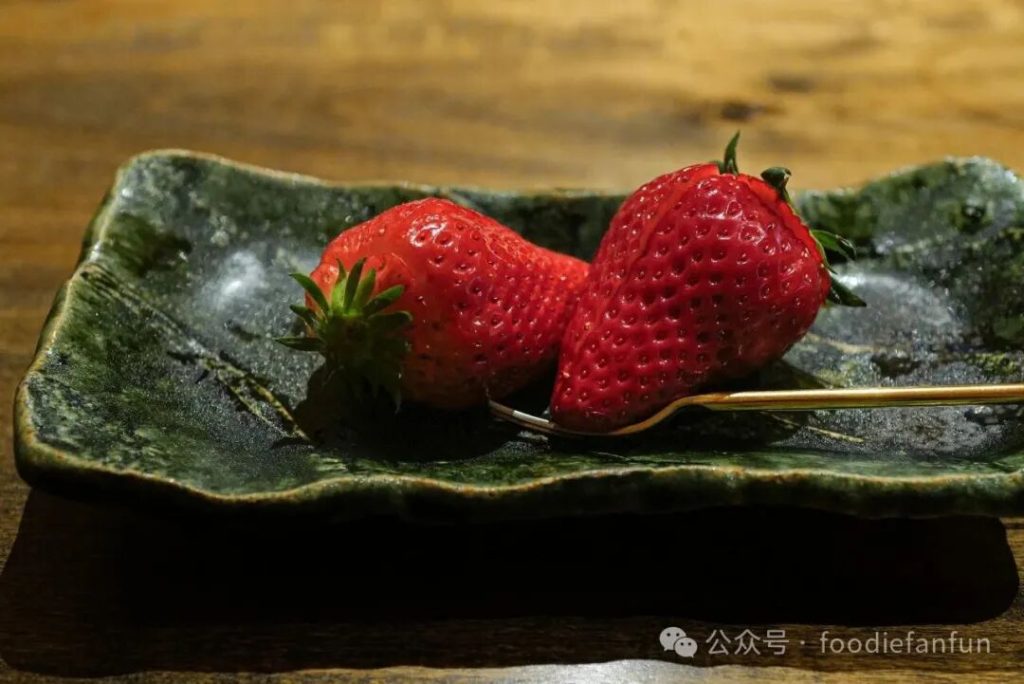
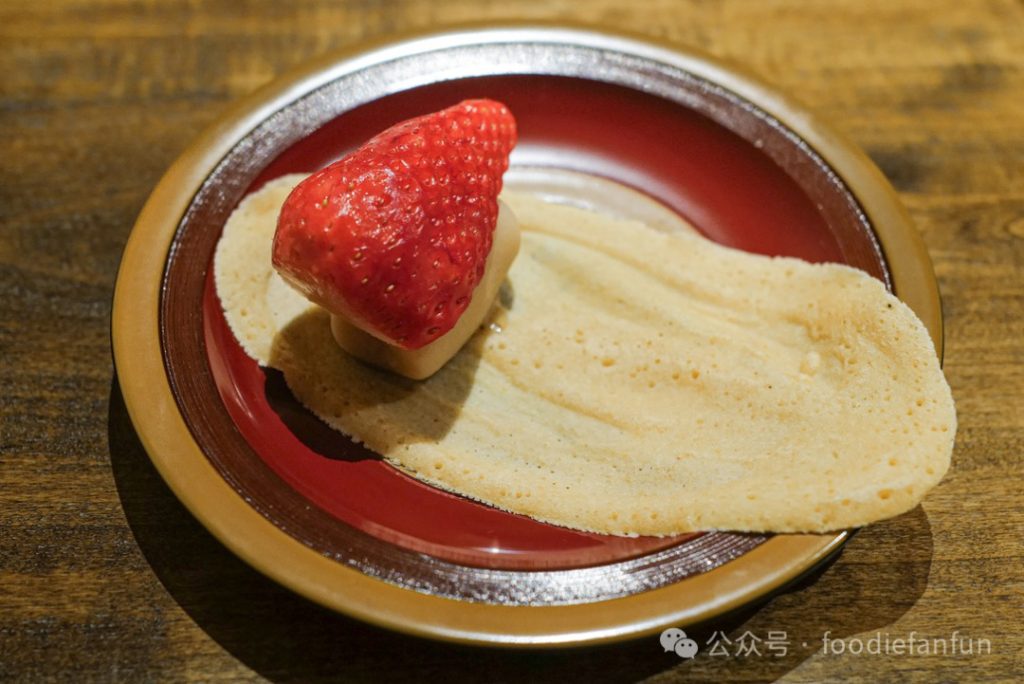
With the dishes finished, dessert is left for guests to assemble themselves. Sugiyama, meanwhile, returns to the kitchen to prepare one last important ritual before the meal ends.
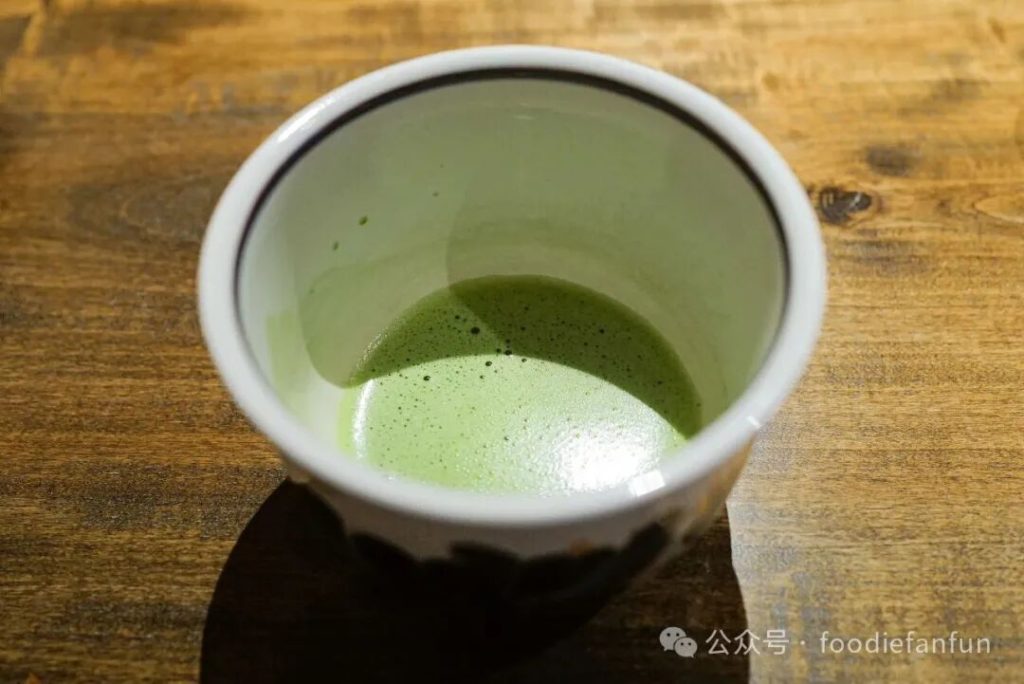
Quietly, he whisks a bowl of matcha for every single guest.
This closing gesture is, like the whole meal, quiet, restrained, with a clear beginning and end. That sense of completeness comes not just from careful attention to process, but from Sugiyama’s control over rhythm, temperature, and proportion. The meal’s memories stack up toward a climax, yet everything is handled with the lightest touch.
There’s no showing off, rarely any deliberate emphasis on provenance, and even the expression itself makes no sound. Yet every dish that comes to the table puts real strength on the plate — through ingredients kept in an exceptional state, precise heat control, and deep cooking skill.
Gentle, restrained — and yet, throughout, powerful.
The ingredients sit at their best point, the cooking stops at exactly the right moment, and the whole meal comes together because of it. This, I think, is the hard-to-replicate charm that belongs to Onjaku, the tea-kaiseki restaurant of Yaizu.
Cha-kaiseki Onjaku
Monday – Saturday
12:30 – 15:30
18:30 – 21:30
Chef’s Menu ¥24,000++
Leave a Reply