I’m Cher. I started this space to trace the way cities speak through food and drink—and to share my reflections on sake, culture, and the stories behind the table.
I’m originally from Beijing. I completed my undergraduate studies at Purdue, earned my first master’s degree at NYU, and I’m now beginning a new chapter at Keio University. I believe every city has its own cultural rhythm, and the dining table is one of the most expressive and intimate ways to understand a place.
I love visiting fine dining restaurants for their craft and imagination, but I’m just as interested in the stories behind small, humble spots—the devotion, the choices, and the people who make them special. Through words and photographs, I hope to share these experiences with you.
I’m also an SSI-certified International Kikisake-shi, Shochu Kikisake-shi, and a sake instructor, and I continue to contribute in my own way to promoting sake culture.
One of the best parts of a Basque trip is San Sebastián’s old town, packed wall to wall with pintxos bars. But some of the “world-class” legends are tucked away in the surrounding countryside.
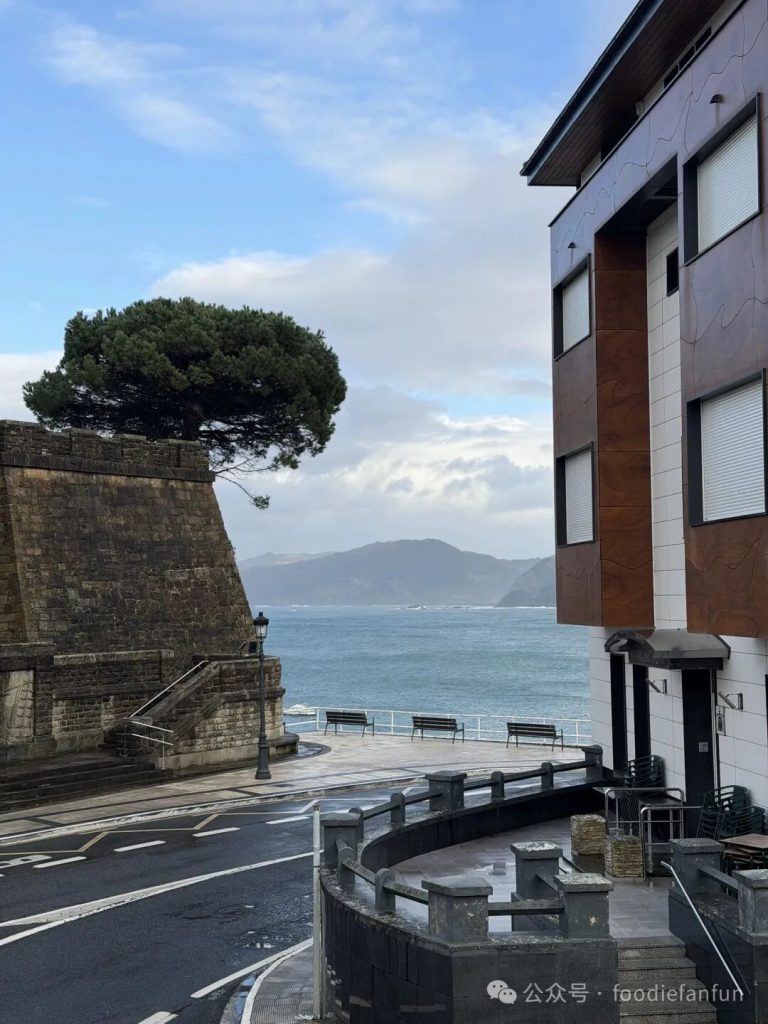
Elkano is a must-visit — in the beautiful little fishing village of Getaria, about 30 minutes from San Sebastián. The god of charcoal-grilled whole fish that food lovers travel the world for, and No. 24 on the 2025 World’s 50 Best Restaurants list.
The spark for a cooking technique usually comes from the ingredient itself.
The story of Elkano’s whole grilled fish began when a fisherman once brought in a fish so large it wouldn’t fit on the grill — so Pedro sandwiched it between two grills instead. What he discovered by accident was that the skin and bones acted like armor, locking the flesh and gelatin tightly together and preserving the flavor to the fullest.
And that’s how the world-famous whole charcoal-grilled fish was born.
His son Aitor later took over the restaurant and refined the philosophy further — minimum intervention, maximum authenticity. He built closer relationships with fishermen, tracking seasonality, fishing methods, and the handling details after the catch, absorbing all that complexity outside the kitchen.
Which is exactly why the cooking itself can afford to be so minimal. Less seasoning, less masking — just charcoal and the ingredient, left to say everything themselves.
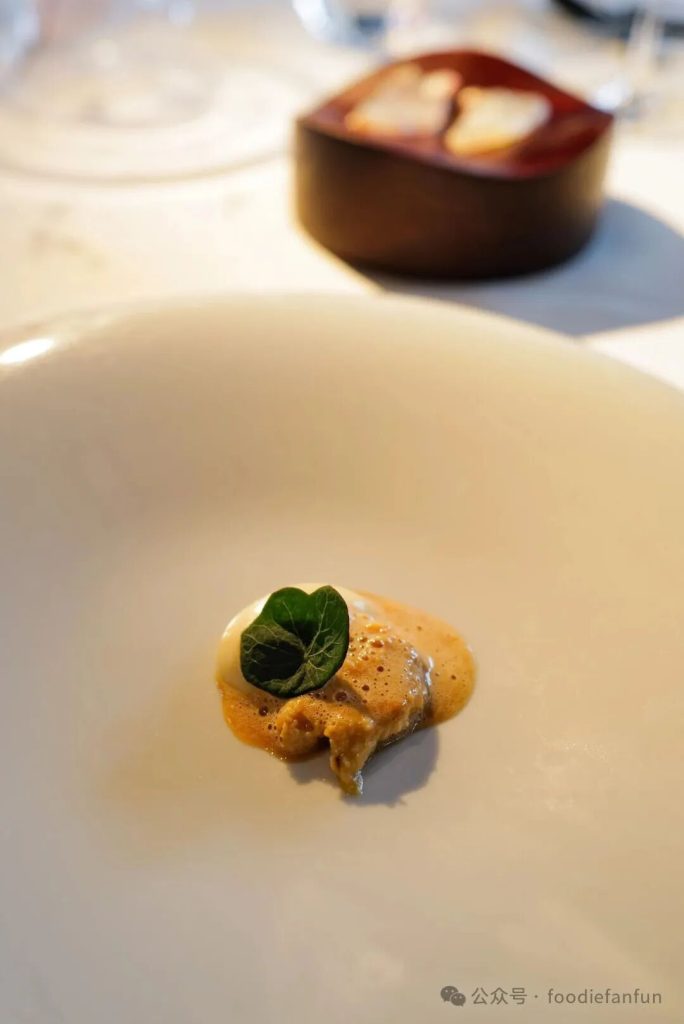
Spider Crab, Cauliflower
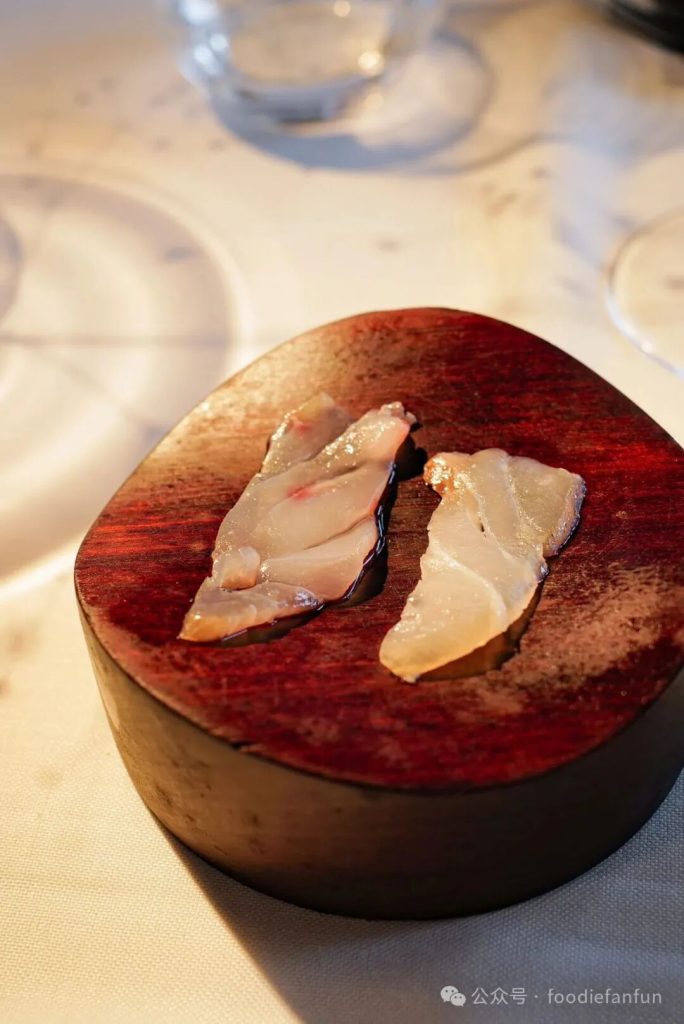
Smoked Sea Bass
Elkano has a full tasting menu (€196), but à la carte is entirely an option too. The kitchen adjusts each dish’s portion and the size of the fish based on the number of guests and dishes ordered.
Even though it’s very much a destination restaurant, ordering here is still an exercise in slowing down.
“Take it easy, no need to order too much — our doors are always open to you.”
The classic combo — fish jaw, half a portion of shrimp, and a whole fish — is just right for two.
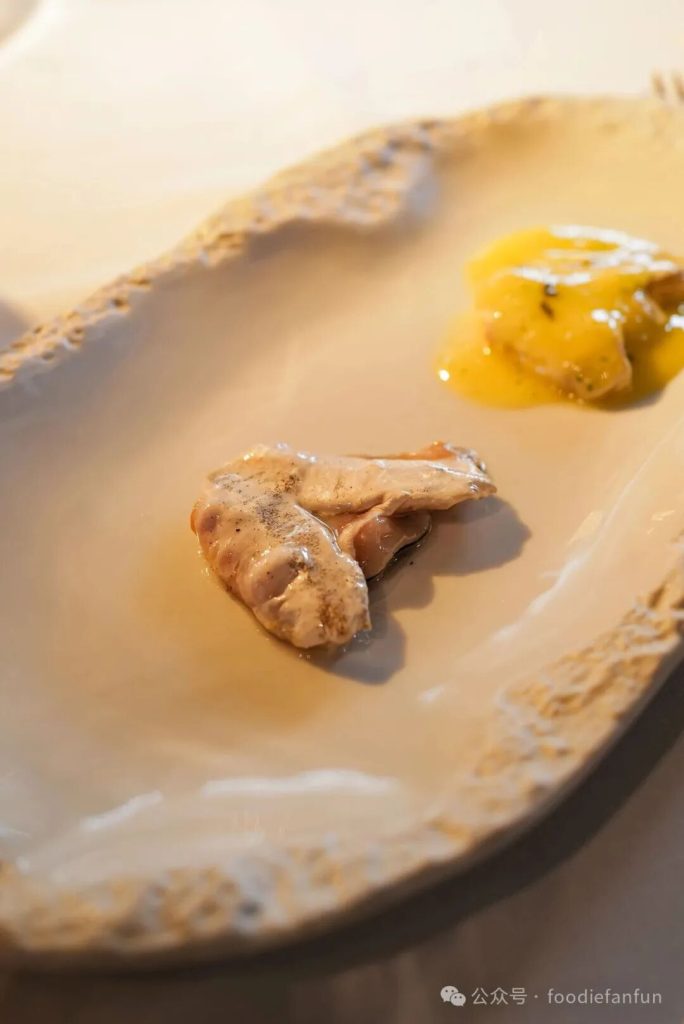
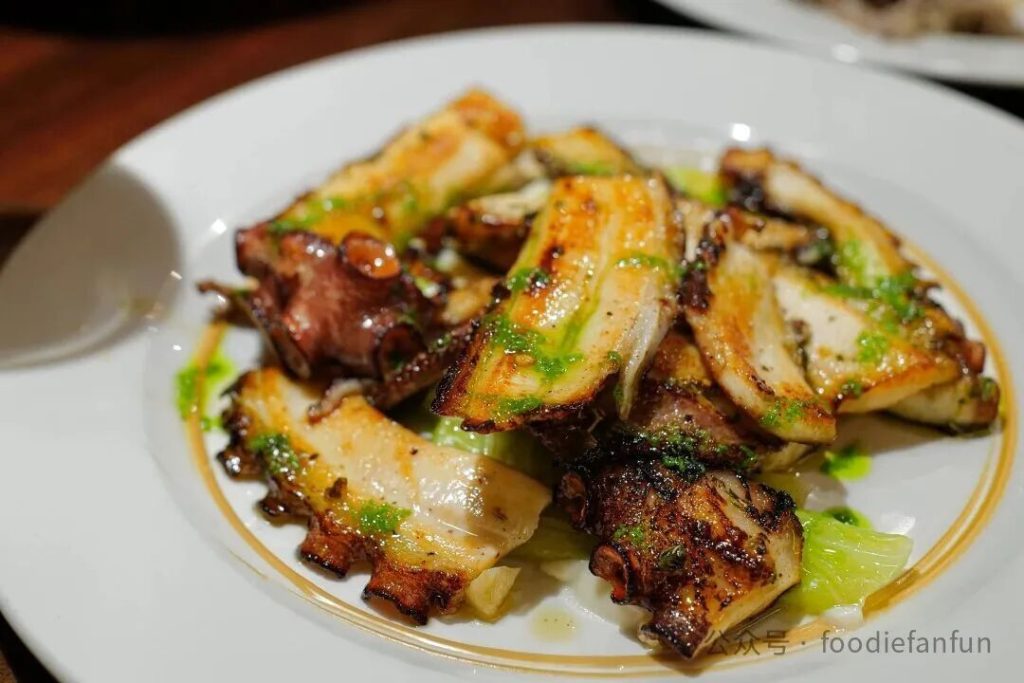
Cod Jaw
The house specialty, cod jaw, is served two ways, each interpreting this gelatinous cut through a completely different technique: fire, and emulsified sauce.
The charcoal-grilled version arrives with a light stickiness and slip on the palate, firm yet springy — an unmistakable collagen texture. The sea flavor is concentrated but never fishy or heavy, spreading slowly through the mouth along with the gelatin, leaving a clean, lingering sweetness.
The pil-pil version is richer and thicker. The emulsified oil draws out the fish’s own gelatin, rounding out the flavor into a texture that glides continuously across the tongue.
It genuinely takes a small, humble-looking cut and blows up its natural delicacy, char, and gelatinous texture to the fullest.
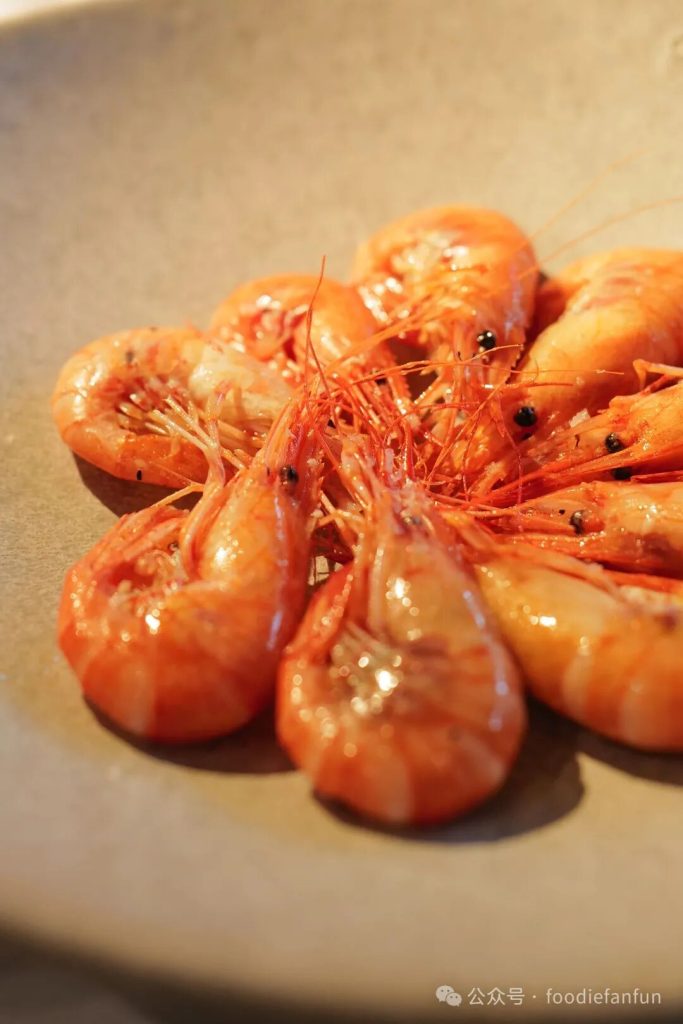
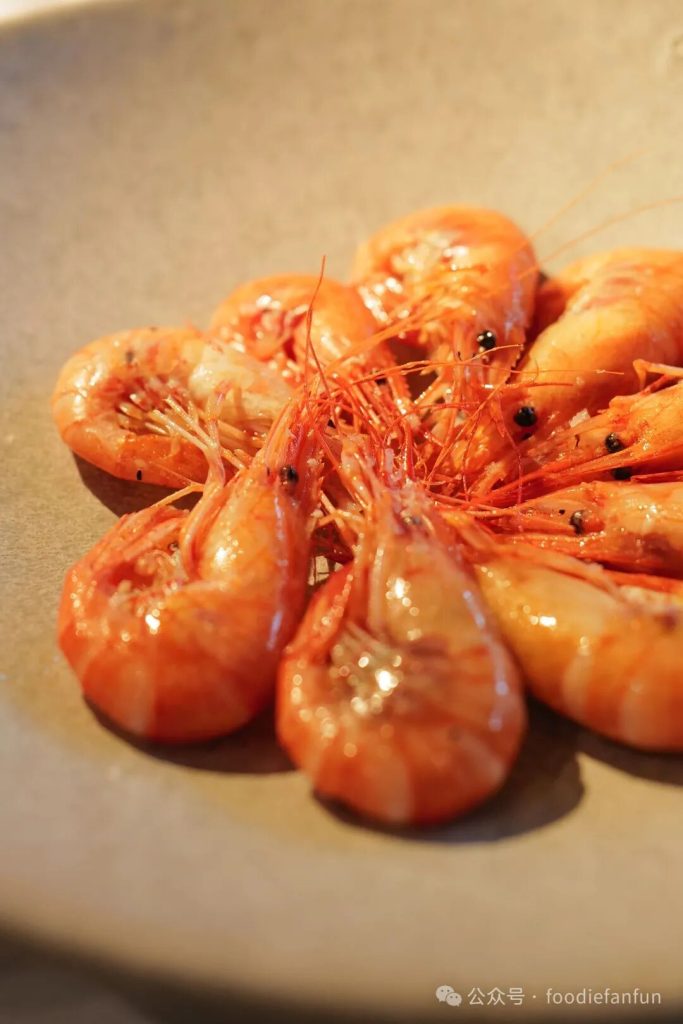
Small Scarlet Shrimp
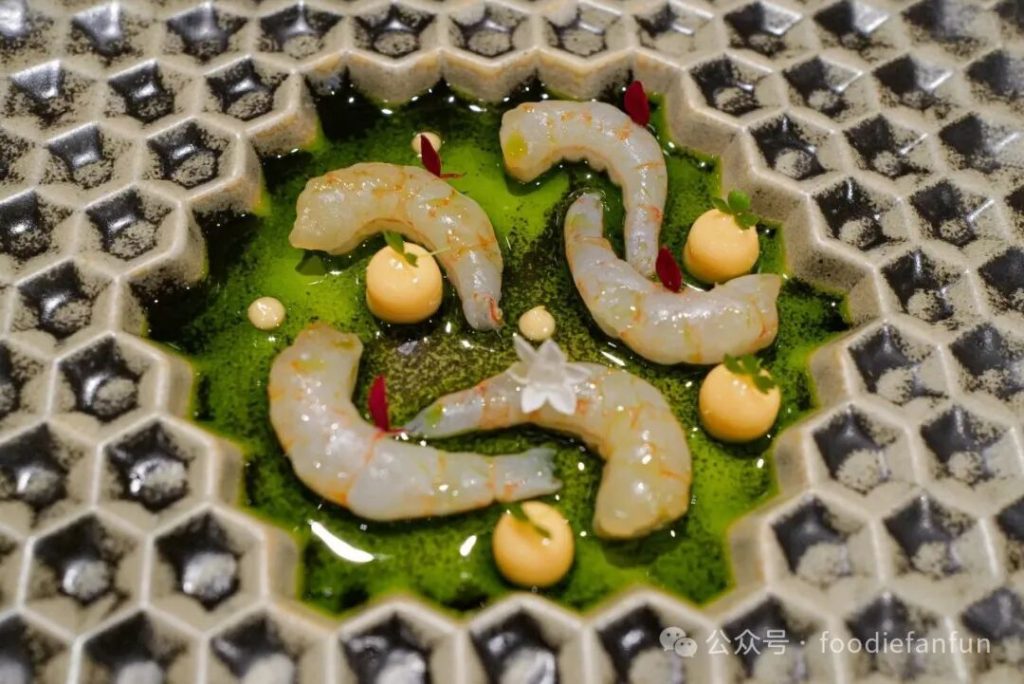
Early-spring baby shrimp, served either raw or lightly grilled — your choice.
Cooked to about 50%, arriving bright orange on the plate. Pull off the head, peel back the legs, and you’ll find deep red roe. The flesh has a light, crisp firmness, the sea flavor clean and clear, sweetness bursting in the mouth. The char left by the coals wraps around it like a thin thread — light, and lingering.
You’ll find yourself sucking on your fingers afterward, unwilling to let a single trace of sweetness escape.
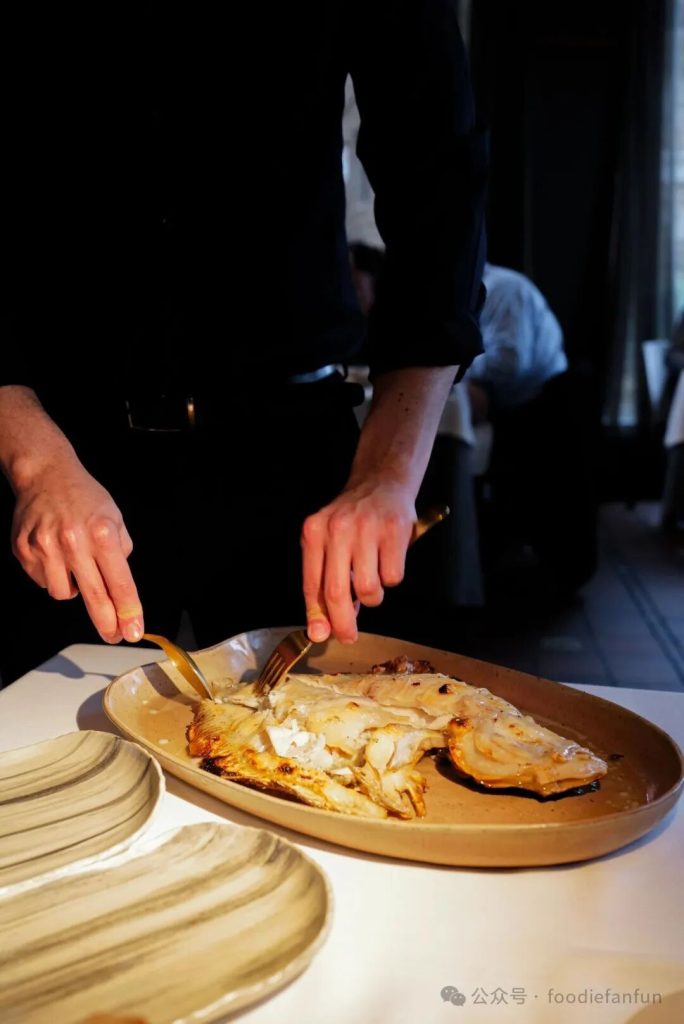
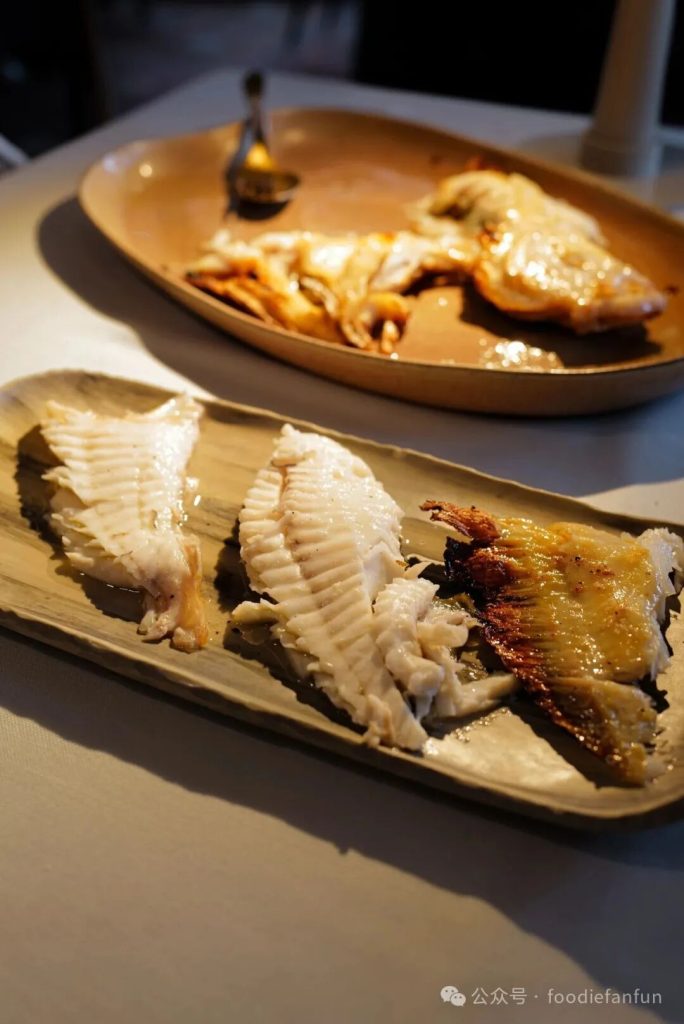
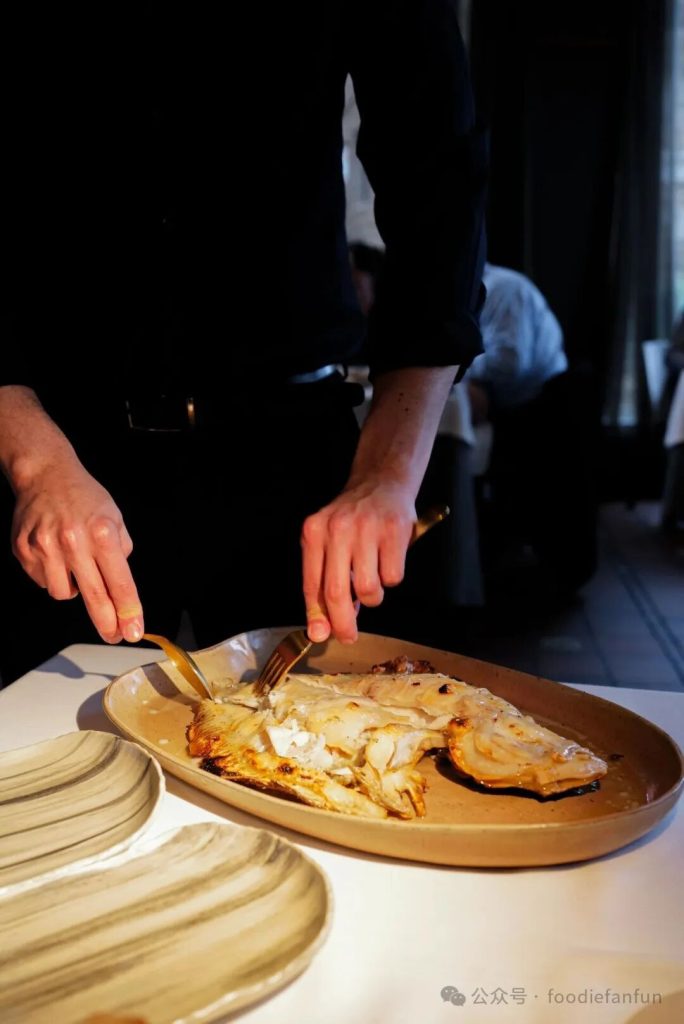
Whole Grilled Turbot
The main event is always the grilled fish — the anticipation starts the moment you spot the whole fish on the outdoor grill before you’ve even walked in.
It arrives trailing charcoal aroma. The back, belly, and fins are portioned out one by one. The back is firmer and cleaner, the belly rich and juicy, silky and delicate with a lingering sweetness, the charcoal scent wrapped around it just right. The skin looks plain and a little charred, but that thin layer holds an incredibly beautiful gelatinous texture.
It’s then finished with a sauce made from olive oil, vinegar, and the fish itself, adding a soft layer of freshness. “This is the one so many restaurants are curious about — our legendary secret sauce.”
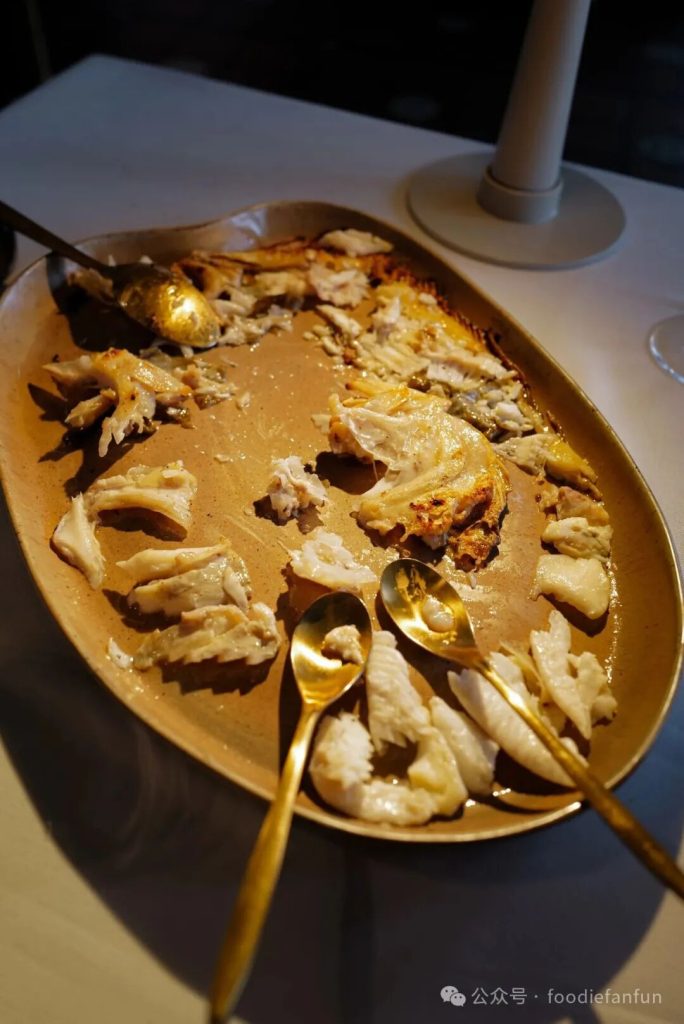
Once the fillets are gone, the rest of the fish is not to be skipped either — from the rice-grain-sized bits of meat along the bone to the neck, cheeks, and jaw, every part of the same fish carries a completely different gelatin and tenderness. By the end, your mouth is left full of gelatin and a clean, sweet finish.
It’s the perfect balance of charcoal, fish, gelatin, and natural sweetness.
One fish, performing the entire role of a top-tier Buddha Jumps Over the Wall all on its own.
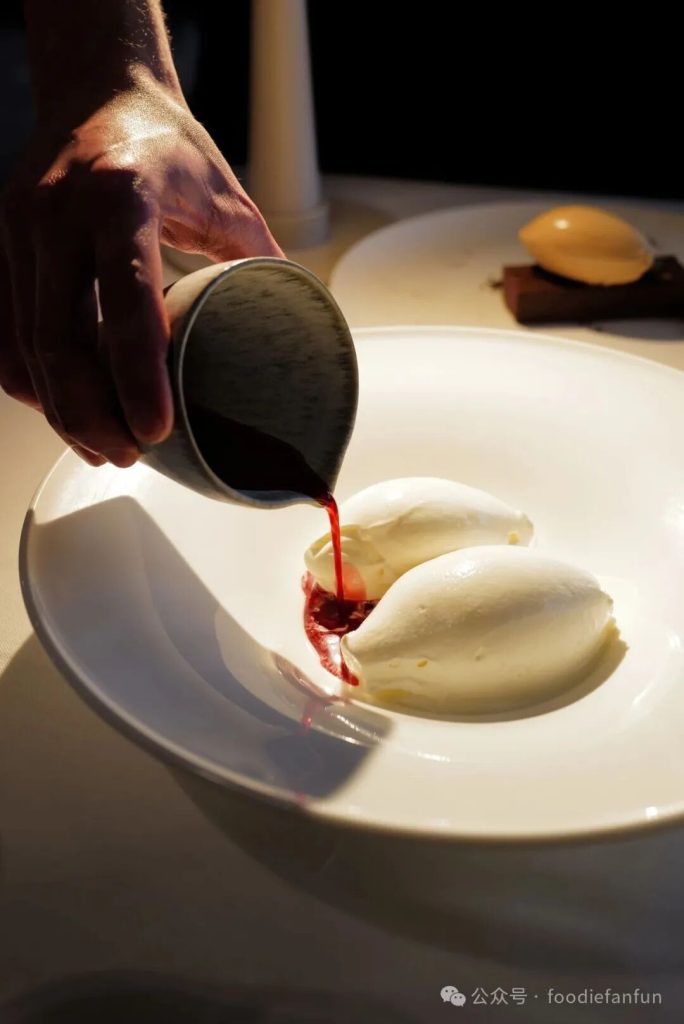
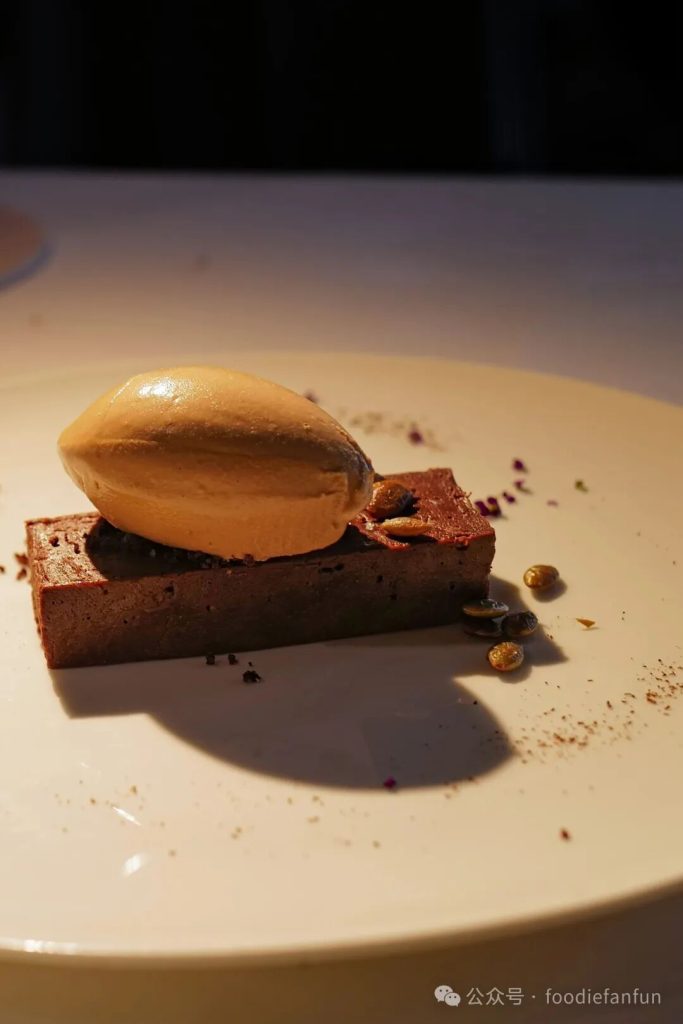
Cheese Ice Cream
Worth mentioning: the wine list here is genuinely worth digging into. Whether you want to start with a Txakoli, work seriously through a lineup of Spanish wines, or mix in something from elsewhere, there’s plenty of room to explore, and the prices are kind. Order a full bottle for two, dig into charcoal-grilled seafood — it’s about the best way to spend a lunch by a fishing harbor.
After lunch, while waiting for a taxi, take a stroll down to the sea and feel the wind off Getaria — the whole trip left us happy and sweet all over.
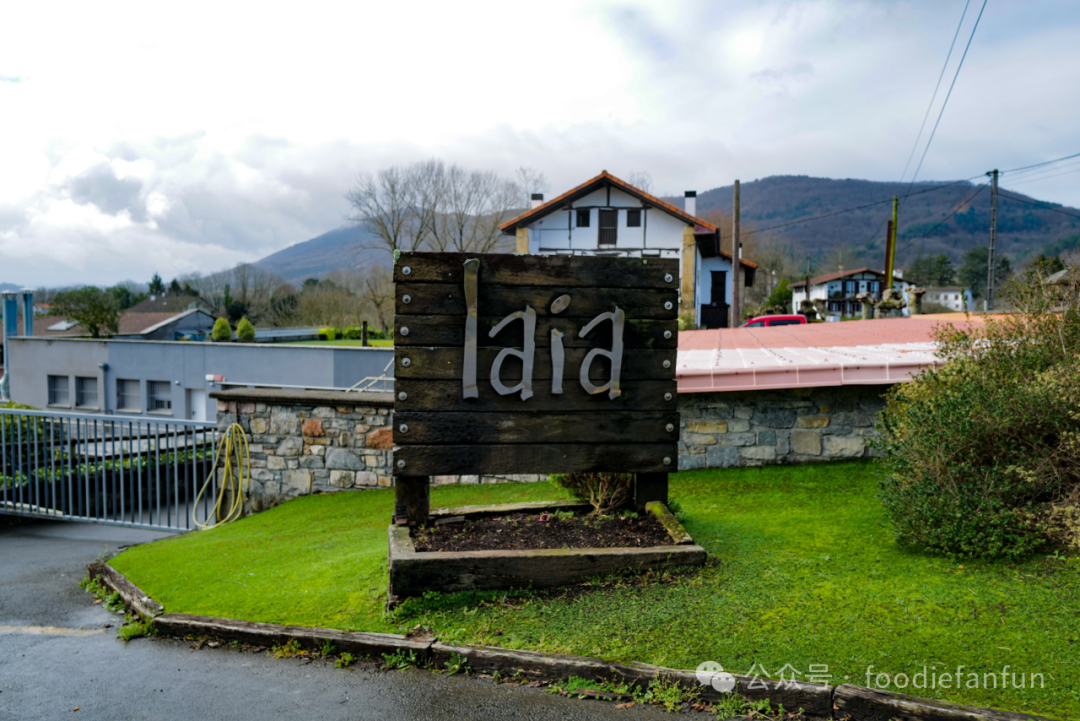
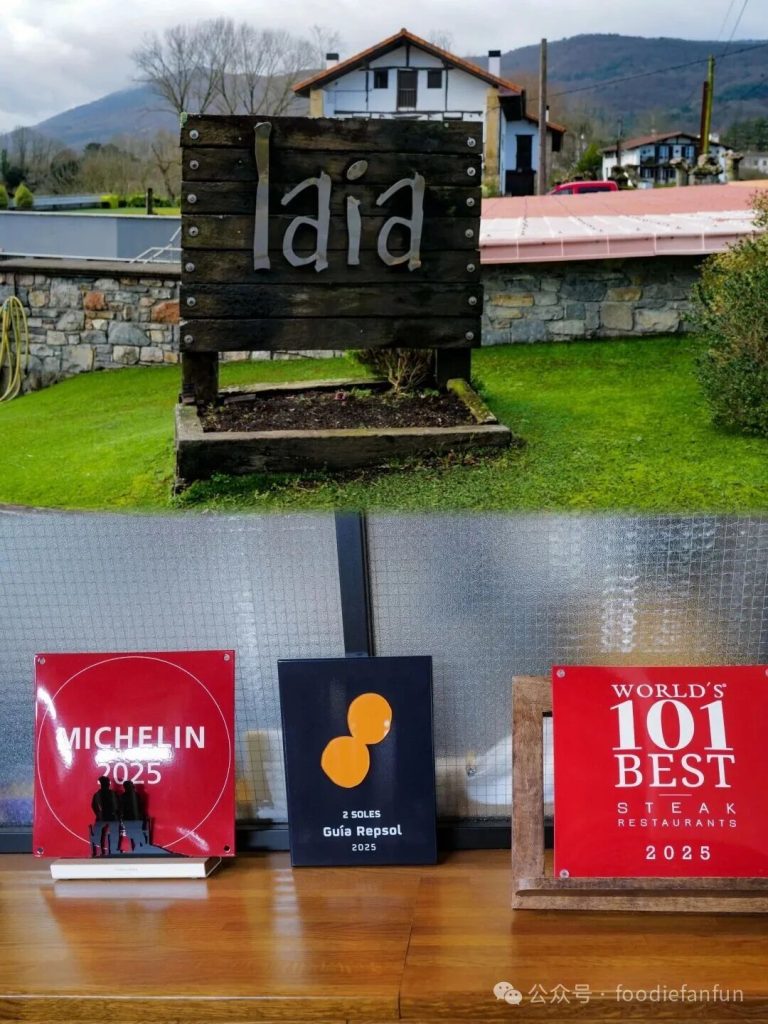
Laia Erretegia is about 25 minutes by car from San Sebastián, in the Basque Country — ranked No. 3 on World’s 101 Best Steak Restaurants 2025, and holds 2 Suns in the Guía Repsol 2025.
The restaurant sits on a small hillside, run by a brother-and-sister team — the brother is an award-winning grill master from the SS Gastronomika barbecue competition, while the sister handles the wine relationships and built the cellar herself.
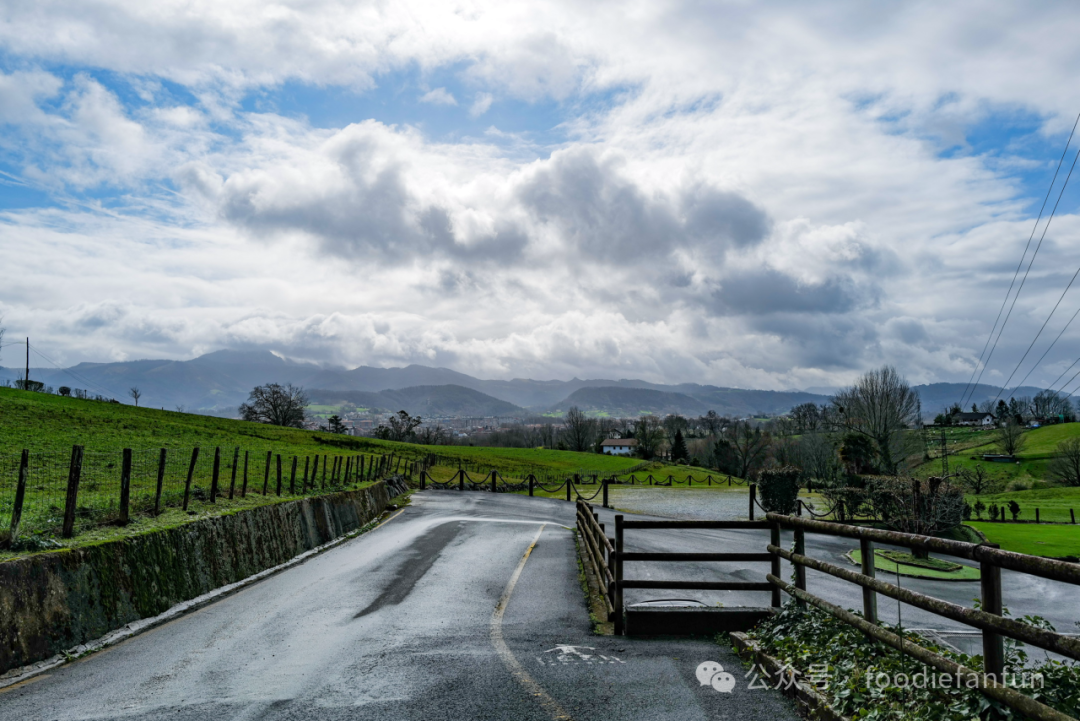
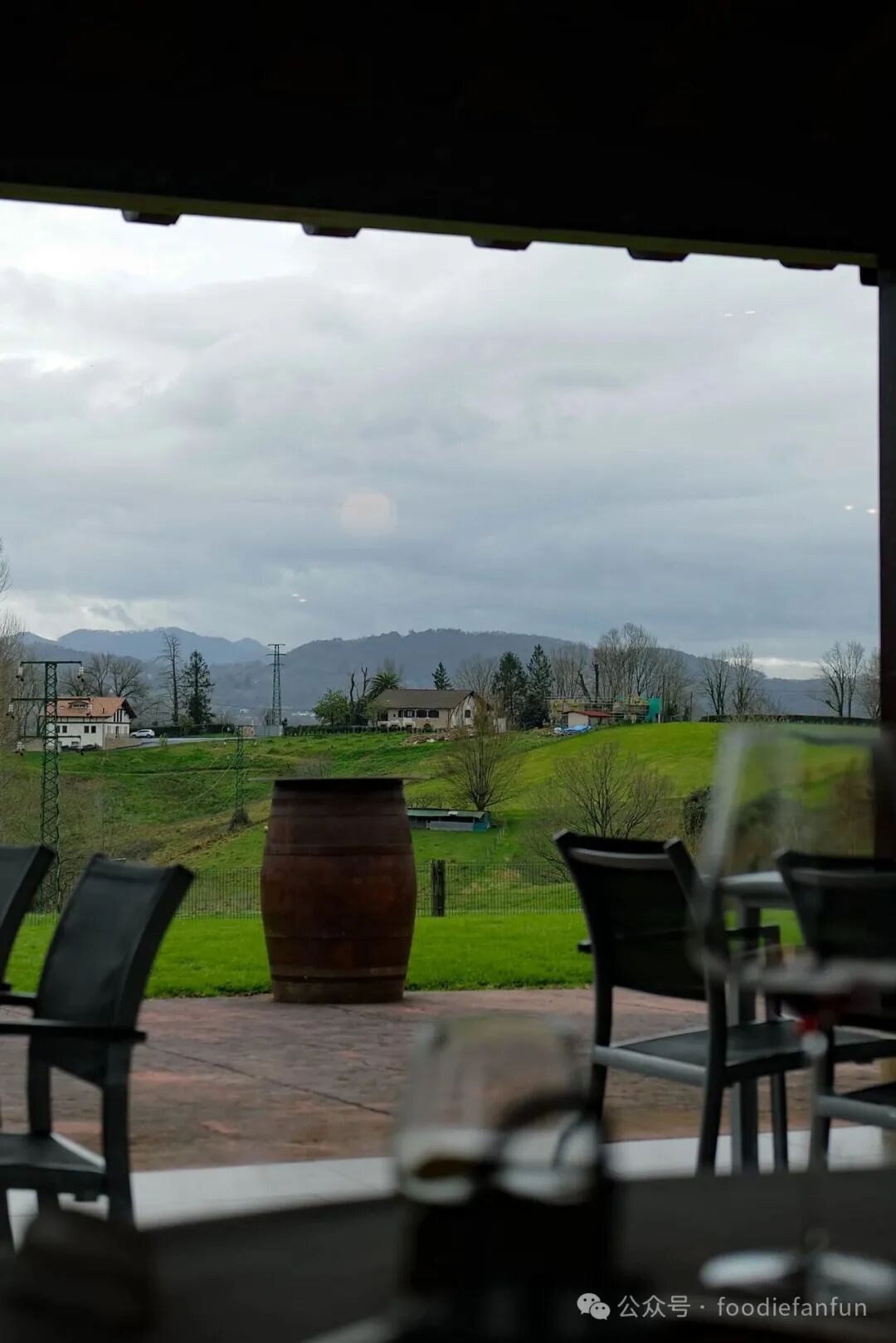
The building used to be a traditional Basque farmhouse. Green lawn rolls out past the windows, like the restaurant simply grew out of the hillside.
It has the kind of natural scenery you can’t fake, but the service, setting, and food are all sharp and precise too.
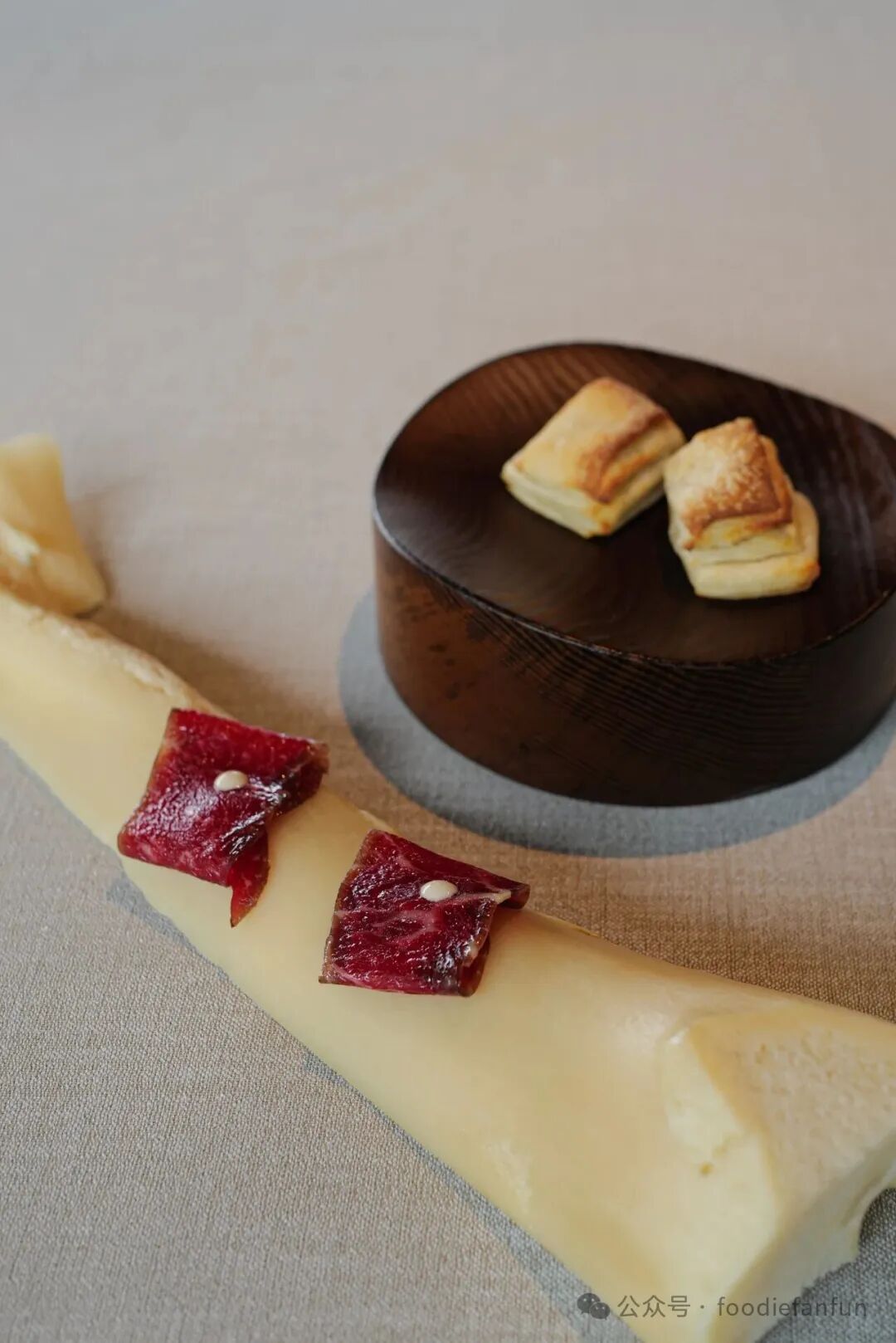
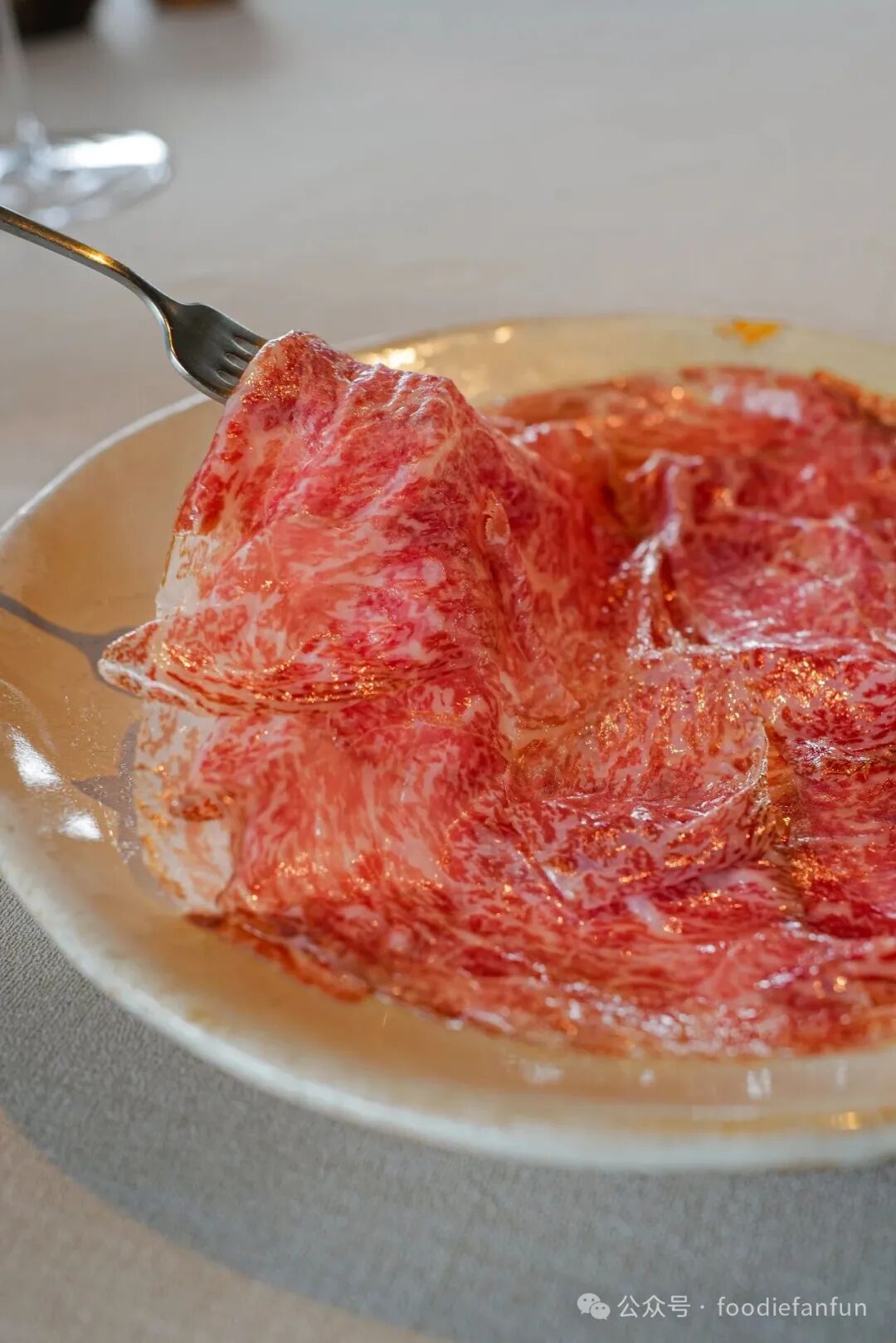
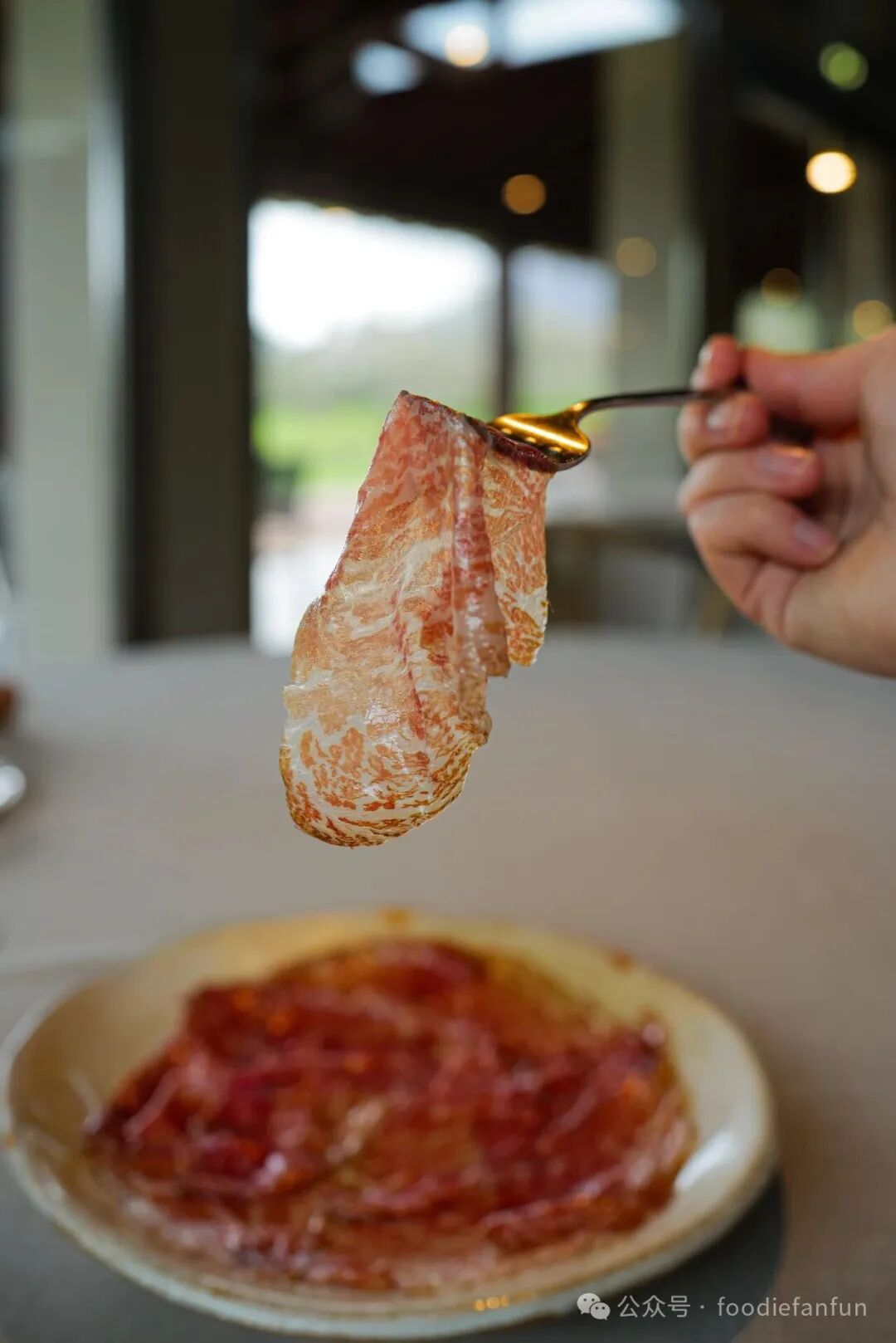
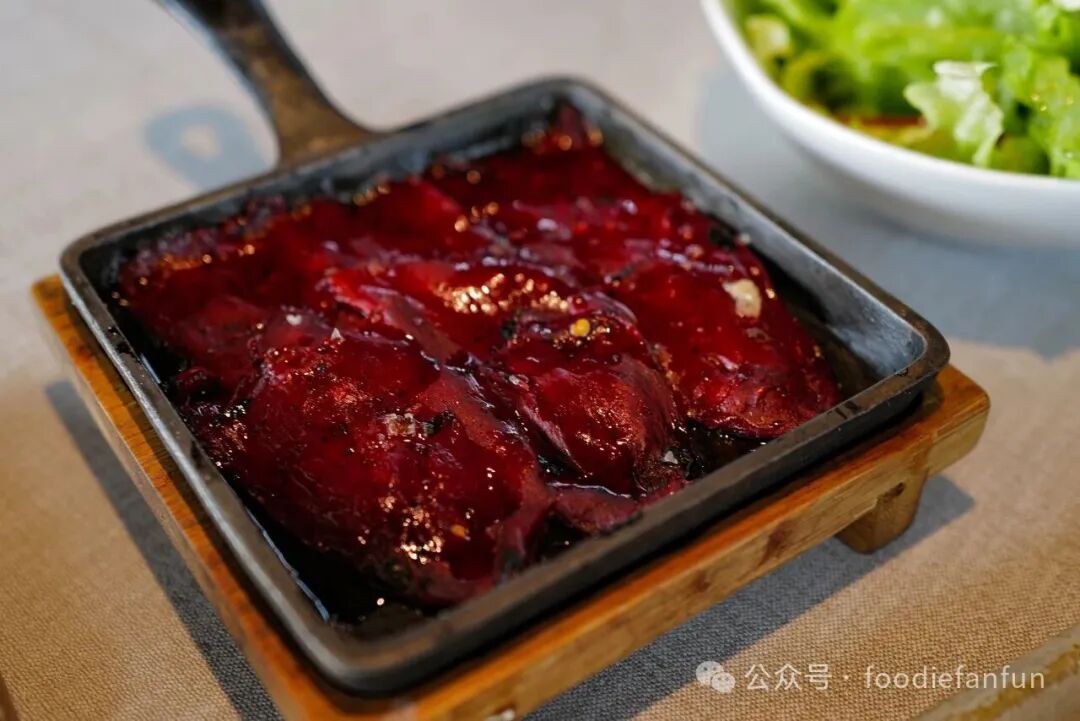
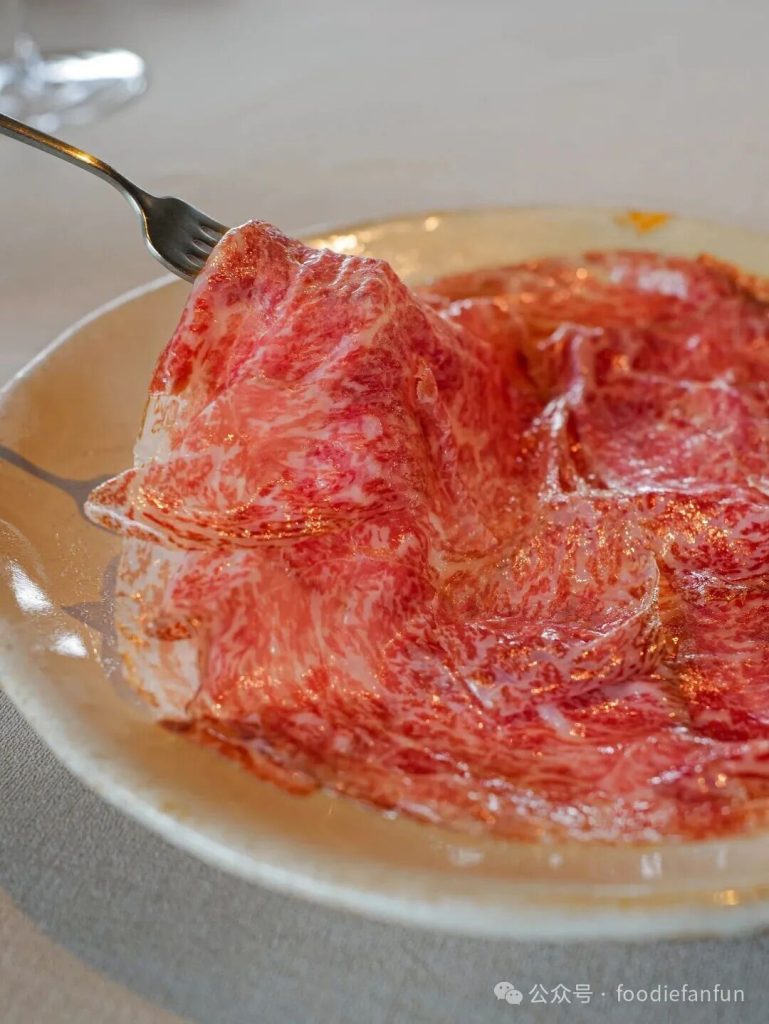
Cecina de bœuf Wagyu
Known for its steak, but the starters already hold their own.
Eating wagyu in Spain sounds like a bit of a tax on the gullible, but Laia’s wagyu ham is genuinely worth trying — Japanese A5 wagyu shipped to Spain and dry-aged in-house.
Sliced paper-thin and nearly translucent, the fat catching the light like gold. It really does have a texture to it — a thin sheet that dissolves on the tongue, layered in flavor but perfectly balanced.
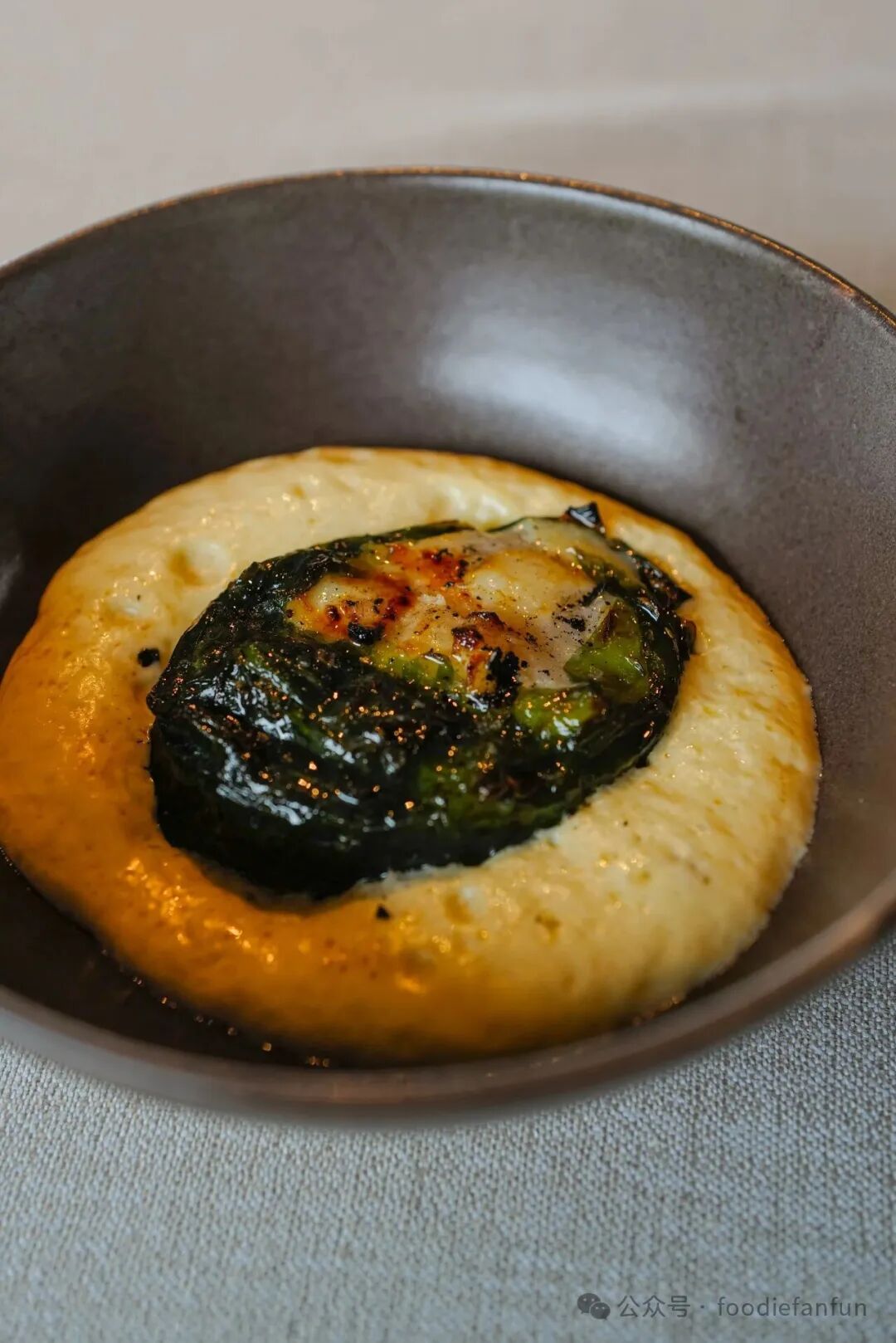
The scallop comes grilled wrapped in seaweed, with an olive oil foam. Setting aside the excellent doneness and tenderness — the scallop’s own sweetness was off the charts, and it didn’t hide its freshness one bit.
I’d heard the seafood here was fresh, but I didn’t expect the ingredients’ natural strengths to be shown off this beautifully.
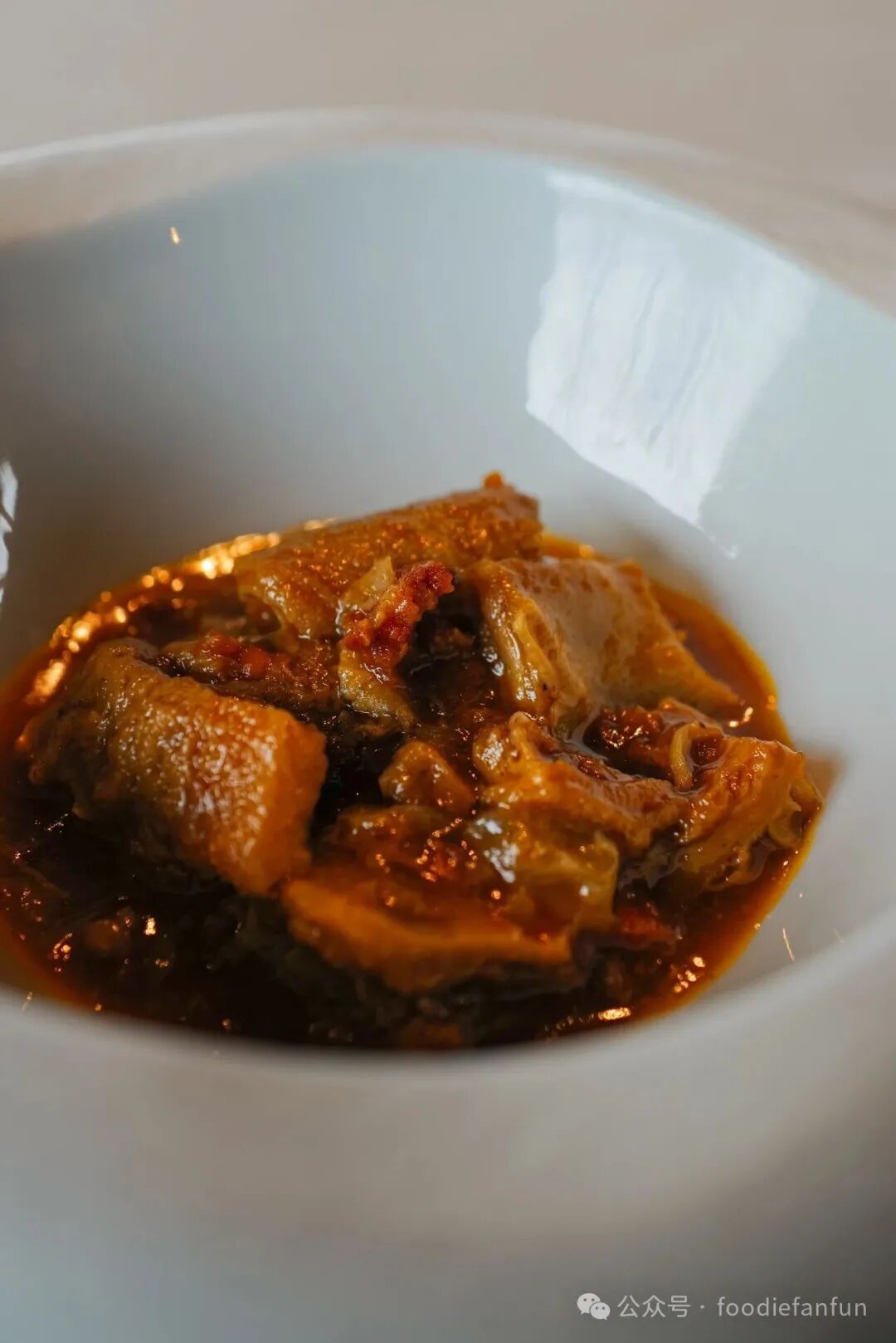
The tripe was also worth trying — you can order a half portion just to satisfy curiosity. Lightly seasoned, all about the freshness and softness of the tripe itself, tender to chew with plenty of flavor underneath.
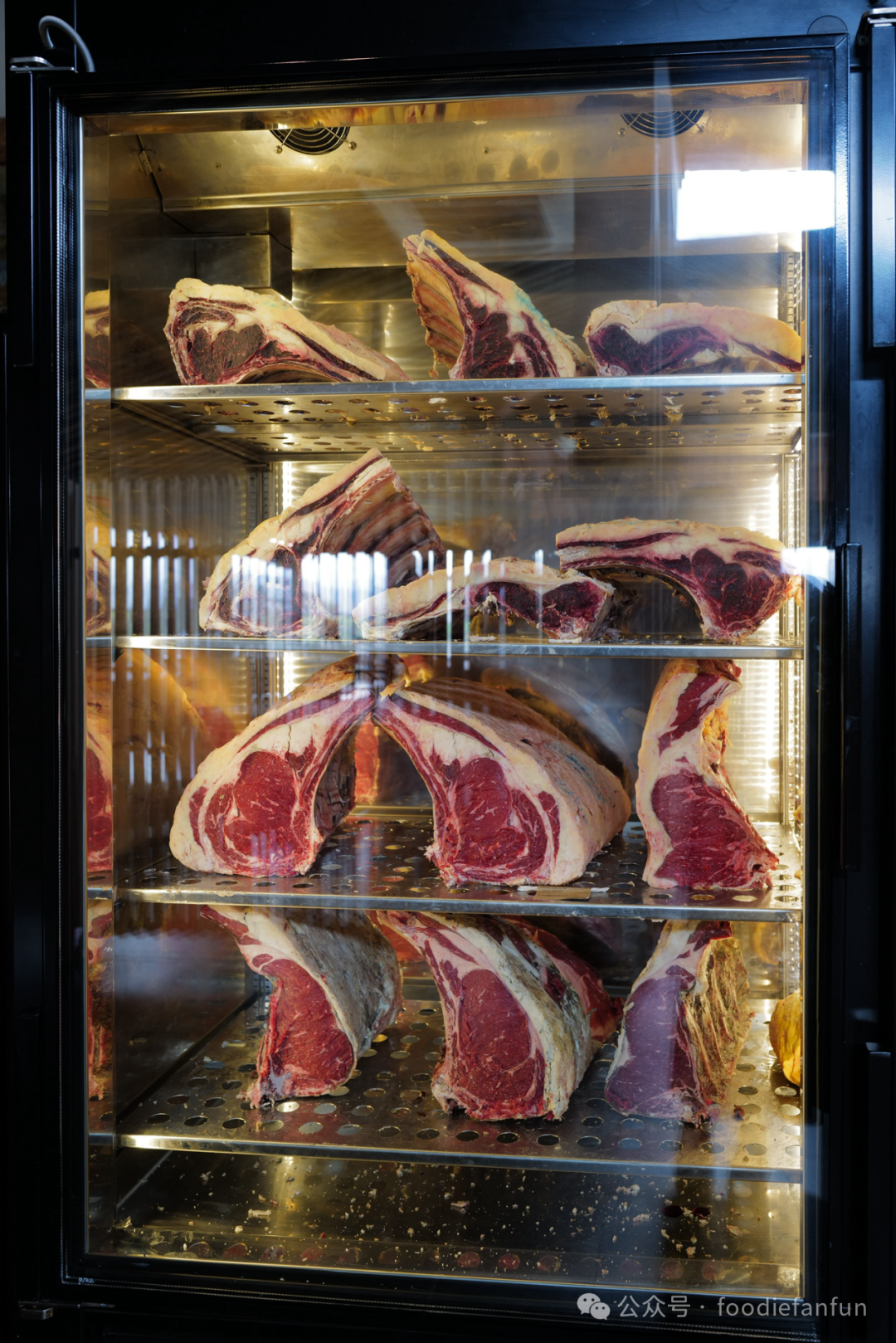
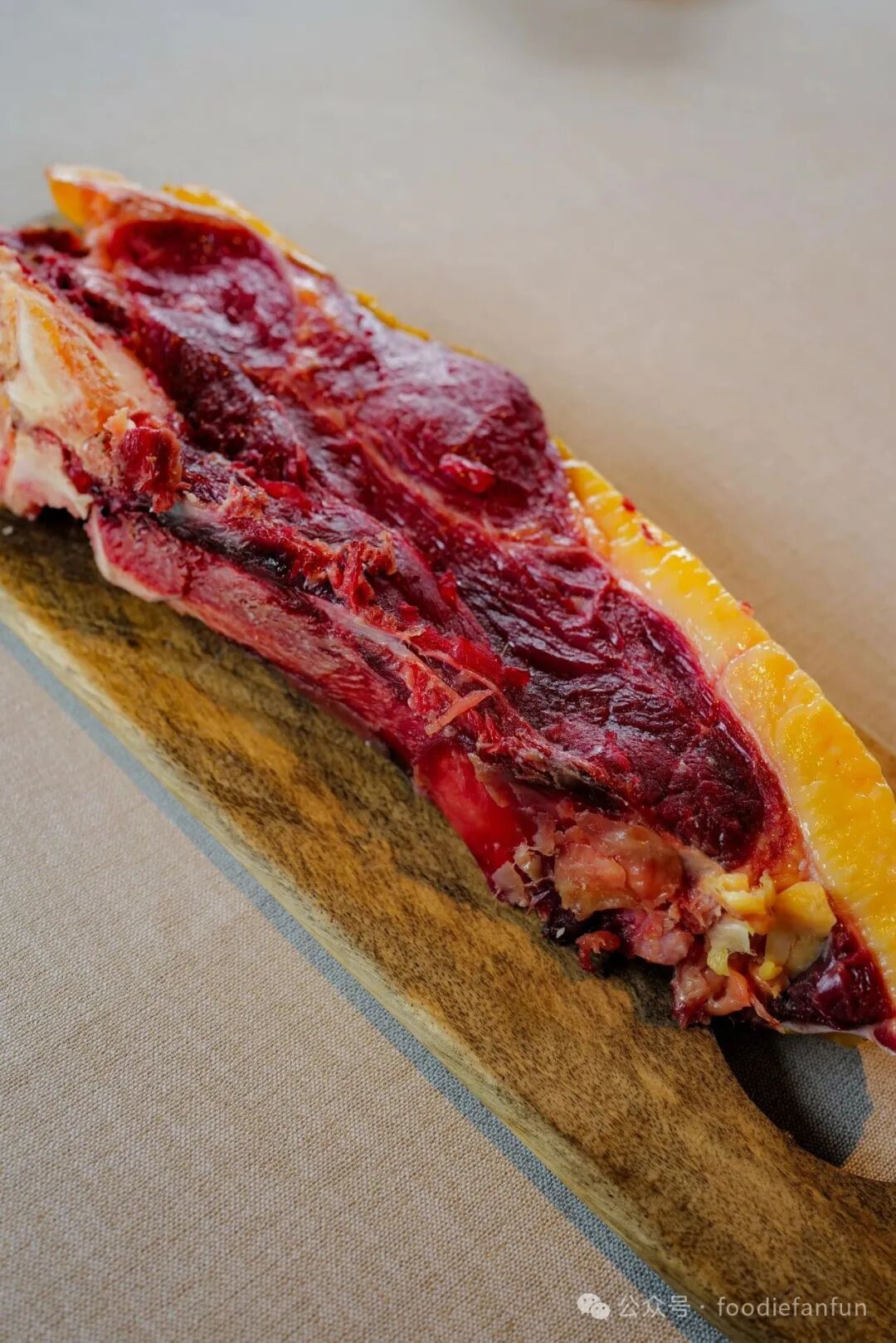
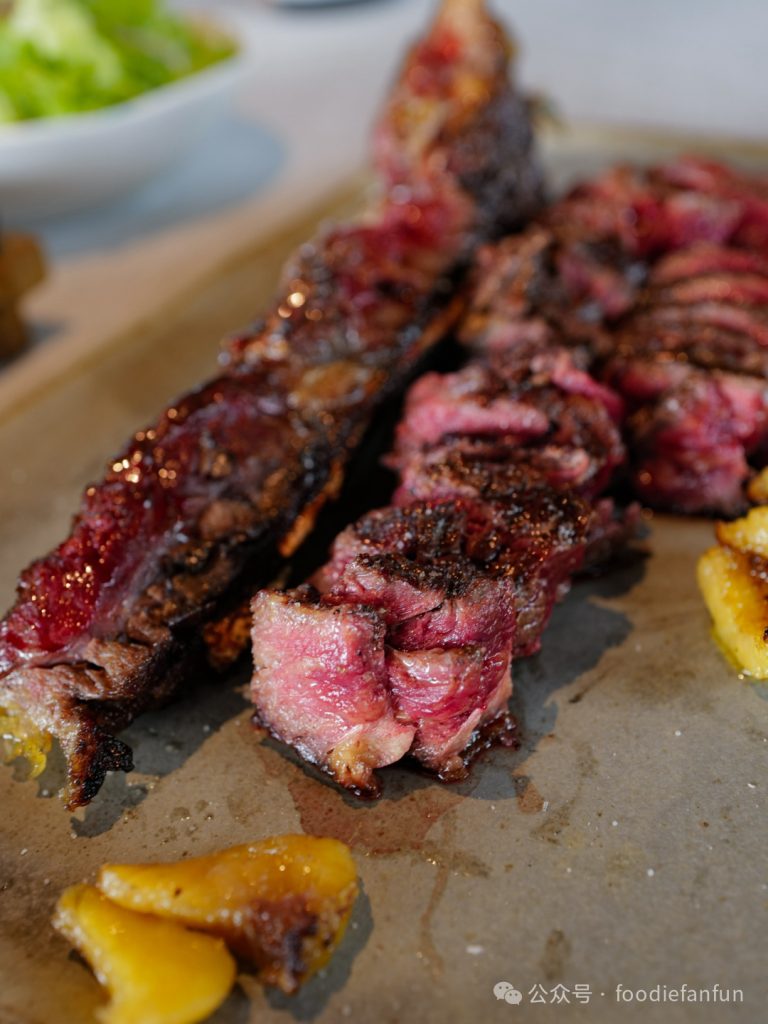
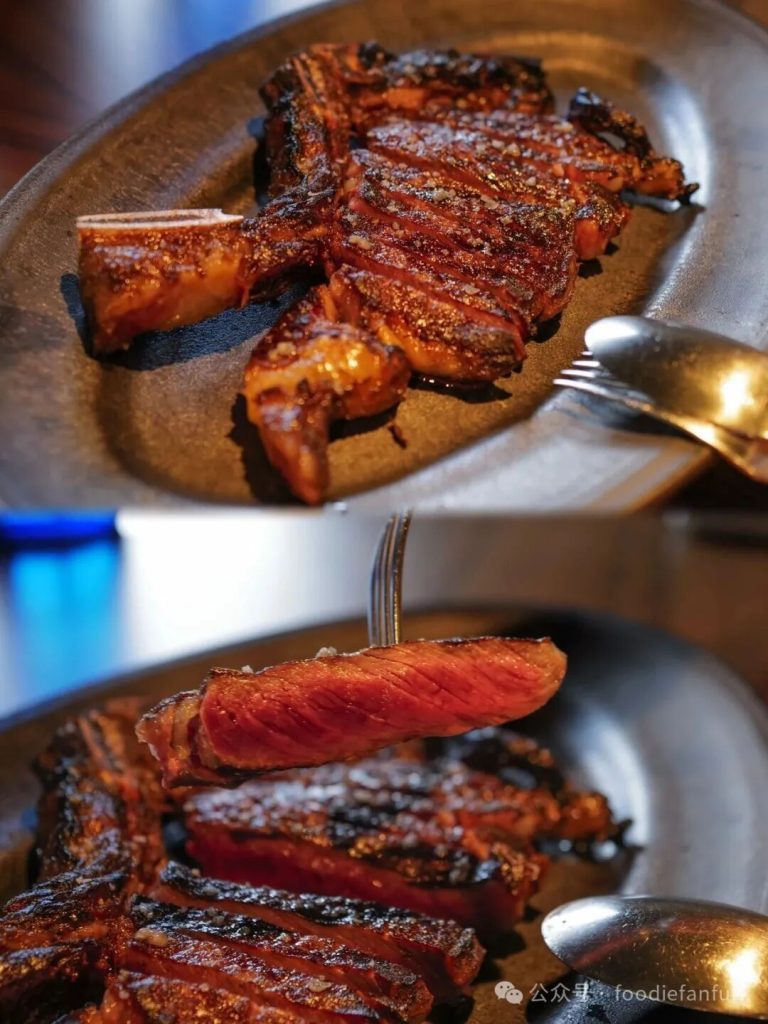
Laia’s steak is defined mainly by the combination of aging and charcoal fire. The default Basque steak is a bone-in ribeye, Txuleta — we ordered the top grade, Côte de bœuf PREMIUM TOP, aged a minimum of 30 days, currently at 45 days.
This giant steak sells by the kilo at just €135/kg — plenty for two people without hesitation. The restaurant thoughtfully picks the smallest cut available, bone-in at around 1kg, enough to satisfy without being excessive.
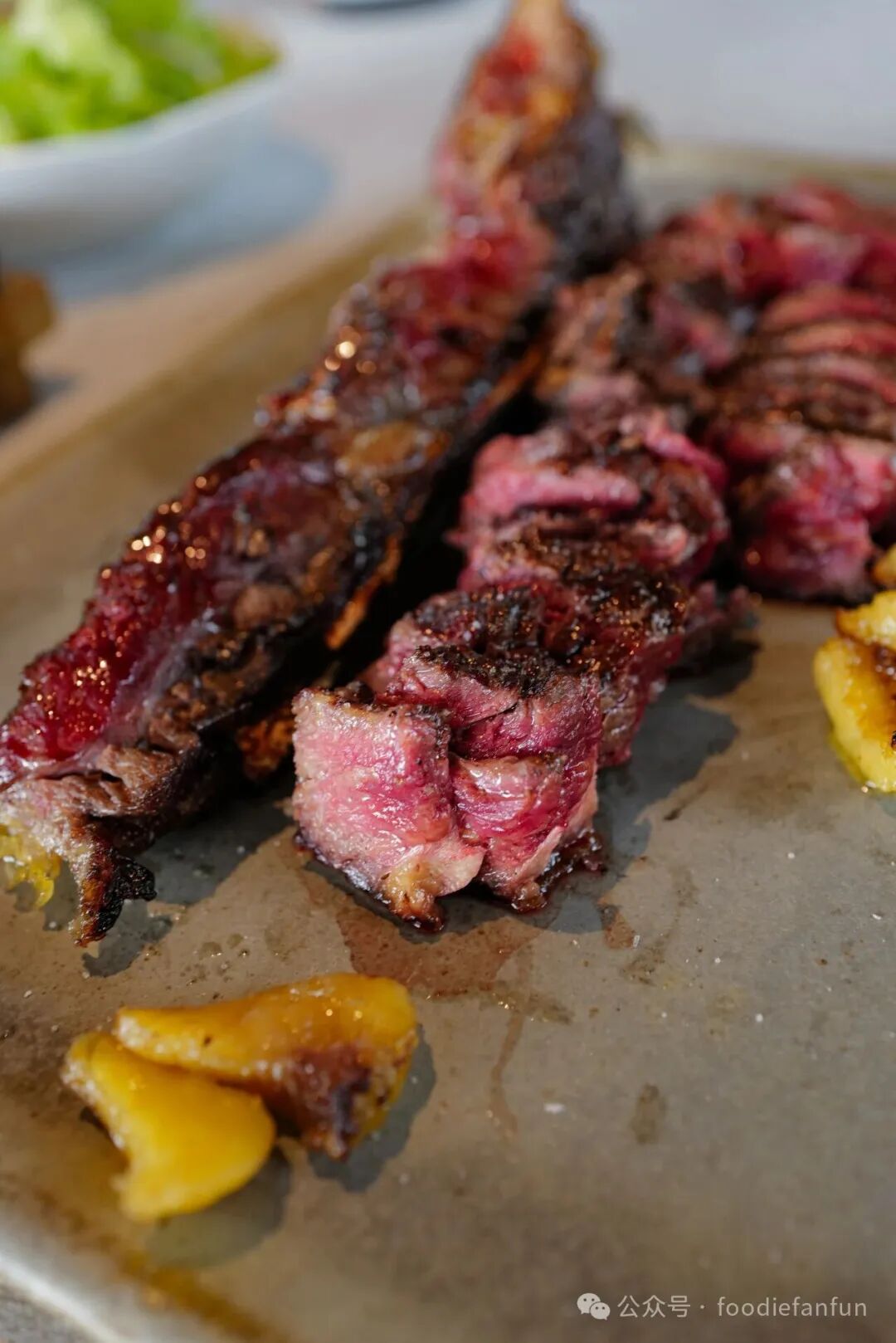
The Maillard crust on the outside was genuinely wonderful — impossible to resist that intensely flavorful, crisp shell, and the smoky char wrapped around it like a cloud. The fat had been rendered out entirely, transformed into pure fat sweetness.
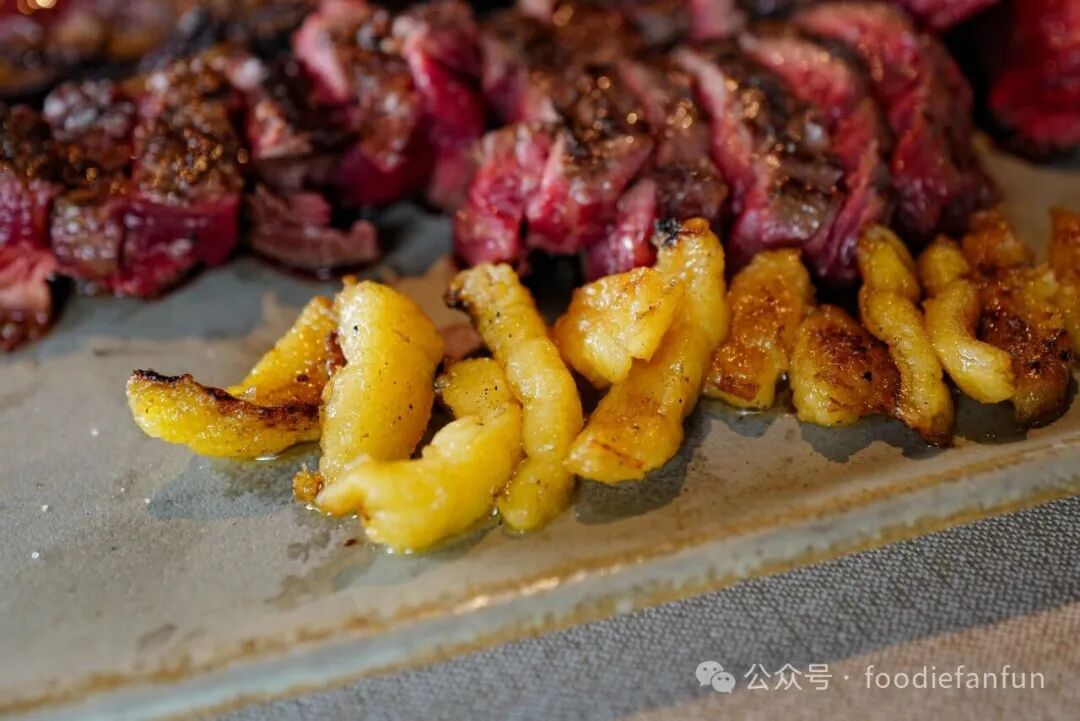
The doneness was restrained — still red when cut, firm to the bite, but the muscle fiber was already fine and tender. It’s not the kind of steak that wins you over on marbling alone; instead it’s dense and refined, holds up well over a long chew, concentrated in flavor, and still expresses itself well as it cools. Though for two people sharing one big cut, it did get a little repetitive by the end.
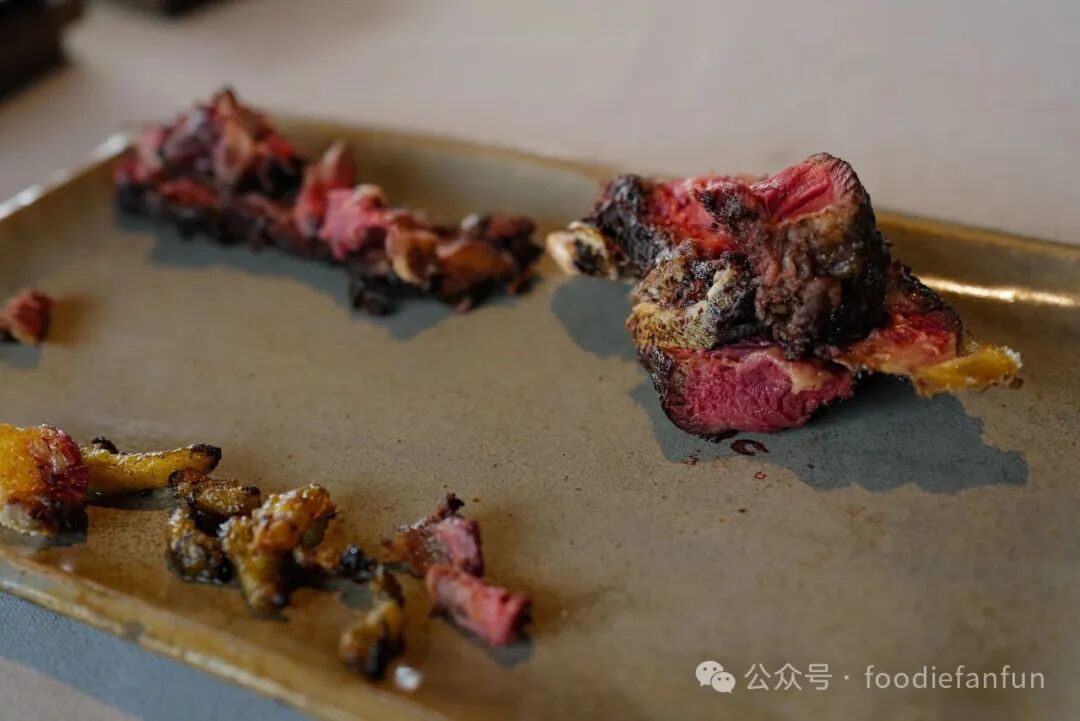
Of course, eating a big cut of red meat is its own satisfaction, and the most tender bone-adjacent meat is a pleasure not to skip — the restaurant will happily reheat and portion it for you, and served rosy-pink it reignites your appetite all over again. The golden fat edge next to it is a little sinful to eat, but that burst of sweetness and milky richness stays with you for a long time.
The side dish was as fresh as expected — this season it was roasted bell peppers, soft out of the oven, unapologetically sweet.
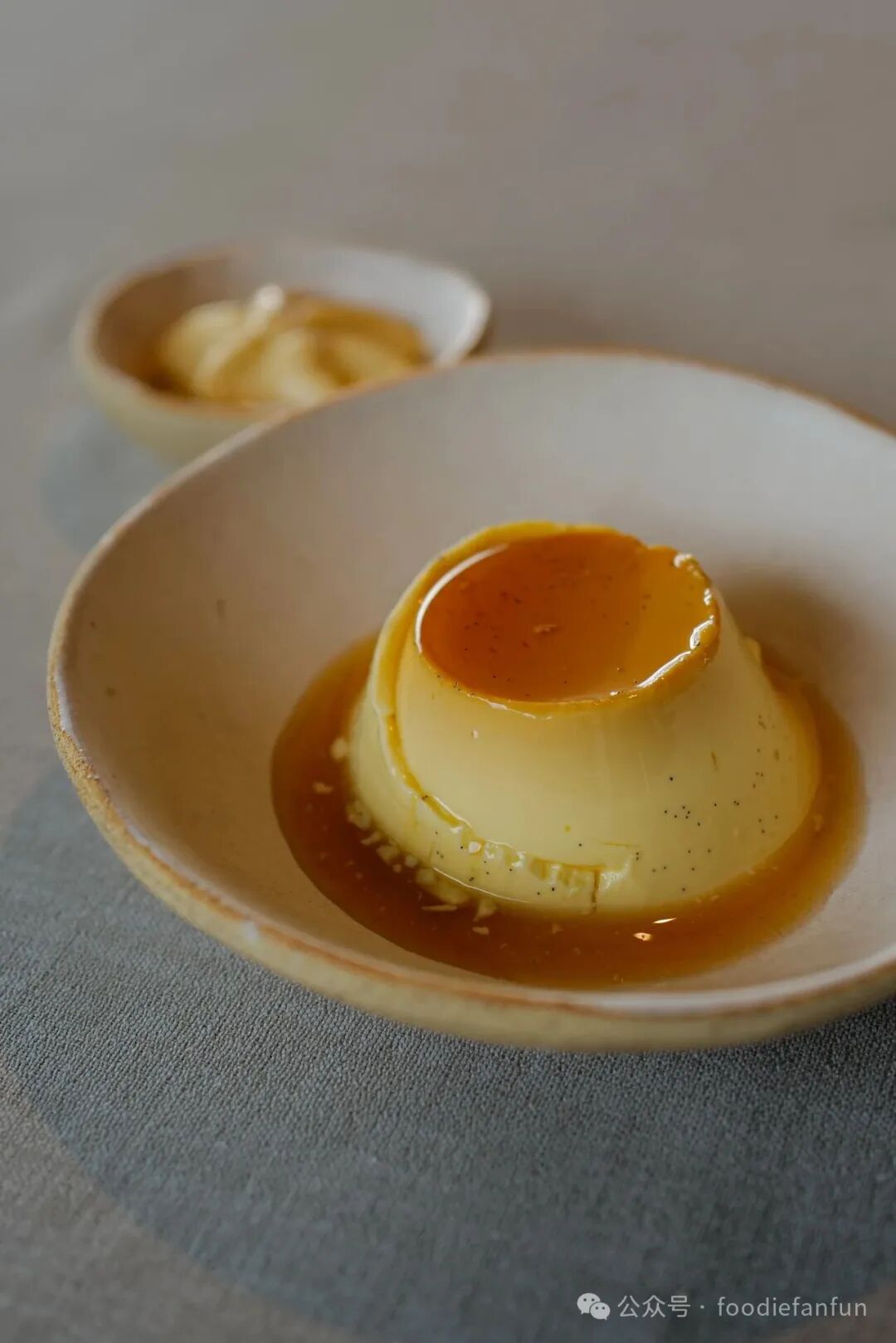
For dessert, we figured we’d already come this far, so we ordered the Flan out of curiosity. It looked a little thrown-together, but it turned out to be pretty much perfect.
Intensely milky, soft and fine enough that you want to eat it spoonful by spoonful — even after being eleven-tenths full from all that red meat, we finished the whole thing without noticing.
The restaurant’s cellar is genuinely excellent — a wide, well-priced selection. You could see nearly every table had a full bottle open, and that laid-back scene of sitting in the sun, eating meat, and drinking wine really maxed out the relaxed factor.
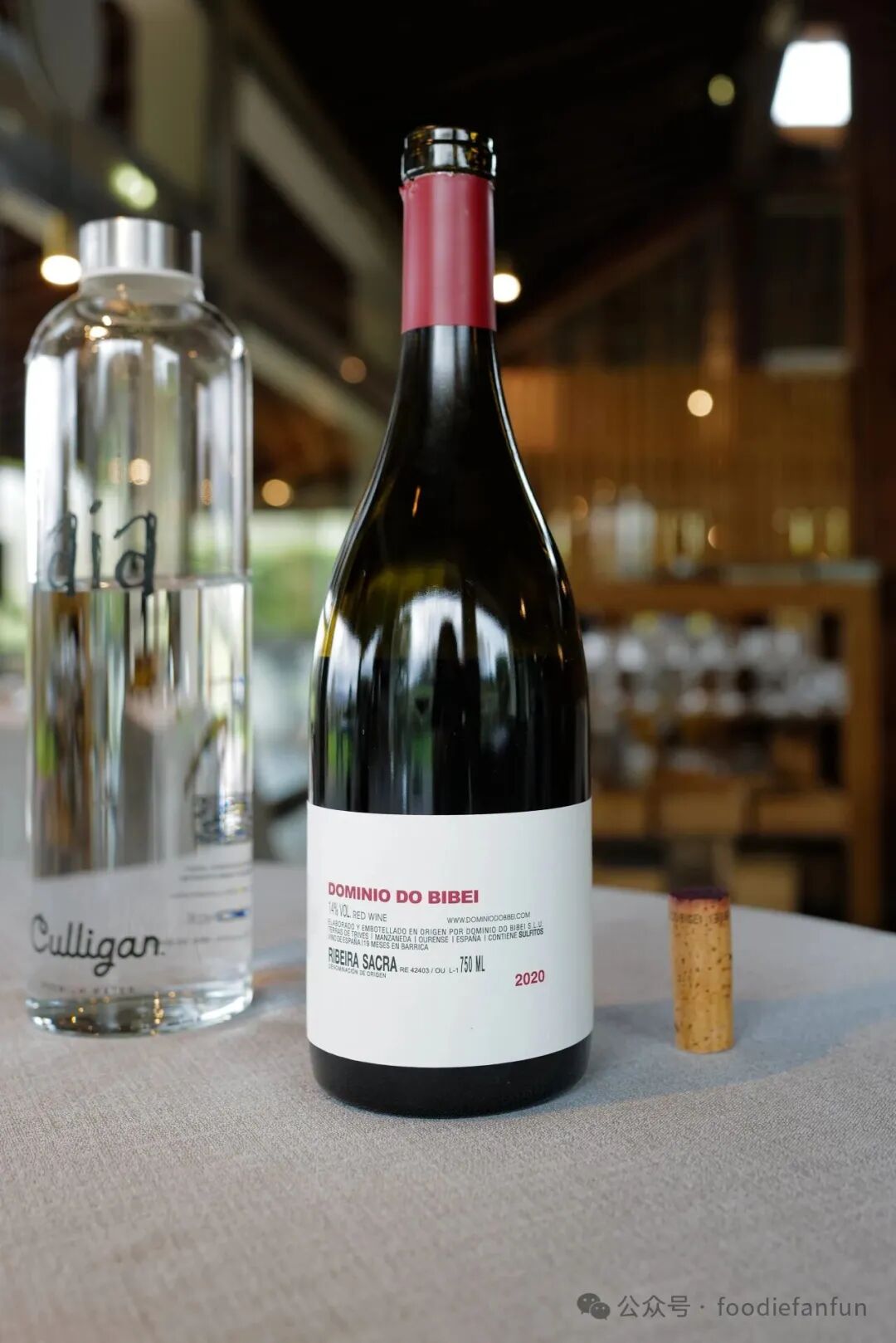
We picked a Dominio do Bibei Ribeira Sacra 2020, from almost the same region as the wagyu — a clean acidity, fine tannins, and a touch of spice that cut right through the sweetness and fat left in the mouth.
Reservations are still fairly easy to get right now — booking three days ahead almost always finds a table. On that front, it’s a lot easier than Elkano.
Looking back, I like it more and more the more I think about it. Next time, hopefully with more people, working through the whole menu.
Laia Erretegia
Arkolla Auzoa Auzoa, 33, 20280 Hondarribia, Gipuzkoa
Restaurants in Spain aren’t quite as hard to book as in Japan, but most of the itinerary still needs to be locked in two months ahead. Txispa, though, got planted in our heads in a genuinely romantic way — just two days before departure, by a lovely couple we’d only just met, who’d recently come back from Spain.
By then online bookings were already closed, so we sent the restaurant a message just to see. Getting a table here felt more like a mix of nerve and luck.
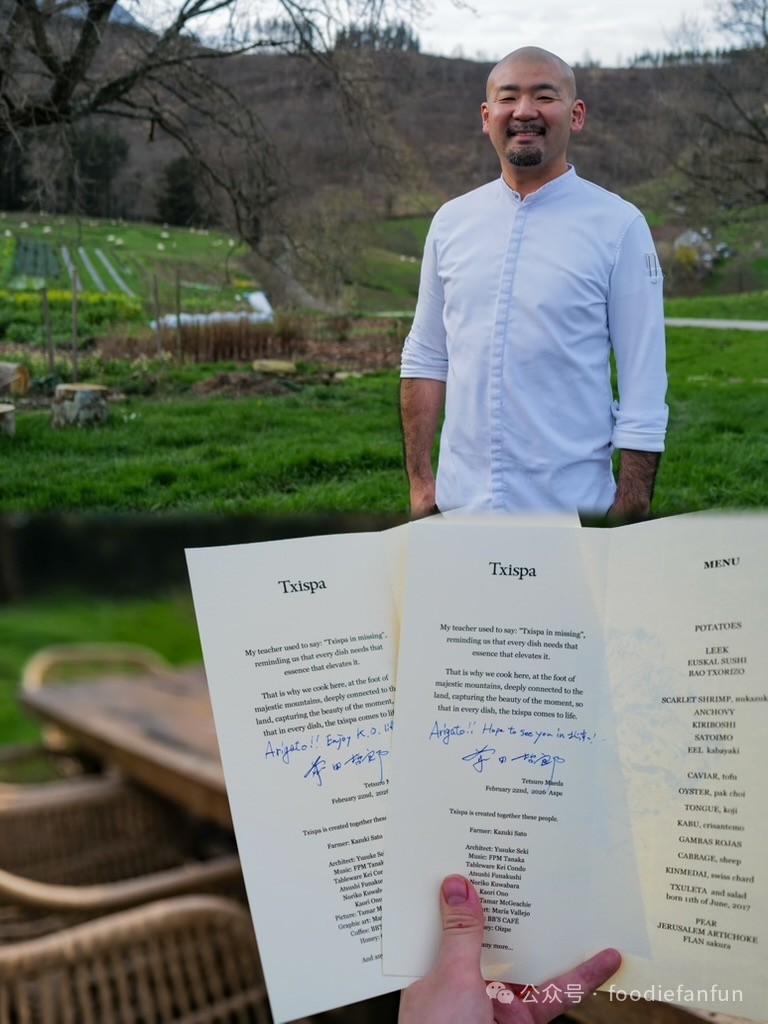
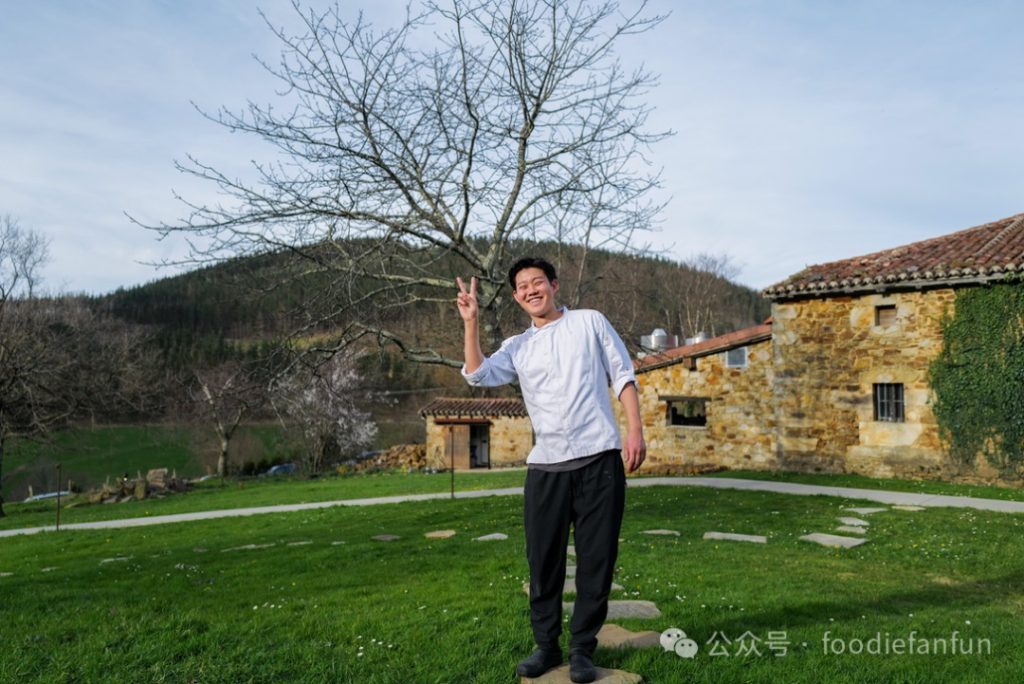
Txispa’s chef, Maeda Tetsuro, is a Tokyo native raised in Kanazawa. He spent 10 years as sous chef at what is now the world’s No. 2 restaurant, Asador Etxebarri.
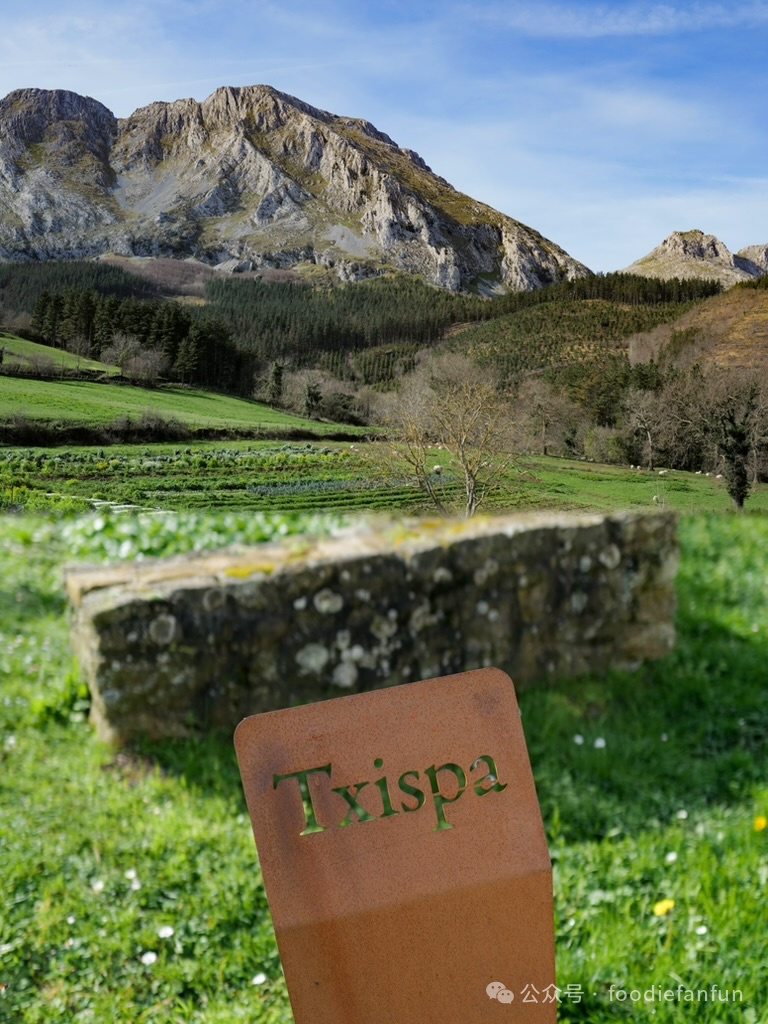
He went independent in 2023, opening his own place on a hillside just a few hundred meters from his mentor’s restaurant, and earned a Michelin star within just six months. Now ranked No. 85 on the World’s 50 Best Restaurants list — a rising star drawing serious attention in the Basque Country in recent years.
Finishing the meal left us excited and genuinely moved.
From the cooking itself, you can clearly feel three forces layered together: a Japanese upbringing and palate structure; technique and cooking control honed through years in professional kitchens; and an understanding and respect for the rustic ingredients of these Basque mountains.
These three threads converge into a cooking style that’s genuinely unique and instantly recognizable.
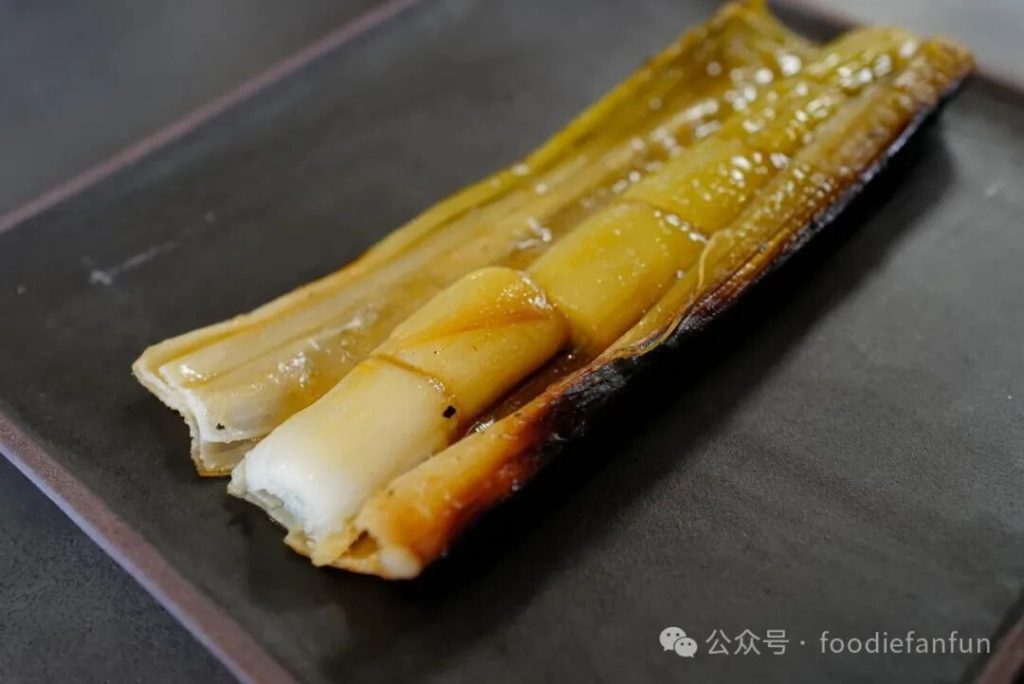
Leek
The hospitality side of things kept moving us too. The joy in the chef’s voice as he talked through his own ideas about cooking was a kind of sharing that came straight from the heart. The rigor in every dish held the anticipation of the meal firmly in place, while also showing his own plain, unvarnished way of living out in the countryside.
Qualities that are usually hard to hold together at once — warmth, restraint, rustic simplicity — were all packed into the same space by him in a way that looked almost effortless. So beyond just being delicious, the whole meal carried an extra layer of memorable, lived-in humanity: a distinctive personal character, vivid, capable, and warm all at once.
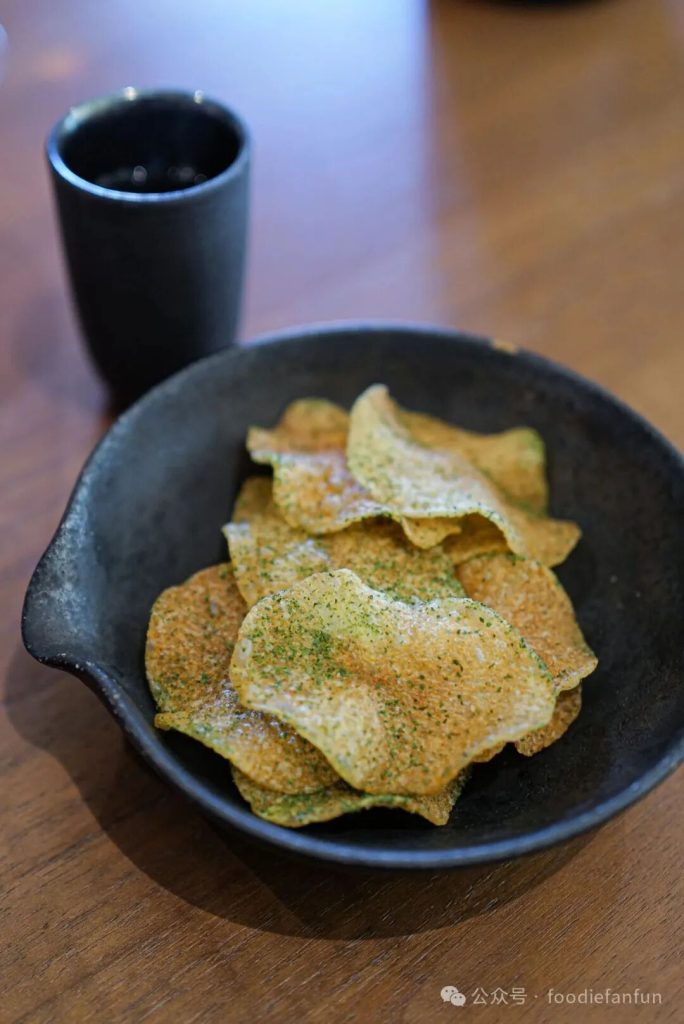
The meal opened with easygoing chips and a warm roasted potato soup — as relaxed as coming home. Everyone tidied up a bit before being led into the kitchen.
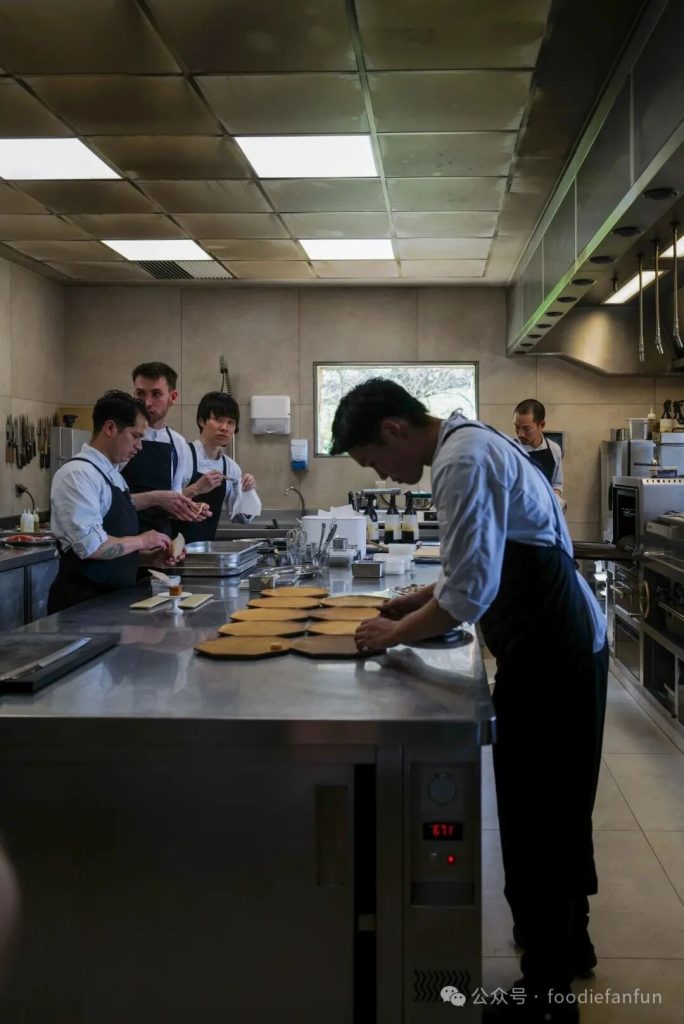
Guests gathered around two counters, and Maeda came over and naturally blended into the crowd, asking everyone where they were from and sharing his cooking and kitchen with us.
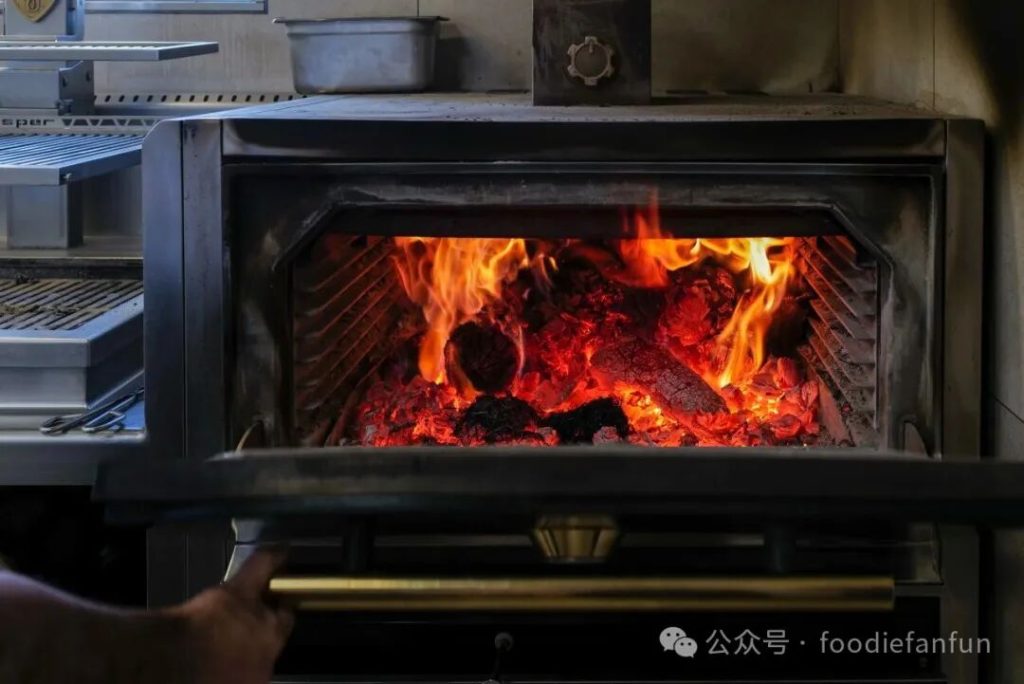
“This is actually a very simple kitchen — we’ve just got a high-heat grill, a rig that lets you adjust the distance from the flame, a meat slicer since all our meat comes from farms, and an ice cream machine — that one was a bit pricey.”
“I always think about what I’d do if I were someone arriving in the Basque Country four hundred years ago. All our seasonings are homemade — like the yuzu shoyu just now on the leek. But there’s no soybean in the Basque Country, so I have to ferment different proteins depending on the season to make our own soy sauce.”
Surprisingly, none of it came across as showing off — whether talking about the equipment or his own condiments, it all sounded like a farmer describing his hoe and his vegetables.
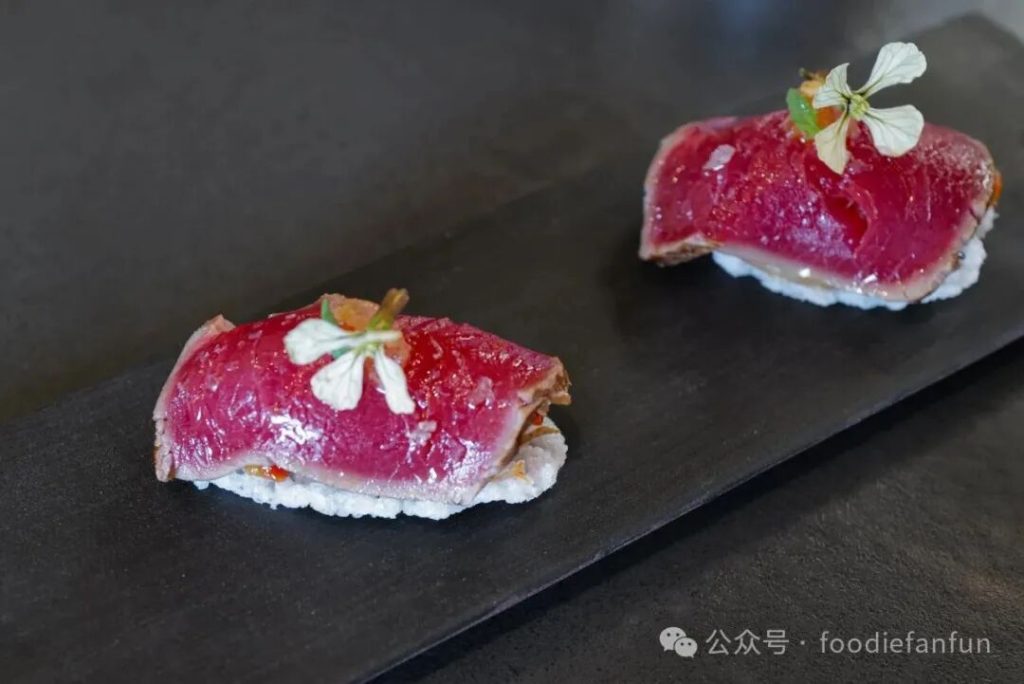
Euskal sushi
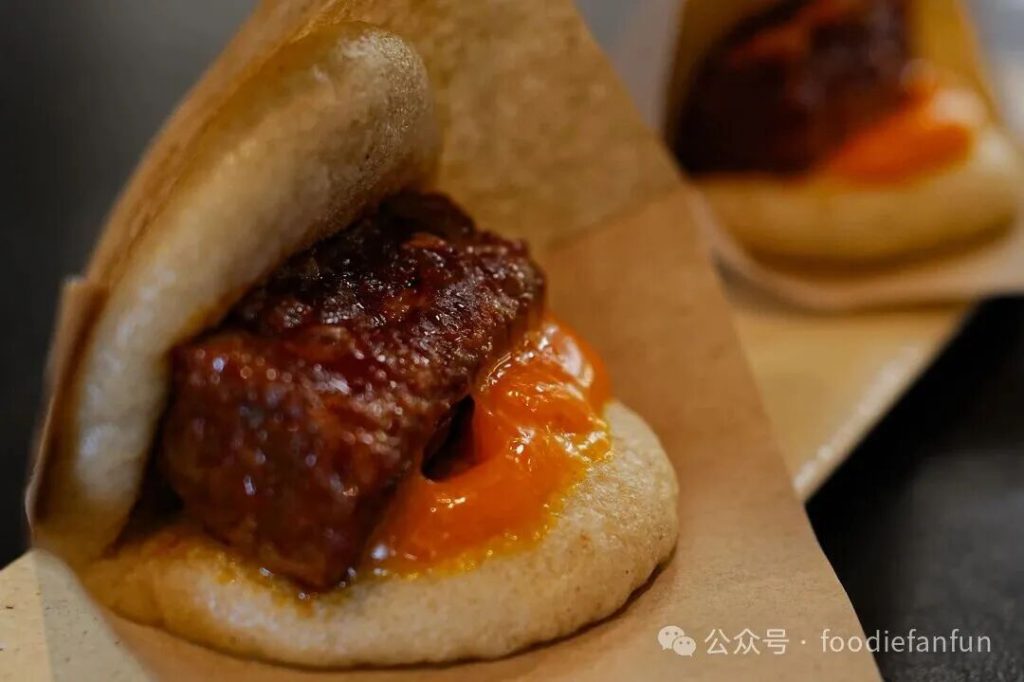
Bao txorizo
The kitchen’s dishes carried some clever little touches too. There was a “Basque-style” sushi, a rice cracker paired with tuna tataki, plus bell pepper and a bit of acidity — a genuine pintxo shaped exactly like sushi.
The txorizo bao showed off even more of a cross-cultural blend — a hot spring egg, a soft steamed bao, and their own house-made Basque pork chorizo bringing softness and spicy richness, direct and delicious.
“Pork does get sold in supermarkets in summer too, but winter is really the main slaughtering season, and the meat’s more flavorful then. So I only make this dish for guests in winter.”
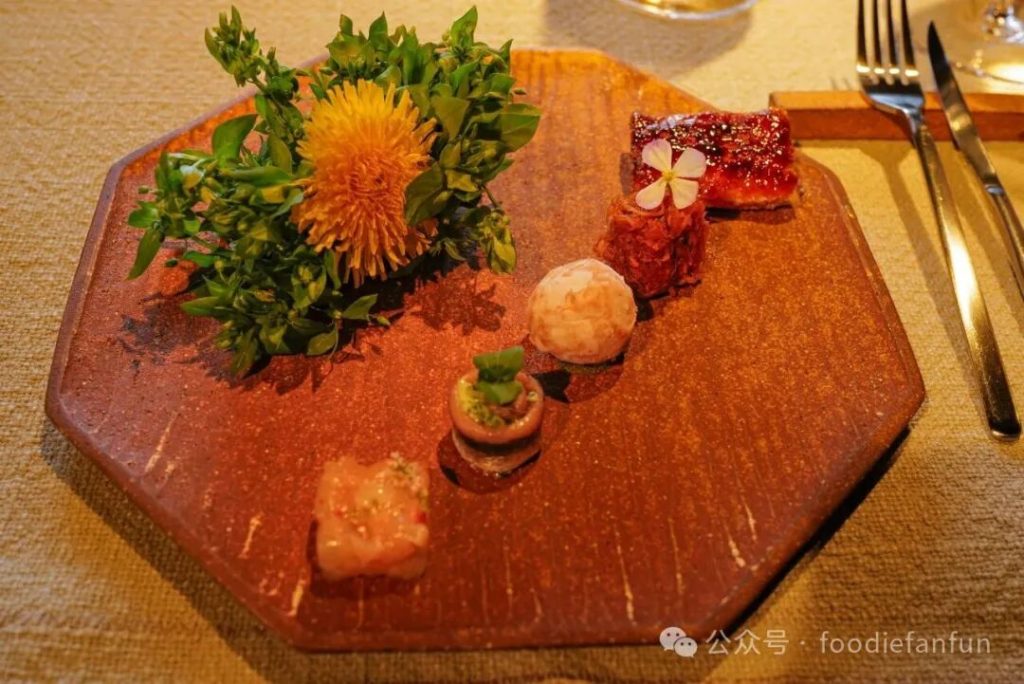
Rice-bran-cured small white shrimp, their own home-cured anchovy, fried taro with yuzu pepper, house-made dried radish, and eel kabayaki.
Fresh ingredients alternated with seafood and plants that had been treated over time. Various self-fermented seasonings supported them from the side, each flavor character clearly distinguishable. One bite and you could immediately identify each seasoning’s personality, yet none of them overpowered the main ingredient — each one-to-one pairing was judged just right.
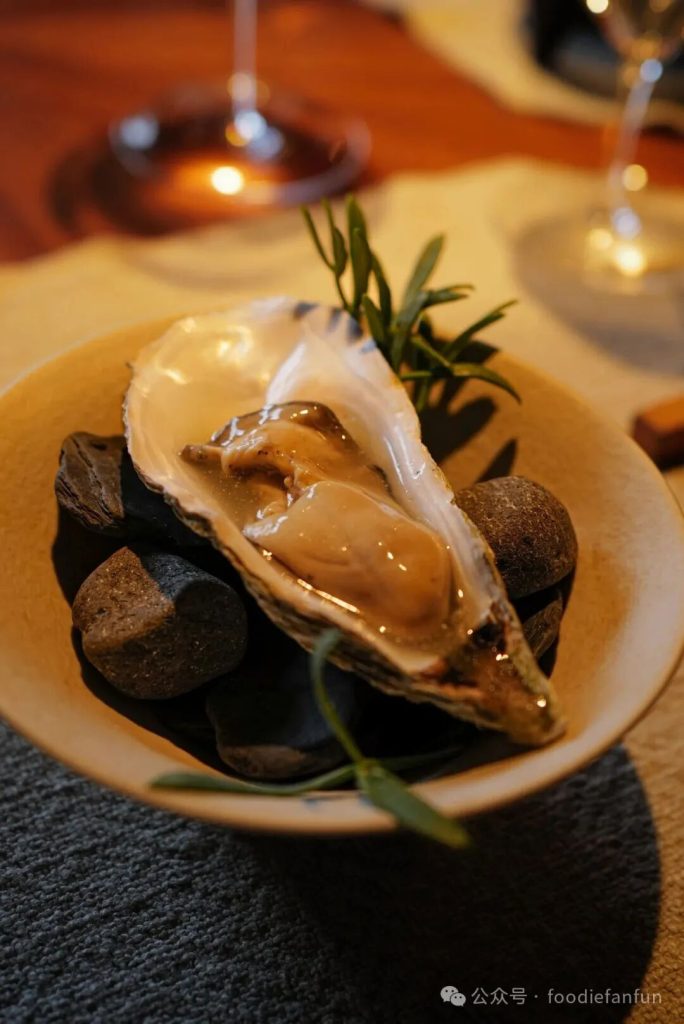
Oyster, Pak choi
Oyster paired with bok choy — a magical combination.
A fresh, plump large oyster, and a broth made from fermented bok choy. Both carried a slight metallic edge, yet paired together they matched surprisingly well. The sea’s coolness and the plant’s fermented aroma caught each other perfectly — both flavors highly distinct, yet neither stole the show from the other. Genuinely interesting.
Tongue, koji
Beef tongue aged five days with rice koji, paired with koji-fermented kanzuri and koji-cured daikon. “We’ve been trying to make our own sake — but honestly, what we’ve brewed so far works better as cooking sake.”
On entry, the texture grabs you first — the aged tongue didn’t go the soft-and-melting route, instead coming across genuinely crisp, with a clear springiness on the bite. Then layers of fatty aroma and umami build on top of that, intertwining in a way that genuinely brings to mind beef tallow melting over hot rice. Dip it in a bit of sauce before the next bite, and the flavor gains an extra layer of soft spiciness and light acidity, pulling the meaty aroma from before into something even more complete — genuinely a case of 1+1 > 2.
I’ve certainly had plenty of beef tongue before, but a preparation that delivers both this kind of texture and lets the flavor unfold layer by layer through the chew, all while still holding onto its own true flavor amid the richness — that genuinely deserves a new memory point.
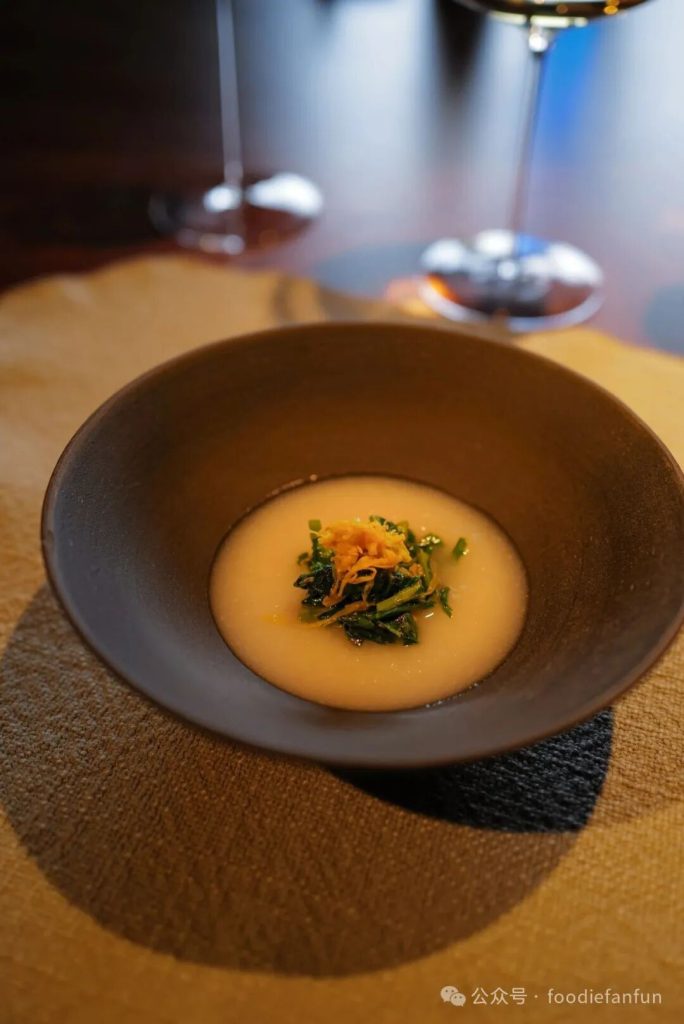
Kabu, Crisantemo
An hour before the meal, the plants were pulled straight from the ground and sent to the restaurant, just 50 meters away.
So the chrysanthemum in the bowl really did hit you head-on with the aroma of field vegetables! The turnip purée underneath had been roasted over fire, its texture soft on entry, carrying a melted charcoal aroma. Delicate and refreshing to eat, a genuinely complete expression.
An upgraded version of a millet-and-greens porridge (bushi).
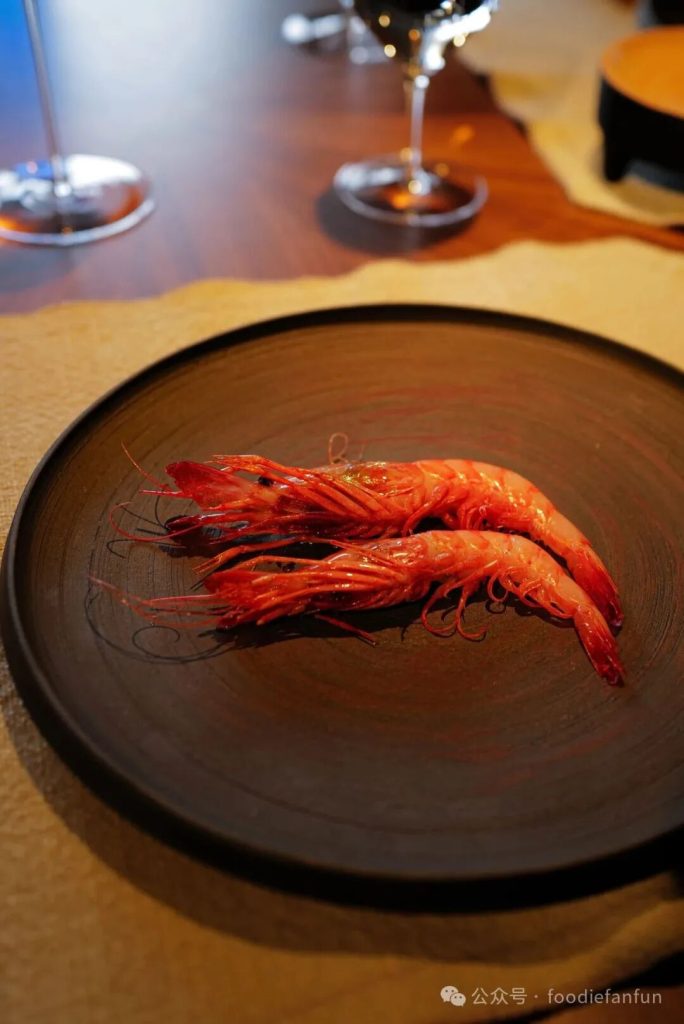
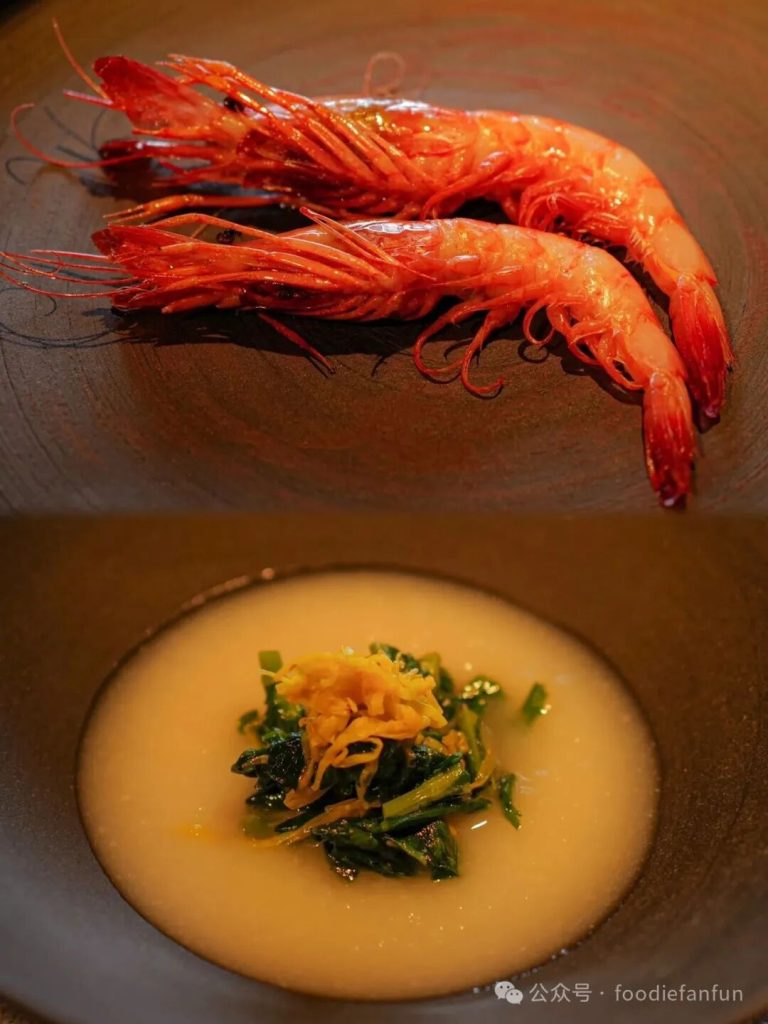
🦐 Gambas Rojas
“We wanted the shrimp head cooked a bit more, so we always grill the shrimp head-down.”
The head about 70% done, the body about 30%. The shrimp “brain” was rich yet clean, drinkable straight as a soup. The shrimp meat, peeled out, still carried a touch of translucence, tasting sweet. The most incredible part was the shrimp “leg” fat — plump enough that you could actually suck it right out.
Genuinely a combination of the best ingredients with the best cooking method, seasoned about as minimally as possible.
Cabbage, sheep
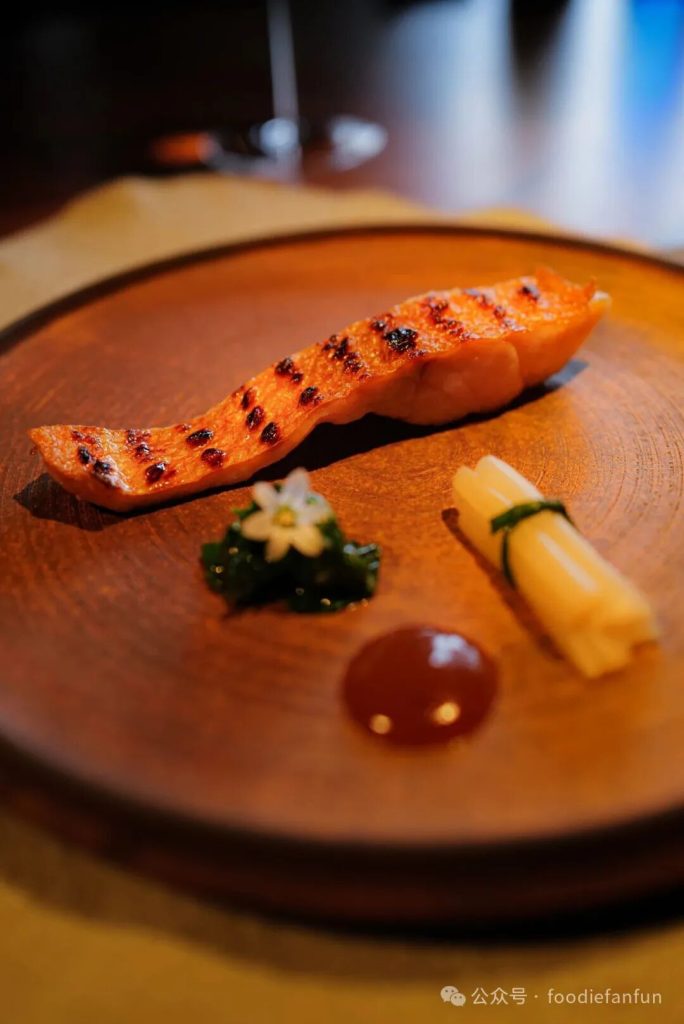
Kinmedai, swiss chard
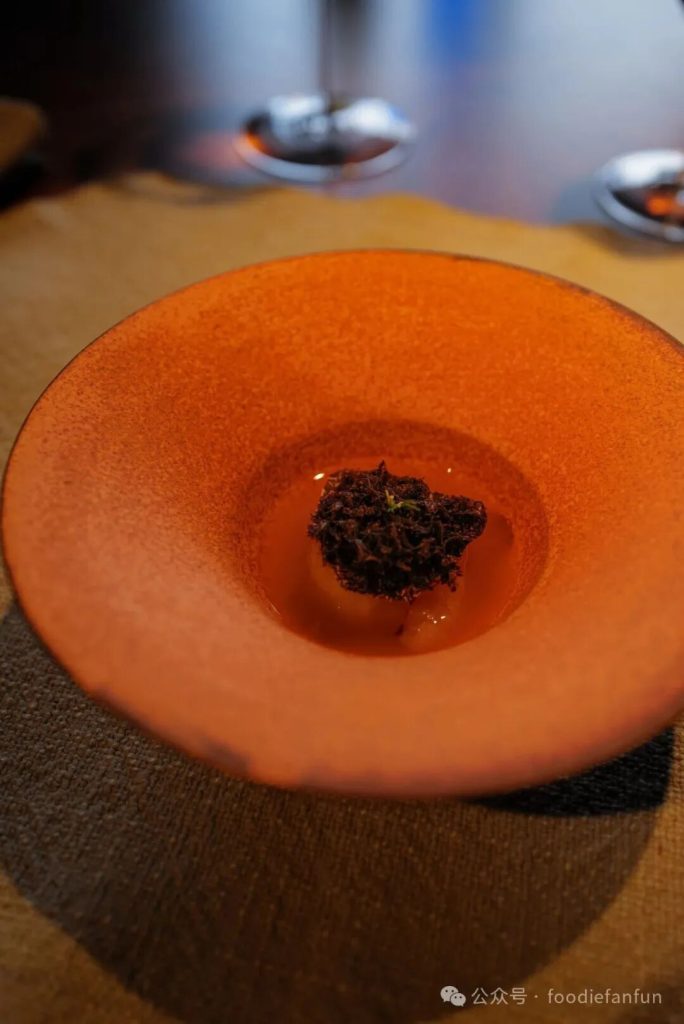
Sheep eat cabbage, so they made a cabbage soup with sheep’s-milk cheese, then added a bit of black truffle to balance the whole flavor out. The cabbage’s sweetness came through richly set against it.
Four-day-aged splendid alfonsino, its skin coming across crisp, the thin layer of belly meat reading delicate and sweet, the back a bit firmer in texture. The shifting textures made for an interesting eat, while the high sweetness from the ingredient itself stayed present the whole way through.
The Japanese-style seasoning genuinely ran through the whole meal, yet never once felt out of place amid this deeply “native”-feeling style of cooking.
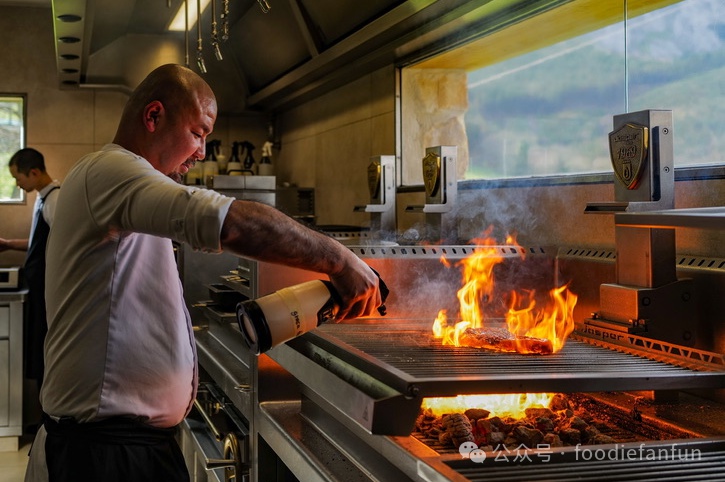
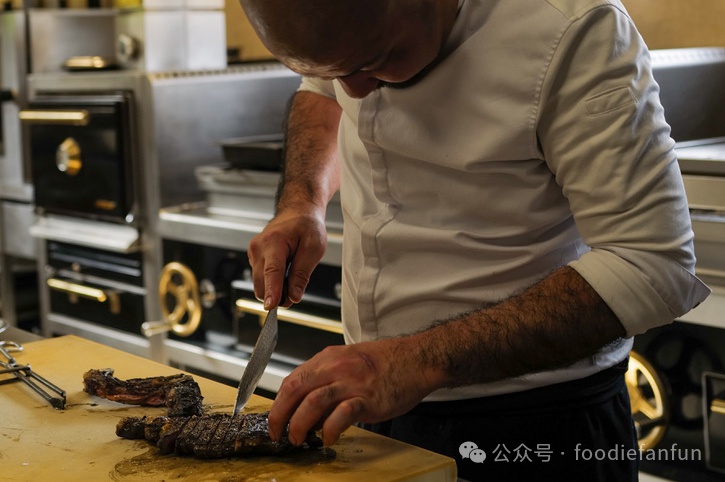
For the actual main course, guests started getting invited to the kitchen table by table. Having already worked through a whole run of his dishes, it was time to watch with our own eyes once more how Maeda handles “fat and flame.”
Those few minutes felt like a real counter-side performance. Standing in front of a custom grill running at a frighteningly high temperature, he grilled and controlled the fire at the same time, his hands moving fast but with nothing wasted. The originally flat, thick chuletón slowly formed a crust and color right there in the fire, eventually turning into one whole, nearly charred-black exterior.
For those few minutes, almost everyone’s eyes naturally landed on him, all together experiencing the process of “cooking” itself.
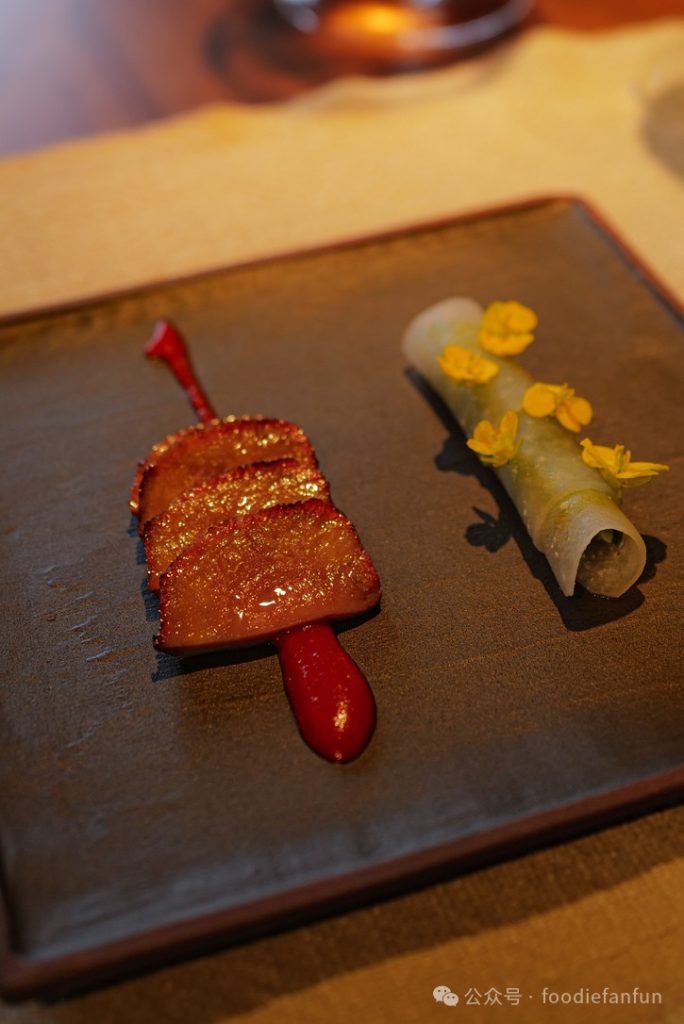
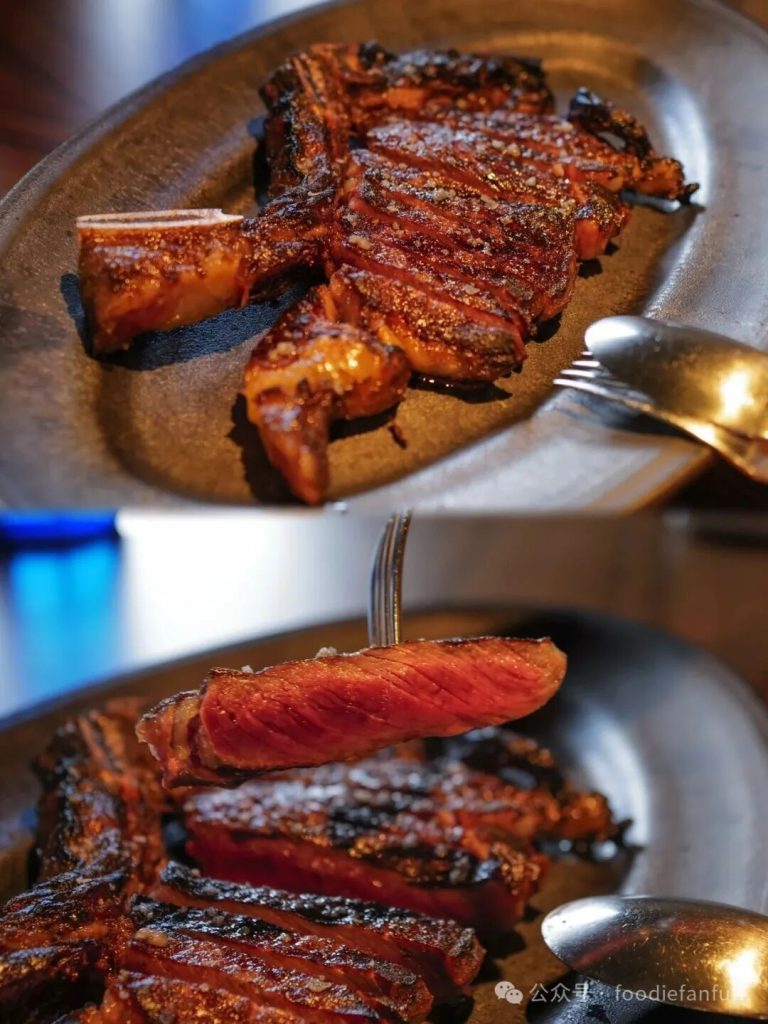
Txuleta, born 11th of June, 2017
The exterior, grilled directly over intense heat, carried a very clear and pleasant charcoal aroma — a crisp, charred shell you could feel the instant you bit in. The texture transitioned almost seamlessly from crisp char to extreme tenderness; the heat was intense, yet the meat itself wasn’t rough in the least — instead it was direct, clean, and genuinely delicious.
The meaty aroma was straightforward, no beating around the bush — the sinew, fat, and meat flavor were all there, yet balanced against each other. But what I loved most was that unapologetic sweetness, a rare kind of natural sweetness coaxed out of the meat by the fire.
It genuinely pushed a very primal expression of steak to its extreme: the power of the charcoal, the meat’s own aroma, sweetness, and tenderness, all magnified.
The heat was applied boldly, yet the whole thing stayed steady throughout — genuinely deeply satisfying.
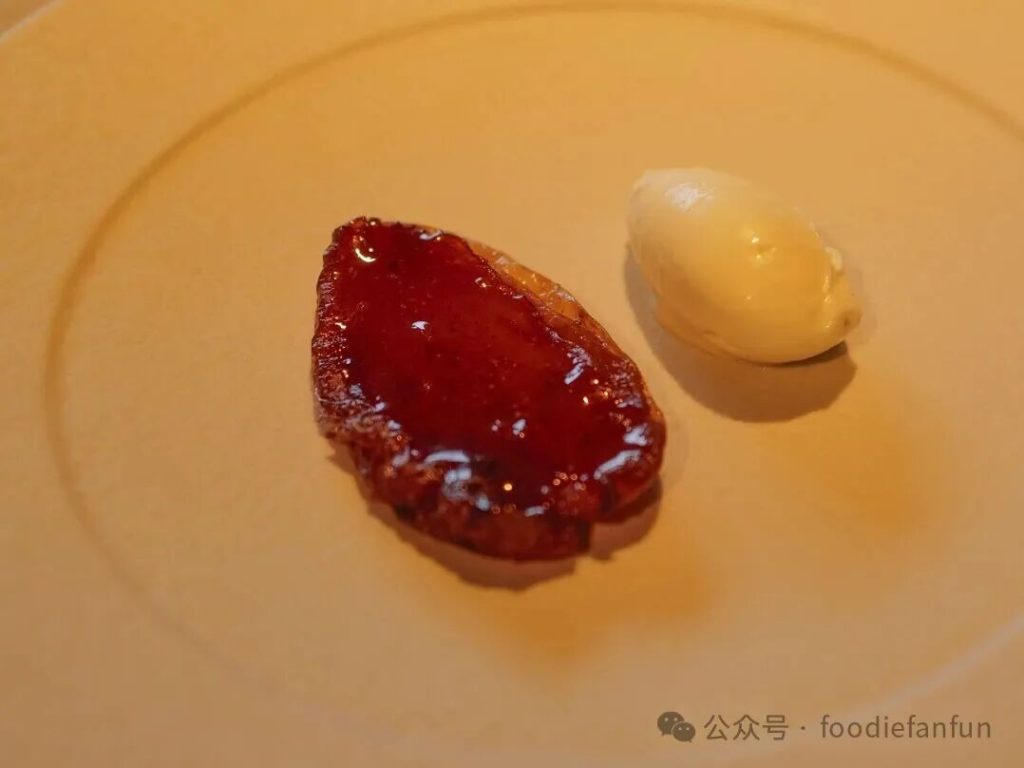
Pear
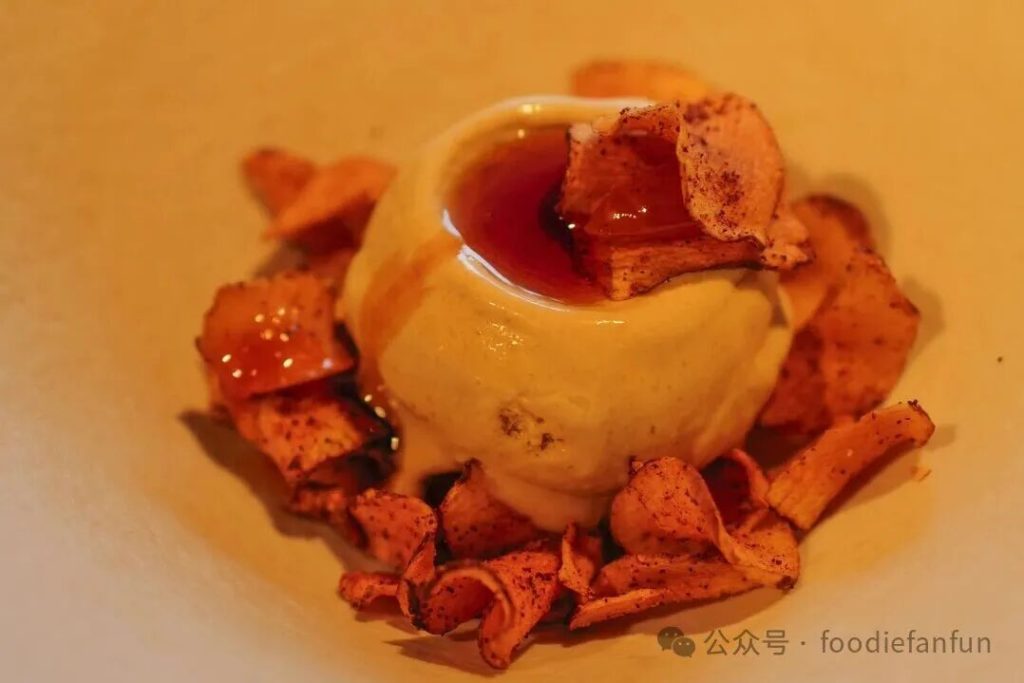
Jerusalem artichoke
Flan sakura
The dessert course held its own too — dried pear with cream, dried apple with Jerusalem artichoke ice cream. Whether in the delicate softness of texture or the flavors different plants condensed into at different states, he applied it all beautifully.
“Never thought that a hundred years ago, someone actually planted two cherry blossom trees right here.”
The whole meal closed with a cherry-blossom flan that looked like chawanmushi — silky, soft, quiet almost to the point of having no edge at all, yet it caught you firmly all the same.
Ending a meal with blossoms from a tree in this valley carried a very natural kind of gratitude.
The gardener who came to say hi
Right at the very end, while waiting to settle the bill and for the taxi, we were led out to a little outdoor garden to sit in the sun.
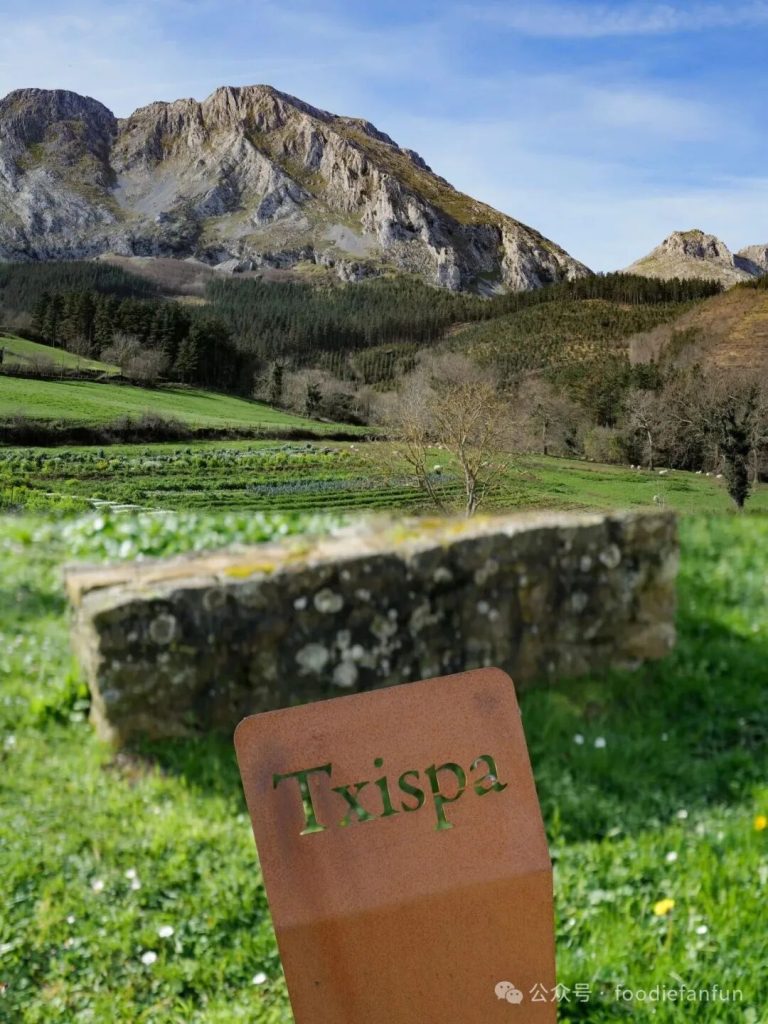
Maeda, done with his work, came out too, and casually shared his own vegetable garden with us. Part of it held vegetables common to the Basque Country, another part leaned more Japanese in character. What made this scene beautiful was, of course, the sunlight, the air, the countryside ease of it all — but more importantly, it pulled the aromas and sense of season running through the whole meal back to a very specific “origin” — turns out they really did grow right here.
And on the menu finally handed to us, there was even the birth date of the very cow we’d just eaten. It was precisely this small detail that made it clear — that this animal, and every ingredient that appeared in this meal, though they all ultimately became “food,” had each been treated with real seriousness, handled with genuine respect.
Possibly the most “rural” meal of this whole Basque trip, and also the one that hit my own taste most directly. There’s something genuinely moving about Maeda’s plain, earnest presence. It’s not just that the food is good — his own personal expressiveness is strong too, and it’s tied directly to the food’s own expression.
Respecting the ingredients, restrained in seasoning, while still having enough sensory display and expressive will — from that angle, is this not, in its own way, a cross-cultural kaiseki?
Txispa
San Juan Auzoa, 45, 48291 Apatamonasterio, Bizkaia
The Basque Country is a place that gets you thoroughly hooked on eating.
The sea breeze is salty, the charcoal is hot, and the wine in your glass is never poured stingy. In this stretch of northern Spain, eating has become a daily practice that borders on faith. From street bars to destination restaurants, from seafood to charcoal fire to bite after bite of pintxos, everything here carries a sharp, direct vitality — a genuinely hard place not to fall for.
This piece focuses on restaurants in the two cities of San Sebastián and Bilbao, plus the destination restaurants out in the surrounding countryside that plenty of diners put at the top of their bucket list.
Hotel options for both cities are included too~
Kept as concise as possible, this still runs over 4,000 words, covers 13 restaurants, and maps out roughly a 5-day itinerary — worth bookmarking first.
✦
•
✦
San Sebastián
In town: Borda Berri, Ganbara, La Cuchara de San Telmo, Bassk (La Viña) | Rekondo, Bar Sport, El Tamboril, Lanperna Jatetxea
Nearby: 🐟 Elkano, 🥩 Laia, 🍴 Martín Berasategui
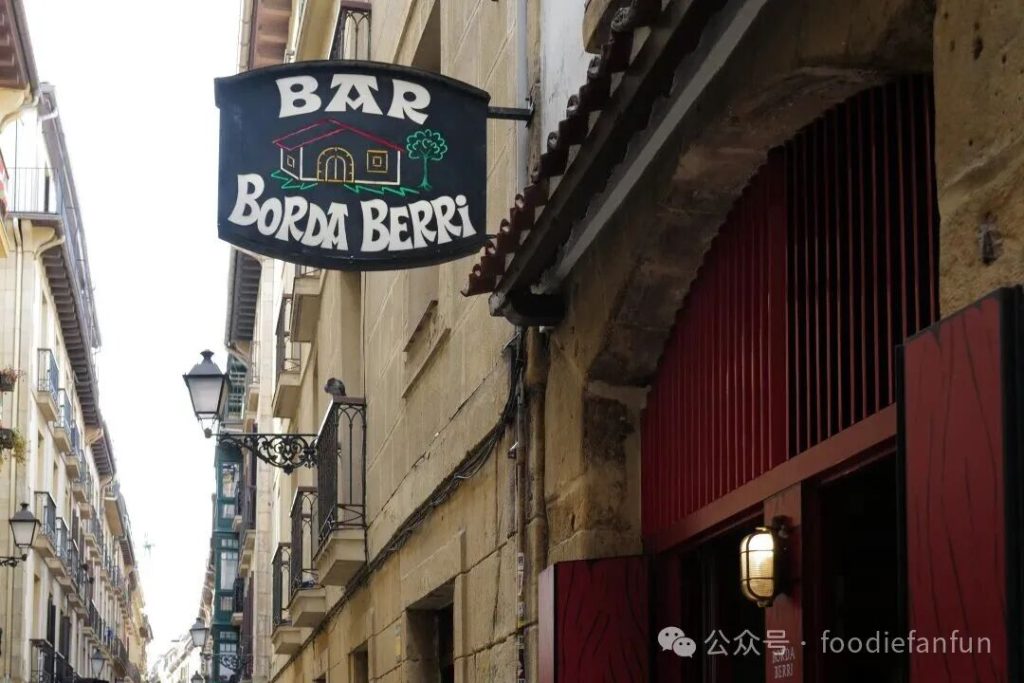
Borda Berri
Fermin Calbeton Kalea, 12, 20003 Donostia / San Sebastián
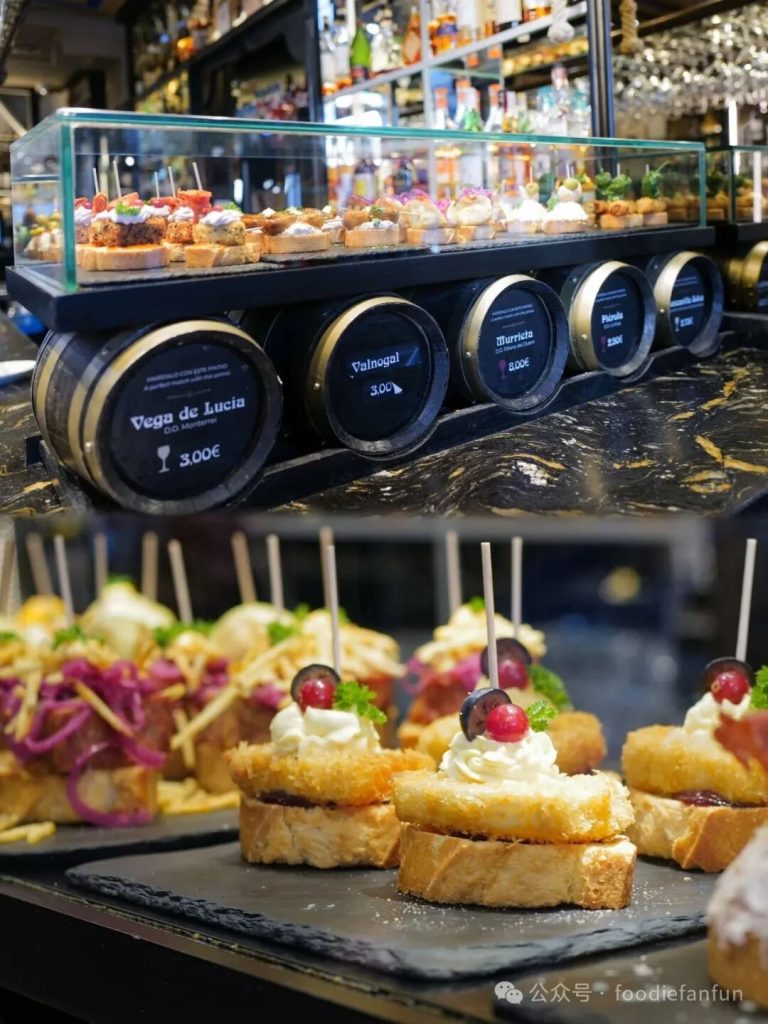
The first order of business on arriving in San Sebastián: drop the bags and go eat.
Map out every pintxos bar you’re interested in on Google Maps and you’ll notice they’re basically all clustered around the old town. Each place has its own signature dish — order two per stop, and one meal can turn into a crawl through several bars.
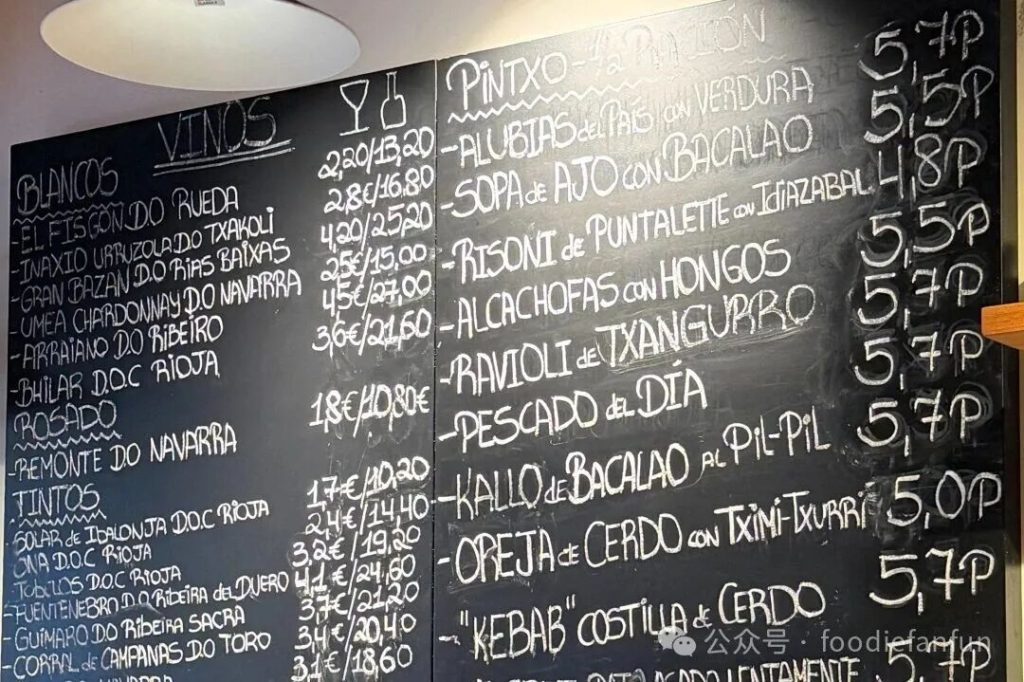
Walking up to Borda Berri, you could already see the crowd spilling out the door. Getting inside to find two open seats felt lucky. The chalkboard was covered edge to edge with wine and food.
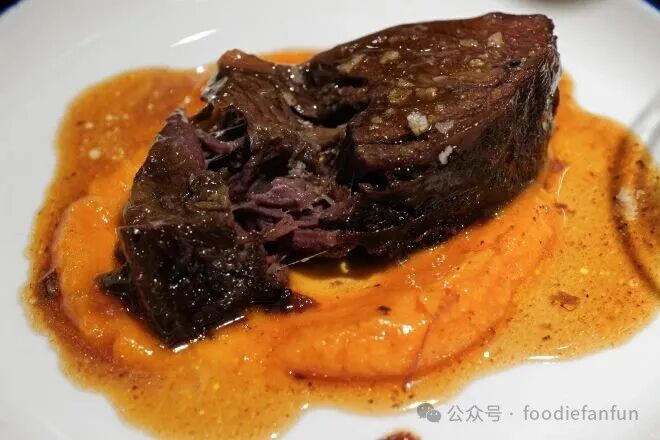
Carrilleras de ternera — beef cheek. Braised so soft you don’t even need a knife; a fork alone pulls it apart. The seasoning was spot-on, the meaty aroma full and clean, dotted just right with flecks of salt on the surface.
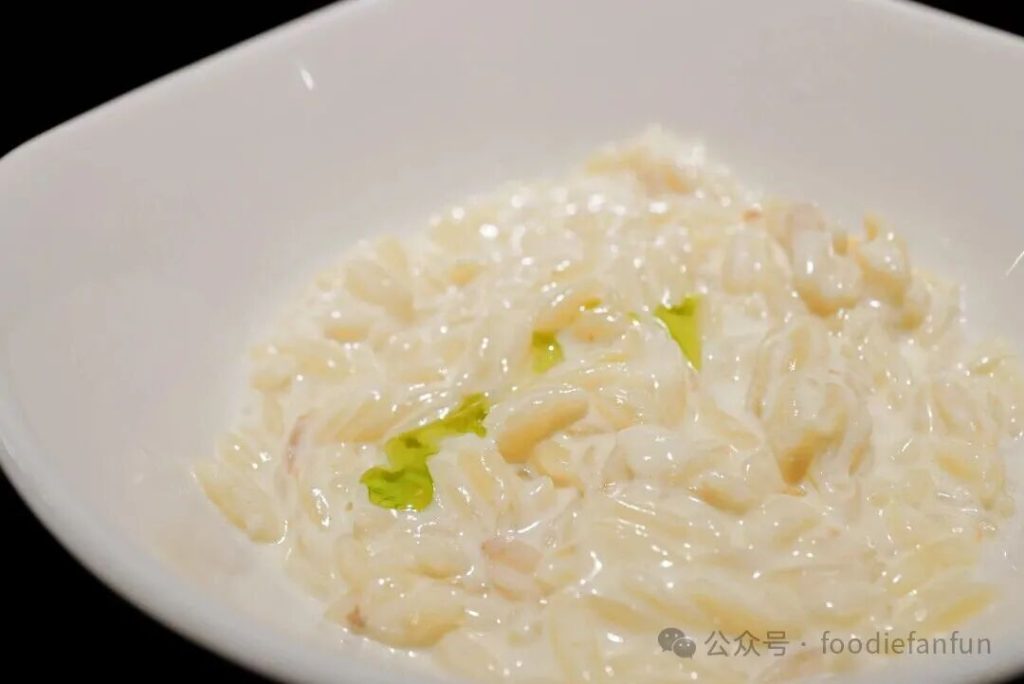
The Risotto de Idiazábal came recommended by the server, made with the local smoked cheese Idiazábal. Both the dairy and smoky aromas were intense — one bite in and it was a guilty kind of satisfaction. The rice grains were silky in the mouth, with small chunks of cheese folded through.
Heard the crispy pig ear is also excellent — next time.
Ganbara
C. de San Jerónimo, 21, 20003 Donostia / San Sebastián
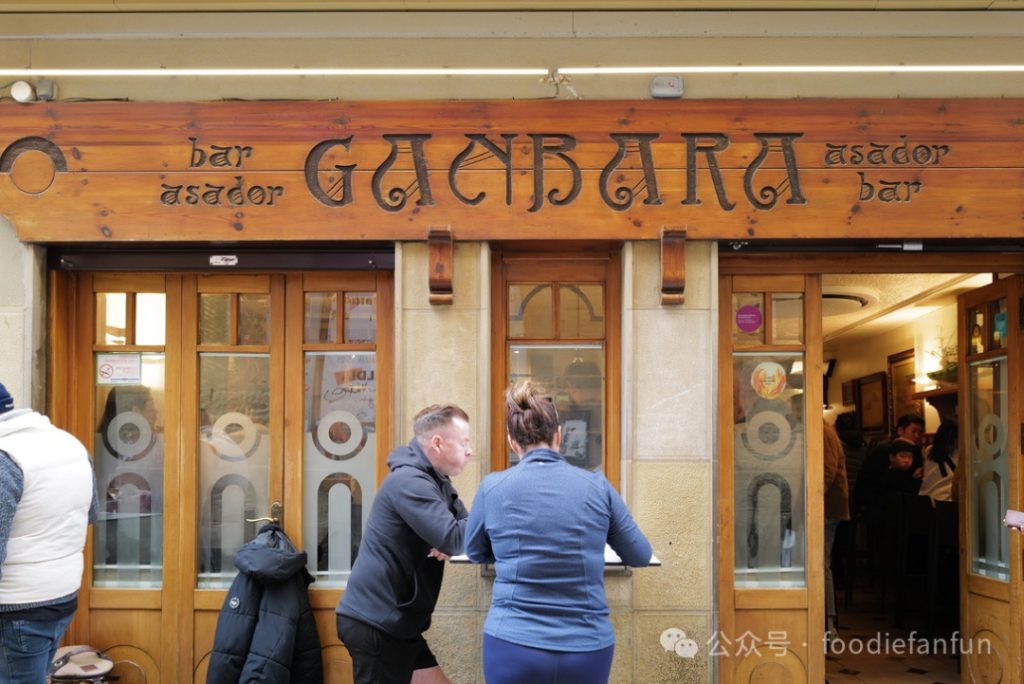
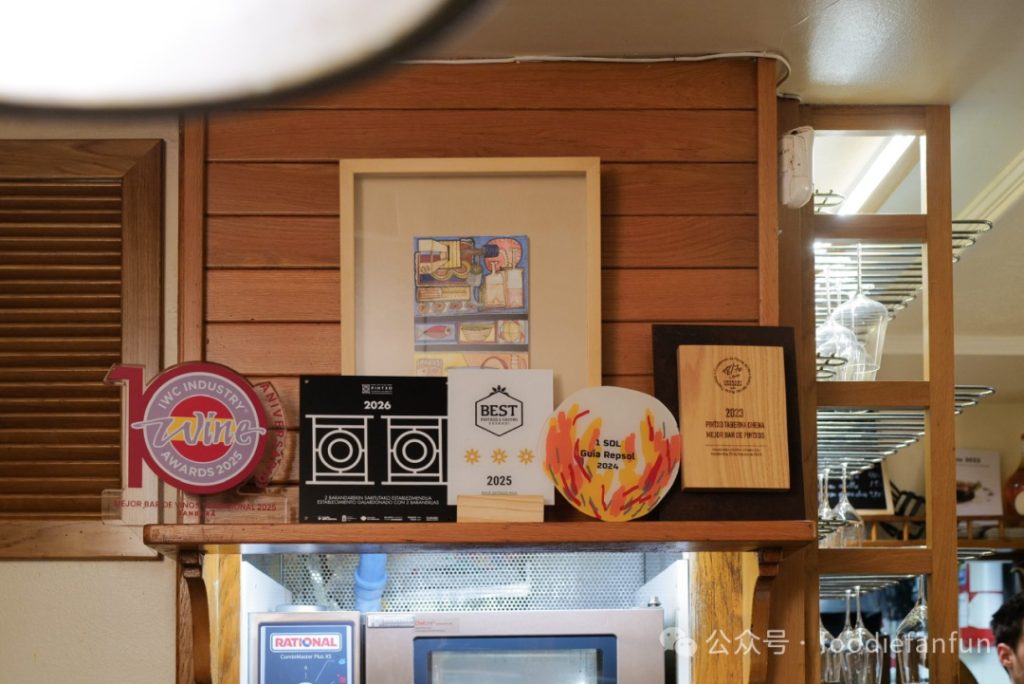
Ganbara is one of the most iconic star restaurants in San Sebastián’s old town. Ask any hotel or local “where should I go for pintxos” and it lands solidly near the top of the list every time. Rain or shine, a line forms out front before it even opens.
On a tip from someone in the know, we called ahead this time and booked a dinner seat. The ground floor is mainly a lively standing-room space for tourists eating pintxos, while downstairs hides a reservation-only dinner level. Compared to the noise upstairs, this felt more like a place to sit down and properly eat a meal — and most of the guests were locals.
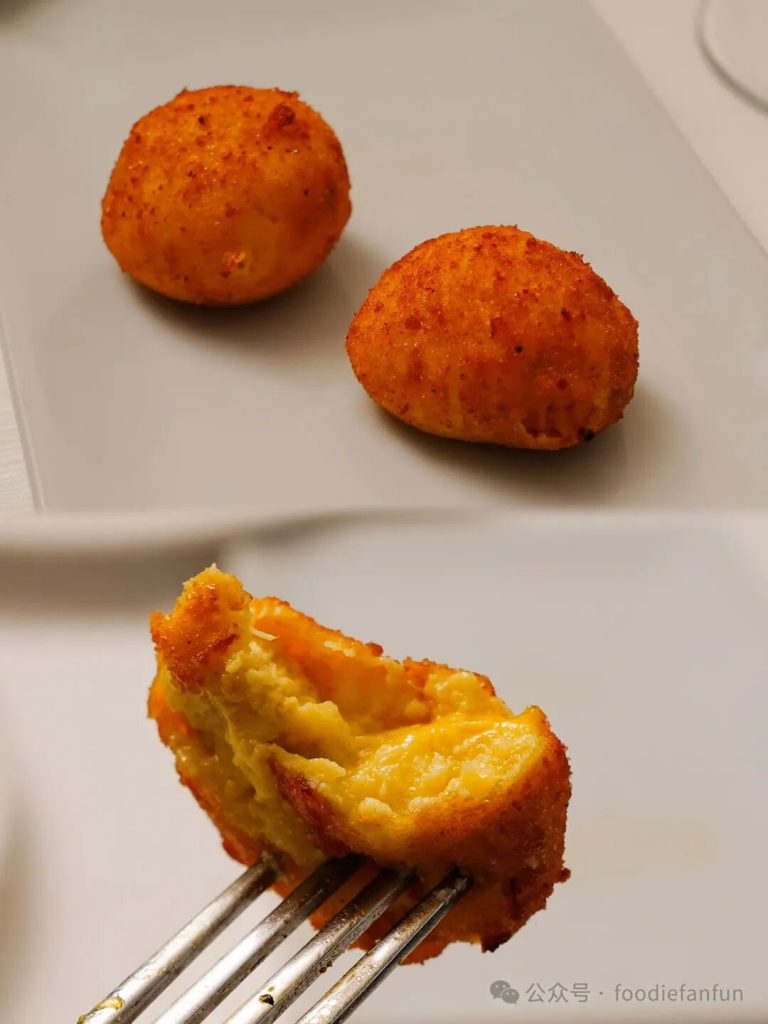
Even the chicken croquette to start was an instant favorite — the shell fried crisp, the inside impossibly creamy, with a whole piece of chicken tucked into the molten cheese. Deeply satisfying, and it immediately kicked the appetite into gear.
You could clearly feel why this place is loved by so many: it makes the most of local ingredients’ natural strengths, and its cooking control is razor-precise.
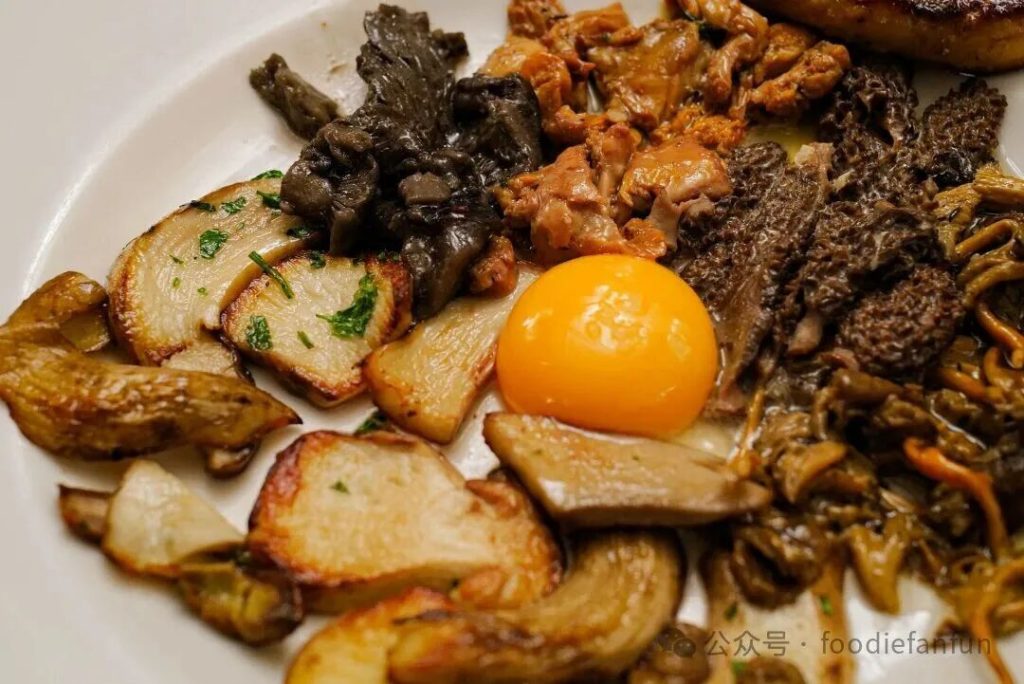
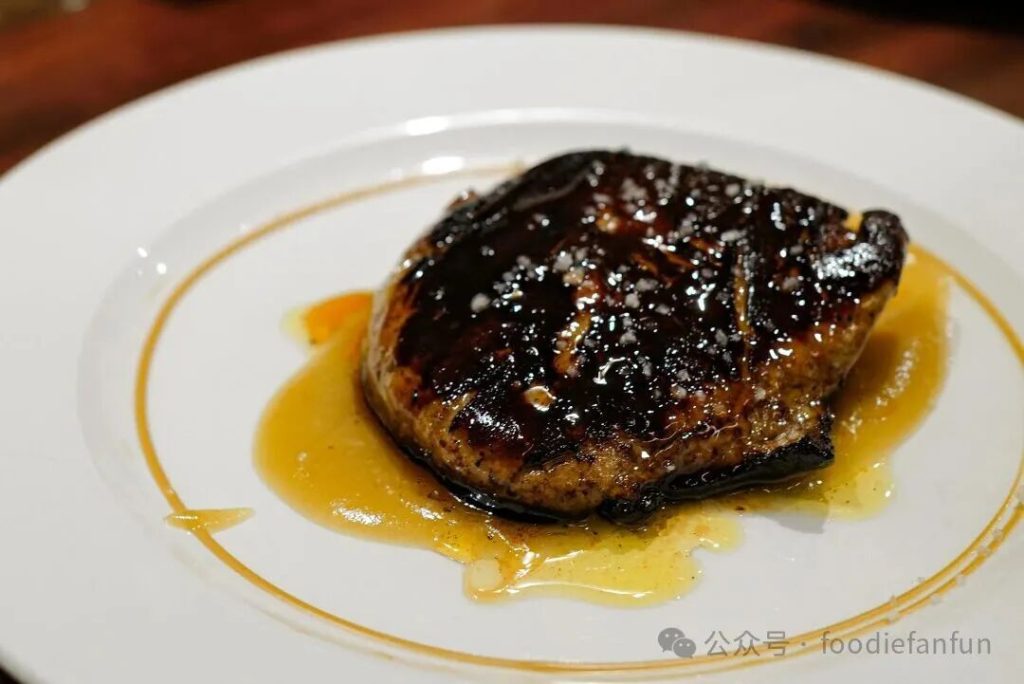
The Basque Country is mountainous all around, so wild mushrooms are naturally one of this land’s strong suits. Ganbara’s method looks almost too simple — just seared, lightly salted, egg yolk — yet it fully amplifies the mushroom’s own flavor. The aroma runs deep, the mushroom flavor is intense, and each variety carries its own distinct textural character.
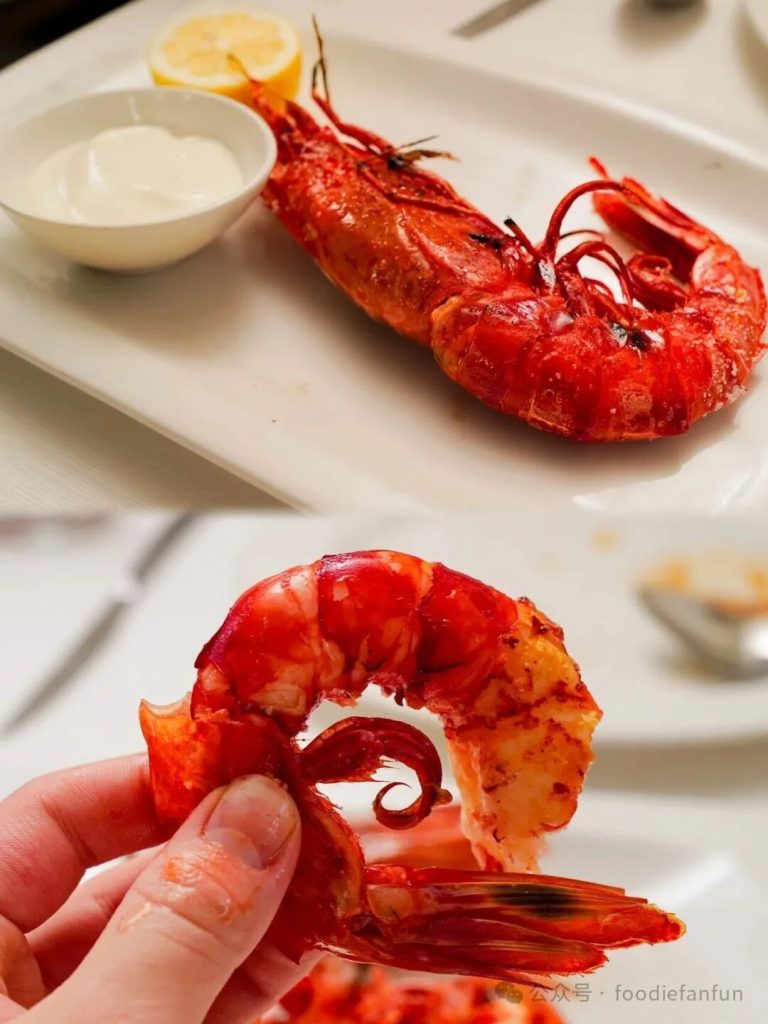
The red carabineros shrimp is the absolute heavyweight of the local seafood. The moment the bright red, oversized shrimp hits the table, it already commands the room. Suck the head first — the sweetness is direct and immediate. Then the meat, with texture running from rich and fatty to firm, leaving a long finish in the mouth as the flavor slowly unfolds from intense into a sweet, clean savoriness.
A genuine dual expression of freshness and heat control.
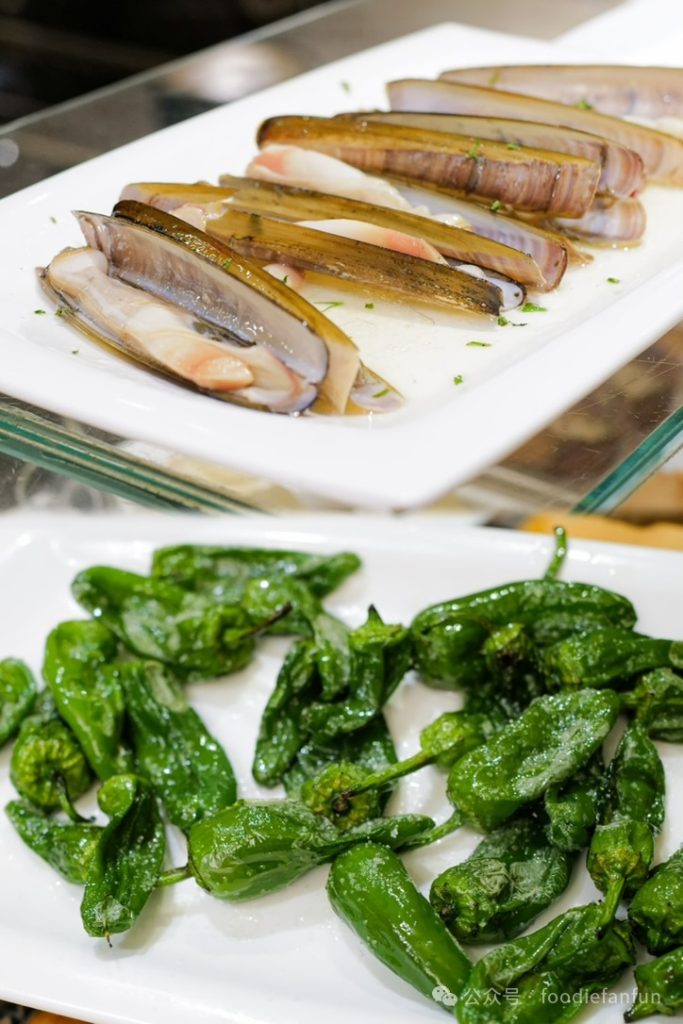
There’s also small green peppers, tomatoes, razor clams, and ham on the menu — Ganbara’s relaxed, direct way of expressing ingredients pushes the idea of “working with what the land gives you” about as far as it can go.
La Cuchara de San Telmo
Santa Korda Kalea, 4, 20003 Donostia / San Sebastián
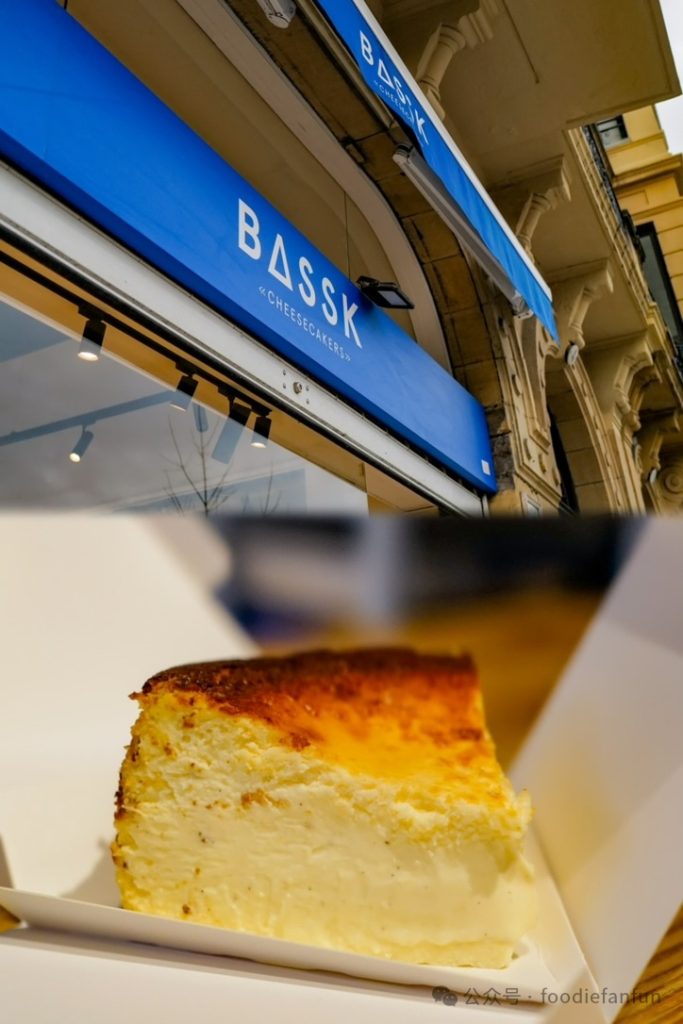
Bassk
Erregina Erregeordea kalea, 20003 Donostia / San Sebastián
La Cuchara de San Telmo was another place hyped up hard during trip-planning. The space is tiny, no reservations taken, and lining up before opening is basically the norm — a place you have to squeeze your way into just to get a bite.
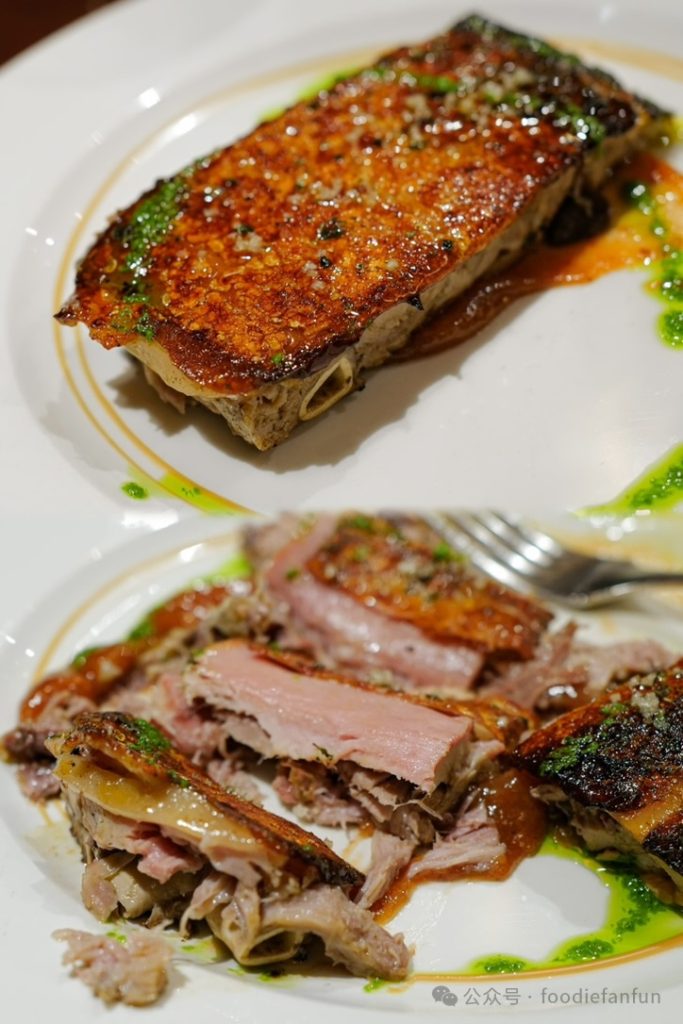
Their crispy suckling pig is the signature. One cut in — just a touch of pressure needed to break the skin — and with a crack, the meat inside falls open naturally along its grain. Fat and meaty aroma spread easily through the mouth; genuinely satisfying to eat.
The overall flavor profile leans noticeably heavier here, with the sauce more assertive too — sweetness and intensity both pushed more directly. The kind of place that hits you head-on.
Big portions, great with drinks, better suited to a few people sharing and sampling a few bites each — that’s actually how you get the most enjoyment out of it.
La Viña, the birthplace of Basque cheesecake, was closed for the winter, so we went instead to Bassk Cheesecake, run by the same team — now a chain, but still with a location near San Sebastián’s old town.
It didn’t deliver the knockout punch we were hoping for, but the balance of milk, egg, sugar, and caramelized aroma was solid, with an almost-melting softness at the center — a very standard rendition. By comparison, the output from the old-school local pastry shop Otaegui felt a touch stiffer.
There are also a few more heavily-hyped restaurants in the old town worth checking out if you have time: Rekondo, Bar Sport, El Tamboril, Lanperna Jatetxea.
Elkano
Herrerieta Kalea, 2, 20808 Getaria, Gipuzkoa
Elkano sits in Getaria, a beautiful little fishing village 30 minutes from San Sebastián by car — the god of charcoal-grilled fish that draws diners from around the world, and No. 24 on the 2025 World’s 50 Best Restaurants list.
There’s a tasting menu (€196), plus individually customizable à la carte options; the classic fish jaw + half a shrimp + whole grilled fish is just right for two people.
The various small seafood dishes all express real freshness, but the main event is always the whole grilled fish. It hits a perfect balance of charcoal, fish flesh, gelatinous richness, and sweetness. One fish, single-handedly performing an entire bowl’s worth of top-tier Buddha Jumps Over the Wall.
Full write-up 👉 Elkano | A Grilled Fish Renowned the World Over
Laia Erretegia
Arkolla Auzoa Auzoa, 33, 20280 Hondarribia, Gipuzkoa
Laia Erretegia is 25 minutes by car from central San Sebastián in the Basque Country — No. 3 on World’s 101 Best Steak Restaurants 2025, and holder of 2 Suns from Guía Repsol 2025.
Laia’s most famous dish is its steak, built on the combination of aging and charcoal fire. The top-grade Txuleta, Côte de bœuf PREMIUM TOP, aged 45 days. It doesn’t chase that satisfaction-through-marbling angle — instead it comes across firm yet fine-grained, deeply satisfying to keep eating, with concentrated flavor that holds up well even as it cools.
Beyond the steak, of course, Laia’s starters and desserts are both built on solid ingredients and technique too, and the wine cellar is genuinely impressive. Booking three days ahead is enough, no stress at all.
Full write-up 👉 Laia | Eating the World’s No. 3 Steak Deep in the Mountains
There’s also Bilbao’s long-established three-Michelin-star Martín Berasategui, well worth a visit too — though note it’s closed in winter; for reference, see 👉 Lasarte in Barcelona.
✦
•
✦
Bilbao
In town: Café Bar Bilbao, La Olla de la Plaza Nueva, Víctor Montes, Bascake | La Venta del Romerete, Los Fueros, Antxoa Taberna
Nearby: 🔥 Txispa, 🍴 Azurmendi
Café Bar Bilbao
Pl. Berria, 6, Ibaiondo, 48005 Bilbao, Bizkaia
La Olla de la Plaza Nueva
Pl. Berria, 2, Ibaiondo, 48005 Bilbao, Bizkaia
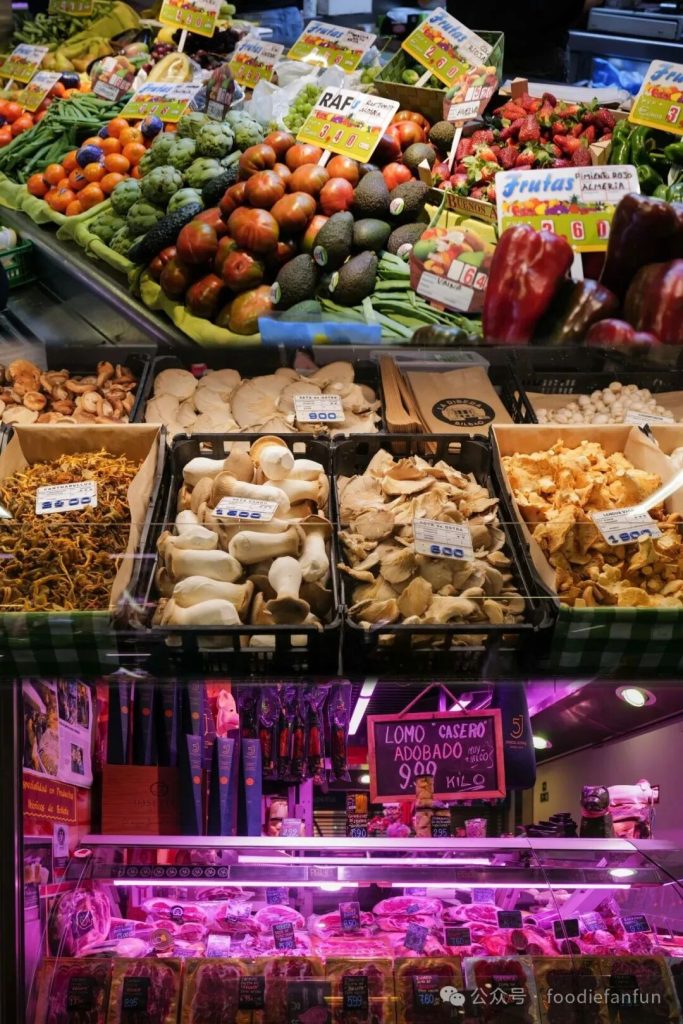
The spots locals recommend in Bilbao are also, as it turns out, in the old town. Start the morning at the city’s Erribera Merkatua market, considered one of Europe’s four great indoor markets. Five minutes’ walk from there gets you to Plaza Nueva, Bilbao’s most popular cluster of pintxos bars.
Before you start eating, adjust your mindset — imagine grabbing breakfast on the streets of Wuhan~
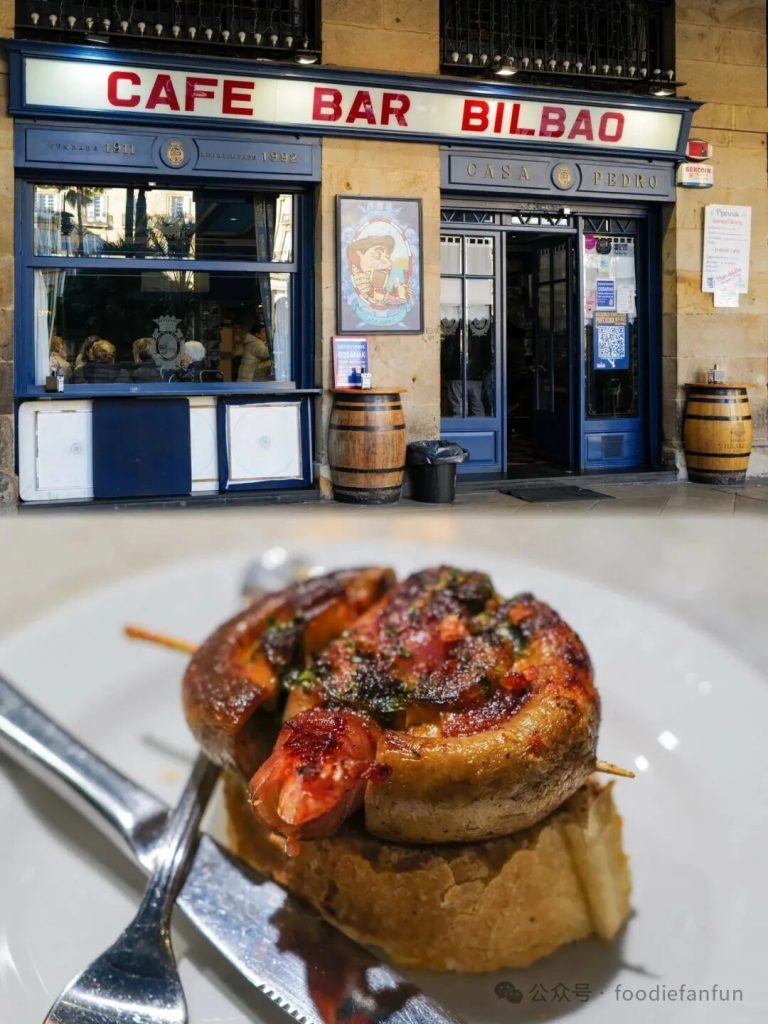
Café Bar Bilbao is one of the most iconic old-school restaurants in Bilbao’s old town, open since 1911. Compared to the more creativity-and-buzz-driven pintxos bars, this place has more of an unhurried, old-café ease to it. Even early morning it’s already packed with locals having coffee, reading the paper, and grabbing a bite on the side.
We were recommended a mushroom-themed pintxo. The mushroom itself had plenty of crunch and juice, with a touch of meaty aroma underneath giving it more body, and the bread underneath was soft yet held its structure. Solid, old-school, deeply satisfying.
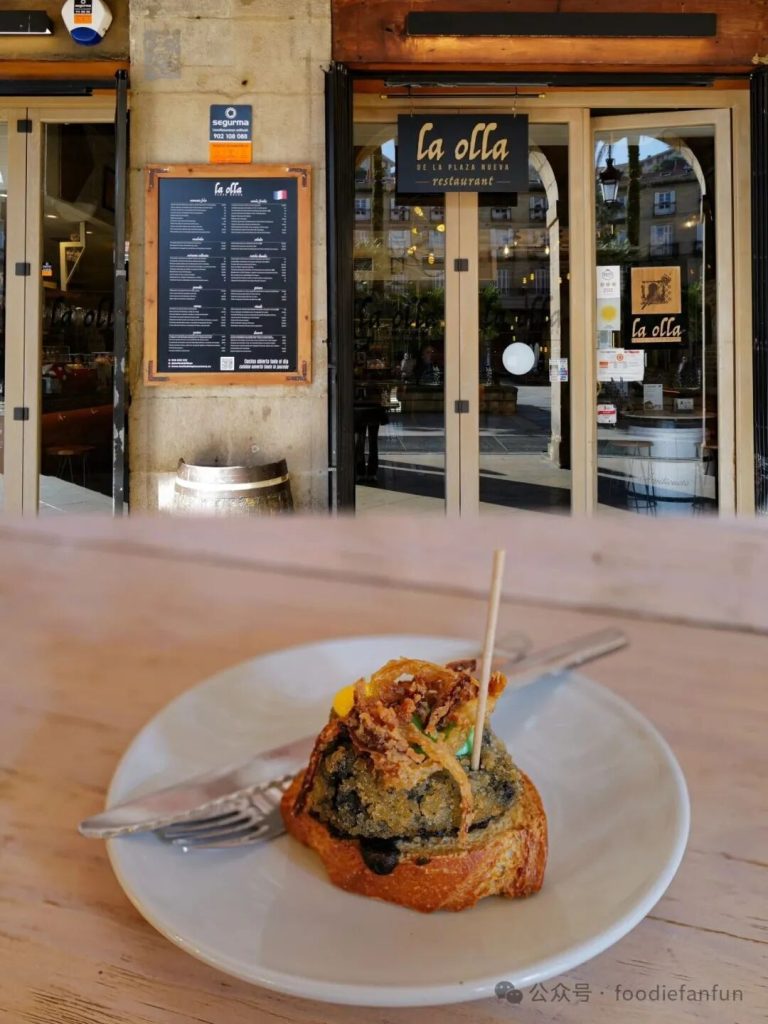
La Olla de la Plaza Nueva is a slightly fancier presence in this same cluster — a bit more of a modern-bistro polish, and a cleaner-cut space too.
Their pitch-black fried baby squid. Expected it to be heavy, but it turned out not the least bit greasy — the shell fried crisp, while the seafood inside kept its own springiness and freshness. Eating it made you want to grab a drink immediately.
Víctor Montes
Pl. Berria, 8, Ibaiondo, 48005 Bilbao, Bizkaia
Bascake
Colón de Larreátegui K., 23, Abando, 48001 Bilbao, Bizkaia
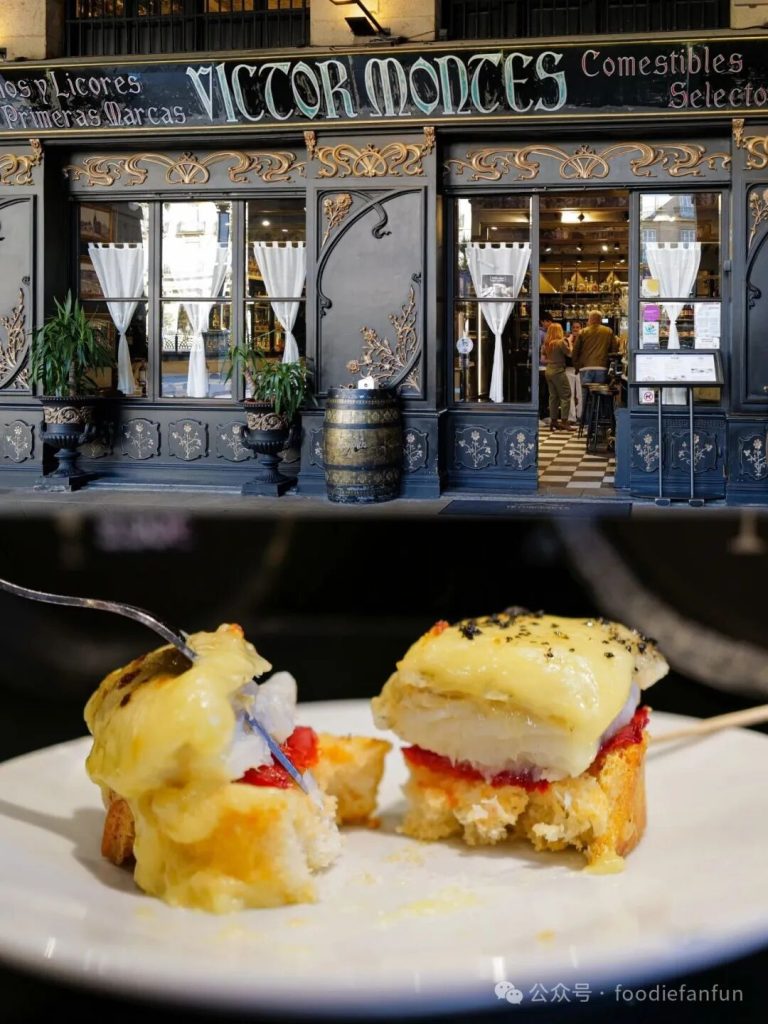
Víctor Montes is another place with real character of its own. Compared to the more casual bars around the plaza, it’s noticeably more refined, carrying the poise and polish of an old-school restaurant. We walked in fifteen minutes before opening and already found guests who hadn’t ordered food yet, just gathered together drinking while waiting for the rest of their group to arrive.
The cod pintxo — grilled bell peppers laid underneath, topped with a smooth garlic emulsion closer to pil-pil style, paired with bread — came across a bit like an elevated fish sandwich. Salty, savory, soft, with a touch of rich fattiness. Not ordering a drink at this point would honestly feel a little rude.
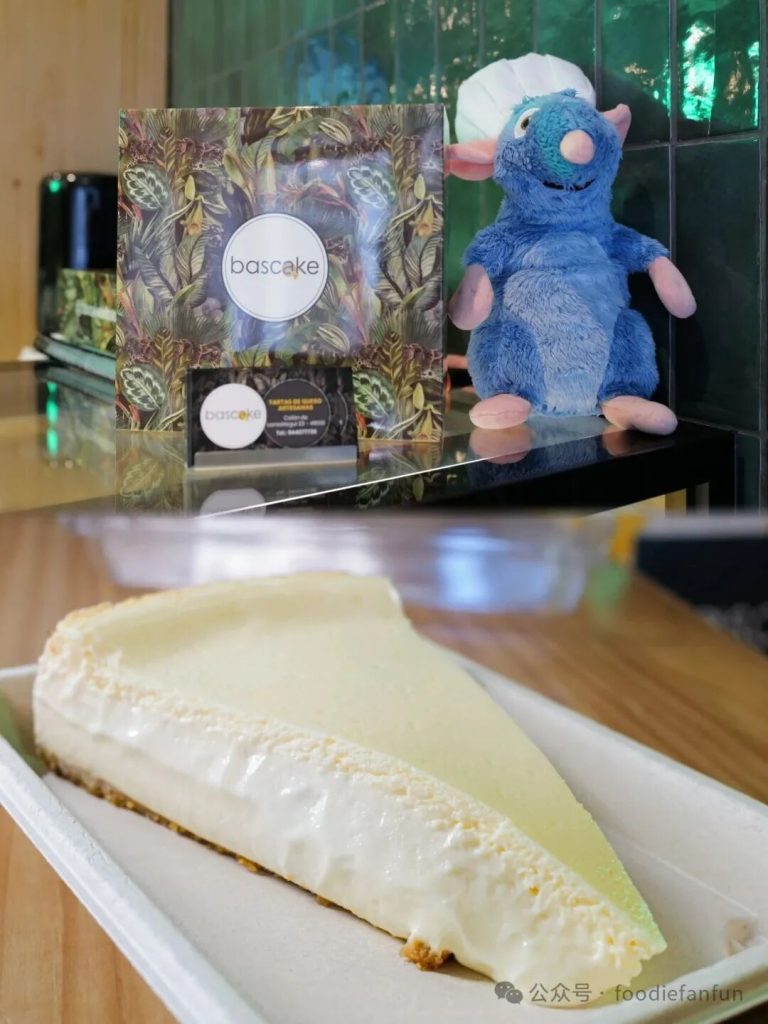
On the walk back to the hotel, we swung by Bascake, which recently opened in the new part of town. Their Basque cheesecake was soft with real layers to it — a gentler dairy aroma and an almost molten softness. Every layer was delicious in its own way, melting together as you went — genuinely hard to resist.
With cake, whatever you personally like is probably the best one.
Also worth trying around Bilbao: La Venta del Romerete, Los Fueros, and Antxoa Taberna are all solid picks.
Txispa
San Juan Auzoa, 45, 48291 Apatamonasterio, Bizkaia
In the Basque Country, driving or taking a taxi out to the countryside to eat is rarely cheap, and Txispa, as one of these “village restaurants,” makes that especially clear. But it’s precisely because of that effort that you come to realize just how worth it the whole trek is.
Chef Tetsuro Maeda, a Tokyo native raised in Kanazawa. He spent 10 years as sous chef at what is now the world’s No. 2 restaurant, Asador Etxebarri.
He went independent in 2023, opening his own place on a hillside just a few hundred meters from his mentor’s restaurant, and earned a Michelin star within just six months. Now ranked No. 85 on the World’s 50 Best Restaurants list — a rising star drawing serious attention in the Basque Country in recent years.
Finishing the meal left us excited and genuinely moved.
From the cooking itself, you can clearly feel three forces layered together: a Japanese upbringing and palate structure; technique and cooking control honed through years in professional kitchens; and an understanding and respect for the rustic ingredients of these Basque mountains.
Full write-up 👉 Txispa | A Rising Star of the Grill
Azurmendi
Barrio Leguina, s/n, 48195 Uria, Biscay
Compared to the Basque Country’s other restaurants, Azurmendi — a three-Michelin-star holder for many years running — comes across as all flourish with the ingredients and flavor both falling short of average.
This is the restaurant of Eneko Atxa, one of the youngest chefs in Spain ever to earn three Michelin stars, located in the mountains about twenty minutes’ drive from central Bilbao.
It’s been named World’s Most Sustainable Restaurant twice, and has held the No. 1 spot on Elite Traveler’s world ranking. In terms of setting, service, and plating, it genuinely lives up to its green-star status. But when it comes to the food itself, showmanship has outpaced flavor — the saltiness masks the ingredients, more than a little like a kindergartner who’s eager to express themselves but hasn’t yet found any logical order to it.
Full write-up 👉 Azurmendi | A Three-Michelin-Star Plain Bun? (Plus a Bilbao Snack Guide)
✦
•
✦
🥢 Hotel Options
We stayed at three different hotels in San Sebastián this trip, each happening to match a different need.
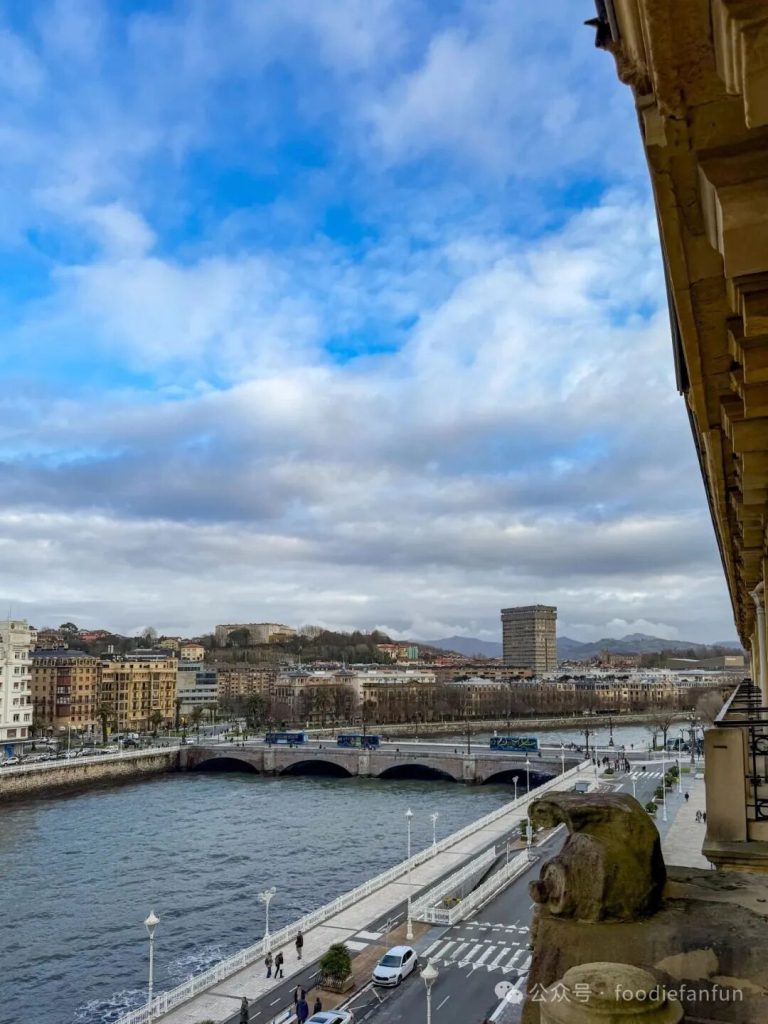
Hotel Maria Cristina is the kind of old-school palatial hotel you remember after just one stay. The presence, the service, the details are all complete — in the classic-luxury-hotel category, it has just about everything covered.
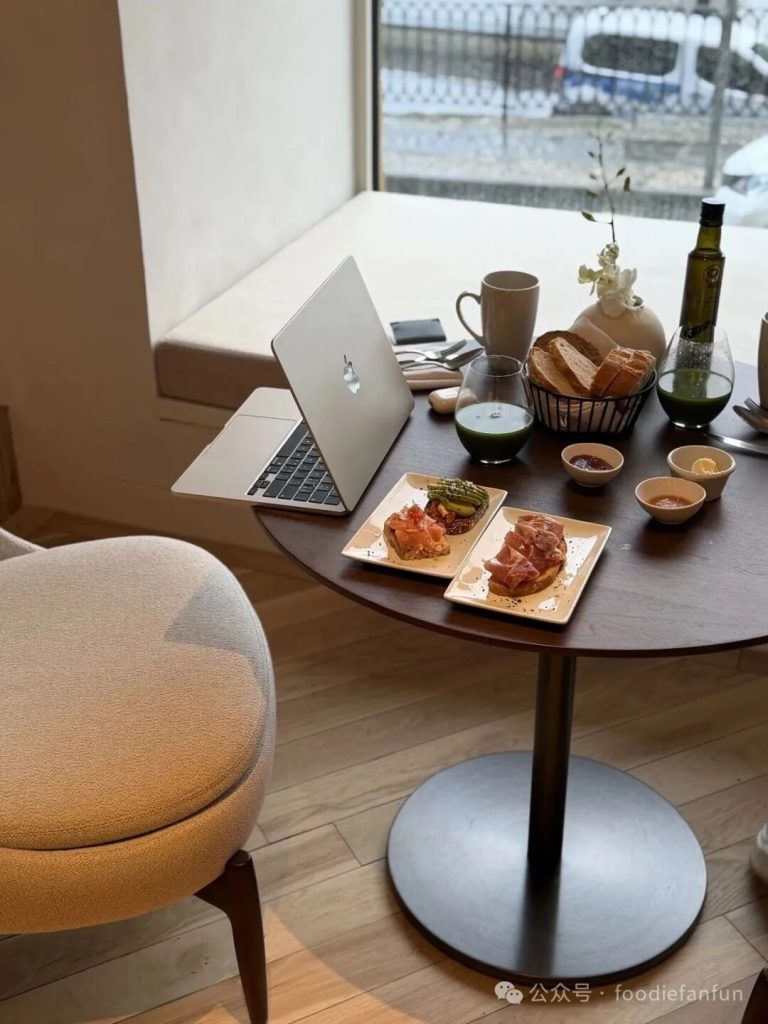
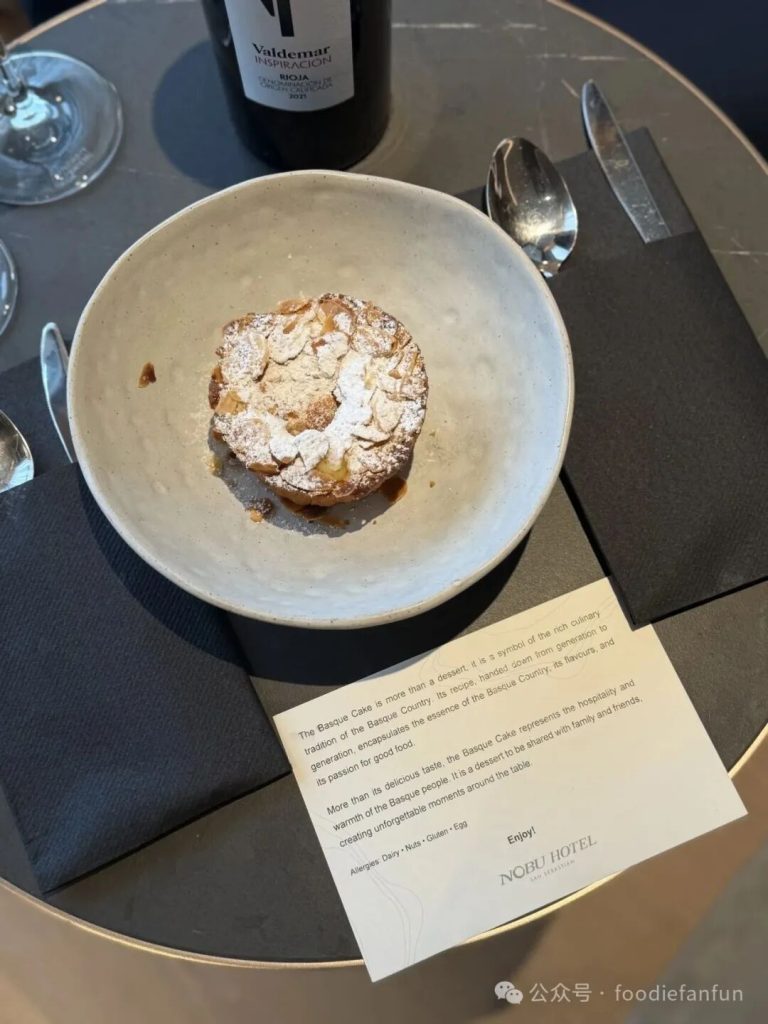
Nobu Hotel San Sebastián is a completely different flavor of luxury hotel. It faces the coastline directly and is stunning on a clear day. In terms of room comfort, it was the best of the three — modern, effortless, and easier to genuinely unwind in. The only downsides: it’s a taxi ride from the old town, and the hotel’s own food really isn’t great.
Lasala Plaza Hotel was the most practical of the three. Close to both the harbor and the old town, with an overall simpler style, but it has everything you actually need — the location alone makes daily life noticeably more convenient.
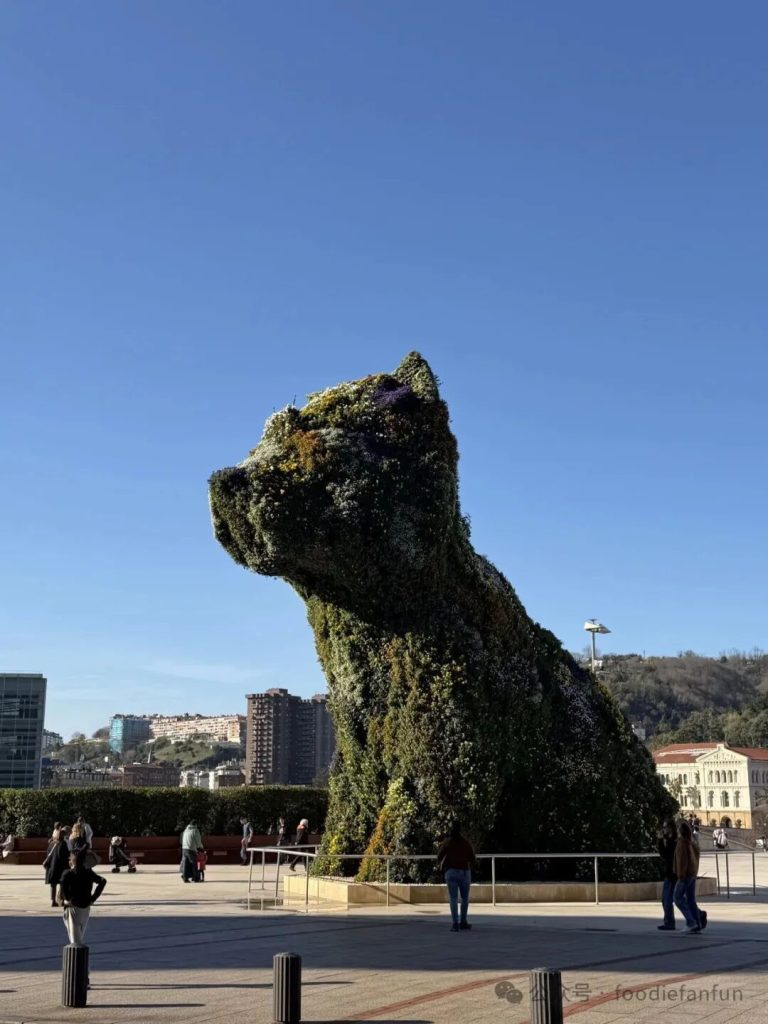
For Bilbao, we’d suggest considering The Artist Grand Hotel of Art, right across the street from the famously well-known Guggenheim Museum. The decor may look modern and minimal, but the rooftop gives you a sweeping view of the whole city, and it has everything you could want.
The Basque Country is a place you genuinely fall for from the heart — utterly taken with the passion it raises up through food and nature.
Could never get enough of it — already waiting for the next round.