In Crayon Shin-chan’s summer specials, the Nohara family goes back to Akita for the Ōmagari Fireworks Festival. It’s also, in the manga’s original setting, where Shin-chan’s father Hiroshi Nohara is from.
Ōmagari’s fireworks are famous enough on their own, but this city had another draw for me — the legendary countryside Italian restaurant giueme.
A lunch here runs just ¥6,000, and a table can be booked three days ahead — a 🥉 bronze-tier restaurant.

This is a restaurant long underrated by out-of-town diners, simply because of the distance. giueme defines itself as an Italian restaurant built around the mountain, sea, and countryside ingredients of Akita. It has won the 🥉 Tabelog Award Bronze for several years running, and has also been listed in Gault & Millau for years.
On previous trips to Akita, at different restaurants, chef after chef recommended giueme without my ever asking. “You really have to go if you get the chance.”
So this time, it became a stop I had to make a special trip for on this Akita visit. And it turned out to be full of surprises.
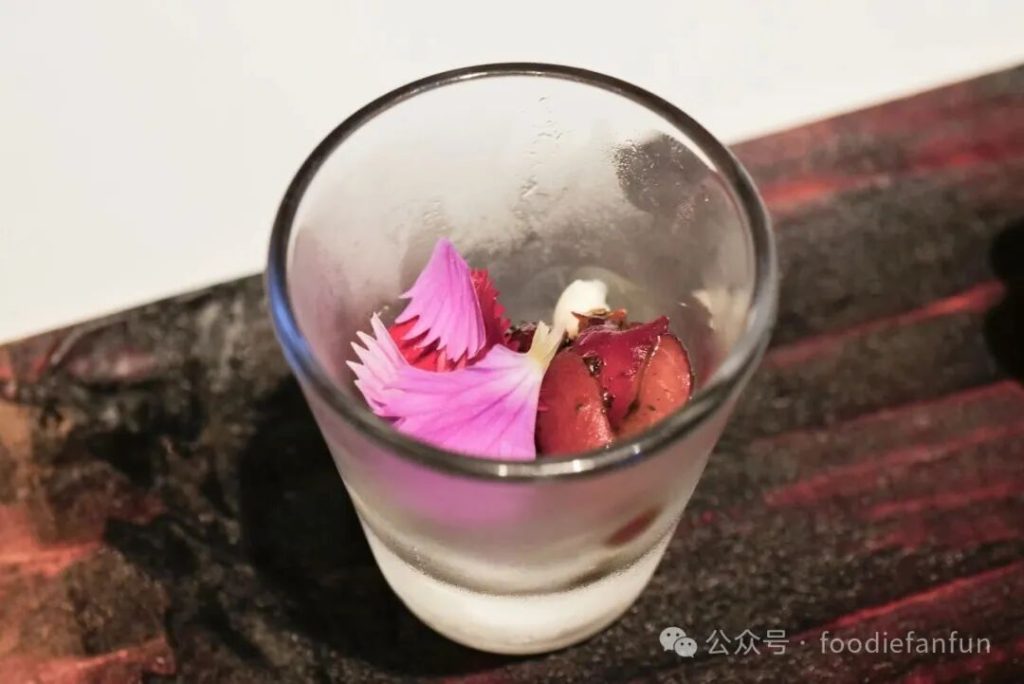
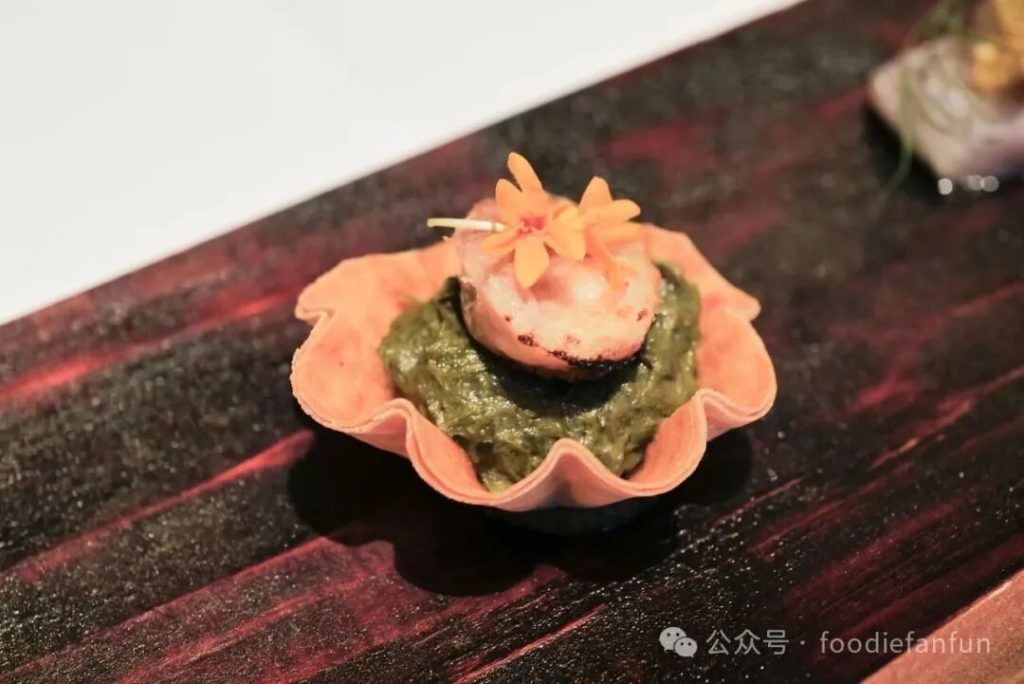
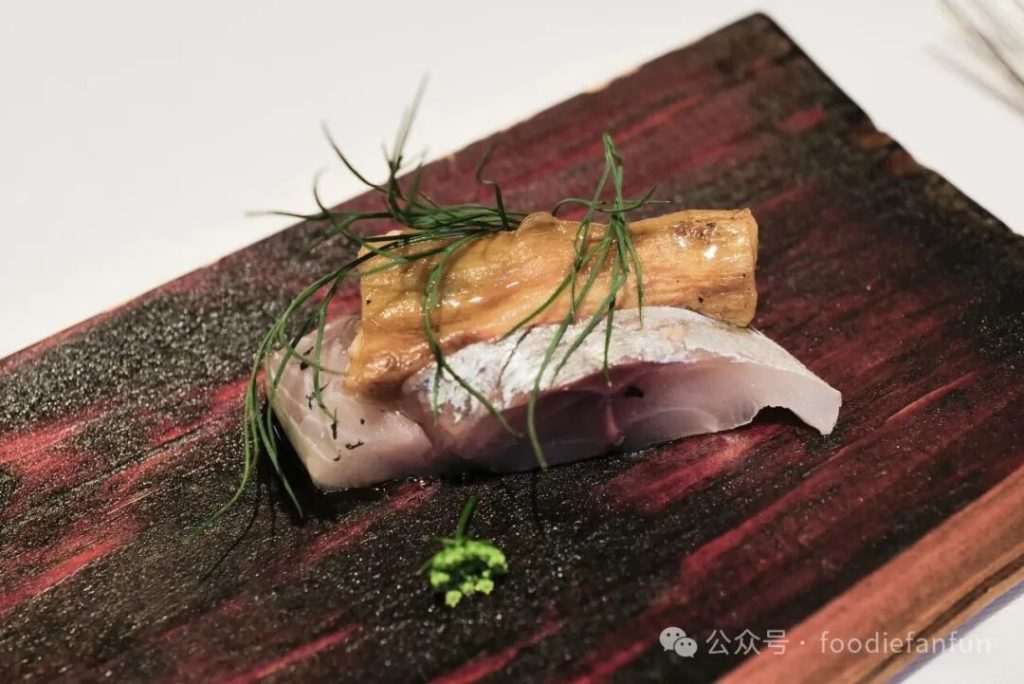
The opening amuse-bouches came as three small bites, arranged together on a plate made of Akita cedar. The ingredients looked light, yet carried a clear sense of Akita’s character.
Satonishiki cherries paired with house-made ricotta made for a bright opening. The cherries’ fruitiness was clear and direct, the ricotta underneath carried a touch of milky richness, and the pesto folded in an herbal aroma. Simple, straightforward flavor, but full of fragrance — one bite and it was pure summer.
Marinated horse mackerel topped with seasonal grilled eggplant — one from the sea, one from the earth, and somehow they came together seamlessly. The eggplant brought enough smokiness, the mackerel held up the texture and freshness, and the lingering aroma sharpened the whole bite. Two familiar ingredients, both stepping outside their usual expressions — deeply rustic, yet full of character.
The bracken purée and sesame fugu shirako tower was an even more astonishing bite. Bracken’s particular bitterness carries the wild edge unique to mountain vegetables, while the fugu shirako hides savoriness and richness inside. Clean seasoning, high bitterness, and yet nothing about it felt sharp — the finish stayed clean and well-defined.
Three starters in, and the style was already unmistakable — pure, bold, and full of personality.
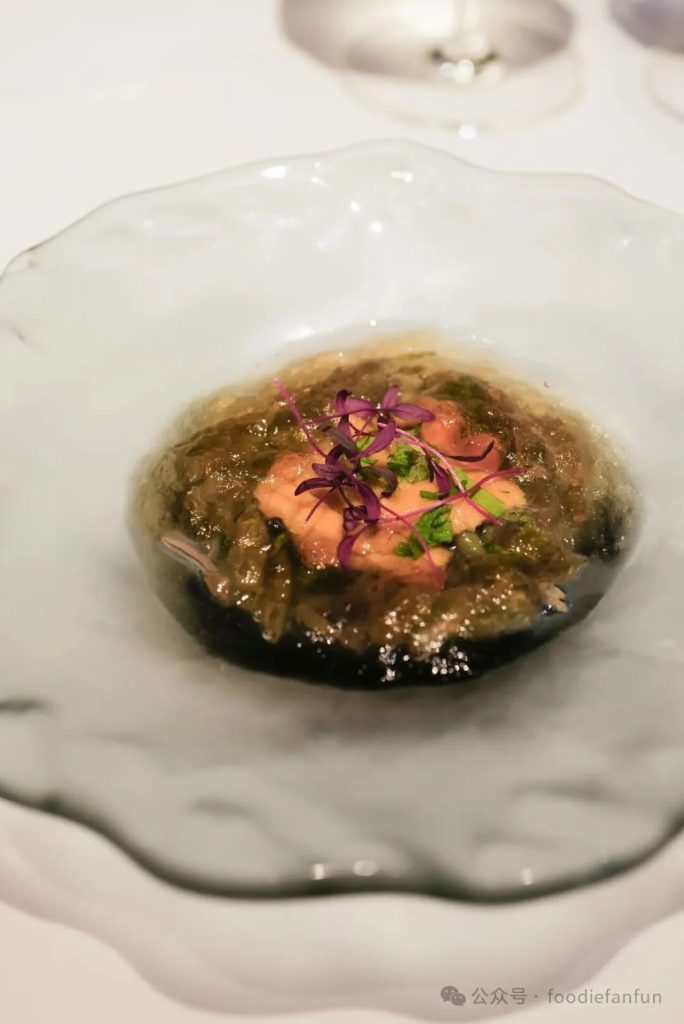
The cold course proper opened with something usually cast as a supporting act, but it’s a defining ingredient of the Daisen area — junsai water shield. Junsai, molokhia purée, Aomori bafun uni, and venison consommé were brought together in one bowl, walking from the mountains straight to the sea — a flavor genuinely hard to sum up in one sentence. The green, herbal note wraps around the uni, dense and silky, with a strong wildness running through it. Here the uni plays a quiet supporting role, propping up the sweetness in the bowl and pulling the whole mouthful into balance.
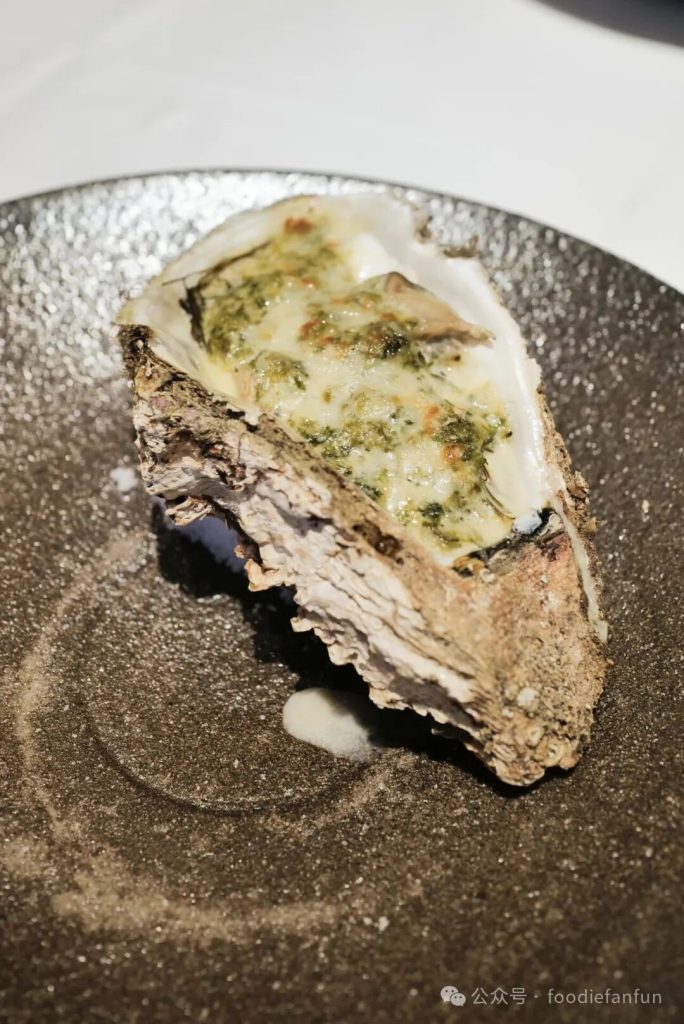
Akita’s rock oysters had only just come into season — getting to eat them was pure good timing. They smelled inviting the moment they hit the table, and on the palate, cream and oceanic minerality burst open together.
The oyster itself kept a beautiful plumpness, while the vegetables tucked into the cream brought out subtle aroma and texture — giving the dish both the direct impact of fresh ingredients and an almost perfect minerality. Impossible not to love.
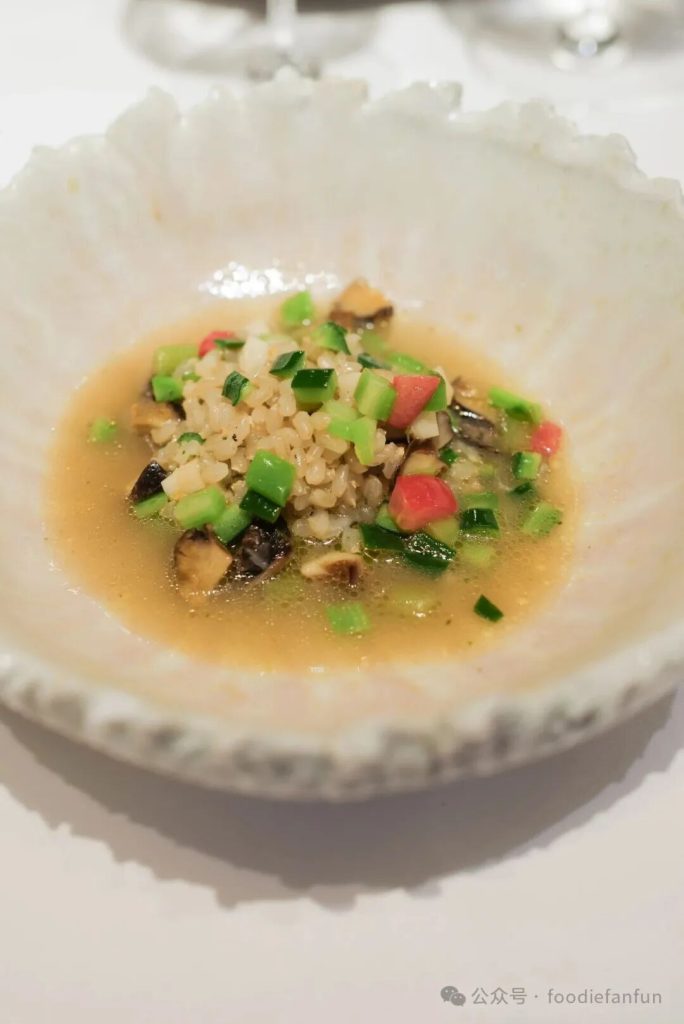
The hot appetizer, surprisingly, turned the familiar sake rice variety Kamenoo into a brown-rice ochazuke of sorts.
Whelk, mountain mizuna, moso bamboo shoot and cucumber came together for a dish full of summer. The herbal bitterness was direct, yet still fresh. The rice grains kept their bite, the whelk offered a springy crunch, and the broth carried plenty of umami.
A grown-up flavor — the more you eat, the more you like it.
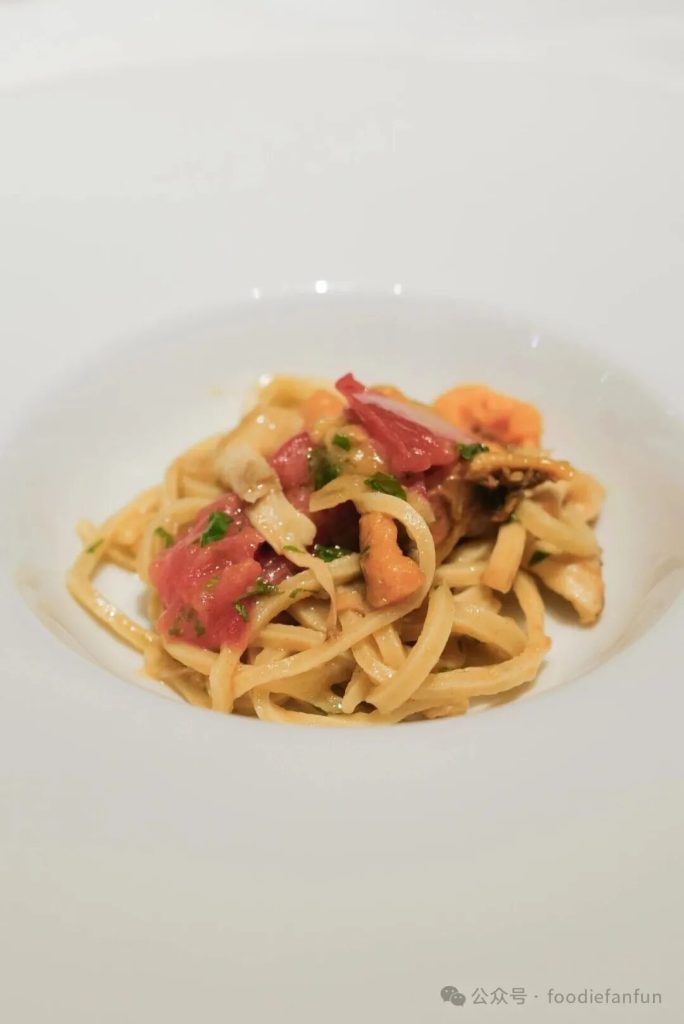
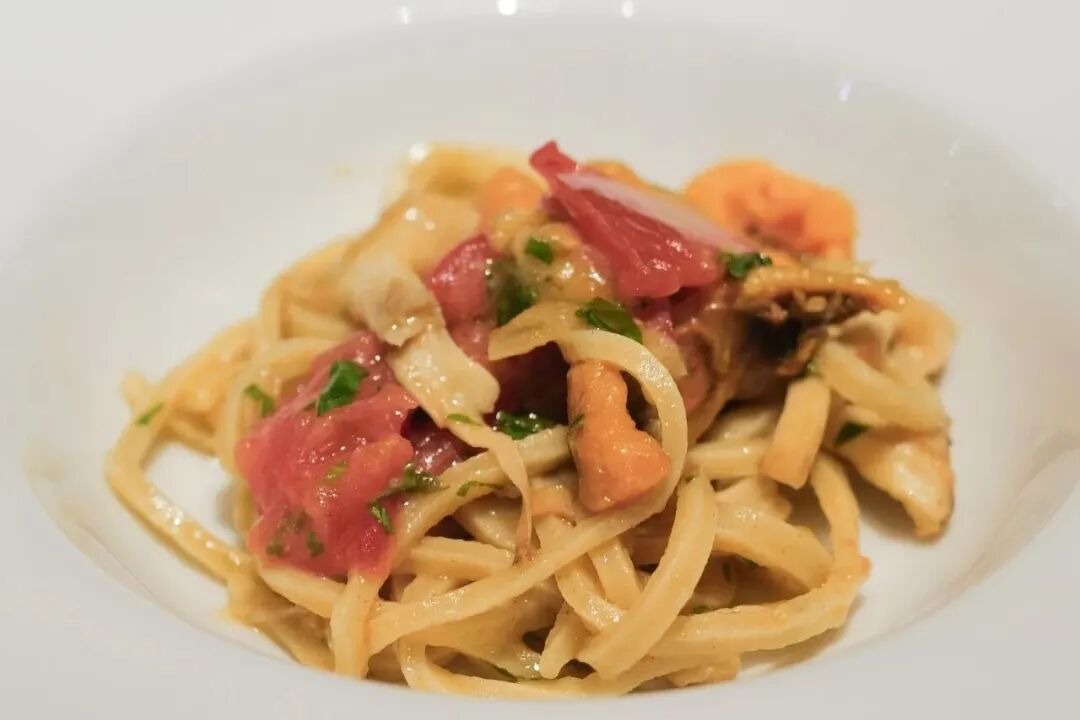
“Chitarra pasta — it’s the noodles you play like a guitar!” “But we never bought a pasta machine, so the chef makes it all by hand.”
The noodles arrived sharp-edged and irregular, fragrant even before the first bite. The pasta itself was light, yet carried real weight in the mouth — good elasticity, good finish.
Sea squirt is a strange, wonderful thing — sweet, then savory, then bitter toward the end, one single ingredient carrying a long arc of change all on its own. The cardamom’s aroma didn’t overpower the sea flavor either; instead it added weight to the whole dish, tipping the balance further in its favor.
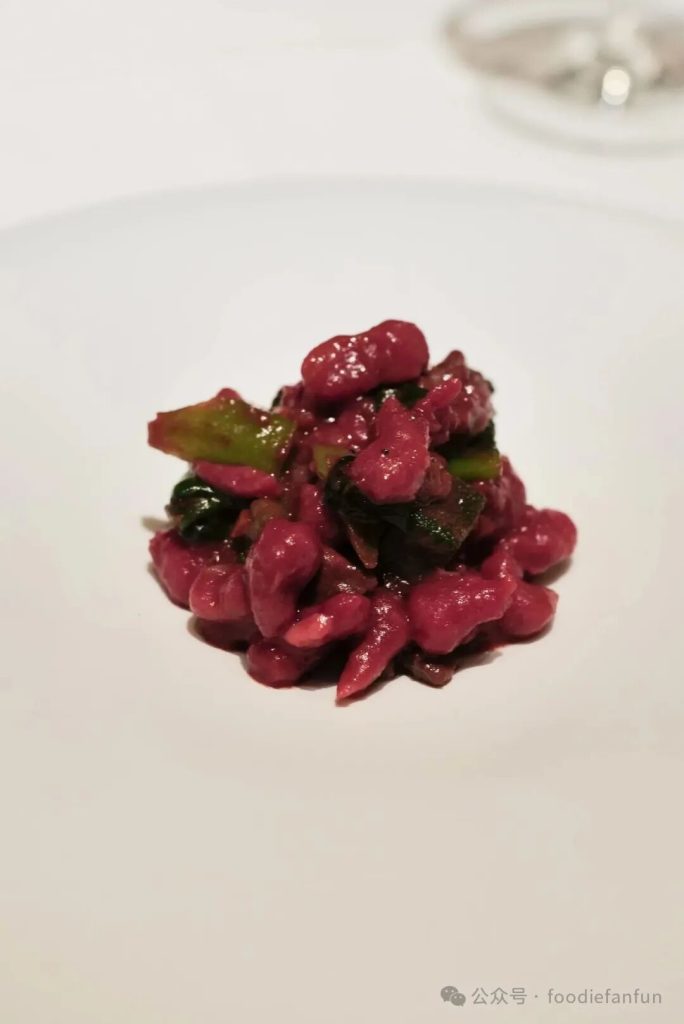
Beetroot spätzle with lamb, okra and Malabar spinach — the dish I understood least when reading the menu, yet it became the most unexpectedly memorable one.
The spätzle was soft, followed by the crunch and slight viscosity of okra and Malabar spinach — a familiar flavor with a gentle texture. Most importantly, it was the first time I’d had lamb this fragrant in a Japanese-Italian dish like this; the combination even brought to mind a lamb stew. A familiar taste, showing up in a fresh way (and color).
Struck by the contrast.
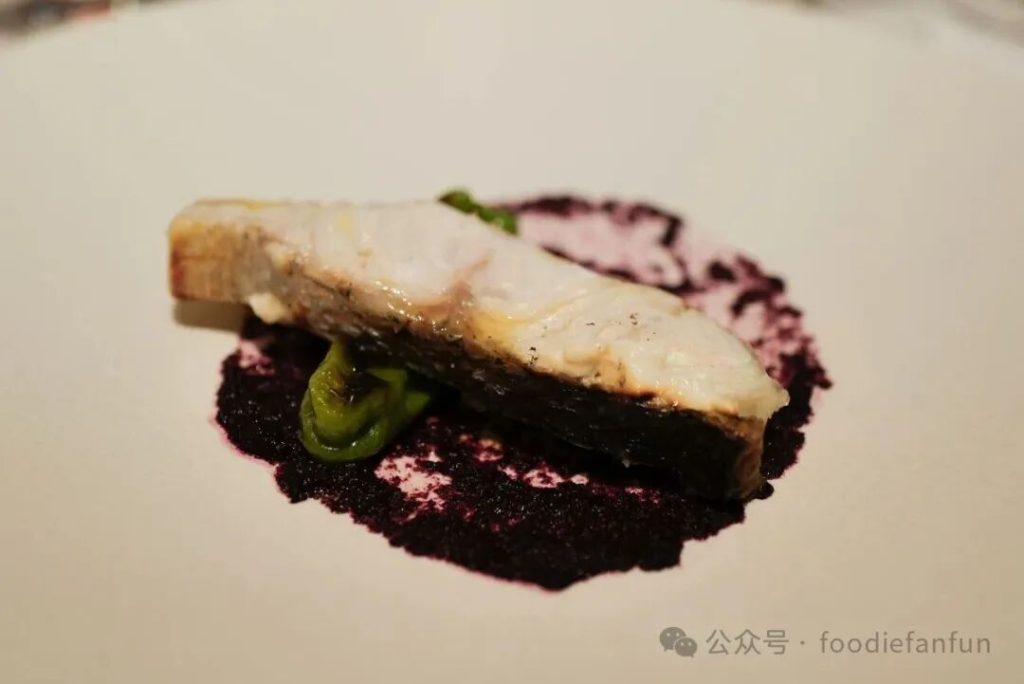
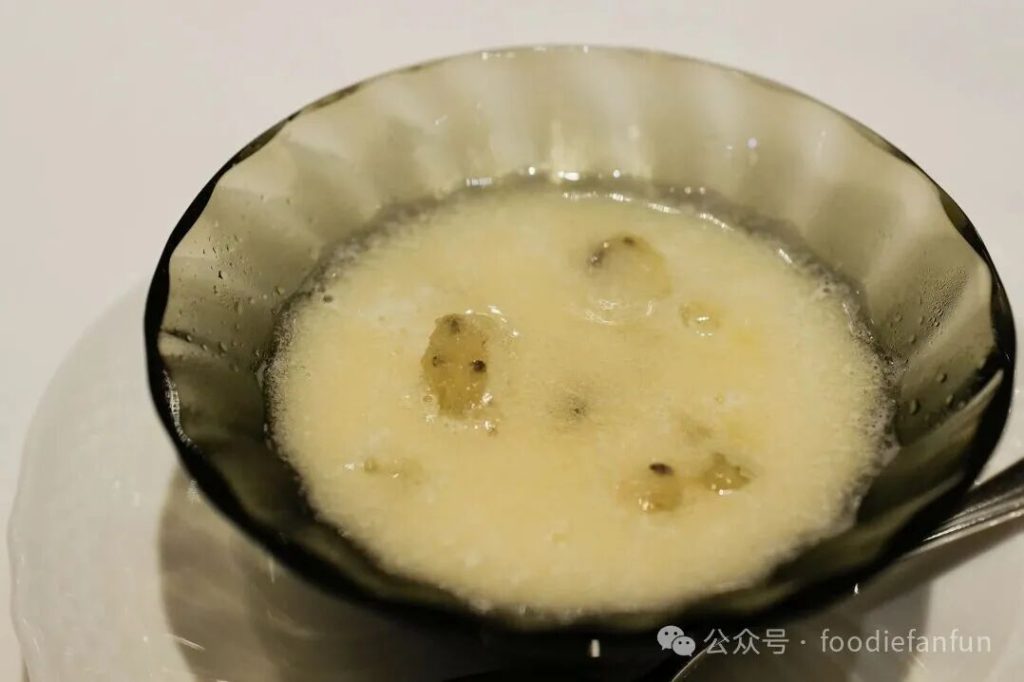
The sea bass looked beautiful, but the flesh was slightly overcooked, saved only by a savory fermented blueberry sauce that carried the memory. The palate cleanser that followed made up for it — the sweetness of melon, the density of cauliflower, and the surprising peppery kick of kiwi, all working together in sweetness, acidity and aroma, somehow landing on an unusually distinctive cleanse.
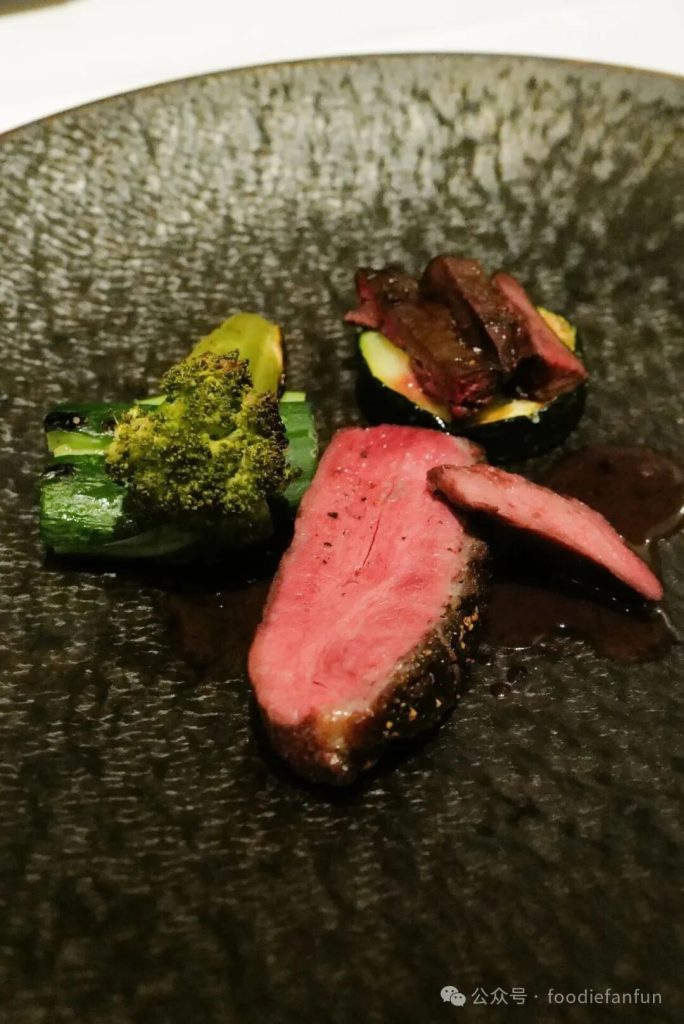
The true main course was Gin no Kamo duck. Duck on Japanese menus is always a tricky bet, but giueme’s version at least left a few clear, memorable marks. Summer duck runs lean, with strong gaminess and a firm bite, the fiber a bit coarse, but the flavor stayed clean and the chew wasn’t unpleasant. It even carried a touch of freshness, a hint of summer.
The vegetables alongside knew how to strike a balance too. The broccoli was lightly sweet, the cucumber carried a faint peppery tingle, and the zucchini had soaked up the duck’s flavor, soft and fragrant to eat.
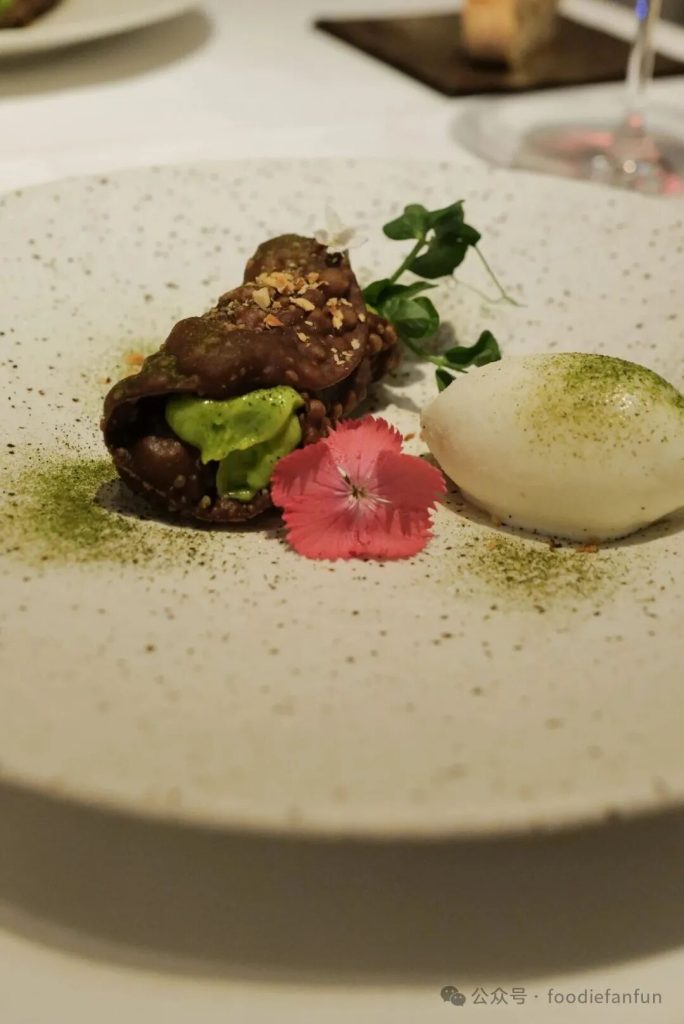
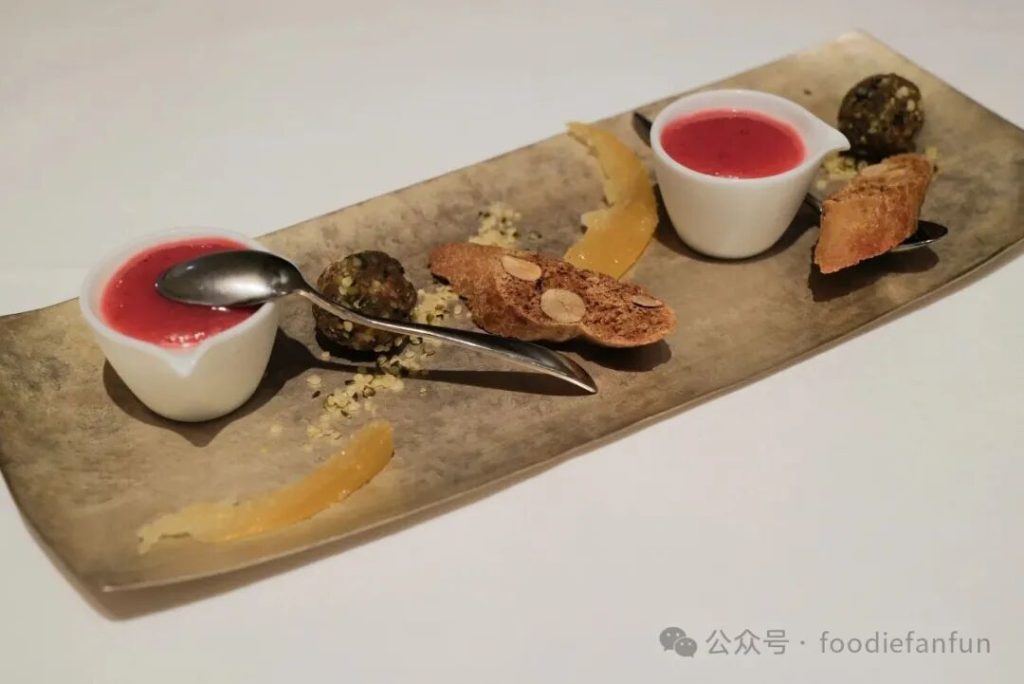
The meal closed with a cannolo filled with green pea cream. The shell was crisp, with a touch of softness, and the pea filling inside carried a delicate aroma.
The first bite suddenly felt familiar… a little like the joy of a sugar-oil cake, honestly. The ice cream alongside, with its faint tingling note, lightly reined in the sweetness.
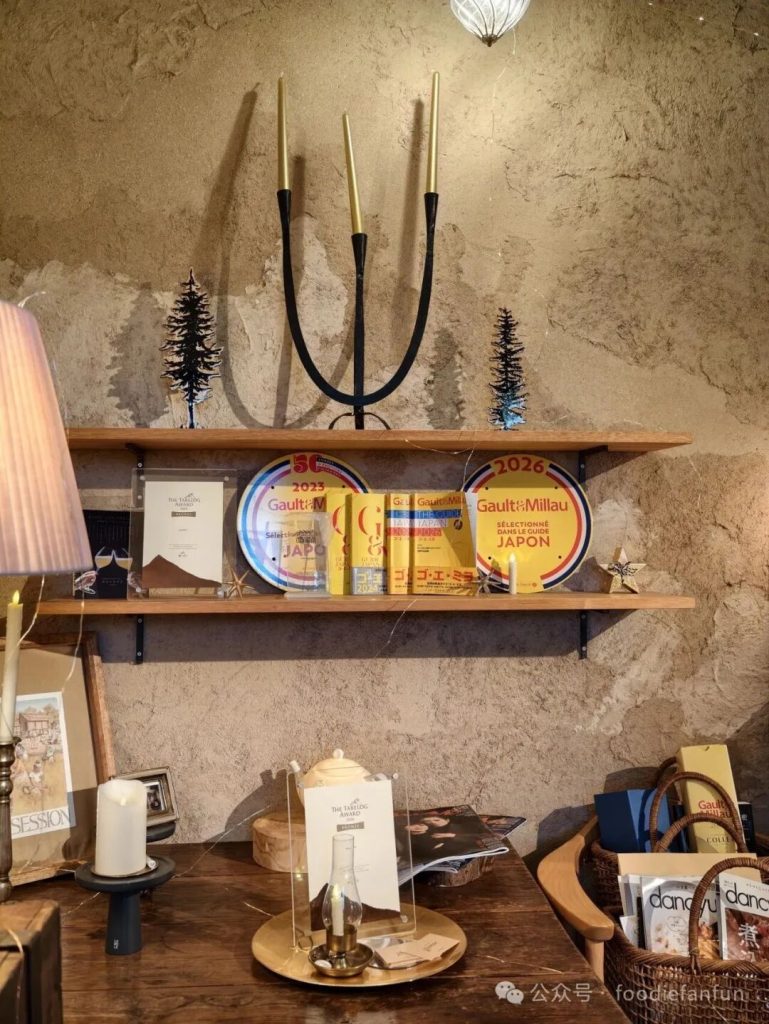
It was a truly special meal.
I rarely eat out in the countryside, and rarely see a restaurant out there express its point of view this boldly. The green, herbal sense of the mountains, the crisp bitterness of summer, an intense and straightforward deliciousness, the flavors born from how ingredients were combined — all of it came through clearly in this meal.
The bitterness of bracken, the crisp bitterness of mountain vegetables, the savory bitterness of sea squirt, the wildness between plant and sea flavors — none of it was deliberately smoothed over.
At the end, everyone got to talking. The chef was quiet, the proprietress lively, and the restaurant cat, “Meow-ko,” kept slipping in for its rounds now and then. The contrast running through the whole place was hard to picture, yet somehow it made perfect sense.
On the surface it’s restrained, gentle — but the flavor has real character. It doesn’t pile on local flourishes, yet it genuinely shows Akita’s terroir.
Genuinely impressive.
And one more thing — go for the pairing! All small pours, but every one fits the food perfectly.
ジュエーメ
Friday – Tuesday
12:00-15:00 18:30 -22:00
Dinner ¥14,520
Lunch ¥6,655/9,680
Leave a Reply