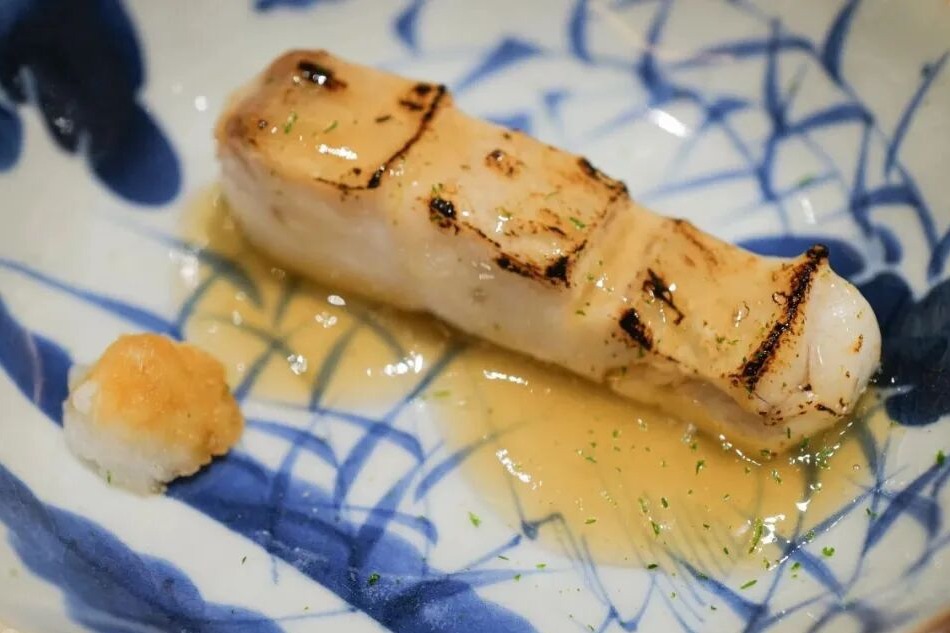
Never expected that in Tokyo, an ‘ordinary’ sushi restaurant you can book just a few days ahead would deliver the joy of chasing fish straight from the sea.
‘The red seabream was caught this morning and flown straight here.’ ‘The ghost flathead too, caught this morning.’ ‘My fish never passes through Toyosu — it comes straight from the source.’ ‘I get my fish before xx and xx (two gold-tier sushi restaurants in Tokyo) do.’
The chef says each line like it’s nothing, but there’s a bit of quiet pride underneath.
From Akashi and Awaji Island all the way to Ainan and Amakusa, the fish comes from Japan’s top suppliers — Tsuruichi, Hasegawa, Fujimoto, Mura, Yamazaki. For anyone who loves fish, this meal is genuinely satisfying.
Chef Yosuke Nishioka’s own path was unconventional too. He fell in love with fishing as a child, yet his first career was in construction. Later, wanting to work with fish, he moved into washoku, then into sushi. His training period wasn’t especially long — he went independent at 25, opening ‘Kyodo Nishioka’ in Setagaya. In 2023, after relocating to Takanawa, it was renamed to today’s ‘Sushi Nishioka.’
His style stands out as unusually sharp-edged in a city as expensive as Tokyo. He takes only six seats a day, and his set menu is priced even lower than sushi restaurants in Beijing or Shanghai.
He doesn’t lean on lineage, doesn’t rely on aging, and doesn’t play with complex seasoning. But the chef is personally friends with fishermen at local ports, built entirely around one idea: catch the fish in the morning, process it, and fly it straight to the restaurant.
Tokyo certainly doesn’t lack good sushi, but to eat a meal this satisfying, with fish that outclasses gold-tier restaurants, Nishioka genuinely offers something one-of-a-kind — the kind of experience that makes you want to come back again and again.
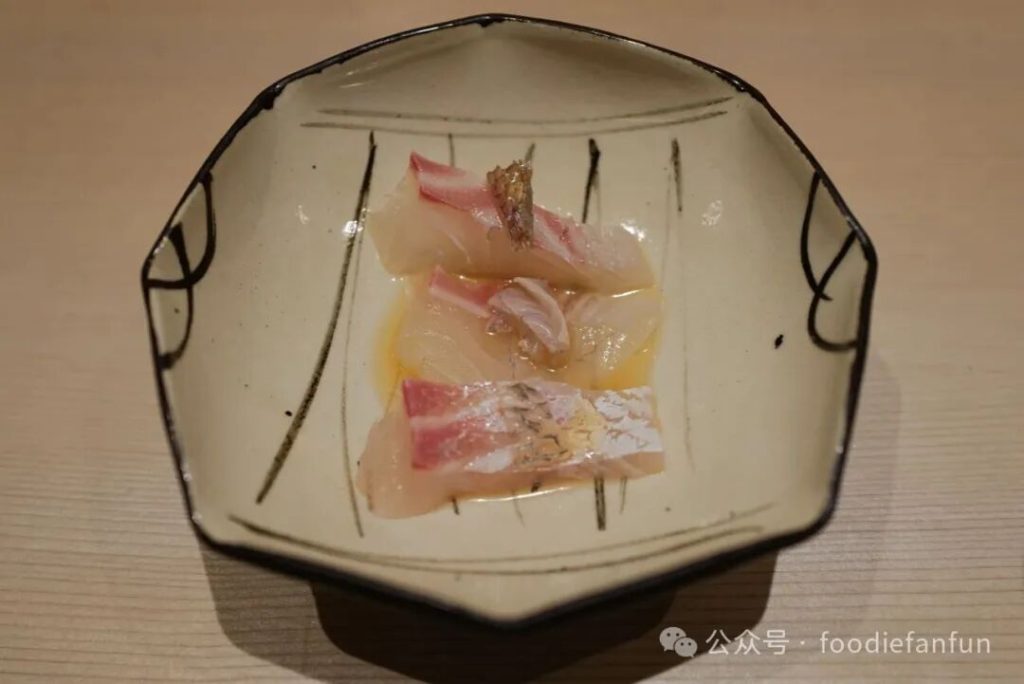
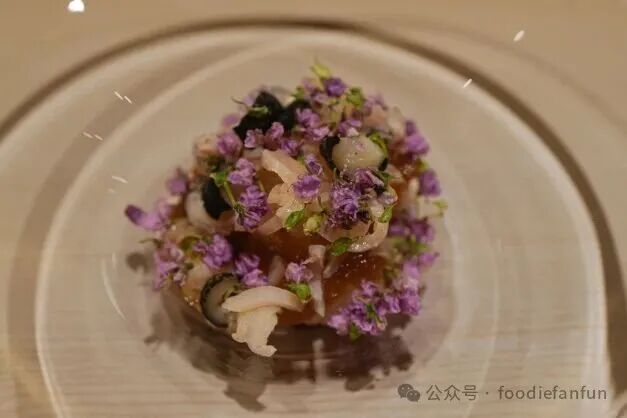
Just the first two sakana courses alone were already substantial.
The red seabream, caught early that morning, came as three large pieces combining skin, collar meat, belly, and back. Set against a fish-bone broth, the first bite rushes with freshness, followed by a structured, lingering sweetness. The flesh has strong spring and plenty of moisture, and layered with a small piece of skin, the contrast in texture comes through even more clearly.
Next came the ghost flathead, flown in from Akashi that same morning.
A small bowl, generously filled, the fish covered in its own skin and various organs. Each bite, lightly rolled in fish flesh, held a surprise. The flesh was moist and crisp, the skin even more refreshing, and by the time you reached the organs — especially the soft, rich liver — the springiness between your teeth suddenly gathered itself together.
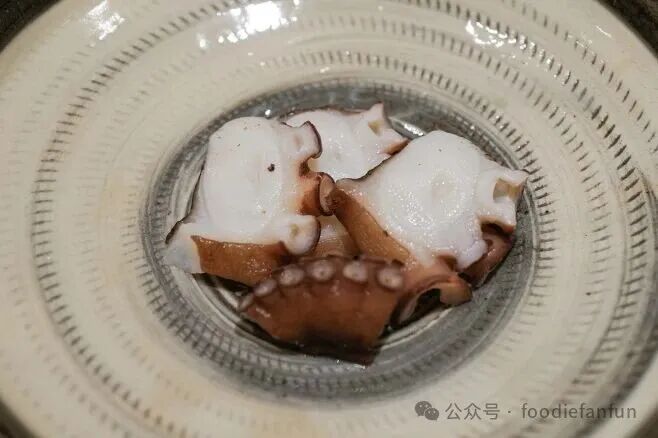
‘The octopus was just boiled in the seawater it arrived in.’ A few segments of one leg revealed completely different textures — add a touch of wasabi, and the octopus’s own faint fragrance starts to emerge, and the more you chew, there’s even a hint of milkiness.
Genuinely a bit of showing off, wrapped in genuine resourcefulness.
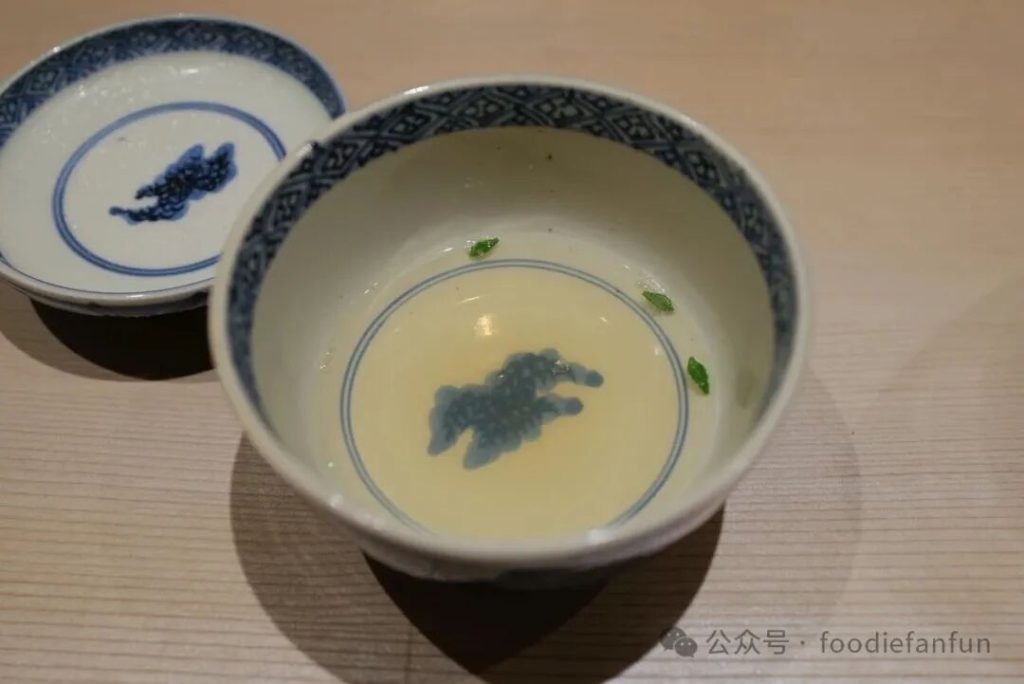
The bean clam soup reduces form entirely into broth — a stock made from nothing but bean clams and water, pure, with a sweetness that keeps rising to the surface, giving it a genuinely elevated quality.
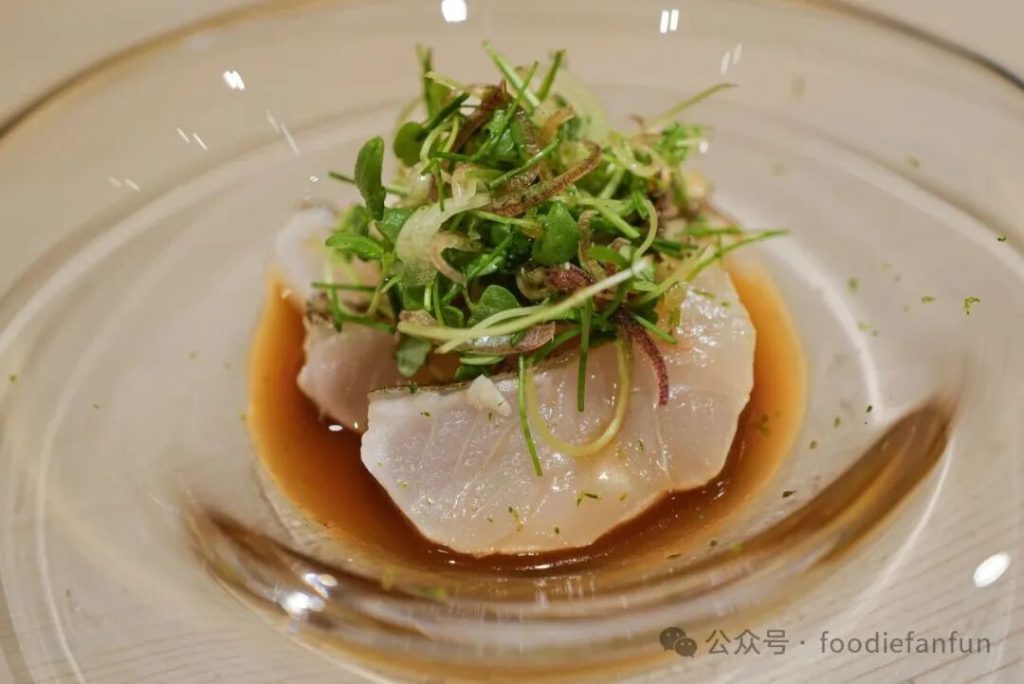
Next, kijihata — a type of grouper — with just a touch of scallion and shiso sprout. The flesh is sweet and crisp, clean and direct on the bite, a beautiful kind of purity.
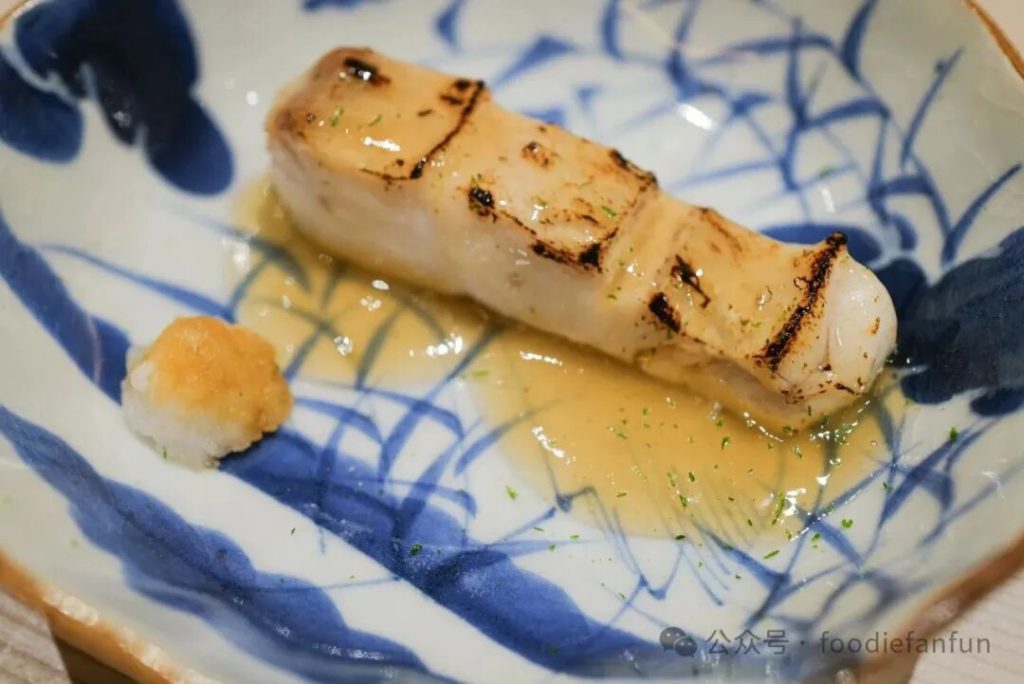
The false bonito took on an entirely different character, cooked through and topped with a rich-looking sauce. On entry, the fat slowly melts, the broth’s umami concentrated, yet the seasoning holds back just enough that what lingers is still the fish’s own fragrance.
By the end of the sakana courses, Nishioka’s character was already clear. Great fish, light seasoning — maybe a touch understated, but solid and genuinely impossible to turn down.
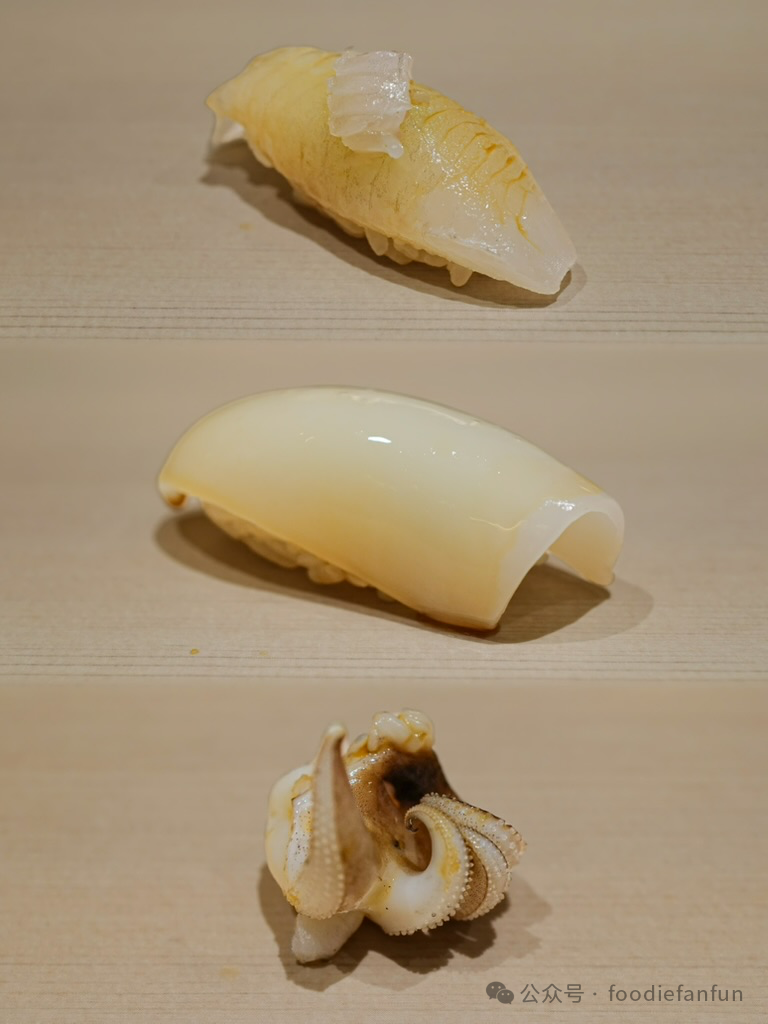
In the nigiri section, it’s obvious the fish is the lead role, with the rice playing a supporting part.
The mottled flounder came topped with a small piece of its own fin frill, and within the soft, springy texture, a precise fish aroma slowly seeped through.
Squid is about as common as it gets at a Japanese sushi counter — even when quality is high, it usually needs tight, deliberate knife work to really shine, genuinely demanding on the chef. But Nishioka’s piece here, left uncut, was soft yet beautifully springy, with a sweetness that was surprisingly intense. The last time I had squid this good on its own merits was at a port on Sado Island.
Right after, a small piece of squid tentacle — crisp in a genuinely delightful way.
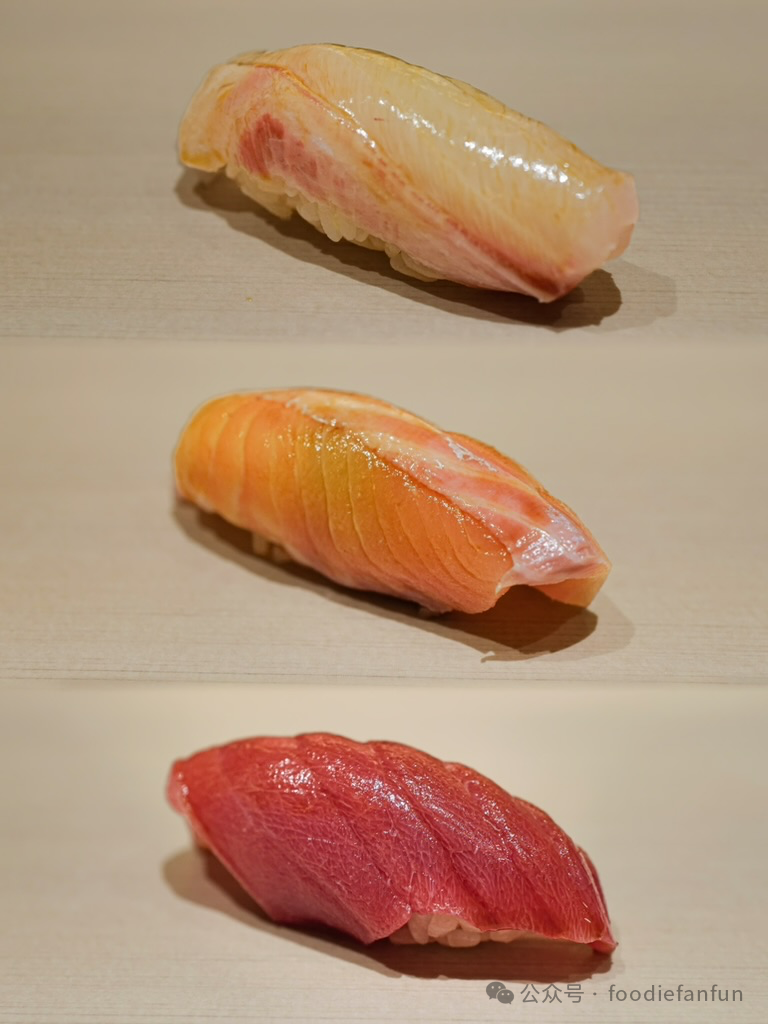
White-spotted emperor is a warm-current fish with extremely limited market supply — a rare guest outside its home region, and we got to have it too.
On entry, first a juicy crispness; then, as teeth meet the thick flesh, it slowly softens, releasing layer after layer of sweetness from the fat.
Oh! There’s even a hint of milkiness.
The biwa trout was also beautiful, full of fragrance, tender flesh, a clean bite. And Senzaki’s back-toro, part of the summer tuna lineup, was soft to the point of almost no resistance, with a faint seaweed aroma drifting up — an extremely distinctive expression.
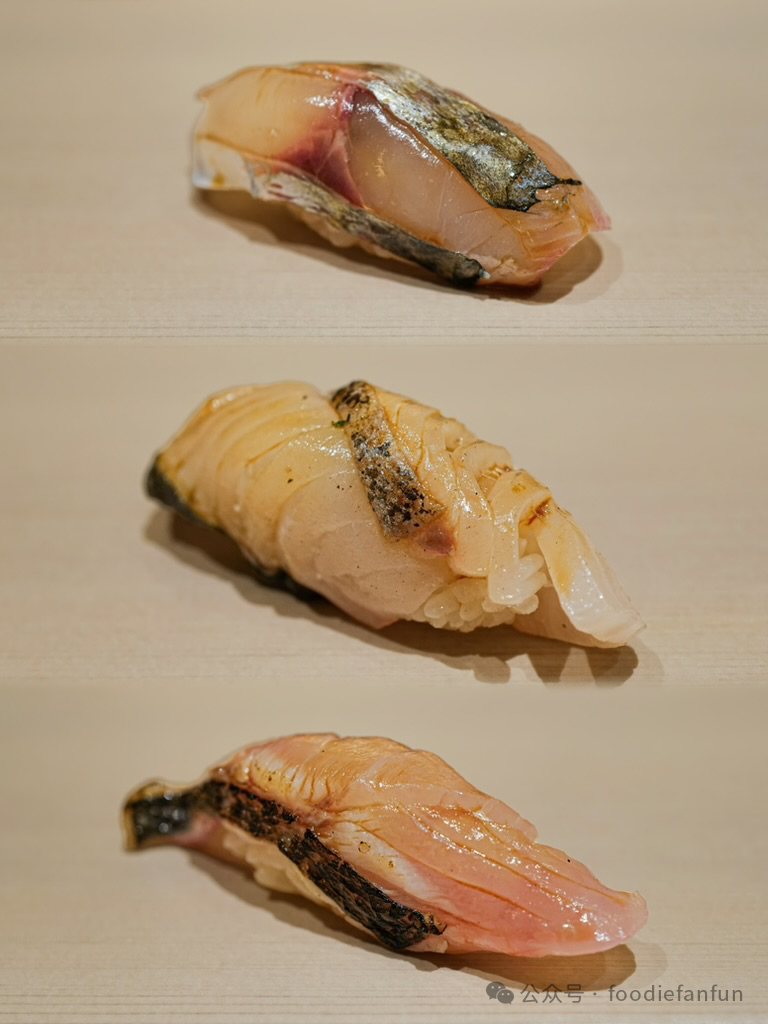
The horse mackerel came as two beautiful pieces layered together, bold and generous. Both crispness and sweetness were lovely, the fragrance expressive, finishing quickly in the mouth — the seasoning was light, yet there wasn’t a trace of fishiness.
Two pieces of Spanish mackerel nigiri cleverly layered the back and belly together, extremely gently soft, the sweetness tightly concentrated, with a noticeable hint of milkiness too.
Nishioka clearly knows, inside and out, how to show guests at the counter the different kinds of ‘softness’ and ‘fresh sweetness’ across white-fleshed fish.
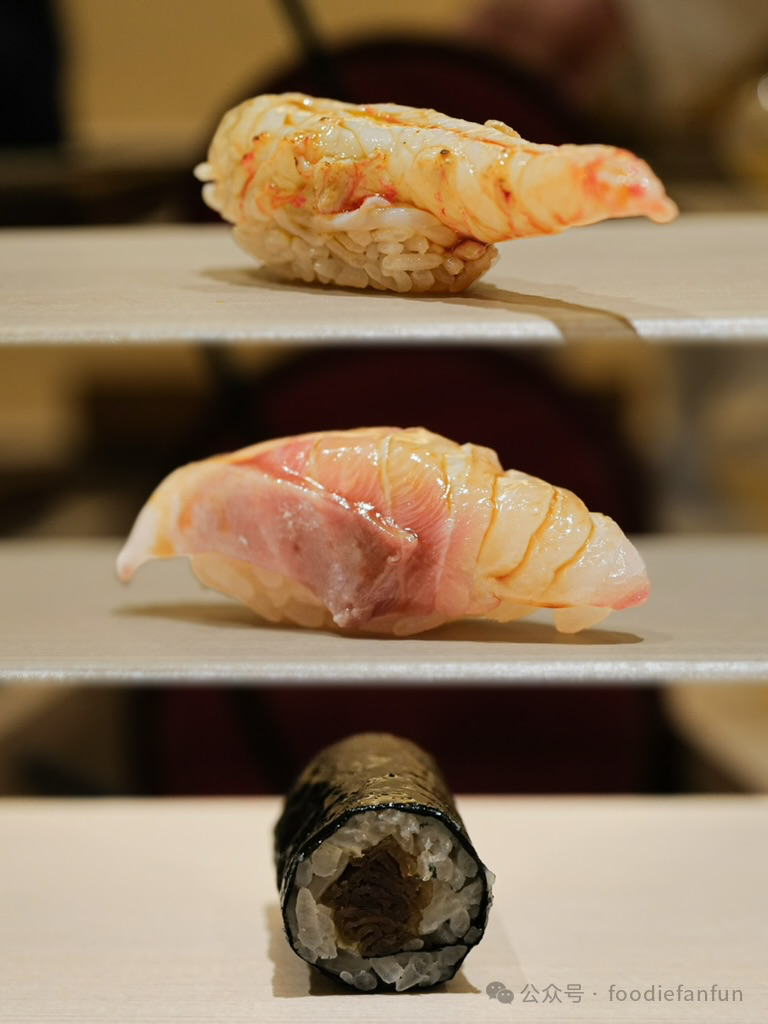
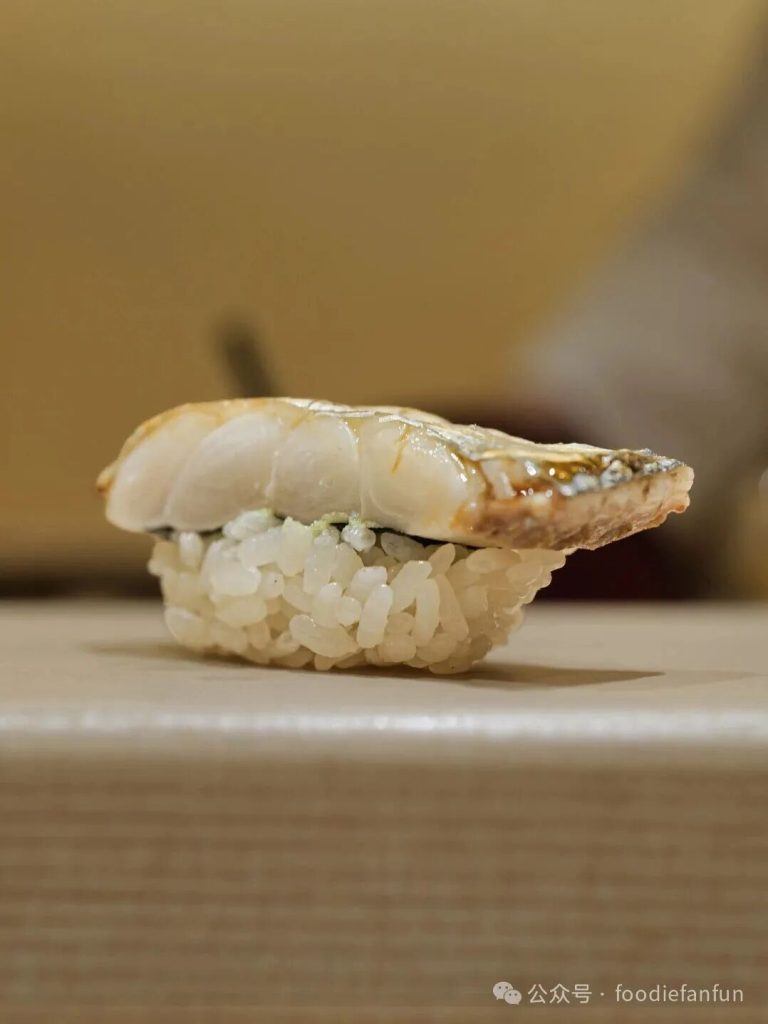
The hairtail was genuinely excellent.
Even the grilled state alone was mouthwatering — shaped into nigiri with a tiny sheet of nori tucked in the middle, giving the umami a three-dimensional quality while making the fish’s softness even more distinct. It nearly melts the moment it hits your mouth, yet carries a highly concentrated freshness, sweetness, and richness.
You need good fish, but you also need someone who can recognize it.
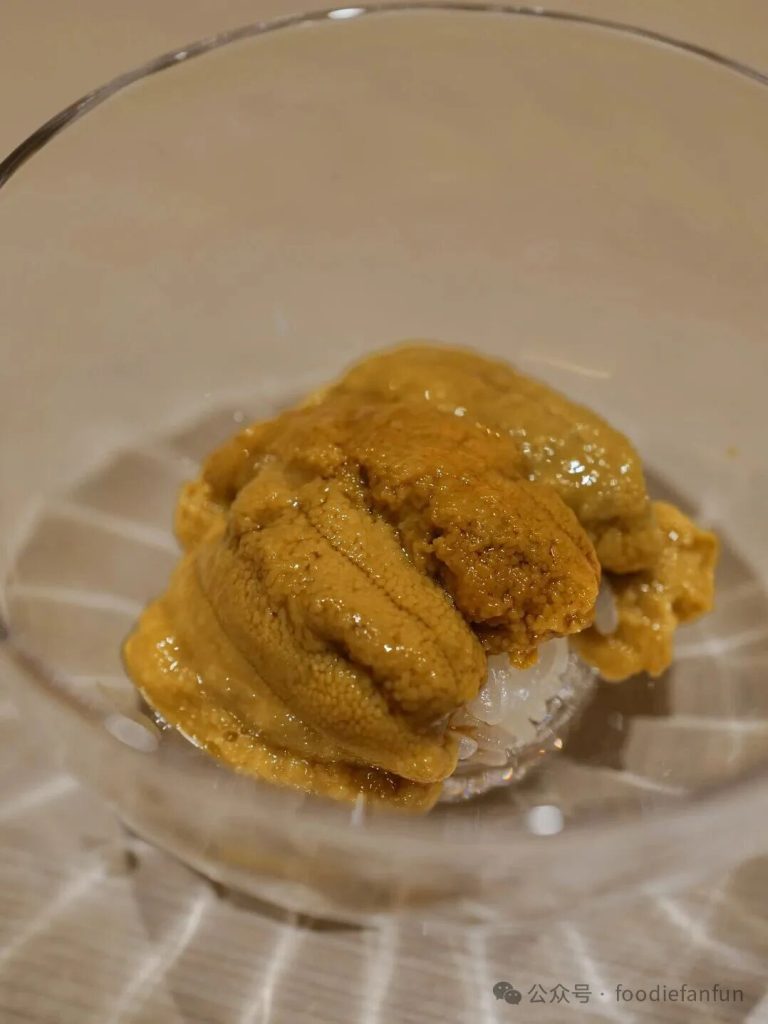
The meal closed with a bowl of Rishiri purple sea urchin — without the protection of alum, its appearance slightly messy, but the flavor showed a genuinely clean minerality and sweetness.
This meal was really a pure demonstration of ‘connections,’ ‘sourcing power,’ and ‘fish quality.’
A restaurant that can calmly and clearly tell you exactly which fisherman handled which fish, what time it was processed that morning, when it arrived at the restaurant today, and when it was prepared at the counter — that’s a genuinely distinct kind of charm.
It feels like, while other chefs are focused on winning over their guests, Nishioka is more focused on winning over the fish and the fish dealers at the ports. That kind of obsession with fish quality and freshness genuinely produces a stubborn, uniquely resourced sushi restaurant unlike any other in Tokyo.
If there’s one clear issue with this meal, it’s that the flavor profile runs a little uniform.
White-fleshed fish naturally carries a slow, drawn-out kind of freshness that needs to be savored patiently, and the seasoning here is very simple on top of that. After a dozen-plus fish in a row, it’s hard to land an explosive impact.
If you’re more used to the traditional Edomae style — constantly shifting between tsuke, jime, simmering, and searing — this meal might genuinely feel like it’s missing a bit of excitement.
But personally, I genuinely loved the dining experience at Nishioka. It’s rare to come across this many white-fleshed fish, all in such excellent condition, in one sitting in Tokyo — that kind of happiness saved me countless Shinkansen trips out to the ports myself.
Reservations currently only require 5-7 days’ notice.
If you’re a genuine fish lover, my advice: go now, while you can.
鮨 にし岡
Dinner 18:30 –
Sunday Lunch 12:30 –
Omakase Course ¥33,000++
Leave a Reply