In Europe and the US, as long as you book early enough, you can pretty much always get a table. Japan runs on an entirely different logic — booking a restaurant here feels more like leveling up in a game.
Some restaurants release seats a year in advance, some only take regulars, some can only be booked a handful of times a year, and some will quietly blacklist you for “bad dining behavior.” Rules that sound exaggerated elsewhere are simply everyday normal in Japan.
Take this place, for example — a Tabelog-silver restaurant, Sanwa, that took a hundred phone calls to book.
Chef Watanabe Daisuke was born in Yamanashi, where his family already ran a yoshoku restaurant. He later trained in Italy twice and studied technique at Tokyo’s celebrated French restaurant Chez Inno. While serving as head chef at Nakameguro’s RODEO, he brought the restaurant into Tabelog’s bronze ranks (though it’s no longer what it once was), before going independent in 2021 to open the Sanwa we know today.
In a lot of write-ups back home, people always emphasize how outstanding this restaurant’s pasta is. But eating through it in person, Sanwa reads more like a highly polished modern Italian bistro — the appetizers are the more impressive part, and the overall style leans toward being directly aromatic, satisfying to eat, and especially suited to drinking alongside.
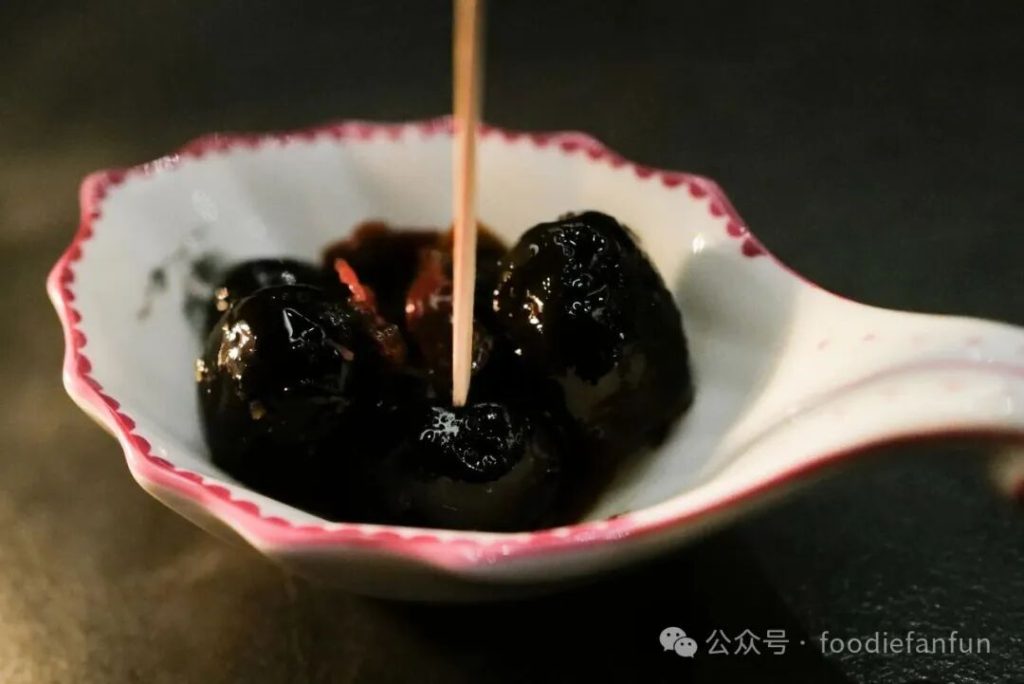
It opens with olives marinated in sherry and semi-dried tomato, carrying a bit of meaty depth and fermented aroma that hooks the appetite right away. The meal itself then follows naturally into cold plates.
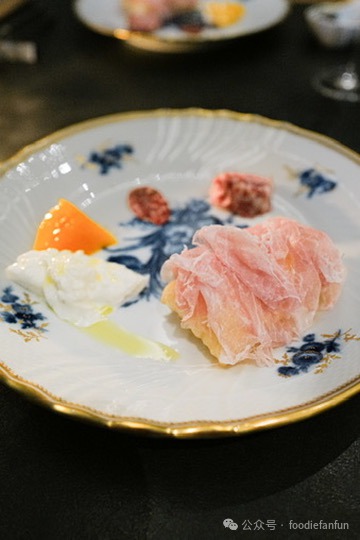
The hand-carved ham is sliced impossibly thin, nearly melting on its own the moment it hits the mouth. The hollow fried dough laid on top is lighter than expected, its crispness weaving together with the ham’s melting saltiness — richness and airiness existing at once, setting each other off just right. You can find the same combination in plenty of places, so what shows a chef’s real skill is the sense of balance.
The two salamis beside it are more direct in style — firm in texture, richly meaty, classic cold cuts.
The burrata on the plate is paired with mango. A small mango with its sweetness kept restrained lets the cheese’s milky richness read cleaner, and pulls the dish slightly away from the meaty aromas before it, lightening the rhythm a touch.
It’s only at this point that it suddenly hits me — as a course meal, no server has once asked about dietary restrictions or allergies the whole time.
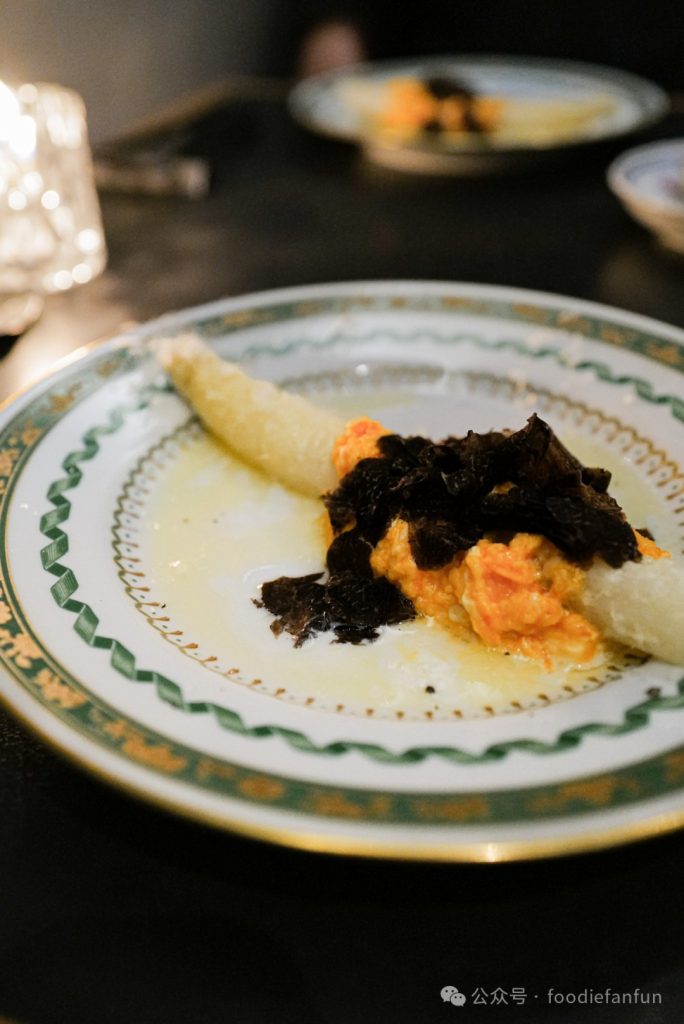
White asparagus, scrambled egg, cheese, black truffle, olive oil — a combination that looks simple, yet takes purity to its absolute extreme.
The aroma is direct enough, yet it demands even more of the chef — doneness, tenderness, and overall balance. In Sanwa’s expression of it, everything stops exactly at the most comfortable point.
The cheese’s rich aroma is held up by the white asparagus’s freshness and tenderness. The truffle’s depth echoes the scrambled egg’s softness and fullness. Flavors stack up layer by layer, yet nothing feels excessive anywhere.
Everything, truly, is exactly right.
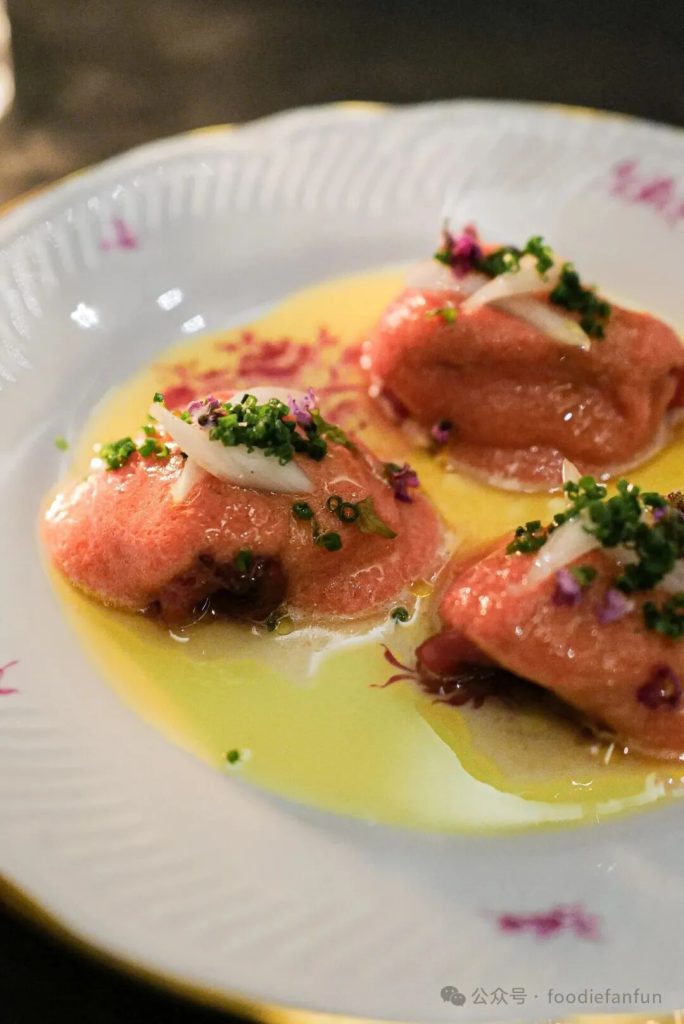
Using hon-maguro for carpaccio already carries a bit of luxury in itself.
Sliced at just the right thickness, both the fat and the freshness come through clearly. The tomato’s aroma provides good support here, making the tuna’s richness read cleaner. Shiso flower brings a faint touch of freshness, enriching the overall layers of aroma.
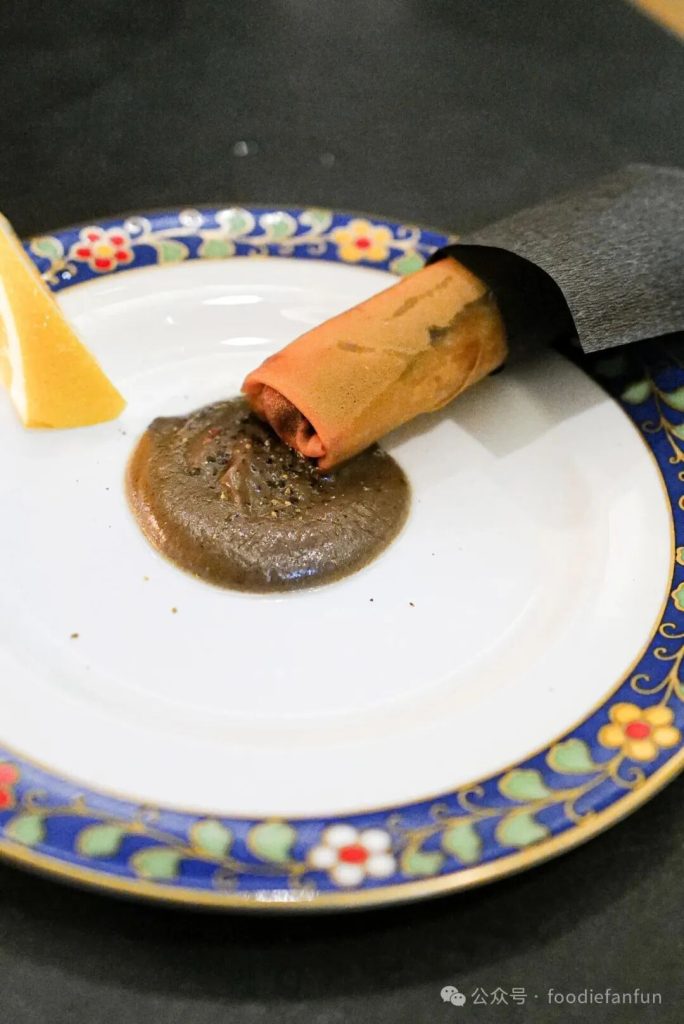
Sardine, meanwhile, is made into a spring roll. The wrapper is unusually thin and crisp, nearly shattering the moment it hits the mouth, yet the sardine’s own flavor inside is well preserved. Don’t hesitate to add the lemon and sauce boldly — they reorganize the fish’s fattiness and freshness back into balance, making the flavor feel more complete.
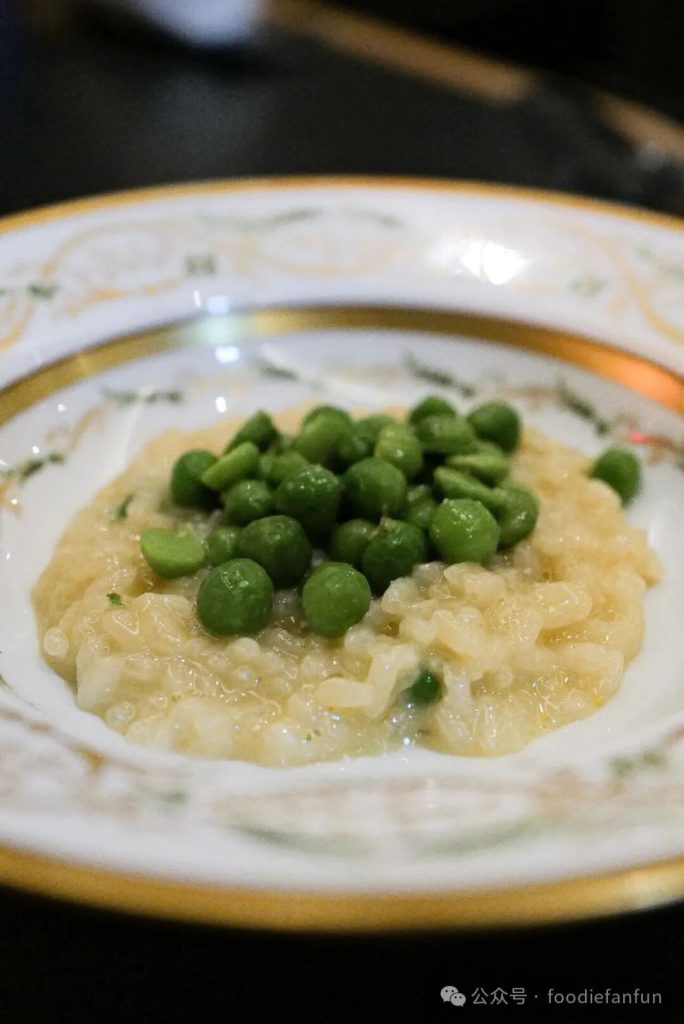
The risotto on the standard menu uses green peas at the height of spring, made with no cheese, just water and salt. The method is extremely minimal, letting the pea’s own clean sweetness come through completely — like a bowl of savory porridge carrying the scent of spring, its flavor clean.
Only the salt runs slightly high, leaving a salty film clinging to the mouth by the end — a bit of a shame.
The set menu’s portions look ordinary enough, but the fullness brought on by layered fat and flavor is unusually intense. By this point I’m already at about 90% full, and the choose-your-own pasta and meat course haven’t even started.
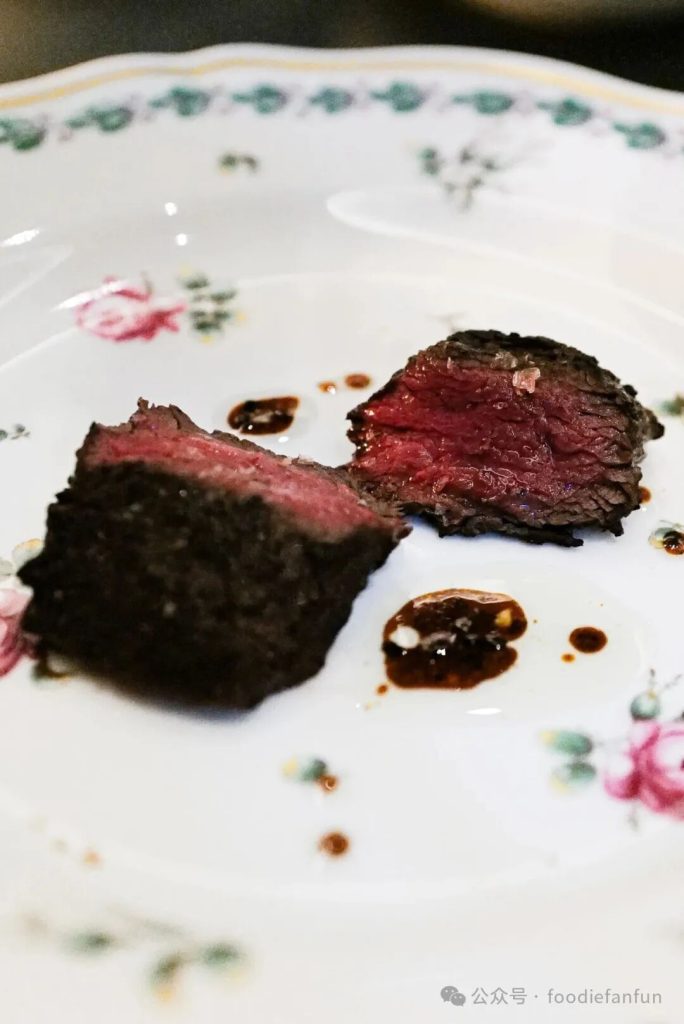
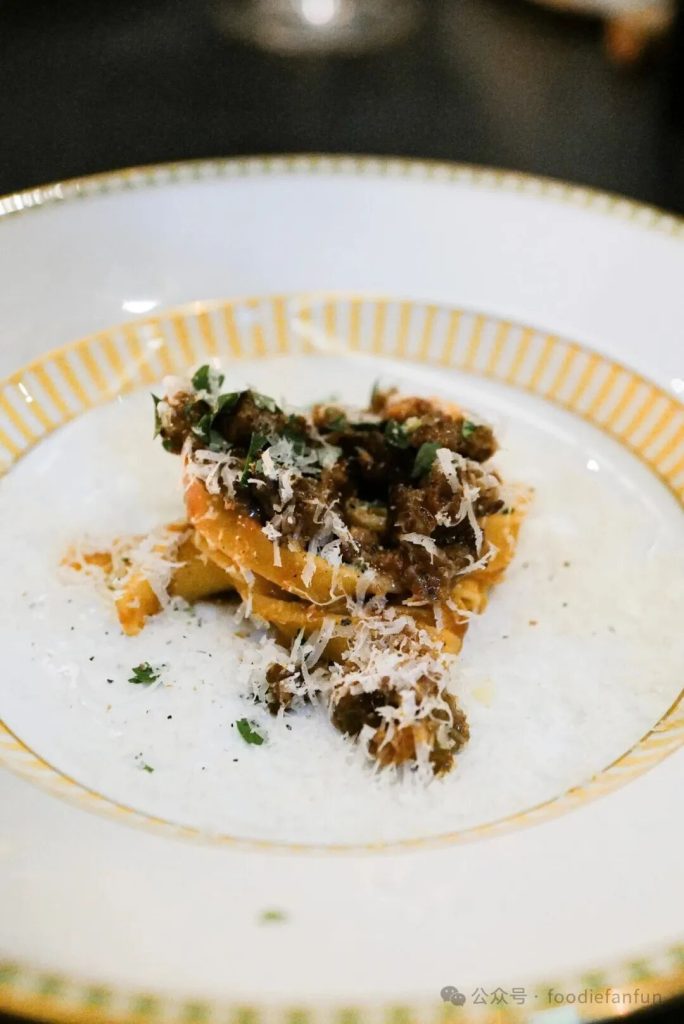
Sanwa’s menu format includes one pasta and one main course built into the set, plus five or more choose-your-own options, paired with a certain degree of seasonality.
All I can say is: more choices doesn’t necessarily mean better choices.
The venison main course doesn’t shine much — it reads a lot like roast beef, short on flavor, though with a very strong cured quality. The meat’s fiber feels stiff, yet without any real firmness to it.
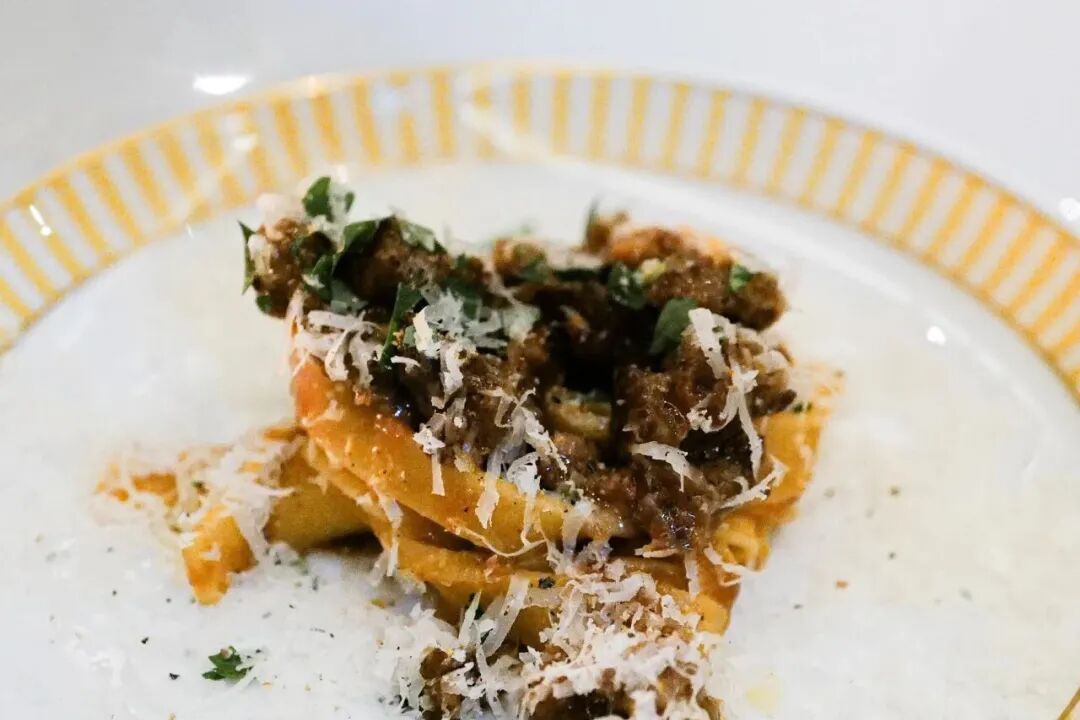
The meat-sauce pasta is traditionally delicious, its big chunks of meat setting off the noodle’s bite even more.
But it all falls apart with the seasonal firefly-squid squid-ink pasta. To put it simply: it’s just enormously salty. Salty enough to short-circuit your brain.
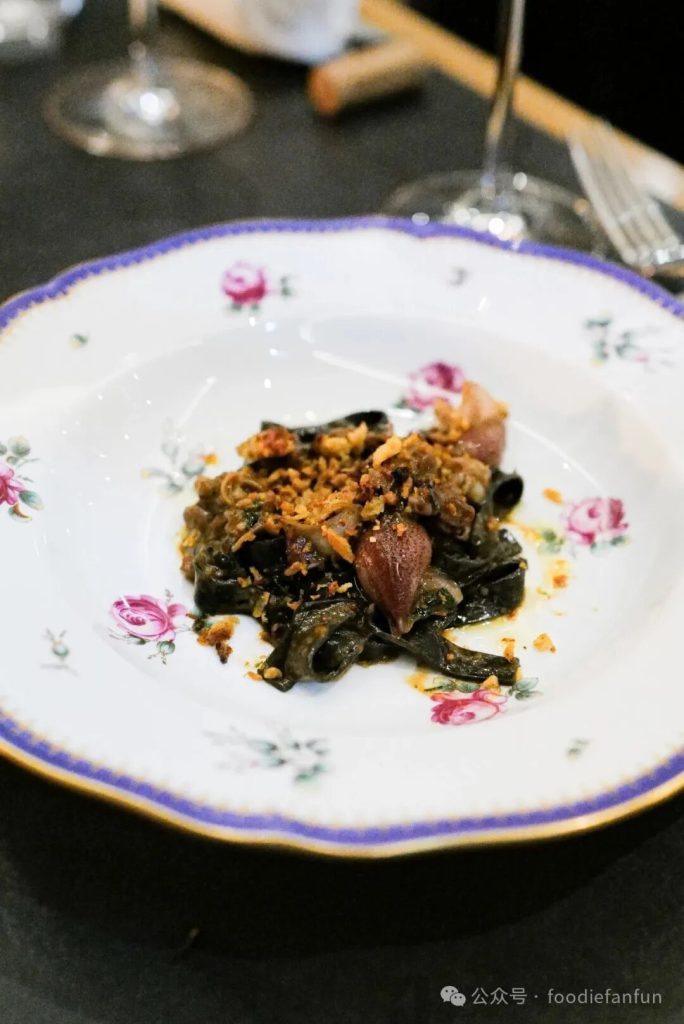
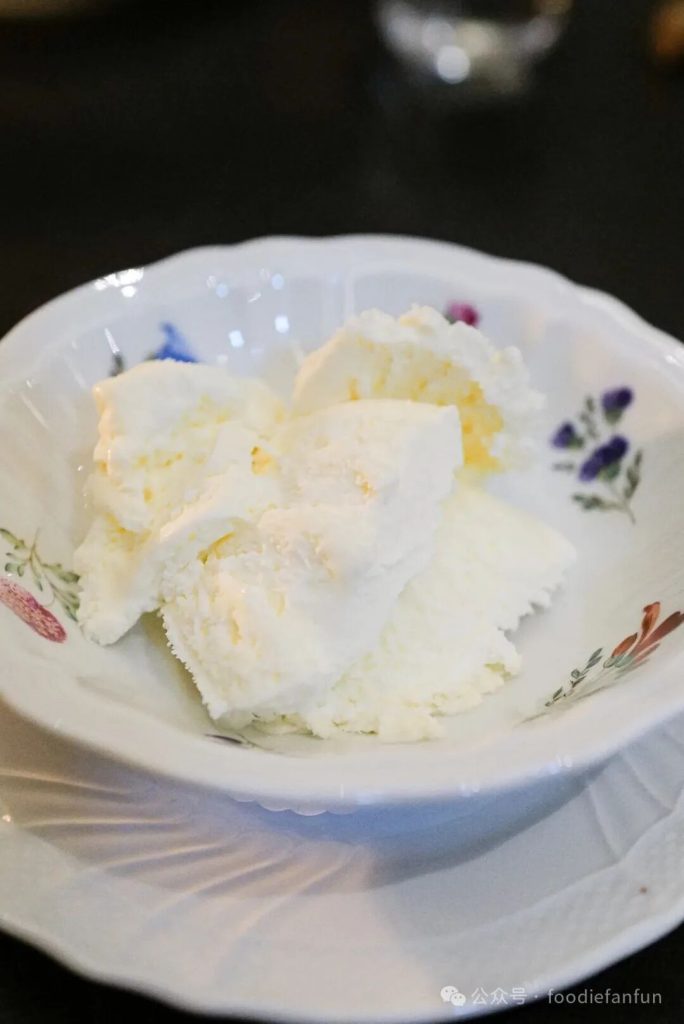
The experience at Sanwa is actually quite distinctive.
The pasta that so many people praise is a touch inconsistent — it’s actually the appetizers that shine brighter, and nearly every one of them pairs beautifully with a drink. Good ingredients presented in the most direct way possible: pure, delicious, well suited to drinking, and reasonably priced too.
It feels a lot like a genuinely popular corner Italian bistro — you know going in that you can settle in, eat good ingredients at your own pace, and drink a little without fuss. If what’s in front of you isn’t quite enough, there are plenty of options to add on.
So here’s hoping the pasta will be better on the next visit.
Sanwa
5-13-14 Shirokanedai, Minato-ku, Tokyo, Shirokanedai THE1000 B1F
Wednesday – Monday 18:00 – 23:00
Chef’s Menu ¥22,000++
Leave a Reply