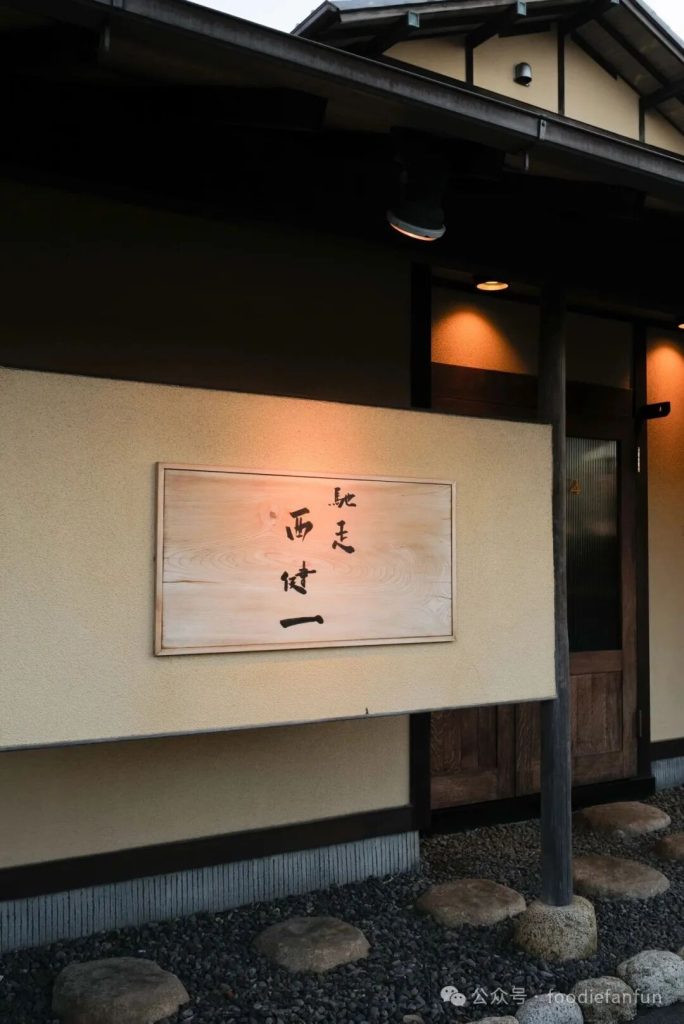
Chisou Nishi Kenichi counts as one of the more interesting Tabelog-gold restaurants in Japan.
Chef Nishi Kenichi, a Hiroshima native, trained in Tokyo and France, and to get as close as possible to the source of ingredients from Suruga Bay and Enshu-nada, he moved his restaurant straight to Yaizu City in Shizuoka Prefecture.
Plenty of chefs find ways to ship good ingredients to their restaurant or hometown, but moving your own restaurant directly to a small town right at the source — and choosing to do French cuisine there of all things — genuinely takes some courage.
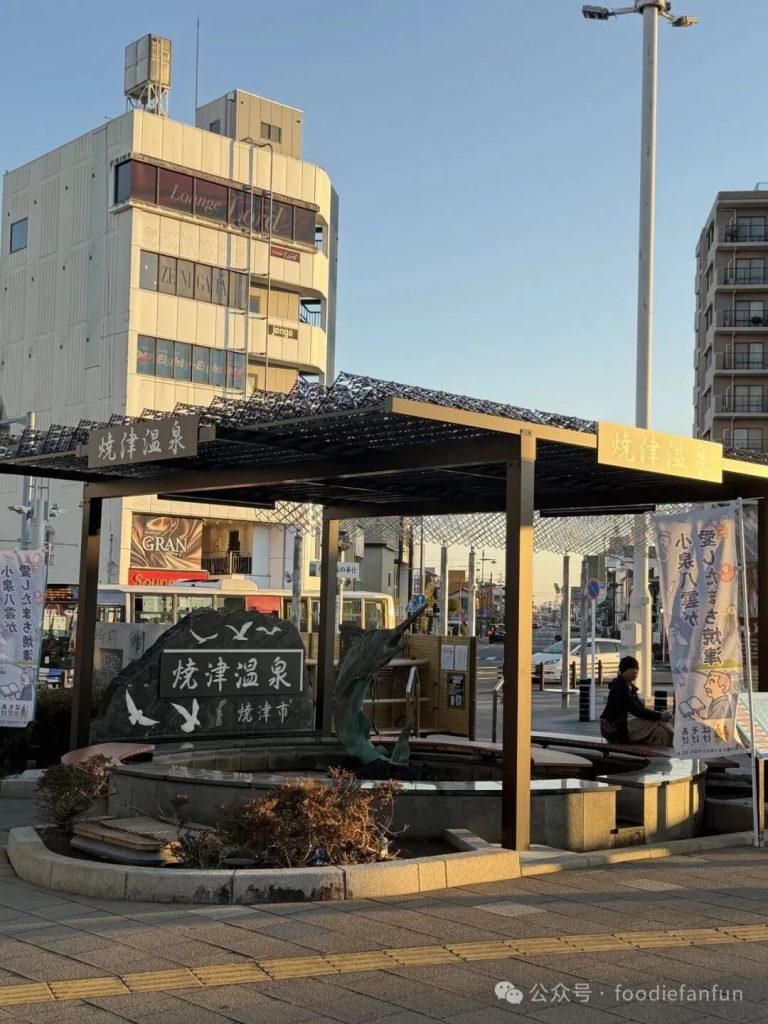
The whole story starts with Nishi Kenichi, back in his Hiroshima days, already in touch with Yaizu’s long-established fish shop, “Sasue Maeda Fish Store.”
What moved him was Maeda Naoki’s understanding of fish. From how the fishermen are chosen, to the judgment behind the cut, the handling method, the time in transit, to the fish’s condition right before entering the kitchen — every step revolves around the same goal: getting the fish onto the table at its best tenderness and flavor.
It was only when Nishi Kenichi tasted fish in Shizuoka that had been “landed today, served today” that he truly realized just one day’s difference in transit time could put the flavor of a fish on a completely different level. So he decided to shut down his restaurant in Hiroshima at any cost and move to Yaizu, opening today’s “Chisou Nishi Kenichi” in 2022.
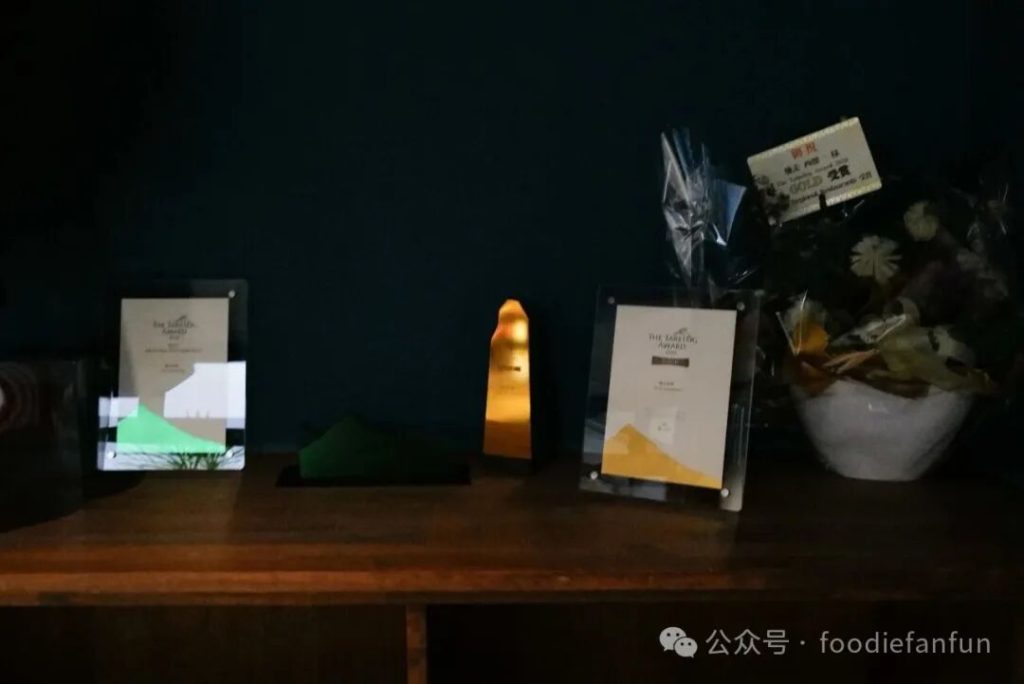
The very next year it earned a 🥉 Tabelog bronze, and quickly climbed to 🏅 gold soon after, even being selected as a “Best Local Restaurant” in 2026.
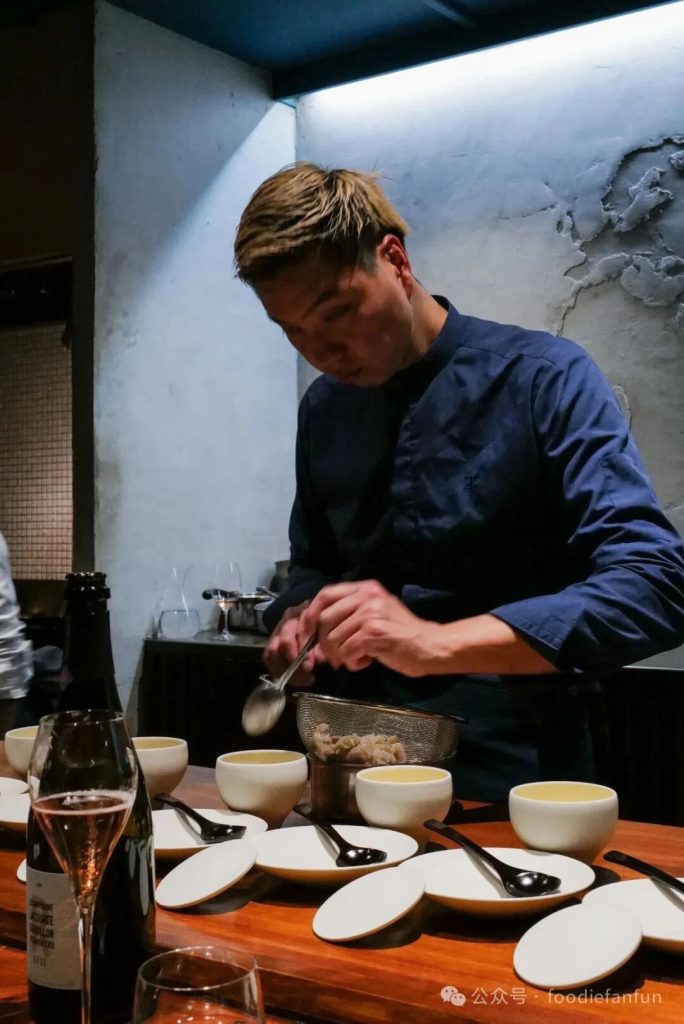
Eight counter seats, all guests seated together, the meal begins all at once. Nishi Kenichi’s counter can be described as unusually quiet.
The chef doesn’t exchange much small talk either, barely any eye contact even, focused entirely on the food, his exchanges with his assistant almost inaudible. But the opening dish is delicious enough to hit you straight in the chest.
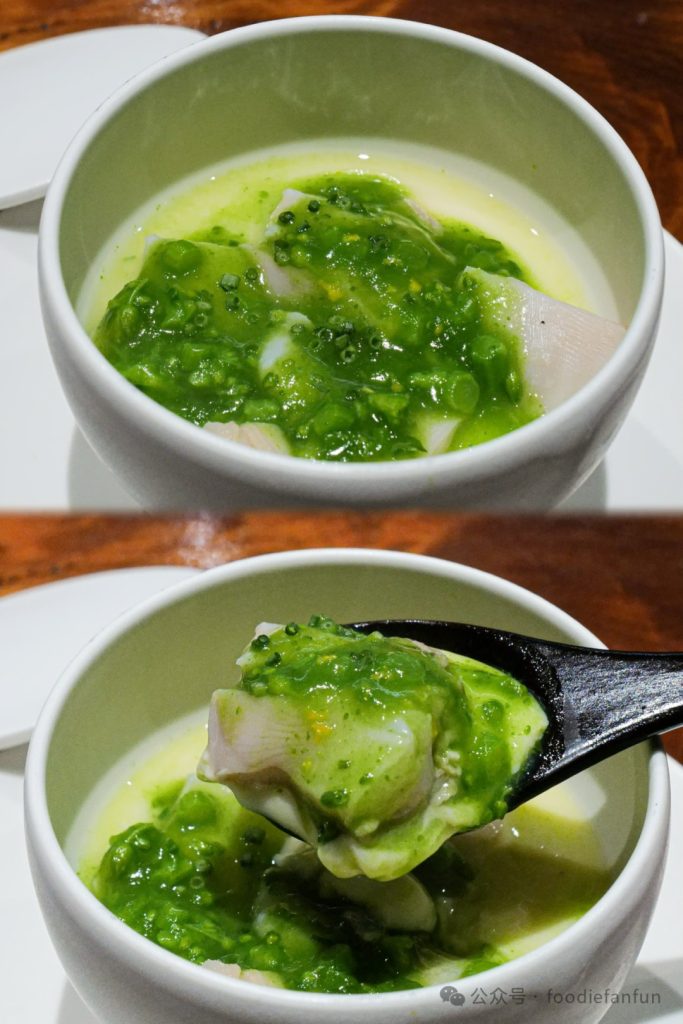
It opens with a warm bowl of chawanmushi. Clams, fava beans, and rapeseed blossoms float on the soft egg surface — spring at a glance.
The clean, fresh aroma of the vegetables overlaps with the clam’s springy sweetness in the mouth. The egg custard itself is extremely delicate, like a stage gently holding up these ingredients, letting every flavor come through clearly. Each carries its own distinct character, yet they form a perfectly balanced whole through the interplay of temperature and texture.
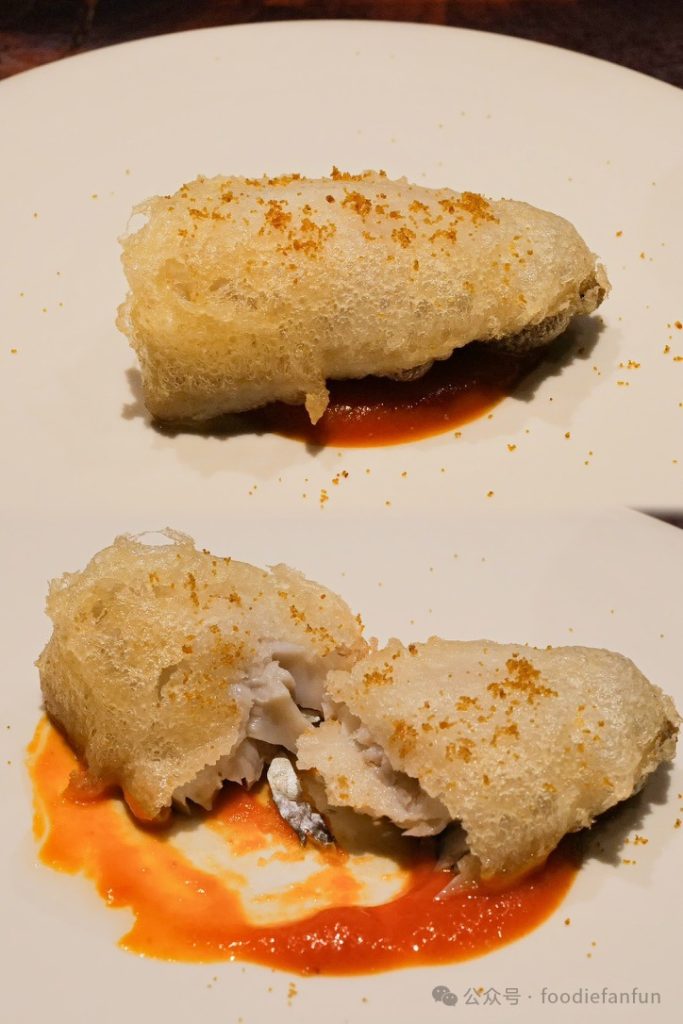
Aji is fried to golden brown and served. The exterior is cleanly crisp, while the inside still keeps its softness and moisture. But what’s really striking is that vivid tomato sauce at the bottom of the plate.
It uses Kakegawa-grown tomatoes with a sugar content of 12 — already carrying a sweetness close to fruit, its flavor compressed tight and concentrated. Made into a sauce, it carries none of the heaviness, instead presenting a clean, bright tomato aroma with an almost transparent freshness and sweetness.
Delicate, soft, yet carrying a restrained kind of strength.
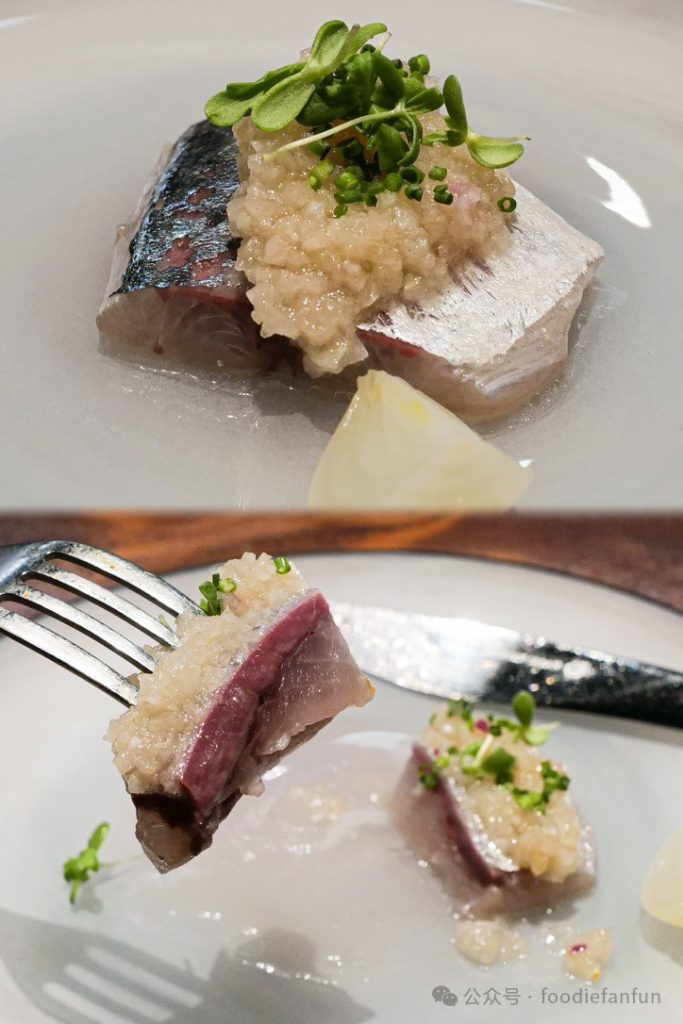
And right after, a real showcase of the advantage that comes from ingredients this close to their source.
Mackerel, just landed that morning, lightly charcoal-grilled over hickory. The heat is applied extremely lightly, more like adding a layer of warmth and aroma to the fish than changing its state.
The fish’s flesh is astonishingly firm, its texture pure, without a trace of off-flavor. The high freshness doesn’t just translate to “fresh” — it’s a clean, lingering sweetness that slowly unfolds in the mouth.
The acidity of the pickled onion laid on top is beautifully judged. Moist and crisp, carrying a touch of coolness, cutting through the umami and fat between each bite of fish, making the overall rhythm feel fresher and more layered.
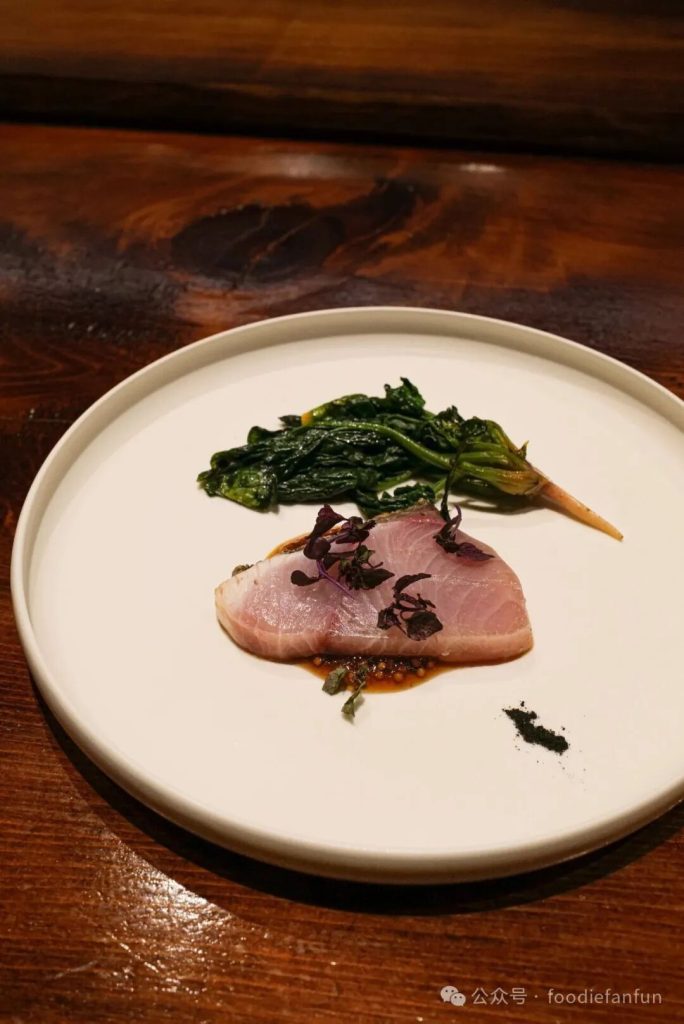
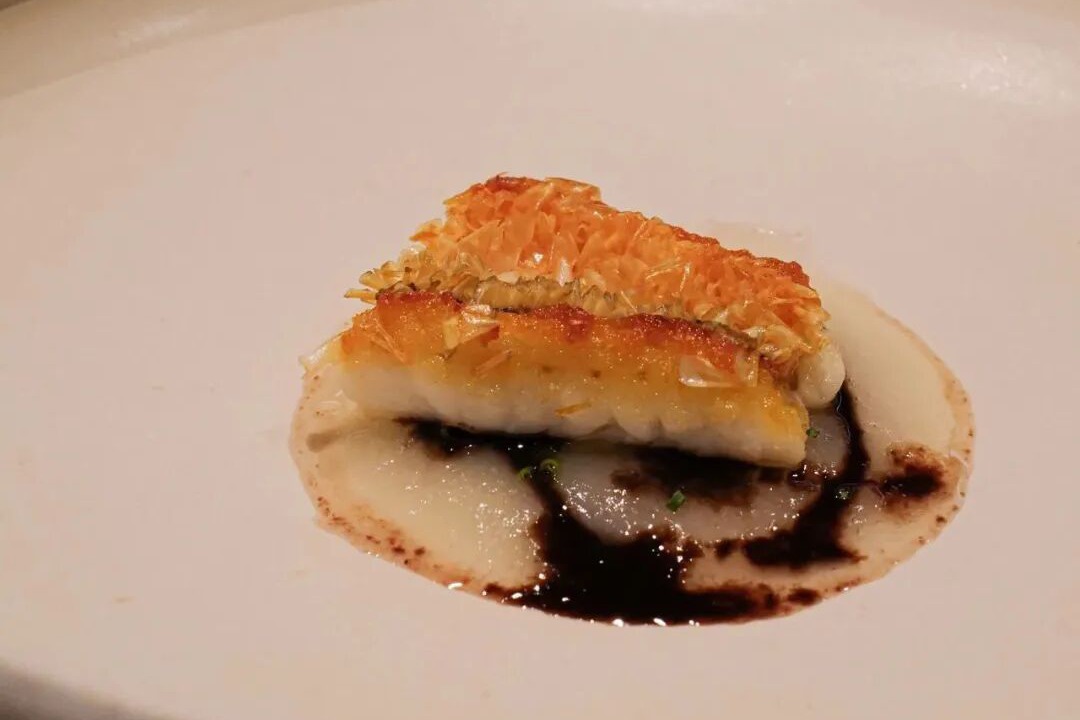
Then comes horse mackerel local to Yaizu, made into a very special scale-grilled dish. Unlike many restaurants that chase the visual impact of a whole golden scale-covered fillet, Nishi Kenichi instead takes only a small skin-on section, letting the large piece of flesh lie naturally on the plate, still holding onto its translucent pink color.
The skin is grilled to just the right crispness, the tiny scales propping up a light texture. The fish is dipped in a mustard seed sauce as it goes in, and after the full richness of the fat, the sweetness slowly stretches out, leaving behind a clean, lingering sweetness with none of the heaviness of oil.
The vegetable sprouts served alongside hold their own too, quickly stir-fried right at the counter by the chef. The heat is extremely light, preserving the vegetable’s own freshness and moisture, adding a touch of light freshness to the whole plate.
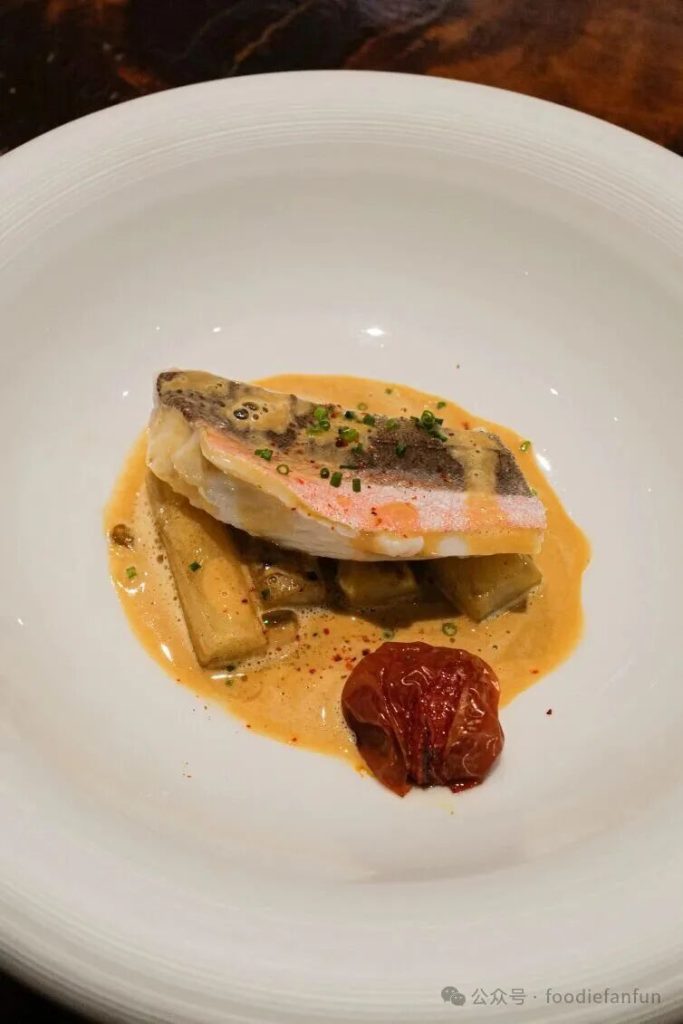
Steamed hobo (red gurnard), its flesh firm yet tender, with a clear sense of grain. The accompanying shrimp-roe sauce is clean and concentrated, without a trace of off-flavor, amplifying the sea’s umami directly. The small tomatoes beside it carry a faint, barely-there smokiness, while the white asparagus lining the bottom of the plate holds its own too, sweet and soft yet propping up a note of clean crunch.
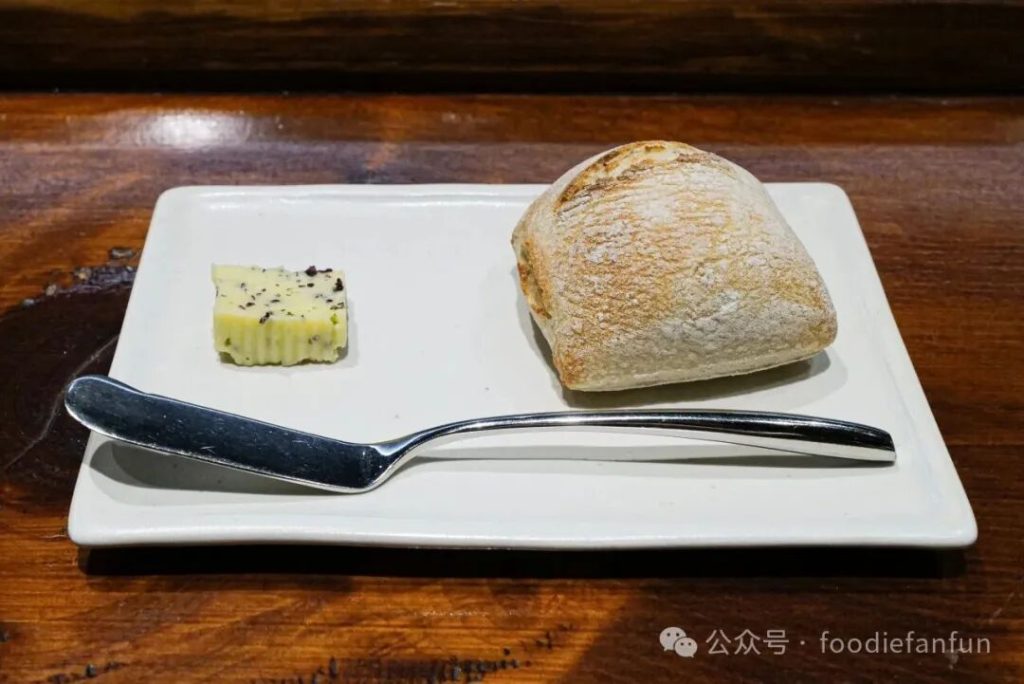
I grabbed the bread and wiped the plate clean.
A remarkably gentle dish. Delicious without being aggressive, yet deeply satisfying.
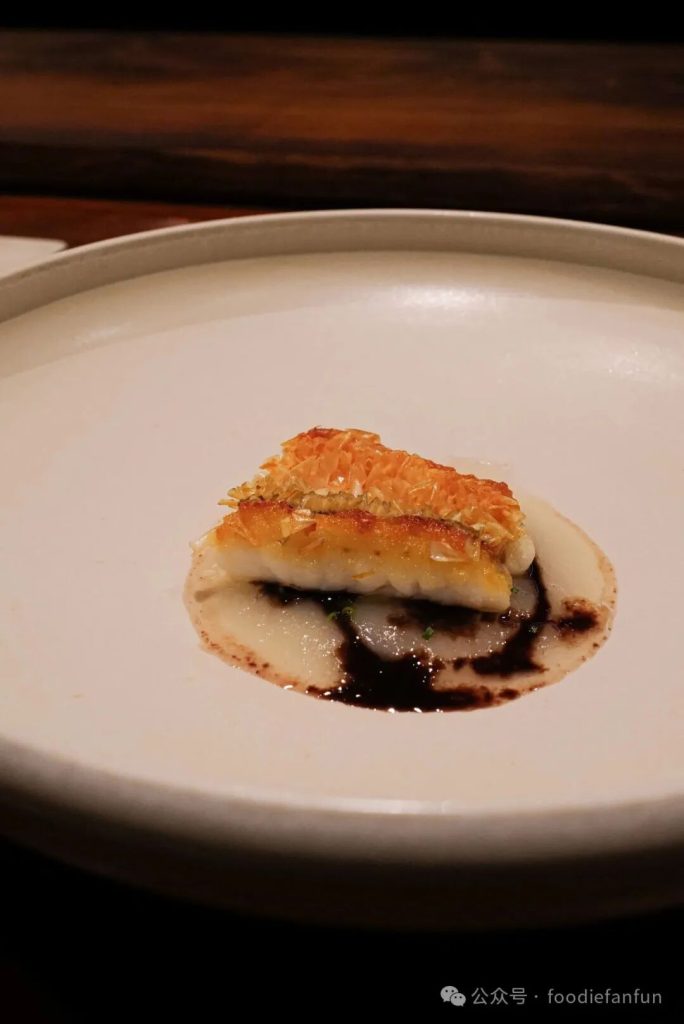
Ikejime amadai, meanwhile, shows off the more traditional scale-grilled style. Surprisingly, it’s paired here with grated daikon and a red wine sauce — sounds like a stretch, but it turns out to make perfect sense in the mouth.
The skin carries the fragrance and crispness particular to scale-grilling, while the flesh has enough fattiness and moisture, the heat control leaving almost nothing to fault. The sauce both cuts through the richness and brings out a touch of clean acidity, letting the whole dish land at a genuinely comfortable balance.
Everything, just right.
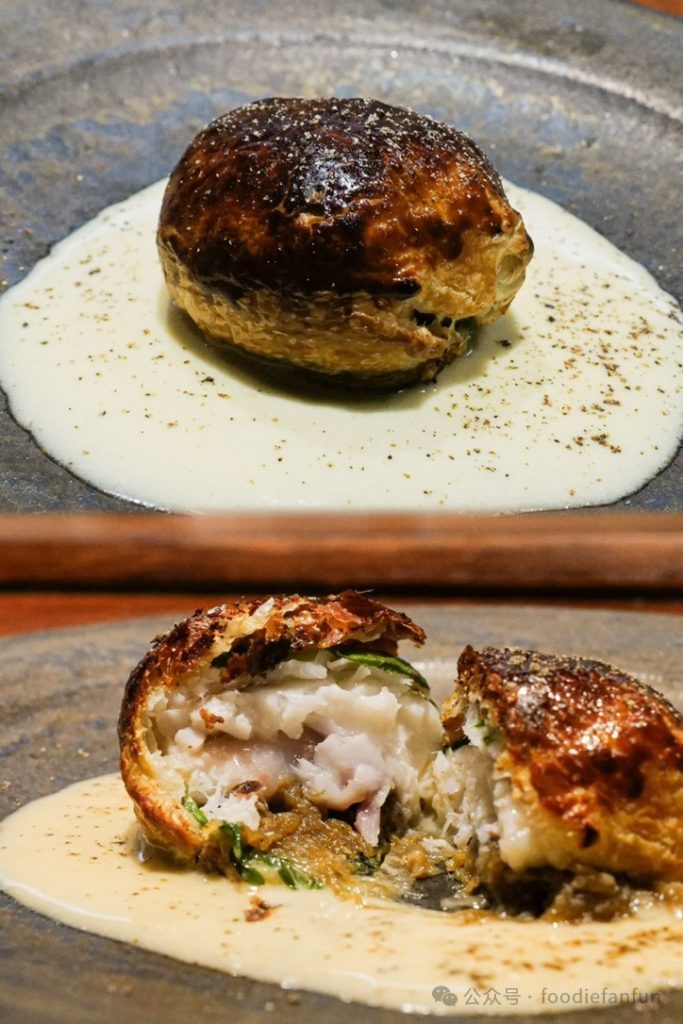
The signature fish pie today uses hana-dai (splendid alfonsino).
The pastry shell carries a bit of casually uneven golden and lightly charred color, and the moment you cut into it, it shatters crisply — the sound alone practically maxes out your expectations. The fish inside is tender at exactly the right point, its moisture and springiness controlled in a genuinely comfortable state. What’s most impressive is that the fish’s moisture is fully locked inside the pastry without ever costing the crust its crispness — real skill hidden in the details.
Caramelized onion holds up a full sweetness and aroma, while shiso brings out a light touch of coolness within it, keeping the overall flavor from ever turning heavy.
Rich in flavor, yet always staying in balance. Fist-sized, it looks like a generous portion, yet grows more interesting bite by bite.
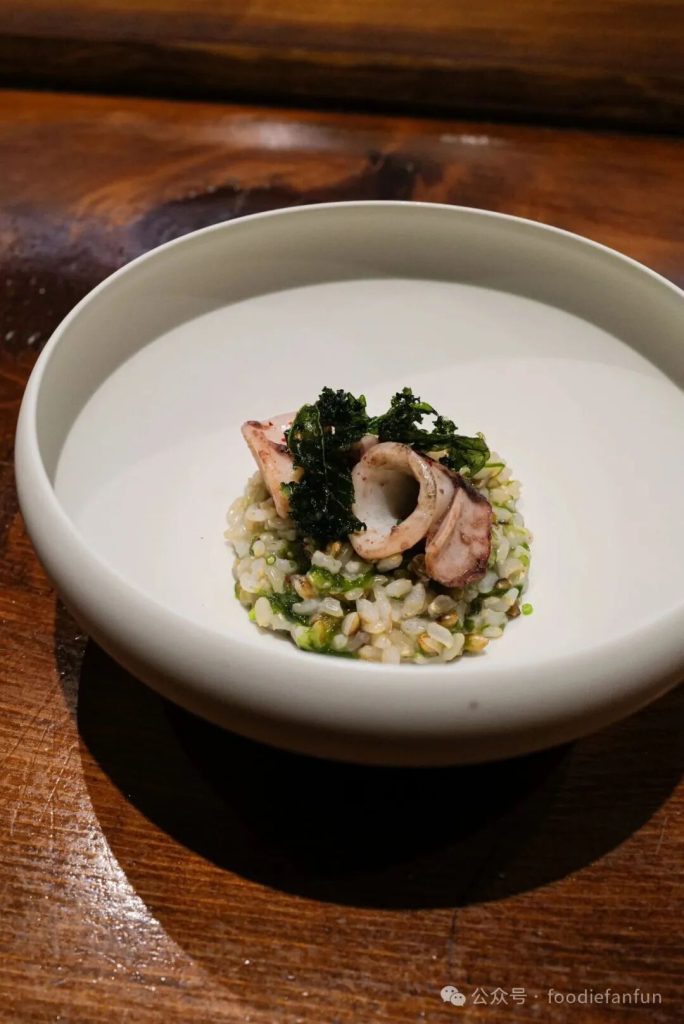
Then there’s a bowl of squid and pearl barley rice. A seemingly unexpected pairing, yet it expresses the contrast of flavor and texture with real directness.
The squid’s tenderness sits somewhere between crisp and moist, carrying a clear woodfire aroma, made even more forceful set against the pearl barley grains. The barley’s own chew adds a sense of rhythm to the whole rice dish. A few sheets of nori tucked among the grains lift the sea’s aroma upward, while fried kale adds one more crisp layer, making the texture feel more three-dimensional.
A robust, smoky character intertwines with those faint, barely-there flavors — seemingly direct, yet with plenty hidden in the details. I liked it right away.
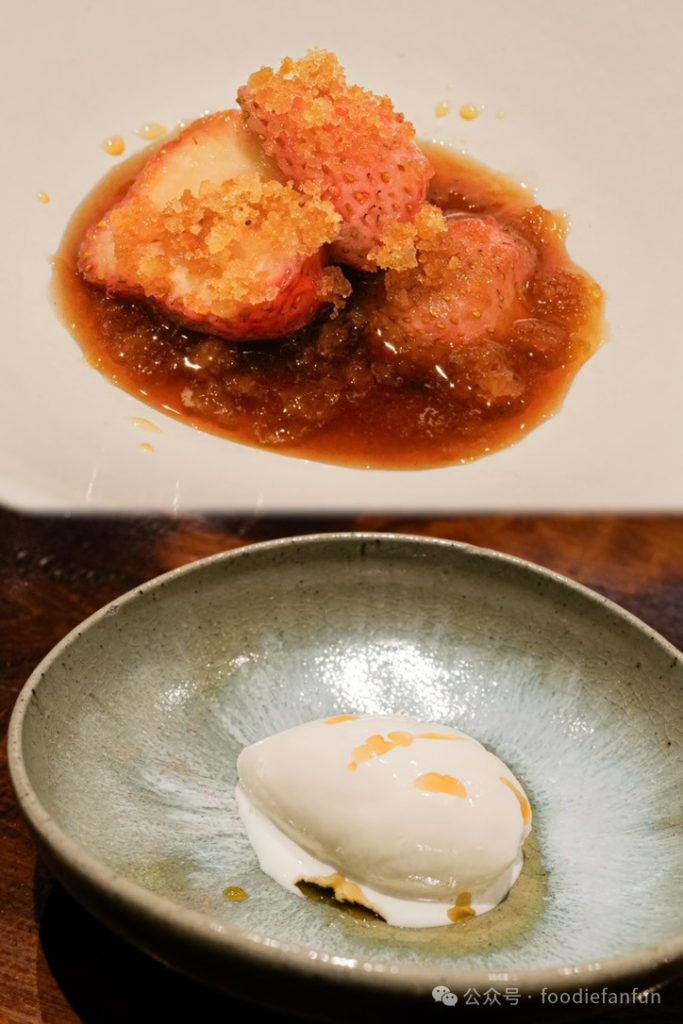
Honey-preserved strawberries, dotted with black tea sorbet, one bite gently pulls you out of a whole evening spent in the world of fish. Sweet-tart and tea aroma intertwine, and the rhythm suddenly turns light.
Milk ice cream comes next, made even gentler set against honey. No complicated design, just sweetness, dairy, and temperature held at a genuinely comfortable state — pure, simple, cleanly delicious.
It’s exactly at this point that the chef finally arrives at the meal’s most concentrated moment of “talking” — scraping the bottom of the ice cream tub, going table to table asking if anyone wants seconds.
Barely any extra exchange for the first few hours, and suddenly, right at this moment, it turns lively. The food is finished — finally, it’s his turn to speak.
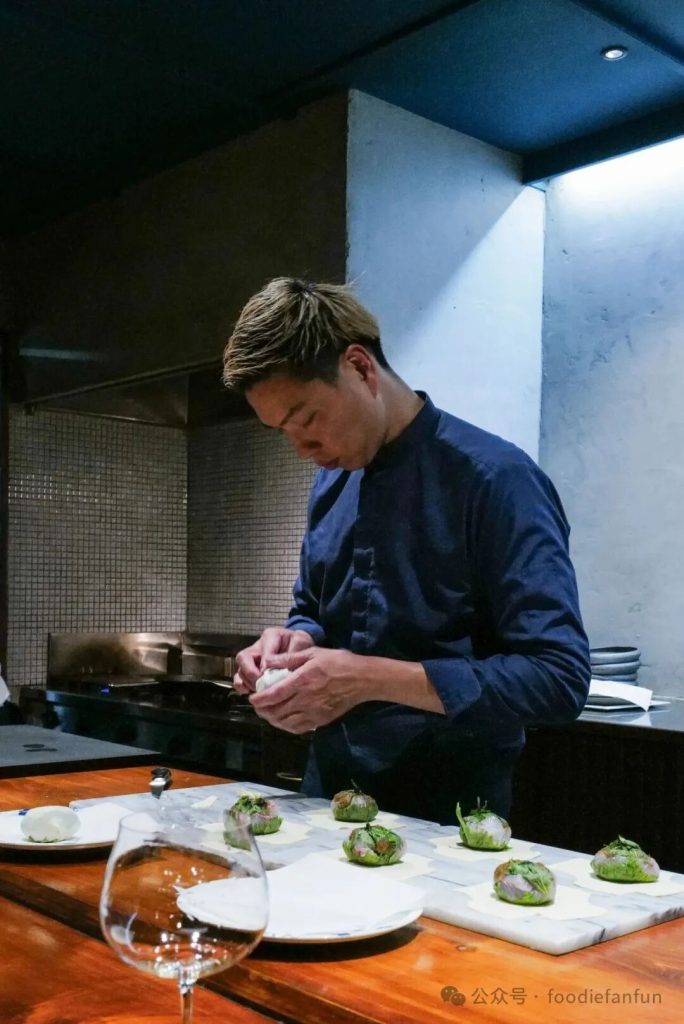
A menu of “only” nine dishes, six of them fish even, yet through different combinations of flavor, it gives you a satisfaction that feels genuinely heartfelt. And, of course, plenty fullness too.
Rather than calling this a Tabelog-gold French restaurant, it’s more accurate to call it the work of a chef who has fully internalized French technique and Shizuoka’s local ingredients, then reorganized the entire structure of the meal around fish as its core. You can see the shape of French cuisine in it, yet it carries a strong sense of the modern, with fish at its center, while showing a clear sense of season in every corner.
What’s even more impressive is that his expression of fish is never singular.
Fat, umami, tenderness, aroma, purity, lingering sweetness… at this small counter, the different dimensions belonging to fish are continually taken apart, then reassembled in different combinations into new layers and structure.
Already looking forward to the next visit.
Chisou Nishi Kenichi
Wednesday – Sunday
Lunch 12:00 | Dinner 18:00
https://www.tablecheck.com/ja/shops/chisou-nishi-kenichi/reserve
Chef’s Menu ¥22,000++
Leave a Reply