Seroja turned out to be an unexpected bonus of this Singapore trip.
We checked off a few names in Singapore — Park 90, the wine bar with a genuinely top-tier sommelier team; Restaurant Born, a fusion fine-dining spot that reframes Chinese food for the world; Tarte by Cheryl Koh, run by a Michelin-three-star-trained pastry chef — all thoroughly impressive.
Then Labyrinth turned into a real letdown.
Not willing to end the trip on that note, I had a friend pull off a last-minute booking at this legendary rising star — also a Michelin Green Star restaurant.
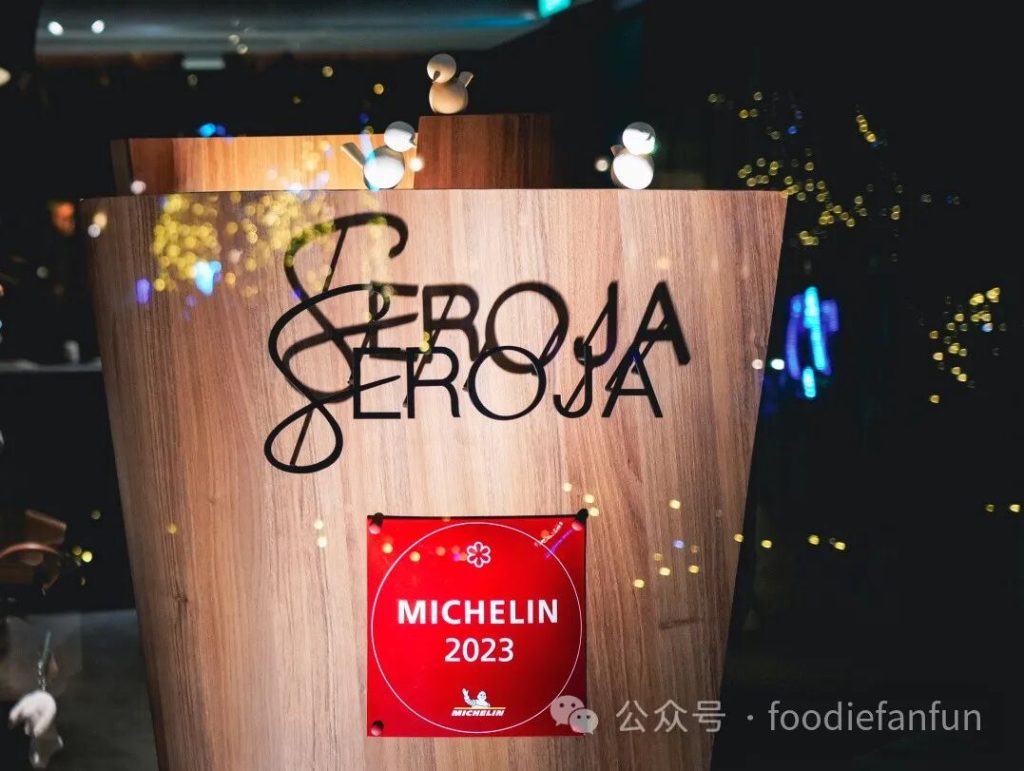
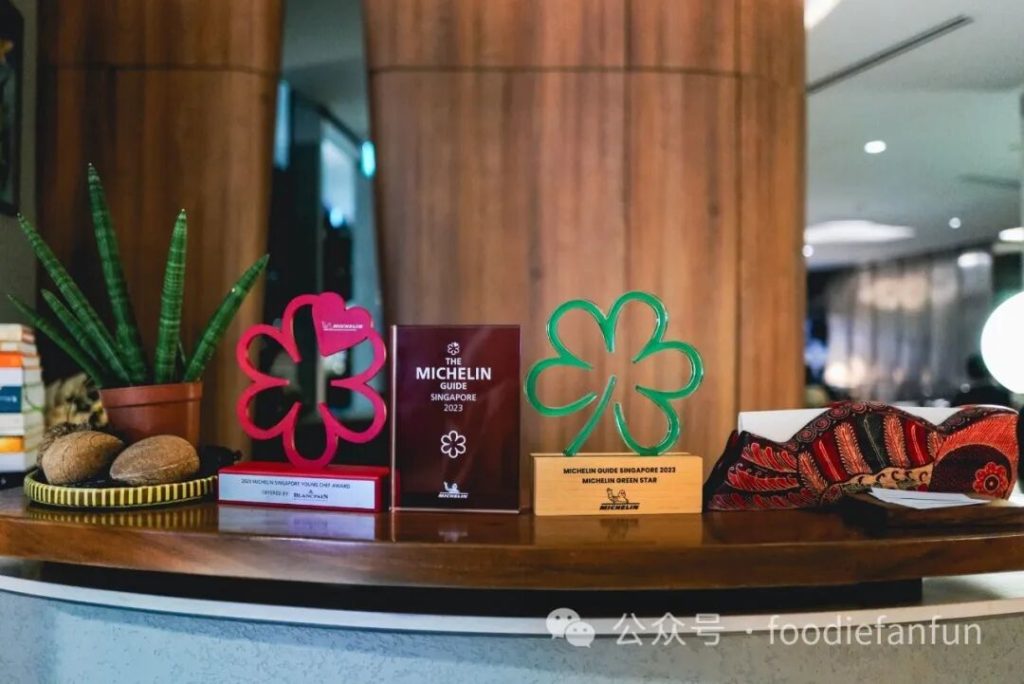
Seroja means lotus in Malay, a shared symbol across the many ethnic communities of the Malay Archipelago, and also a nod to Jalan Seroja, the street where chef Kevin Wong grew up.
* * * * *
The space itself is still classic fine dining, but the details lean heavily into Malay elements, from the palm leaves decorating the entrance to a roofline shaped after the Malay Archipelago. The suited staff carry just the right amount of poise, while still holding onto that warm Malay hospitality.
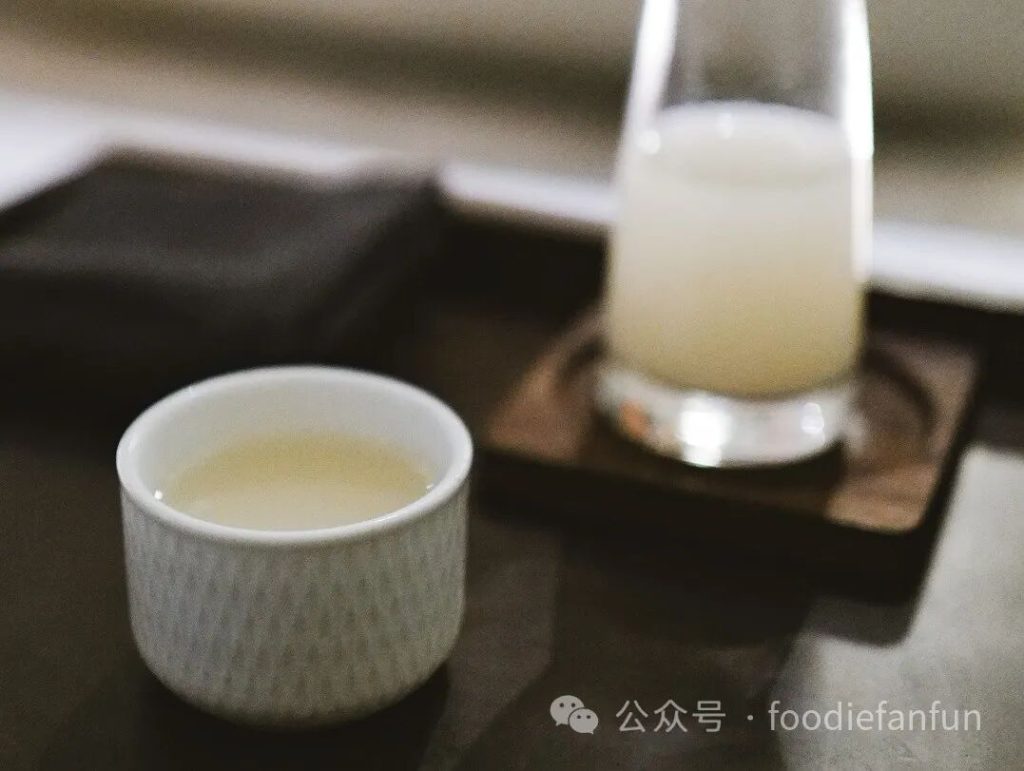
Tobby | Coconut
We were seated with a glass of the restaurant’s own fermented Tobby.
Countries with abundant rice make rice wine; countries with abundant coconuts, naturally, make coconut sparkling wine. Tobby is a coconut sparkling drink that every Malaysian household knows how to brew.
This is a non-alcoholic version, lightly sparkling, full of fresh coconut aroma — clean and appetite-sharpening.
* * * * *
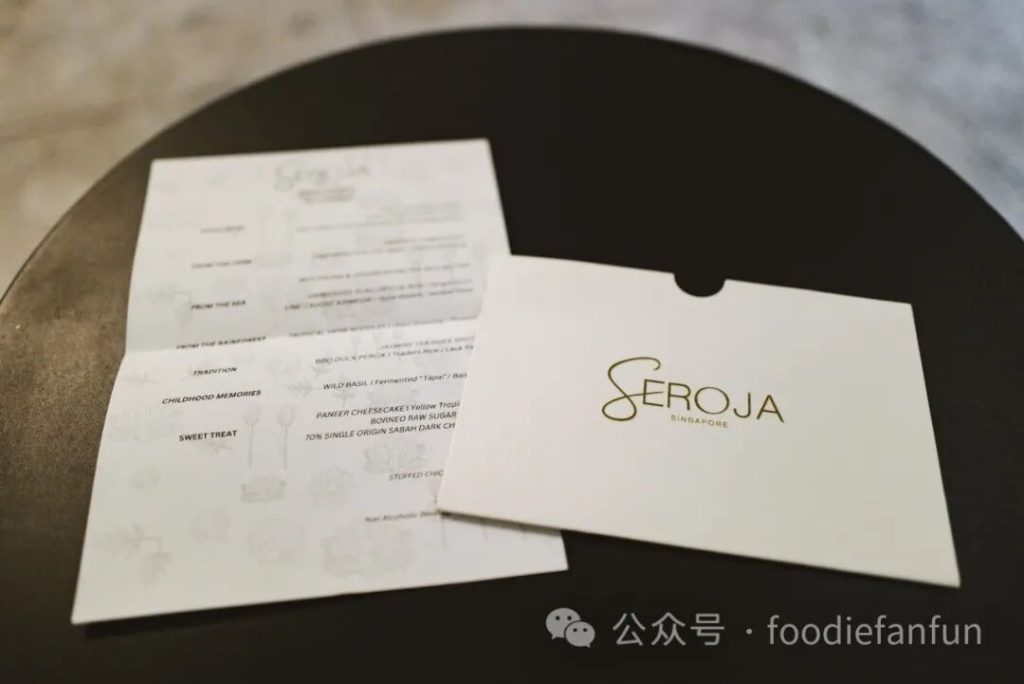
One side of the menu lists that night’s dishes; flip it over and there’s a QR code showing their partners — everything from cacao, sugar, and spice, to space design, floristry, and music, a long list with names in bold. This is Seroja’s way of thanking its ‘friends,’ and the gesture reads as genuinely warm and personal.
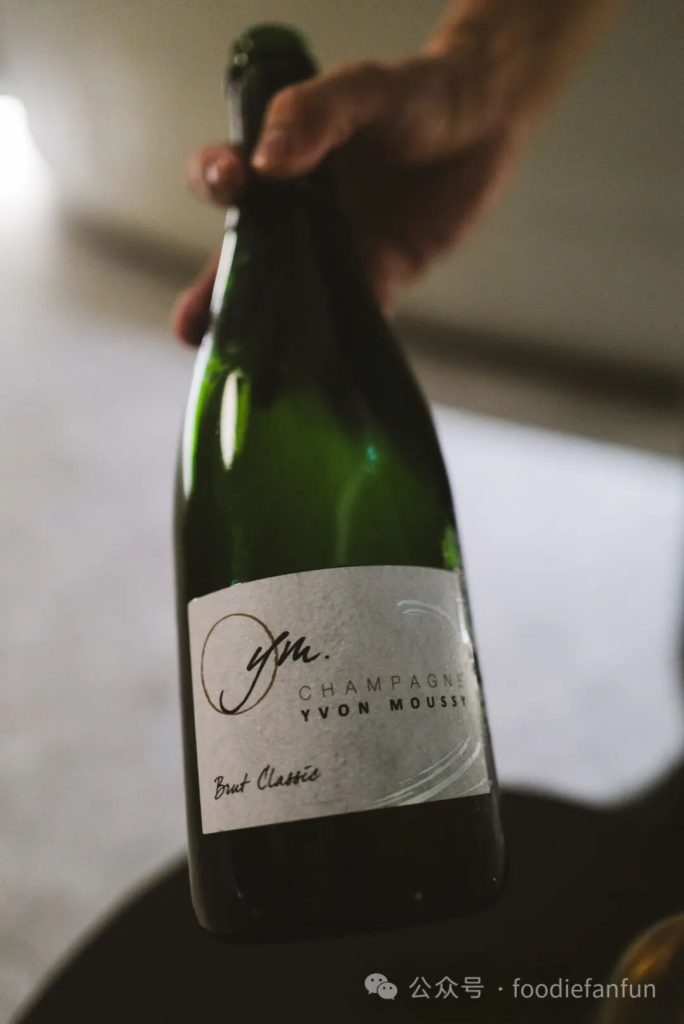
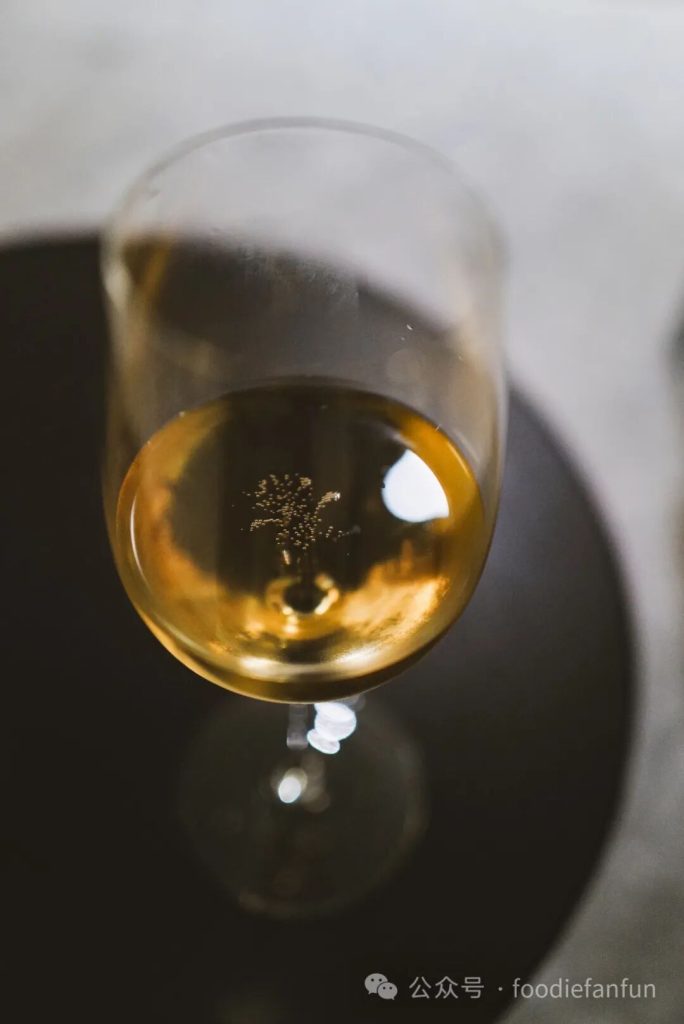
Yvon Moussy Brut Classic NV
I’d done my homework before arriving — Seroja’s wine list is known for boutique growers from small, lesser-known producers, spanning a wide geographic range. The wine pairing is genuinely excellent too.
The pairing officially starts with the second course, the salad, so at the very start I asked the sommelier to recommend a grower’s wine instead. Beautiful bubbles, a strong sense of minerality, layered stone-fruit aromas and bright acidity — the whole wine felt structured and full of energy. A great way to open.
* * * * *
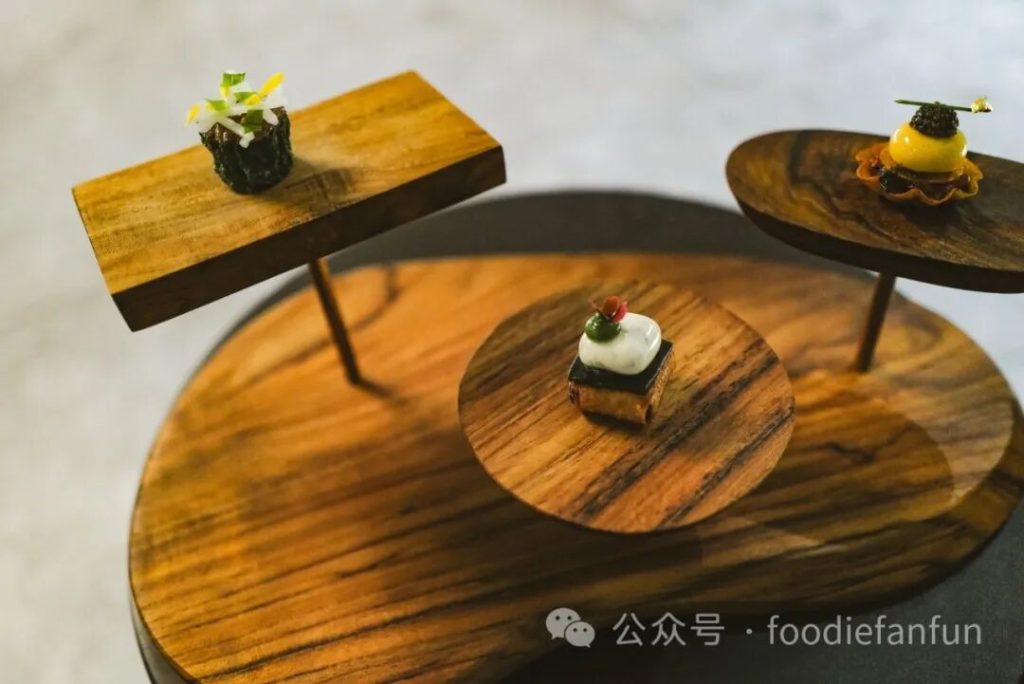
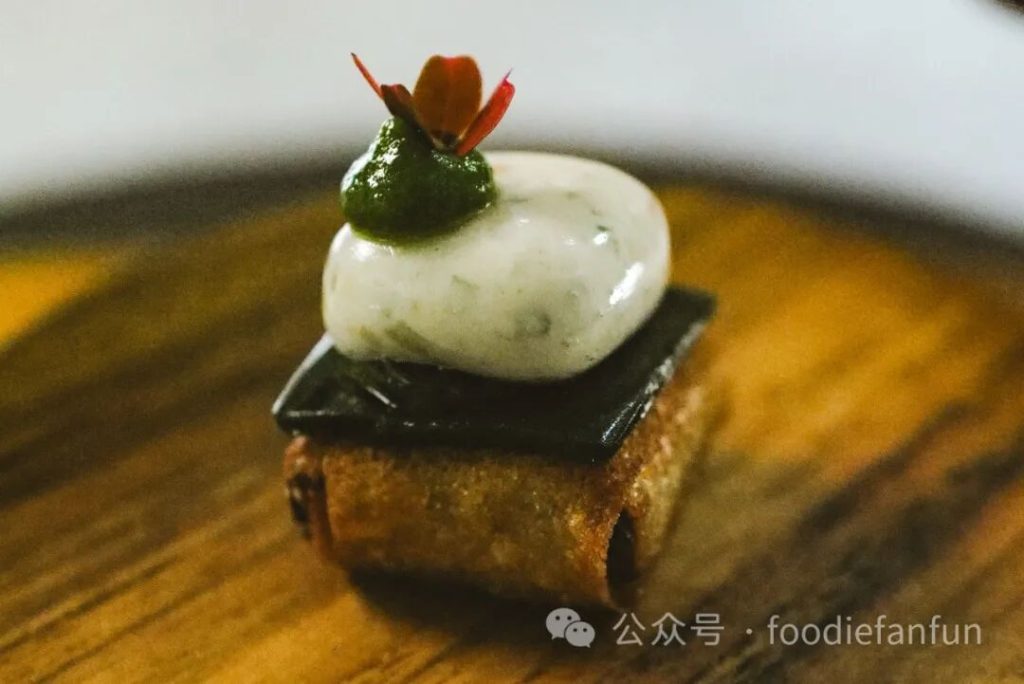
SPICED FISH FLOSS / Raita / Mint
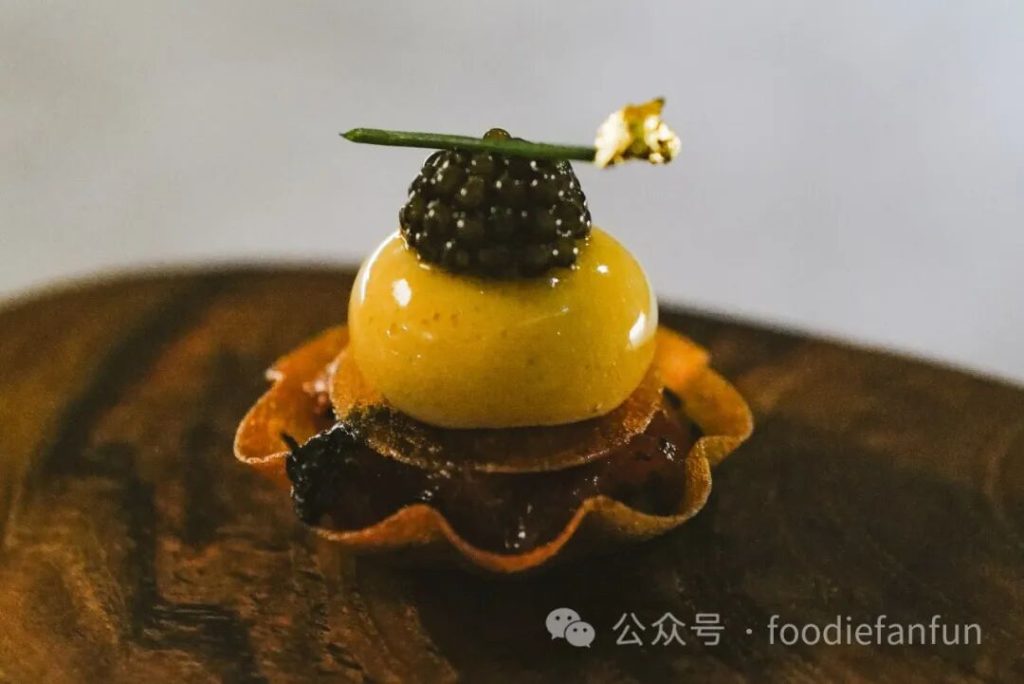
TUNA / Kerabu / Caviar
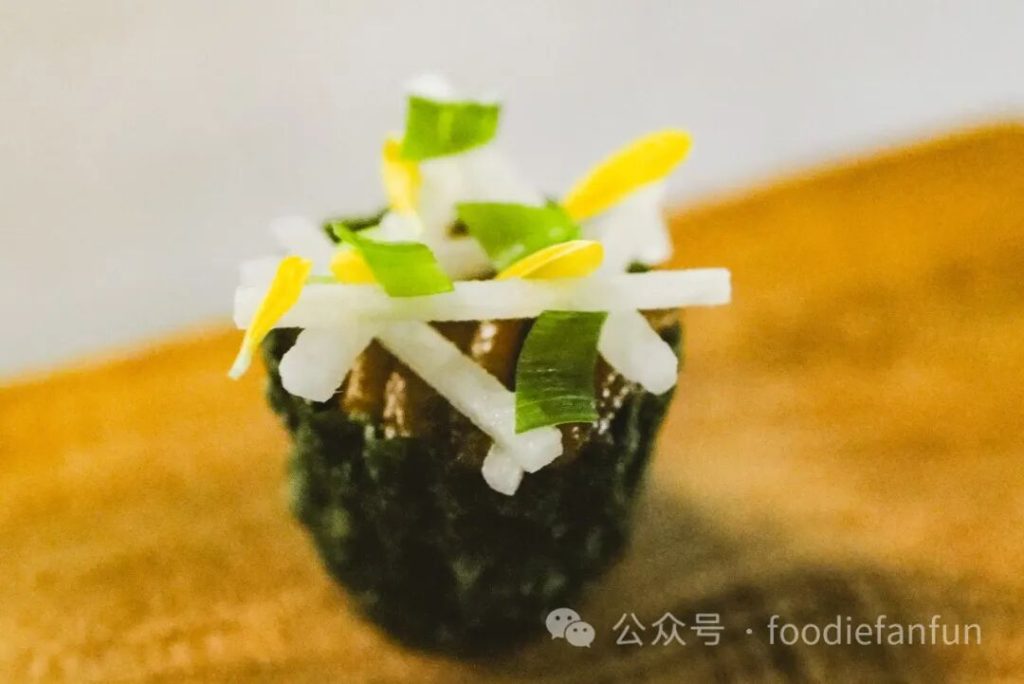
SEA CONCH / Fermented Shrimp Dressing / Onion Jam
The surprises started right from the opening trio of snacks.
First up: fish floss with an Indian-style yogurt-and-vegetable sauce — crisp shell, soft inside, with a distinct Southeast Asian character.
Next: tuna belly and toro paired with ginger-spiked kerabu and caviar, rich and soft with a faint Japanese undertone.
Last: a little tower of sea conch, firm in texture, seasoned with fermented shrimp paste and onion — it brought to mind a classic Malay-table salad.
Three creatures from the sea, each sharing the same freshness but heading off in completely different directions in texture and seasoning — a real showcase of how diverse Malay cuisine can be.
* * * * *
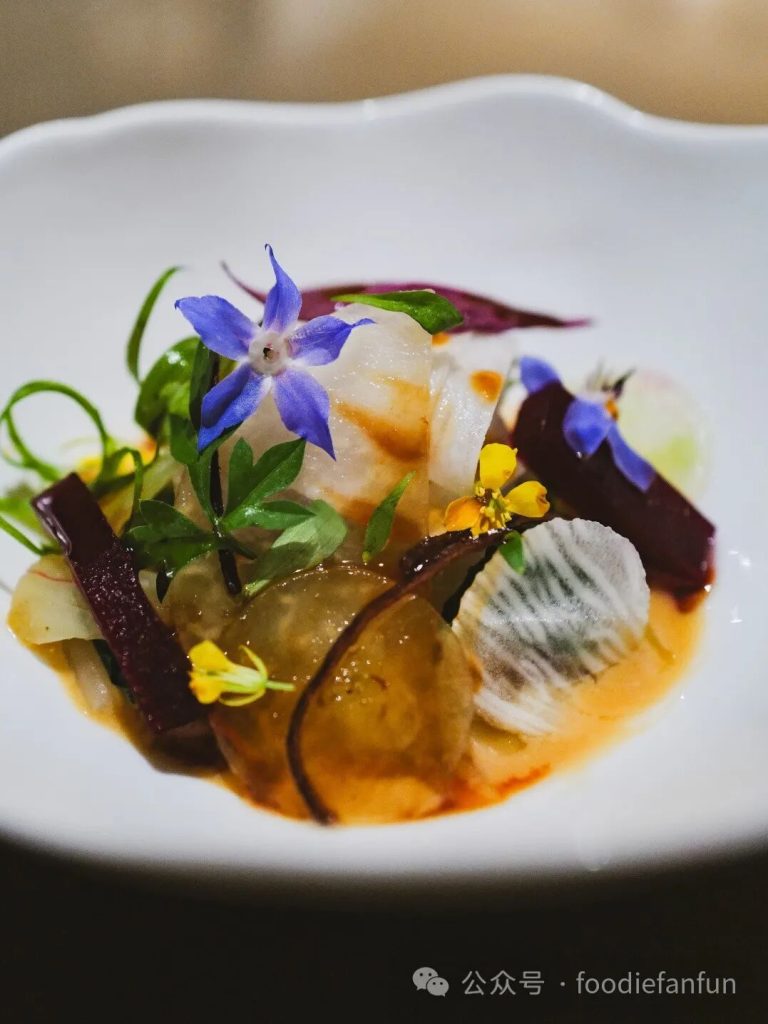
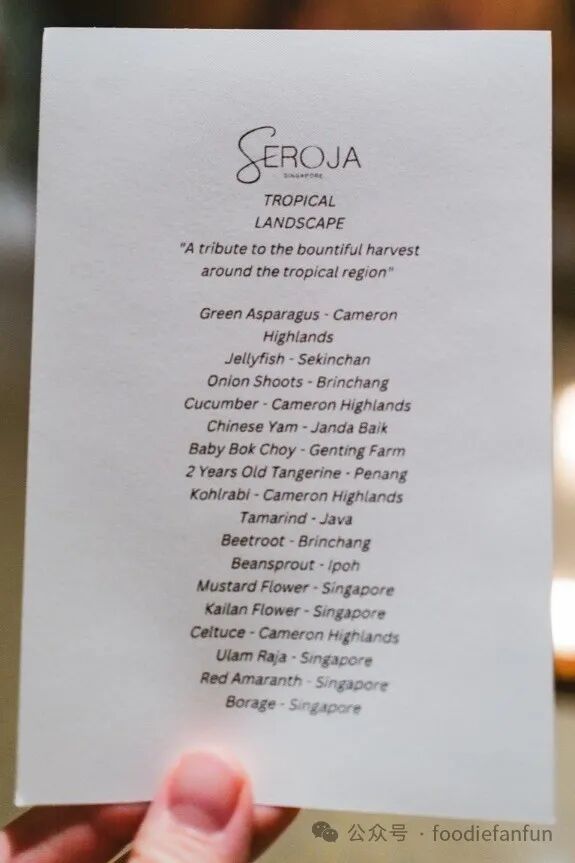
“TROPICAL LANDSCAPE”
I genuinely never guessed this was a salad.
Over a dozen ingredients pulled from the tropics, all listed out by the restaurant: asparagus from Cameron, jellyfish from Sekinchan, yam from Janda Baik… finished with a sauce made from Java tamarind.
Just reading through the place names and ingredients alone felt like a fascinating little journey through geography.
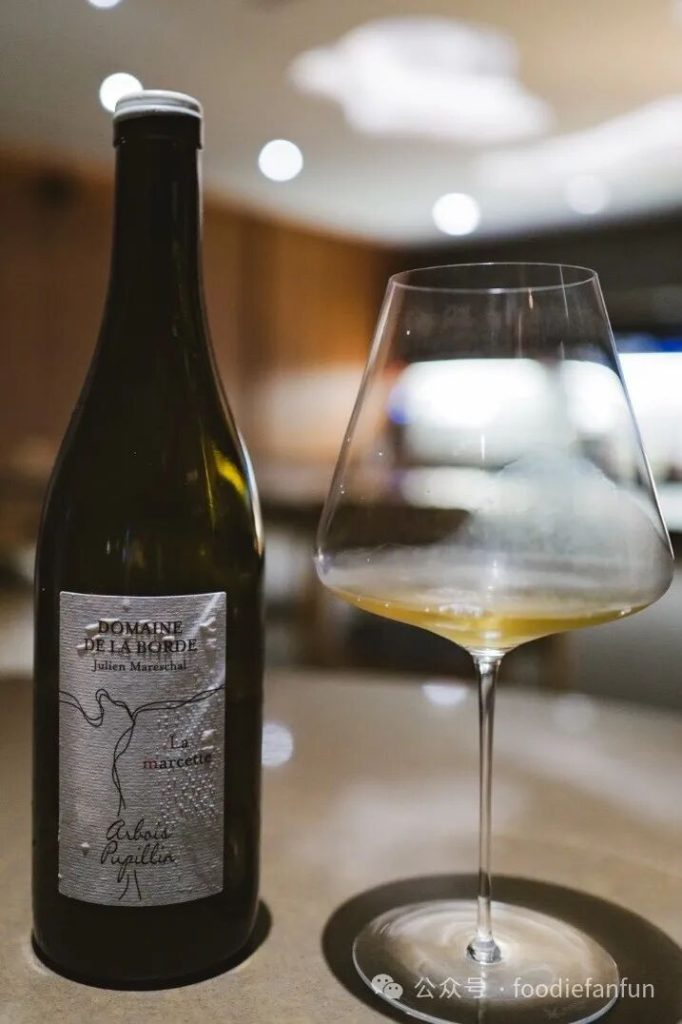
Domaine de la Borde – La Marcette
The pairing here, surprisingly, was a Chardonnay from the Jura — a tiny 5-hectare estate in Pupillin, sitting at 300 meters, on red marl-limestone, aged 12 months on lees under an anaerobic process.
On its own it’s a genuine surprise: stone-fruit aromas mixed with a sea-breeze note, bright acidity, a touch of cream, quickly overtaken by an intense minerality that fills the palate, finishing with a clear salinity and a long finish.
A wine this structured and savory paired with a bright, layered salad — an absolutely perfect match.
* * * * *
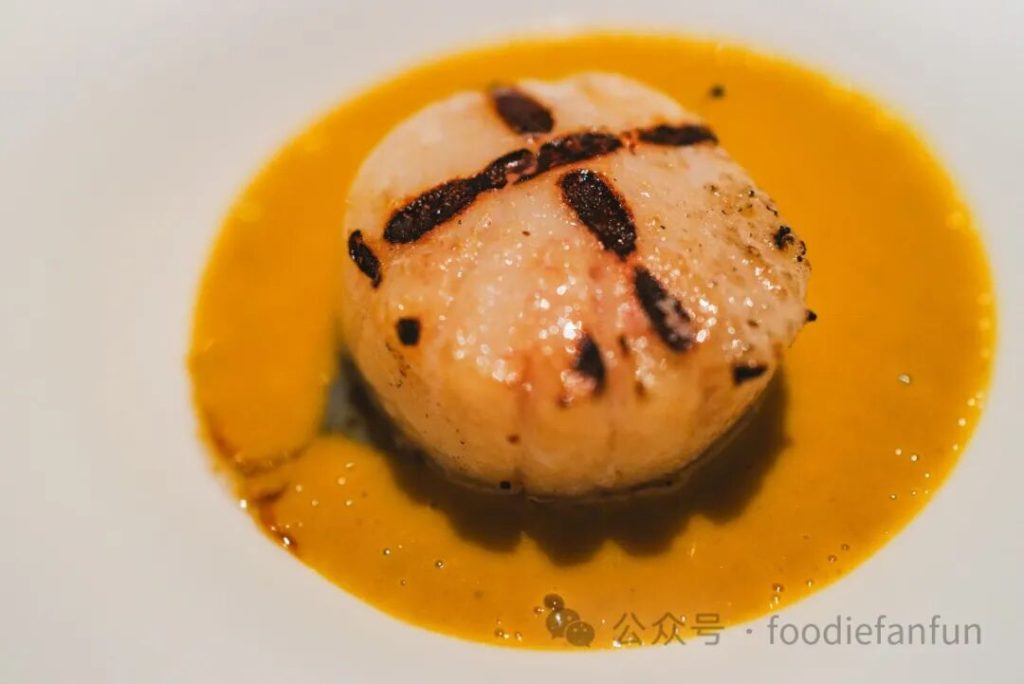
HAND DIVED SCALLOP / Lilybulb / Gingertorch
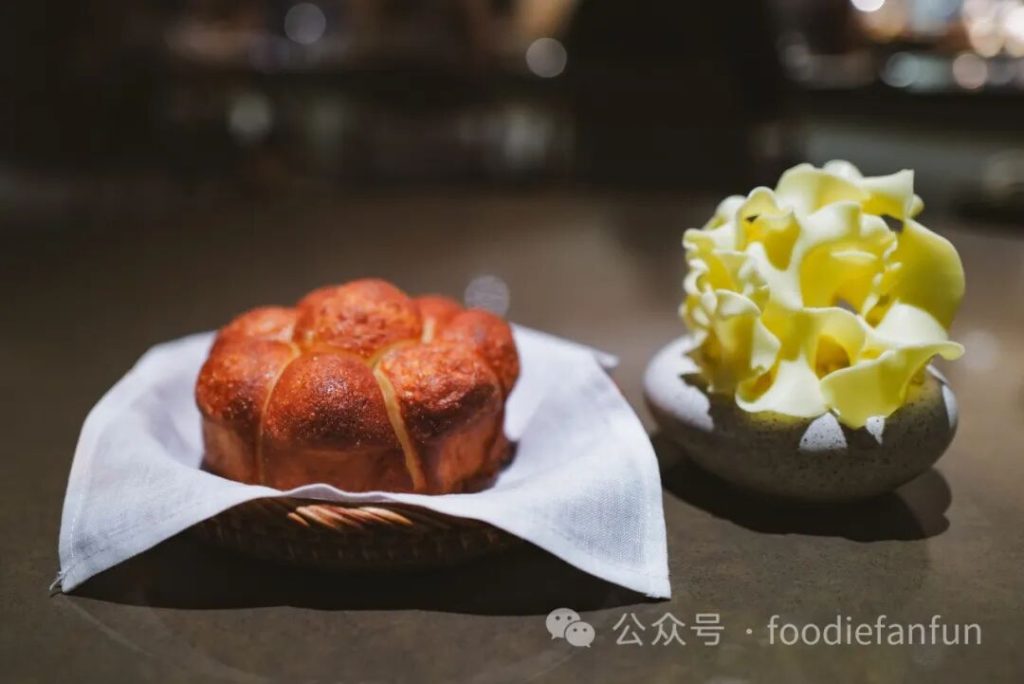
ROTI PAUNG
The large scallop comes from Iwate, Japan — fragrant, tender, with a translucent milky-white center.
But what’s really worth mentioning is the torch ginger sauce served alongside — a highly ornamental tropical plant whose flavor resembles ginger, made into a sauce that’s fresh yet carries a familiar, warm spiciness.
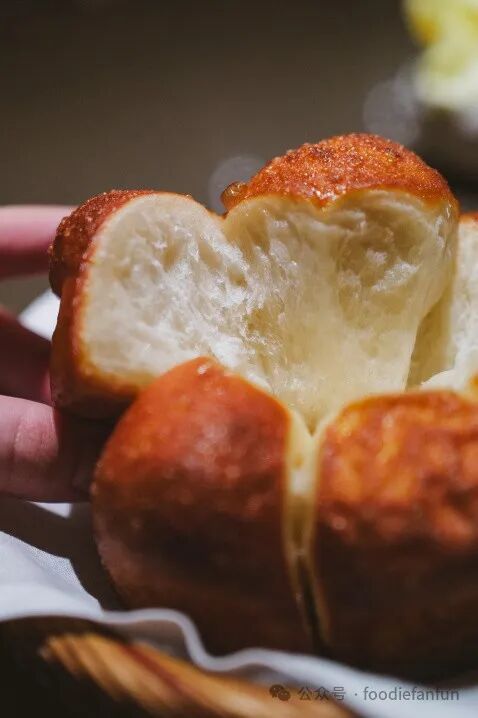
Dipped in roti, it’s rich, grounded, balanced, and genuinely memorable.
It tasted familiar somehow, yet this was the first time I’d ever dipped bread into a ginger sauce — and I still wiped the plate clean!
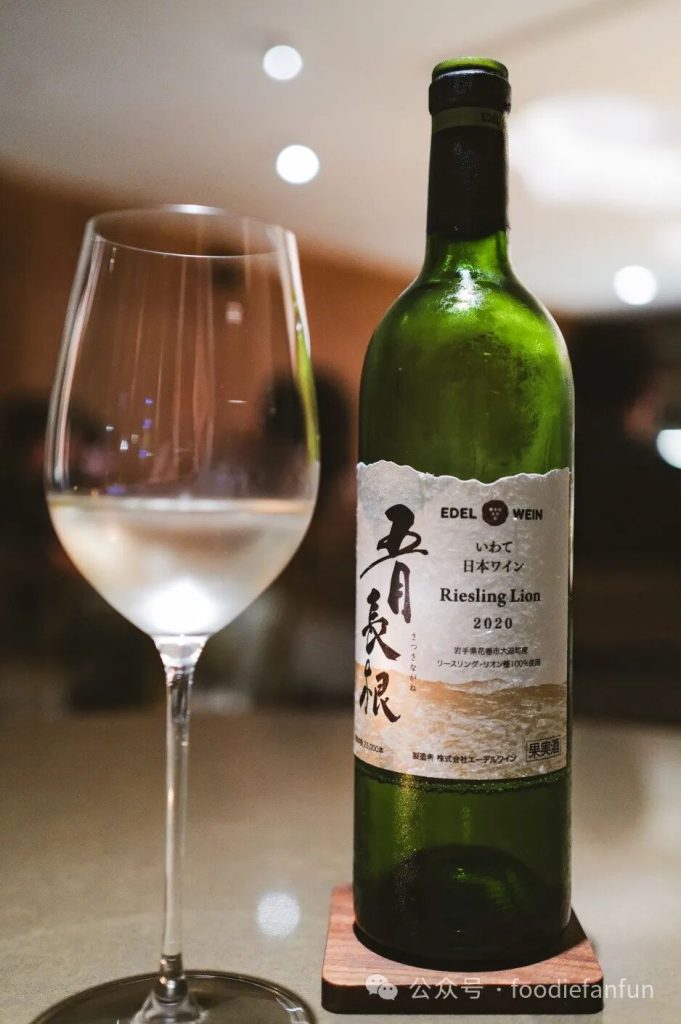
EDEL WINE SATSUKINAGANE RIESLING LION
The pairing here was clever — another wine from Iwate, but this time not sake, a Japanese-produced Riesling.
Green apple and grapefruit brought plenty of fresh, bright fruit character, with well-balanced acidity. It paired beautifully with the scallop, and also bridged nicely with the ginger’s spice and the butter in the roti.
* * * * *
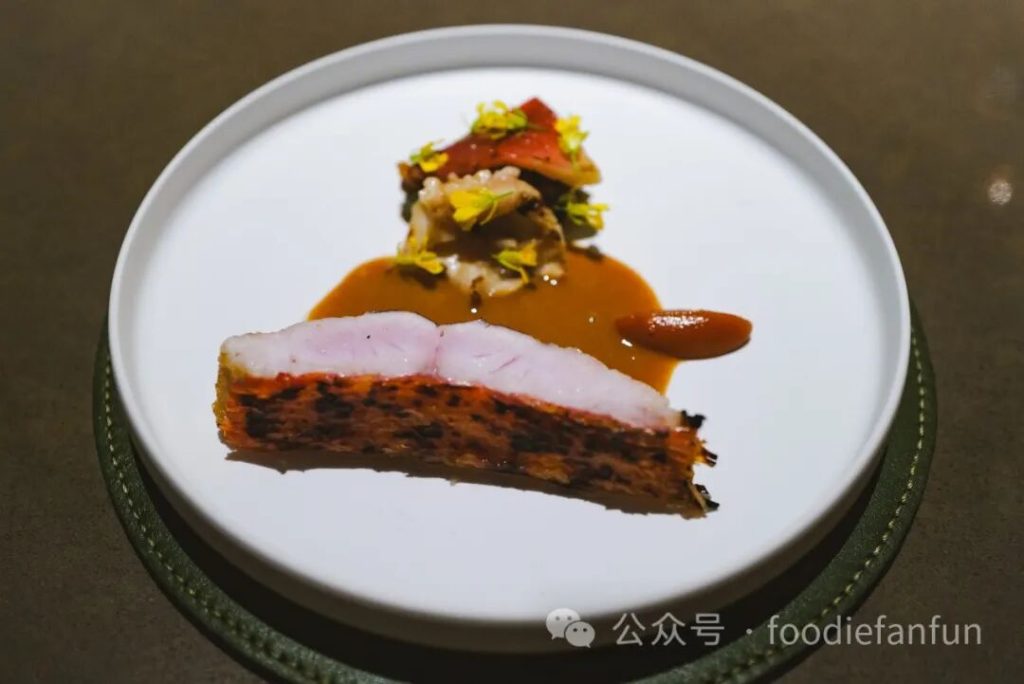
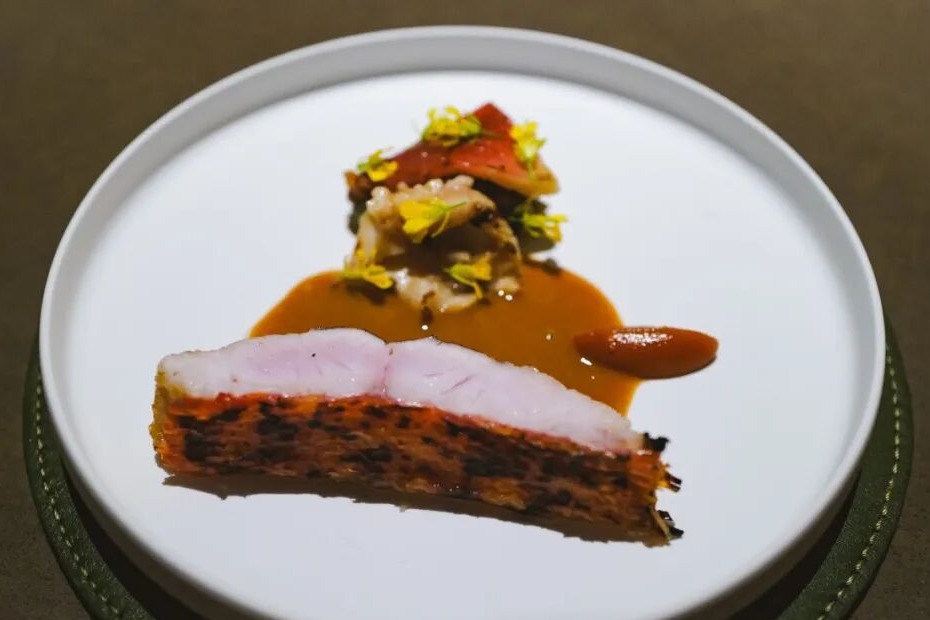
Golden-eye snapper is well known in Japanese cuisine as a tropical sea fish, but Singapore, Malaysia, and Thailand are actually where the species originally comes from.
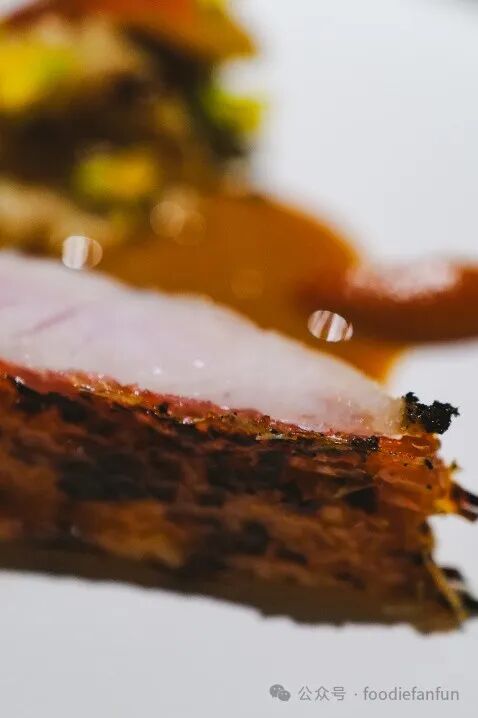
Living up to its reputation as the “King of Grilled Fish,” Seroja treats it here with a char-grilling method — a touch of smoke running through the crisp skin and tender flesh, layering freshness with softness in a genuinely appealing way.
It’s paired with sambal, the spicy shrimp paste every Malaysian household keeps on hand — a genuinely inspired and fitting match for the fish.
I have to say, sitting at Kevin’s table feels like a running exploration of Malaysia — every dish turns up some new discovery from Malay culture.
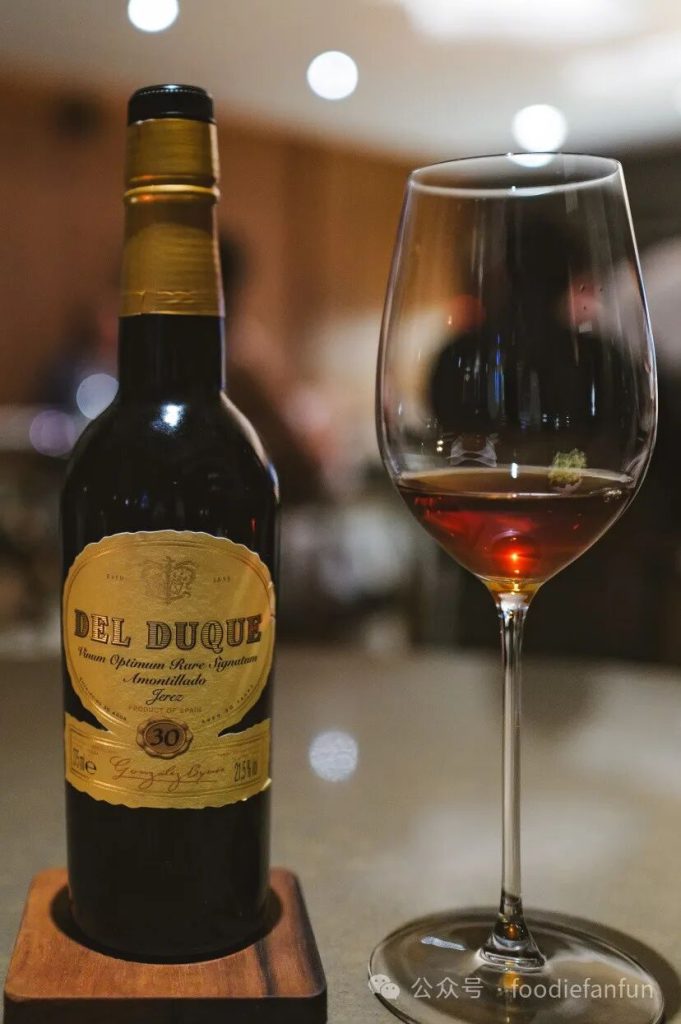
Completely unexpected: the pairing here was a 30-year Amontillado Sherry.
Rich dark fruit, dried apricot, cinnamon, mineral, and nutty aromas — landing perfectly on the smokiness from the fish skin, while the wine’s own savory character stretched out the whole dish’s presence.
The aftertaste got pulled out and amplified — a genuinely stunning pairing.
* * * * *
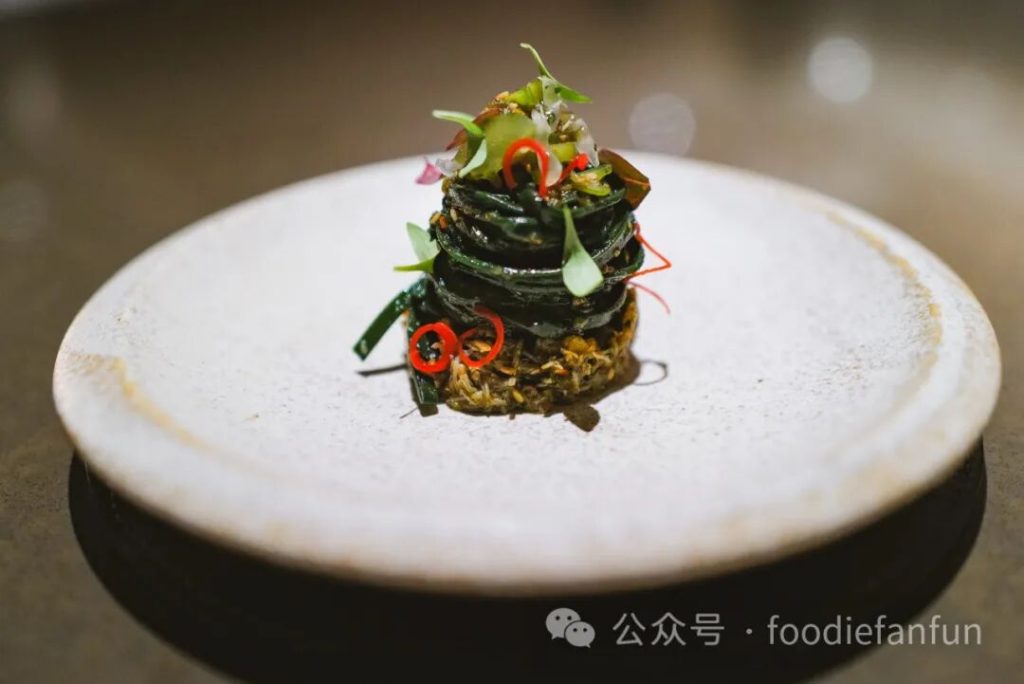
This is the restaurant’s famous cold noodle dish, and it truly lives up to its reputation.
Complex tropical herbal aromas balance perfectly against the noodles’ body, carrying both chew and a cooling quality. Crab meat holds up the dish’s freshness and its gentler side. Touches of sweetness and crunchy heat make the whole bowl feel even richer.
It’s a cold crab noodle that looks deceptively simple but genuinely hits home.
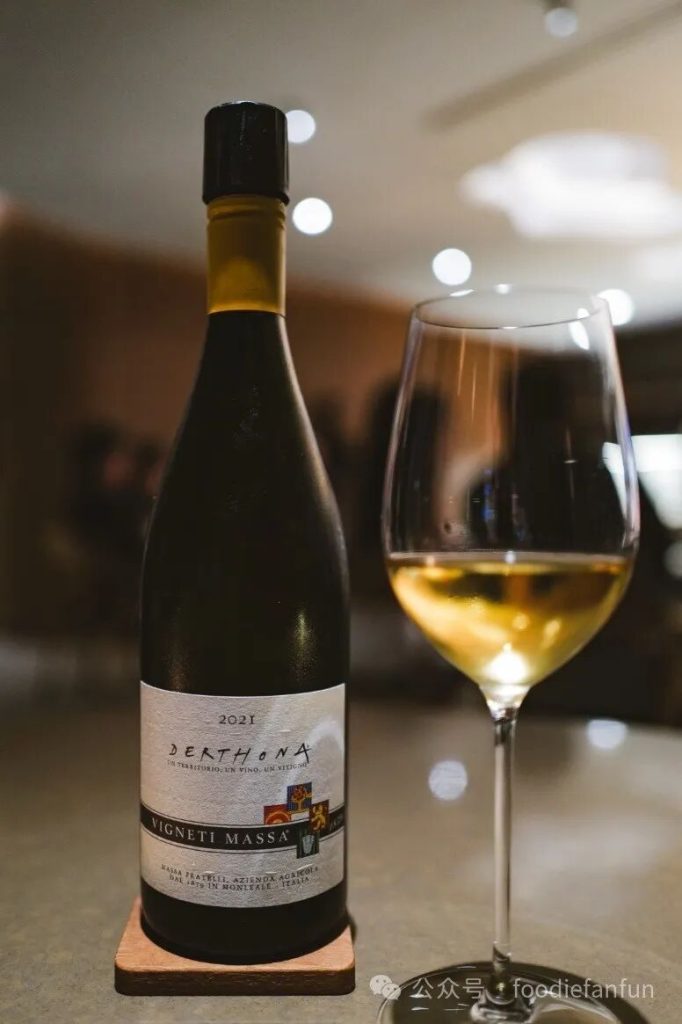
Vigneti Massa Timorasso ‘Derthona’ 2021
I never expected the wine pairing to introduce me to a variety not even covered in the WSET Level 3 textbook — Timorasso, a rare grape grown in small quantities in Piedmont, known for producing highly aromatic wines that age well.
This particular bottle was still quite young — abundant stone-fruit and floral notes, genuinely pleasant, with a very high concentration on the palate.
By 70% through the meal, I was already convinced the wine pairing here was doing 1+1>2.
It’s not chasing the same predictable, direct flavor match every time — it keeps switching up its pairing style and logic, and isn’t afraid to break convention. Genuinely impressive.
* * * * *
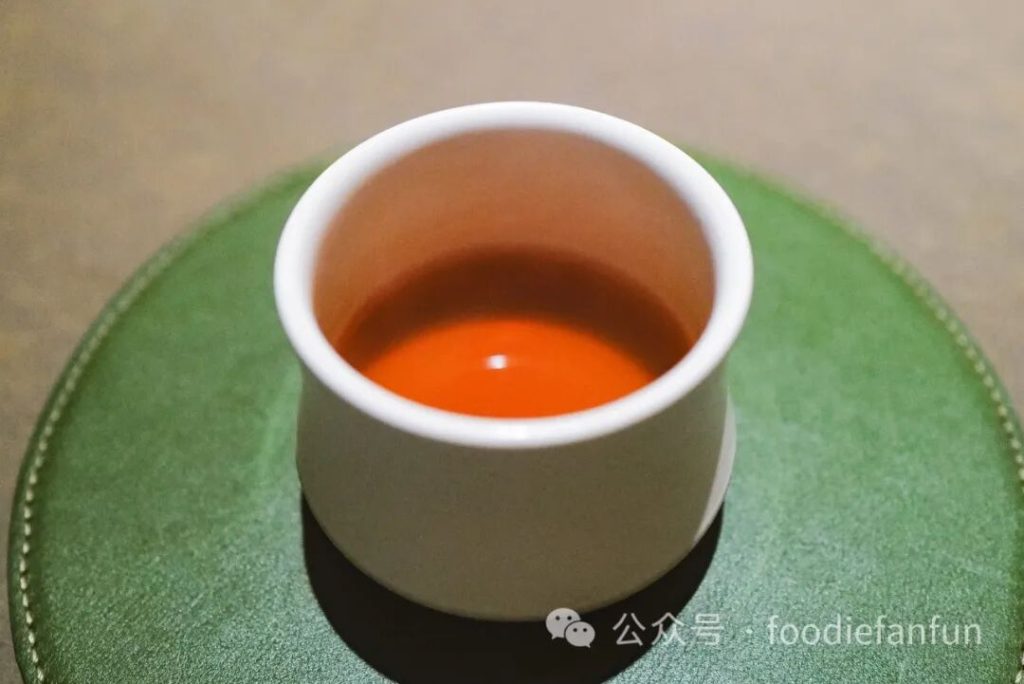
JASMINE TEA DUCK BROTH
Before the main course, a clear broth to reset the palate.
Rich duck broth meets the light fragrance of jasmine — soft and warm. And of course, there’s no skipping the Southeast Asian touch: kaffir lime leaf adds a distinctive, arresting fragrance.
* * * * *
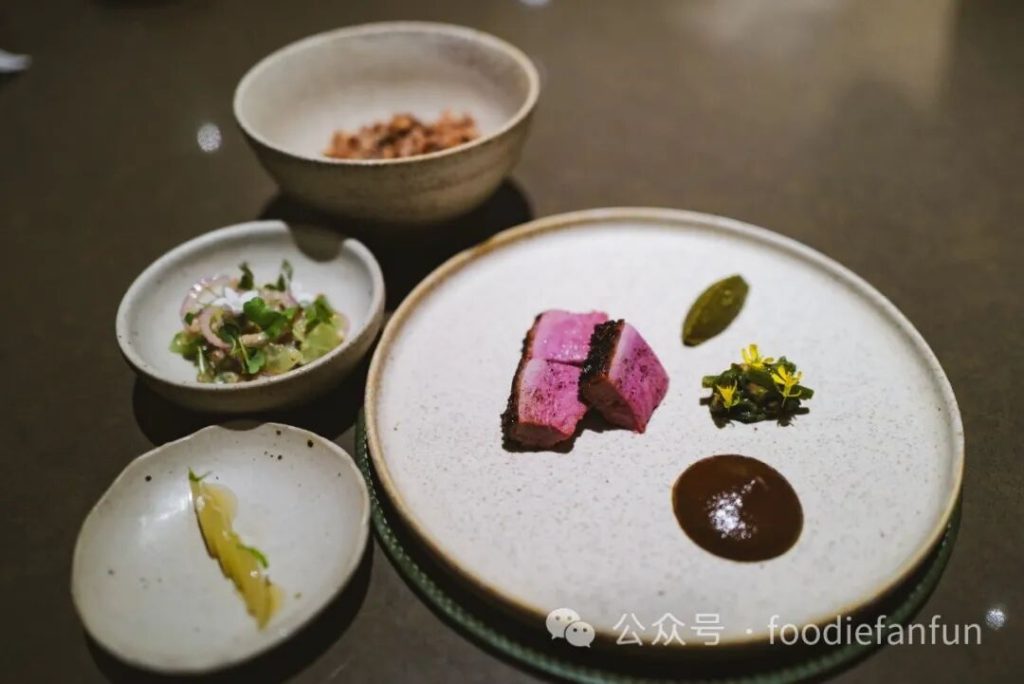
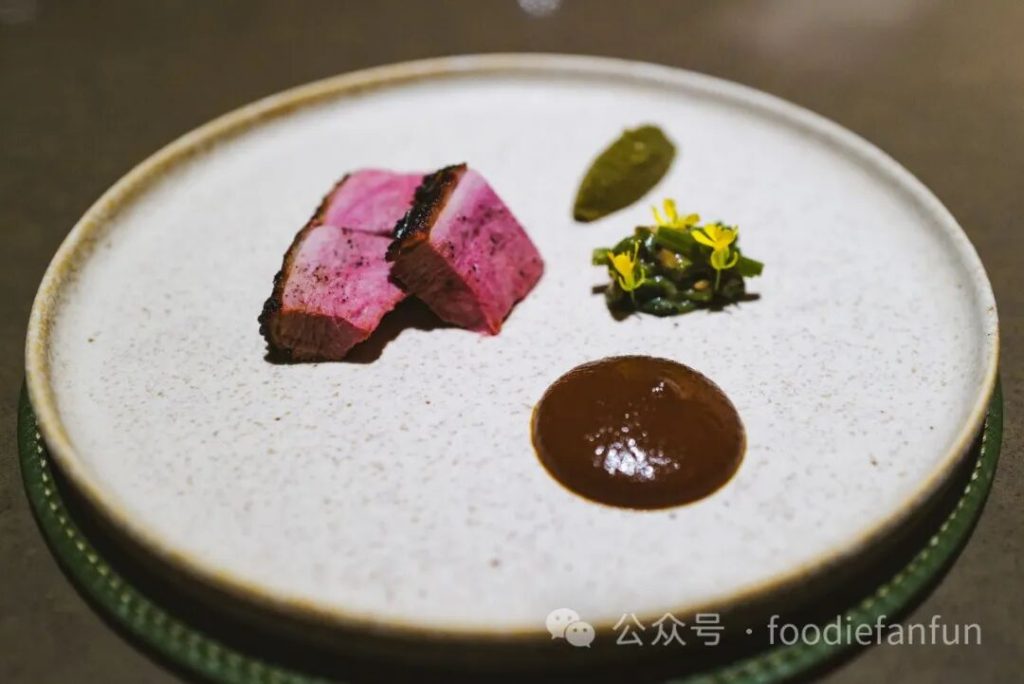
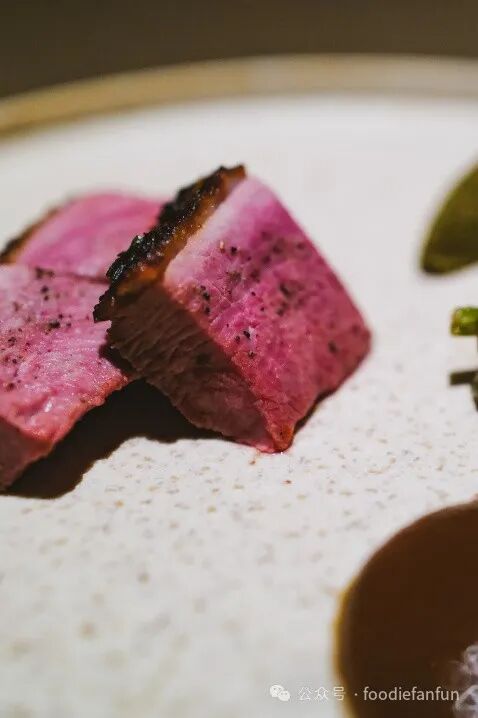
After the duck broth comes the main course: duck breast.
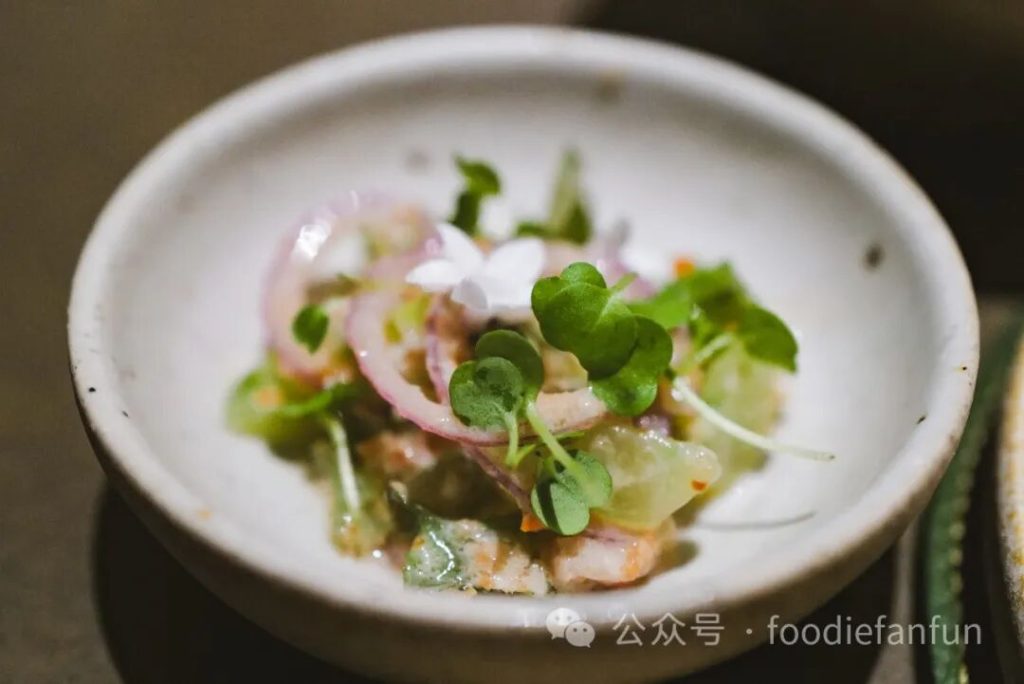
Alongside it arrives lauk pauk — a whole spread of side dishes showcasing the sheer range of Malay flavor profiles. This lineup alone could be its own tasting menu.
A fresh fern side dish, a shrimp-paste salad, gourd pickles, a coconut-based sauce… nearly every bite is something surprising. There’s freshness, a touch of sweetness, crunch, and a burning kind of heat too.
There’s also rice made from grains grown in the mountains of Sarawak — the top layer crisped up sweet and fragrant, the bottom full-bodied and chewy. I couldn’t help but finish the whole bowl.
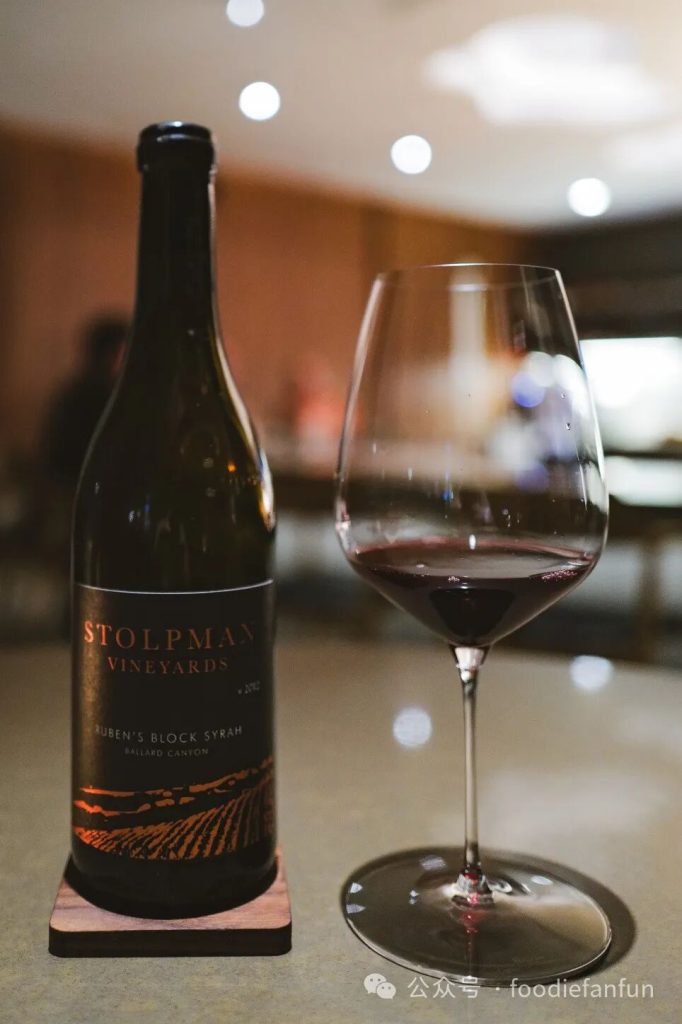
Ruben’s Block Syrah 2017
A Syrah from Ballard Canyon, from a vineyard block perched right on a cliff above Ballard Creek. Violet, anise, mint leaf, and blackcurrant aromas, with a full body that moved gracefully between the duck and the sharply distinct side dishes — one wine handling a whole spread of different flavor profiles.
* * * * *
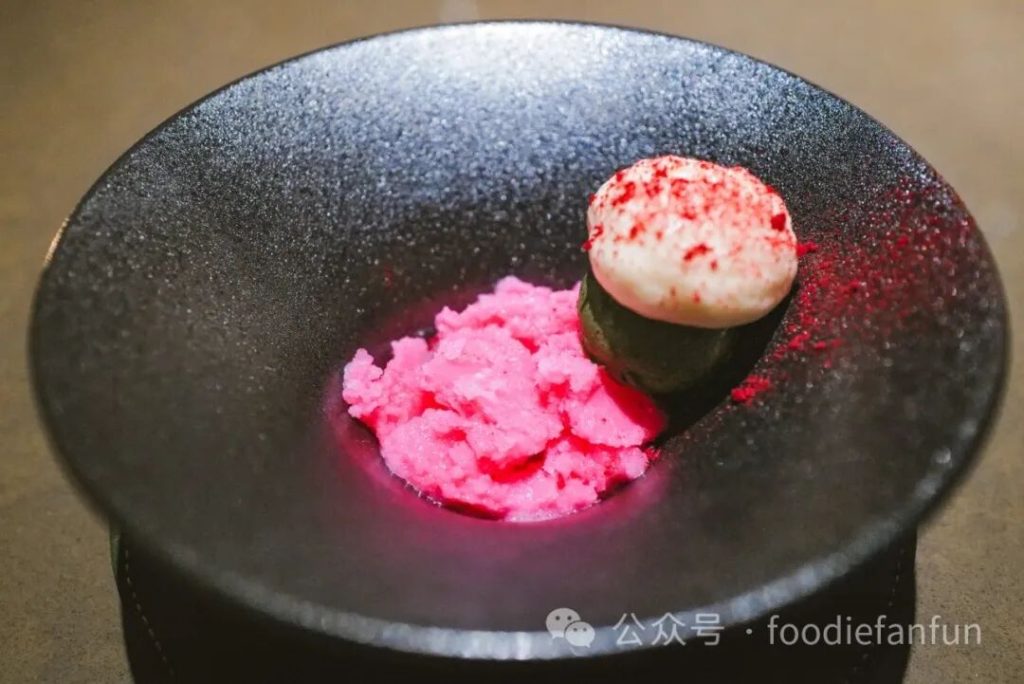
By the pre-dessert, the chef brought back a memory from his childhood.
A sorbet made from tropical herbs truly let every layer of tropical botanical aroma bloom. The accompanying fermented rice wine and kueh come together in a way where each layer is interesting on its own, but the mix is beautifully balanced — rich yet palate-cleansing.
* * * * *
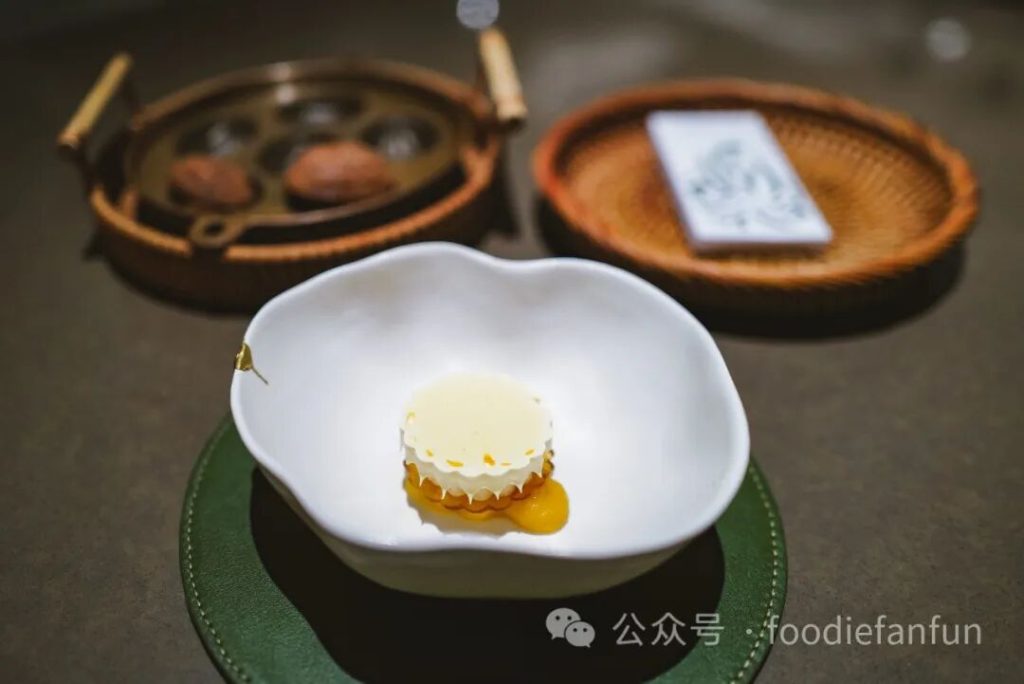

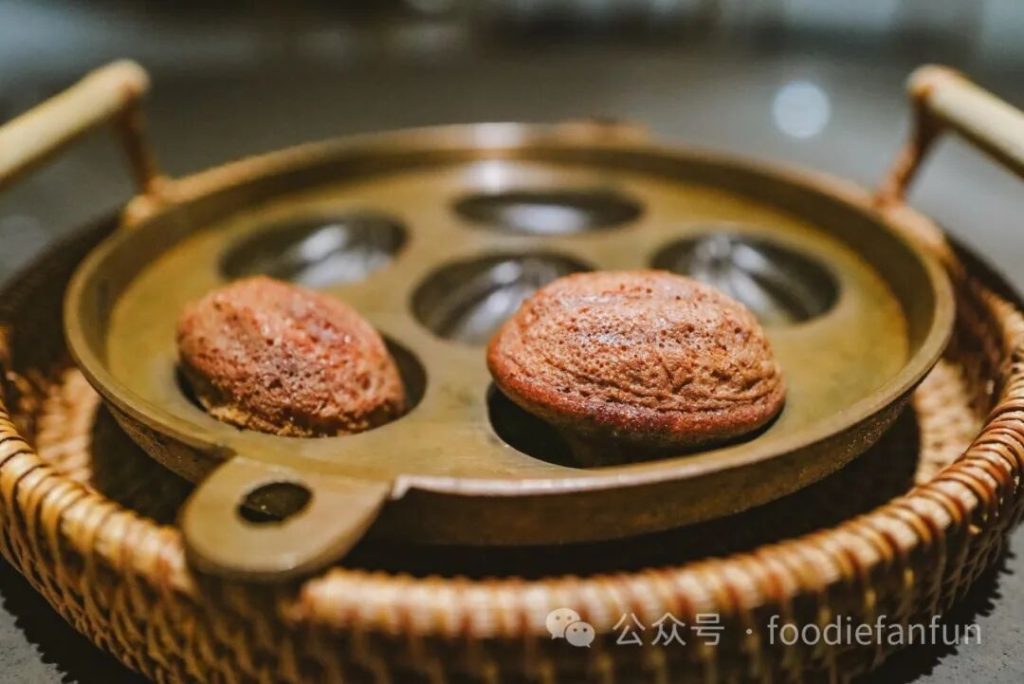
BORNEO RAW SUGAR BAHULU
The dessert arrives, and just from the colors alone you can feel the tropics.
Mango, pandan, passionfruit — crack open the meringue on top and it’s like stepping straight into tropical fruit paradise.
Served alongside is the traditional Kueh Bahulu, a classic Malaysian egg cake. Still warm, soft and delicate, it brings a genuinely gentle kind of happiness.

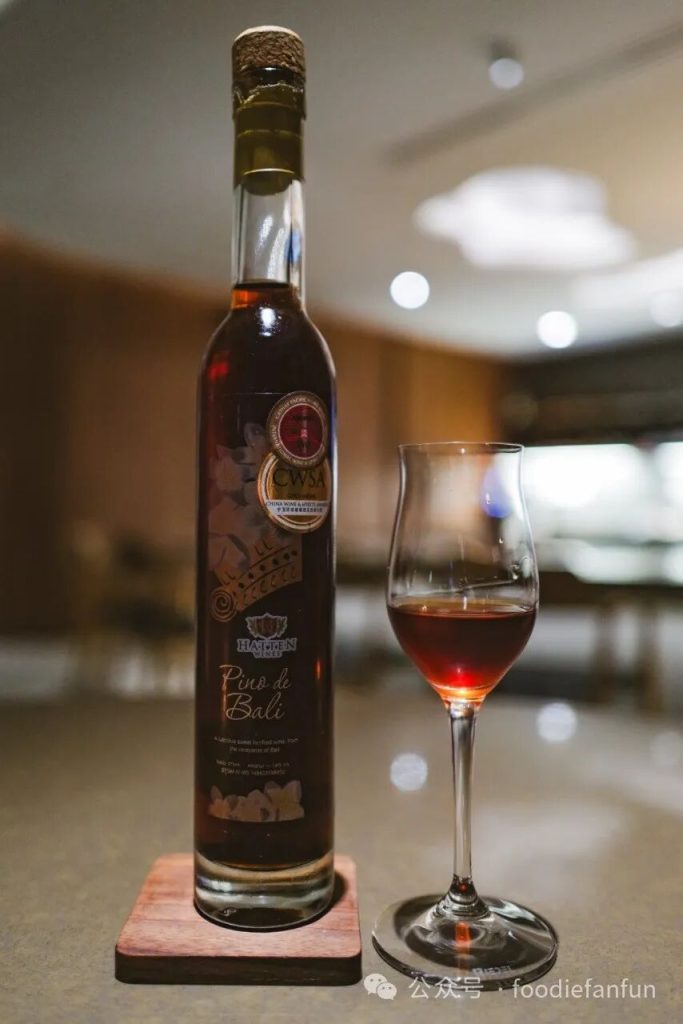
The final pairing comes from Indonesia.
(Congratulations, I’ve just unlocked a new country.)
The production method is unusual too — it references how Pineau des Charentes is made in France: the grape juice is fortified before fermentation, then aged over five years in French oak using a solera system.
Dried fruit, almond, honey, and toffee notes — a genuinely perfect match with the bahulu.
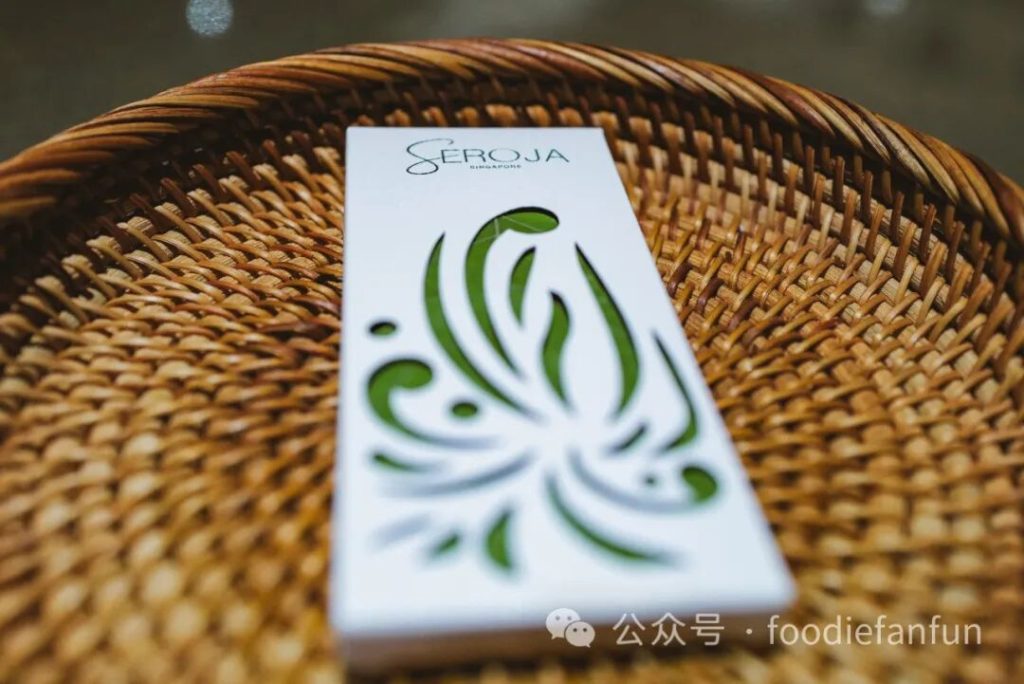
The parting gift is dark chocolate from Chermor. Genuinely remarkable — this single meal unlocked so much of Malaysia’s plants, cuisine, and cities.
* * * * *
Looking back on this menu, I can’t help but admire Seroja’s team and its chef.
Plenty of restaurants lean on sentiment. Plenty of restaurants tell stories.
But being able to translate a story through food — to present Malaysian food through the plating language of French cuisine, and let a foreign diner grasp its deliciousness simply and directly — that’s genuinely rare and genuinely impressive.
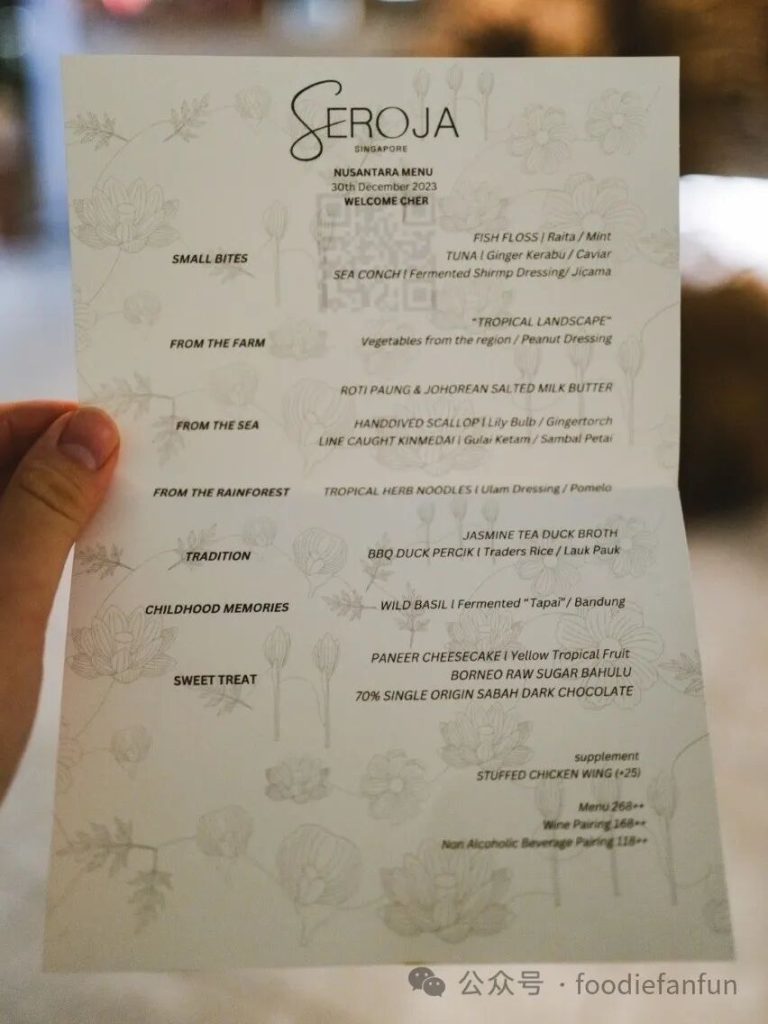
Chef Kevin and his team clearly have a lot of stories, and they’ve dug up plenty of fascinating Malaysian ingredients to showcase. But they never settle into their own memories, never force anyone to sit through a story — instead, they let guests explore for themselves, through the physical experience in front of them.
Even in reflection, it kept my curiosity fully engaged — writing this piece, I looked up at least 35 different culinary and botanical terms.
The wine pairing was also bold and inventive without losing its sense of principle. Matching the dish is table stakes here; what stands out is that each pairing still carries a personality of its own, delivering one surprise after another in a different direction each time.
This is, without question, a destination restaurant in my heart — and reason enough on its own to go back to Singapore, just for Seroja’s menu.

Seroja
Fridays and Saturdays 12pm to 2:30pm
Tuesday – Saturday
6:00 PM -11:00 PM
Seroja.sg
Chef’s Menu $218++ / $268++
Wine pairing $118++ / $168++
Non-alcohol pairing $88++ / $118++
Leave a Reply