I’ve been to Gunma Prefecture twice this year, but there was one restaurant I’d been longing for that I could never book — Sushi Obana, Gunma’s number one sushi restaurant. Many food lovers consider it one of Japan’s top three sushi restaurants.
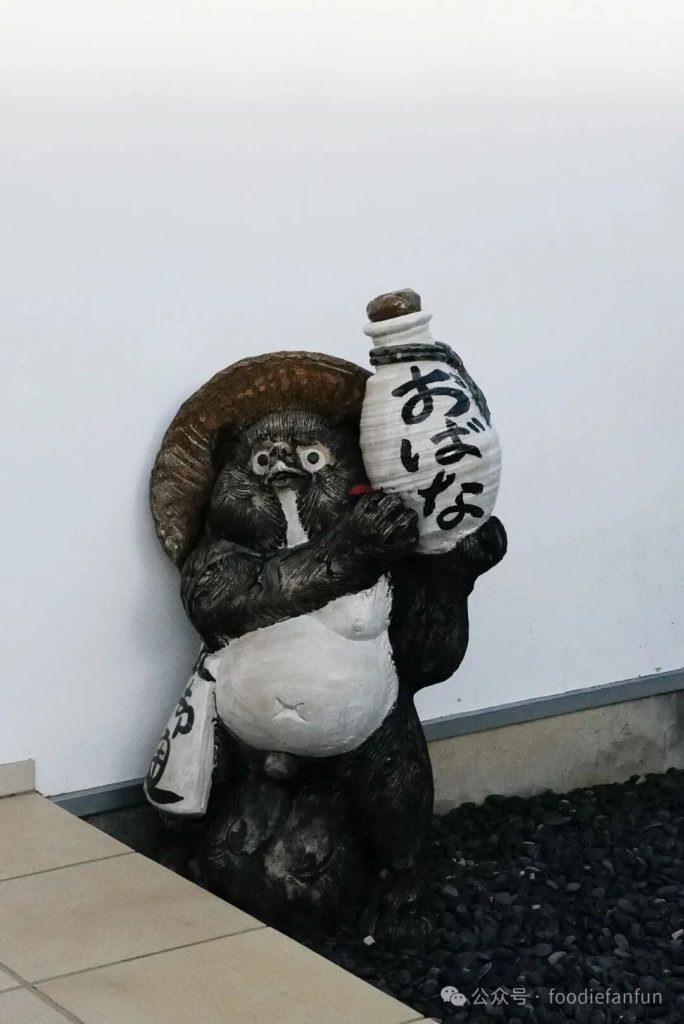
At this point, Sushi Obana basically doesn’t release seats to the public anymore, and the reservation line only takes regulars. This time, it took help from three different connections to finally get this meal.
Distance-wise, whether you start from Tokyo or Gunma’s Takasaki Station, it takes over an hour by train to reach Tatebayashi, where Sushi Obana is located. Oh, and this happens to also be one of the hottest towns in Japan.
Once again proof that Japan’s small towns produce legendary restaurants.
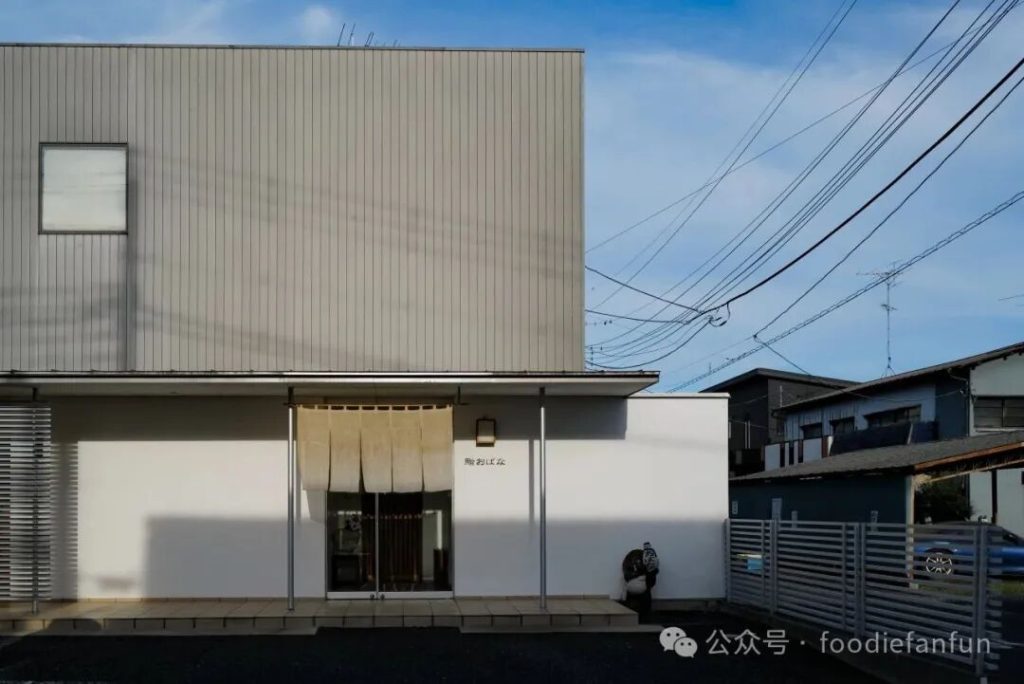
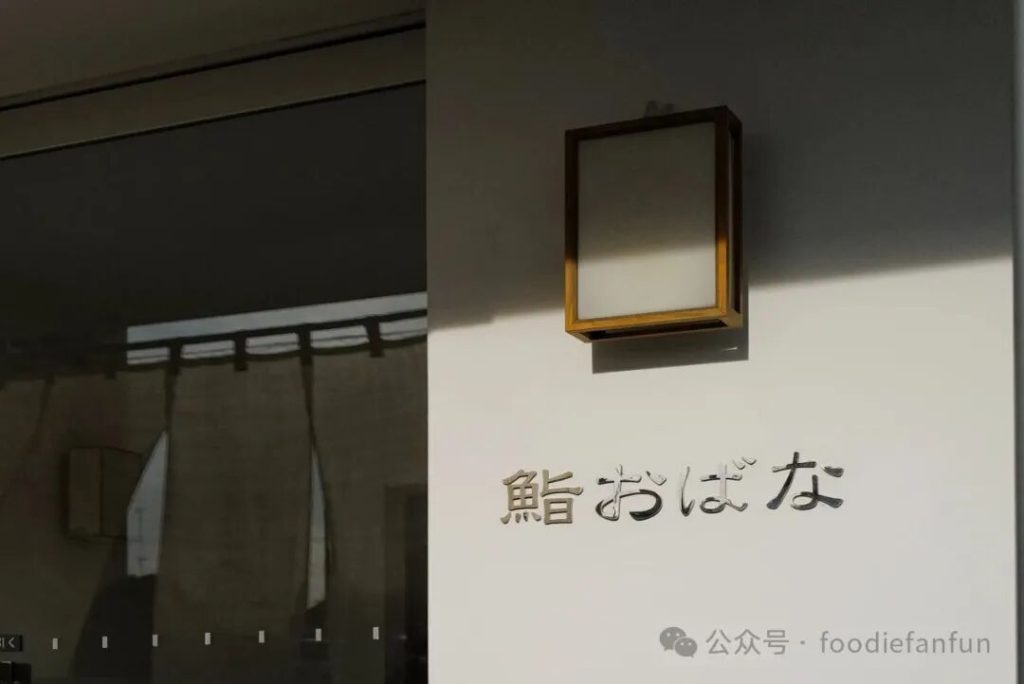
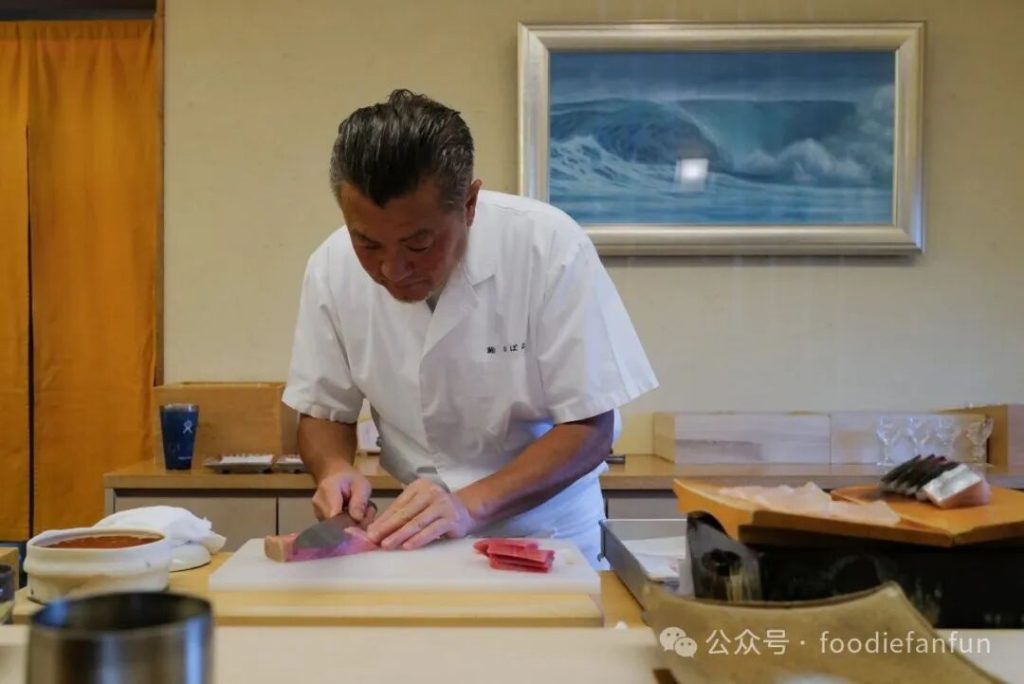
The restaurant is now run by the second-generation chef, Teru Obana, who transformed it from a modest streetside sushi shop into a beautiful sushi restaurant. Since 2001, Obana-san has driven 80 kilometers to Tokyo’s Toyosu Market twice a week to personally select ingredients. So even now, in an age of efficient logistics, Sushi Obana is always the very first stop in Gunma for fresh seafood shipped in cold chain.
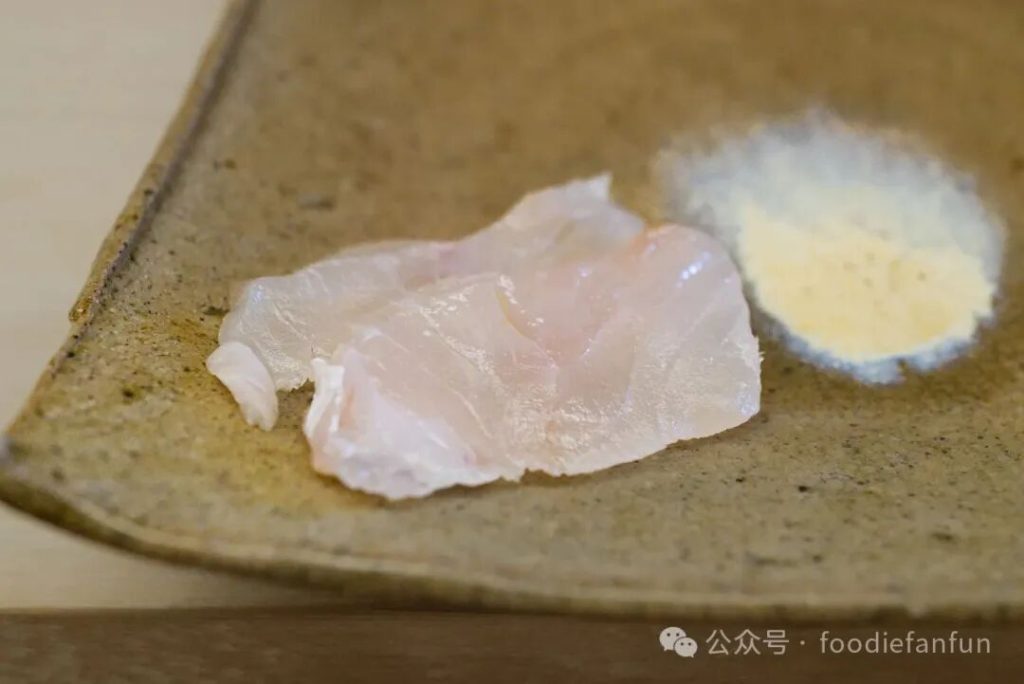
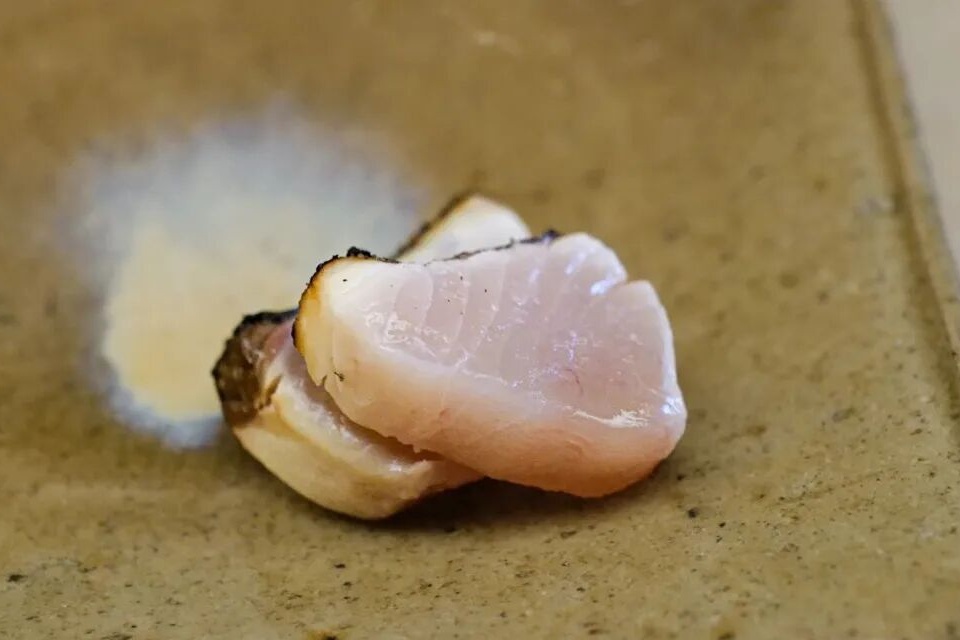
True Grouper
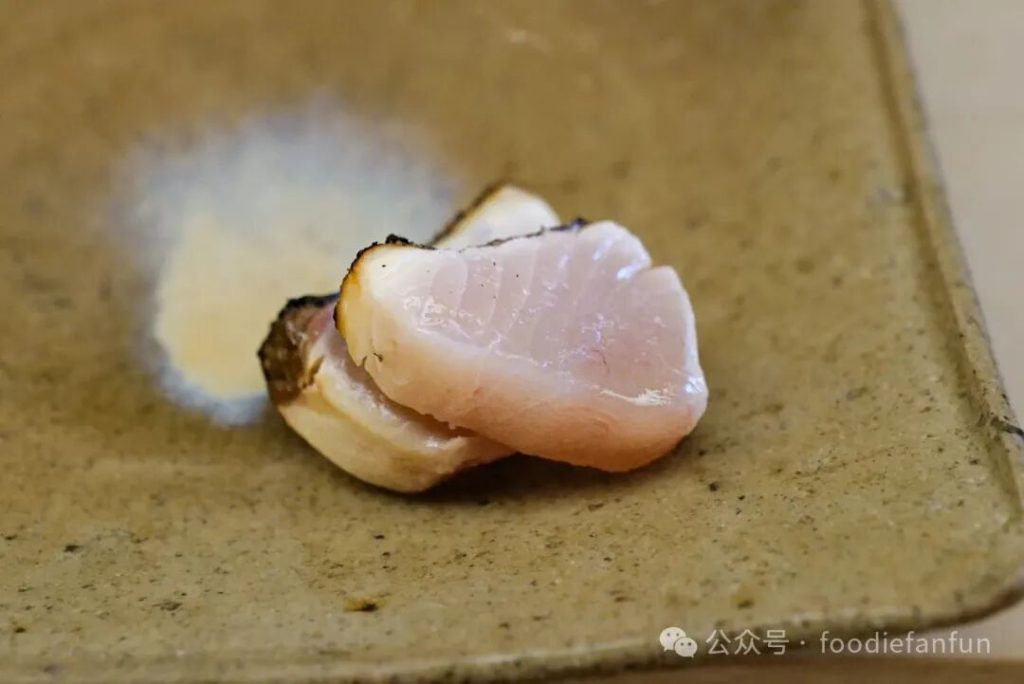
Straw-Seared Bonito
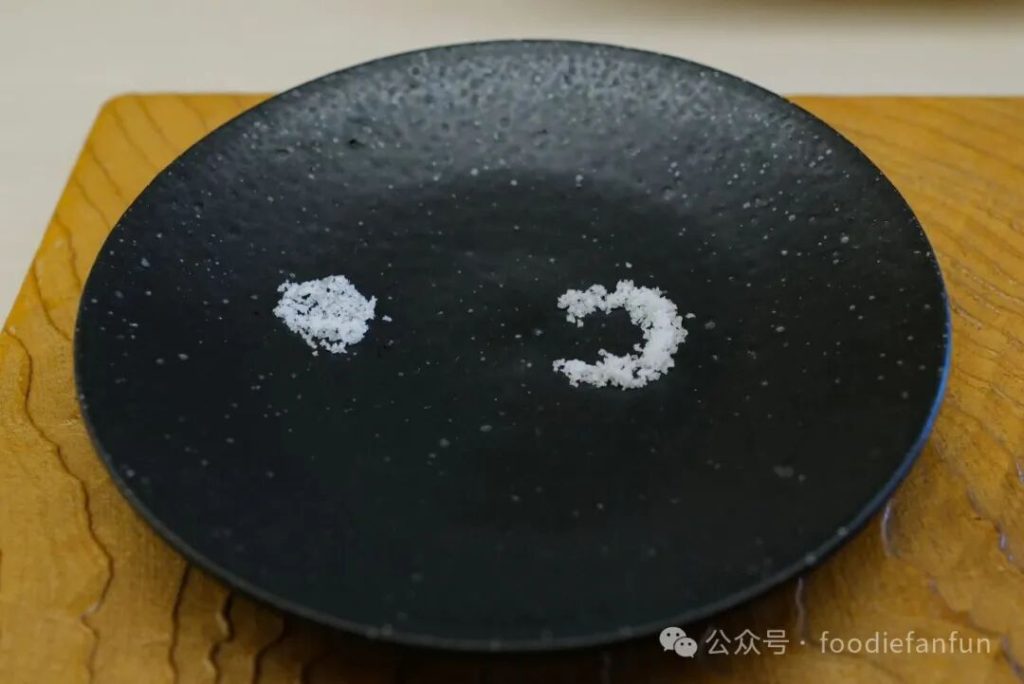
When I wrote about Tempura Mokkosu before, I mentioned Amakusa’s “full moon salt” and “half moon salt.” This time, sitting down at the counter, I saw the same pairing again — plated in a shape that matched their names.
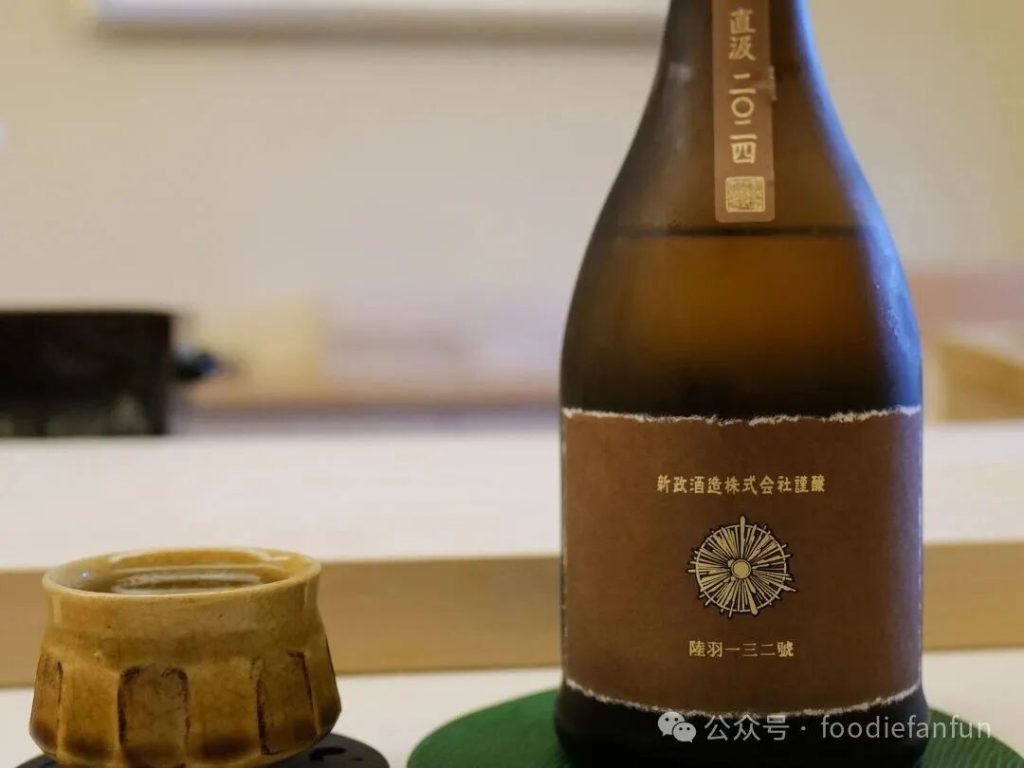
As for pairing, it can be adjusted to personal taste — the former is rounder with a stronger minerality, while the latter focuses on a clean, direct lift of umami.
Personally I like grouper with the half-moon salt, while the straw-seared bonito might pair more distinctively with the full-moon salt. You get a smokiness that rushes straight up your nose, then cuts off abruptly, followed by gently textured fish, with the umami and lingering sweetness staying fine and long on the palate.
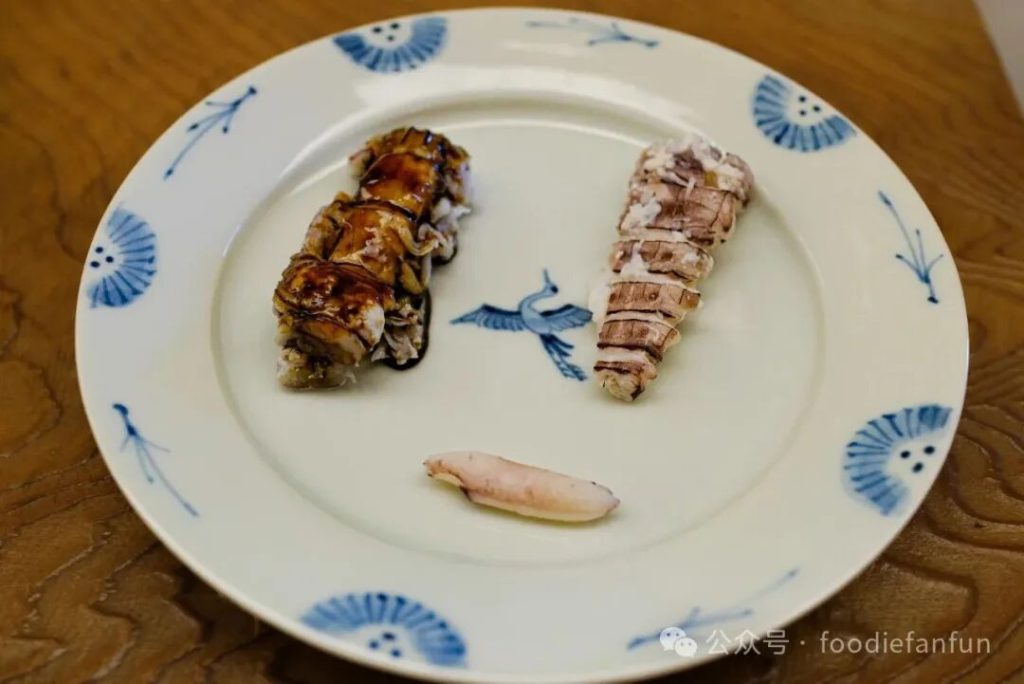
Mantis Shrimp
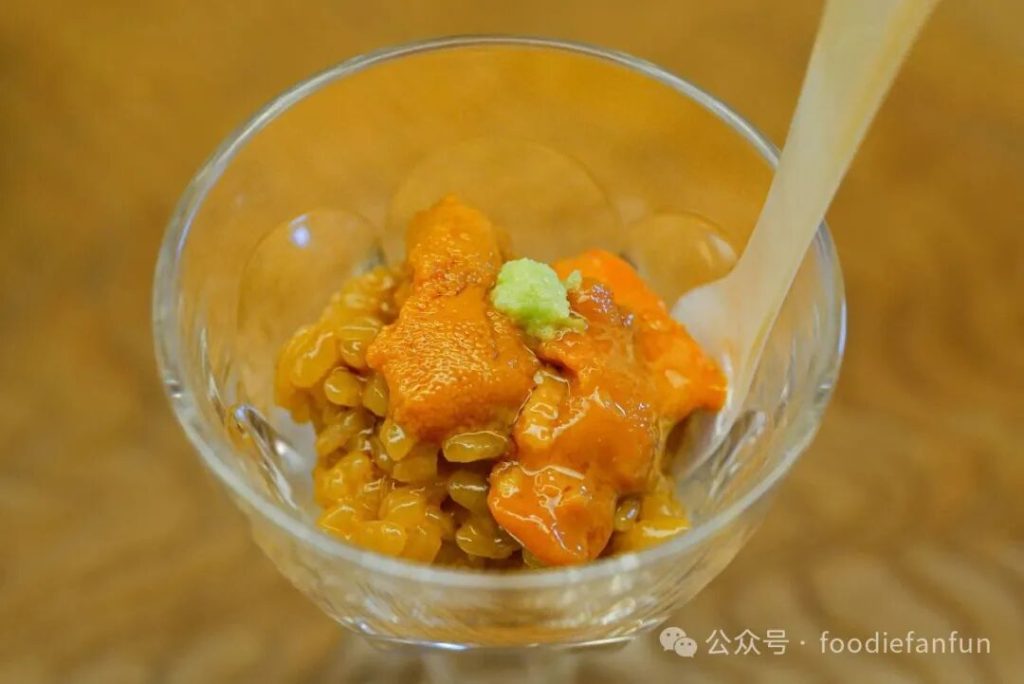
Sea Urchin Parfait
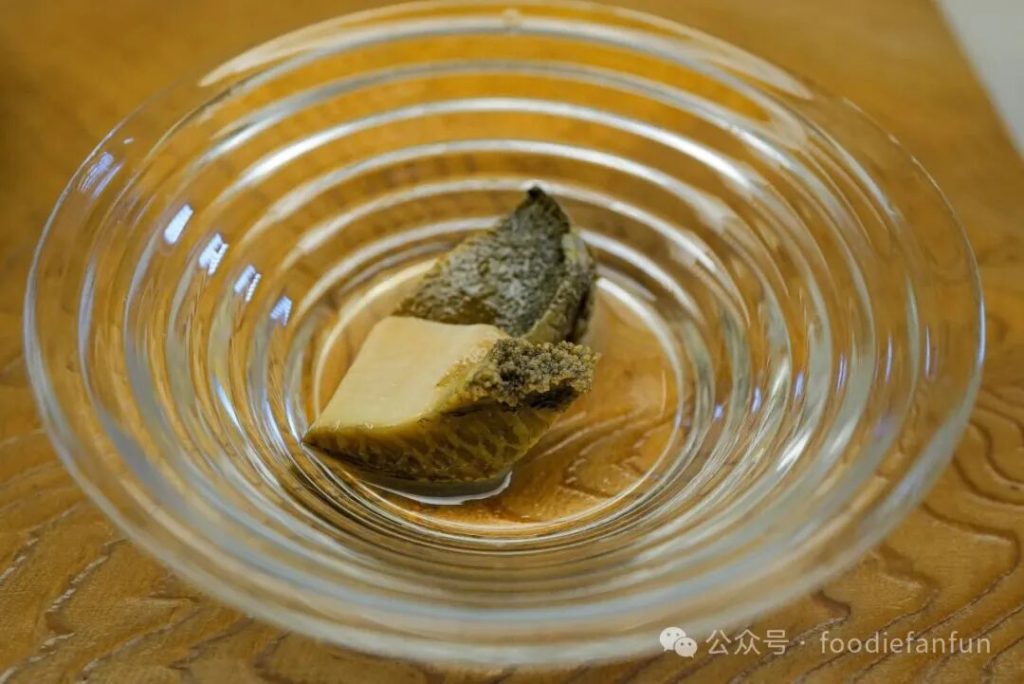
Abalone
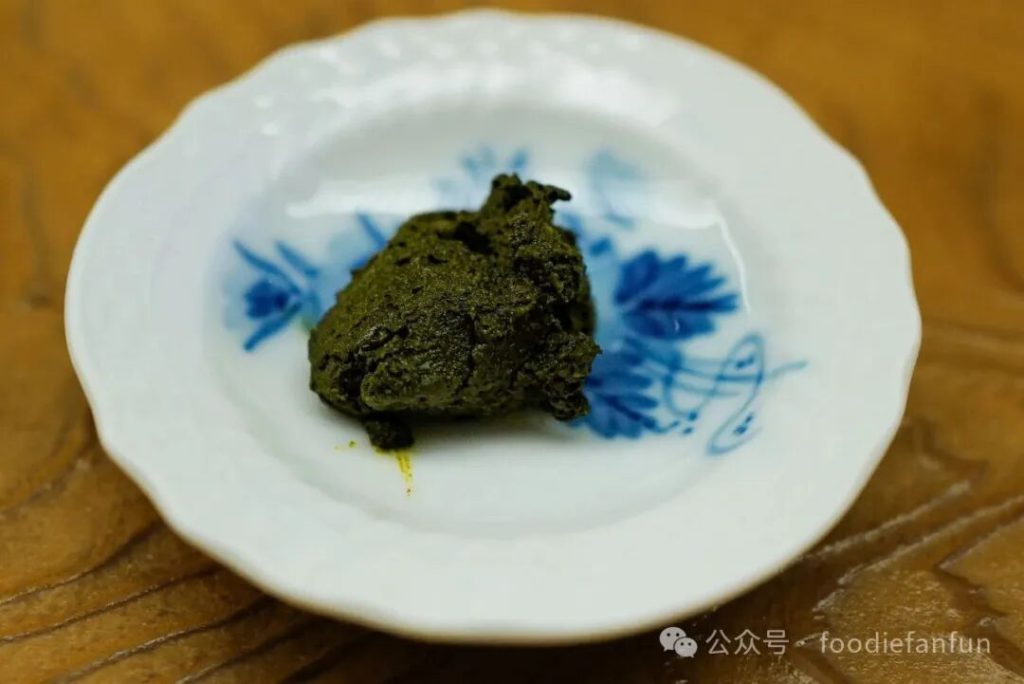
Abalone Liver Purée
Obana’s otsumami (drinking snacks) still feature the familiar mantis shrimp, sea urchin, and abalone, but the preparation absolutely breaks from convention.
The mantis shrimp came as a male-female pair for comparison — female on the left, male on the right — with the roe’s richness playing off sharply against the sweetness of the sauce on top. The abalone was cooked to a crisp bite with intensely concentrated umami, and the abalone liver wasn’t left as a mere side note either — it got its own dish, soft and savory, as a standalone drinking snack.
The sea urchin parfait is one of Obana’s signatures — bafun uni that skips Toyosu Market entirely and comes straight from the port to the restaurant, shaken in a cocktail shaker and mixed together with shari (sushi rice). The slightly underdone rice mingles with sweetness, saltiness, umami, and a full-bodied minerality — who could resist a combination this quietly luxurious? One bite, pure happiness.
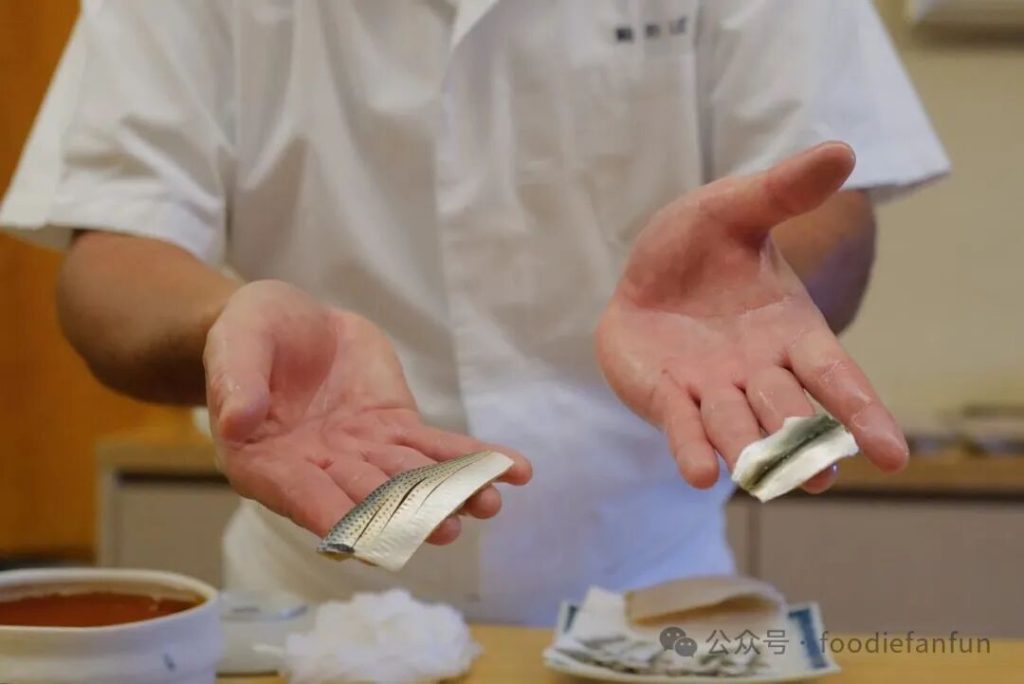
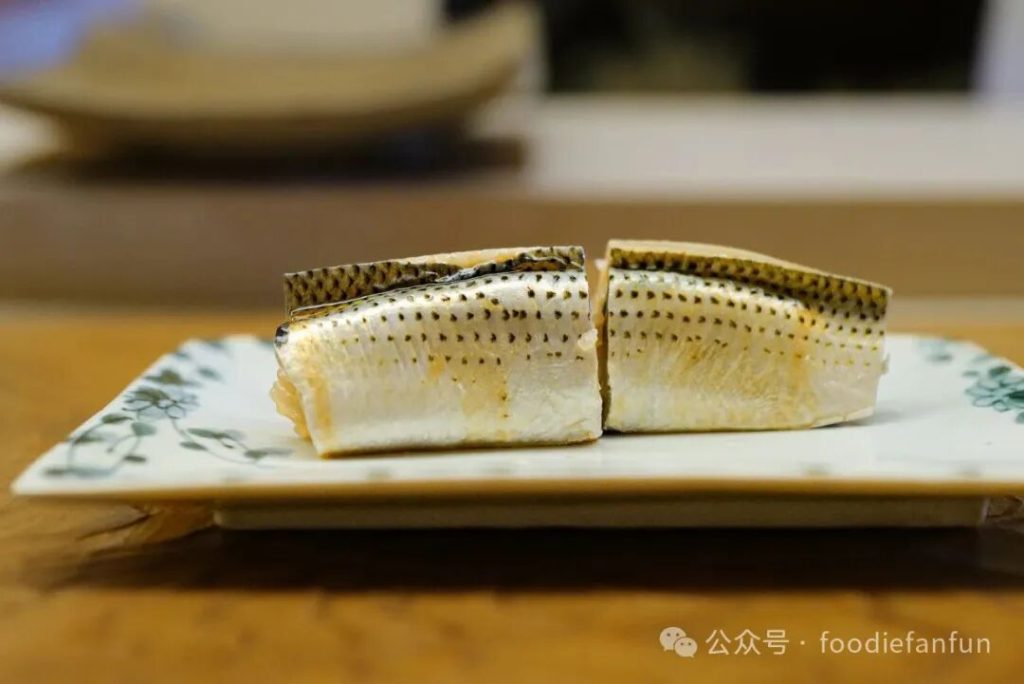
Nakazumi (Grown Kohada, colloquially “Ōgohada” / Bushi)
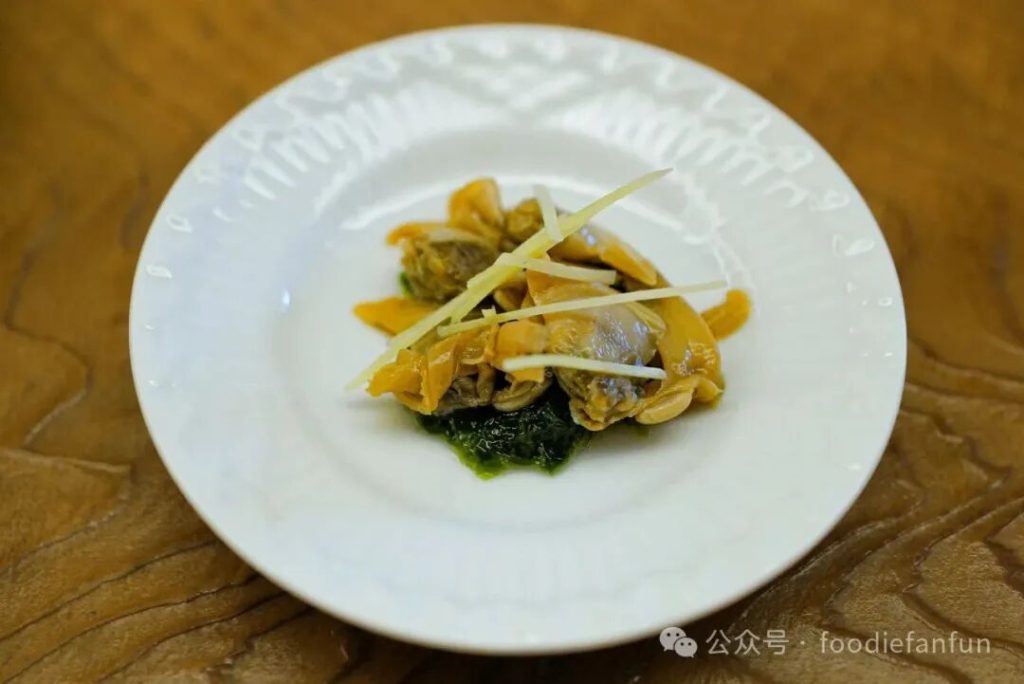
Manila Clam
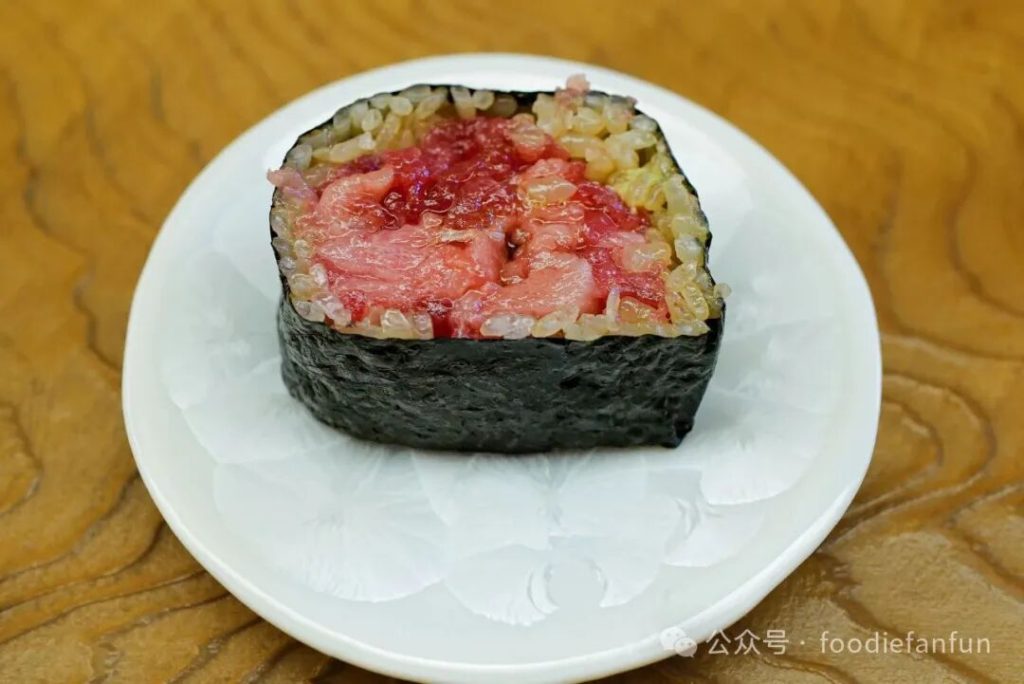
Futomaki Roll
Obana-san pulled two beautiful silver-skinned fish out of the fridge. “Today’s menu is going to put on a three-generation kohada show.”
The fully grown kohada was made into bo-zushi (pressed sushi); the flesh had a slight springiness, and the acidity balanced beautifully with the ginger tucked inside.
Then a futomaki roll was passed over — look at that gorgeous cross-section of tuna, who wouldn’t be dazzled? A sushi restaurant tucked away in a “village” was quietly flexing the sourcing power that comes with being Gunma’s sushi don.
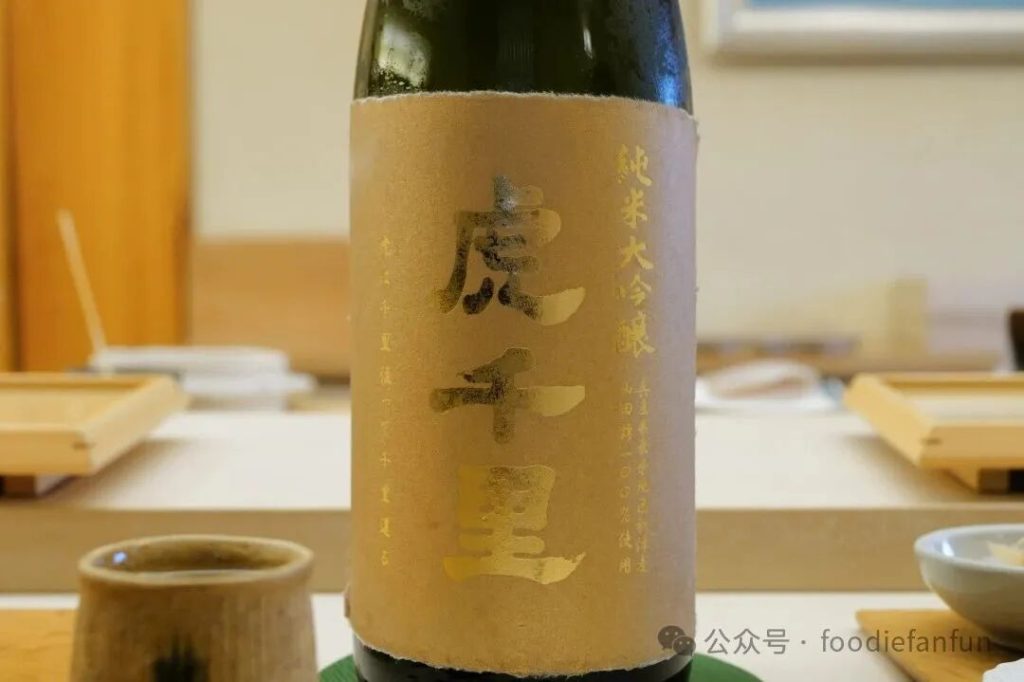
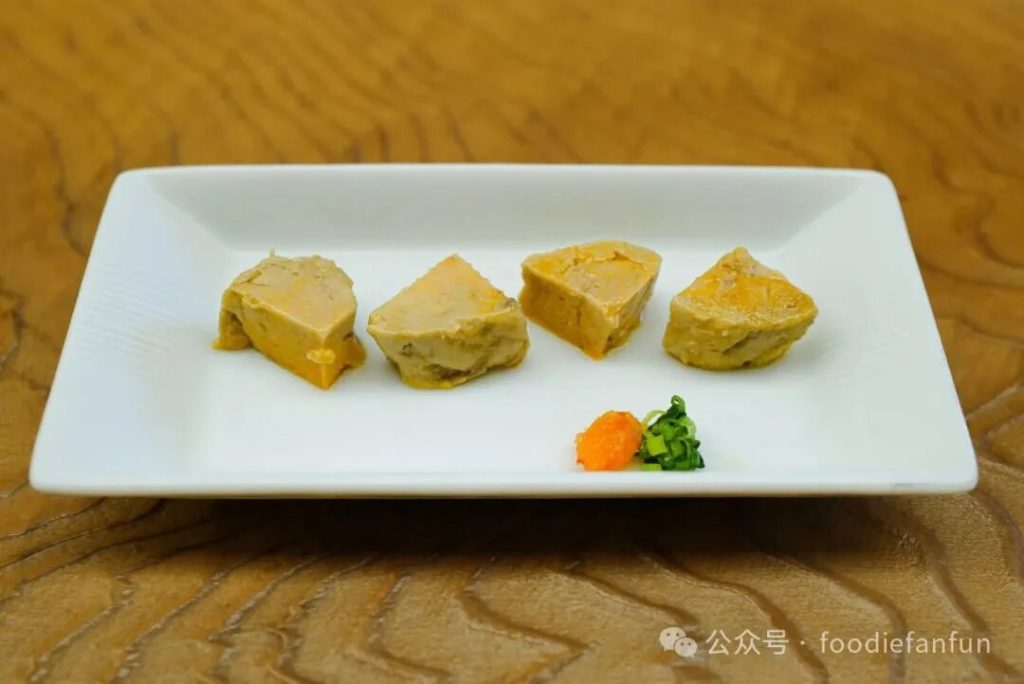
あん肝のポン酢漬け
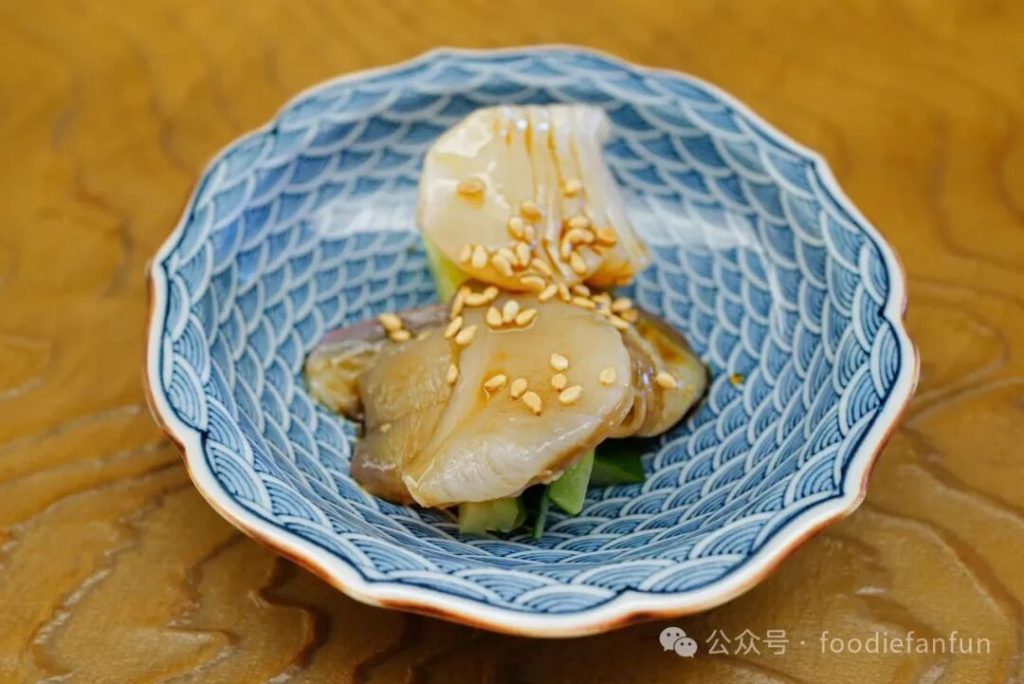
Arctic Surf Clam
Dinner started at 5:30, and by 6:03 we were already on the 10th otsumami course — but Obana-san’s pacing between courses was so skillfully handled that it never felt rushed.
Before the sushi began, monkfish liver marinated in ponzu for three days was served — remarkably, it had a texture just like cheese. The salty umami and creamy aroma were handled gently and in balance, melting the moment it hit the mouth.
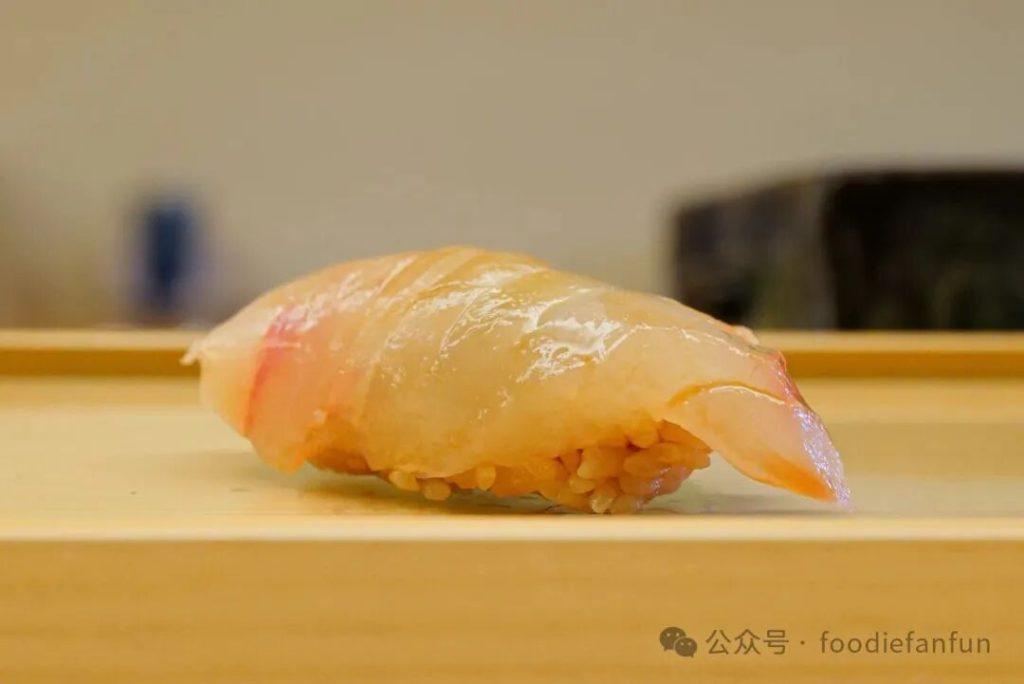
Isaki (Chicken Grunt)
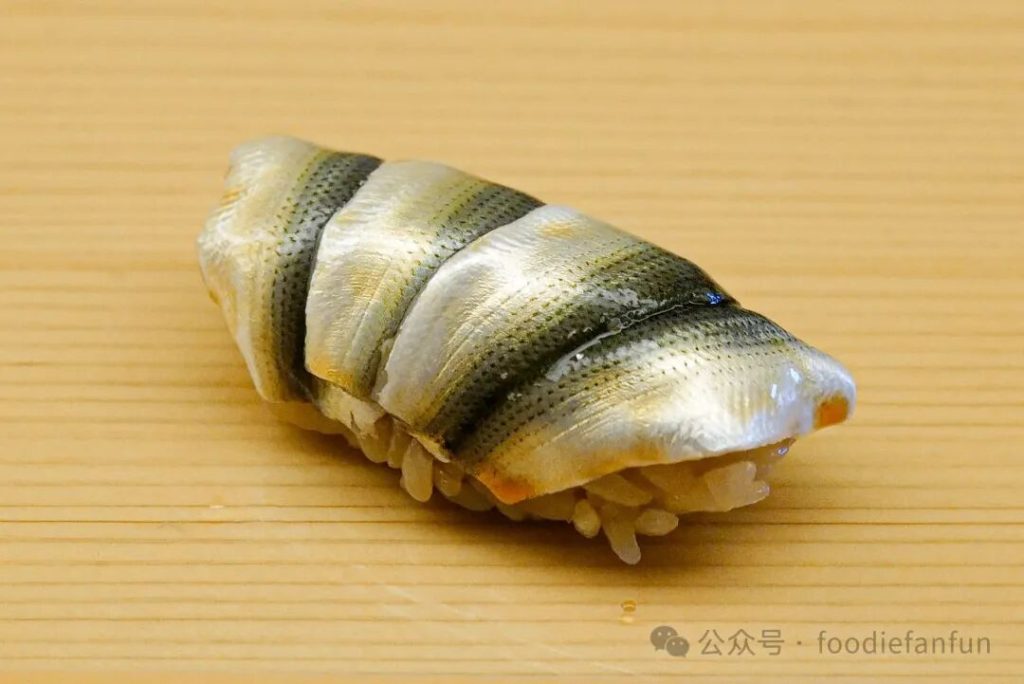
Shinko
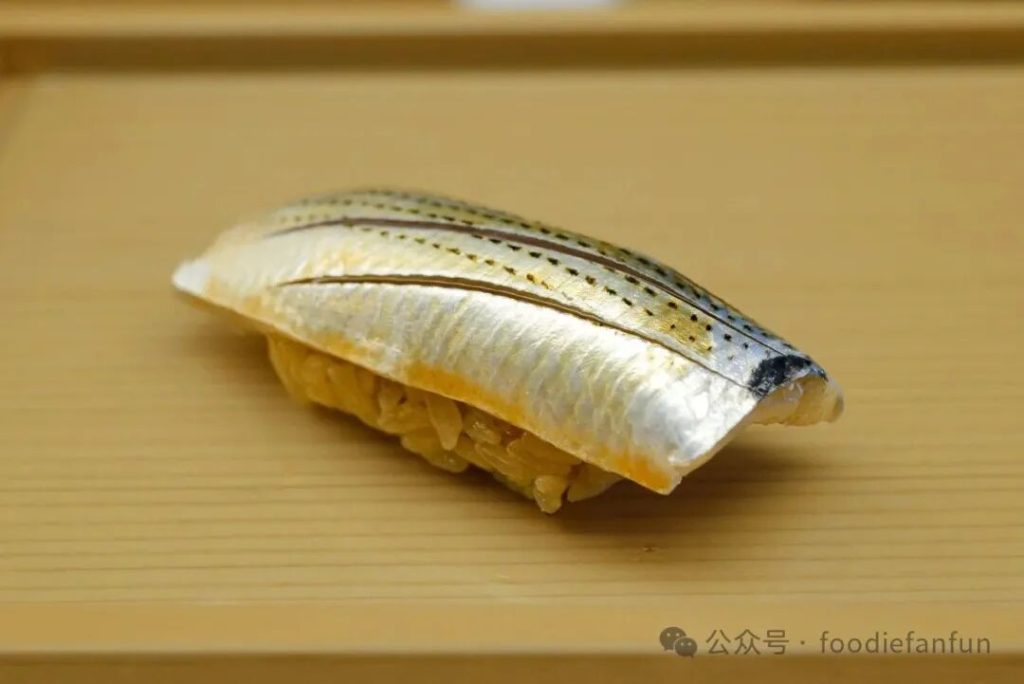
Kohada
After more than a dozen otsumami courses, it was finally sushi’s turn to take the stage.
A beautiful isaki, its flesh still translucent. The fat content was just right, rounding out the flavor of this white fish.
Shinko and kohada came one after another, their silver skin gleaming beautifully. The former offered a soft, elongated fish flavor; the latter, a hard-hitting, highly concentrated umami. The contrast was unmistakable.
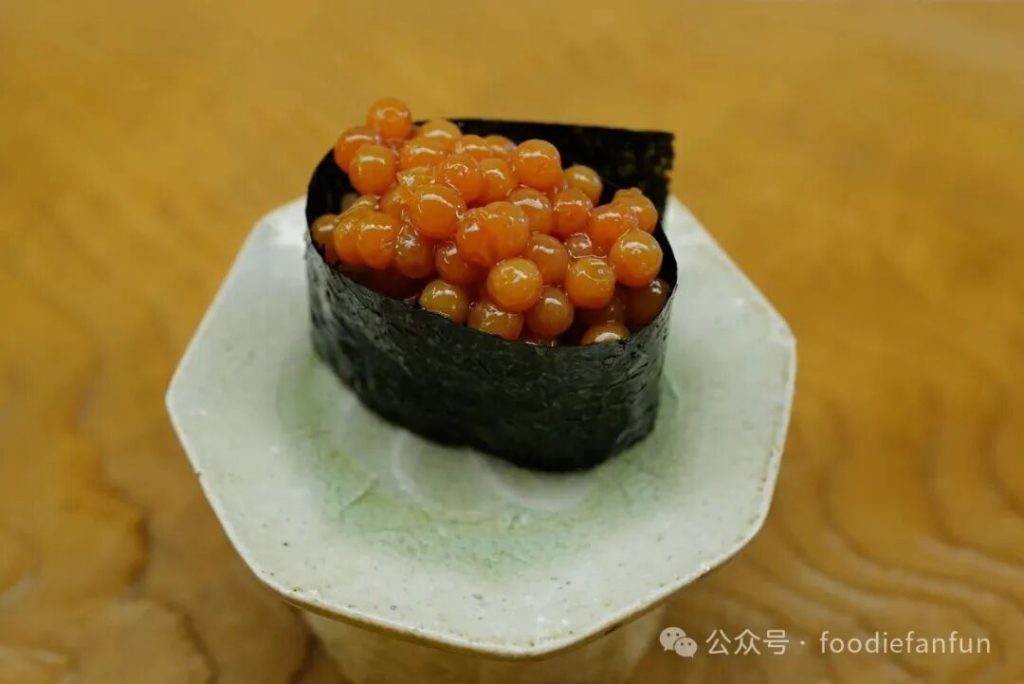
Salmon Roe
Salmon roe is another Obana signature — before tasting it, it was hard to imagine salmon roe with a texture like ice cream. Not the usual image of little juice-bursting pearls, but umami that melts right in your mouth. Absolutely incredible.
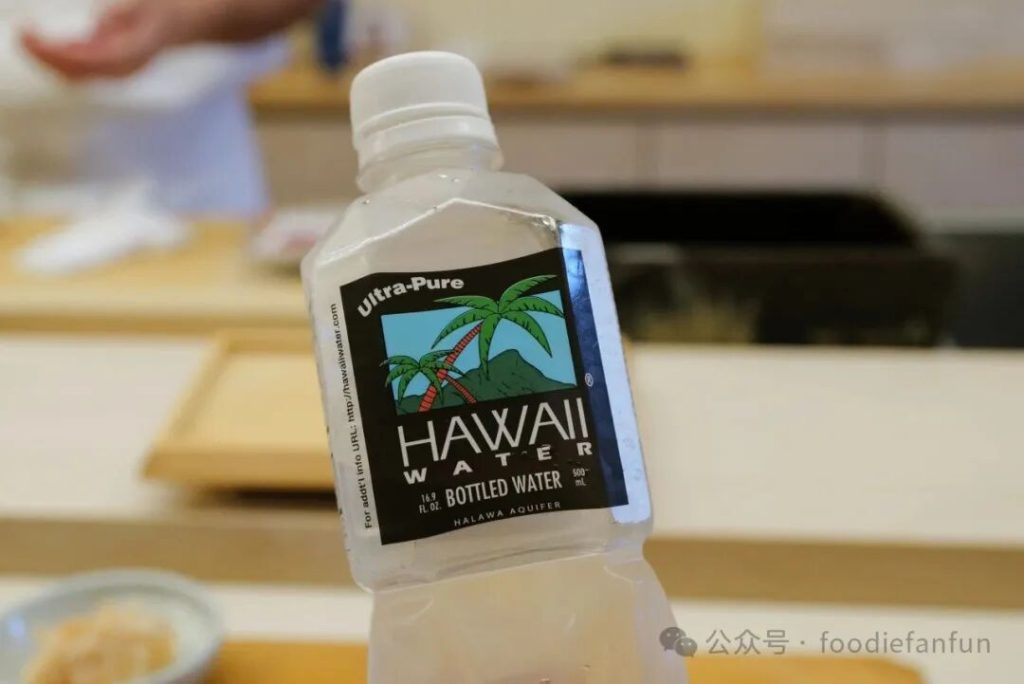
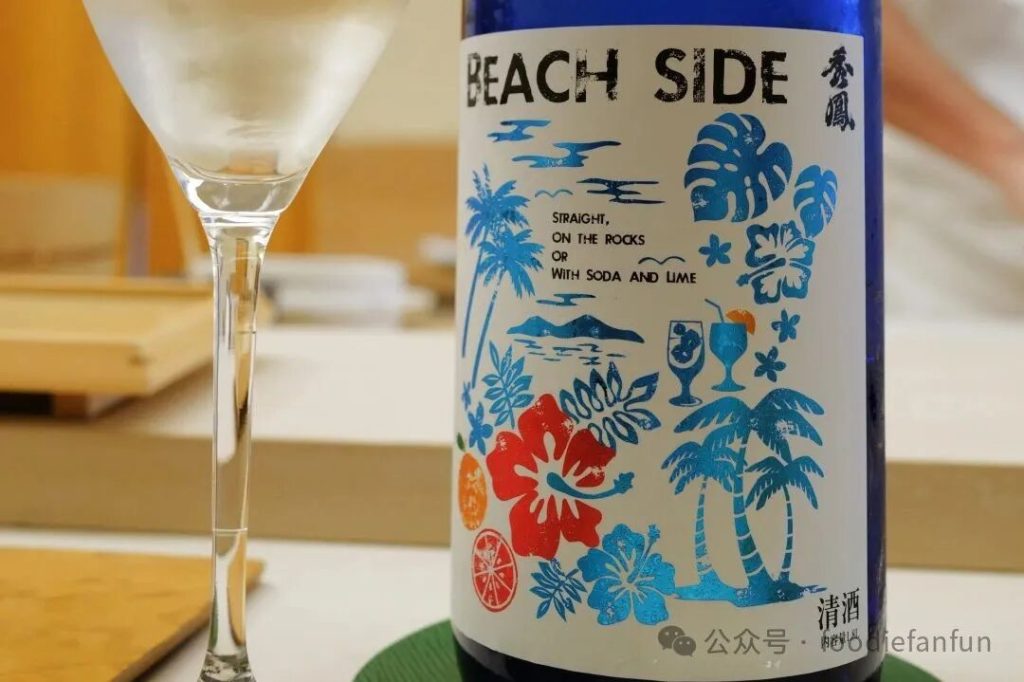
The last few pieces of sushi hit pretty hard, so I asked Obana-san for a glass of water. He pulled out mineral water imported from Hawaii.
“That’s what we drink here~”
Whew — a surfer through and through, apparently.
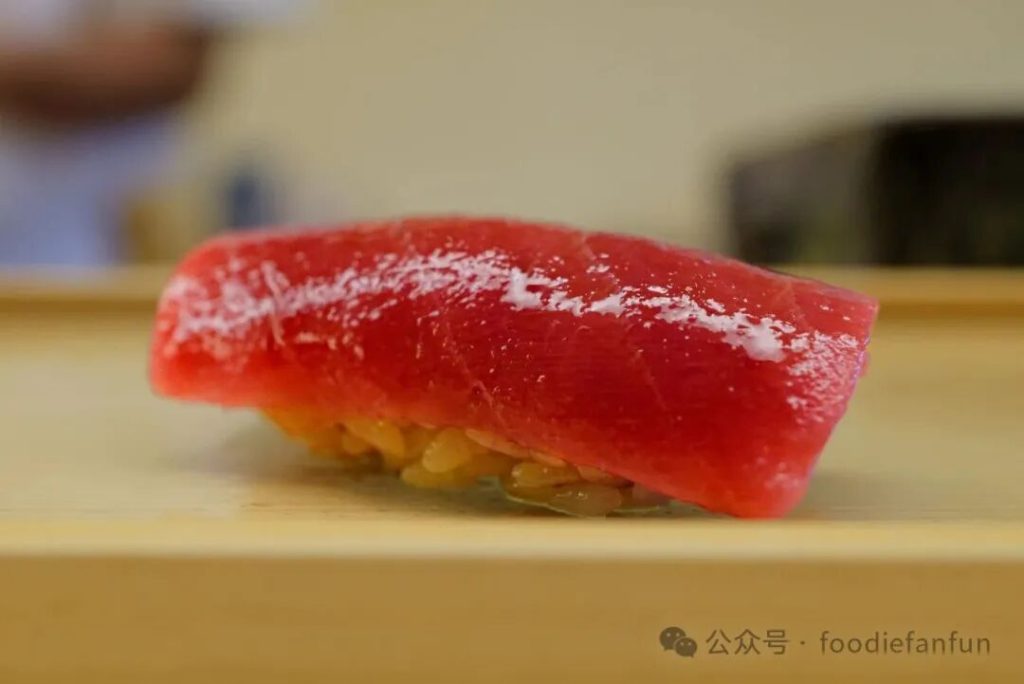
Akami (Lean Tuna)
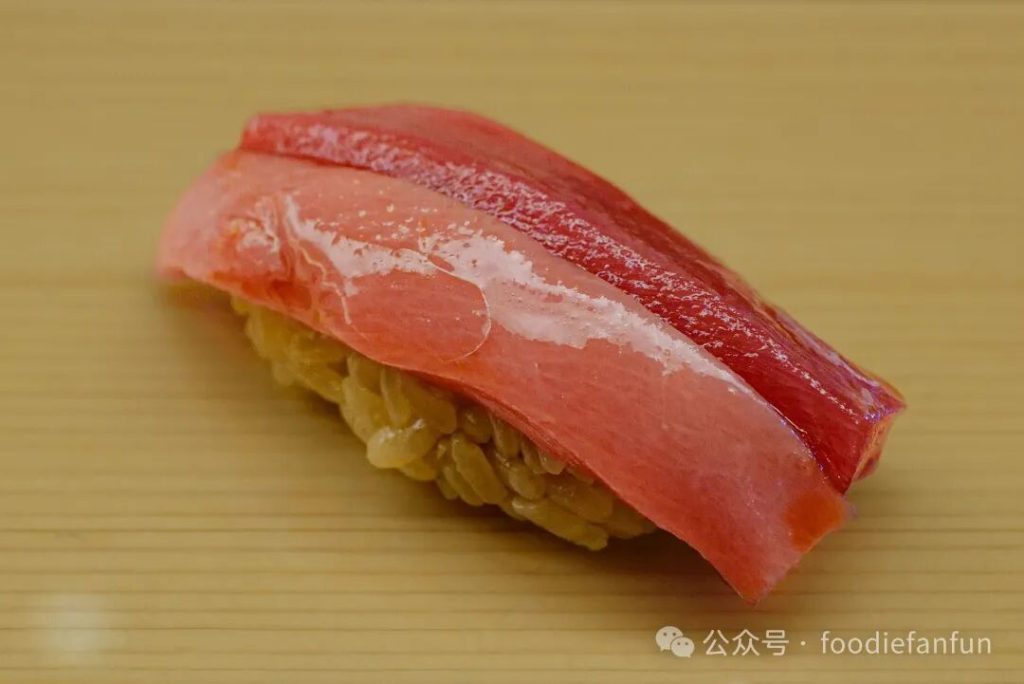
Tuna (Sinew + Center Cut)
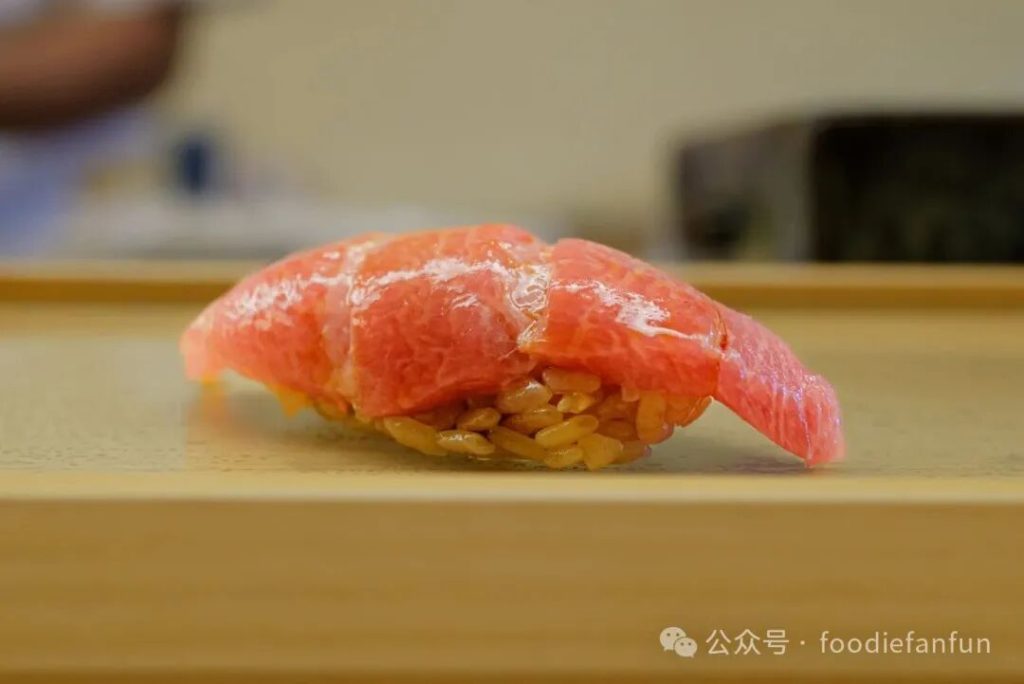
Otoro (Fatty Tuna Belly)
Three pieces of tuna — akami from Hokkaido’s Funka Bay, otoro from Miyagi Prefecture. Each slice was cut generously thick, and against the shari, the differences in flavor and fat between each fish and each cut really came through.
The real shock came when Obana-san served a piece of “double tuna” — the sinewy cut where the belly meets the akami. Most places would mince a cut like this into paste, but he kept the full thickness of the meat intact, delivering a serious impact with every chew. The texture and fatty aroma of the two sections balanced perfectly in the mouth — savory, soft, with a lingering sweetness.
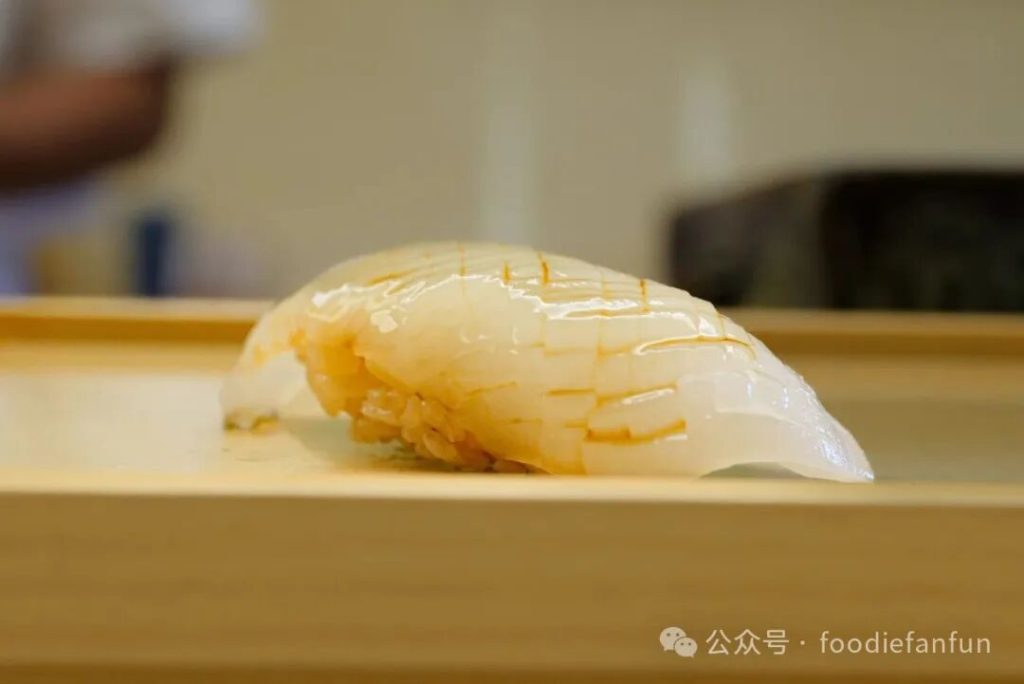
Aori Squid (Bigfin Reef Squid)
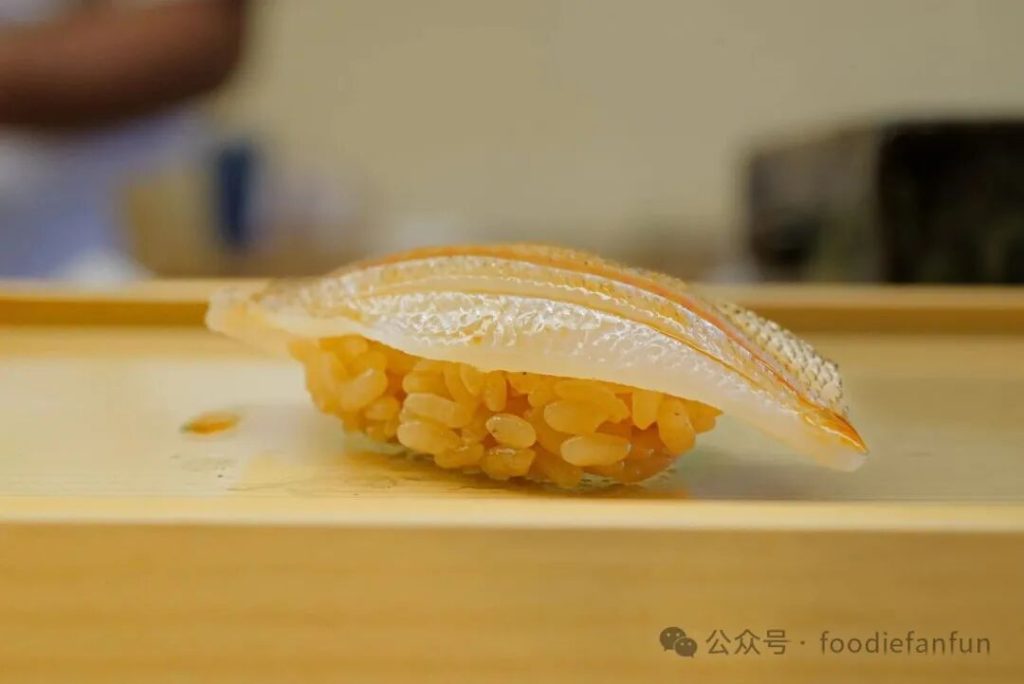
Extra-Large Kisu (Japanese Whiting)
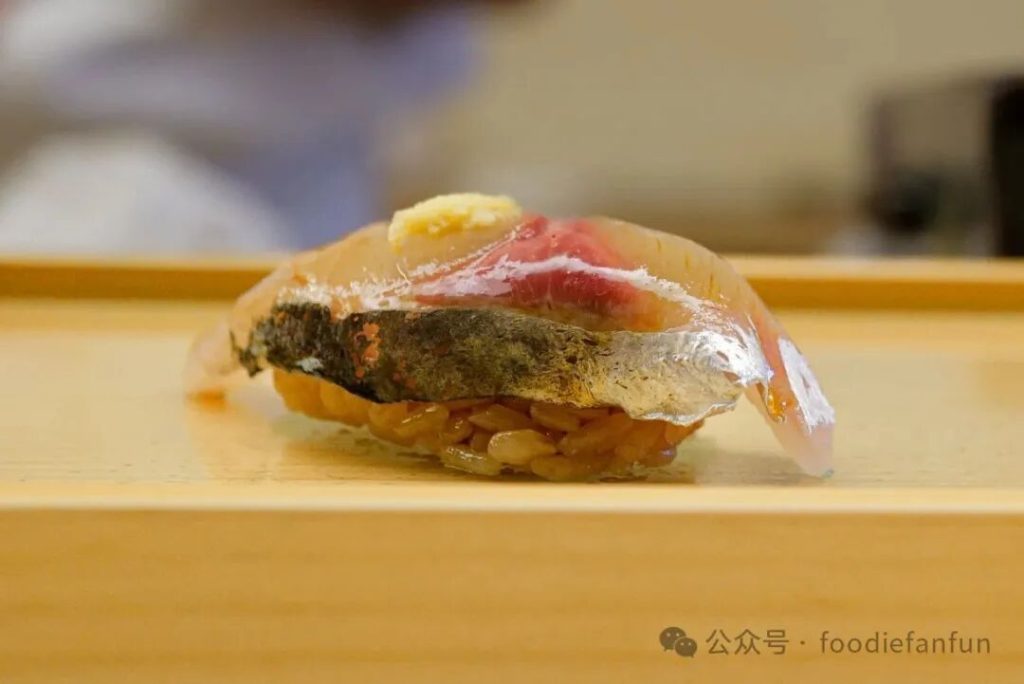
Oni-Aji (Giant Horse Mackerel)
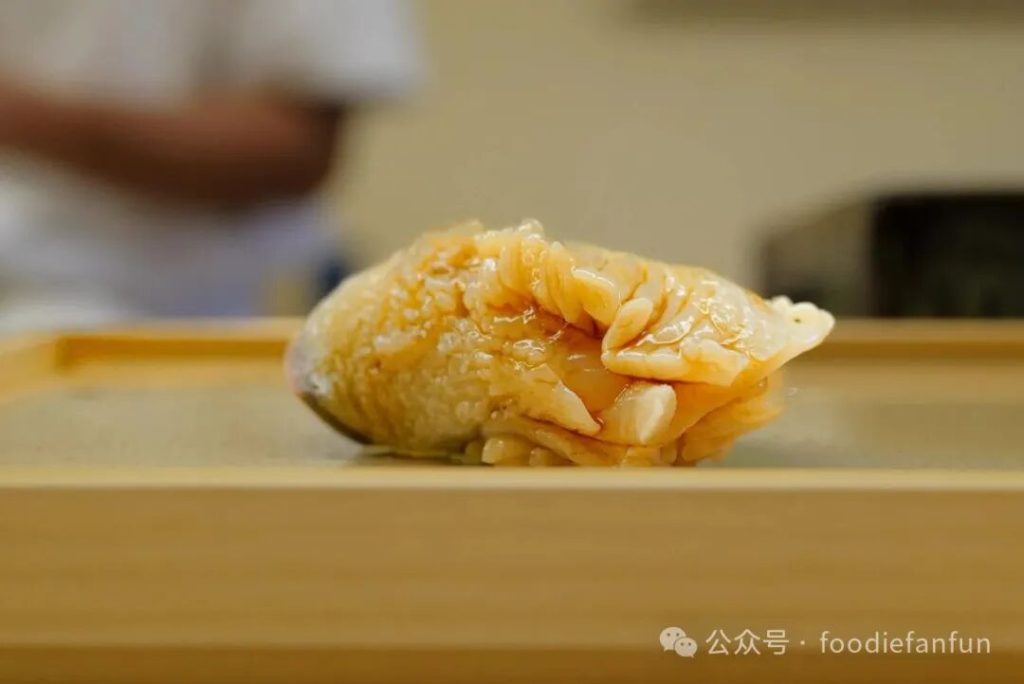
Arctic Surf Clam
After a continuous assault of silver-skinned fish and tuna, the pace started to lighten up — though it still kept showing off Obana’s sourcing chops.
Kisu from Tokyo Bay, but this one was noticeably bigger than usual. Early summer is prime season — the flesh was rich but still stayed refreshing.
The oni-aji that followed isn’t actually a distinct species — it refers to an extra-large, extra-fatty horse mackerel. A thick slice draped over the shari let you really feel the springiness of the flesh and the impact of its fat.
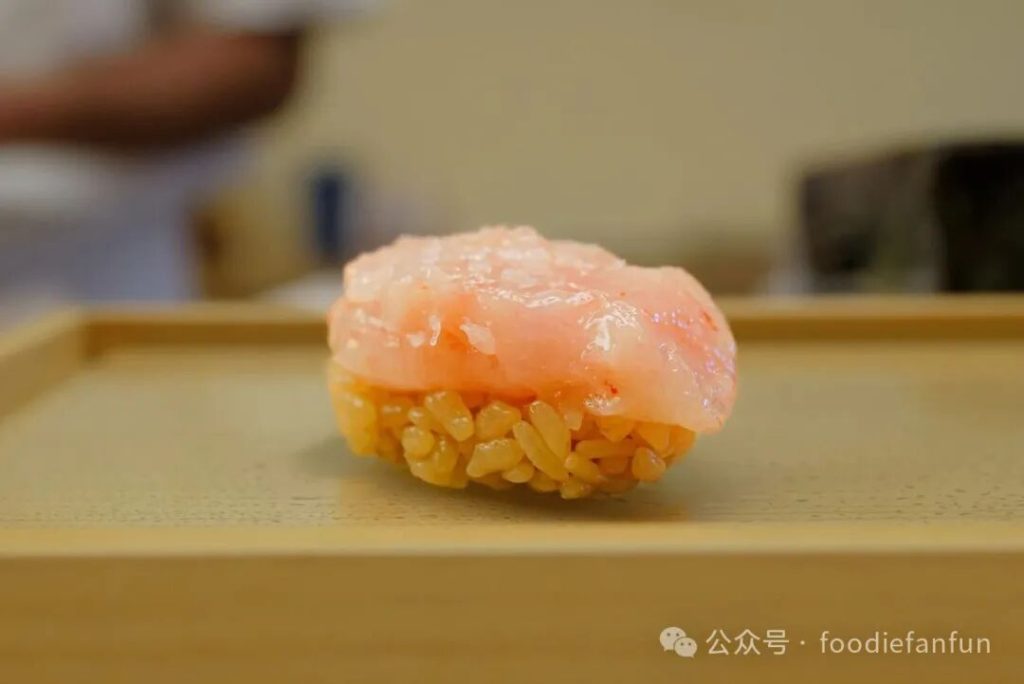
Sweet Shrimp
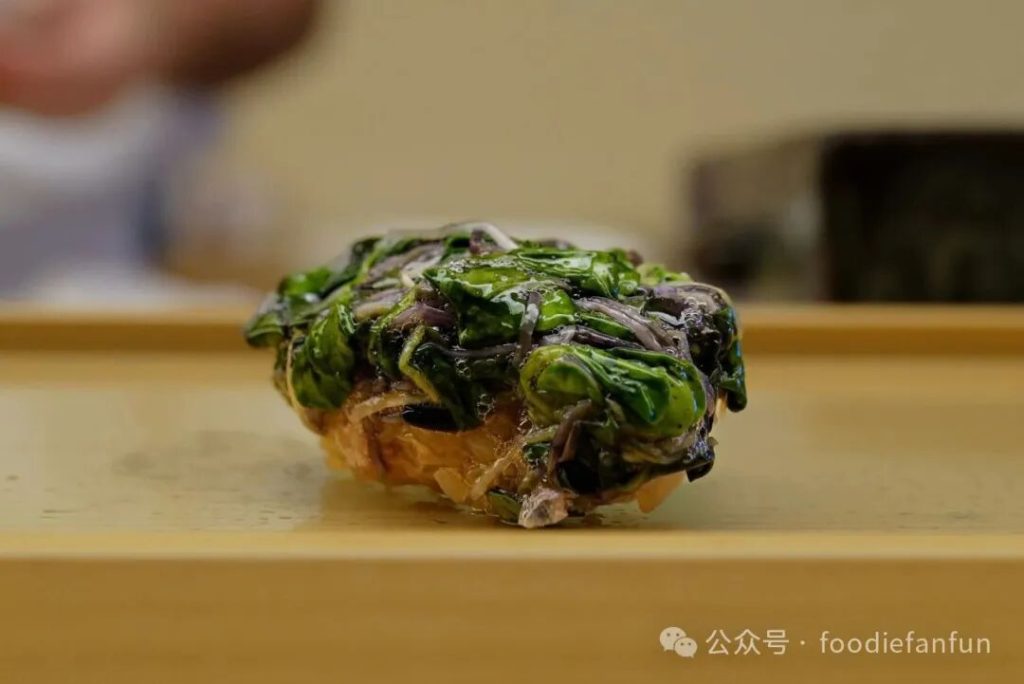
Radish Sprout
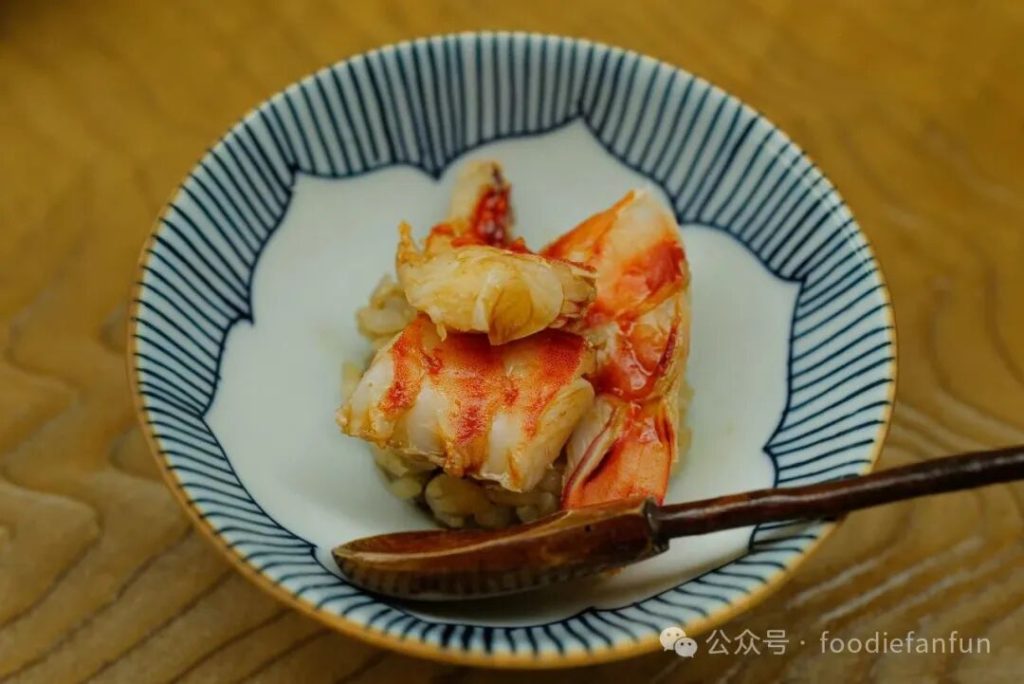
Grilled Shrimp
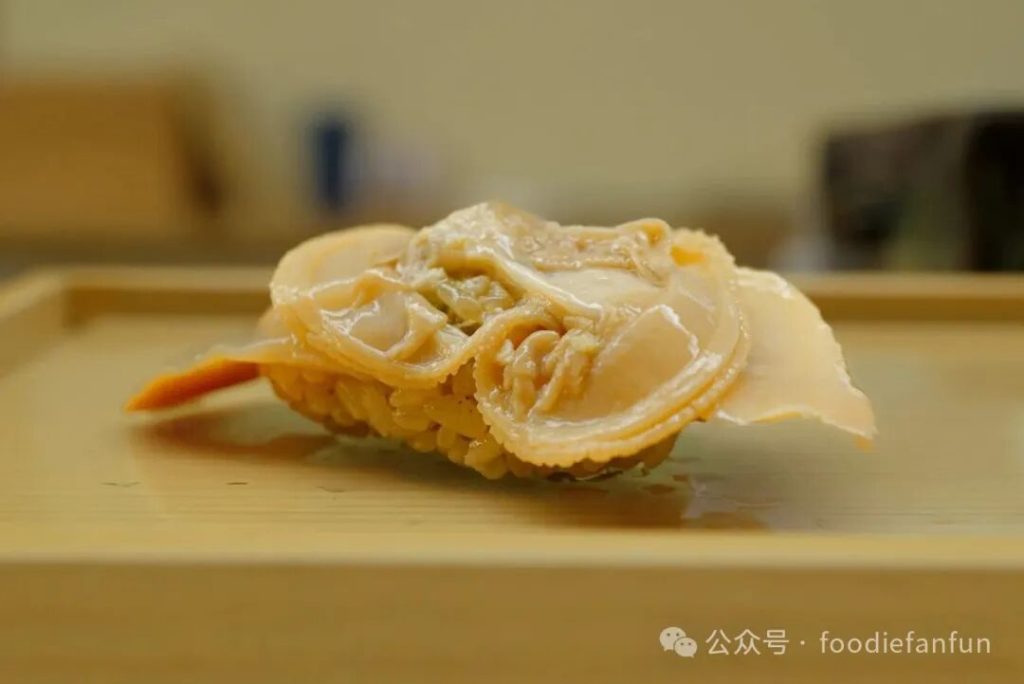
Simmered Clam
The sweet shrimp was another god-tier piece — on the outside it looked like a shiny pink-white shrimp paste, but inside it was actually wrapped around a whole small sweet shrimp. Soft and crisp at once, the sweetness and umami were amplified to a whole new dimension of surprise.
Between the grilled shrimp and the simmered clam that followed, a vegetarian piece was slipped in — kombu-cured radish sprouts, offering a faint bitterness as a palate reset while the kombu carried the umami through. No fish involved, but this one piece of sushi, arriving right around the 80% mark of the meal, cleared the head and set things up nicely for the meal’s final stretch.
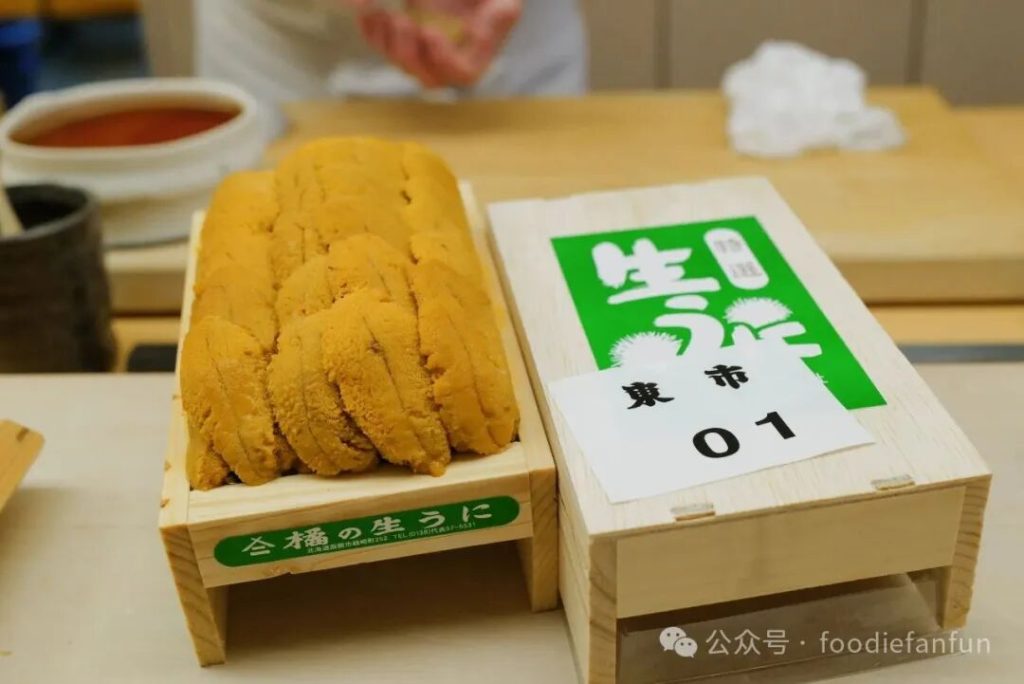
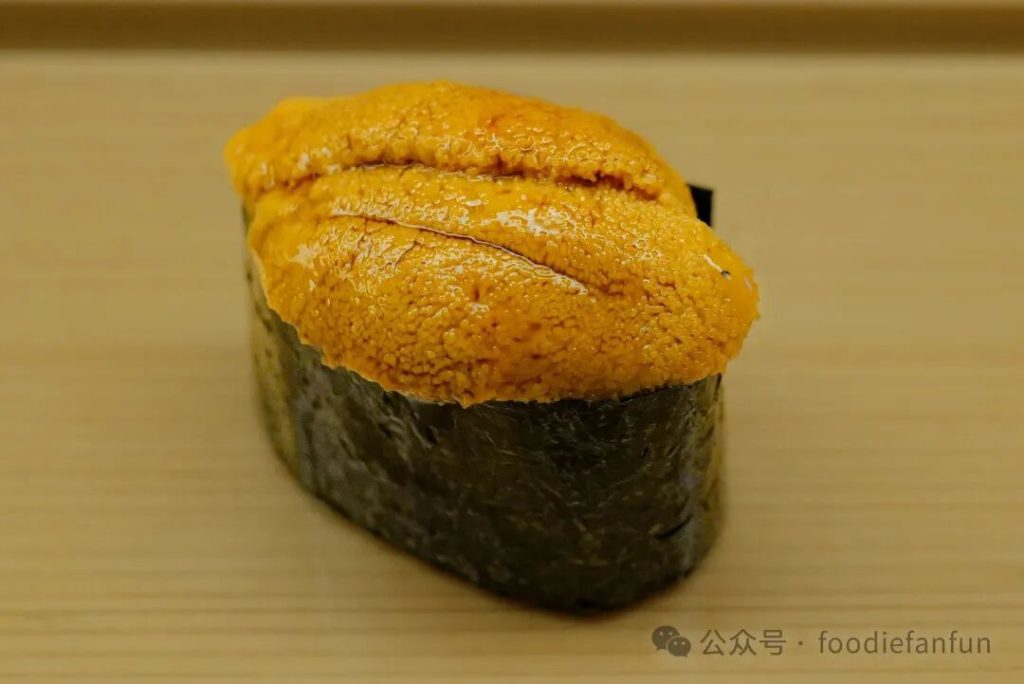
Toichi No.1 Sea Urchin
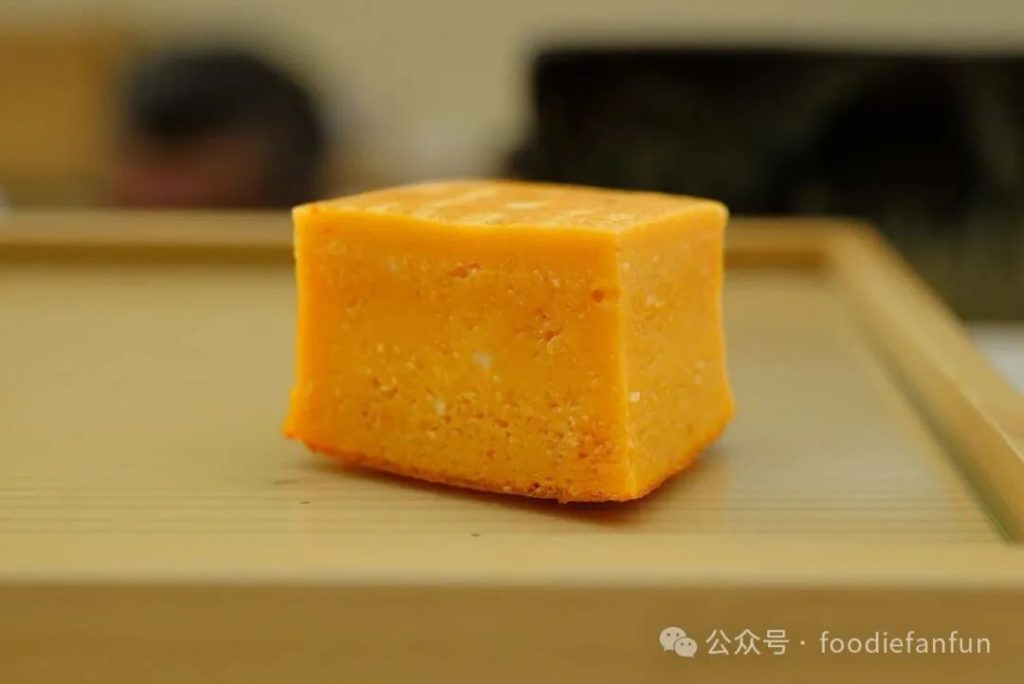
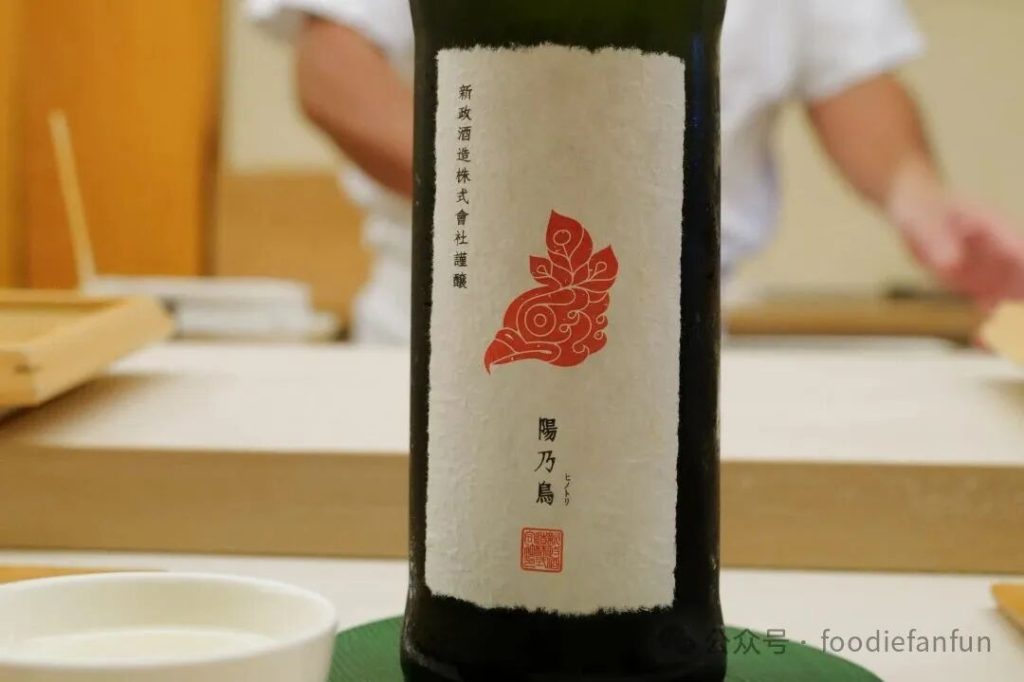
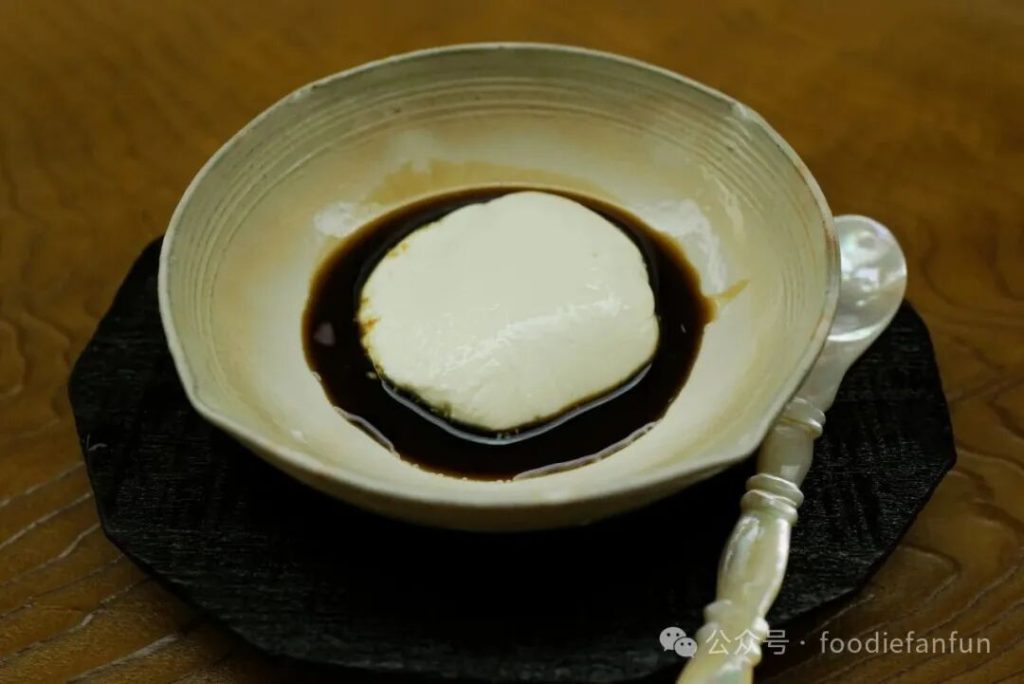
Brown Sugar Milk Pudding
Toichi No.1 — the last time I had this was also at a restaurant in Gunma. Among Gunma’s top handful of restaurants, even though the cooking styles differ, there’s a degree of overlap in ingredient choices.
By habit, I still prefer sea urchin paired with shari as sushi at Obana. The oceanic flavor teaming up with a beautiful sweetness — even after 11 otsumami and 15 pieces of sushi, it still delivers an explosive sense of happiness.
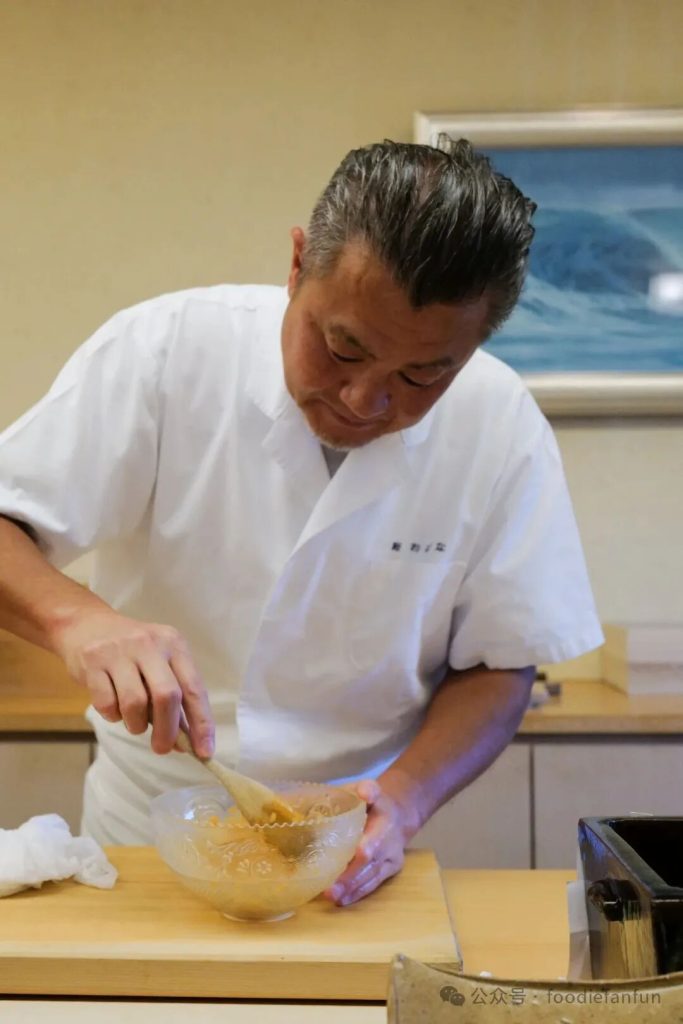
The meal wrapped up at 6:55, and taking the train back to Tokyo, it was still only just past eight. In under five hours and with nearly 30 pieces, we got to experience the skill of a local legend — efficiently satisfying, to say the least.
For Obana-san himself, what he wants is to give the best possible service to a very small number of guests. So he stays focused here in this small town of Tatebayashi, sourcing the best fish and hosting guests in his best possible state.
This handsome older gentleman has his own particular quirks — he loves surfing and is noticeably more tanned than most people, yet his hands are unusually pale.
“Don’t surfers’ hands get tanned?” “I take deliberate care of them — I think a sushi chef absolutely needs beautiful hands.”
“You and the proprietress get along so well.” “I’m scared of my wife, wouldn’t dare cross her. (laughs)”
People say Obana-san’s cooking is like his own little theater — the unusual location, a one-of-a-kind culinary style, seafood sourcing that can only be called extravagant, and his sly, playful personality.
“When can I book again?” “Ask me again in a month — I’m off to Hawaii to surf in January.”
So anyone who’s been must be dying to go back. Hoping to see this place again next year.
Sushi Obana
5-1 Otemachi, Tatebayashi, Gunma
Tue/Wed/Thu/Fri 5:30 PM / 7:30 PM (two seatings)
Sat 5:00 PM, Sun 12:00 PM / 3:00 PM (two seatings)
Holidays 12:00 PM
Omakase ¥27,500 / 33,000++
Leave a Reply