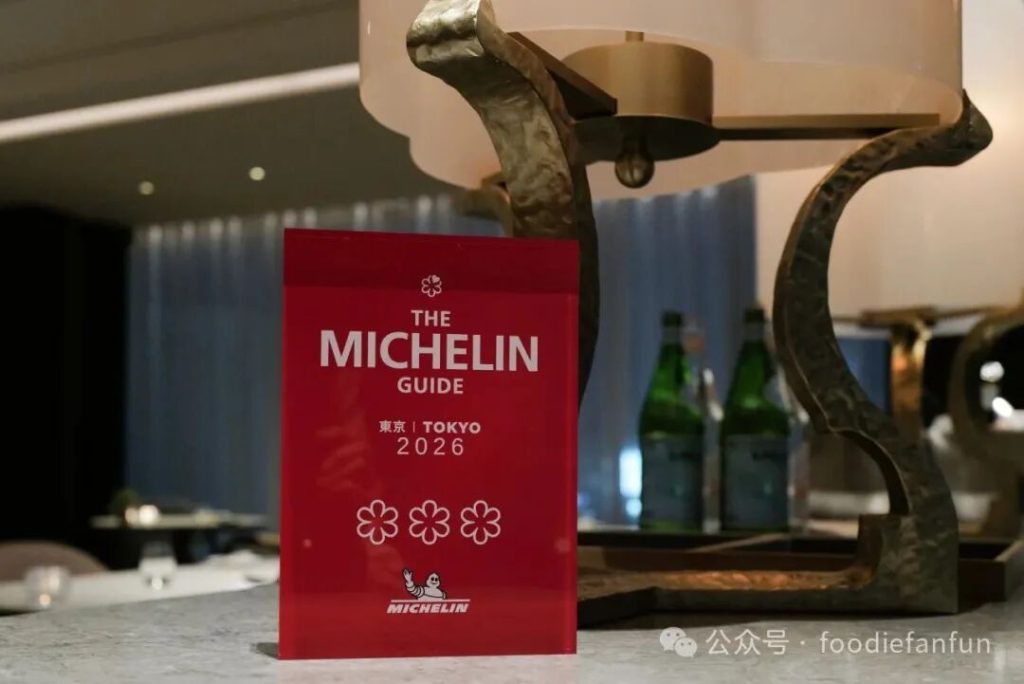
Among Tokyo’s restaurants, Sézanne carries real weight. #1 on Asia’s 50 Best Restaurants 2024, #7 on the World’s 50 Best Restaurants 2025. Four years since opening, and two consecutive years holding three Michelin stars.
Chef Daniel Calvert’s résumé stands out too — he served as sous chef at Per Se while still young, led Belon to a Michelin star, and began his journey at Sézanne in 2021, earning a Michelin star in the restaurant’s very first year.
In short: a top-of-the-class graduate, and a straight-A student of French cuisine.
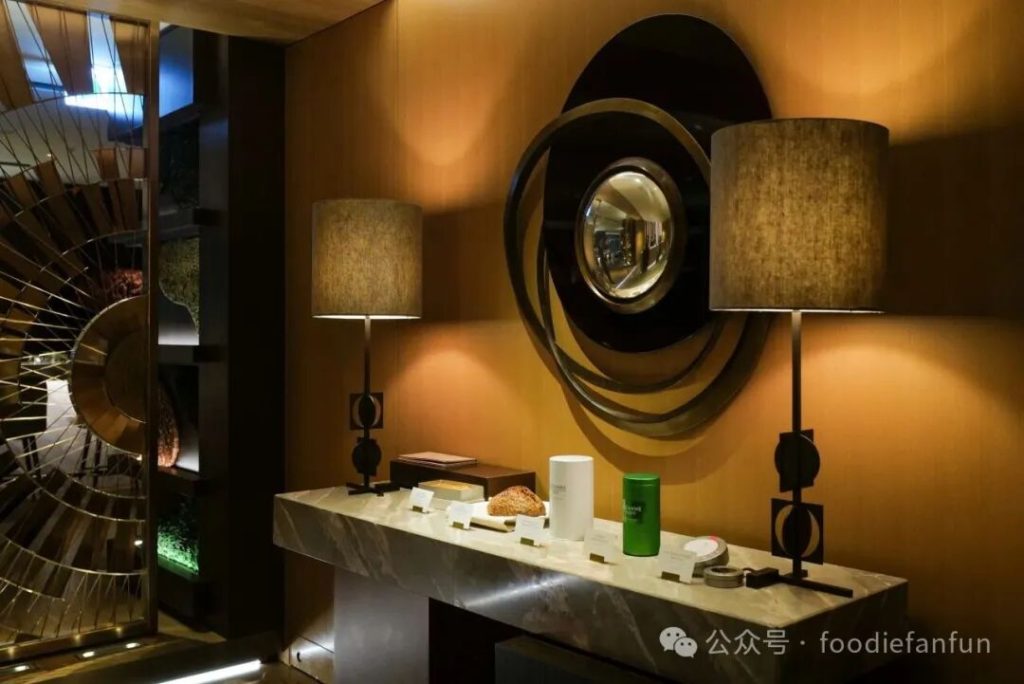
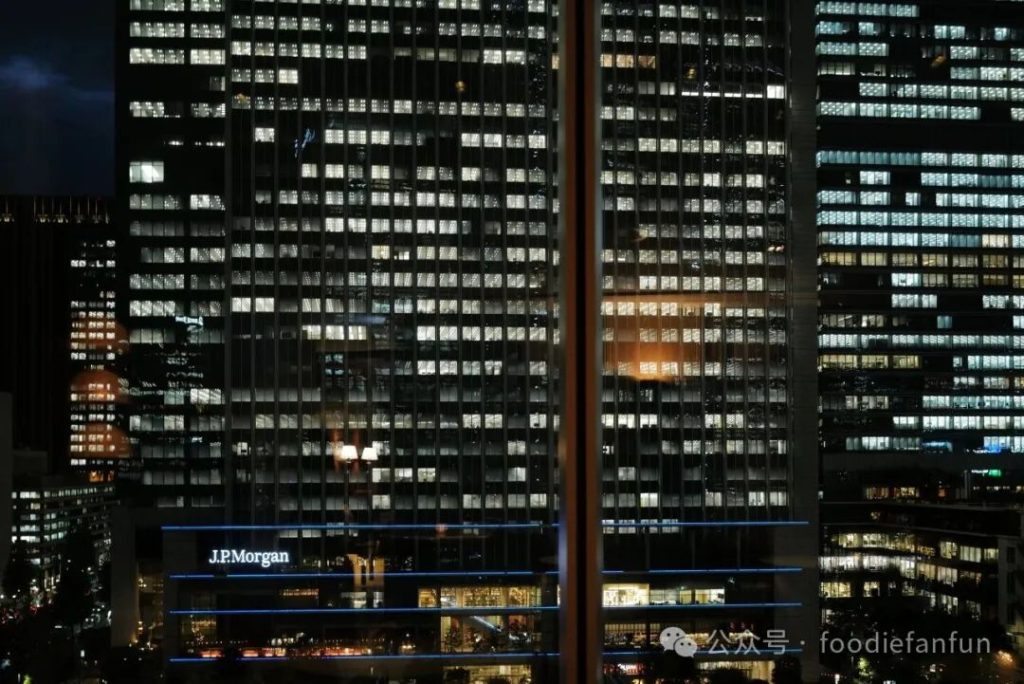
Sézanne sits inside the Four Seasons Hotel in Marunouchi — the equivalent of Beijing’s Westin Financial Street or Shanghai’s Mandarin Oriental Pudong. Looking out the window, you see neat, brightly lit office grids — elegance shot through with a faint sense of corporate grind.
Draw the sheer curtains, though, and it’s as if soundproofing kicks in — a different, elegant world entirely.
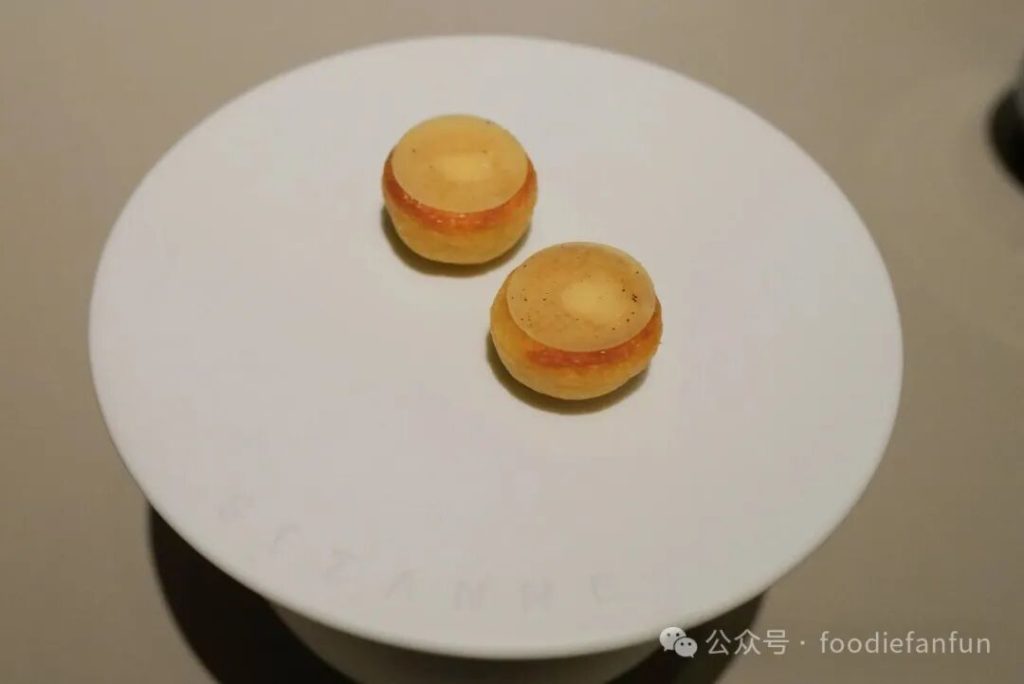
48-Month-Aged Comté Cheese Choux
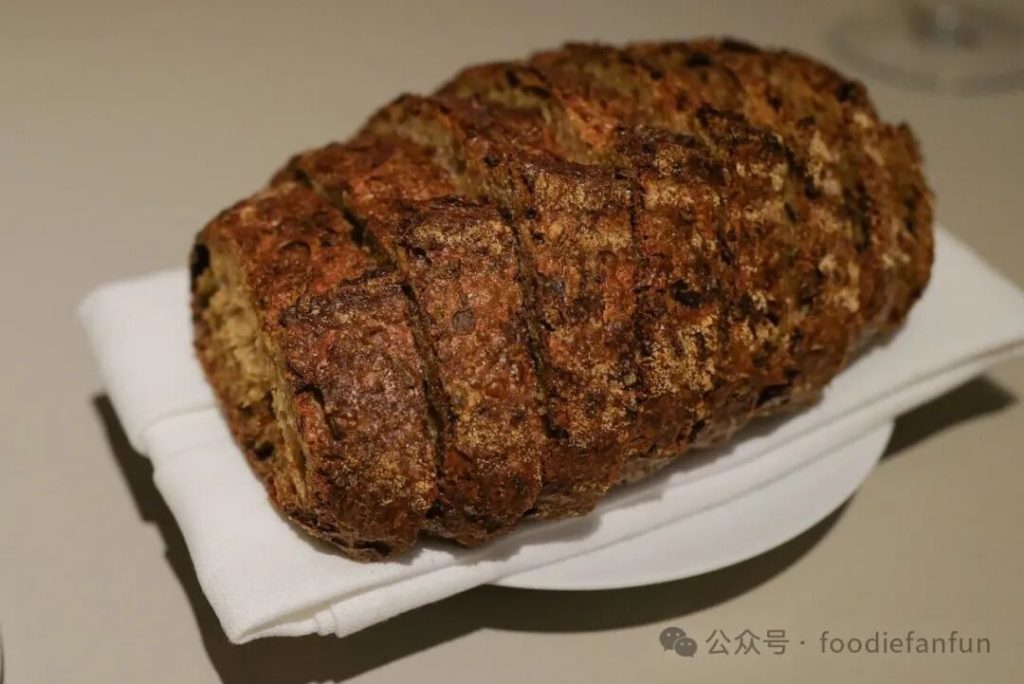
Grain + Koshihikari Rice Sourdough
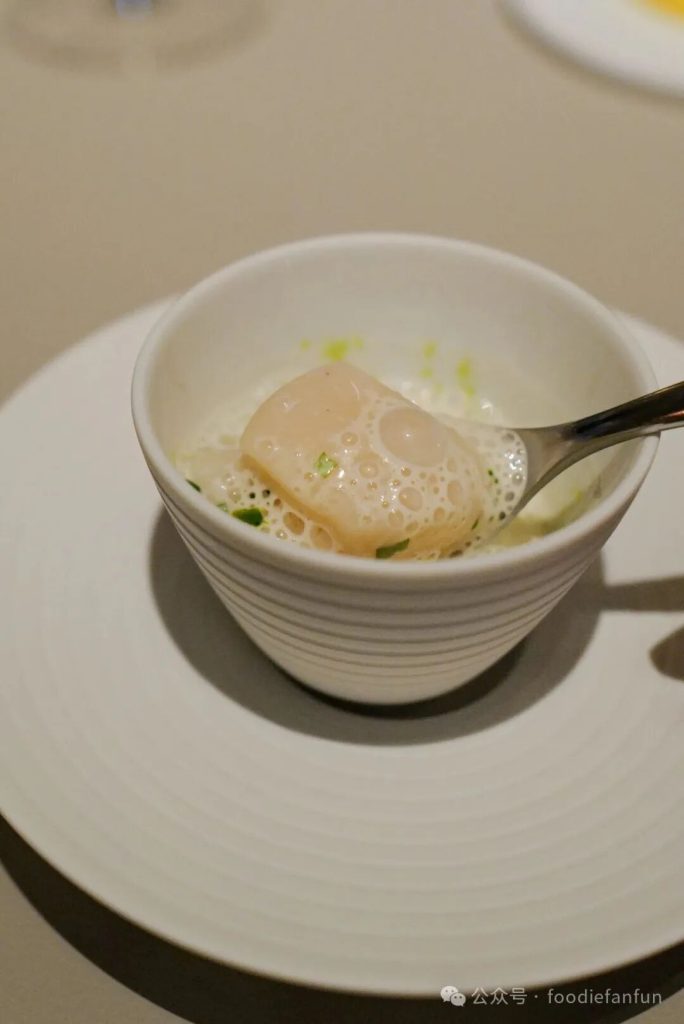
Hokkaido Scallop, Wasabi Leaf Oil, Horseradish
The opener after we sat down looked modest — a pair of cheese choux. Thin shell, molten center, a burst of aroma — bright and delicious, and it goes great with champagne.
The Hokkaido scallop came as a warm soup, looking pink and translucent, with an almost perfect tenderness. The creaminess wrapped around a sweet umami, with a touch of mustard expressed with real elegance.
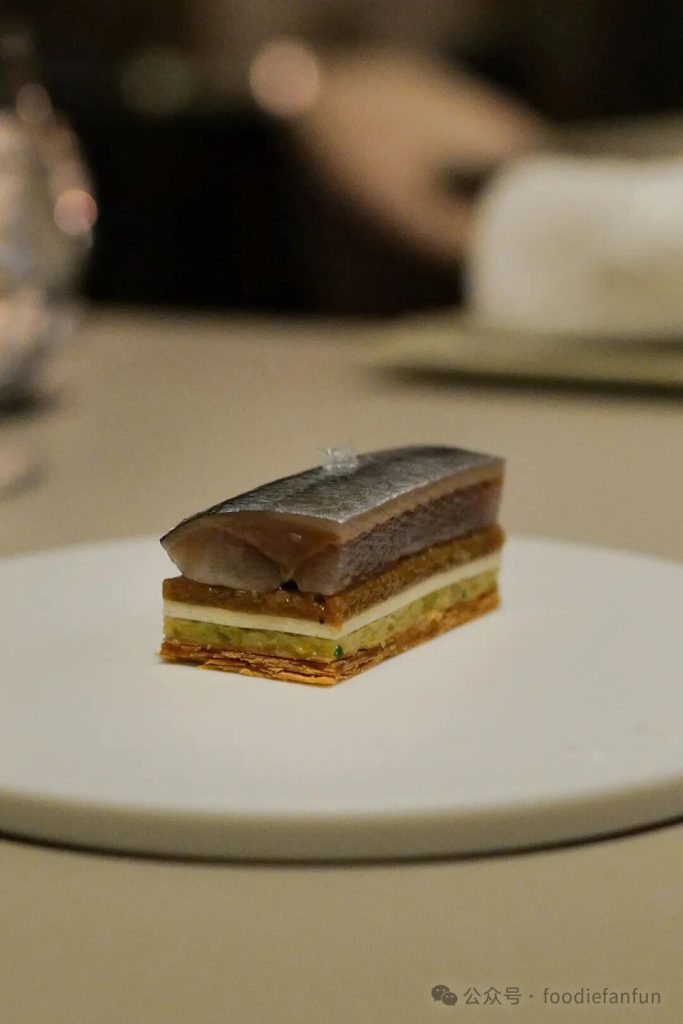
Sanma, Caramelized Onion, Green Olive
In-season sanma (Pacific saury) made into a mini mille-feuille. Its silver skin delivers an impactful oceanic flavor, and the perfect fattiness speaks to exactly what’s good about this season. The onion’s sweetness balances the fish’s richness, while a touch of green olive paste adds savory saltiness and a fermented note.
In a single dish, it managed to showcase both the strength of Japan’s seasonal ingredients and a genuinely complex layering of flavor.
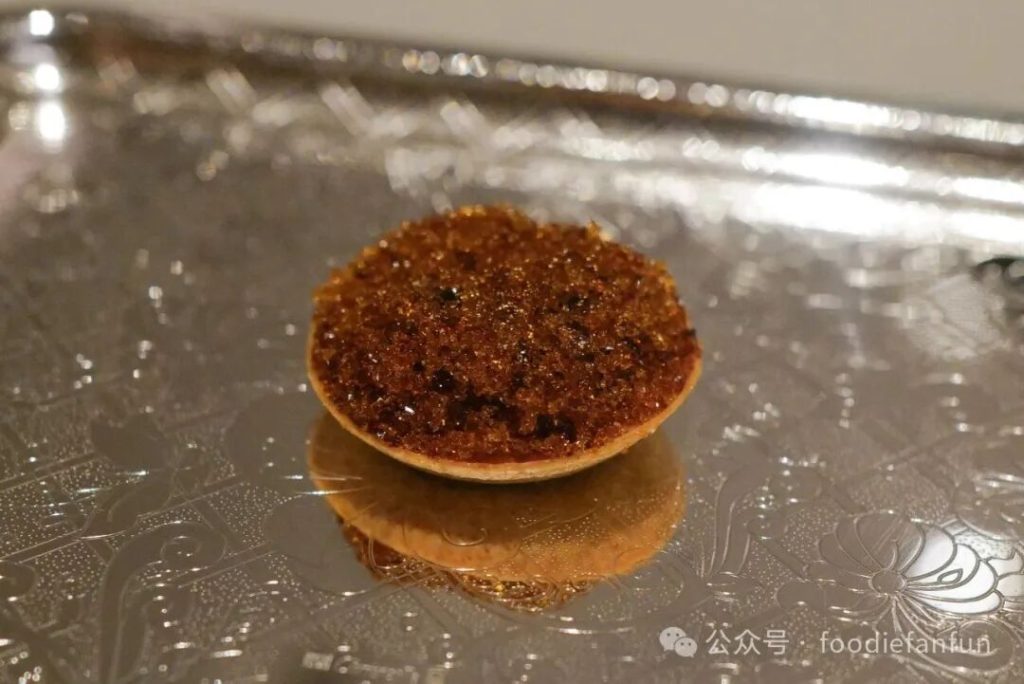
Monkfish Liver, Chinese Soy Sauce, Black Vinegar
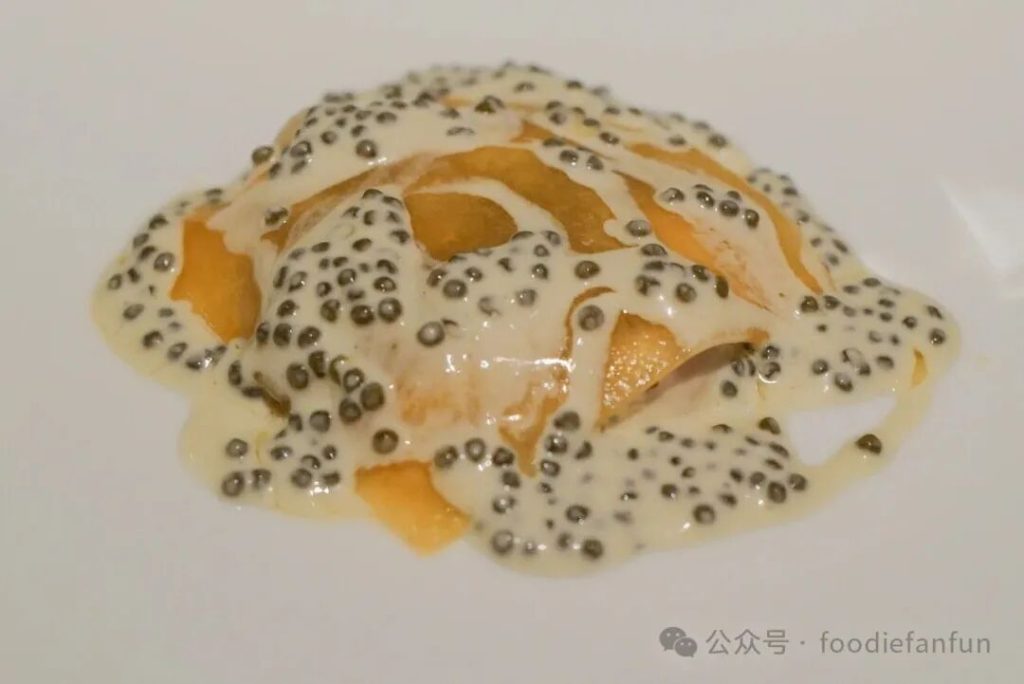
Akkeshi Oyster, Yubari King Melon and Junsai
The monkfish liver was made into a tart, with soy sauce and black vinegar turned into a jelly on top. The texture was rich, but even with all that umami, a faint fishy note wasn’t fully masked.
Oyster paired with melon sounds like a cult combination on paper. The oyster meat was plump with a real minerality, while thin slices of melon lifted the sweetness and crunch — surprisingly delicious.
With all the cold starters served, the flavors leaned bold overall, but there were plenty of surprises within that range.
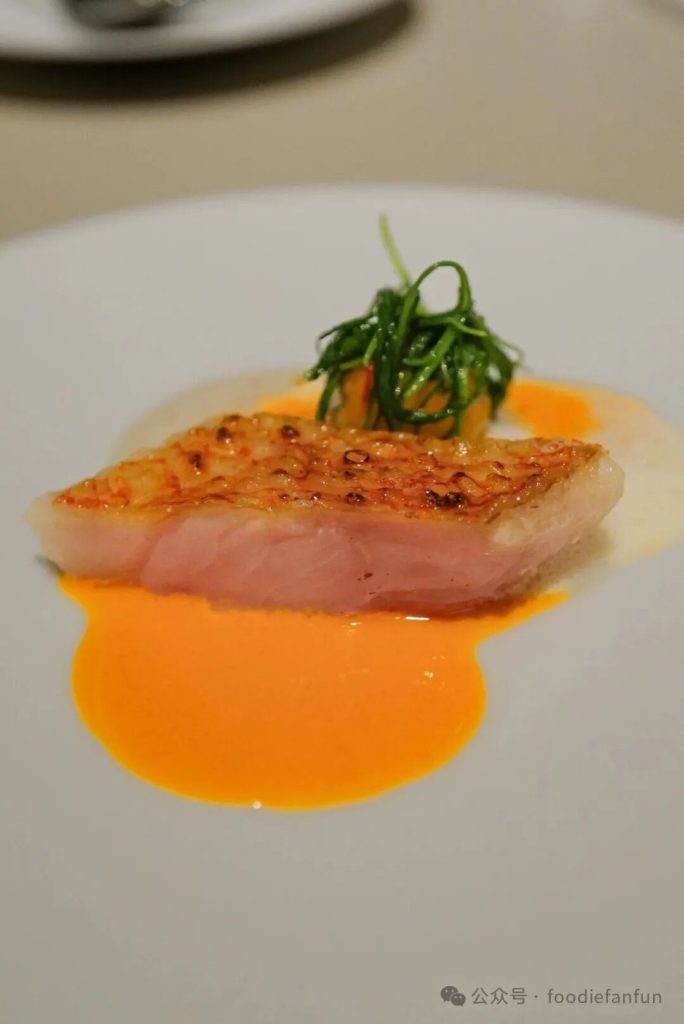
Crispy-Skin Kinki, Saffron
The hot courses opened with a nearly perfect piece of kinki (thornyhead rockfish).
The skin’s crispness was kept restrained, sitting atop flesh with a faint pink tint. The sauce was interesting without stealing the show — saffron sauce and clam juice mixed together, carrying a light spice note that also boosted the sense of freshness.
A small potato on the side was soft and delicious too.
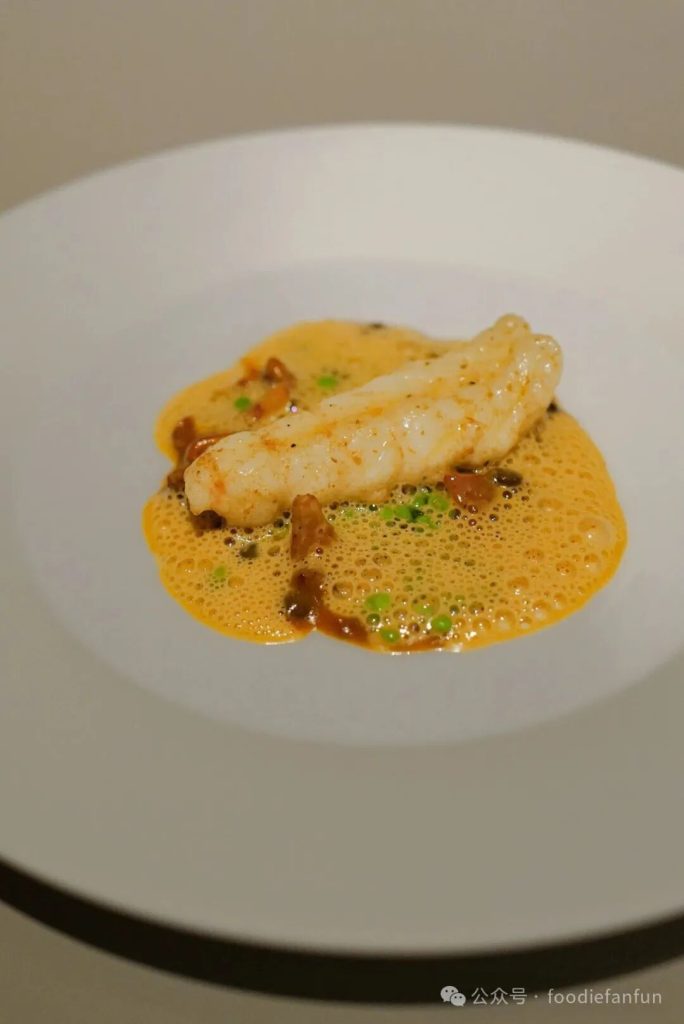
Scottish Langoustine, Chanterelle Mushroom, Kagawa Green Pea
The langoustine that followed was just as likeable.
It lay languidly in the center of the plate; cut open, the center still had a faintly translucent tenderness. The sauce made from the shells was, unsurprisingly, an umami bomb, with a few sweet peas tossed in adding sweetness.
This is where I have to circle back and gripe about the bread served earlier — the grain-plus-Koshihikari concept sounds great, but the crust was so hard it was almost impossible to tear, wasting an entire plate of shrimp-shell sauce.
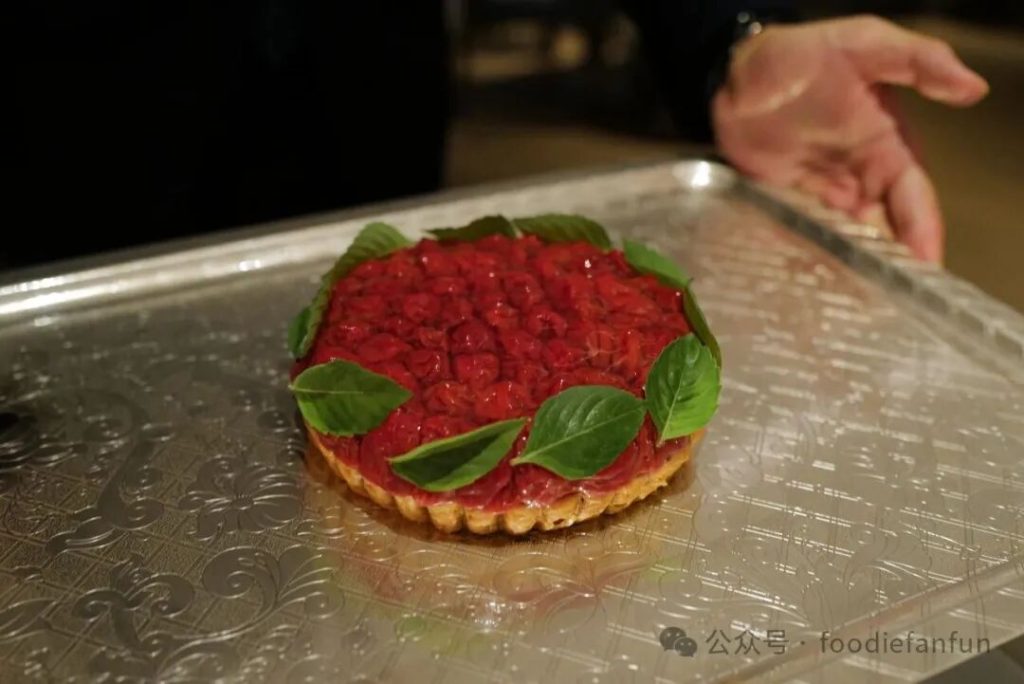
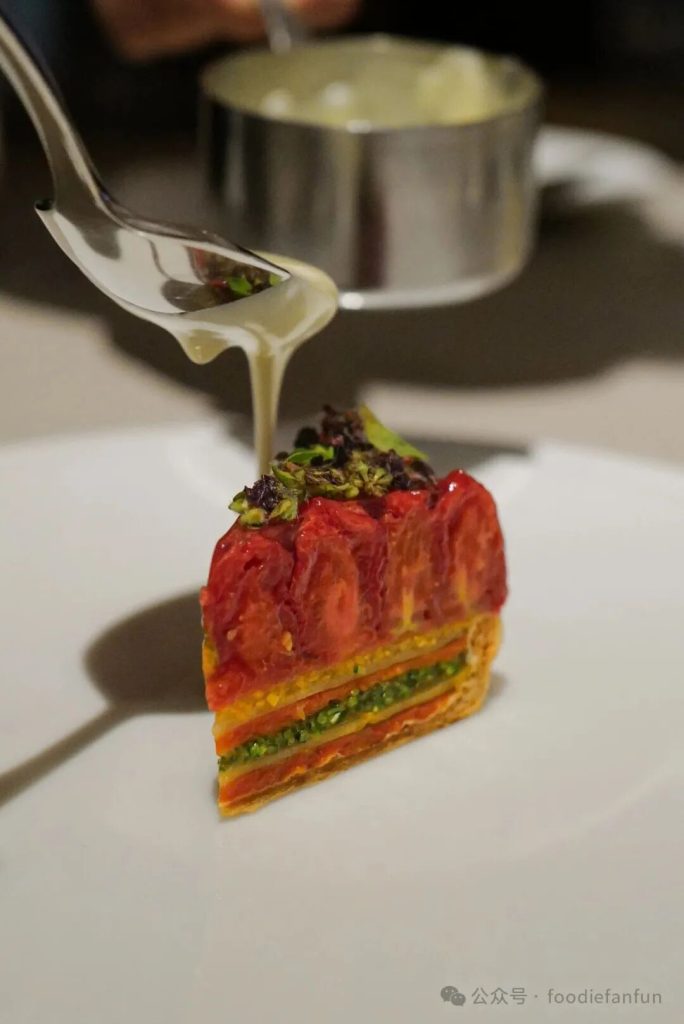
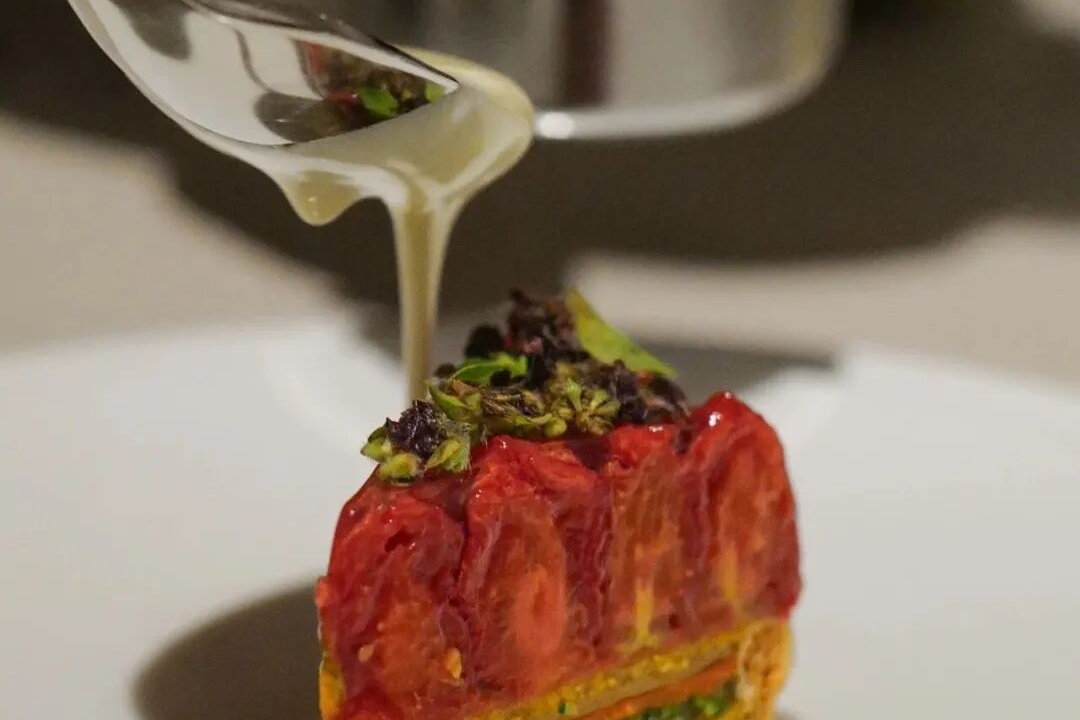
Tomato Tart, Basil, Burrata
The tomato tart is basically a classic on Sézanne’s summer menu.
The classic red-white-green combination of tomato, basil, and burrata is reconstructed here as a vegetable tart — a harmony that’s exactly as expected.
The cherry tomatoes carried a strong flavor — very sweet, but as each layer unfolded with its acidity, saltiness, and freshness, it actually ended up feeling palate-cleansing by the last bite. Burrata’s creaminess held up every layer of ingredients — balanced, delicious, and it tasted exactly like summer.
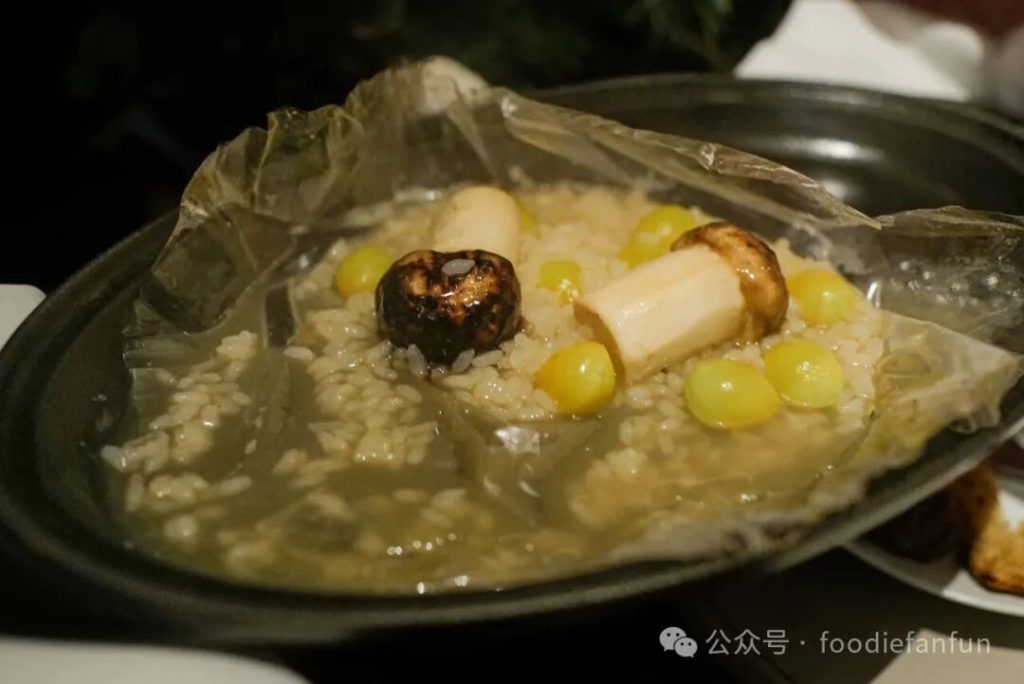
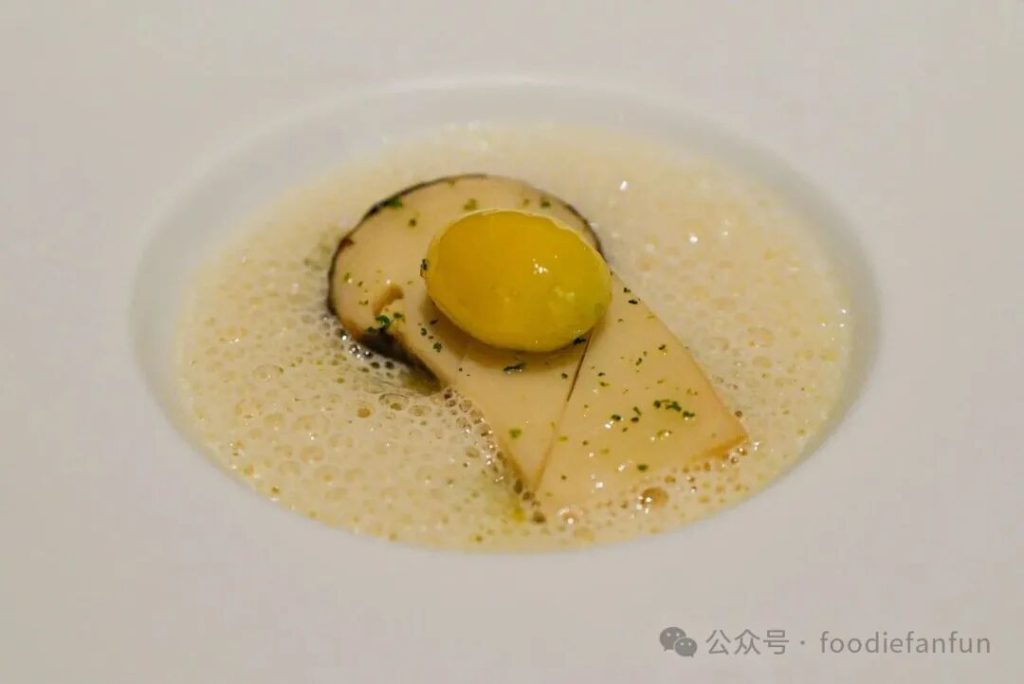
Yunnan Matsutake, Ginkgo Nut, Koshihikari Rice
A clear bag was cut open right at the table, and the aroma of umami immediately filled the whole table.
Once plated and set down, it turned into what looked like a creamy mushroom soup in front of us… or maybe rice porridge?
The matsutake was cooked to just the right crispness, still slightly juicy. The ginkgo nuts in the sauce were soft, their faint bitterness opening up another layer of flavor. If there’s one shortcoming, it’s that the Koshihikari rice was cooked so soft the grains had split apart, which left it feeling entirely like rice porridge in the end.
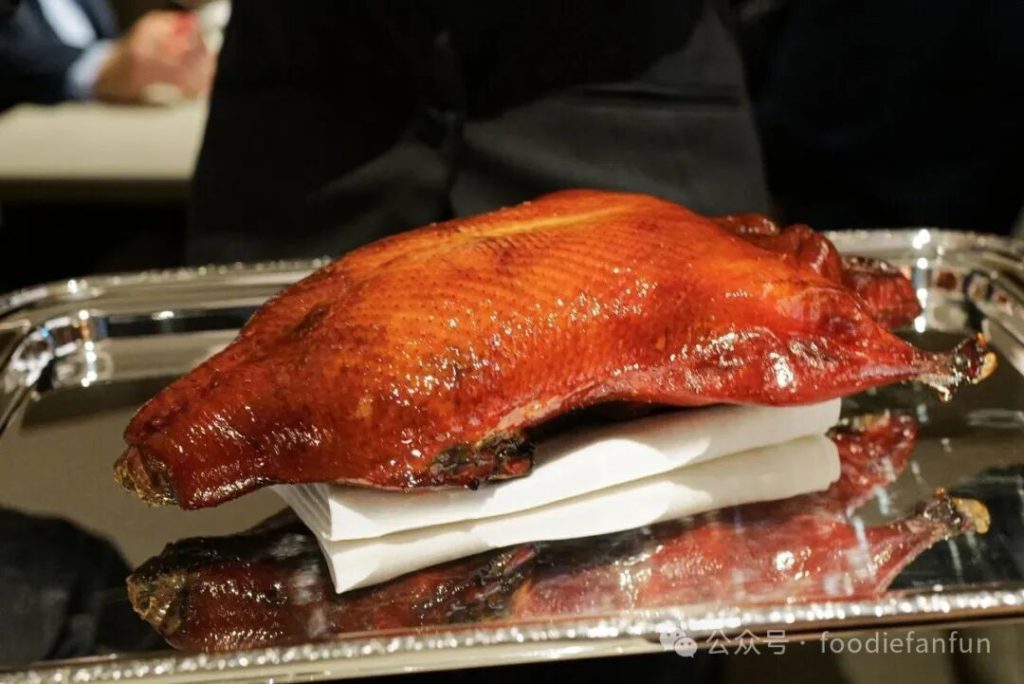
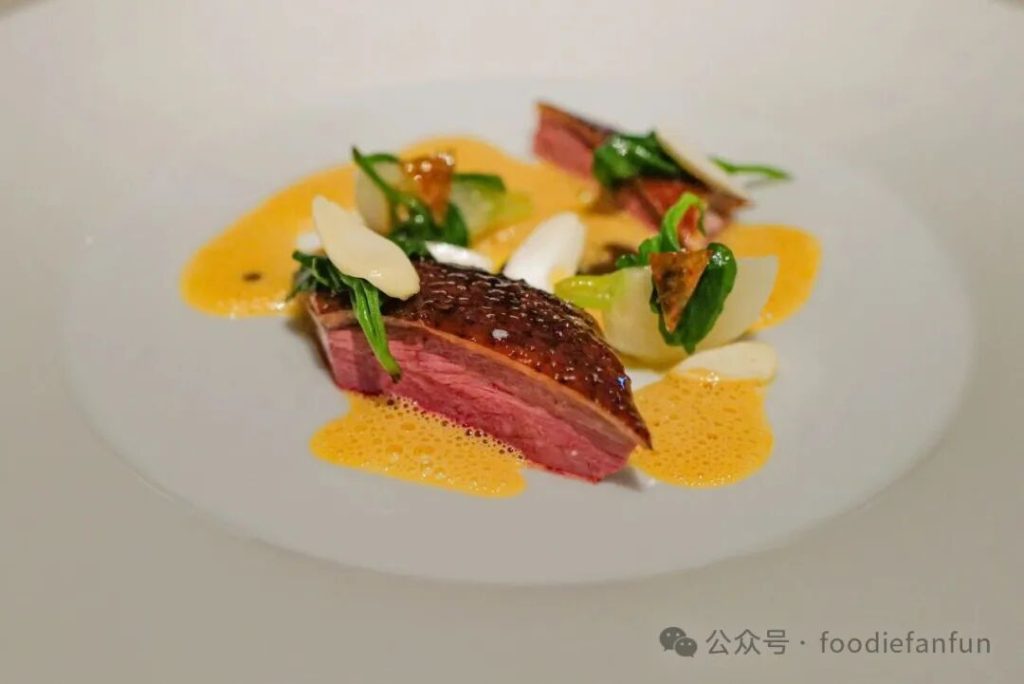
Roast Duck, Baby Leek, Cherry Red Wine Sauce
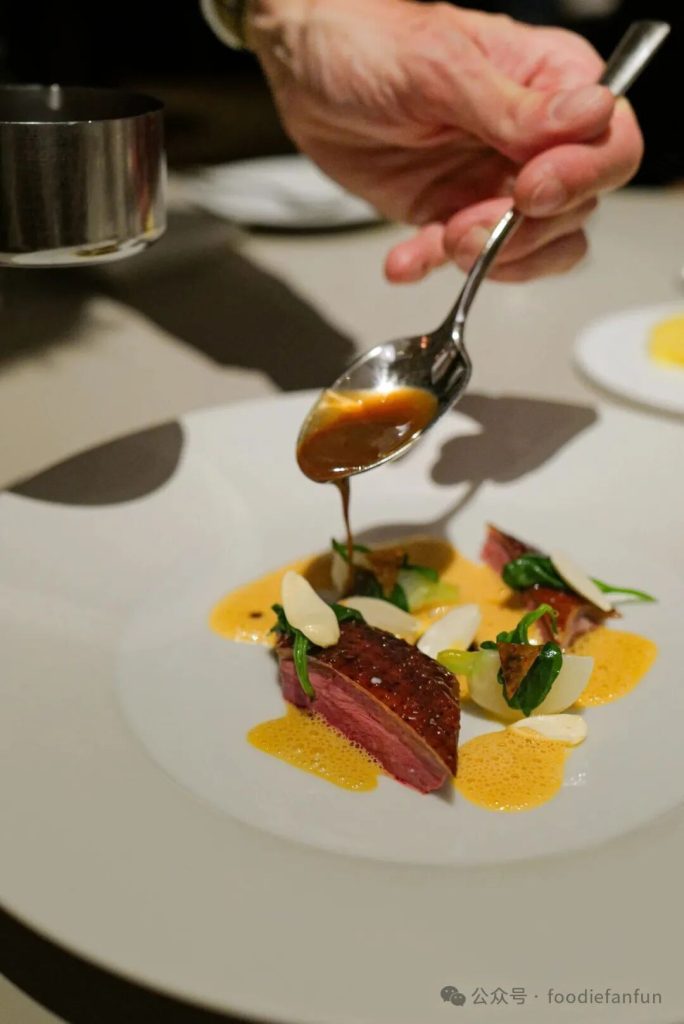
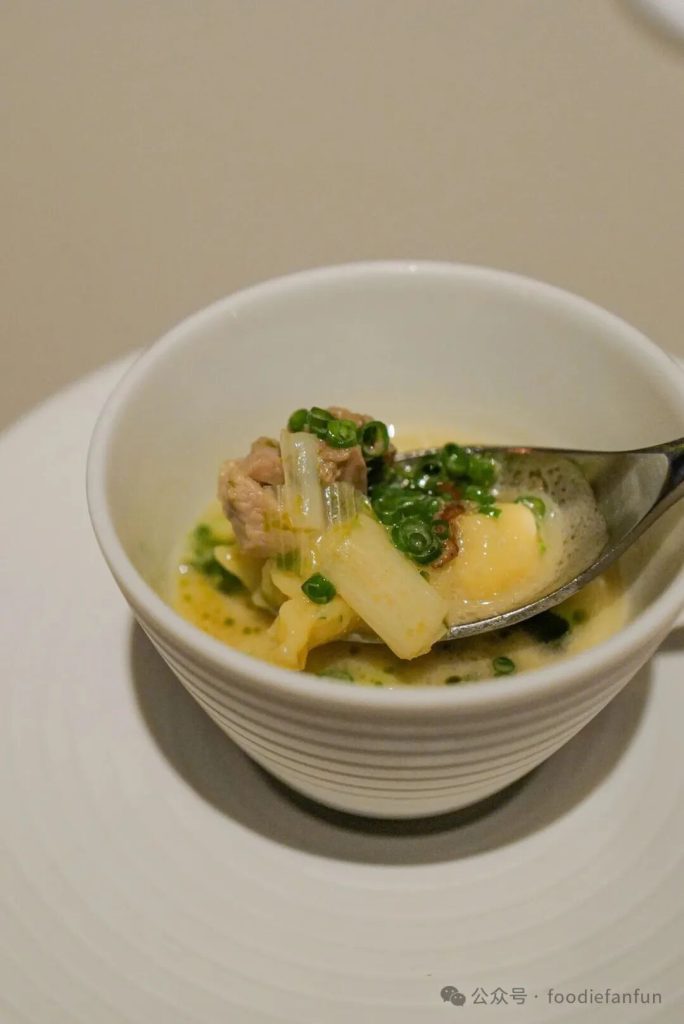
The main course landed on roast duck, paired with a chive-and-duck-leg soup.
The whole duck was air-dried, then charcoal-roasted — a method that resembles Peking duck to some degree, but it’s kept at a pink, medium-rare state.
Compared to the seafood courses before it, this main course was, frankly, just average — nothing memorable. The duck skin lacked fragrance, the meat felt dense, the sauce had no real presence, and the duck soup was rich to the point of being oily, which was a bit much all at once.
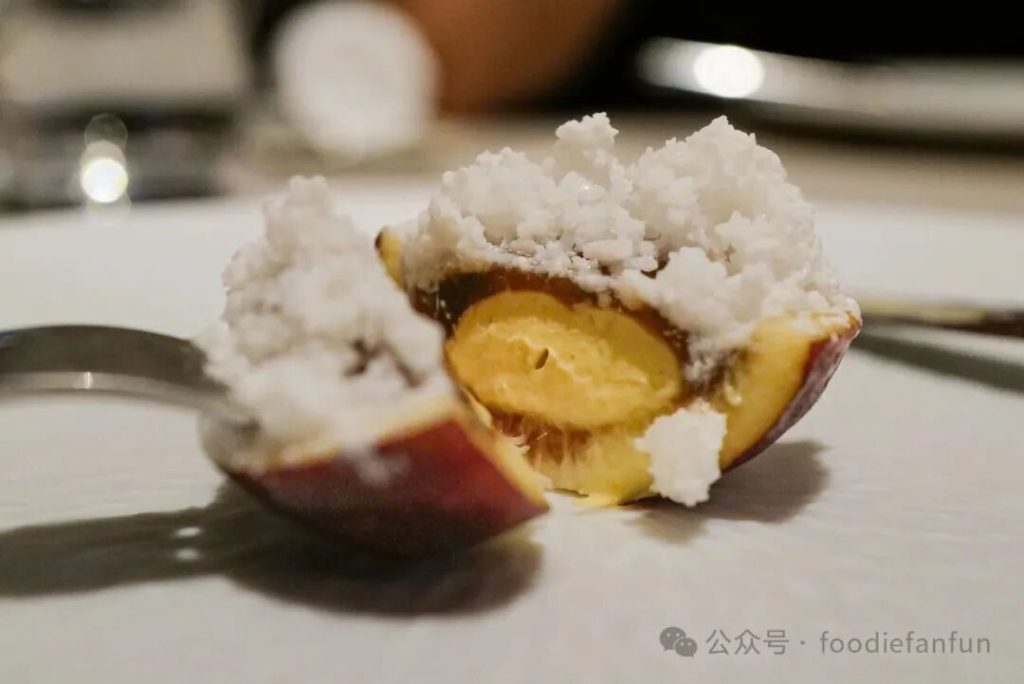
Aichi Fig, Coconut Granita
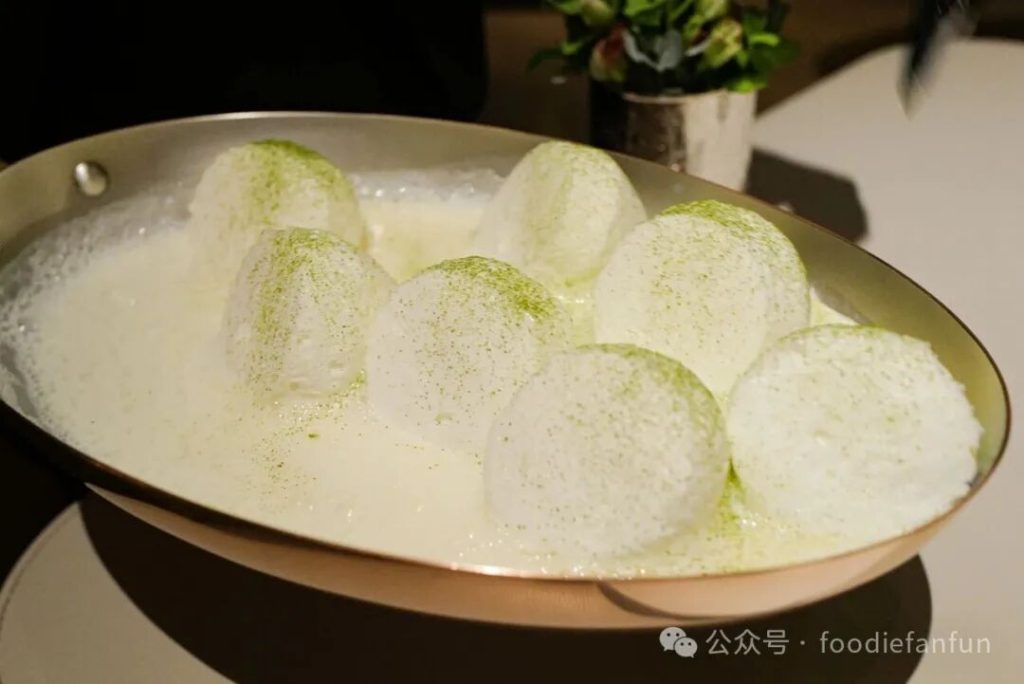
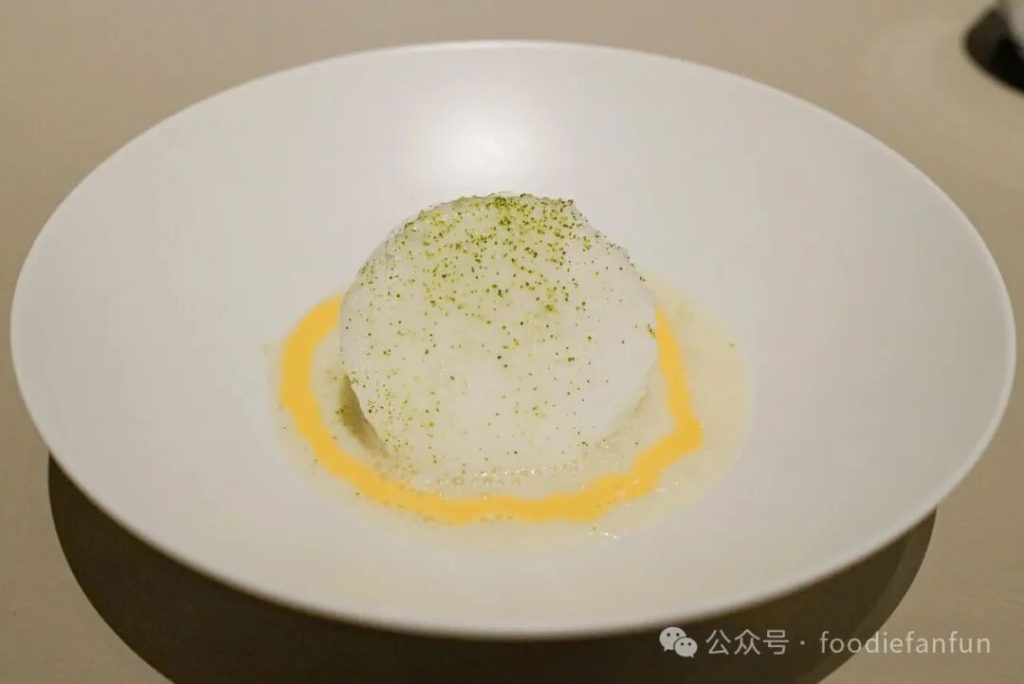
Fig Leaf, White Miso
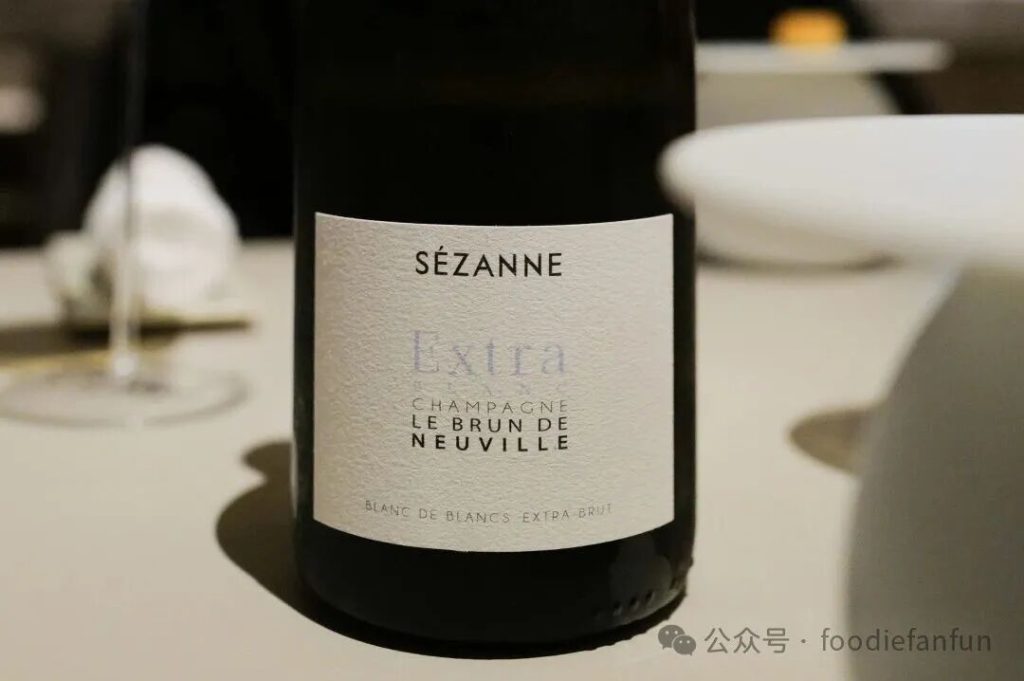
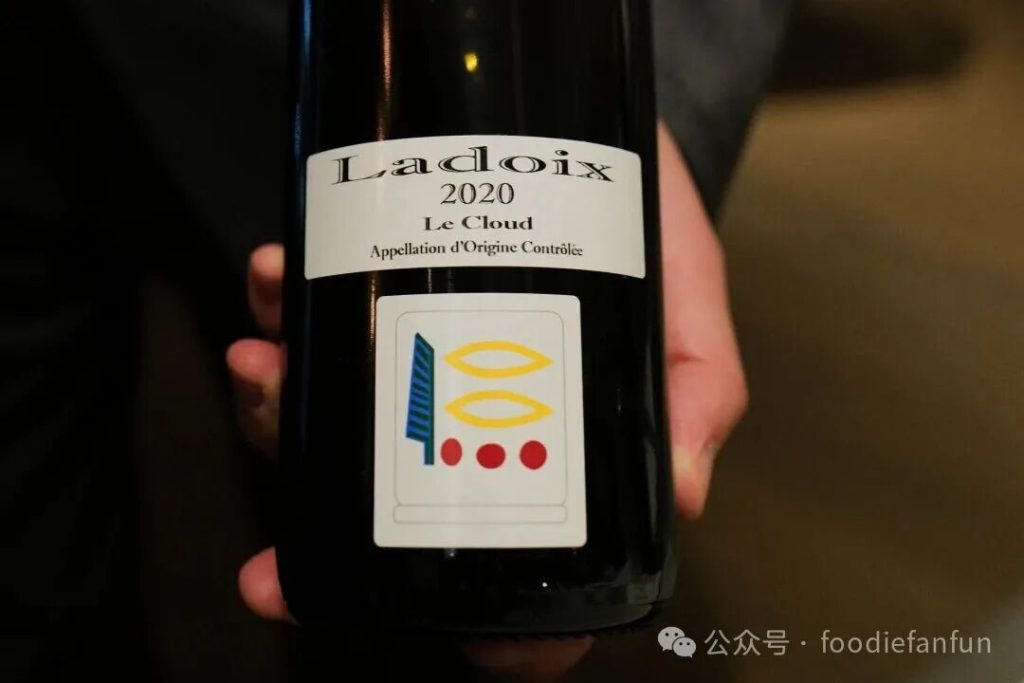
At one point during the meal, a bottle was brought out and sabered open tableside — turns out Sézanne’s wine list does have some reasonably priced options, and a number of bottles come shipped directly from the estate, which is its own kind of guarantee for how well the wine has been kept.
In terms of service, Sézanne absolutely lives up to what most people picture when they think of a three-Michelin-star French restaurant. Whether it’s the wine service, how dishes are presented, or all the smaller details that happen at the table, everything was handled gracefully and thoughtfully.
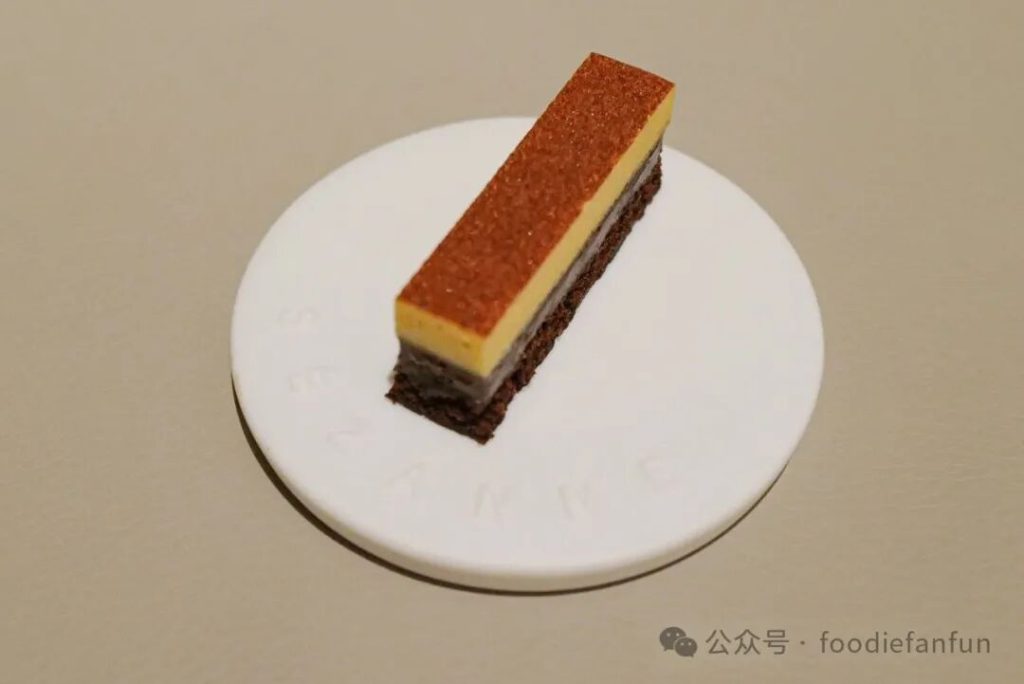
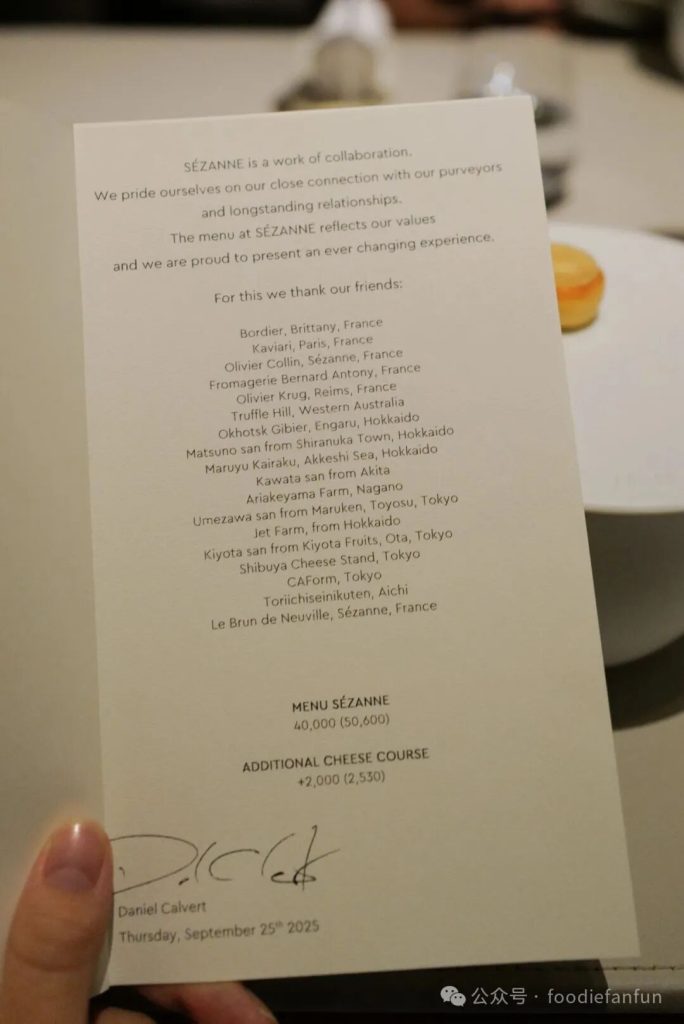
Across the whole menu, most dishes are clearly built around Japanese ingredients as the main subject, but paired with plants and produce from around the world to complete the complexity and balance of each dish.
You can see a British chef trained in French cuisine, after working across several of the world’s major cities, forming his own point of view here in Japan about the ingredients this land has to offer.
Though most of the surprising dishes cluster in the first half of the meal, nothing here ever crosses into a genuine misstep that ruins the experience.
It’s a “Tokyo French” worth trying at least once. Come on an anniversary or some other special occasion, and the setting and service might just add a touch of romance to the day.
Hoping next time we get a decent piece of bread — one that doesn’t leave the friend who came with you texting at midnight after dinner, “I’m hungry again.”
Sézanne
Wednesday – Saturday
12:00PM – 3:00PM
Wednesday – Sunday
6:00 PM – 11:00 PM
https://www.sezanne.tokyo/
MENU SÉZANNE ¥56,925++
Leave a Reply