Found what’s now my favorite French restaurant across the whole of Japan.
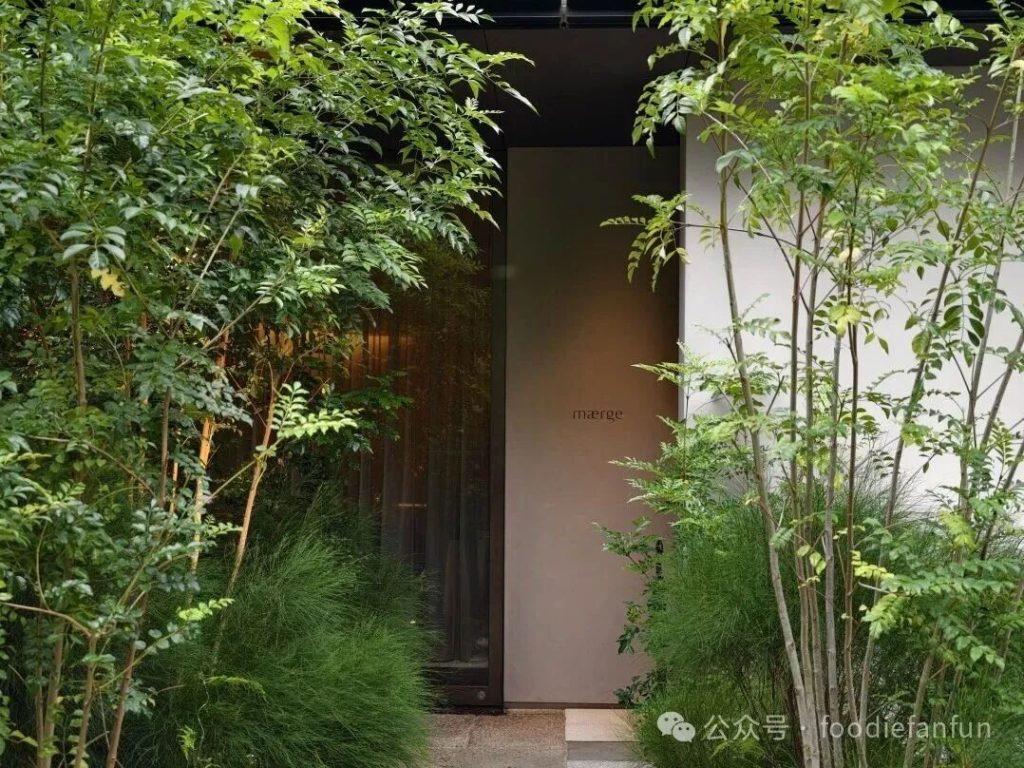
mærge, which earned a Michelin star just three months after opening.
The restaurant’s name comes from two words: marge, French for “margin” or blank space, and merge, English for coming together.
Chef Shibata Hideyuki places both ideas side by side, making them the restaurant’s central theme. French culinary technique, the terroir of regions across Japan, producers, seasonality, and human connection are all laid out on this one big round table.
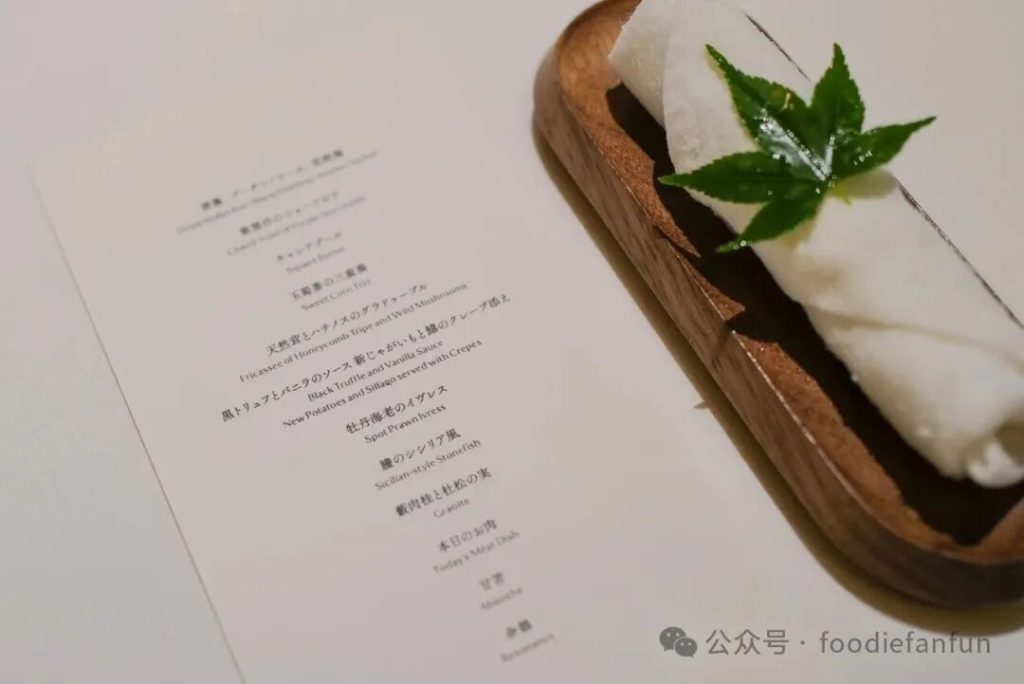
Every dish on the menu clearly states its origin, alongside the chef’s own interpretation of it — where it comes from, and what it becomes in Shibata-san’s hands.
This was genuinely a rare, almost perfect Western-cuisine dining experience in Tokyo. Deliciousness always comes first, and the appetite is looked after with real thoughtfulness. Attention to detail and a real sense of interaction at the table are both maxed out, with an atmosphere of extreme comfort — the space, tableware, and lighting gently wrap around you without ever creating stiff distance. The service staff were earnest and modest, occasionally offering a line or two of Mandarin that, however imperfect, lightly closed the distance between guest and table.
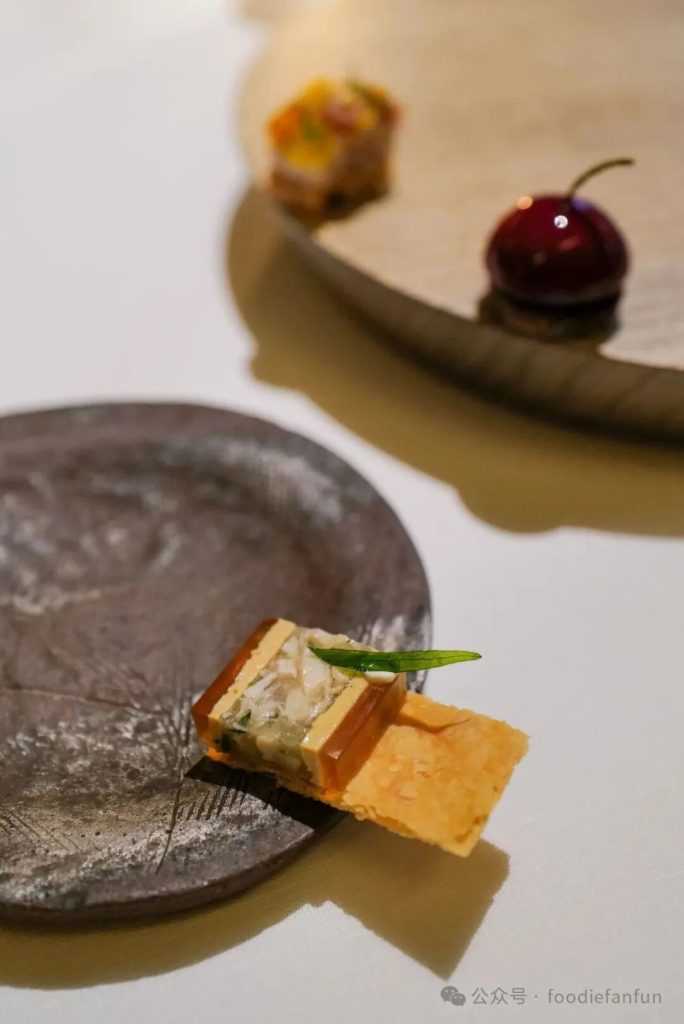
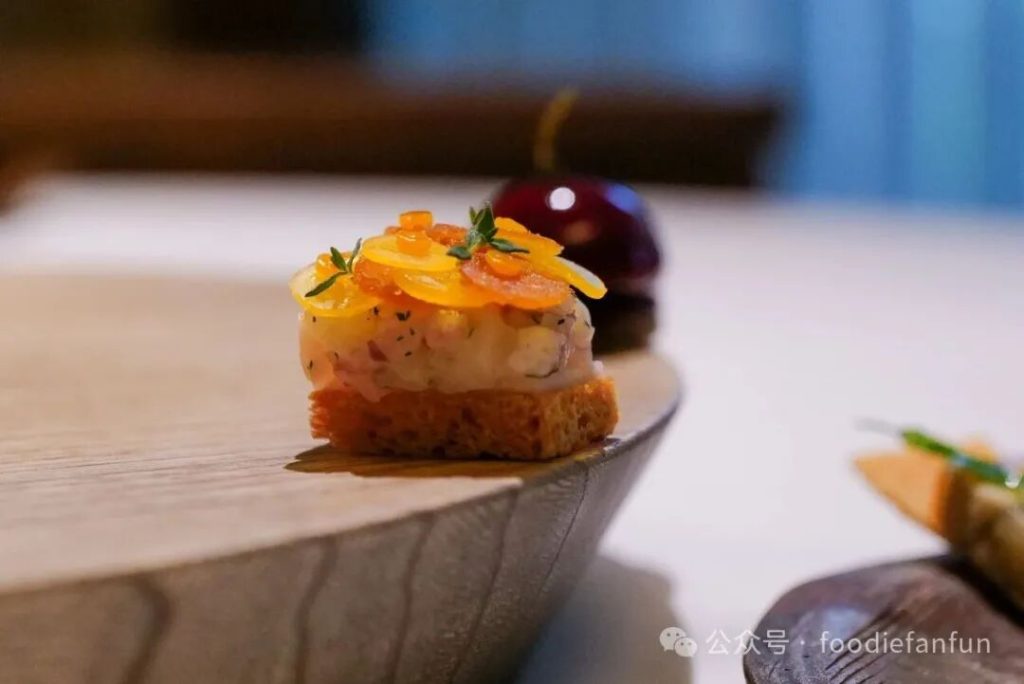
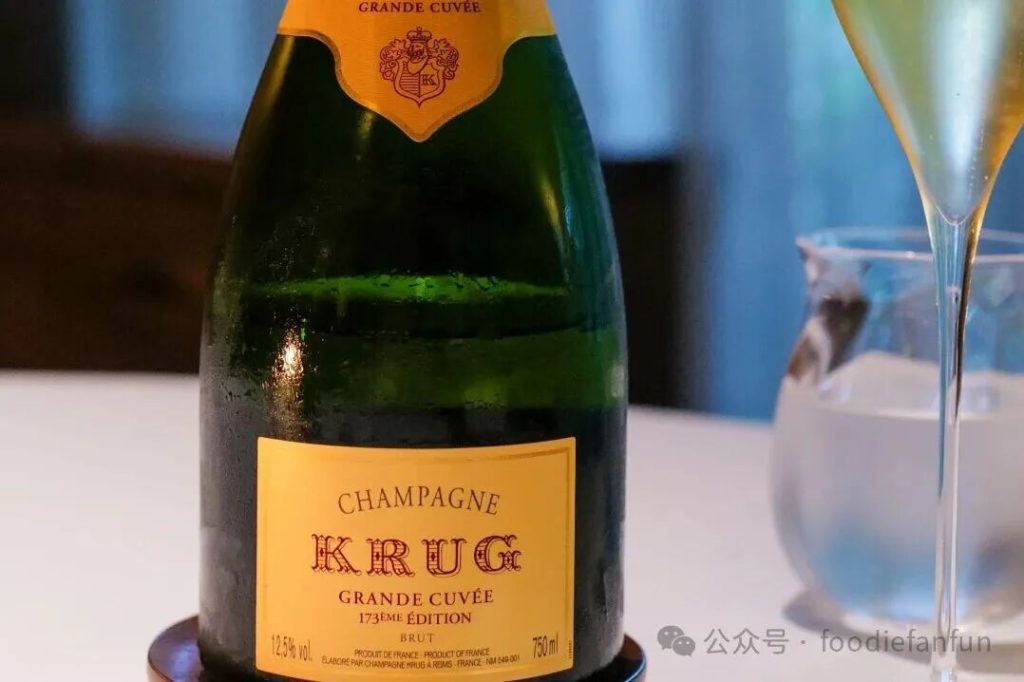
The opening trio of small bites carried inspiration from both Japanese and French ingredients at once, unusually bold yet touched with lightness.
The bottarga was, surprisingly, paired with a beautiful citrus note. The texture was soft, the umami concentrated, and the citrus acidity instantly brightened what was already a rich savoriness — good with a drink, and very much summer in feel.
Next to it, a whole large cherry concealed, surprisingly, blood sausage inside. The lightly cured flesh was crisp and juicy; the blood sausage’s gaminess, wildness, and spice slowly released afterward, steadily caught by the spiced aroma of the crisp cracker underneath. Refreshing and rich lingered in the mouth at the same time — unexpectedly delicious.
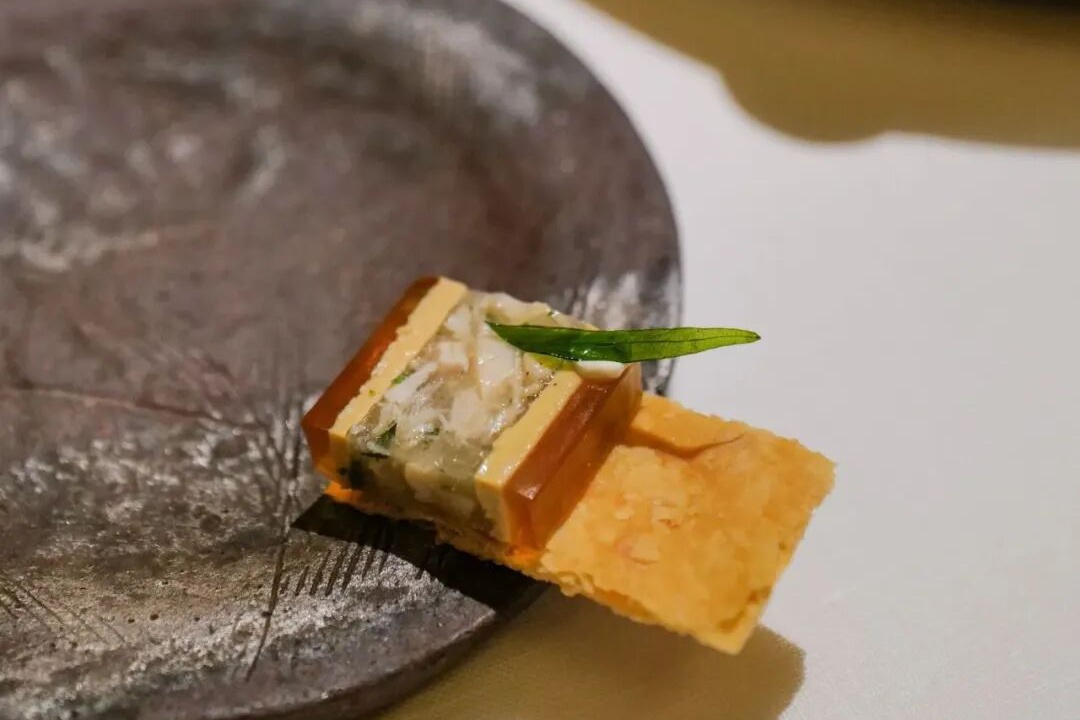
There was also a small bite made with Arama chicken. The chicken’s fiber was very fine, the aspic concentrating the savoriness, clean on entry yet substantial in flavor. The outer butter puff pastry carried a distinct aroma too — a tiny bite, yet a bright, memorable taste.
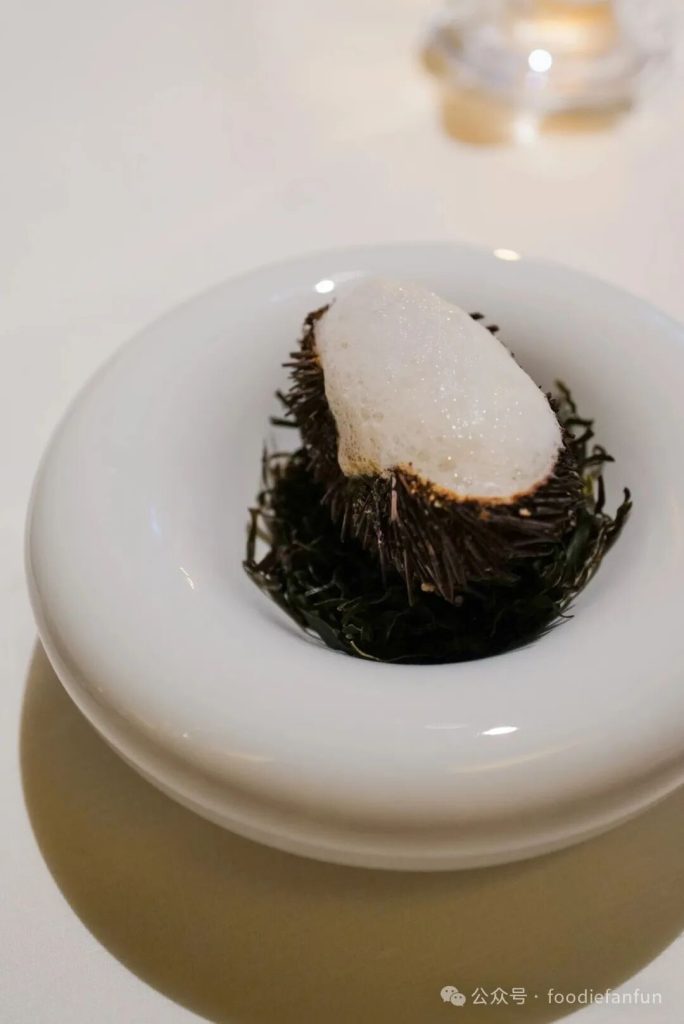
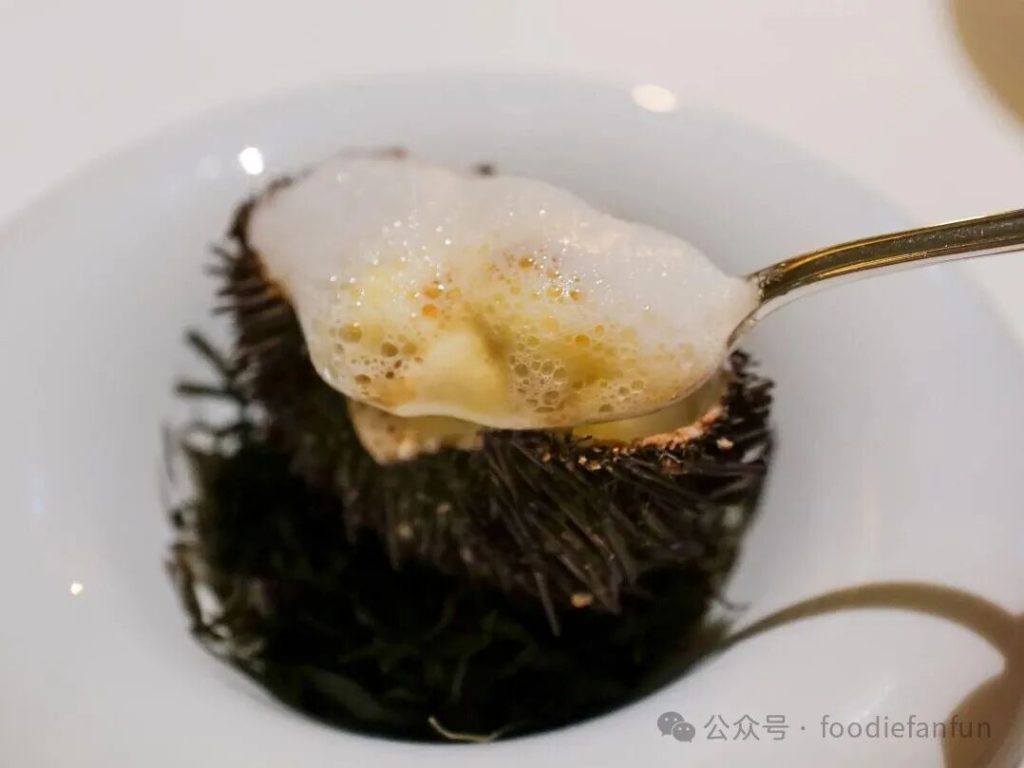
The first appetizer was purple sea urchin from Aomori, served still in its shell.
Digging the spoon all the way to the bottom, the first thing you hit was a texture that alternated between richness and airiness. The white cheese and egg-yolk sauce brought thickness, acidity, and a soft, enveloping quality, while champagne foam made the whole bite light. The urchin didn’t rush to show itself — its sweetness and umami stayed all the way through to the finish, clear and long-lingering.
Every bite was first filled with dairy richness and bubbles, then reawakened by the urchin’s fresh sweetness. Highly concentrated, yet airy too — two seemingly opposite sensations interwoven beautifully.
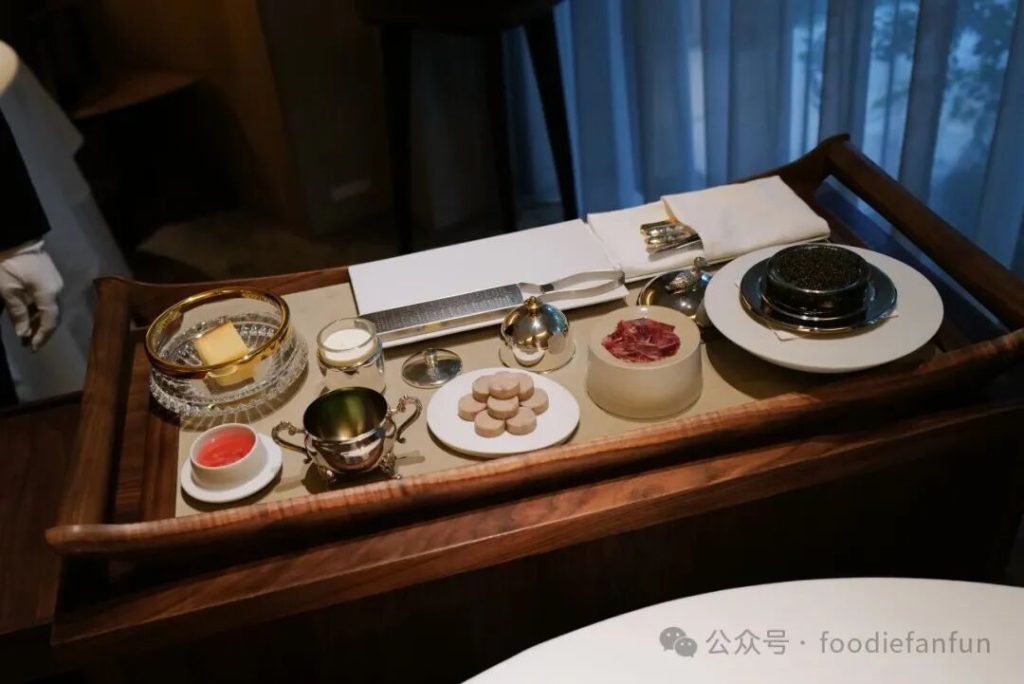
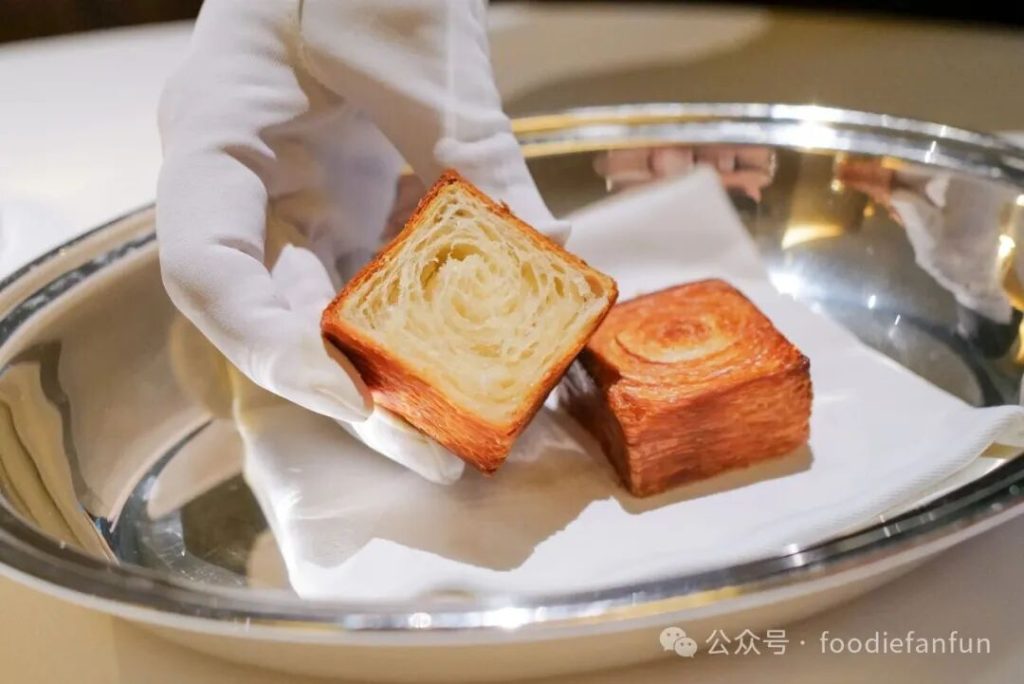
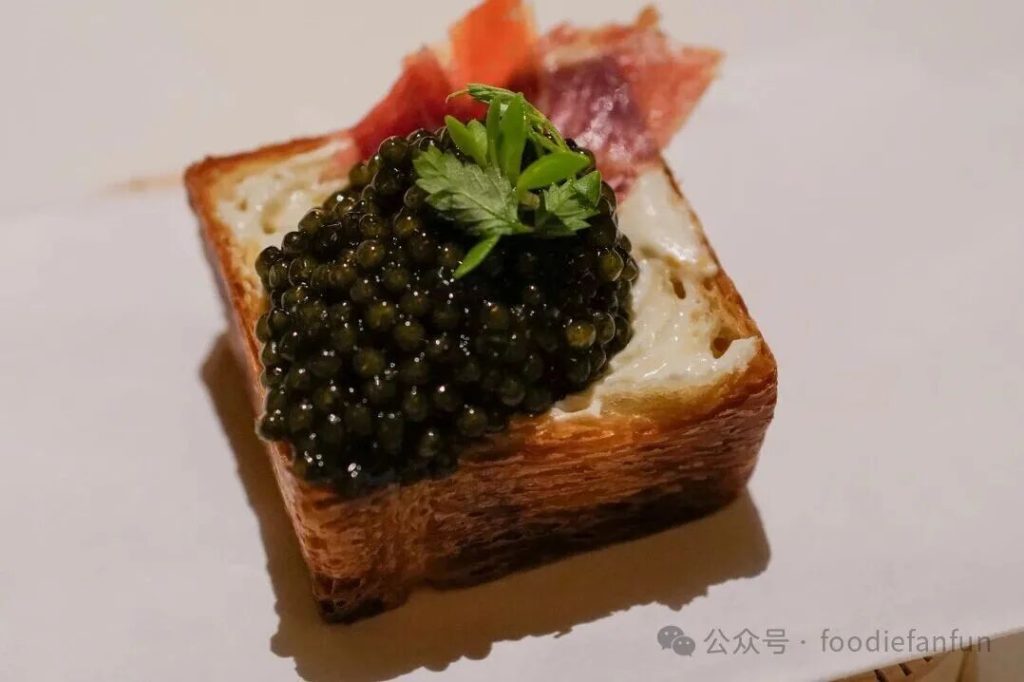
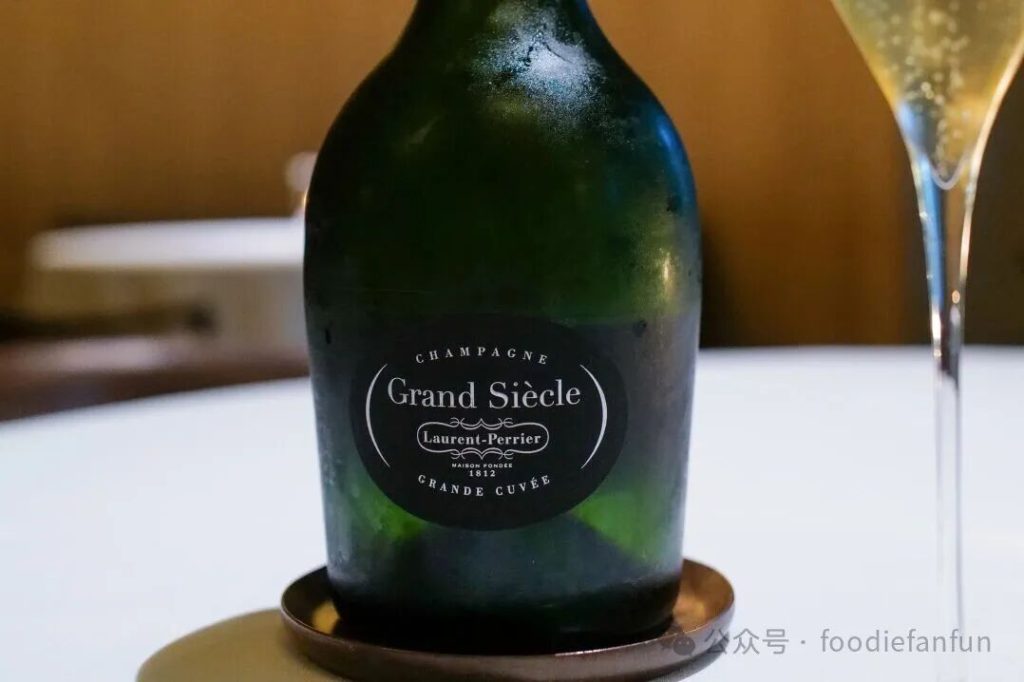
Then came “buffet” time.
A piece of buttery puff pastry bread that you could freely pair with ingredients to make an open sandwich. Seven toppings were prepared that day, and choosing between the glamour of caviar and the contrast of pork butter was tough, so we handed the decision to the server, asking them to choose as if for “a first-time guest.”
What we got was a classic combination: ham, caviar, fresh herbs, and cream. The puff pastry itself was made just right — crisp on the outside, still soft inside, its buttery aroma holding up the whole base, with each topping pulling out its own layer of flavor purely through its own quality.
Excellent bread and toppings — before you know it, you’re already curious about what combination to try on the next visit.
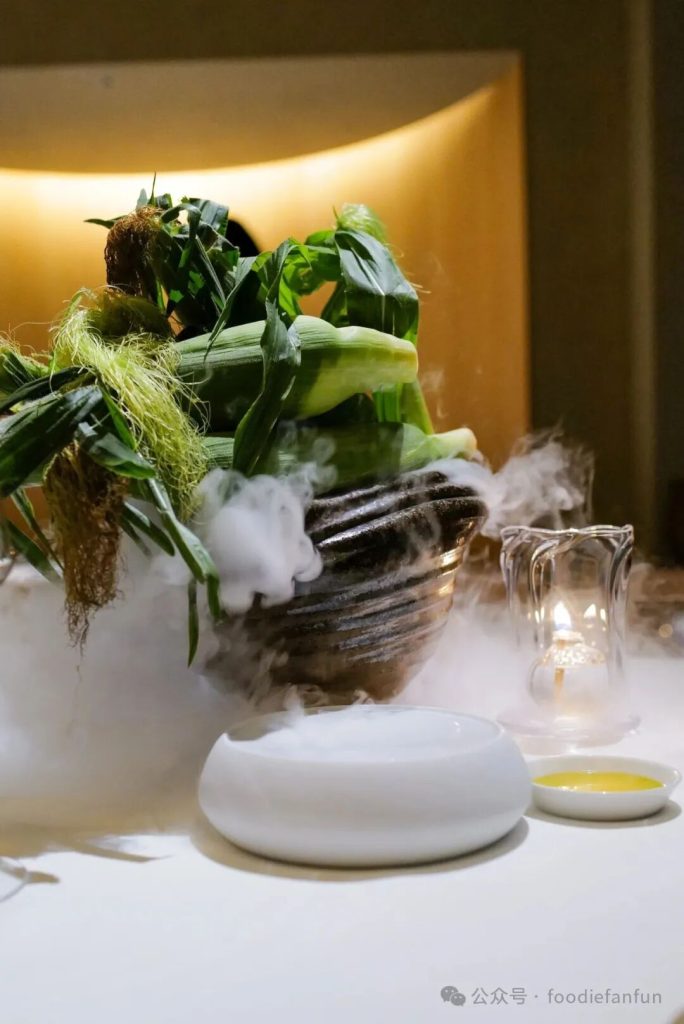
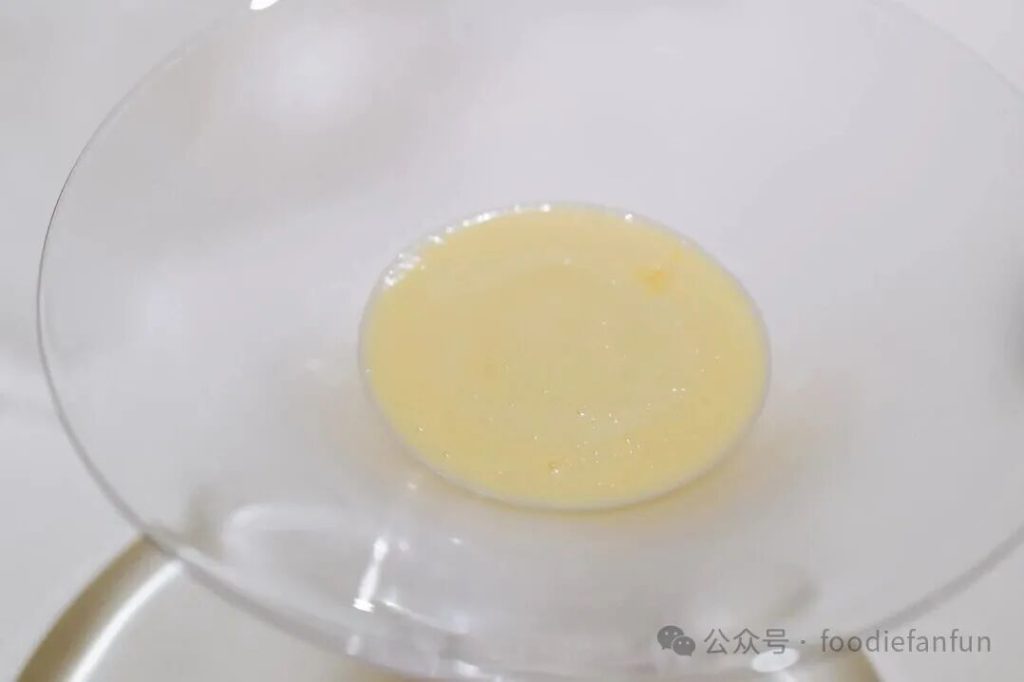
Next, a whole basket of corn from Kagawa Prefecture.
The chef turned the same single ingredient into three expressions: mousse, jelly, and a thick soup. One spoonful in, first the corn’s own sweetness and softness, then the refreshing lift of the jelly, and finally the soup slowly carrying the umami up.
The further in you go, the more the saltiness and umami unfold bit by bit, with a faint smoky note still detectable on the finish.
The whole dish revolves around almost nothing but corn, yet it shows off one ingredient’s different textures, temperatures, and flavors in a way that feels complete, pure, and genuinely layered.
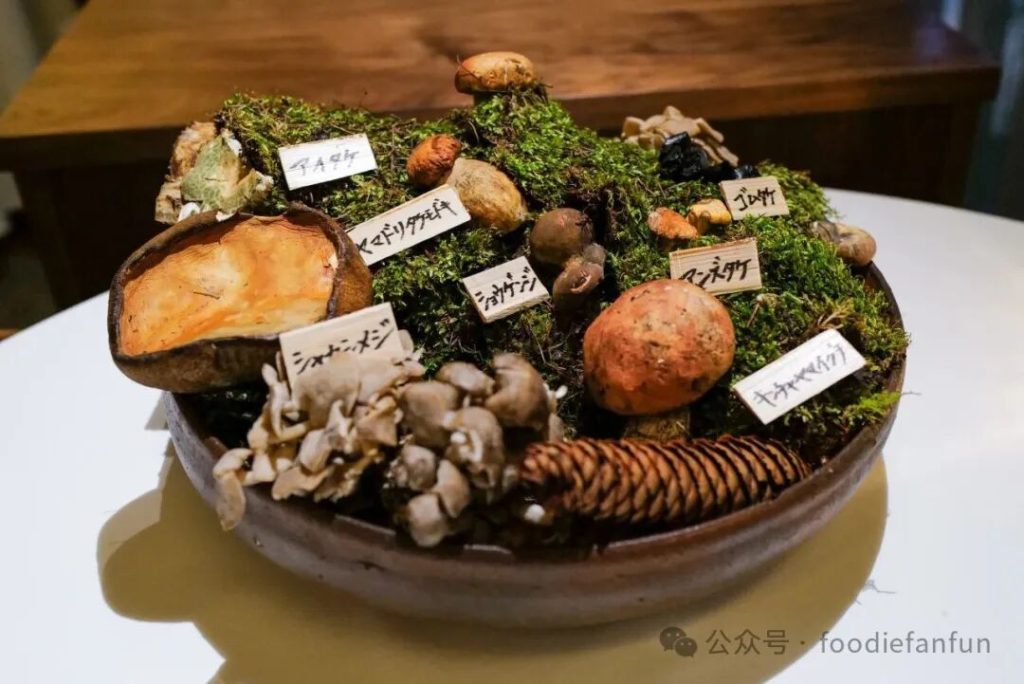
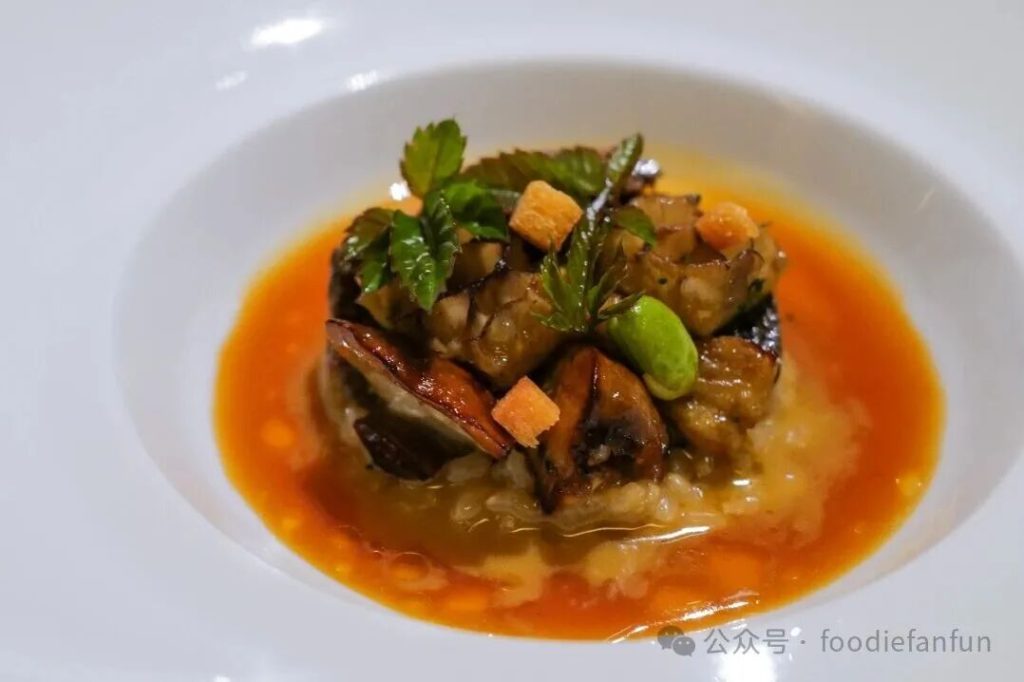
Wild mushrooms from Nagano, right in season. Different varieties were each pan-fried at exactly the right heat, each retaining its own degree of crispness and char. A rich mushroom sauce was poured all around, with plenty of gelatinous body, amplifying the umami without masking the mushrooms’ own aroma.
“There’s jing qian du~ (beef tripe)” — a server nearly two meters tall floated out a line of slightly clumsy but essentially standard Mandarin.
Woven through the dish, the tripe was soft yet springy, giving the whole plate its chewy backbone. Underneath, a grainy pearl-barley risotto was spread out, its faint acidity lending the flavor a lightness.
Broken down, every technique in this dish was fairly traditional, yet it stayed memorable through the layered progression between different ingredients and textures.
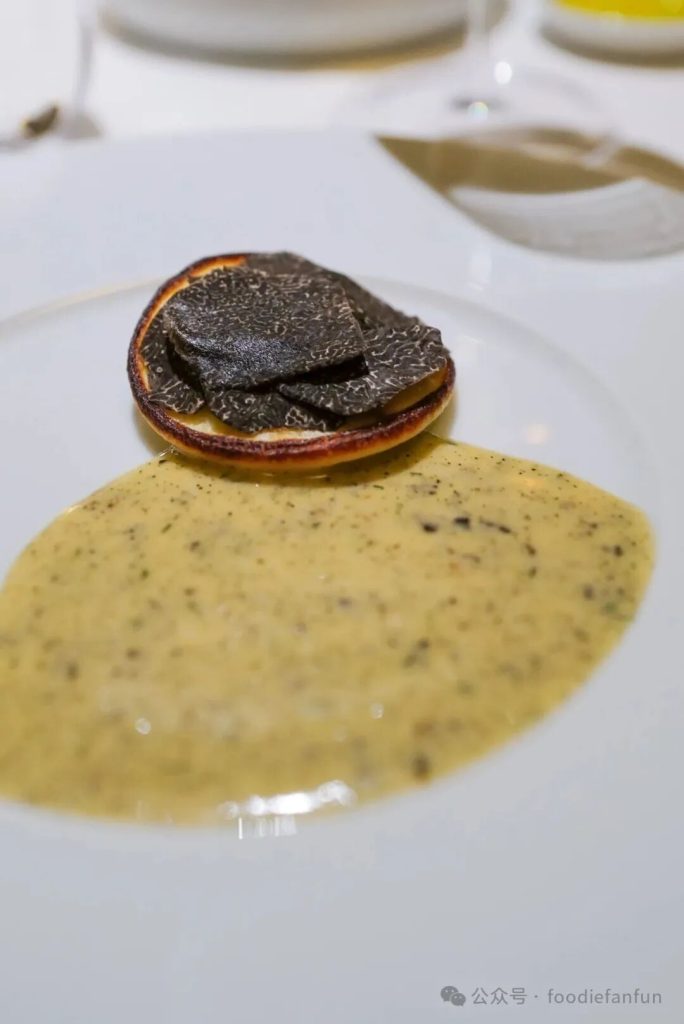
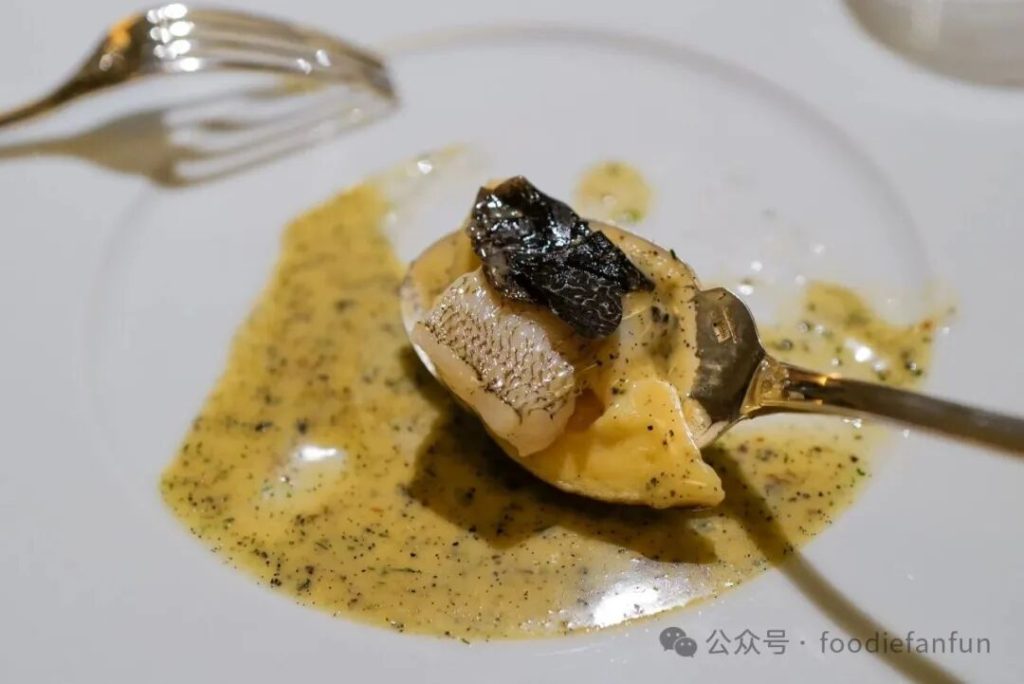
Potato and black truffle looked like a somewhat “classic” French pairing, yet it turned out to be the most thought-provoking dish of the night.
A soft crêpe wrapped around new potato and sillago fish; on entry, first the potato’s natural sweet aroma and a light dairy note, then slowly the fish’s delicate umami emerged. The black truffle had a clear presence without ever stealing the show, instead carrying the overall aroma steadily forward.
What was most moving about this dish was its impeccable sense of order. First the soft texture registers, then the aroma slowly reaches you, and only at the end does the umami spread out. Summer sillago and black truffle came together almost perfectly — fragrant without being heavy, light yet genuinely deep.
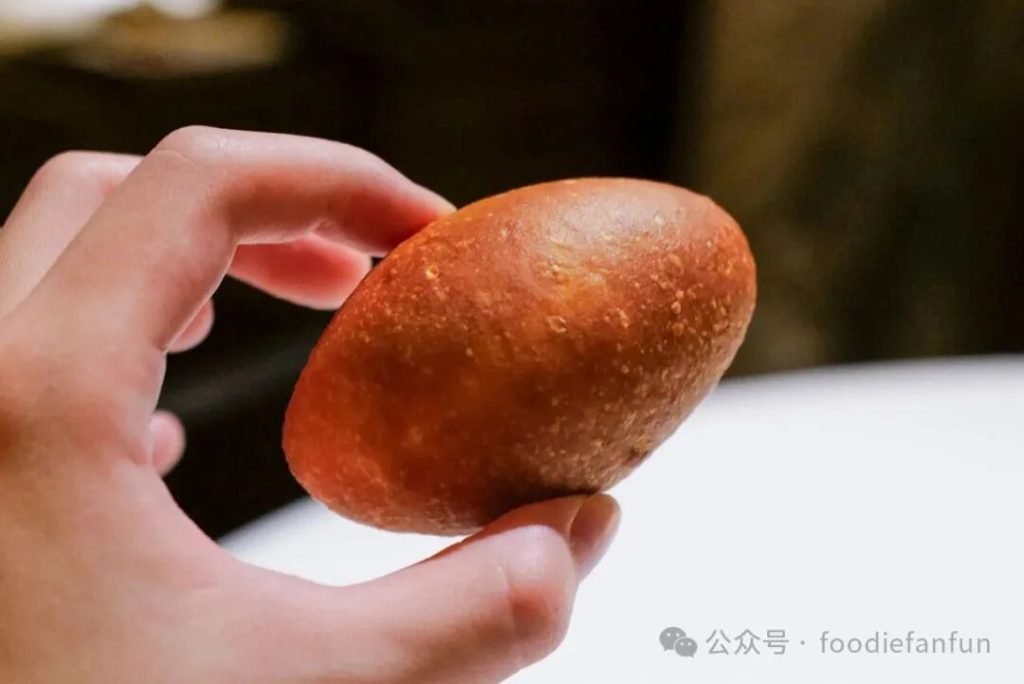
The little cream bread beside it, fresh from the oven and still warm, had real bite to it — dipped generously in the sauce, it delivered a whole other kind of satisfaction.
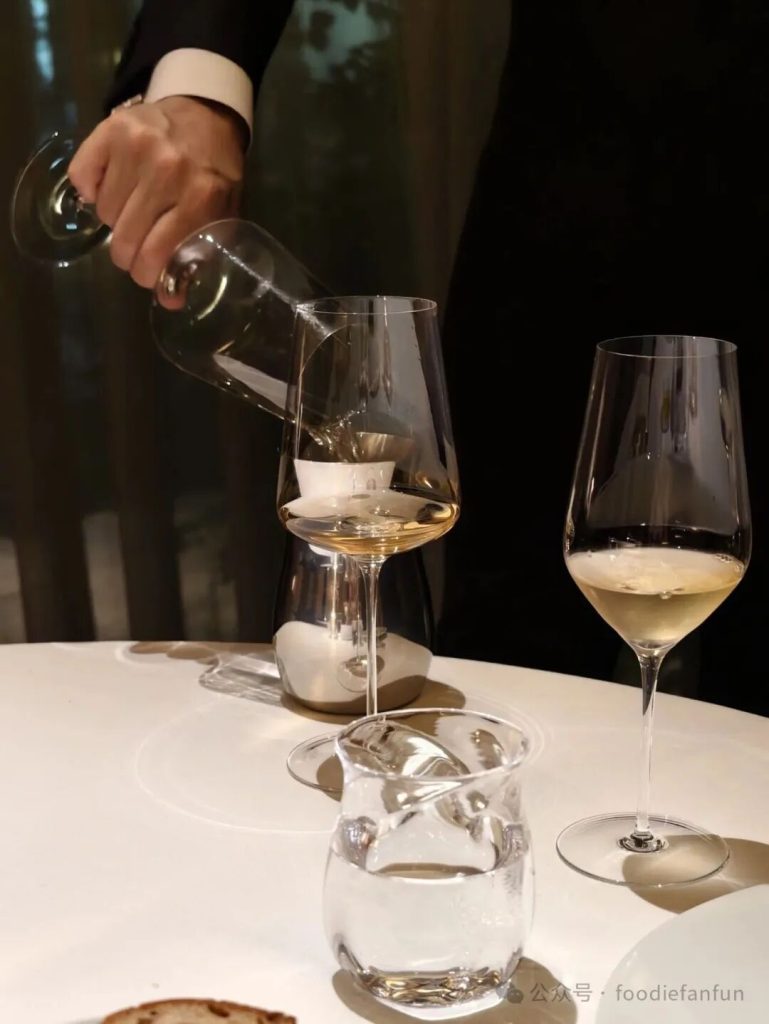
Want to slip in an unexpected small detail here.
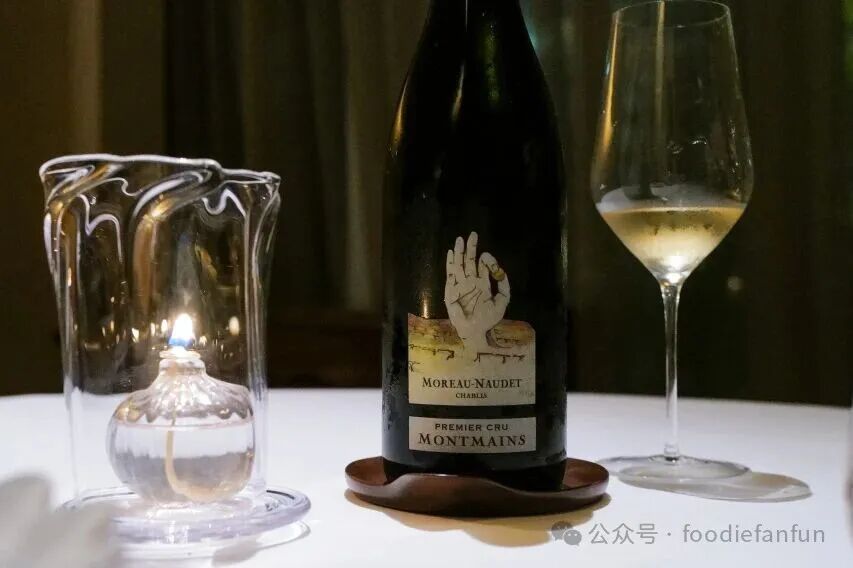
By this point, the white wine in the glass had gradually warmed up, and the sommelier naturally swapped it into a colder glass and re-served the same wine. This level of detail in service is genuinely rare, even after the fact of ordering. (👀)
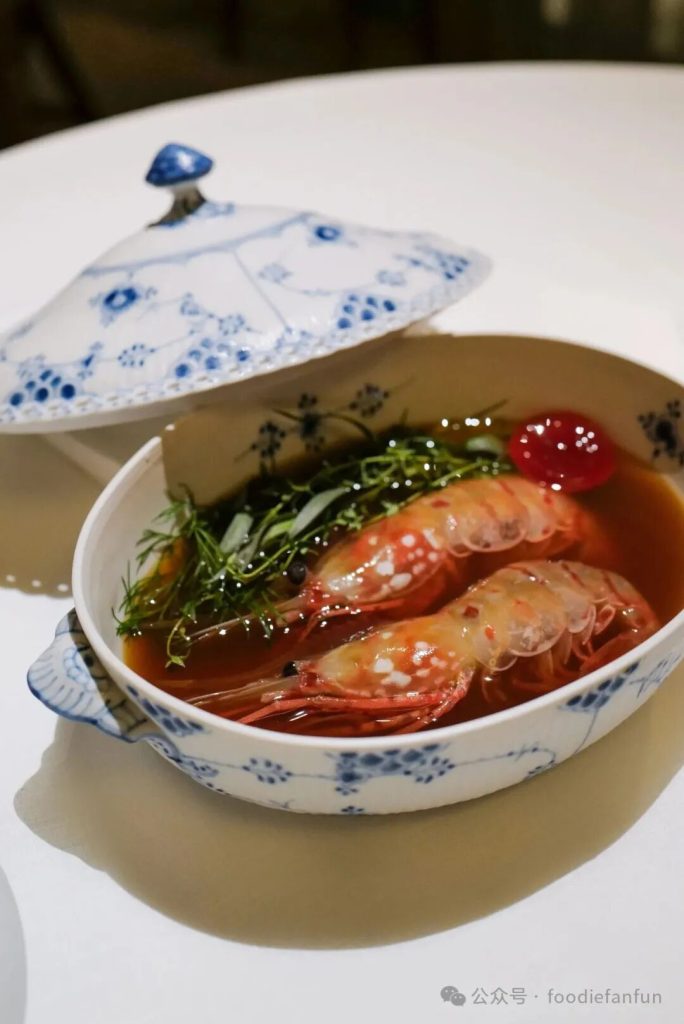
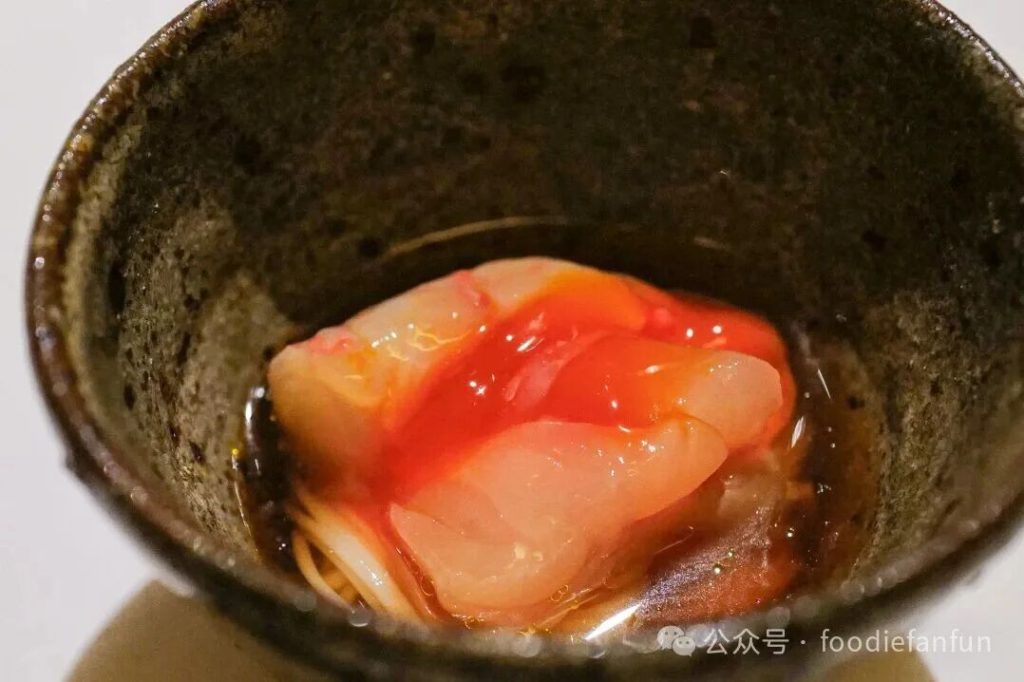
Next came the Spot Prawn Ivresse — more precisely, “tipsy prawn.”
Botan shrimp lightly cured in cherry, sake, and white wine, paired with an egg-yolk sauce and thin noodles eaten together. The wine’s aroma wasn’t as intense as expected, more like a lightly floating tipsiness — the whole thing very refreshing.
The botan shrimp itself still kept its sweetness and umami, only picking up a faint bitterness on the finish. The thin noodles had real resilience, springy like cold noodles, adding an extra layer of chew to the dish.
A dish with real ideas behind it, fully realized in its expression — though compared to the previous courses, it honestly didn’t move us as much.
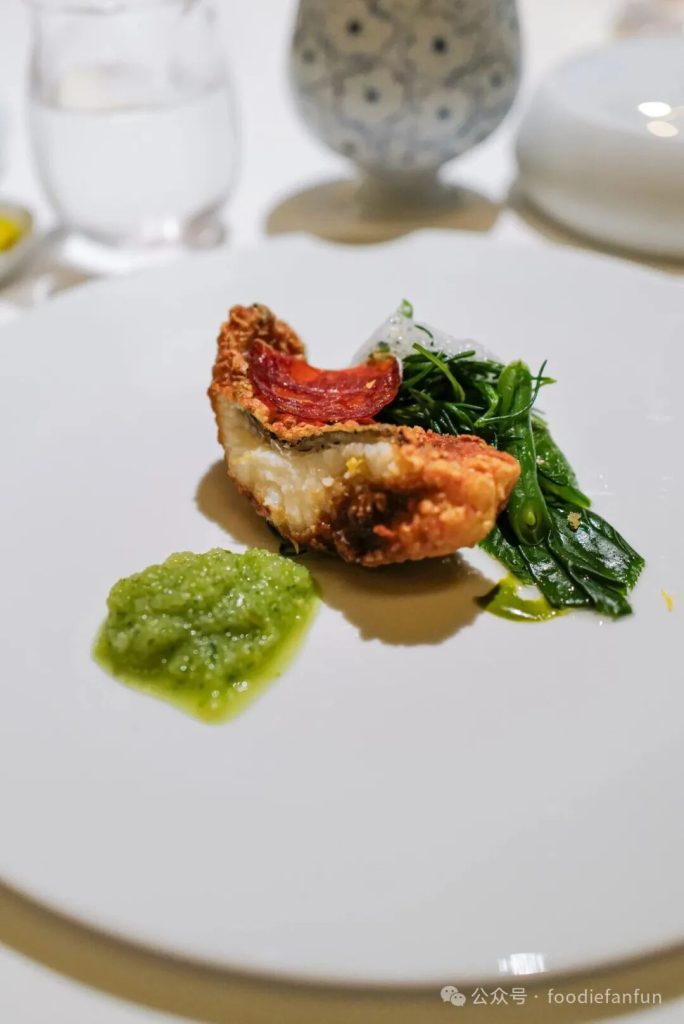
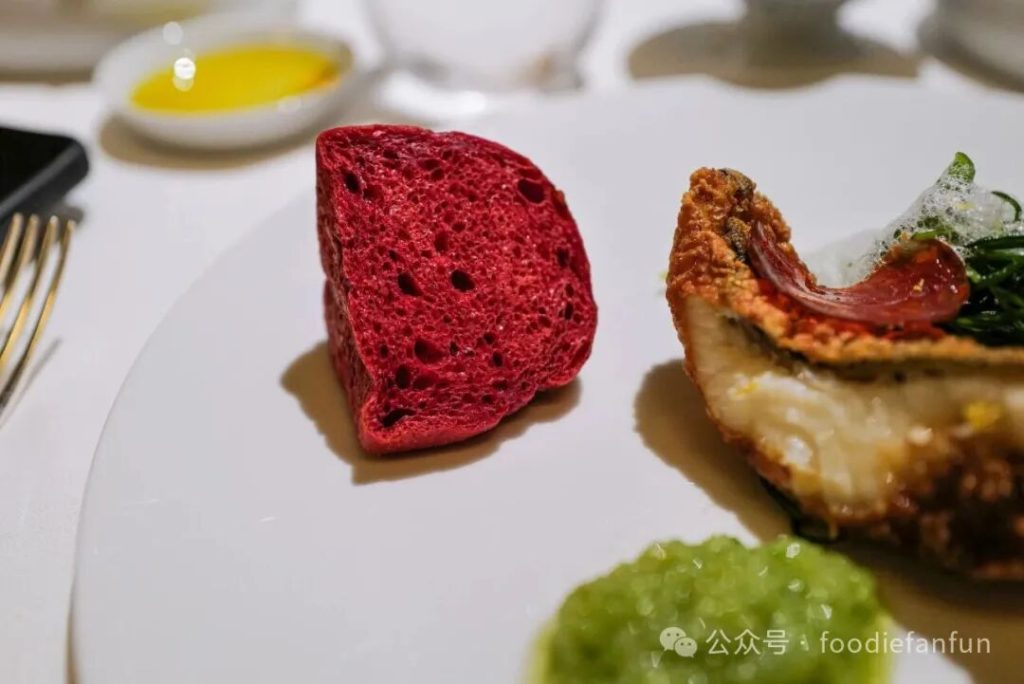
The kichiji rockfish was fried beautifully.
Under the crisp shell was also a thin layer of fish skin, carrying a touch of gelatinous body, with the flesh at peak tenderness. Alongside it, a sauce made from cucumber, yuzu pepper, and green tomato was refreshing in acidity, spice, and vegetal character, setting off the summer white fish even more cleanly.
On the other side, the vegetables were paired with lemongrass foam and pistachio paste. The lemongrass aroma floated lightly on top, while the pistachio added some body, keeping the dish light throughout without ever feeling thin — giving the sense that “even the side elements were thoughtfully looked after.”
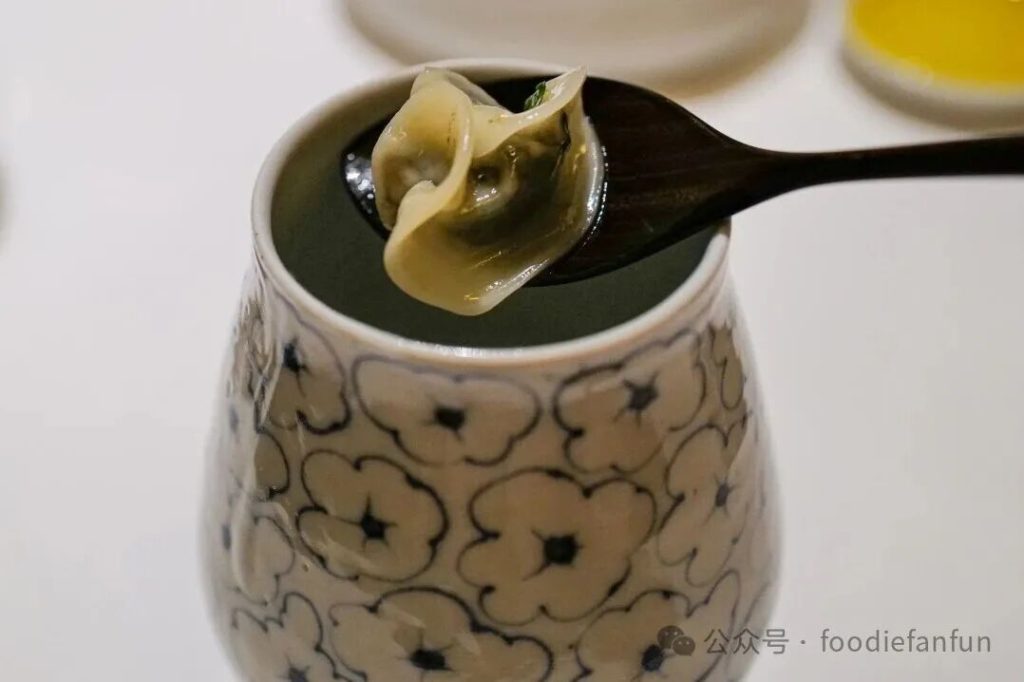
The ravioli in the jar, filled with anchovy and mandarin-leaf, was a bit less memorable. The presence of the herb and the bitterness on the finish didn’t fully come together, feeling somewhat scattered compared to the main dishes.
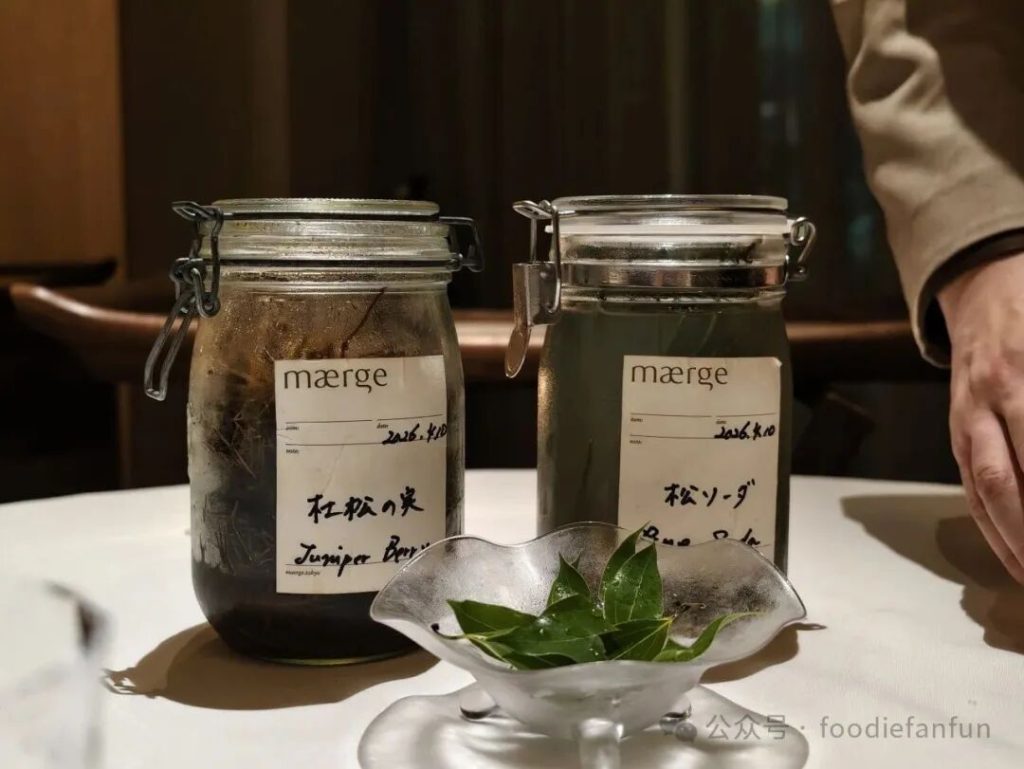
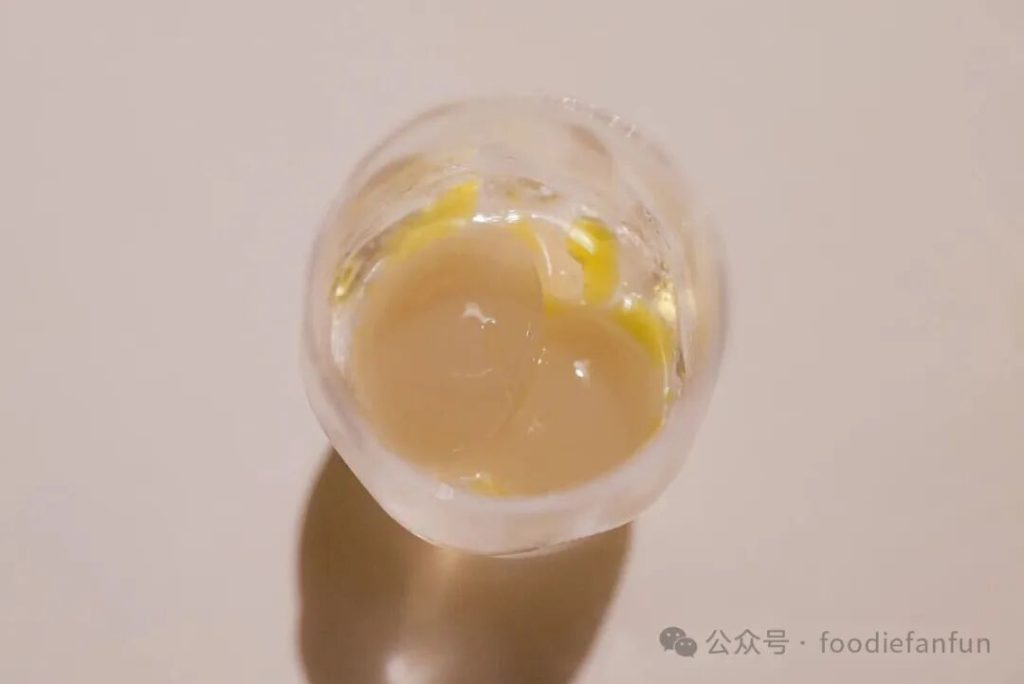
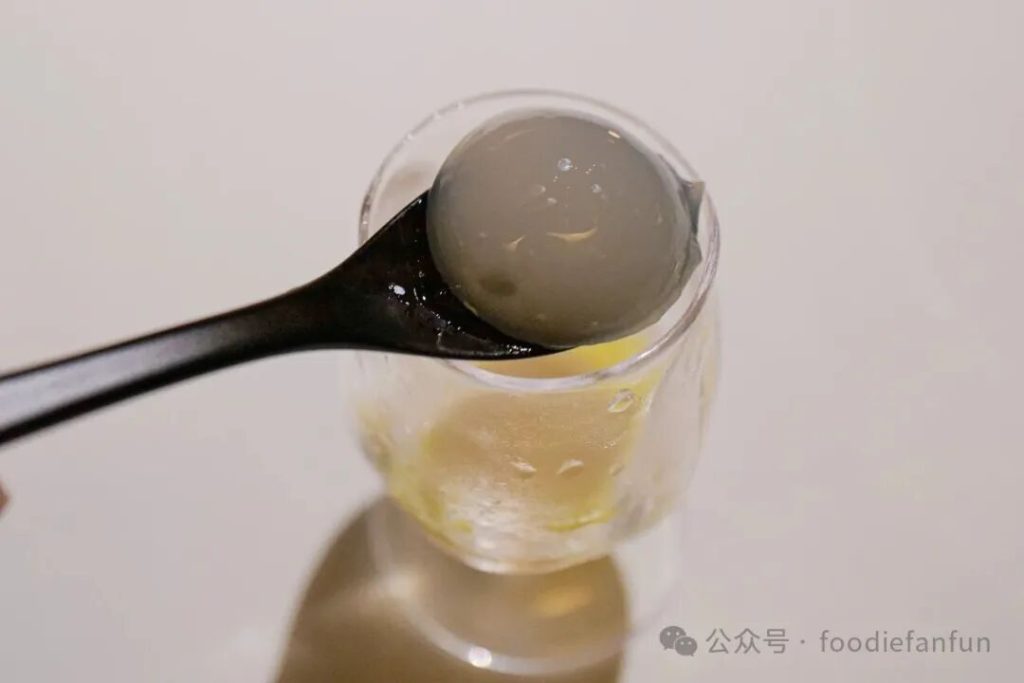
Then came the palate cleanser, inspired by an alcohol-free gin and tonic.
Juniper and pine soda formed the base; on entry, first a lovely acidity, then a pine-needle-like refreshing plant aroma slowly unfurled — very much the feeling of a summer forest.
The rice cake mixed in provided a bit of softness and lightness, adding a soft, chewy layer of fun to it. An unexpectedly memorable touch.
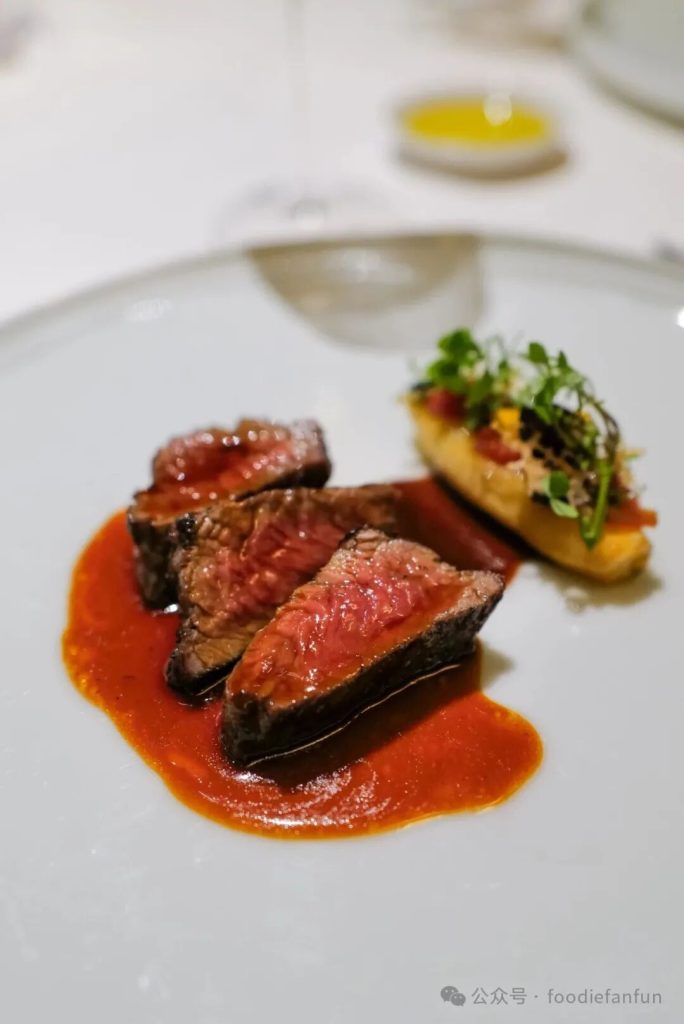
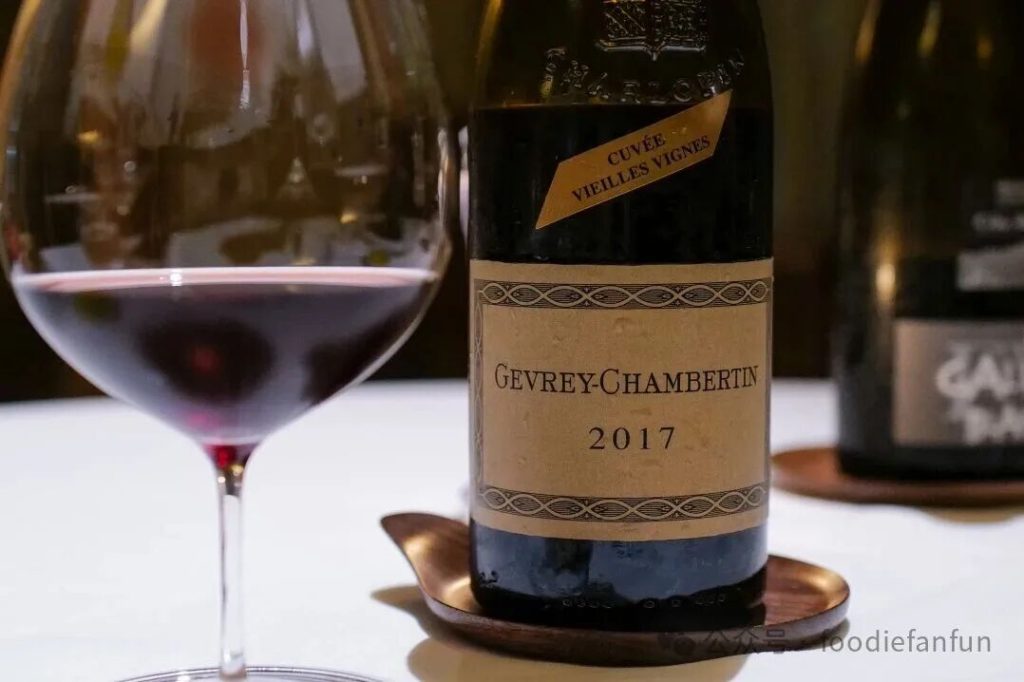
The main course, remarkably, offered seven choices — on a first visit, of course, the classic charcoal-grilled beef.
The surface carried a beautiful char aroma, while the inside kept its soft, juicy quality. Two different-style sauces flanked it, and the one made with sherry vinegar was especially memorable, its woody aroma and acidity both distinct, pulling the beef’s deeper layers of flavor right into view.
At the same time, the side dishes beside it were never just an afterthought. The zucchini was crisp and fresh, and the lightly pickled vegetables kept reopening the palate with several different plant aromas.
Sides here are never a supporting act — every detail on the table gets looked after.
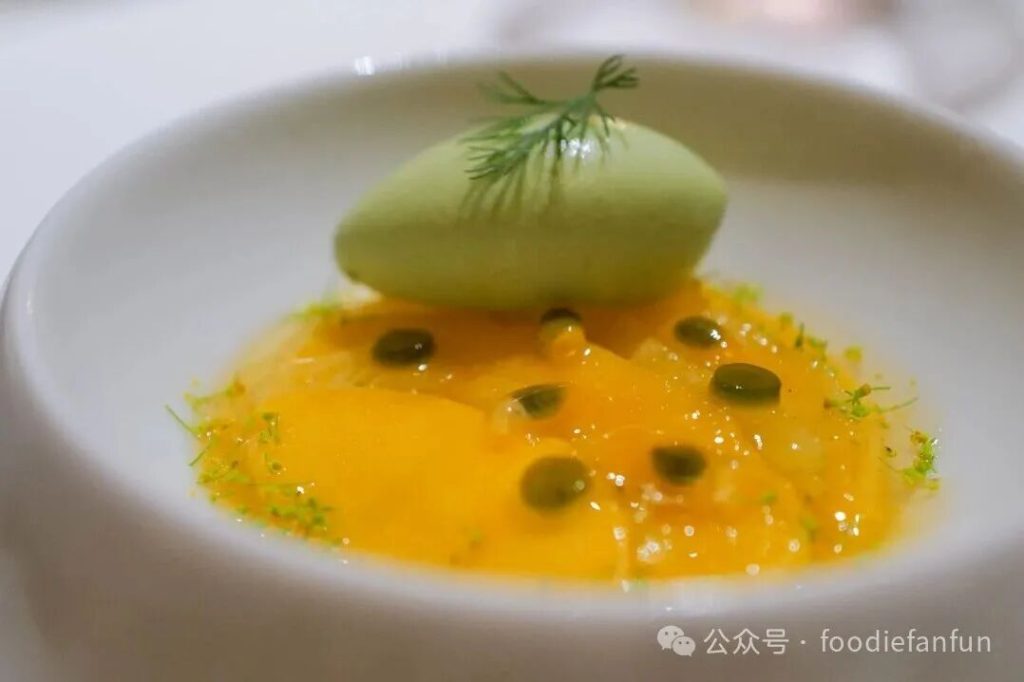
The palate-cleansing dessert used banana-herb ice cream, paired with ripe mango and a layer of herbaceous jelly.
The mango itself was very sweet, and the herbal notes in the ice cream made the tropical fruit’s sweetness read even brighter and clearer. The jelly laid underneath added a deep aroma with a touch of woodiness, lifting the whole dessert out of simple fruity sweetness into something with real dimension.
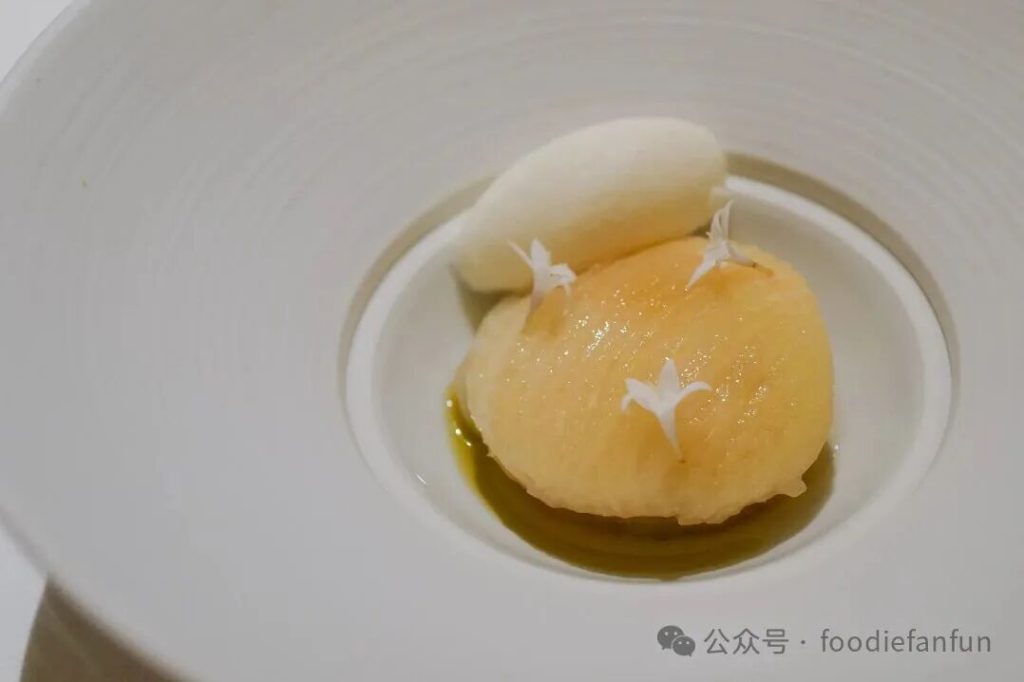
The main dessert then featured a peach at the peak of its season, cured in jasmine, paired alongside beach rose ice cream and lychee.
The peach itself was in great condition, the jasmine aroma clear and distinct, almost carrying a touch of perfume. Beach rose and lychee kept adding on floral and fruity notes; the whole dessert’s aromatic range was beautiful, though layered on top of the sponge cake underneath, the overall sweetness did read a touch high. A small bite was just about right.
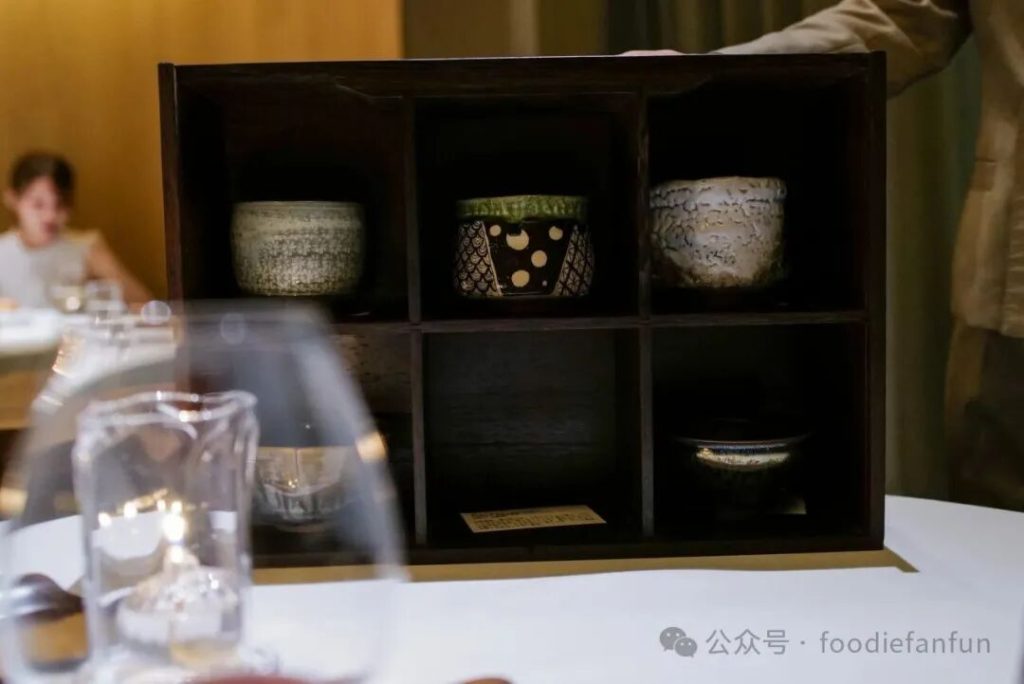
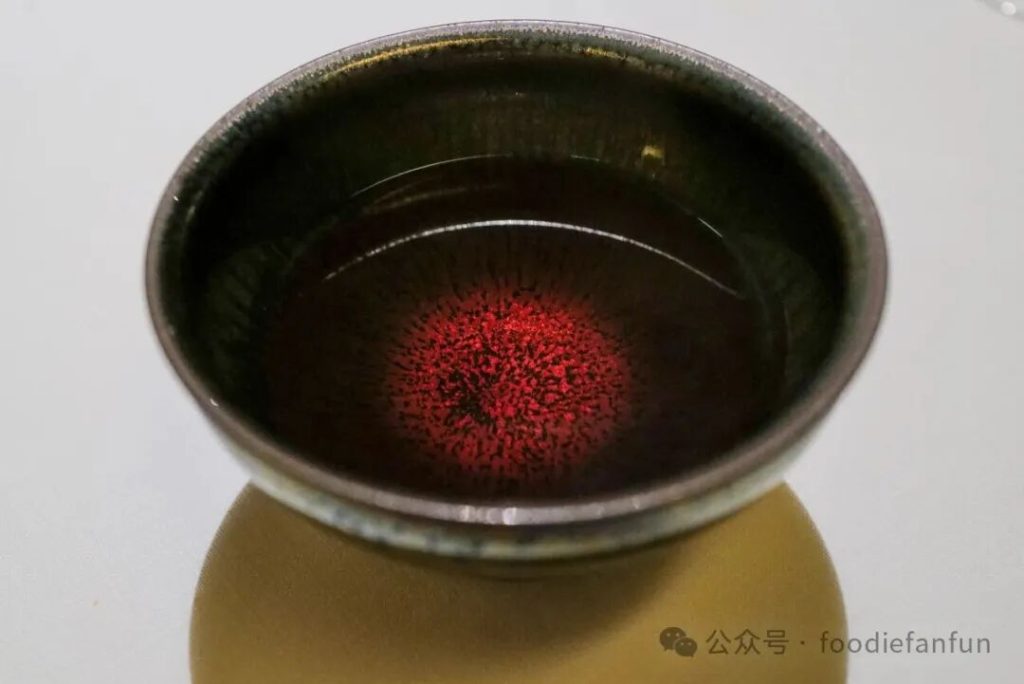
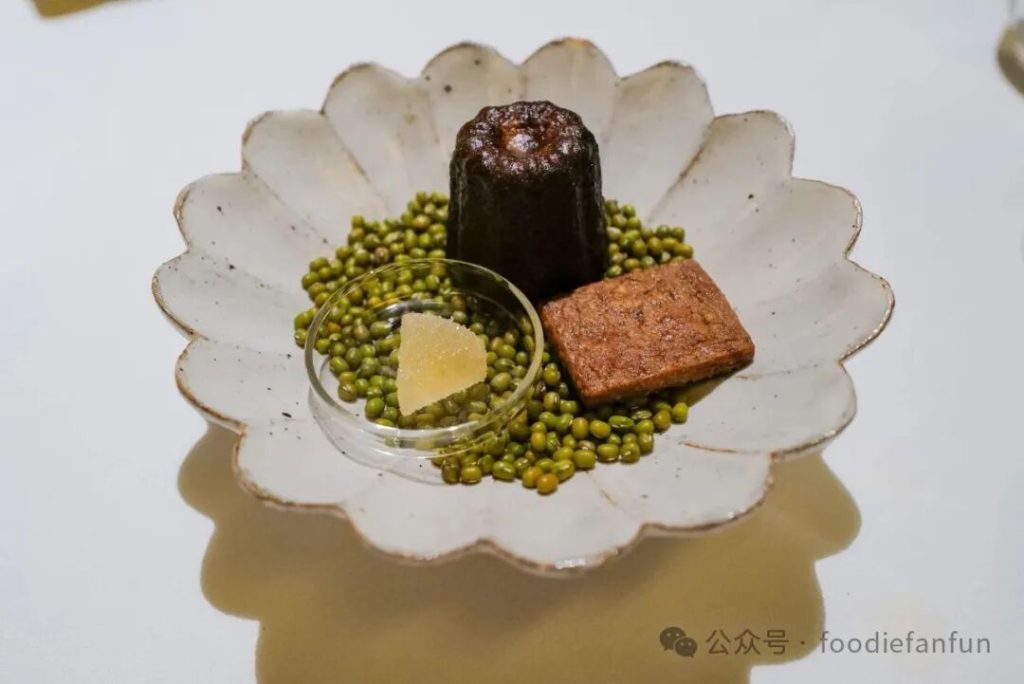
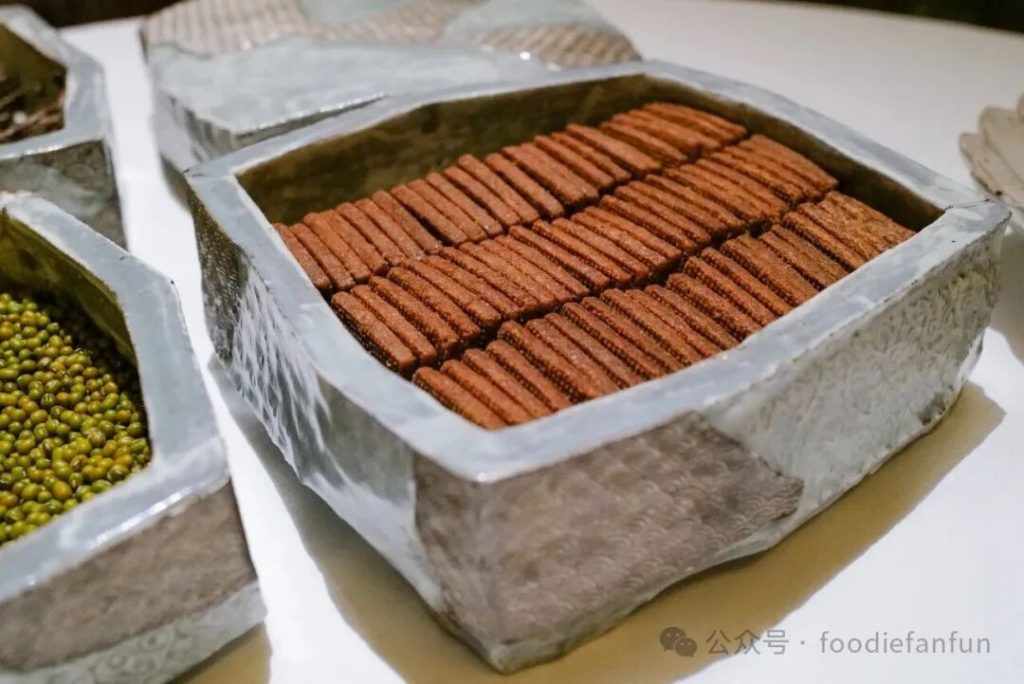
The meal ended with tea time, herbal tea served in beautiful Japanese vessels, alongside a set of petit fours with a bit of playfulness to them.
A beautiful piece of porcelain was set on the table; opening it revealed what looked like it was packed full of cookies.
“So are these all edible…?”
“Yes, they are. They’re mainly decorative, but if you feel like you need more…”
Suddenly the tail end of the meal picked up a bit of charm. Everything before had been thoughtful, ceremonial, atmospheric — and yet, right at the end, it could still close the meal out in a relaxed way.
Chatting with the chef after the meal, we learned he’d just flown back on an early morning flight from Guangdong that same day. Apparently in September he’ll be doing a four-hands collaboration with a chef from Guangdong. Hearing that news right after finishing this meal already had us looking forward to it.
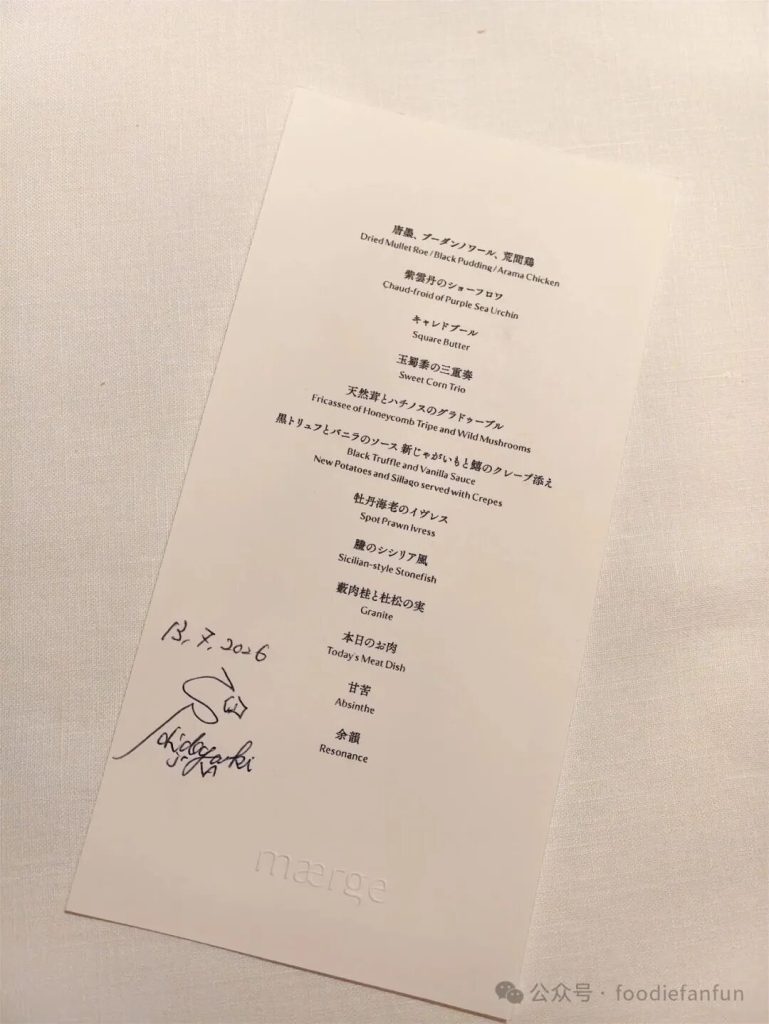
From sitting down to finishing writing this record, less than 24 hours have passed. For me personally, that alone says enough about how much I loved this meal. There were so many flavors I couldn’t wait to write down, one by one.
Though the restaurant has only been open a full year at most, the presentation of every plate, the rise and fall between dishes, and the coordination between the sommelier and front-of-house all show a team’s years of accumulated, mature skill.
This happens to echo the name mærge itself. French technique, Japanese ingredients and hospitality, local producers, tableware, service, and space are all placed into the same meal. They intersect with one another, yet each keeps its own shape.
In the end, what’s truly left for the guest is a complete feeling — carefully looked after, surrounded by beauty, and still able to quietly experience the goodness of the food itself.
Already looking forward to the next visit.
mærge
https://maerge.tokyo
Monday, Tuesday, Thursday 6:00 PM – 11:00 PM
Wednesday, Friday, Saturday 12:00 PM – 3:00 PM, 6:00 PM – 11:00 PM
Seasonal Omakase Menu ¥38,500++
Wine Pairing From ¥19,800++
Lunch Omakase ¥38,500++
Chef’s Table ¥8,8000++
Leave a Reply