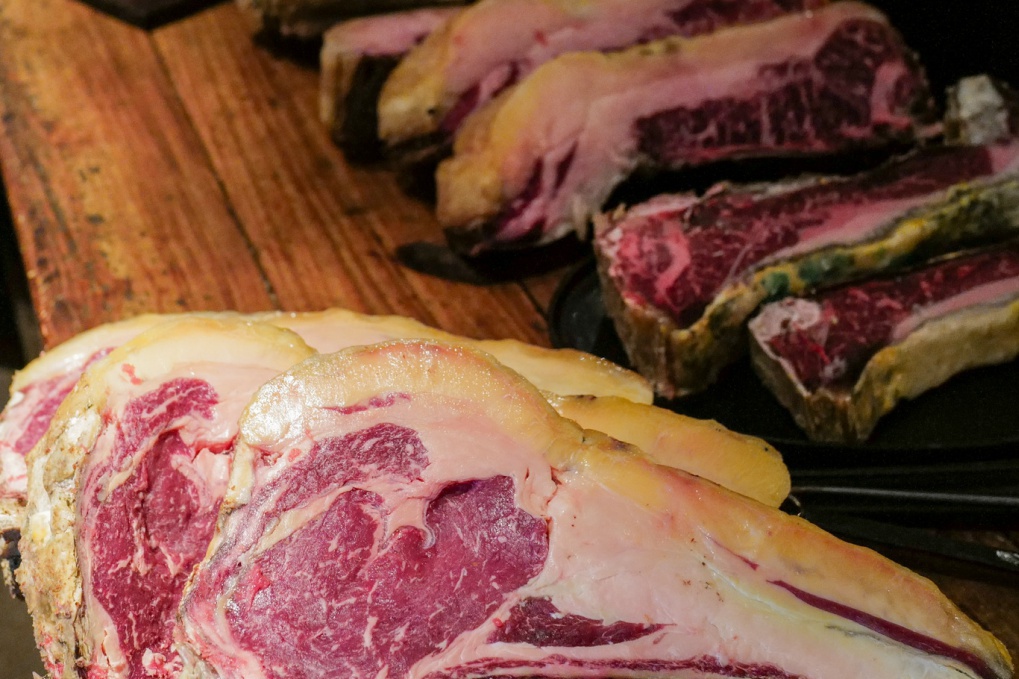
After visiting Laia and Txispa back to back on the same trip, I went back and forth for a while on whether it was worth also stopping by Lana in Madrid.
In the end, it proved worthwhile — not a repeat, but a completion. It amplifies the visual and olfactory sense of aging’s raw strength, while keeping the meat vividly red and full of sweetness. Unapologetically wild and lush, it’s an expression of aged beef’s other side, one that steps outside the usual stereotype.
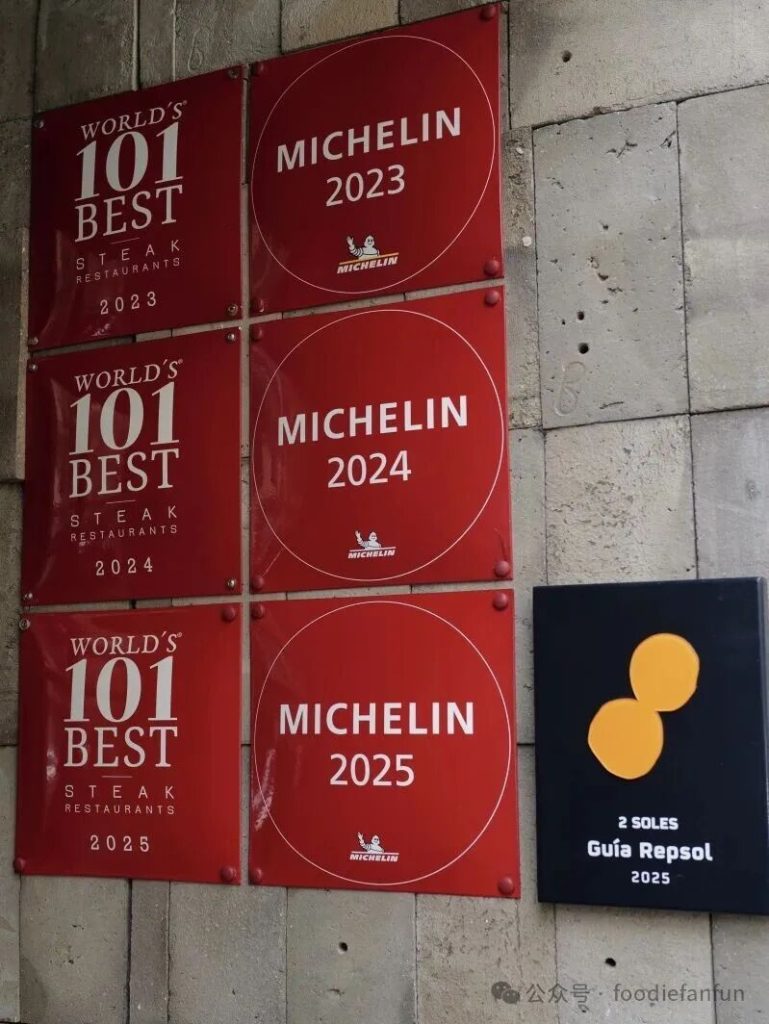
The restaurant’s owners are a pair of Argentine brothers, Martín & Joaquín Narváiz, who grew up in a ranching family. They opened this restaurant in Madrid in 2022, and it has made the World’s 101 Best Steak Restaurants list every year since, climbing to No. 8 in the world by 2025.
On Lana’s menu, beef is simply listed by breed and cut. The real meat-selection moment happens when guests are led straight to the charcoal grill lined with cuts, to feel firsthand the flavor differences that come from breed, cut, and aging time.
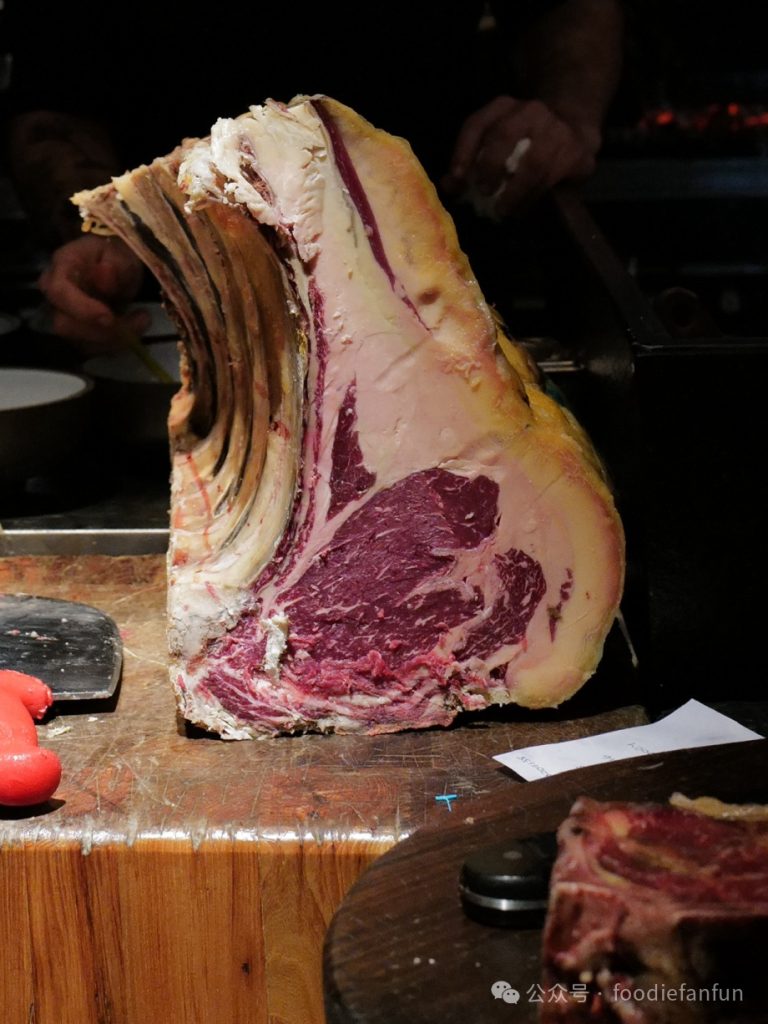
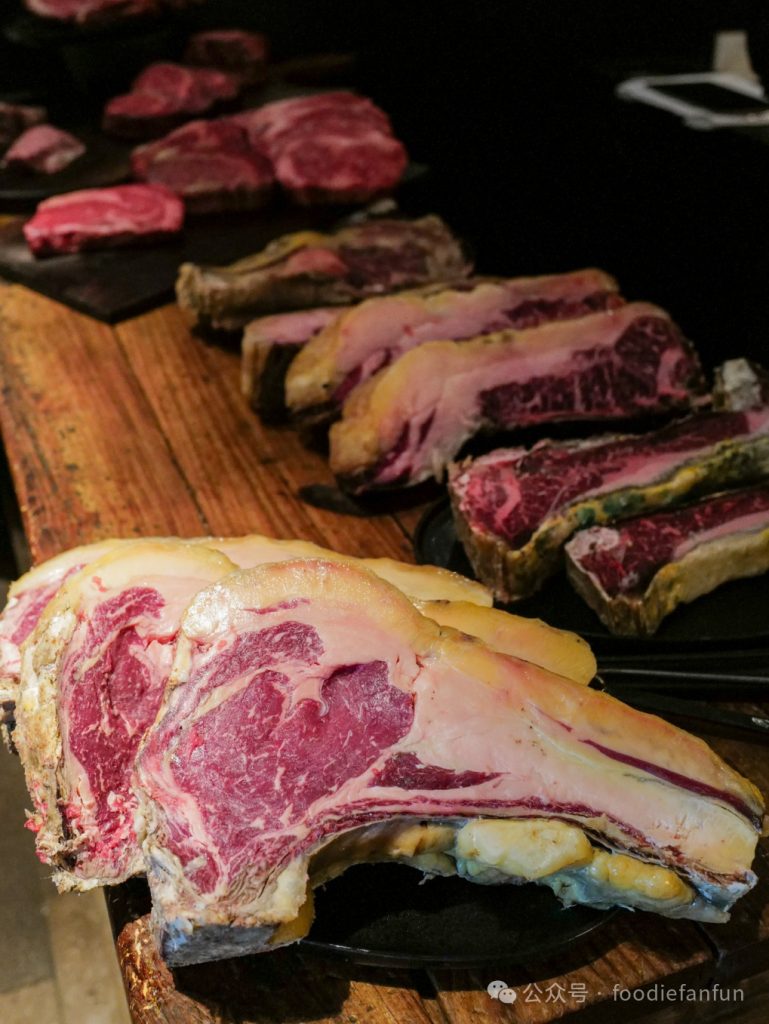
By flavor profile, Lana’s beef roughly splits into two systems.
One is the Argentine / South American line. Built on pasture-raised Aberdeen Angus bullocks under three years old, with a clean flavor and fat that isn’t overly assertive, emphasizing the meat’s own clear structure and the char brought out by open flame. This also includes Argentine Wagyu × Angus crossbreds, with attractive marbling, though the fat penetration is noticeably lower than Japanese wagyu. This line is mostly boneless and reasonably priced.
The other is the European line + long aging. This includes Rubia Gallega crossed with Portuguese Minhota cattle, Portuguese Casino OX, and larger-bodied breeds like German Simmental, with aging periods starting at nearly a hundred days. One leaner rib cut we saw on site had aged a full year and three months, its outer layer wrapped in blue-green mold, with a distinct cheese aroma up close. Starting at €130/kg, running as high as €320/kg — an expression of serious concentration and complexity.
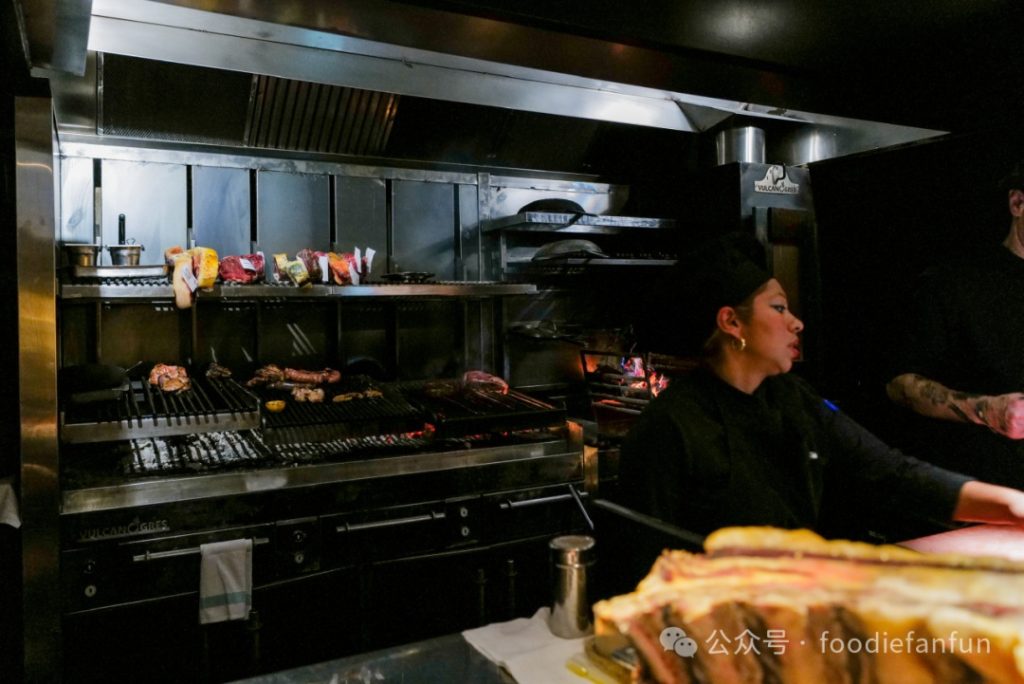
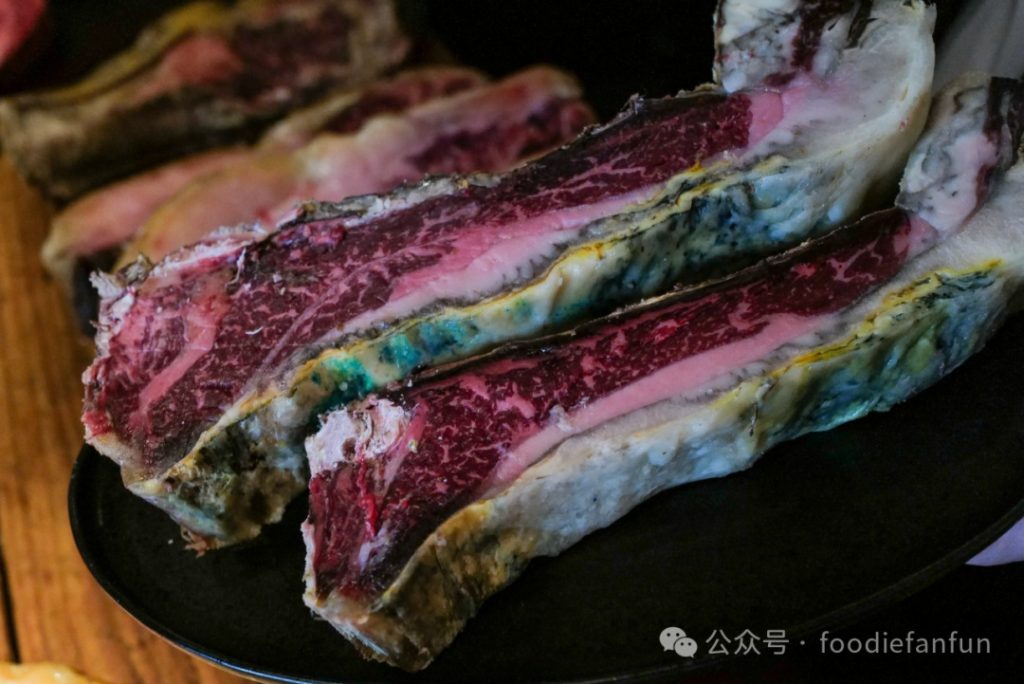
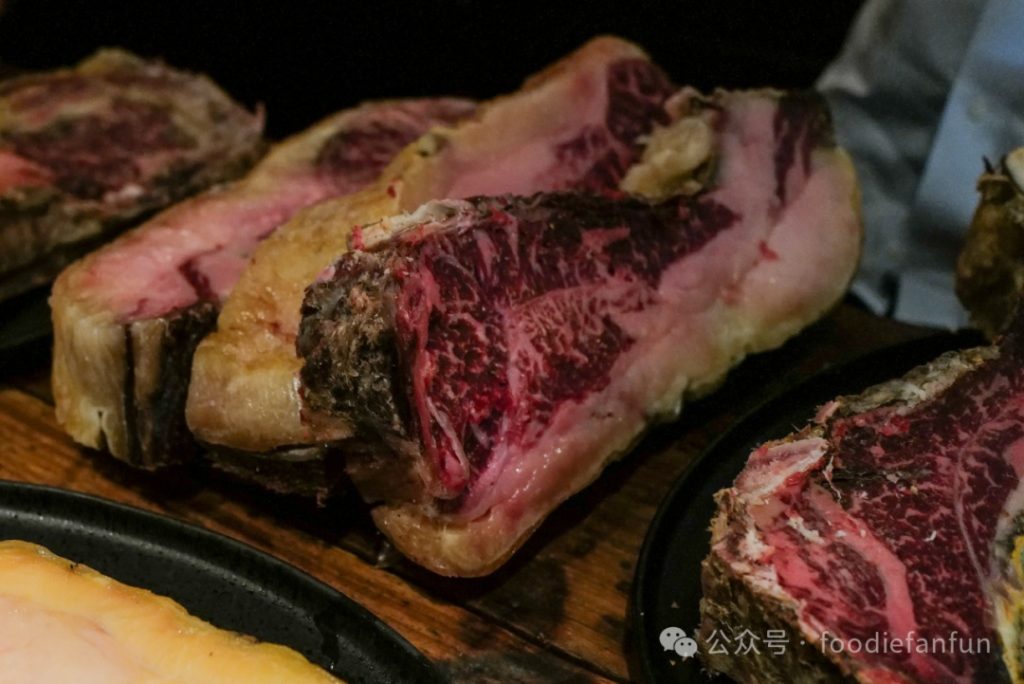
By comparison, the grilling style felt much more straightforward.
The most important part of Lana’s philosophy is thorough preheating before grilling. Behind the meat display case you can see the grill station, where selected cuts are first brought up to temperature beside the grill before going over open charcoal.
It arrives at the table with an obvious Maillard crust; lift a piece and it’s still a beautiful pink inside, at just the right temperature — never raw or cold, but with the fat rendered enough to give the meat a more complete texture and flavor.
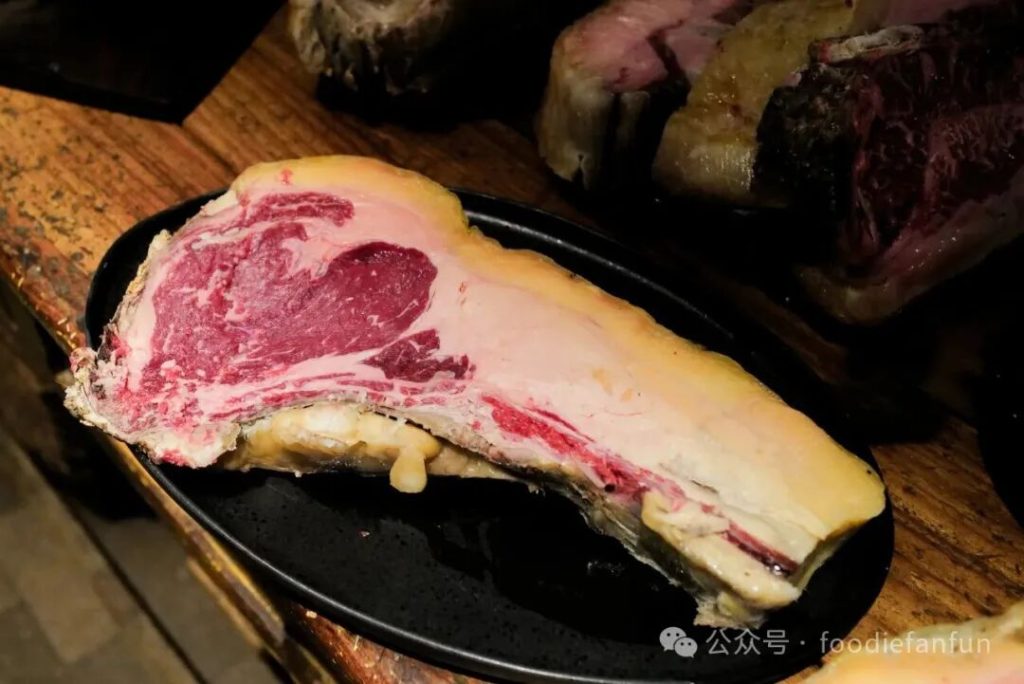
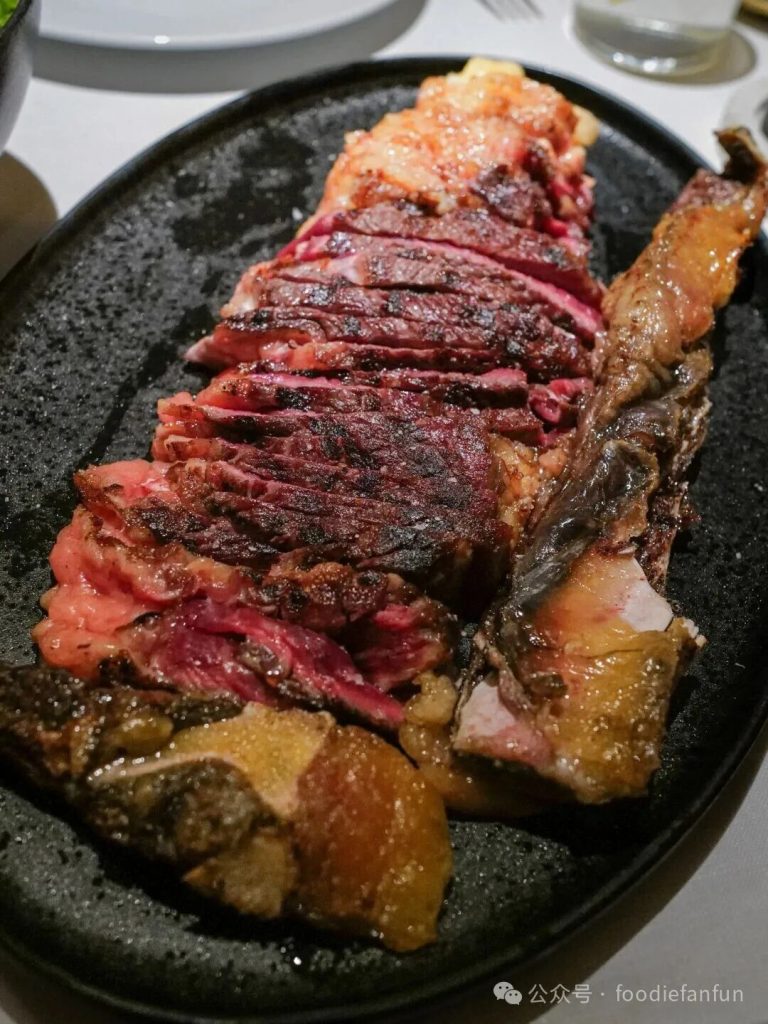
As tourists, we still wanted to try the Rubia — a rare chance to taste this golden-haired cattle breed from northern Spain. The nine-month-aged Chuletón, with even the smallest cut weighing 1.6kg, looked generously marbled at the edges, but the sheer amount of meat once it hit the table was still shocking.
Sliced half a millimeter thick at the table, you could feel a clear shift in sinew and texture almost every two or three pieces. The meat itself carries plenty of fat, gaining a chewy resilience after dehydration, which then turns into a softer bite after aging — even the originally coarse fibers came across noticeably finer.
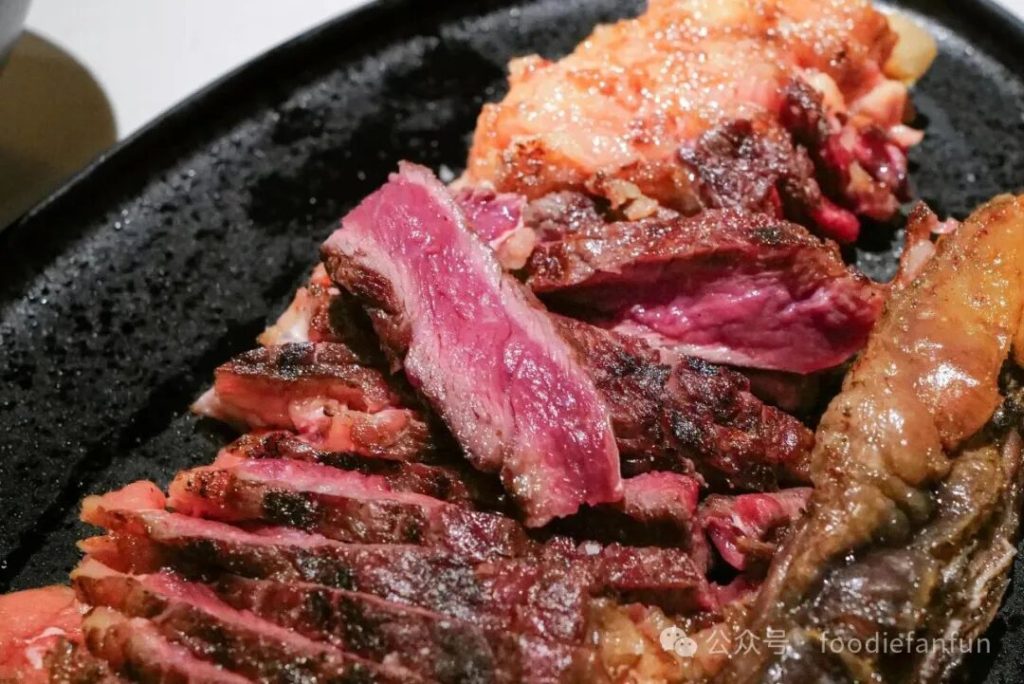
The most striking part was that it actually tasted sweet!
Under the powerful beef flavor, the fat melted in the mouth with each chew, and an intense sweetness layered on top, one wave after another. Working slowly through the different cuts, you could clearly feel how the sweetness on the finish shifted with the differing fat content. That thin ring of fat right against the red meat had a texture almost like jelly — sticky, soft, yet not the least bit greasy.
At this point, no extra seasoning was needed at all.
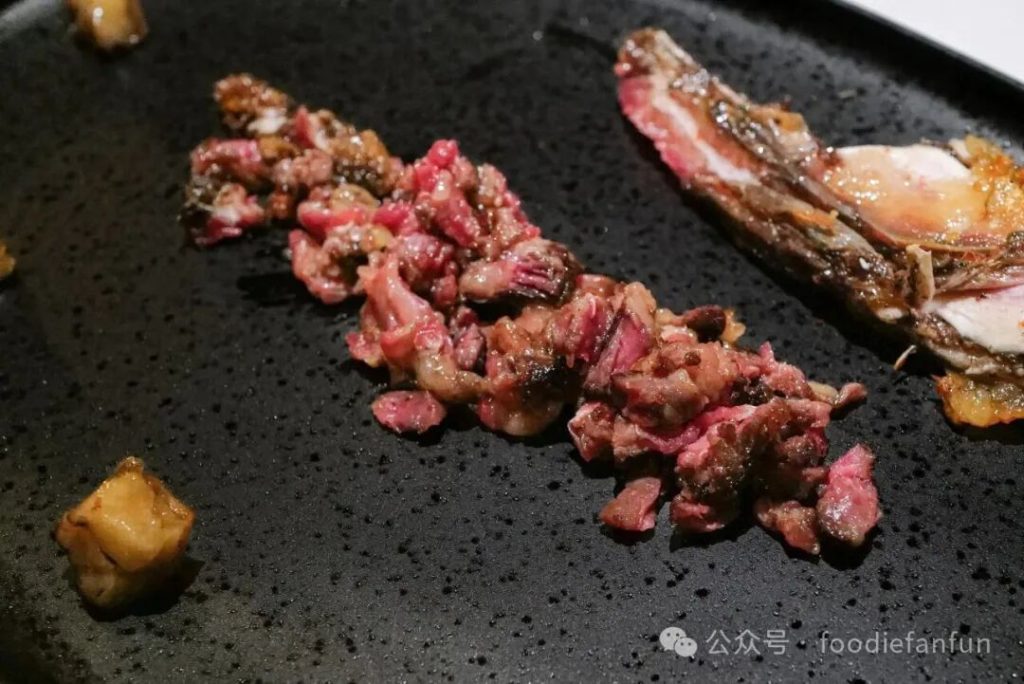
Two people obviously couldn’t finish a whole cut, but the restaurant still insisted we try the meat near the bone. That bite carried a noticeably stronger fermented aroma from the mold-aging, mixed with the richness of the fat, amplifying the flavor even more directly. There was a thrill to walking right along the edge between flavor and funk.
Thankfully, it held itself together — the flavor landed just right.
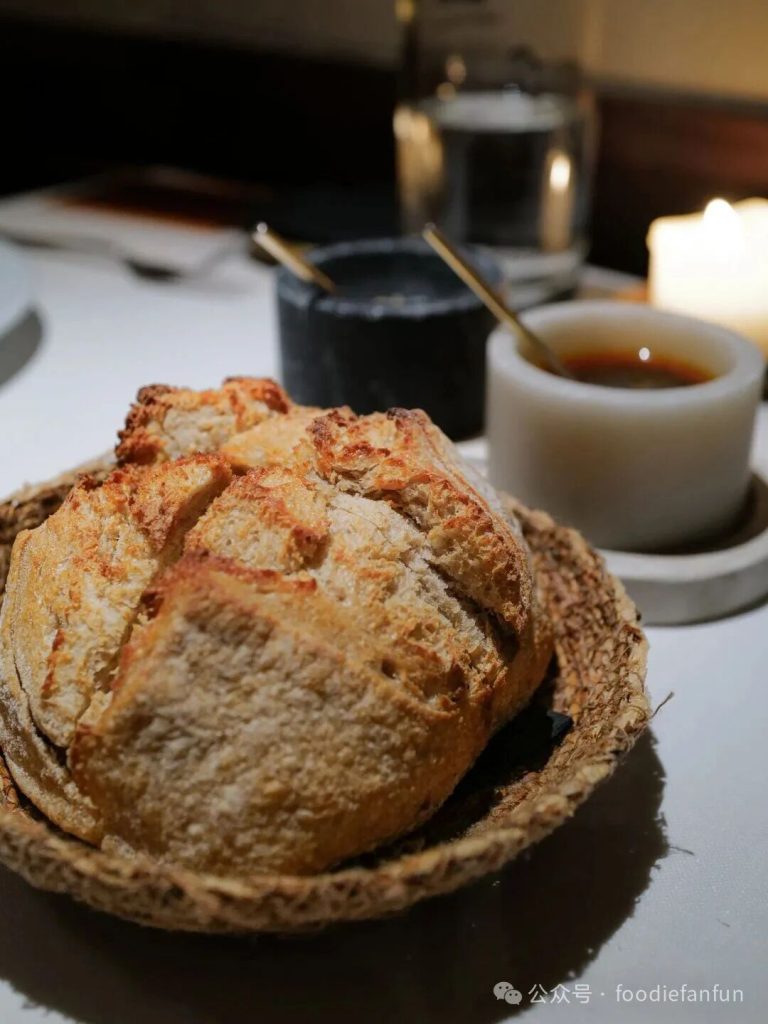
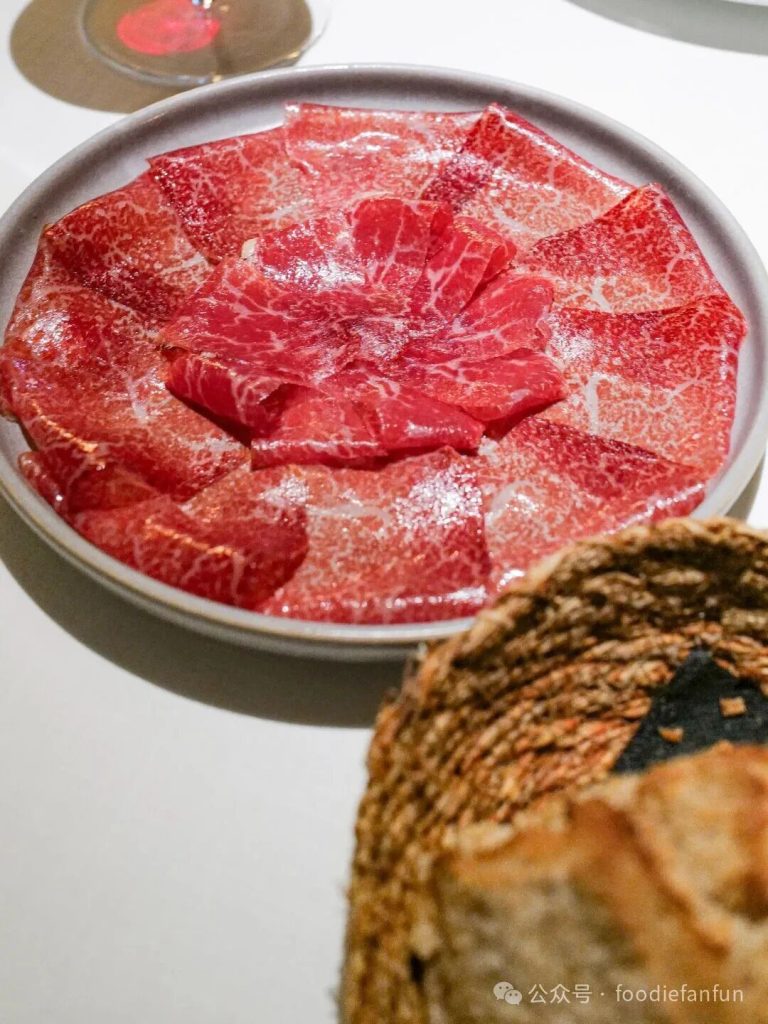
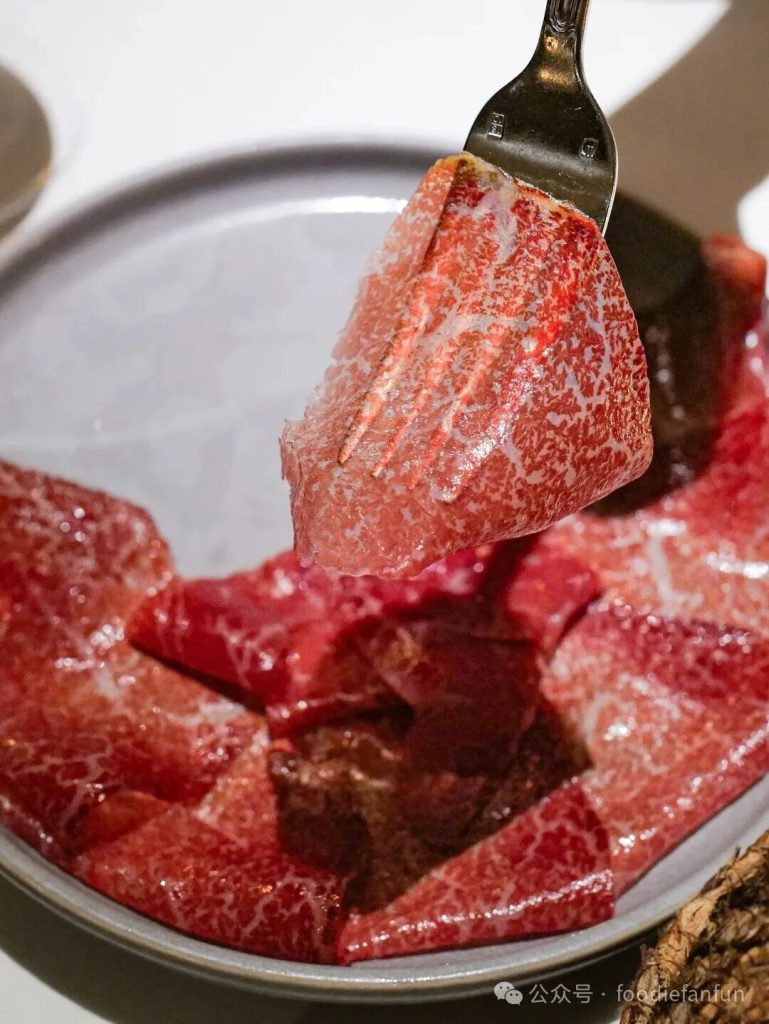
Against these massive steaks, the starters were kept brief, but still had their memorable moments.
Beyond the butter melting into the bread’s core for a warmer, softer texture, the fermented chili sauce served alongside was tangy with a bit of heat — full of character.
The wagyu ham was a completely different style from Laia’s — firmer, a touch ahead of the fat, chewier, with a richer dairy aroma. The ring of fat around the outside was even more abundant, tasting sweeter. The pieces at the center were noticeably more vividly red, with a richer nuttiness and concentrated dairy character.
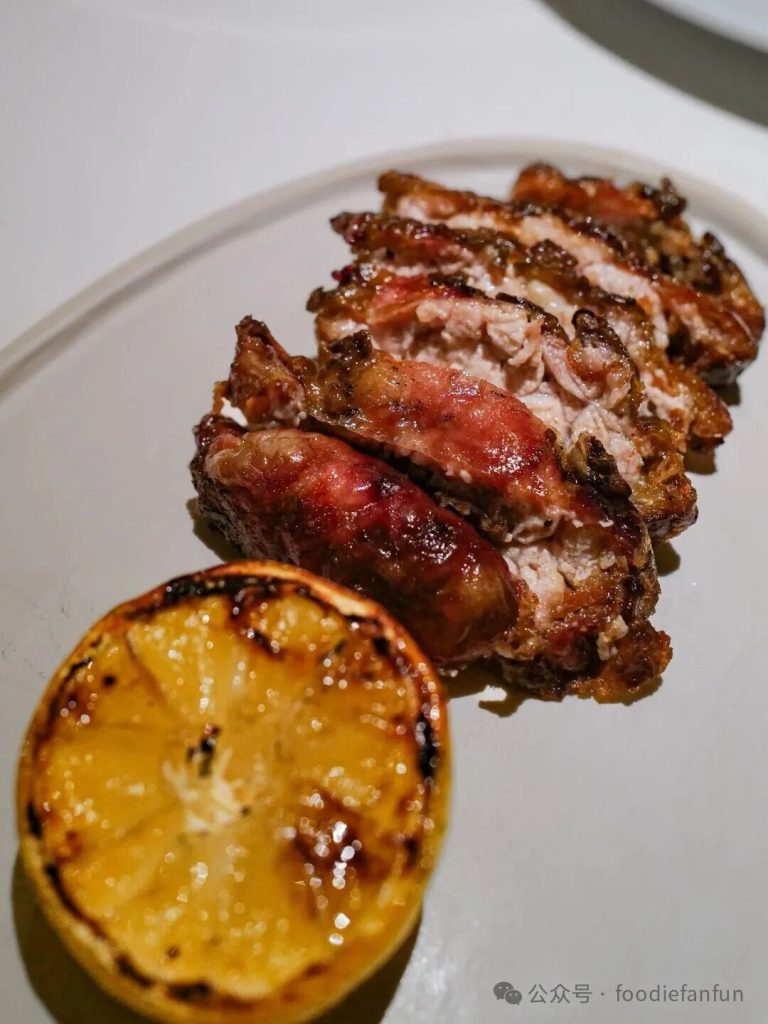
The beef thymus was done in a distinctive way too. The menu described it as grilled, and I expected the usual “crisp outside, tender inside,” but it arrived instead with a thin shell more like Peking duck skin. A layer of char wrapped around a sweet crispness, with a clear crack on the first bite. Inside, though, the texture was faintly powdery — soft, silky, clean, as if the fat’s aroma had been folded into a light, milky note.
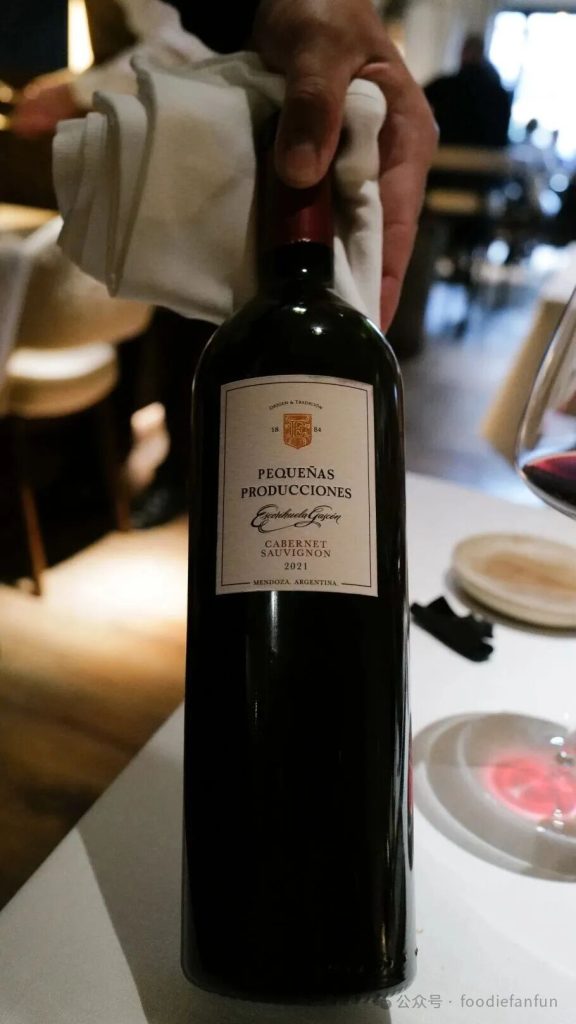
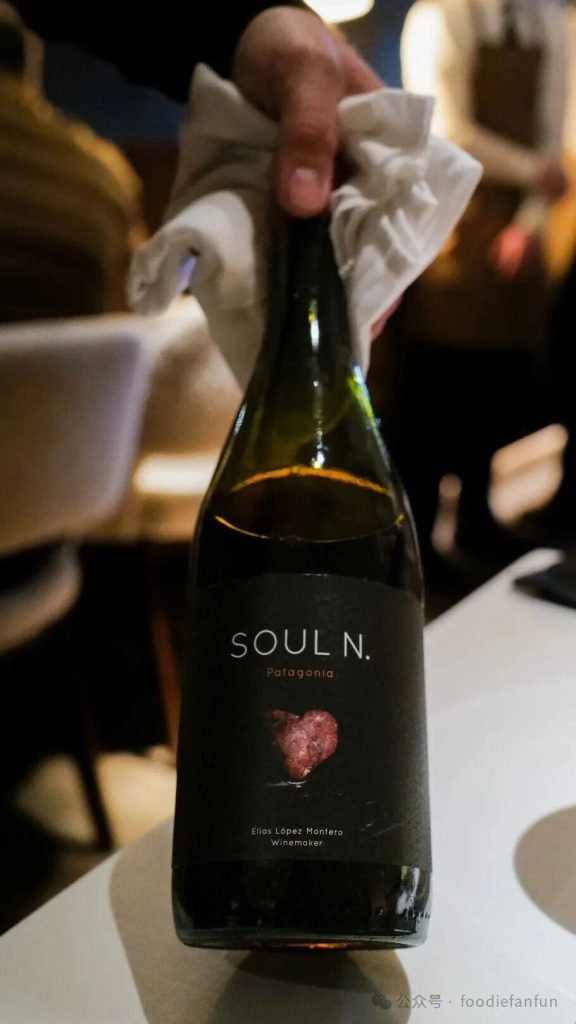
Worth noting: Lana’s wine list is genuinely interesting too, and in stark contrast to how broad its beef selection is — it’s the other extreme entirely. The cellar holds over a thousand labels, but every single one is from Argentina.
Just the by-the-glass options alone open up plenty of fun exploration, and they happen to match perfectly with the fatty, charred richness from the open flame and aging, giving you a solid anchor point above the intensity of the meat.
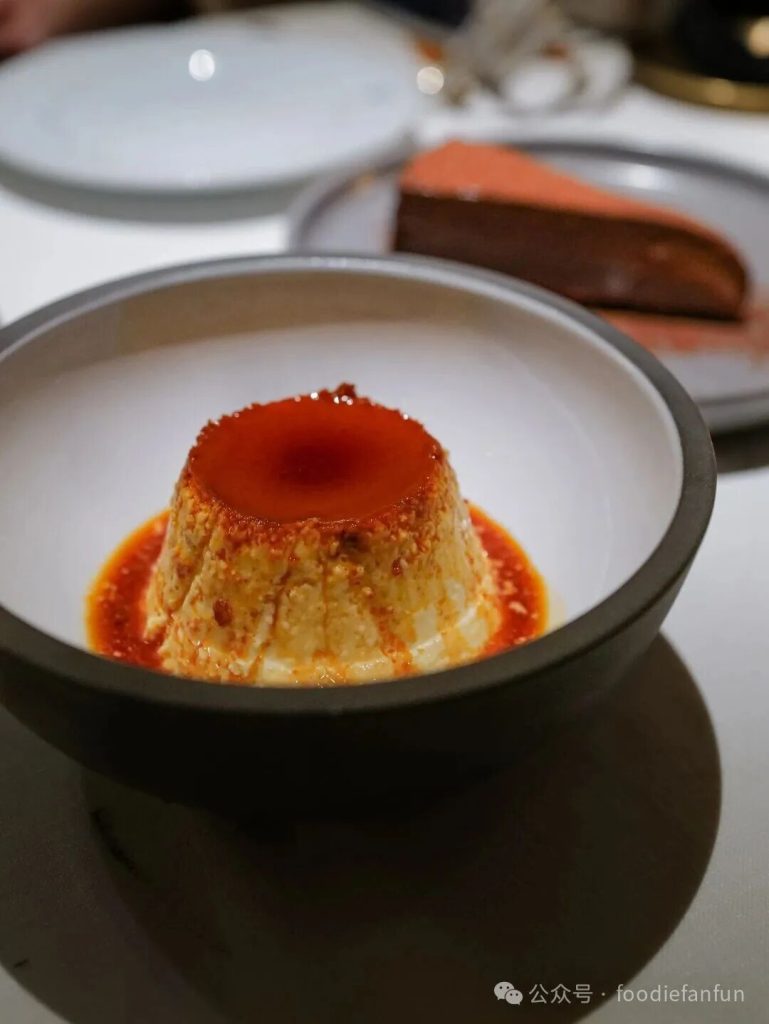
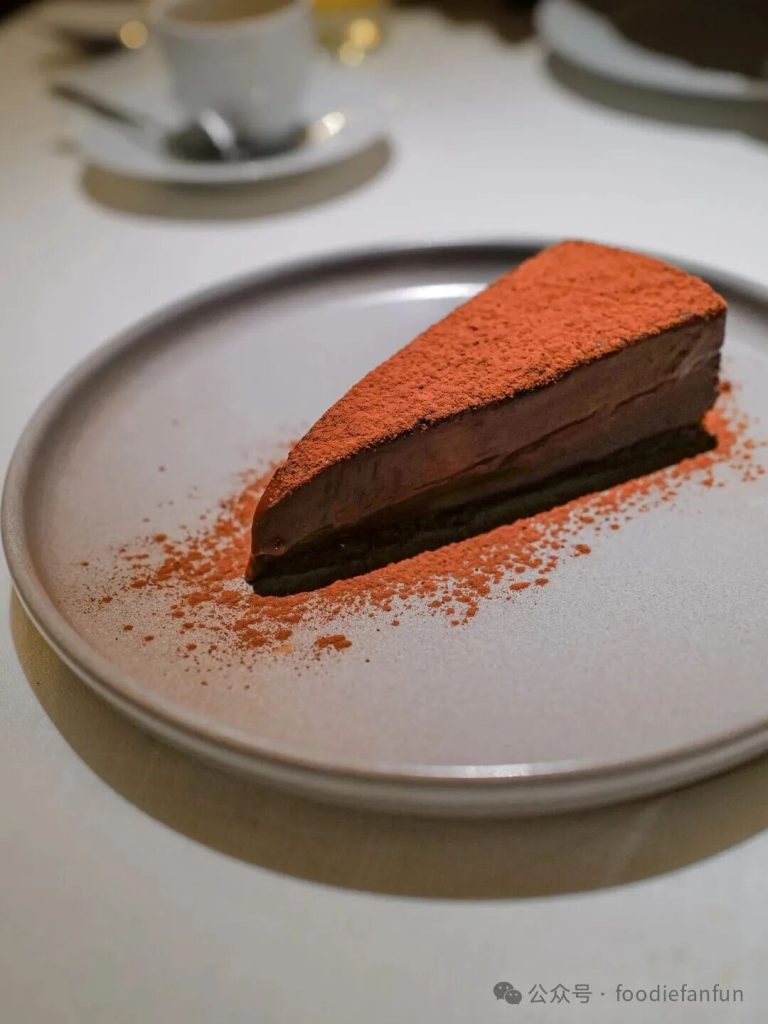
Dessert kept up that same rich-but-refined thread running through the whole meal.
The flan leaned into a cheesecake-like richness — silky with a good amount of stickiness, full dairy and egg aroma, already fragrant enough without needing more caramel sauce. The chocolate was more direct, a blend of three cocoas pushing the flavor to a high concentration, with an extremely silky texture and a deep aroma — sweet overall, but never cloying.
And so the meal came to a beautiful close.
Looking at the bill at the end: the 1.6kg steak came to €300, but aside from that, the rest of the dishes really weren’t priced high at all. If there were a steakhouse like this near home, one you could just walk into anytime for a cut of meat and a drink — how lucky would that be. 🥺
Restaurante Lana
Monday – Saturday
1:30 PM-3:30 PM
8:30 PM-10:30 PM
Home
Leave a Reply