I think most people share my reluctance to pay premium prices for Chinese food in Tokyo. But when Minami-Aoyama’s Sansan opened, curiosity got the better of me.
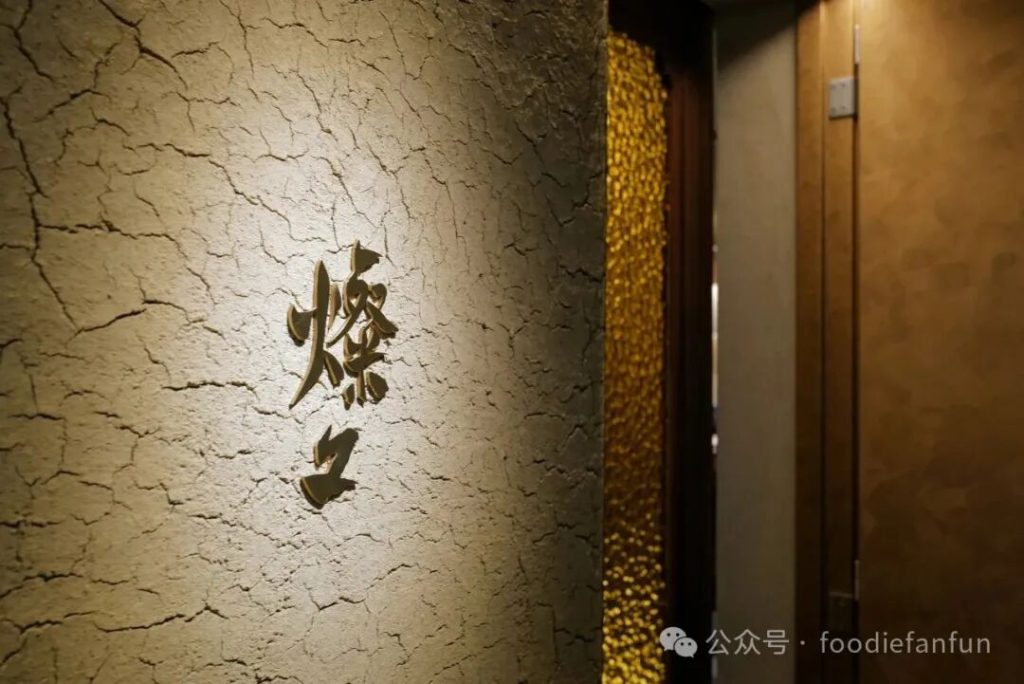
A new Tokyo outpost of Shanghai’s Toudao, plus a disciple of chef Tan Shiye — that’s already eye-catching enough. But what actually won me over was a young chef from Shaanxi who’s seriously digging into Cantonese cuisine.
(On chef Tan’s Longting tasting counter)
His menu has showy shark fin and red crab spring rolls, quick-fried seafood that tests real skill, and hand-pulled biángbiáng noodles made to order — it has blood and bone to it, and at some point it stirs up real respect for Chinese culinary craftsmen.
First impressions: this is a great spot to bring Japanese or other international friends, a counter that carries the true spirit of Chinese cooking.
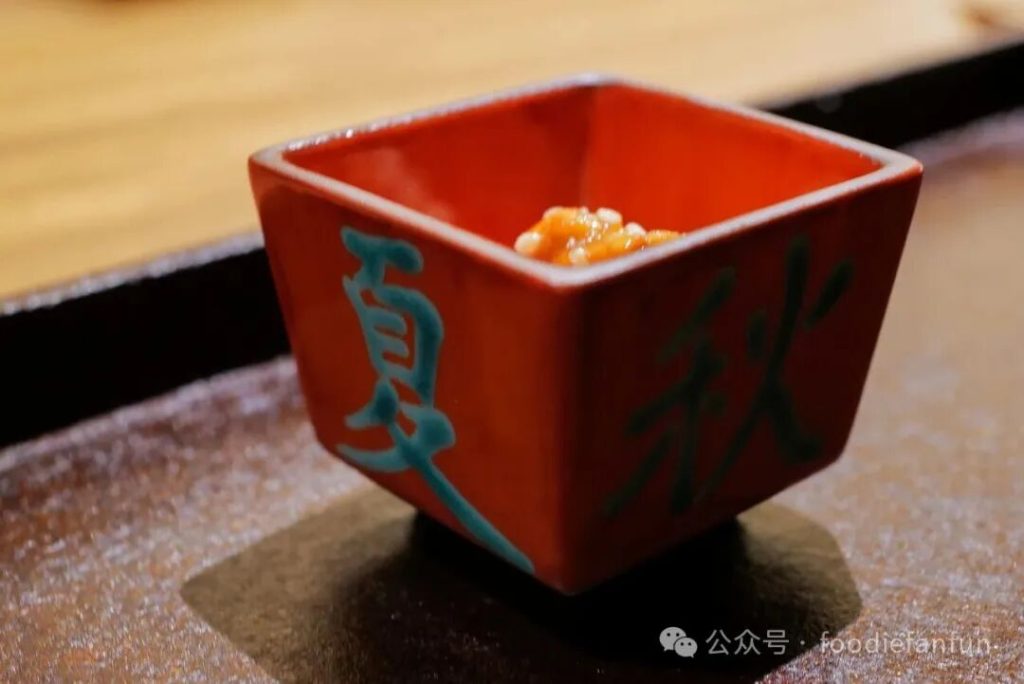
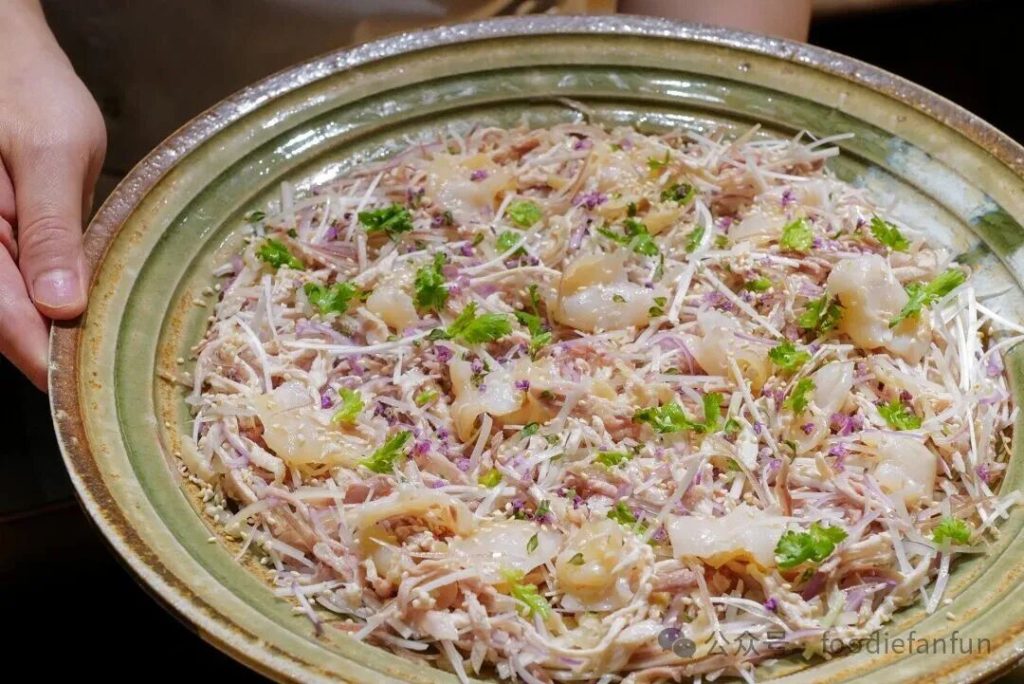
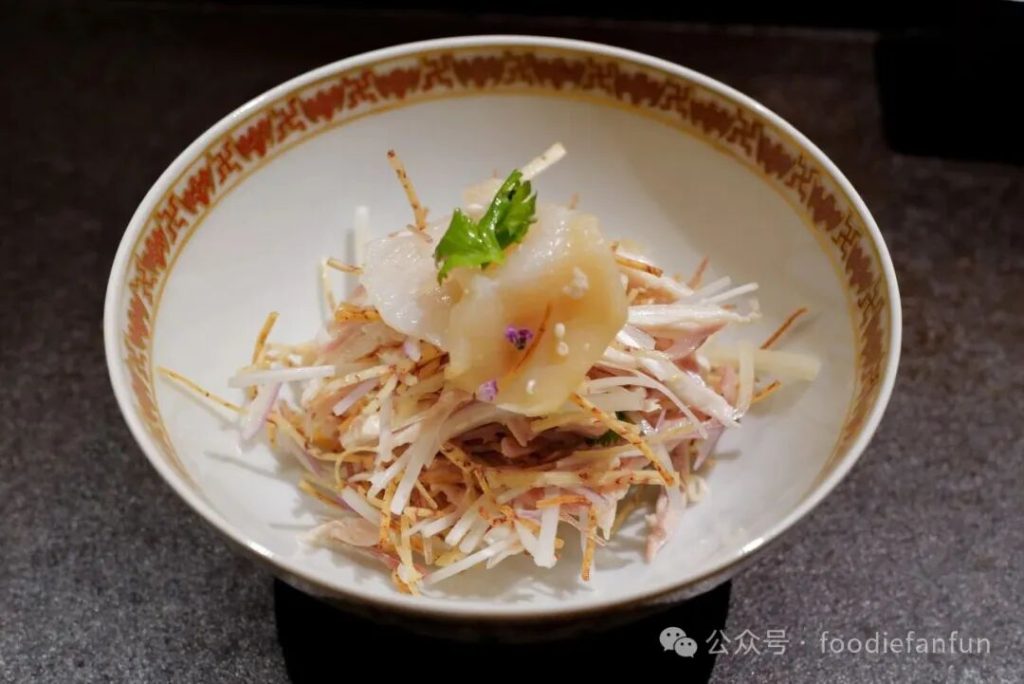
Hokkaido conch x Nagoya jidori chicken — a lively start
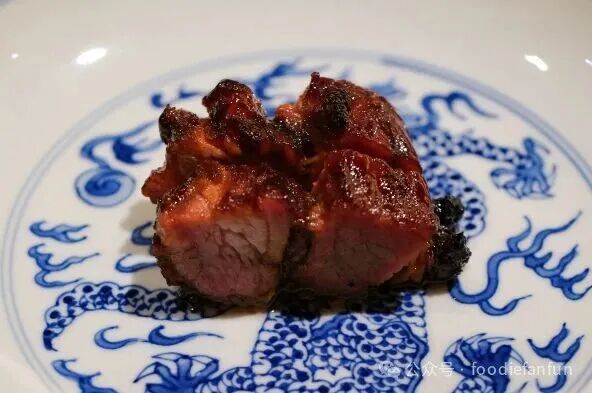
Char siu
I happened to catch Sansan’s first day on the new autumn menu — only one cold dish before moving straight into roasted meats.
A lively opener made with Hokkaido conch and Nagoya jidori chicken, topped with fried crispy taro strips and myoga. Solid but unremarkable — an opener that doesn’t leave a strong memory.
The char siu’s flavor has clearly been adjusted — the marinade is out, replaced with papaya and other fruits as the main source of flavor during curing. Notably sweet, closer to the Japanese palate people would expect. The thin translucent strip of fat tucked in the middle had a pleasant crispness.
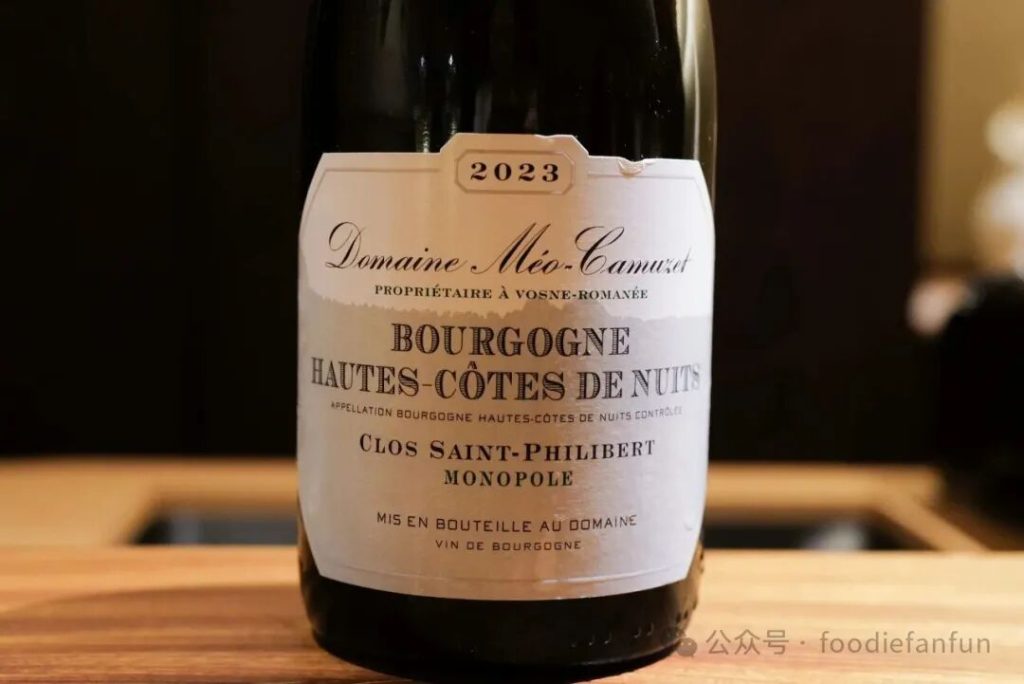
I wanted a drink with the meal, but Sansan’s wine list is still fairly simple, and there’s no one on the floor you can talk to for sommelier recommendations. In the end I picked a safe bet off the little wine card.
For wine lovers, next time it might be worth considering paying a corkage fee and bringing your own bottle.
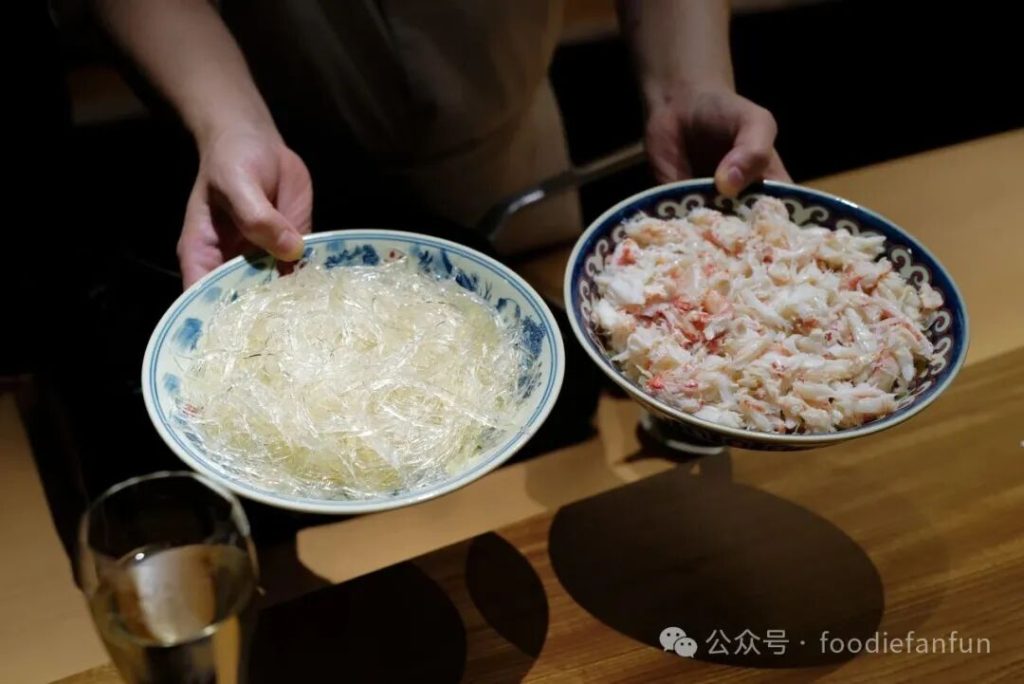
During the meal, chef Ahao showed everyone the ingredients needed for that day’s dishes — two large red crabs and shark fin, minced fresh on the spot in preparation for the fried spring rolls.
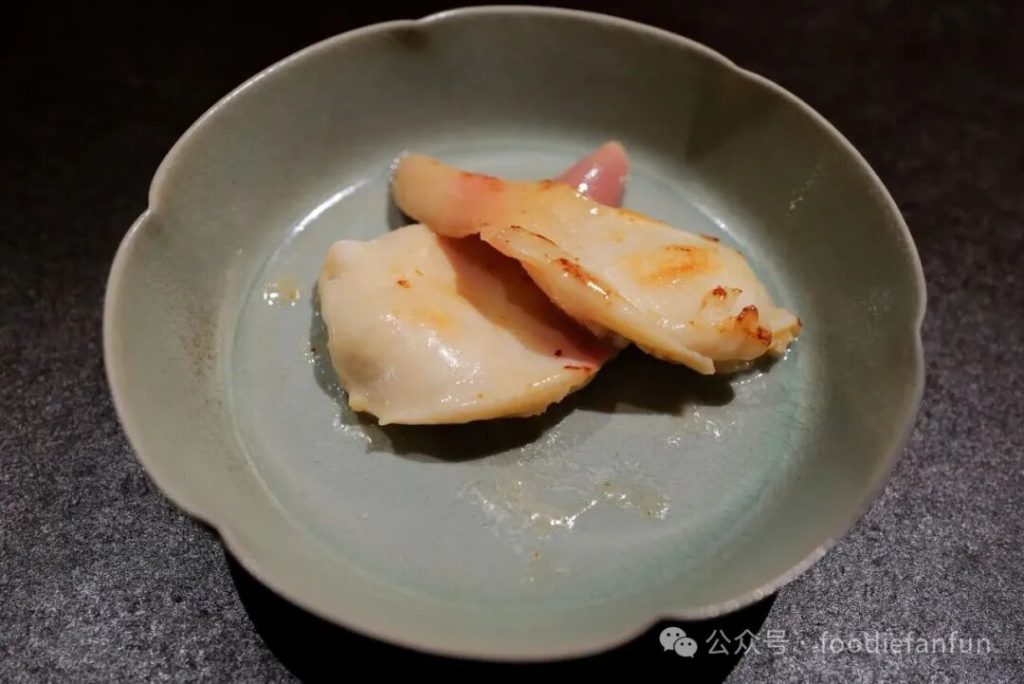
Quick-fried hokkyokugai clam
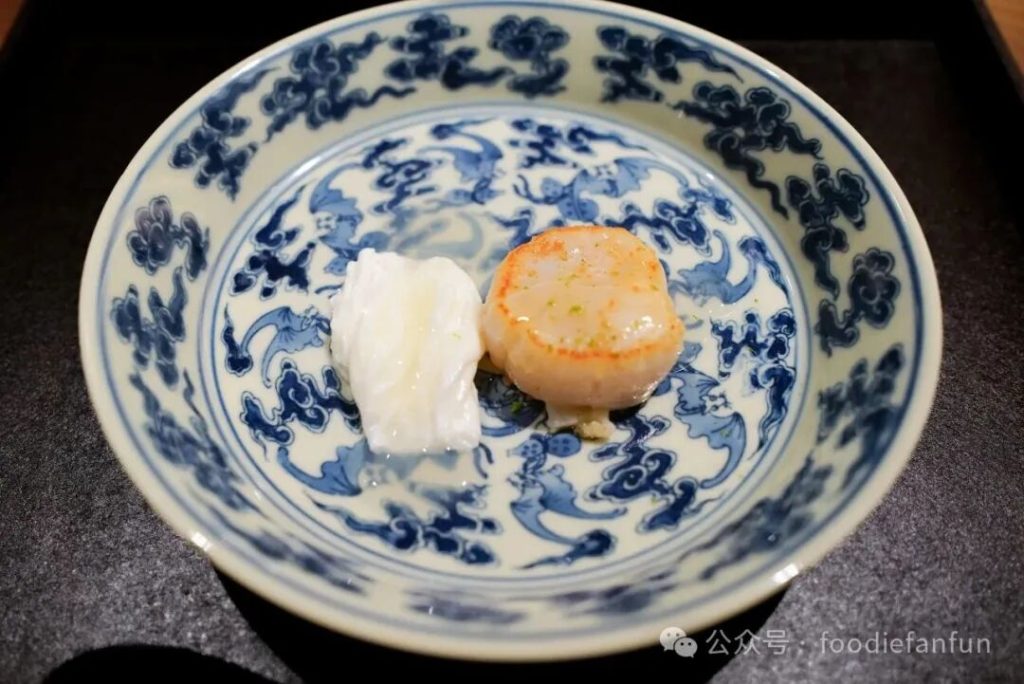
Scallop in oyster sauce
The eight-second quick-fry — at chef Tan’s Longting counter it’s geoduck, but at Sansan it’s been swapped for Japanese hokkyokugai (Arctic surf clam).
The plated-per-person format strips away a bit of wok hei, but surprisingly, Japanese ingredients turn out to have their own edge under Chinese cooking techniques. Coated in oil, the clam showed off a juicy crispness, sweetness, and umami.
The scallop that followed held its own just as well — I remember chef Tan’s version being deep-fried with oyster sauce, while under Ahao’s hand the technique shifted to pan-searing, paired with the classic Shunde egg-white scrambled milk.
A crisp, sweet bite meeting soft, milky richness — a perfect example of Japanese local ingredients meeting Cantonese-style bites.
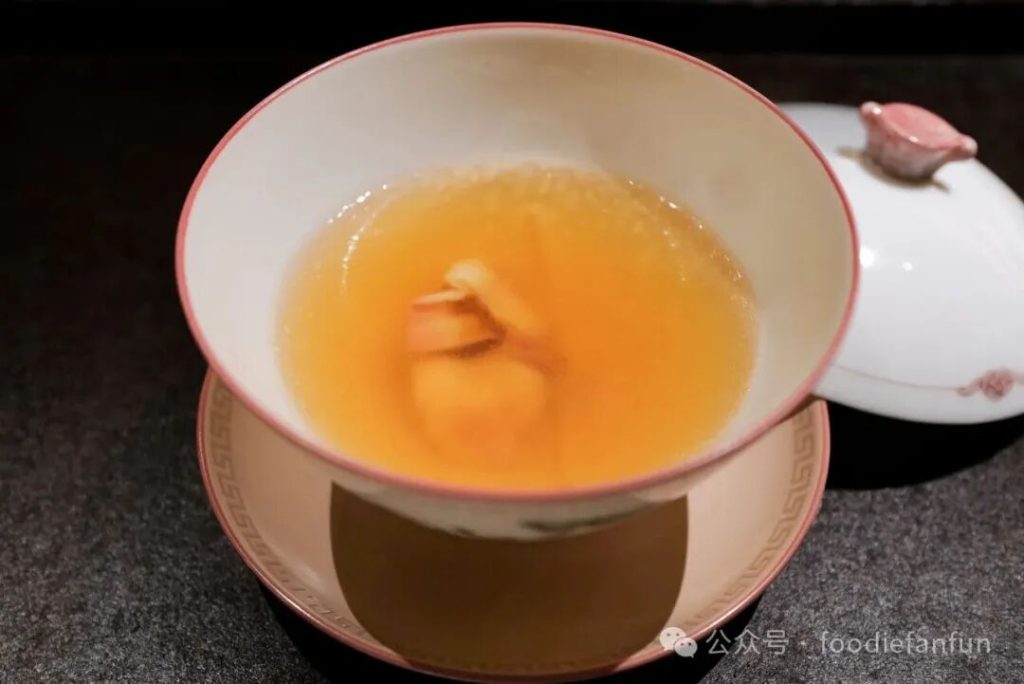
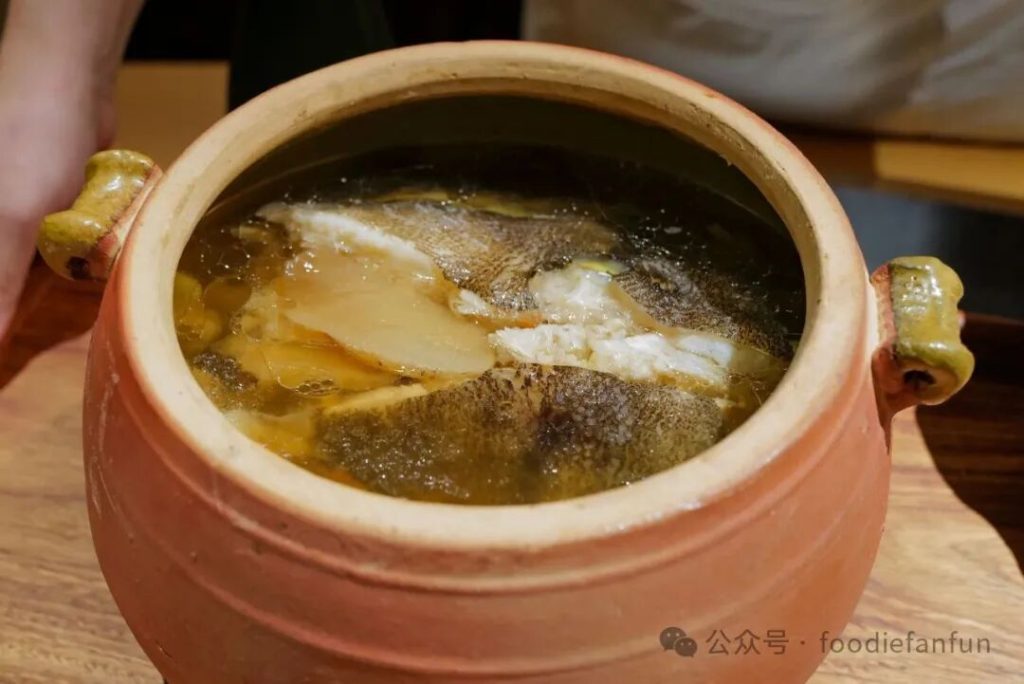
Gastrodia and giant grouper soup
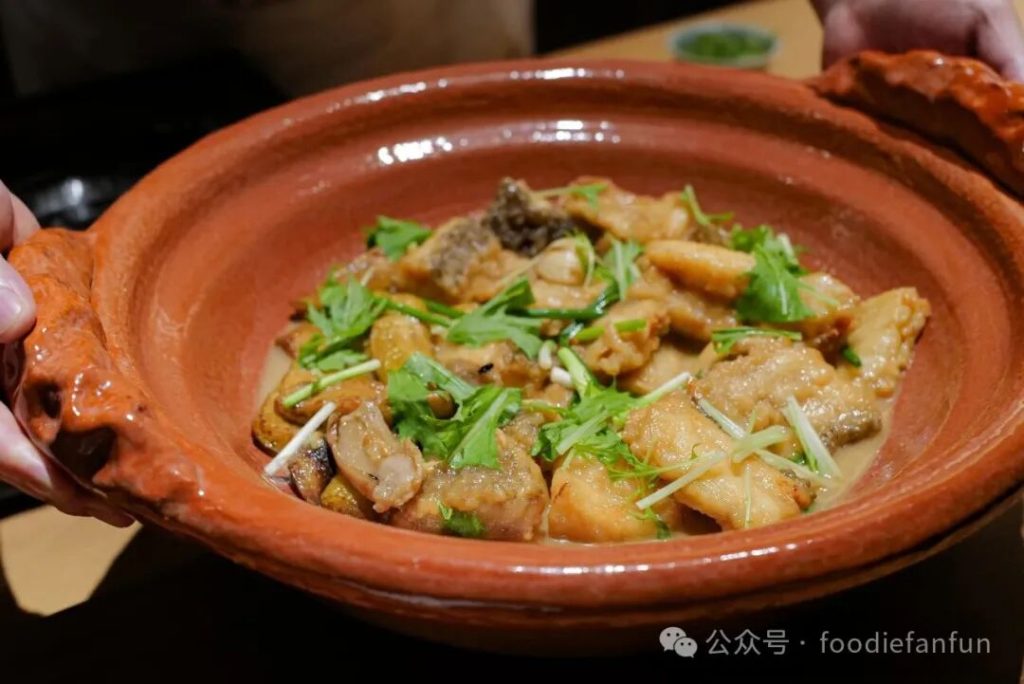
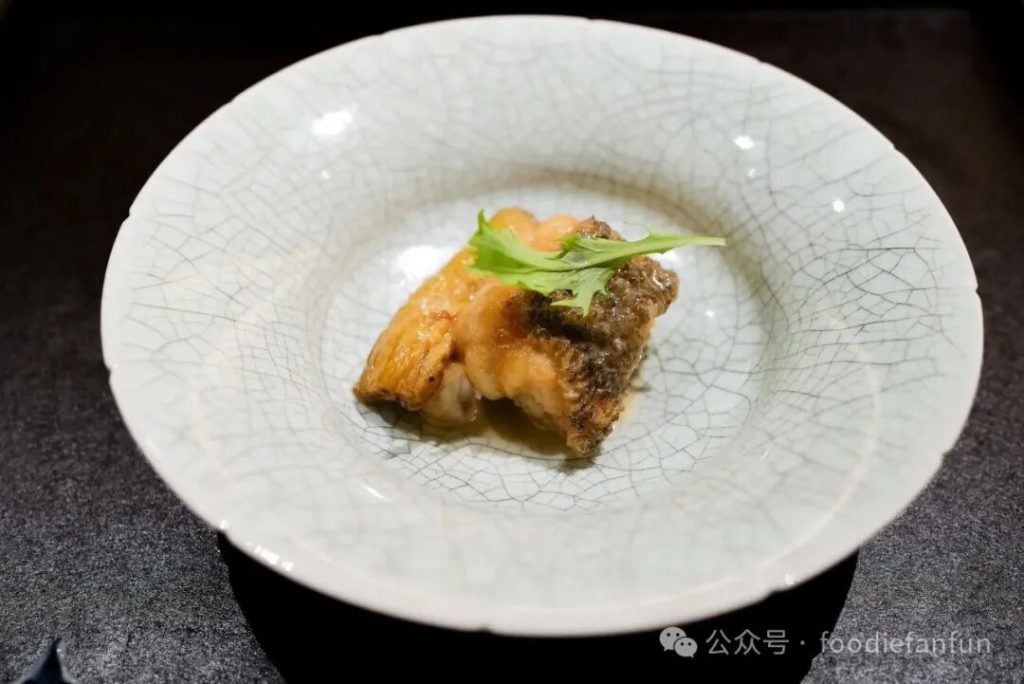
Giant grouper with mizuna
A 16-jin (about 8kg) giant grouper, split into two parts.
The head went into a gastrodia (tianma) and grouper soup — most of the aroma hit the moment the lid came off, but the taste itself lacked the depth you’d hope for in a Cantonese-style soup.
The body was lightly pan-fried, glazed, and paired with mizuna — the fish was plump and tender, carried a fragrance from the light frying, and the skin had a faint gelatinous texture, balanced by a crisp stalk of mizuna. A genuinely good dish, where quality ingredients met precise cooking.
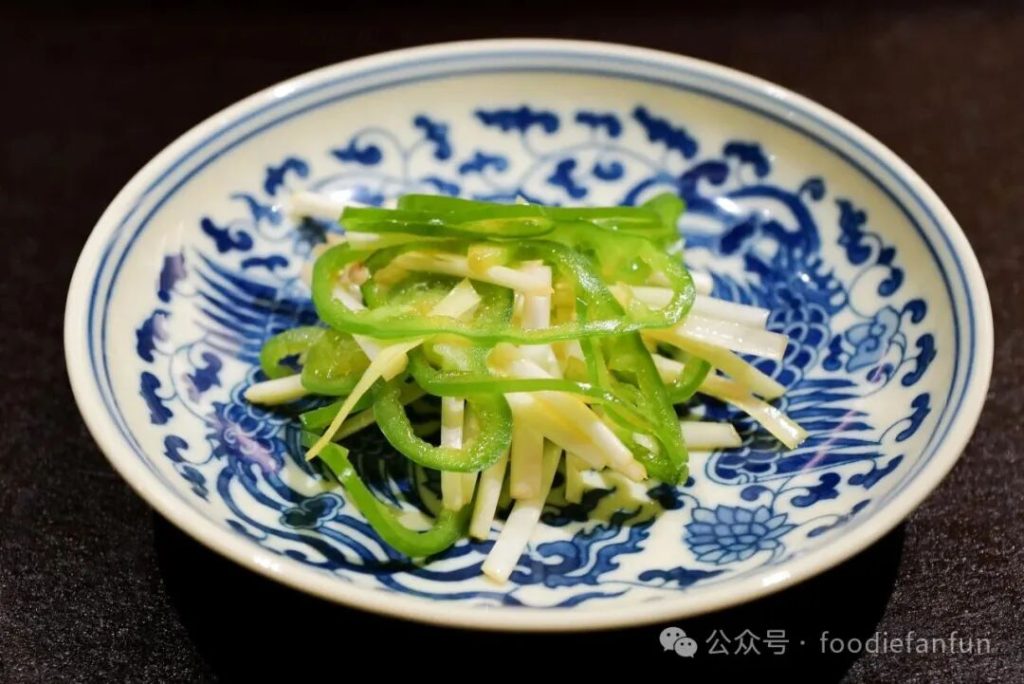
Steamed chives and green pepper
I never expected to be shocked by a vegetable dish tucked in among all the showy ingredients.
Green pepper, chives, peanut oil, plus a touch of the restaurant’s own soy sauce.
The green pepper brought a fresh, green vegetal note and a juicy crunch, the chives carried a distinctive, individual aroma, and peanut oil with soy sauce rounded out the flavor from every angle. Amid all the rich meat and seafood, this plate of crisp greens practically bounced onto the table with its own energy.
Clean, fresh, crisp — and every bit as fragrant as anything else on the table.
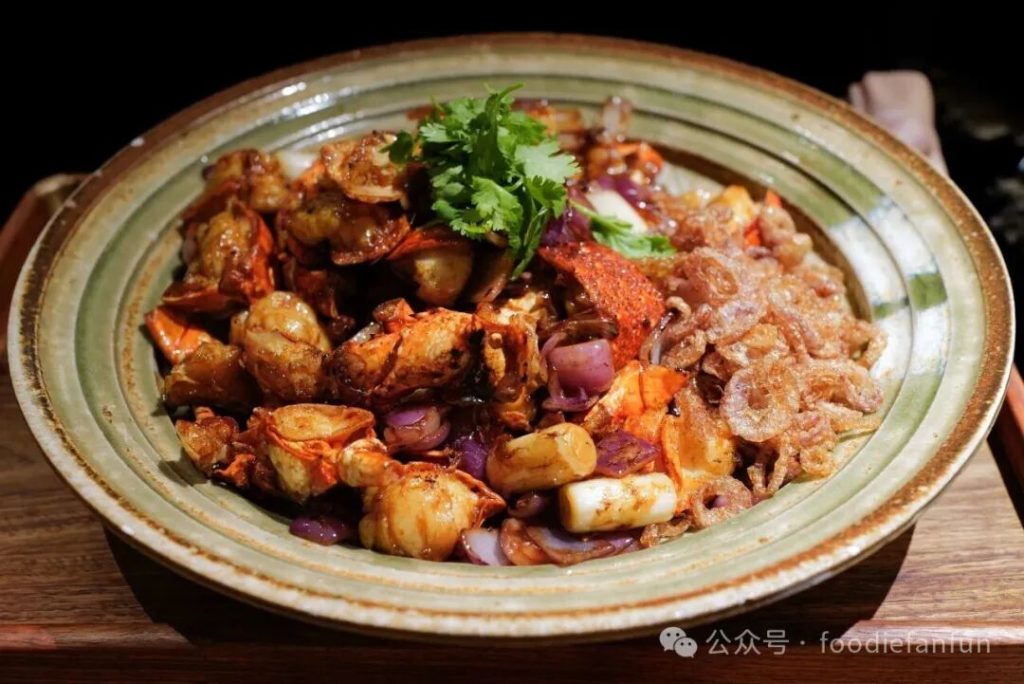
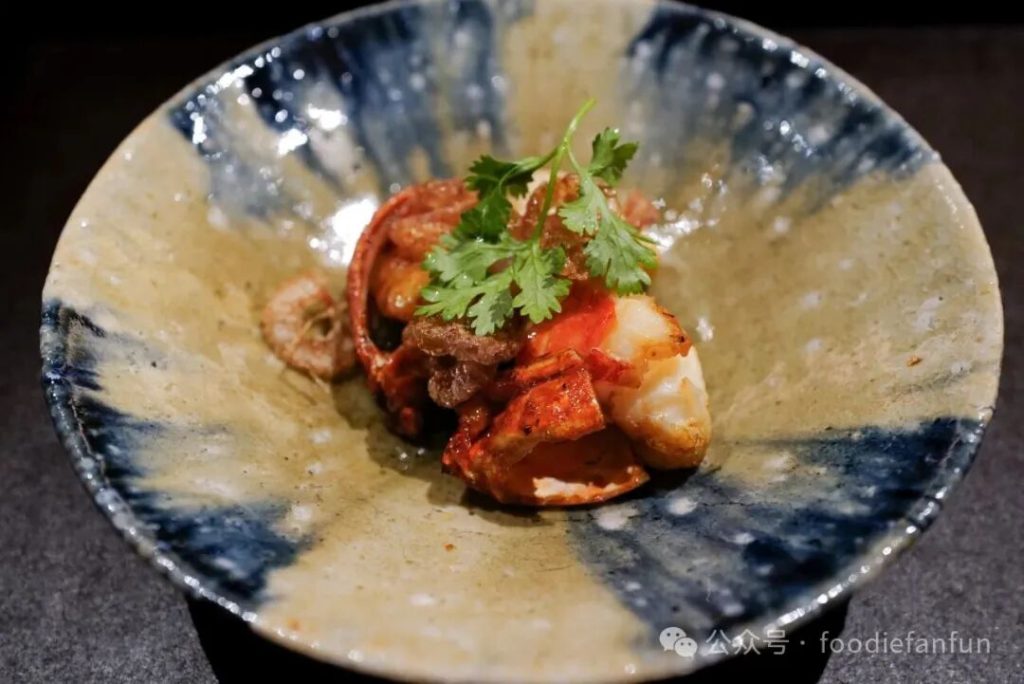
Ise lobster stir-fried with sansho and onion
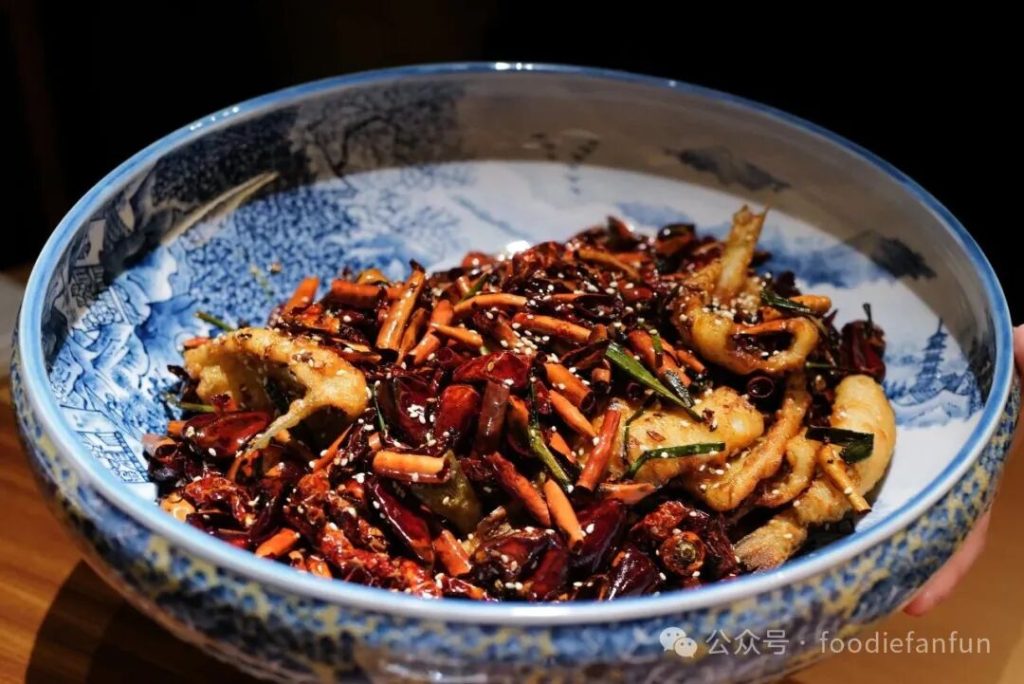
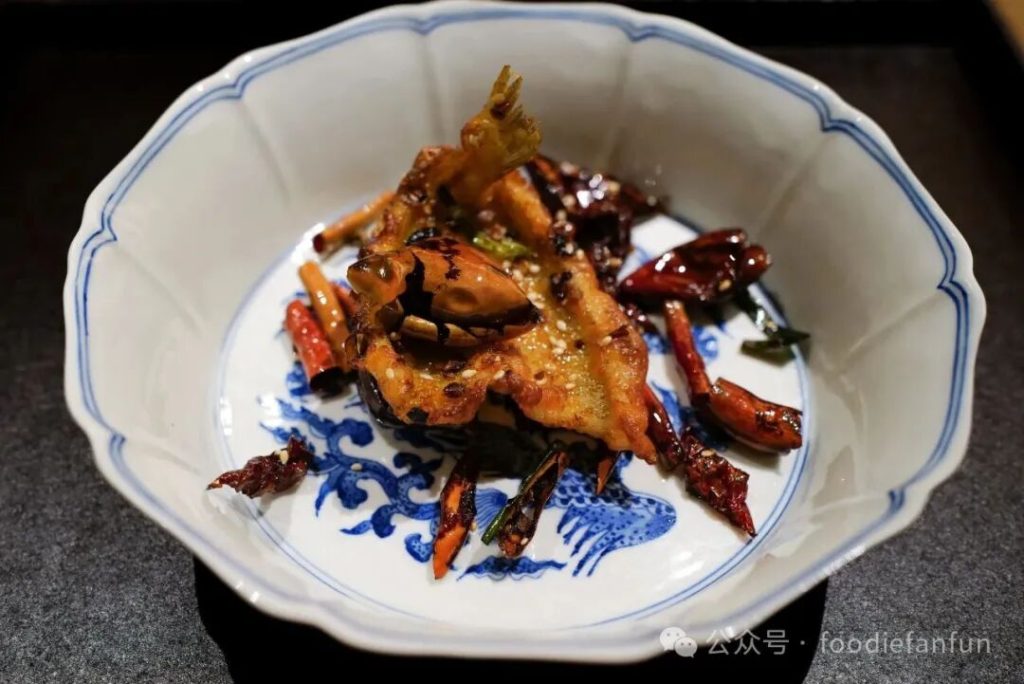
Stir-fried kisu (Japanese whiting) with chili
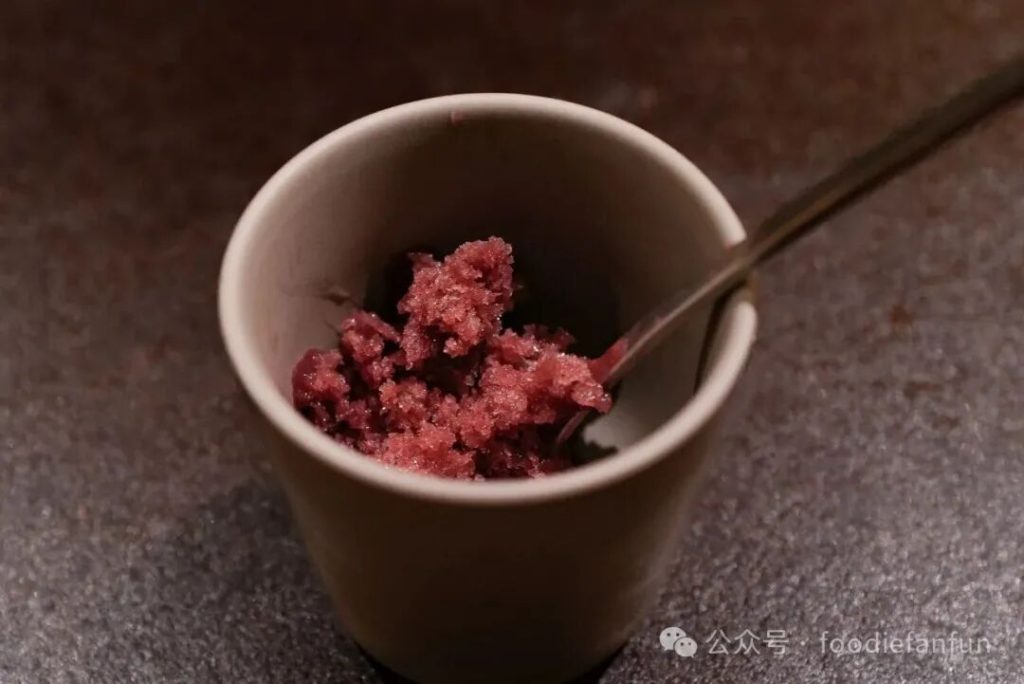
Grape granita
When pushed onto the international stage, Sichuan and Cantonese cuisine always seem to get bundled together like two poles of a magnet, showing off the range of Chinese flavor profiles. In this menu at Sansan, you also see Japanese ingredients expressing themselves somewhere in between, crossing cuisines.
The sansho-and-onion Ise lobster and chili-fried kisu hit you with aroma the moment they land on the counter. But the flavors didn’t quite align — under the plated-per-person format, the temperature and taste of the counter dishes by the time they reached the mouth fell a bit short of expectations.
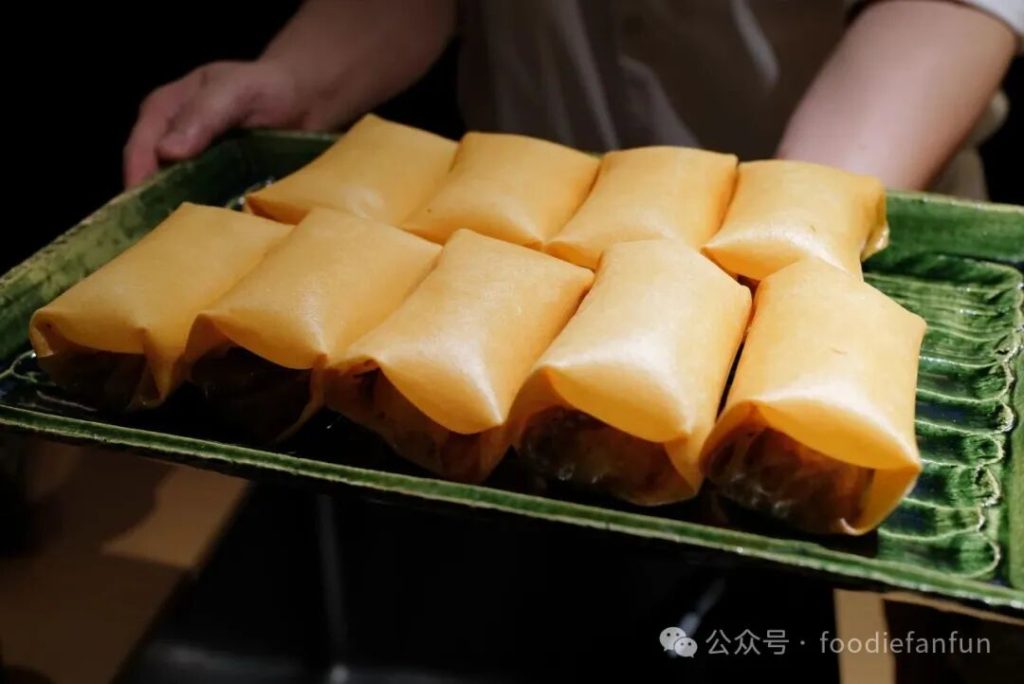
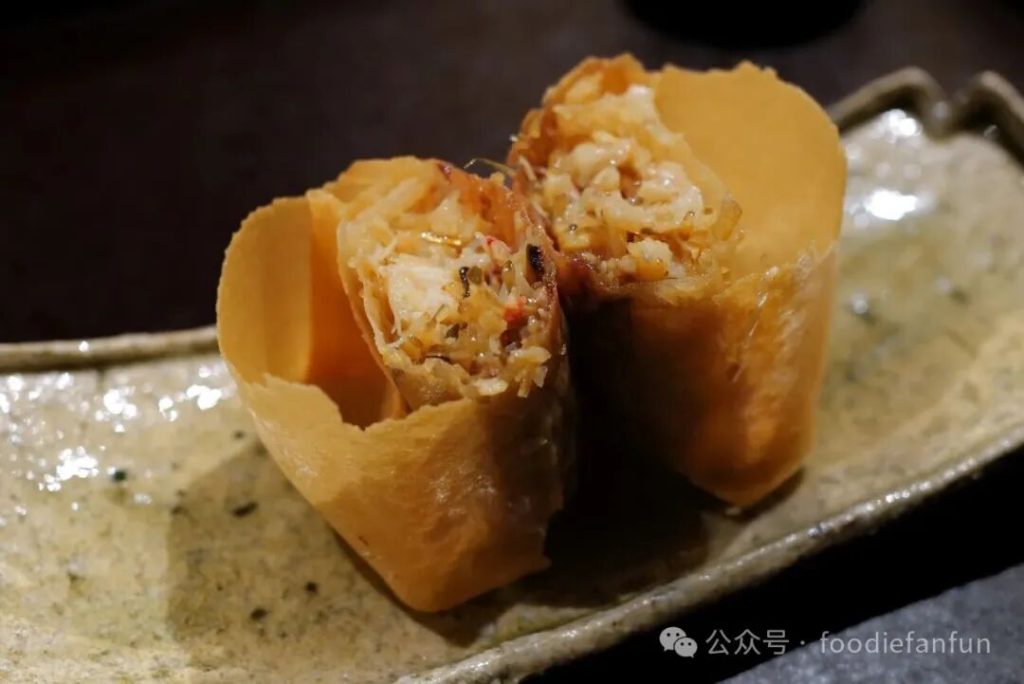
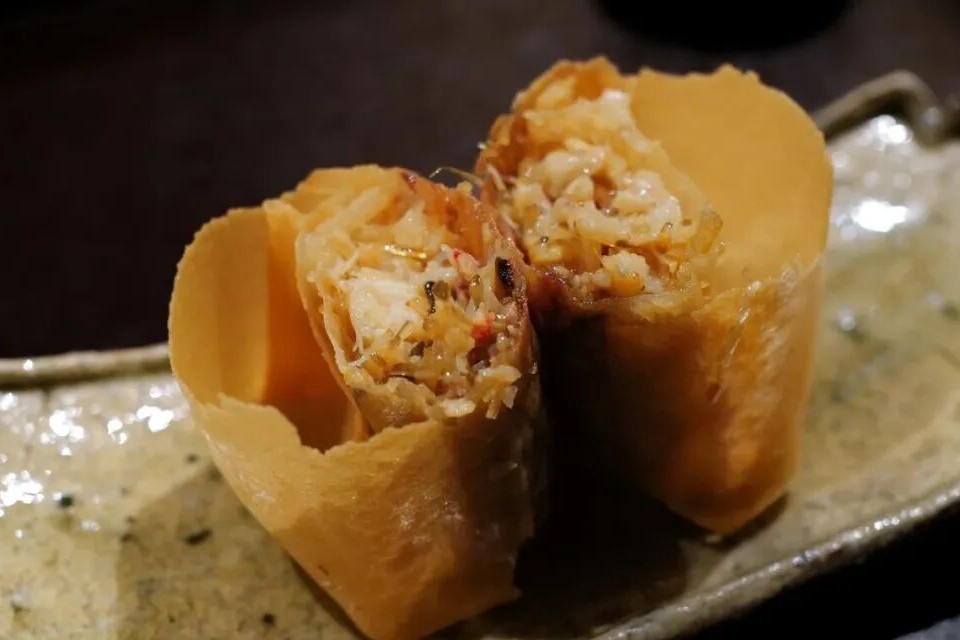
Shark fin and red crab spring rolls
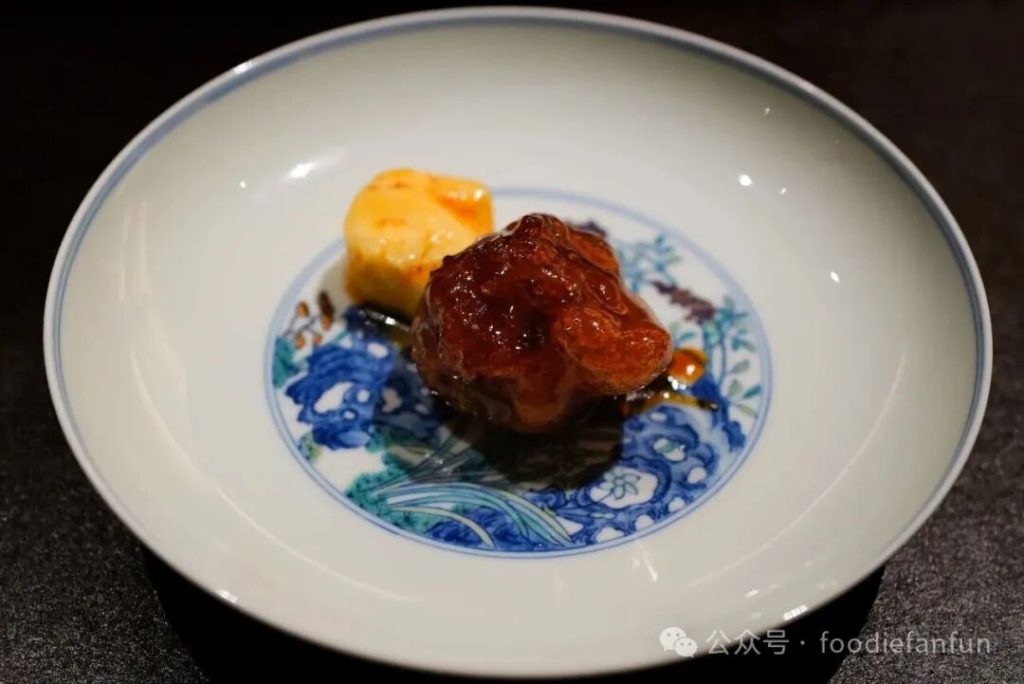
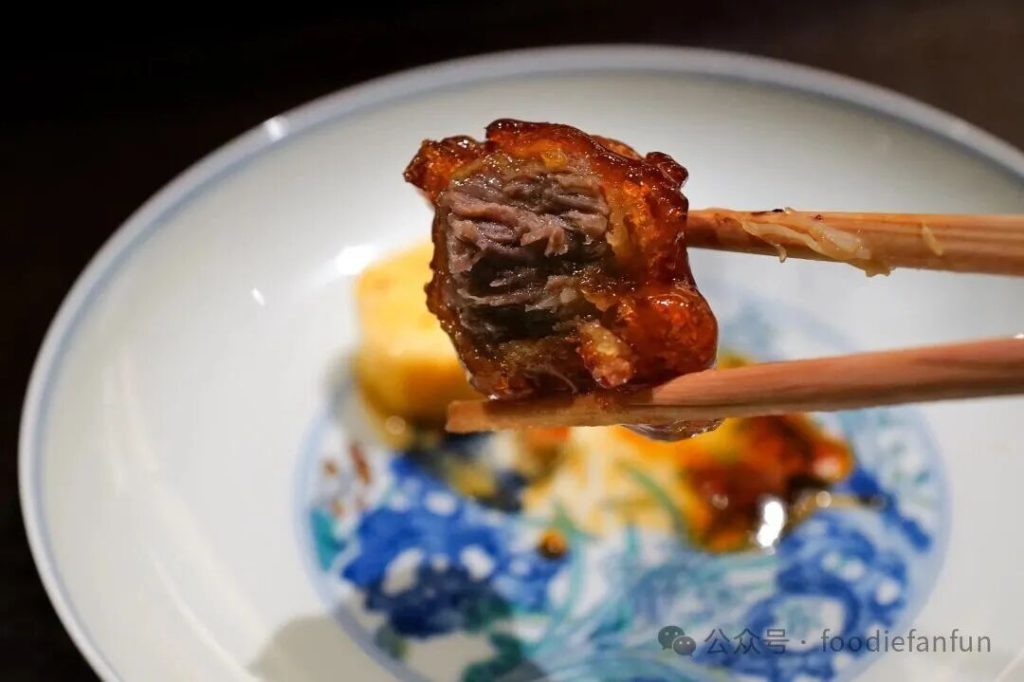
Wagyu sweet and sour pork
As the meal moved into its second half, the freshly assembled spring rolls finally arrived at the table.
Like little golden pillows — cut open, they’re packed full of filling. Crisp outside, tender inside, the straightforward satisfaction of a great spring roll. Watching a dish that tests real technique get made and plated live in front of you always earns a little extra anticipation and appreciation.
But the wagyu sweet and sour pork made by Mayu stumbled a bit — it’s fragrant on the first bite, but by the second or third the fat rendering out of the beef becomes overwhelming. Layering that much high-fat meat with a rich sweet-and-sour sauce felt too saturated for a counter setting, missing a bit of nuance.
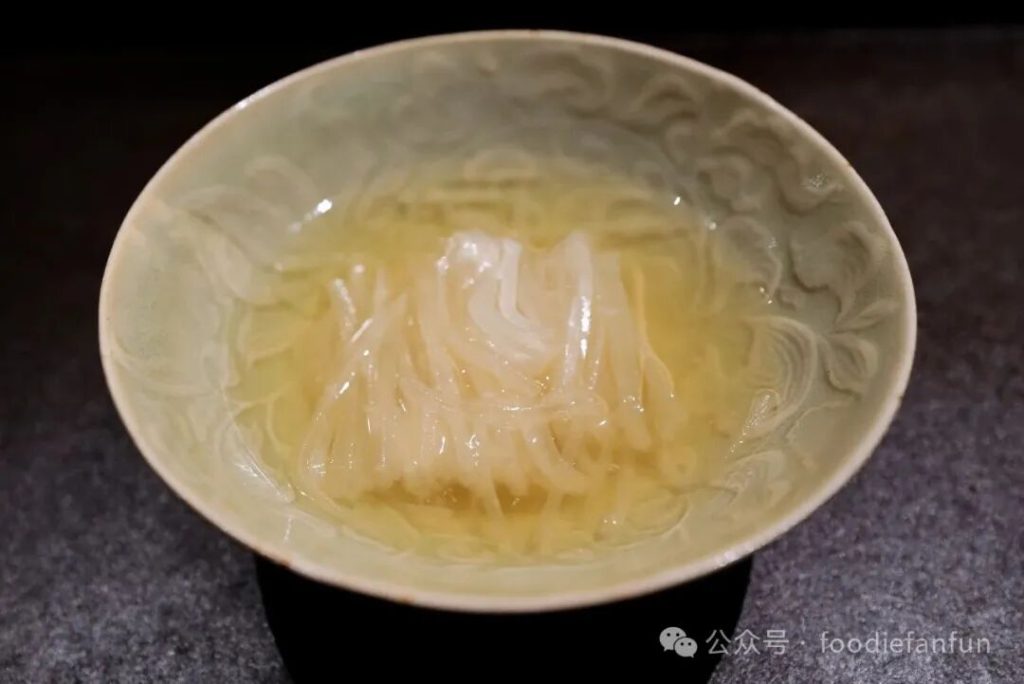
Seafood and daikon soup
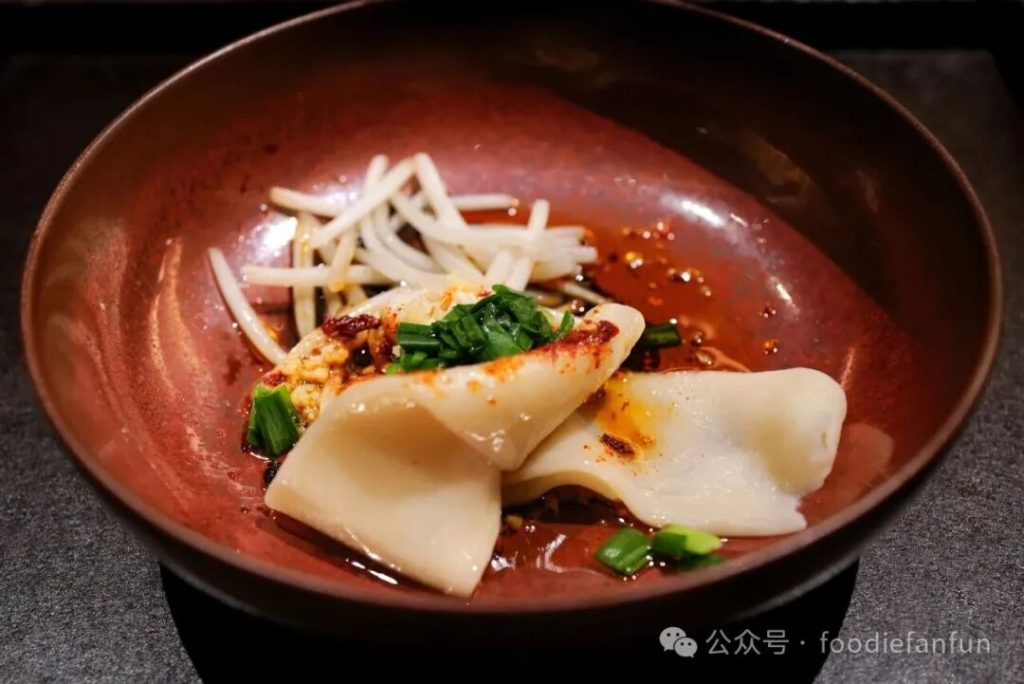
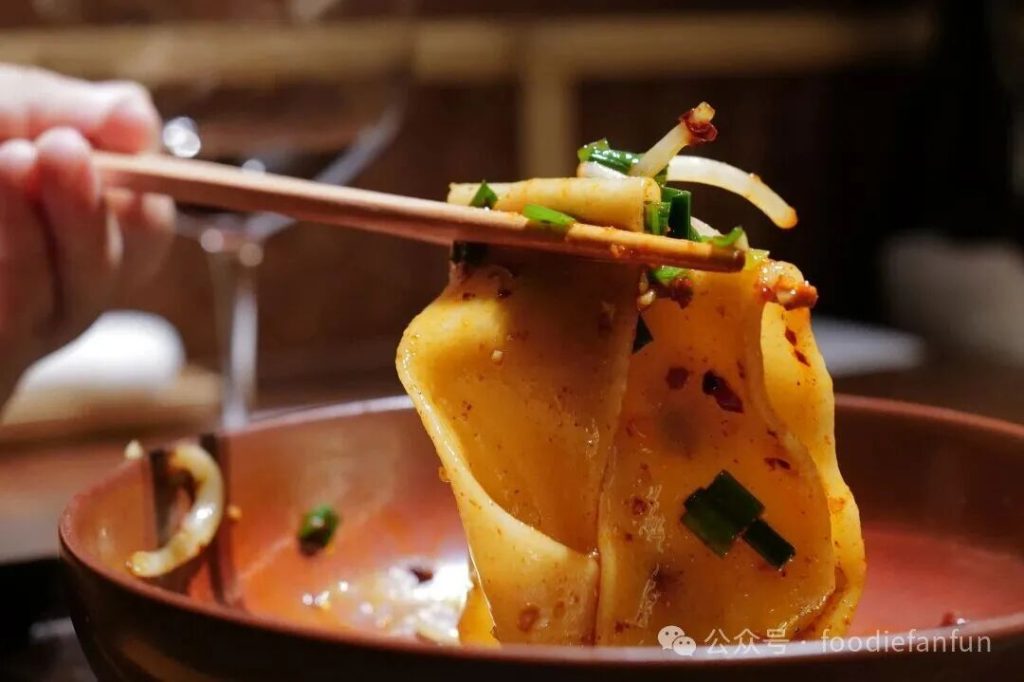
Biángbiáng noodles
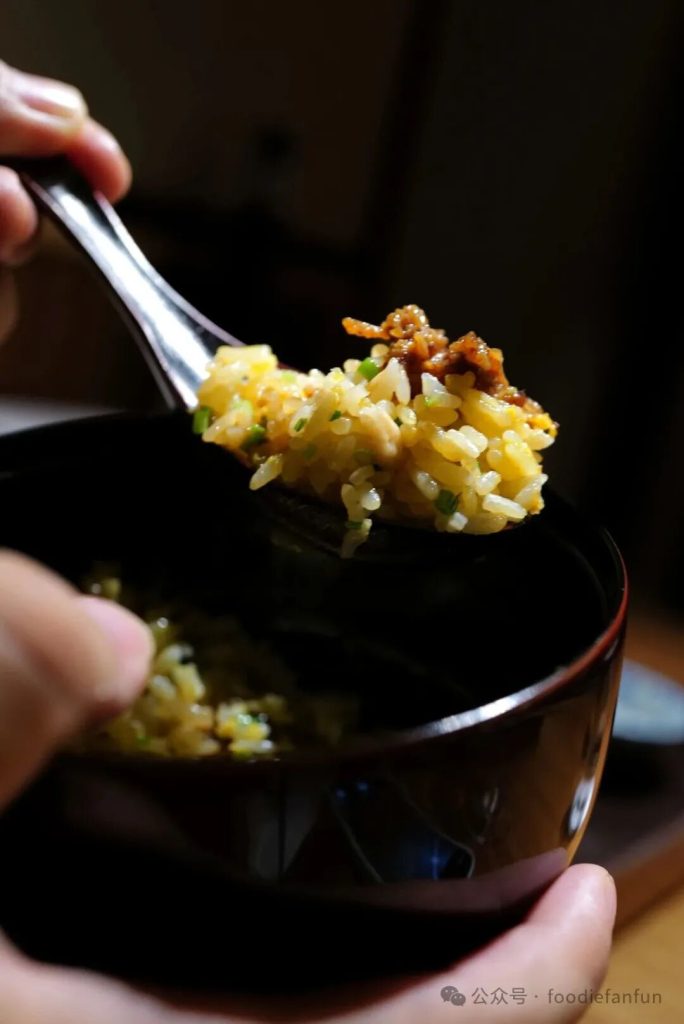
Olive-kernel fried rice with egg
Even though chef Ahao trained as chef Tan’s disciple with a Cantonese background, this menu doesn’t stick strictly to Cantonese cuisine throughout.
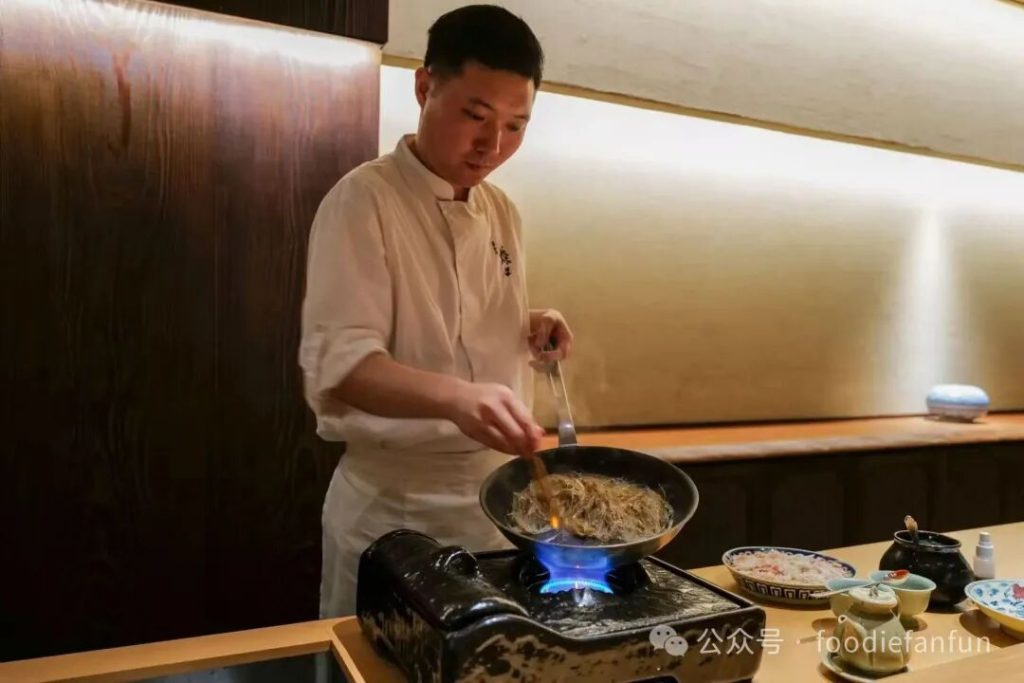
For the starch course, freshly proofed noodles were set out at the counter.
Hands moving, noodles slapping down on the board with a sharp crack, clean, fast, full of energy — like a rhythmic sparring match. It brought a real sense of Shaanxi street life to this counter.
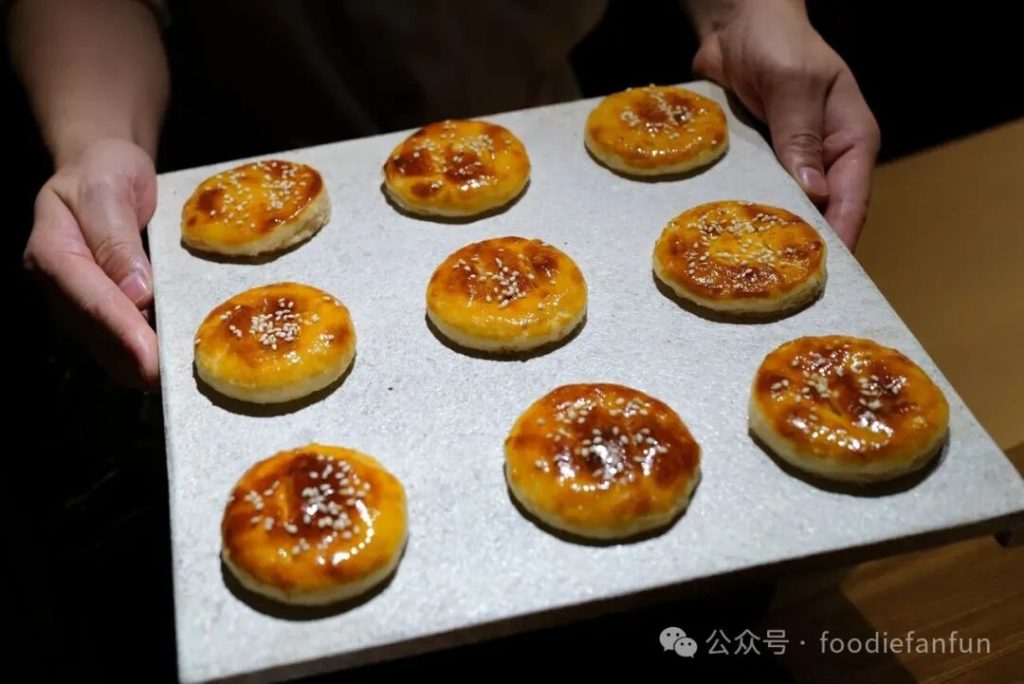
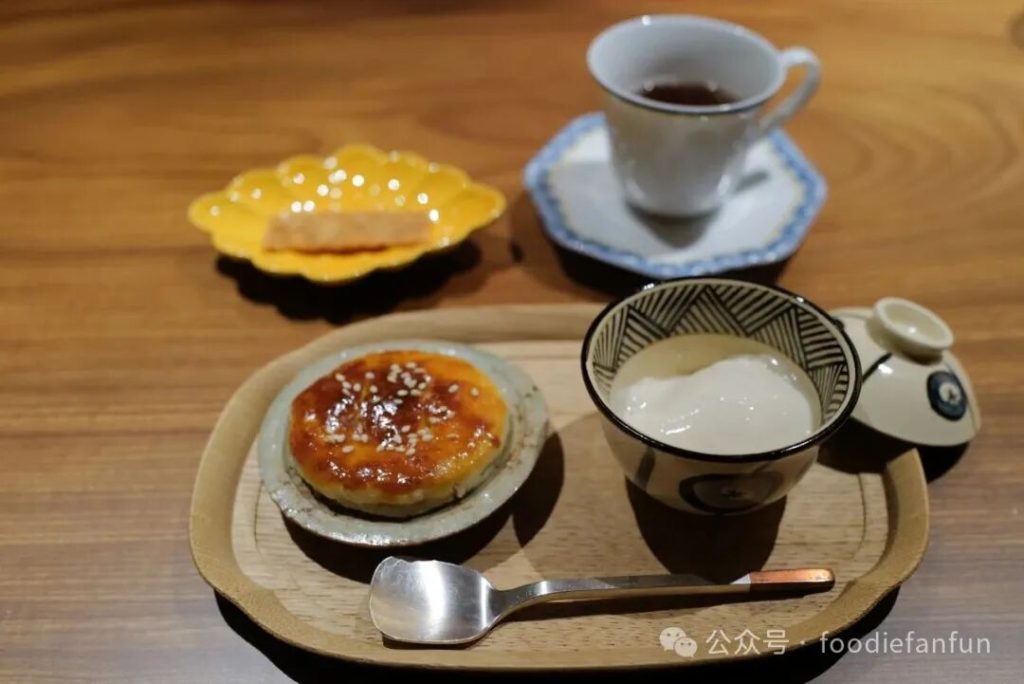
Grandma cake and iced tofu pudding
As a restaurant that’s just opened, it might not yet match the impact of the Longting tasting counter, but you can already feel the focus and seriousness of a genuine Chinese chef at this counter.
The fusion of Japanese ingredients and Chinese technique brings out the strengths of both, and the kind of hands-on, feel-and-timing craftsmanship usually hidden in the kitchen gets brought right in front of the guests, making the skill itself part of the experience.
By the end of the meal, you’ll easily find yourself putting this on your “Top 1 Chinese restaurant to bring Japanese friends to next time” list. It’s a moment of a Chinese chef standing at a counter in Tokyo, showing the world the appeal of Chinese cuisine.
That said, choosing the counter format means the restaurant is committing to deliver a complete dining experience for guests, not just a table of dishes. Right now, some hot dishes fall short on temperature, the wine list is limited, and the interaction at the counter doesn’t feel fully realized. Compared to Tokyo’s more established restaurants, these shortcomings stand out more within the overall experience.
Looking forward to watching it climb, step by step, toward the peak of “Tokyo counter-style dining.”
Minami-Aoyama Sansan
Honma Building 4F, 7-14-6 Minami-Aoyama, Minato City, Tokyo
Monday – Sunday 6:00 PM
Chef’s Menu 30,000 JPY ++
Leave a Reply