

On any Kyoto itinerary, Arashiyama is an unmissable stop. Mountains, water, gardens—everything you want in one place. And when autumn arrives and the maple leaves turn red, countless visitors come specifically for that scenery.
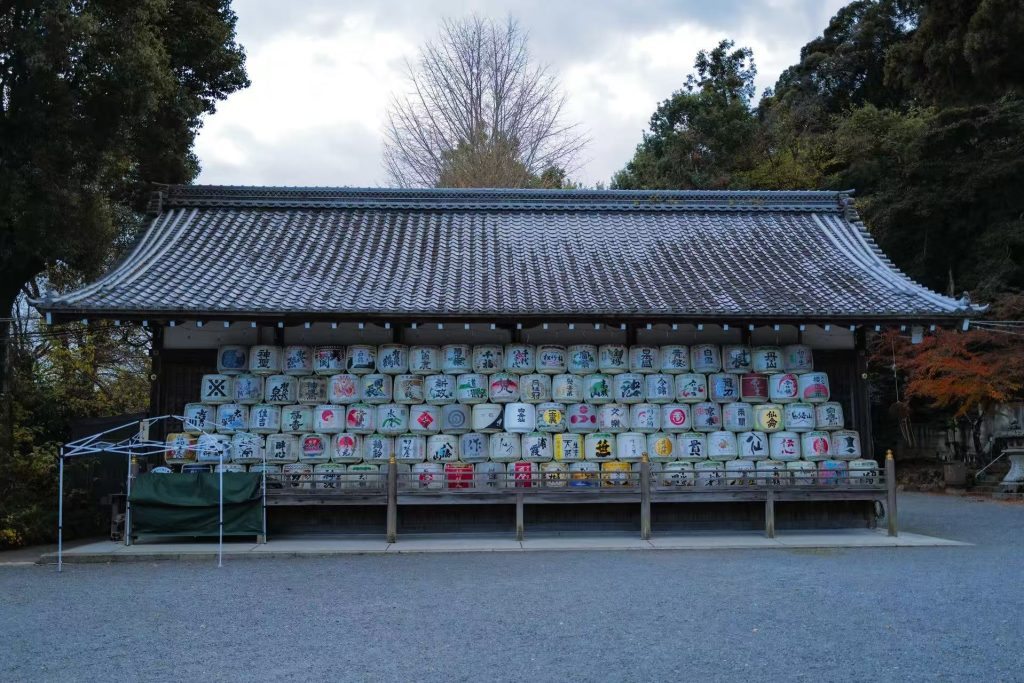
Nearby stands Matsuo Taisha, founded in 701 and now with over 1,300 years of history. The shrine is home to Kame-no-i Sacred Spring, and a distinctive tradition of faith has grown around water and brewing. It is one of the most revered shrines for sake breweries across Japan, long honored as an important place of worship.
Nearby stands Matsuo Taisha, founded in 701 and now with over 1,300 years of history. The shrine is home to Kame-no-i Sacred Spring, and a distinctive tradition of faith has grown around water and brewing. It is one of the most revered shrines for sake breweries across Japan, long honored as an important place of worship.
If some of Kyoto’s ancient shrines feel defined by a grand sense of history, Matsuo Taisha feels more like a venerable name shrine that has grown alongside sake—breathing with it, and woven quietly into the city’s veins.
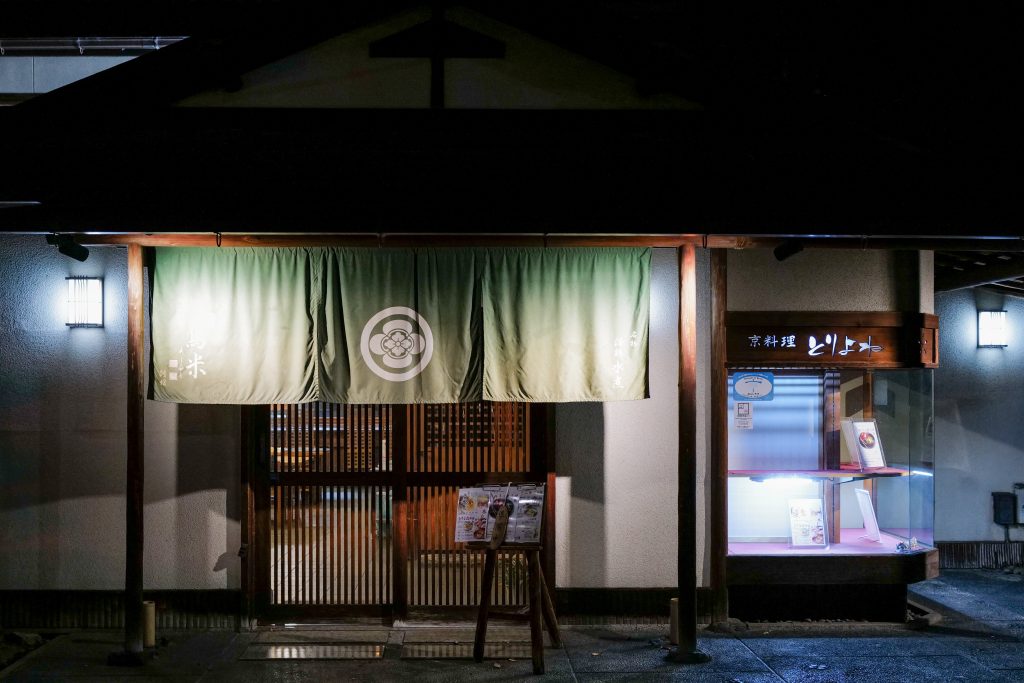
Toriyone sits right at the gate of Matsuo Taisha. Founded in 1888, it has been passed down to the sixth generation as a Kyoto kaiseki restaurant.
It almost feels like opening a restaurant on blessed ground at the foot of a sacred mountain.
In its earliest days, the restaurant was essentially a chicken hot pot spot where brewery owners would rest after visiting the shrine. The focus was direct, hearty chicken cooking—the kind that fills you up and makes you happy. Over time, the restaurant gradually evolved. Under the sixth-generation owner Yoshinori Tanaka, it officially became a Kyoto-style kaiseki built around chicken.
In other words, a classic storyline of a long-established Kyoto house modernizing with the times.
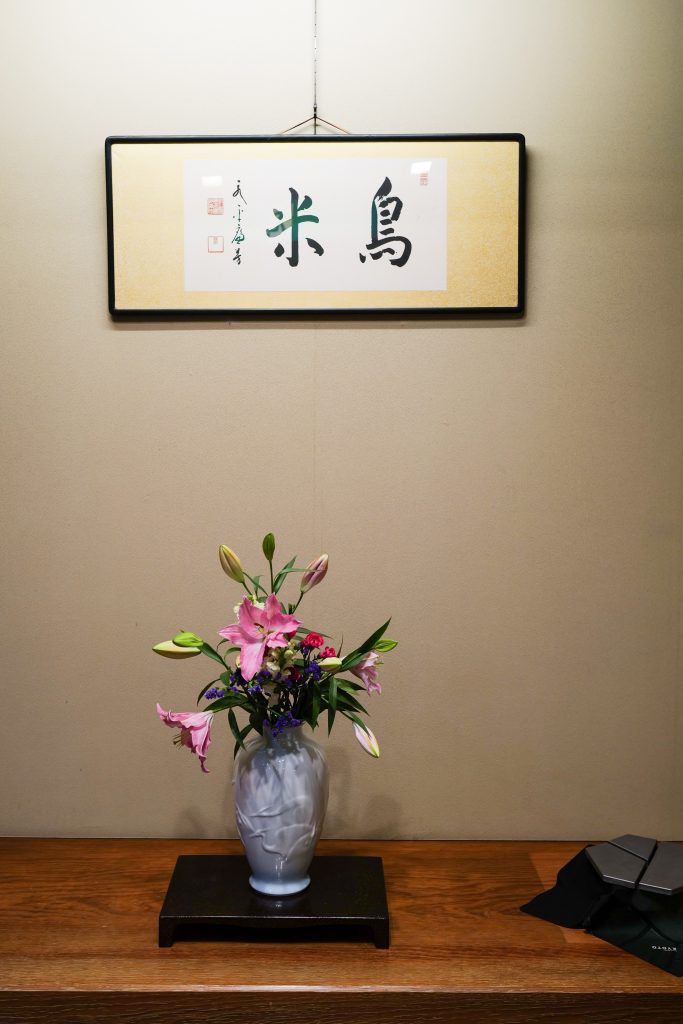
Tanaka’s idea is that, especially after Kyo-ryori was registered as an intangible cultural heritage in 2022, the cuisine should continue to evolve—learning new techniques and changing with intention—so that its historical spirit can be carried forward.
So while the restaurant preserves the traditional five-senses aesthetics of Kyoto dining—vessels, lacquerware, space, ingredients, and cooking—it also brings in modern elements through presentation, technique, and pairing.
For example: pairing courses with sake from across Japan, and even house mixed drinks; coating sashimi with bottarga; or replacing the familiar savory custard with an unexpected combination of yuba and chicken fat.
A meal that keeps surprising you
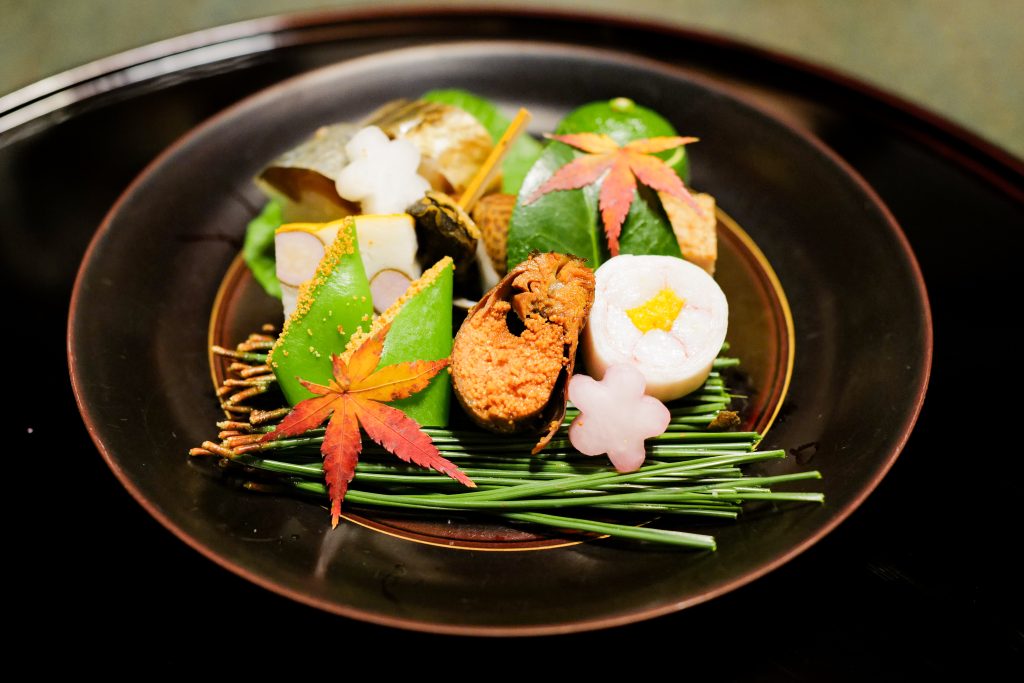
From the very start, there was a small but delightful surprise. For a restaurant that began with chicken hot pot, the hassun was impressively classic and precise. The chicken patty hidden under a leaf proved its skill with softness and tenderness. Ayu lightly steeped in bancha was plump yet elegant. Salmon roe with grated daikon felt especially bright and refreshing. And the pressed mackerel sushi landed with perfectly balanced weight.
The pairing was equally unexpected: a genshu from Kyoto’s local brewery Kintō Masamune, matured by the restaurant in a wooden cask for 25 days. The gentle wood notes and a standout milky aroma worked beautifully with every bite of the hassun.
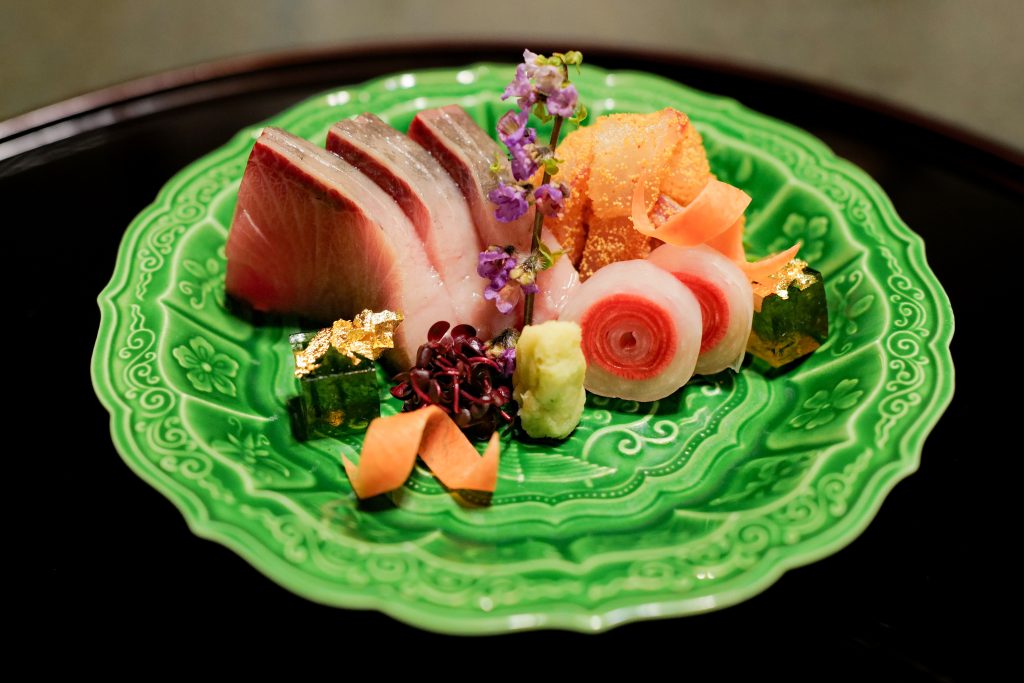
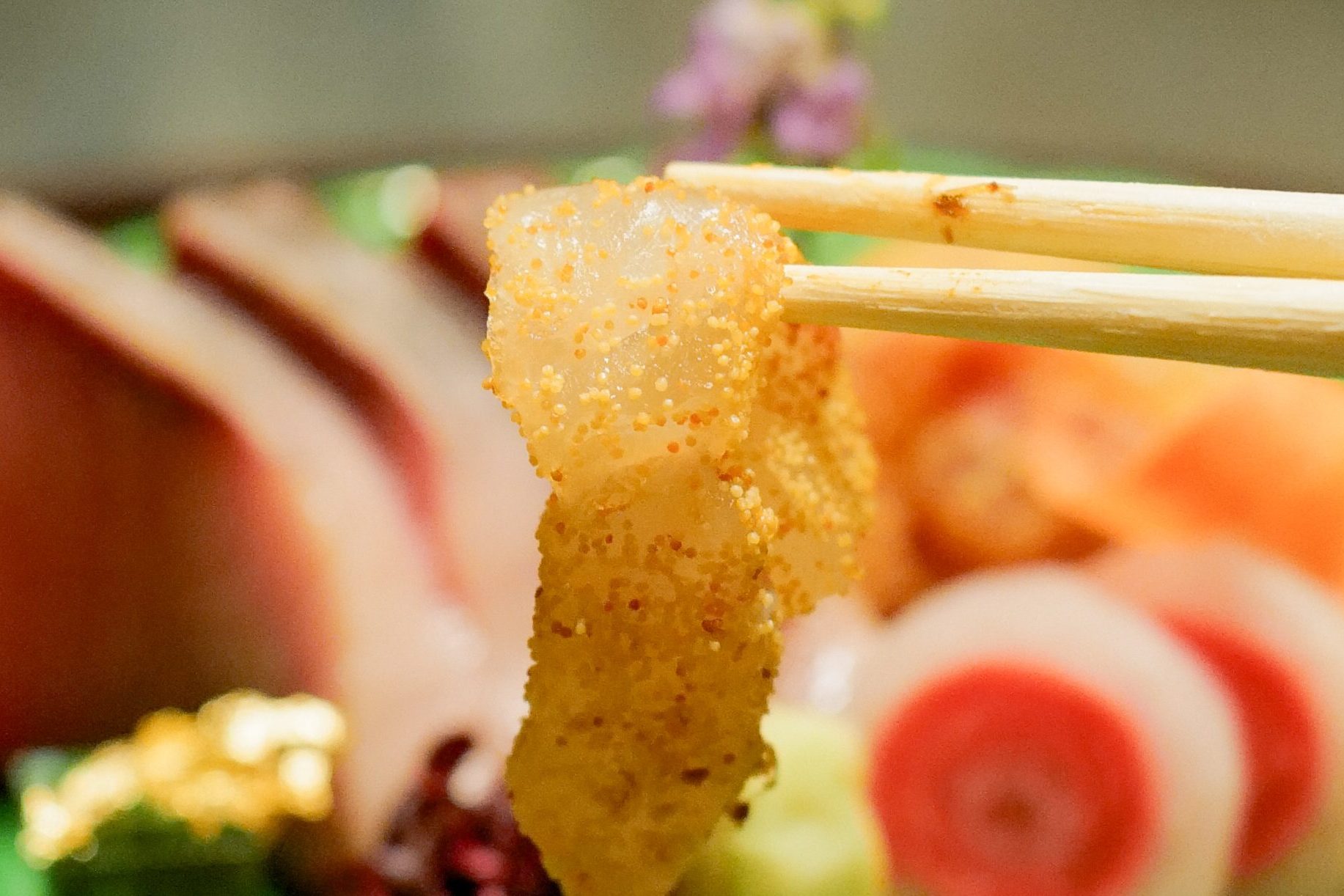
For the late-autumn-to-early-winter mukōzuke, they chose kan-buri and squid—both with a little quiet strategy behind them. The buri was not yet fully rich with fat, so it had been aged for a week, letting the softness of the flesh make the fat feel more delicate and elegant. The squid was wrapped in a thin layer of bottarga; the aged umami embraced a gentle sweetness—an exceptional match for sake.
This course was paired with Bon Junmai 55—clean, umami-forward rice character that gave the fat and the ocean salinity a sharper, more dimensional shape.
The “god-tier” chicken-fat yuba
Chicken fat with yuba can only be described as extraordinary.
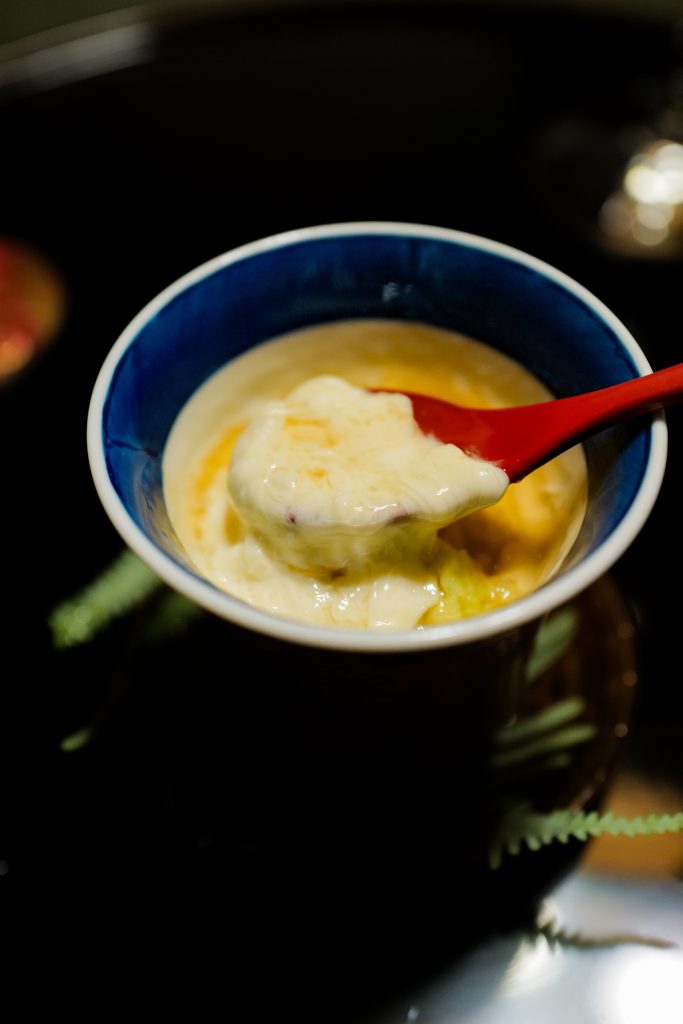
Beneath that golden, glossy layer of chicken fat was a special yuba from Kyoto’s Yubashō (ゆば庄). The first bite had an almost cheese-like, lightly stretchy richness—not heavy, but bright and clean. The warmth slowly coaxed out the soy aroma. The chicken fat deepened both umami and sweetness, leaving a faint, pleasant finish of gentle bitterness.
It’s the kind of “quietly delicious” Kyoto excels at—unshowy, but increasingly convincing the more you eat.
This was paired with an autumn sake from Ishikawa, Chikuha. Its roundness and soft rice umami held the richness of the chicken fat perfectly, while its acidity and clean finish lifted the yuba’s bean aroma and aftertaste into something lighter and more refreshing.
A sharp, daring pick. A perfect match. Respect +1.
Grilled duck, and the return to origin
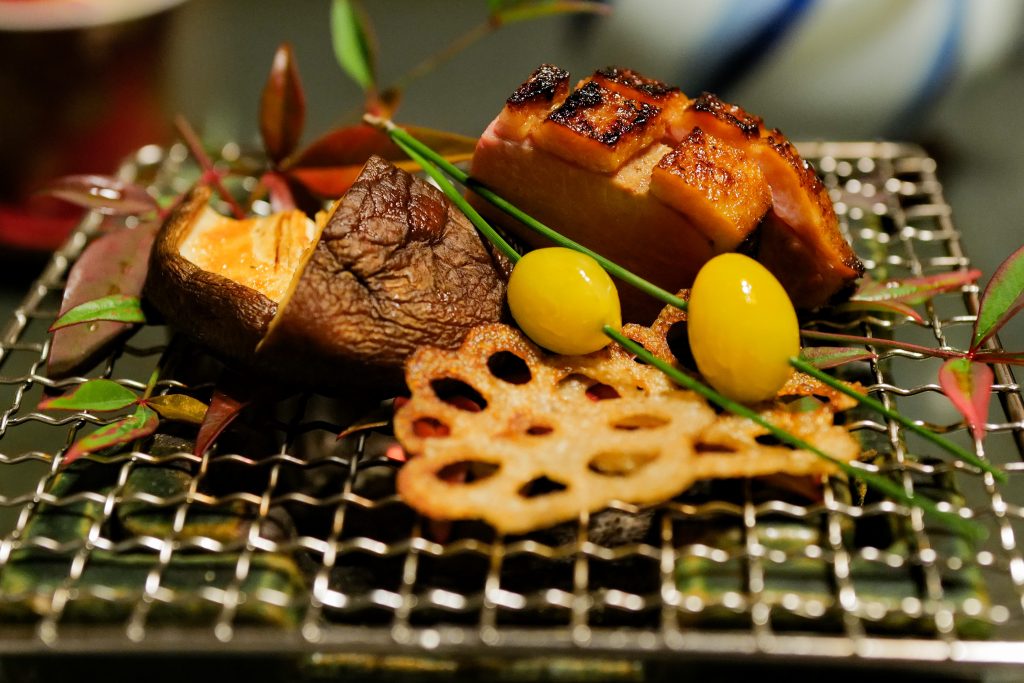
The yakimono arrived as grilled duck. The color of the skin alone raised expectations; a beautiful smoky aroma drifted up. The meat had a subtle wild tension, but nothing rough. A delicate sweetness pulled the edges into focus, making the whole dish feel restrained and balanced. The flavor didn’t explode all at once—it unfolded like lingering warmth, steadily seeping through as you chewed.
It was paired with Kinsui Masamune “Fujibakama.” This wasn’t a pairing built on impact, but on gentle, well-timed support—like a kimono and an obi: one defines the silhouette, the other completes the spirit. Each elevates the other.
Back to the Roots: The Chicken Hot Pot
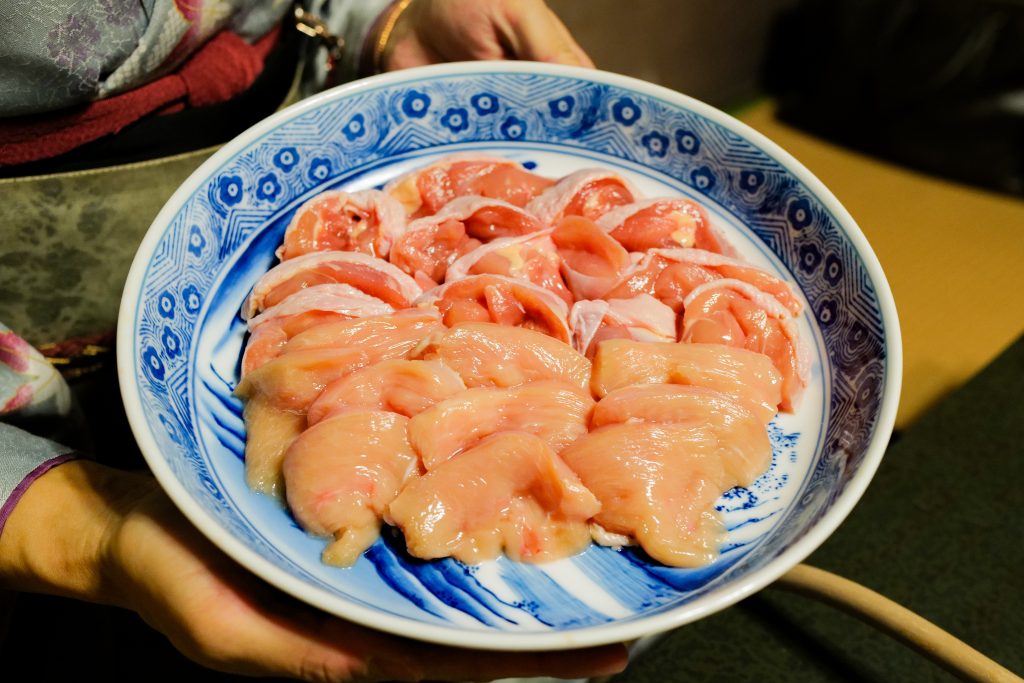
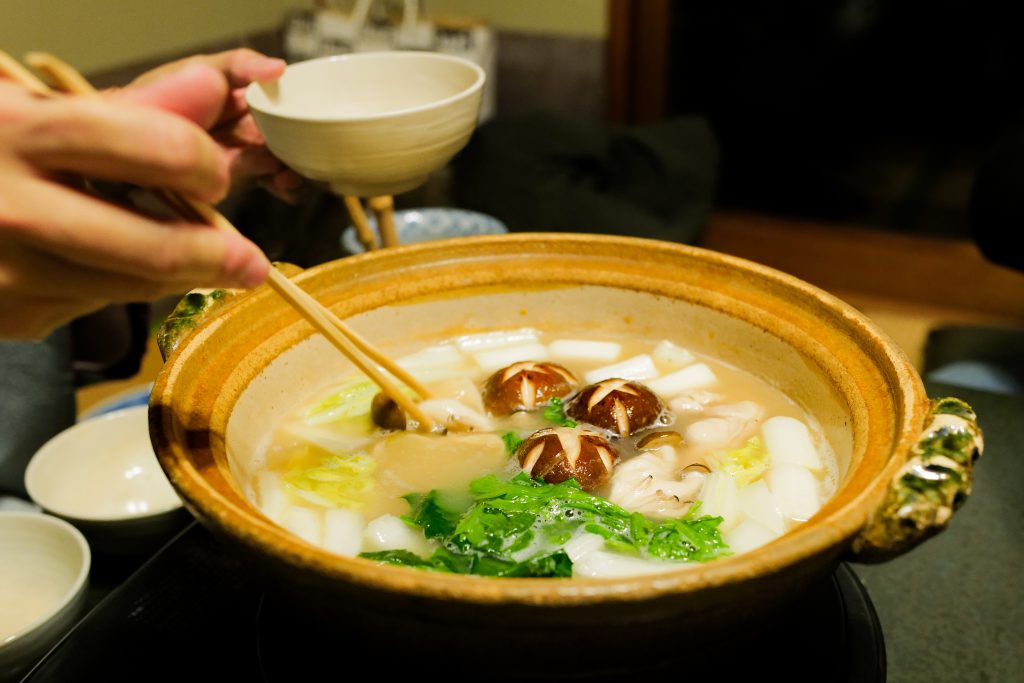
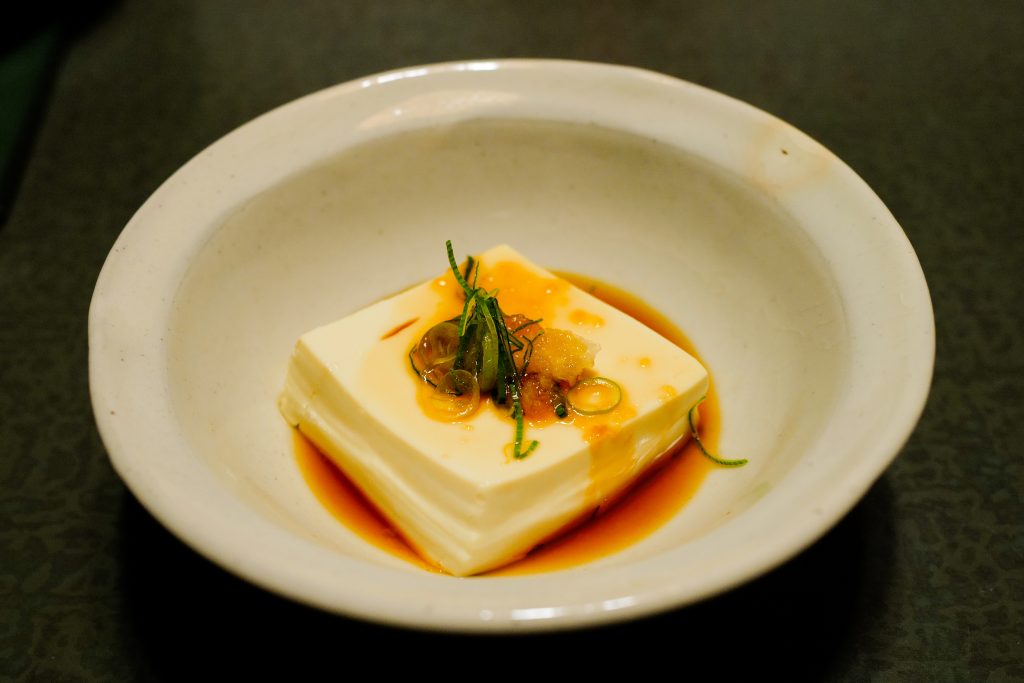
The restaurant’s origin—chicken hot pot—begins with a bowl of chicken broth. Their own chickens are used; heads and feet are simmered into a stock that carries a milky note and a light, gelatinous body. The warmed pairing sake, Kinsui Masamune “Ginkaku,” came with a suggestion from the okami: pour a little into the soup. The layered umami and savoriness made the broth even richer and more expansive.
The tofu in the pot was swapped for soft tofu from Saga’s long-established maker Morika. It felt almost weightless in the mouth, but with none of the aroma sacrificed.
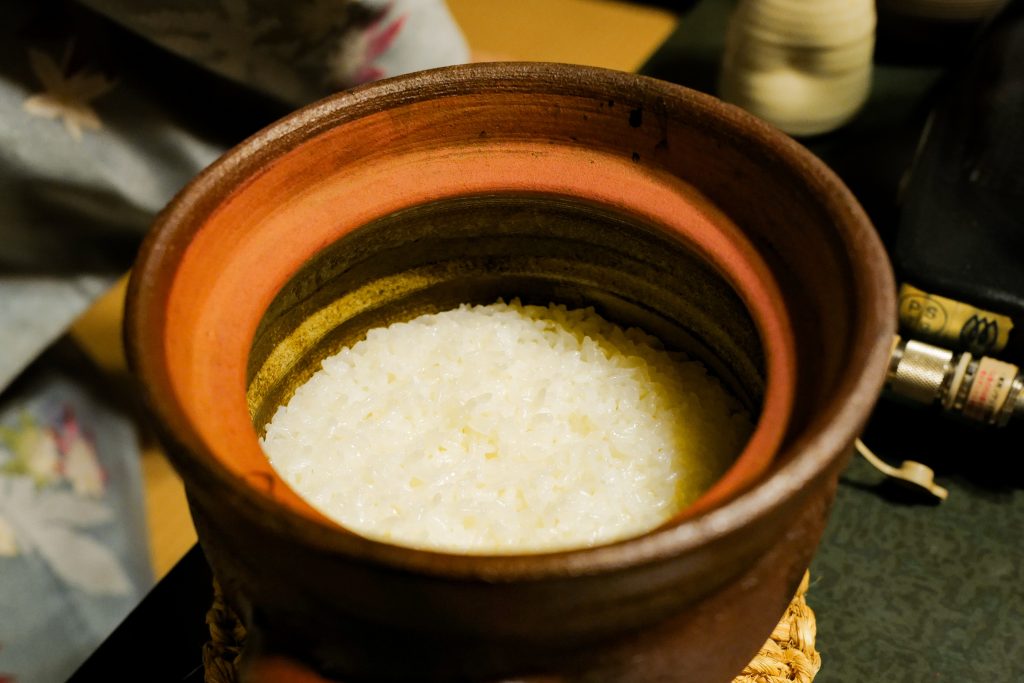
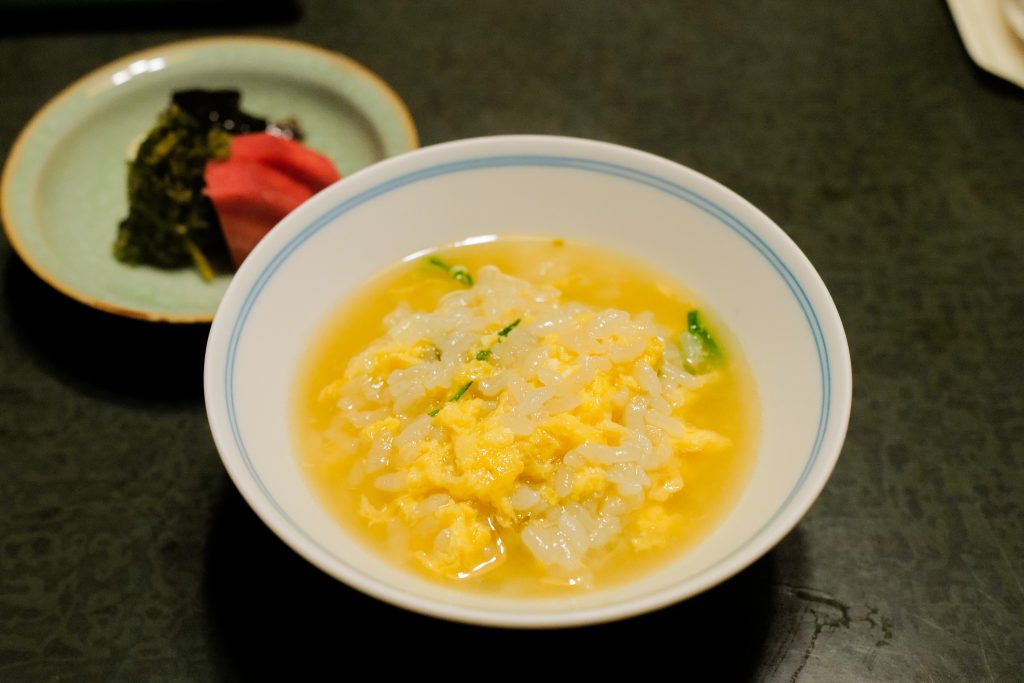
Once the chicken was neatly finished in the pot—perfect timing—the kamameshi was ready too.
The okami brought the pot back to a boil, added white rice to the broth, and gently pressed it apart with the back of a spoon. Then she whisked the egg, poured it in two or three thin rounds along the edge, and watched the egg ribbons bloom. The surface of the soup shifted from milky white to a soft golden color. When the lid was lifted again, steam rose in a rush; the fragrance of chicken broth wrapped around the sweetness of the rice and hit the nose immediately.
For restaurants that truly care about pairing through the meal, zosui is the best possible staple.
Rich, soft, warm—and deeply comforting.
Final thoughts
Looking back, this might not be the most textbook “formal” Kyoto kaiseki—but it was comfortable, interesting, and genuinely thrilling at points.
I really admire how the chef balances tradition and modernity. With Kyoto vegetables and seasonal rhythm as the thread, each dish carries a clear idea, expressed with precision—sometimes through combinations you rarely see elsewhere.
Add to that the context of being right in front of Matsuo Taisha: the chef has been steeped in sake culture since childhood. His style feels a touch “heavier” than typical Kyoto cooking, but that weight serves his goal of thoughtful food-and-sake pairing. The sake list extends from Kyoto to across Japan, including smaller, more niche breweries, and the pairing logic feels more flexible and expansive.
It stays firmly within the framework of Kyoto cuisine, while offering a generous, open-minded stage for sake from all over Japan.
The okami’s hospitality was another highlight you can’t ignore. She speaks with ease but never steals the spotlight, and she takes care of details with quiet precision. Gentle, elegant, poised—yet grounded in solid knowledge and impeccable sense of measure. Those small touches make you quietly marvel at the understated power of Kyoto women.
“I hope I’ll have a chance to visit every time I’m in Kyoto.”
Kyoto Toriyone (京料理 鳥米)
Lunch: 11:00–15:00 (L.O. 15:00)
Dinner: 17:00–22:00 (L.O. 21:00)Website: https://www.toriyone.com/
Leave a Reply