

Tokyo has no shortage of excellent sushi. The baseline is high, and once you start grouping shops by style and lineage, you begin to notice shared logic across many of them. So even if you can’t get into one place, you can usually find another that feels “close enough.”
But if we’re talking about something truly special—somewhere you visit once and immediately start craving a return—Sushi Yasumitsu is one of those rare exceptions.
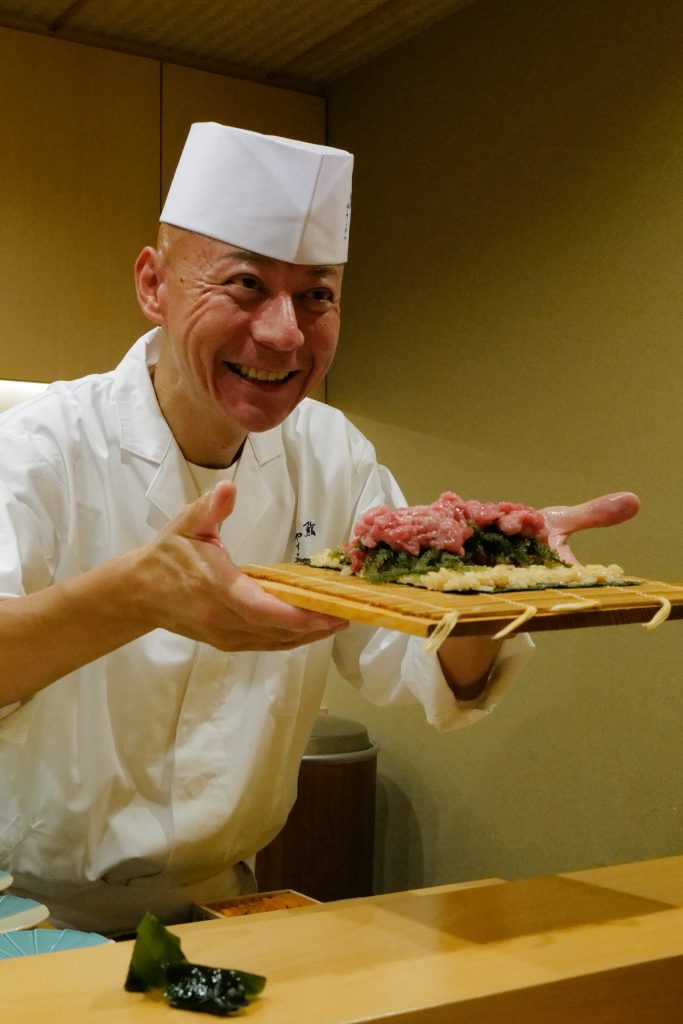
This is a real-deal, extremely difficult reservation in Tokyo. They’ve basically stopped taking new bookings, and even trying to reserve on-site now can mean waiting a year or more.
Their weekday course is usually around ¥20,000–¥30,000, but depending on the season, they also offer limited-time special menus just over ¥40,000—winter matsuba crab, summer shellfish, autumn matsutake. At that price point in Tokyo, it almost feels like charity.
Don’t be fooled by Chef Watanuki-san’s modest, friendly presence—he’s something of a minor celebrity. In recent years, he has appeared as a judge on the well-known Japanese variety show Job Tune (there are even Chinese-subtitled clips floating around online).
Unlike many Tokyo sushi chefs who emphasize hierarchy and lineage—where the shop you trained at becomes a cornerstone of your independent reputation—Watanuki-san originally stepped in simply to inherit the family business and continue his father’s sushi restaurant. But through years of traveling and researching catches across regions, he gradually built a style that’s unmistakably his own.
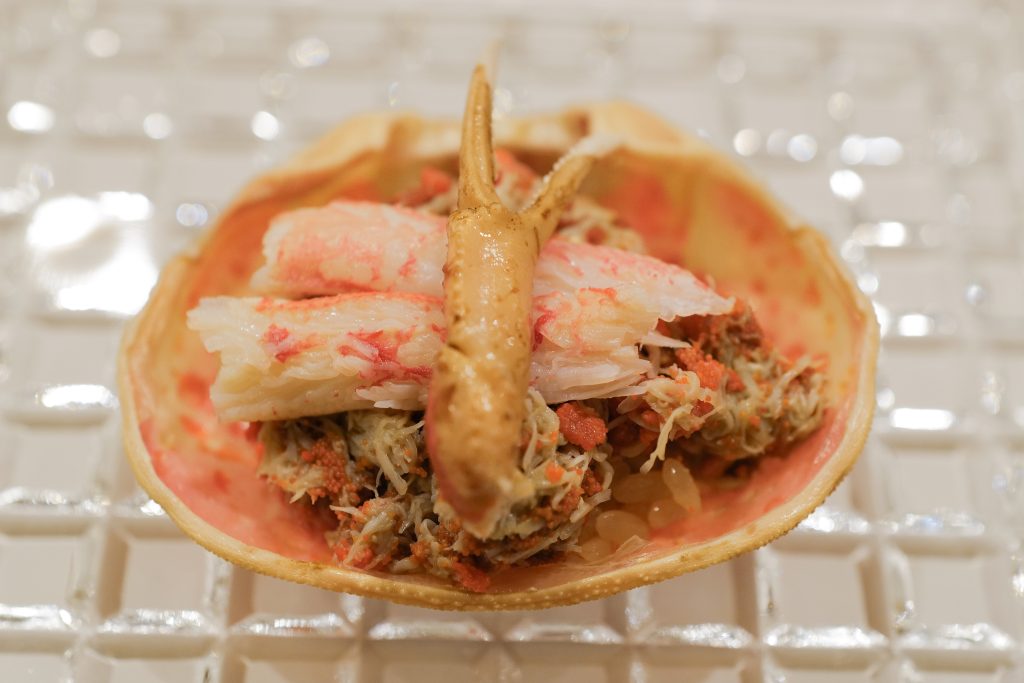
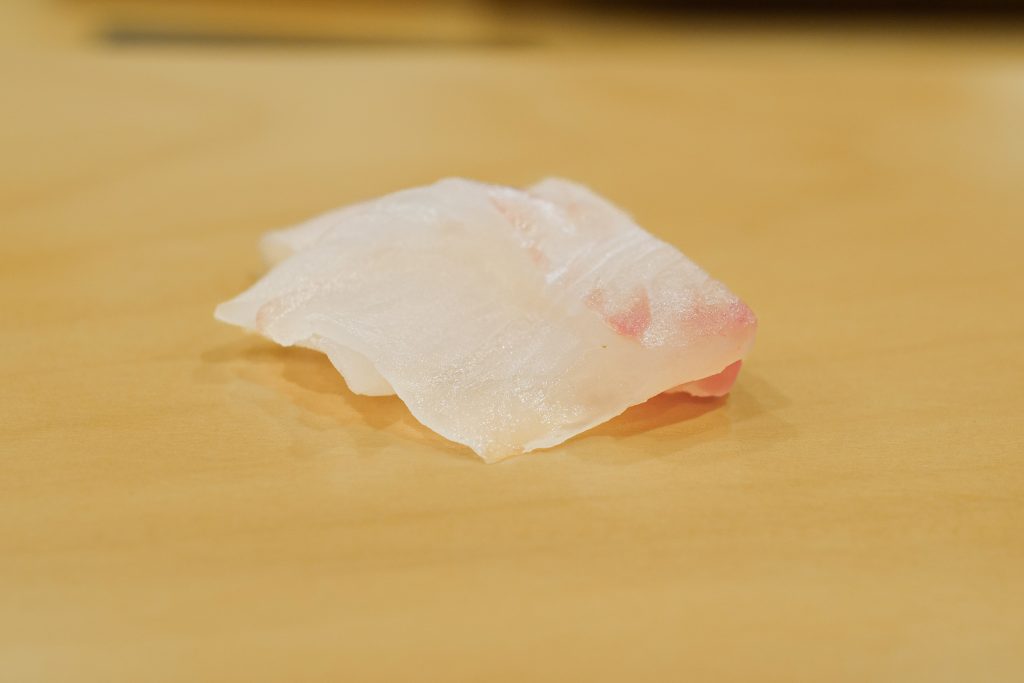
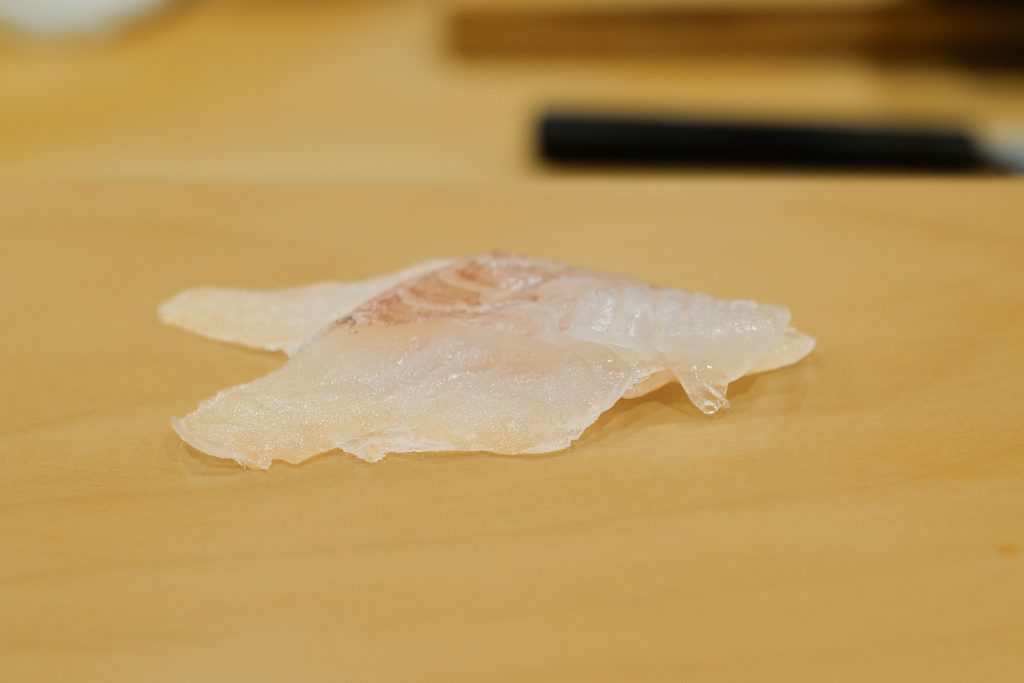
November is peak crab season. The very first dish was an umami bomb from “Kōkō crab”—crispy crab roe paired with high-acidity vinegared rice. Pure crunch, pure satisfaction.
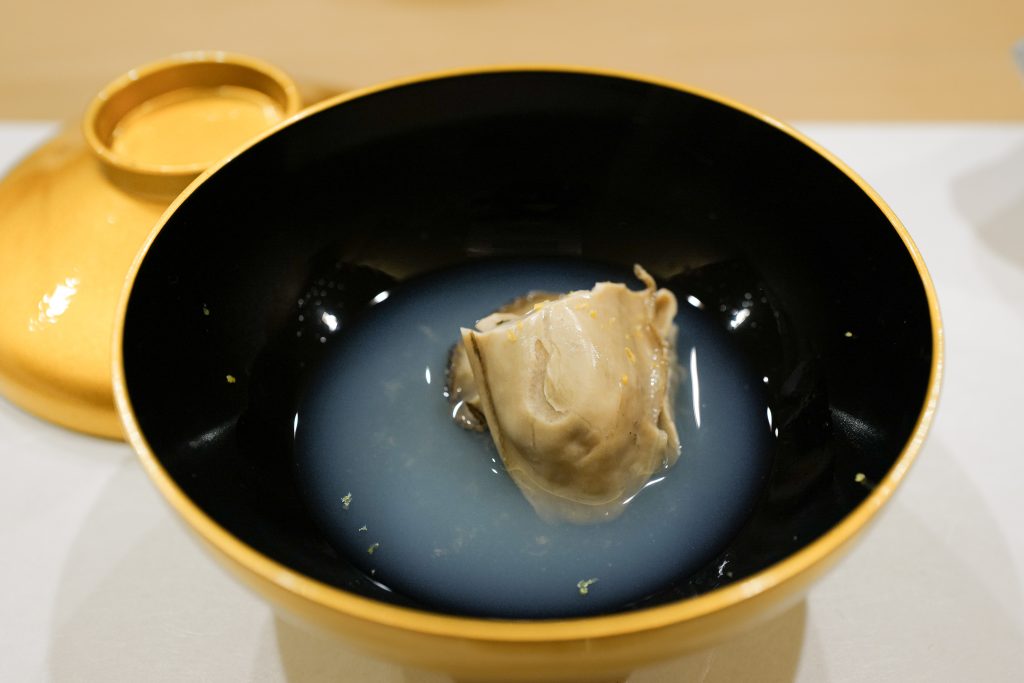
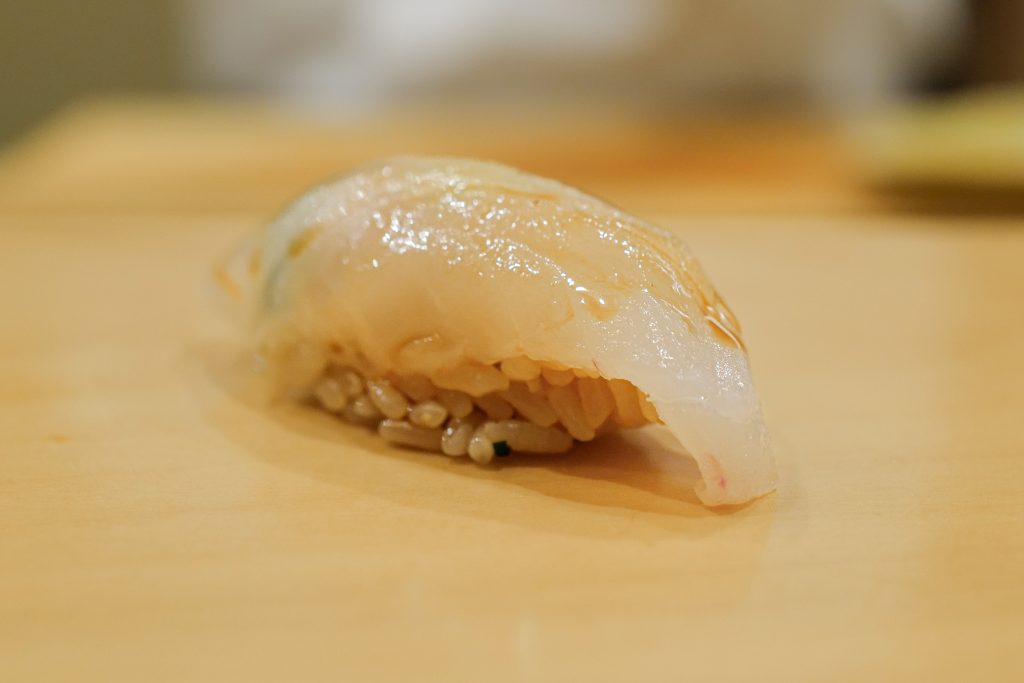
Two white fish were presented in contrast, with different aging times to sharpen the textural difference. The oyster, meanwhile, won you over instantly with its fullness and presence.
It was a straightforward opening: no excessive decoration, just clean, honest deliciousness—with impeccable control over texture and balance.
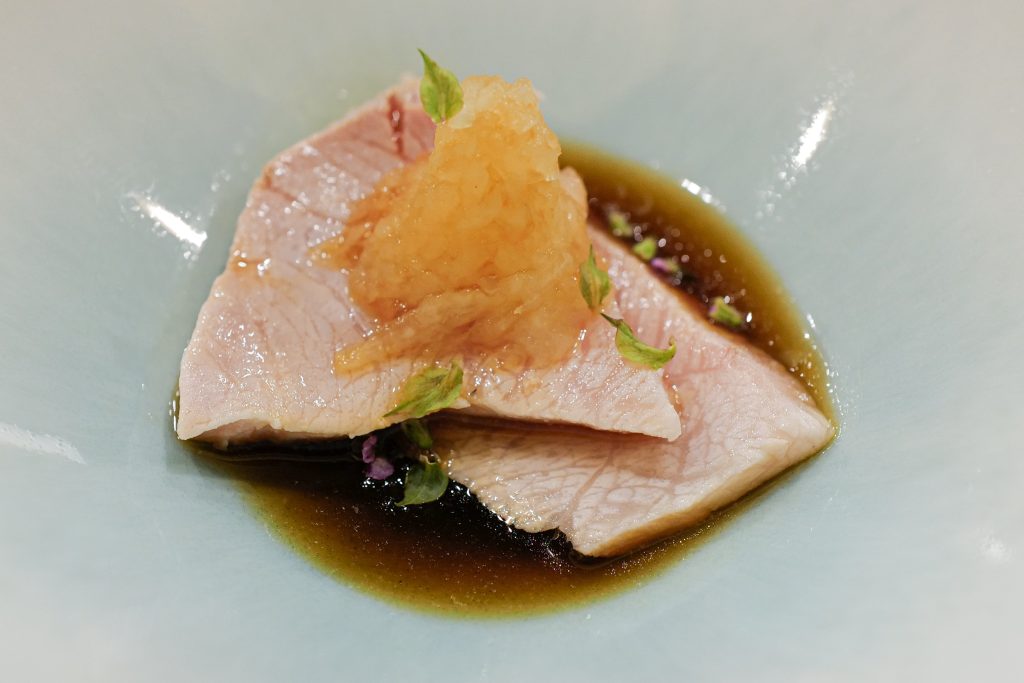
The winter buri had just come into season. Instead of serving it as sashimi, it was lightly seared to about three-tenths doneness. You got that gorgeous fat aroma, plus a faint crispness in the bite. The seasoning was restrained but sharply acidic—simple, pure, deeply satisfying.
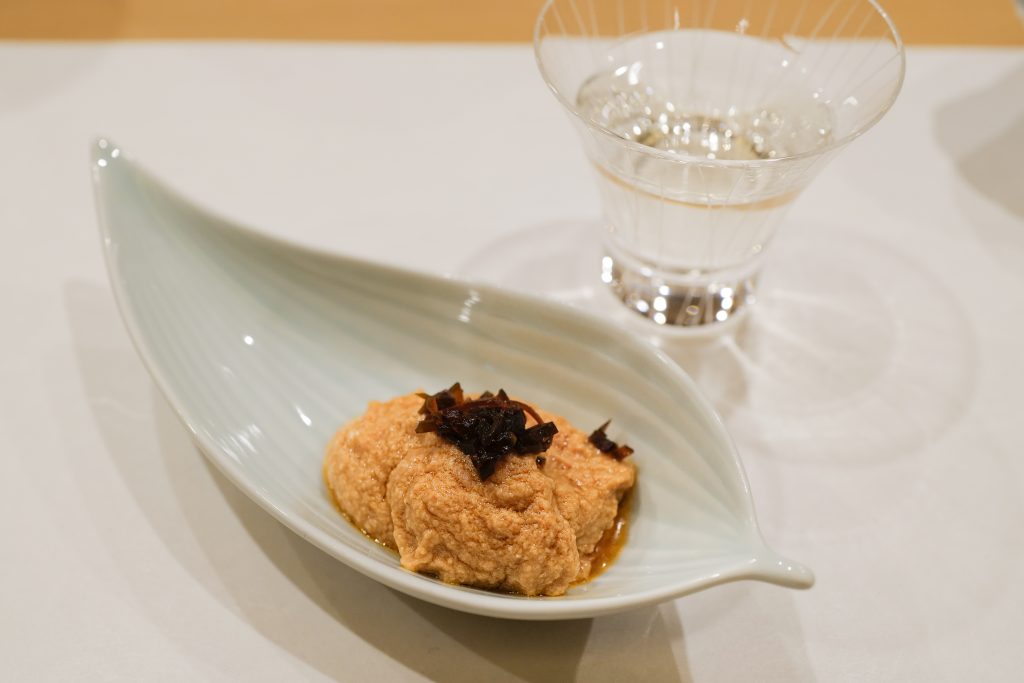
The ankimo was mashed into a paste with zero graininess, landing somewhere between foie gras and thick cream. Like Sugita, Yasumitsu also proactively paired this with a glass of Aramasa “Hinotori”—a perfect match for the rich, rounded liver.
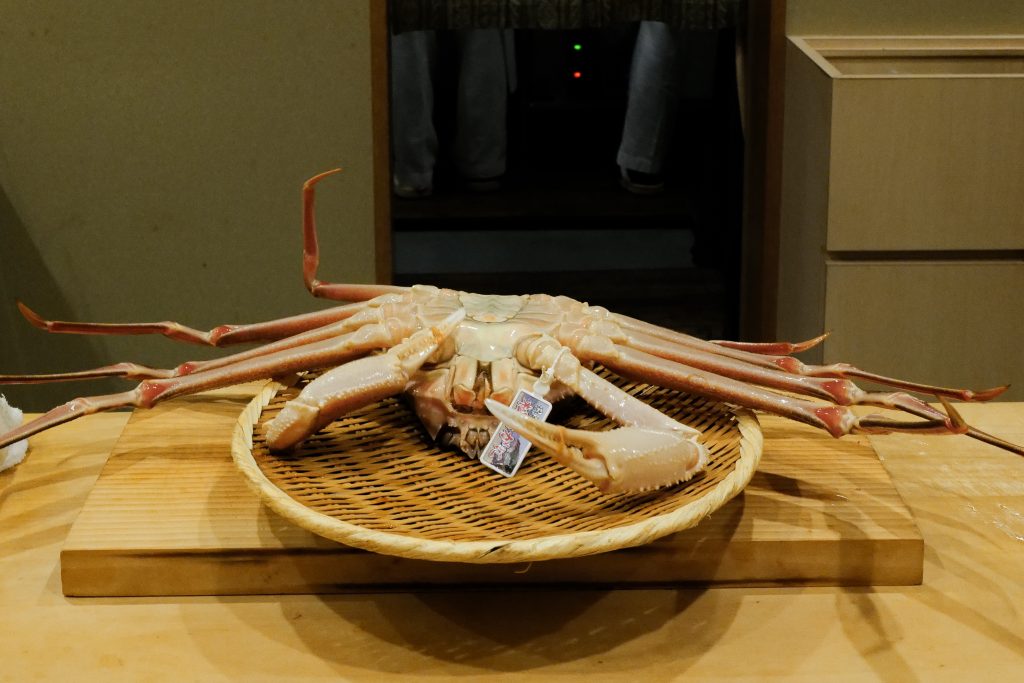
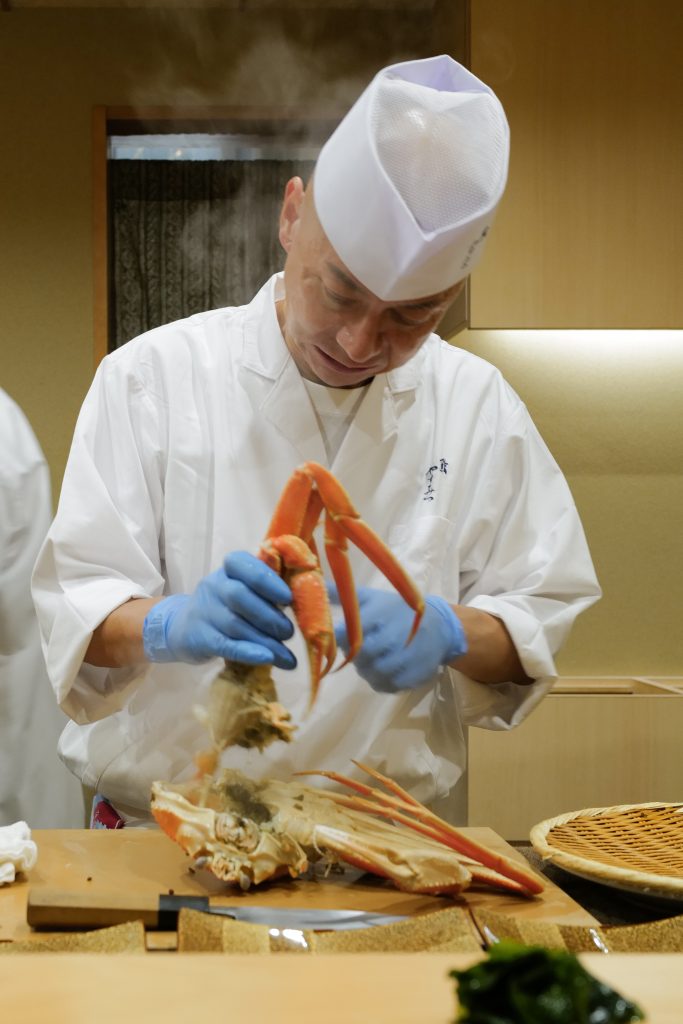
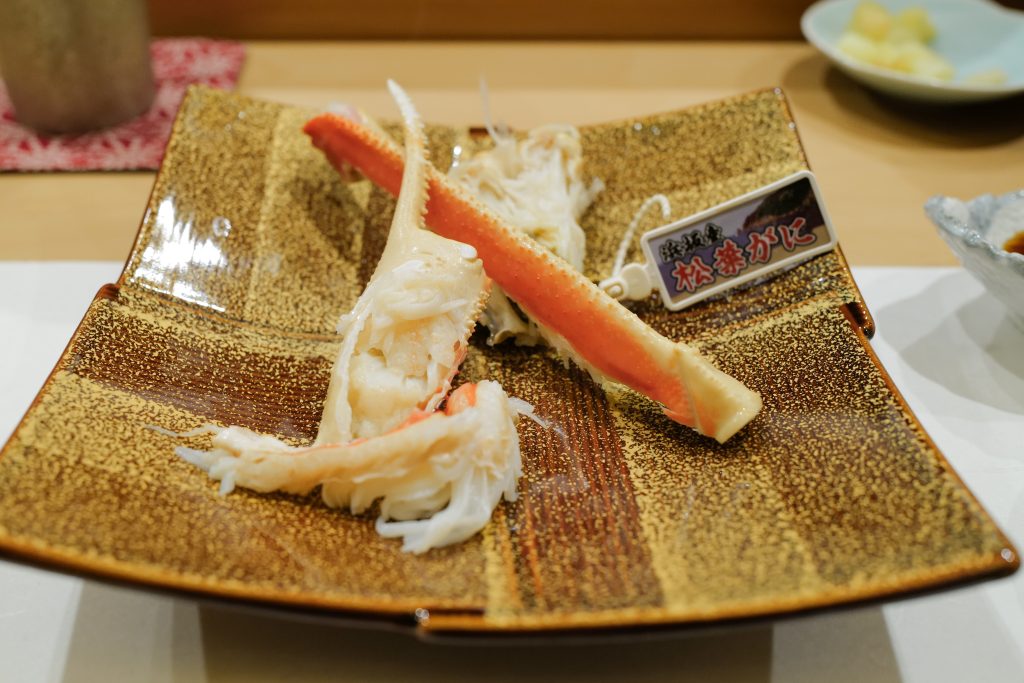
For an eight-seat counter, they prepared two 1.1kg matsuba crabs from Hamaizumi Fishing Port in Hyogo. Once boiled and brought out, the crab fragrance practically overflowed the counter. Watanuki-san dismantled the crab with stunning efficiency, narrating as he worked:
On a winter menu, the most heavyweight ingredient is of course crab.
“In Fukui it’s called Echizen crab; in Kyoto it’s Taiza crab… and if it lands in Toyama, it’s Kano crab.”
Suddenly, the counter gained an extra layer of performance charm.
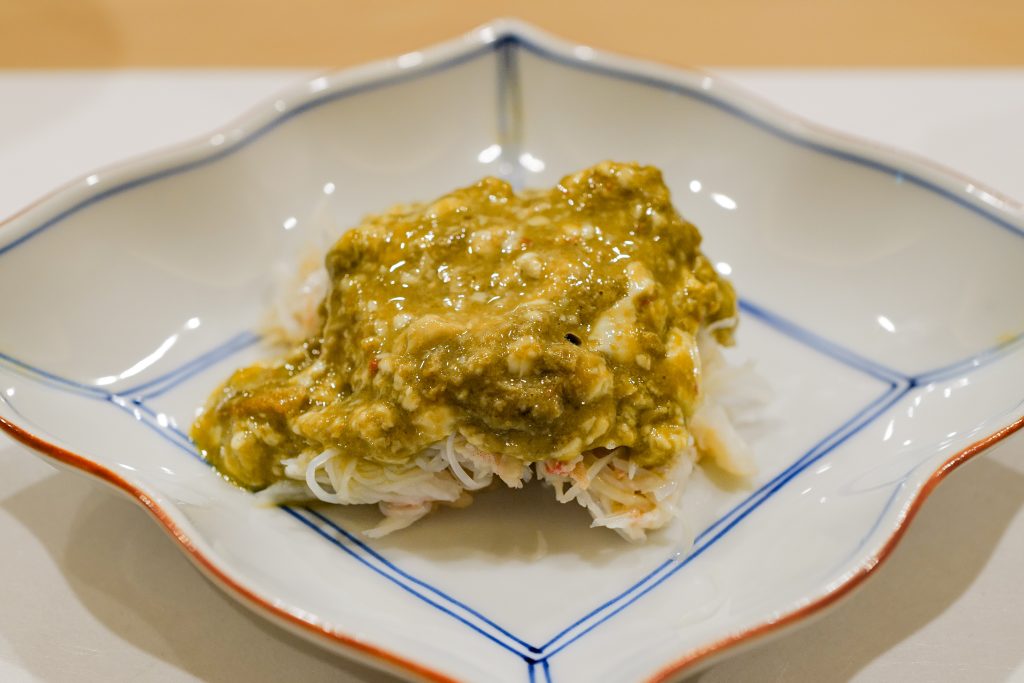
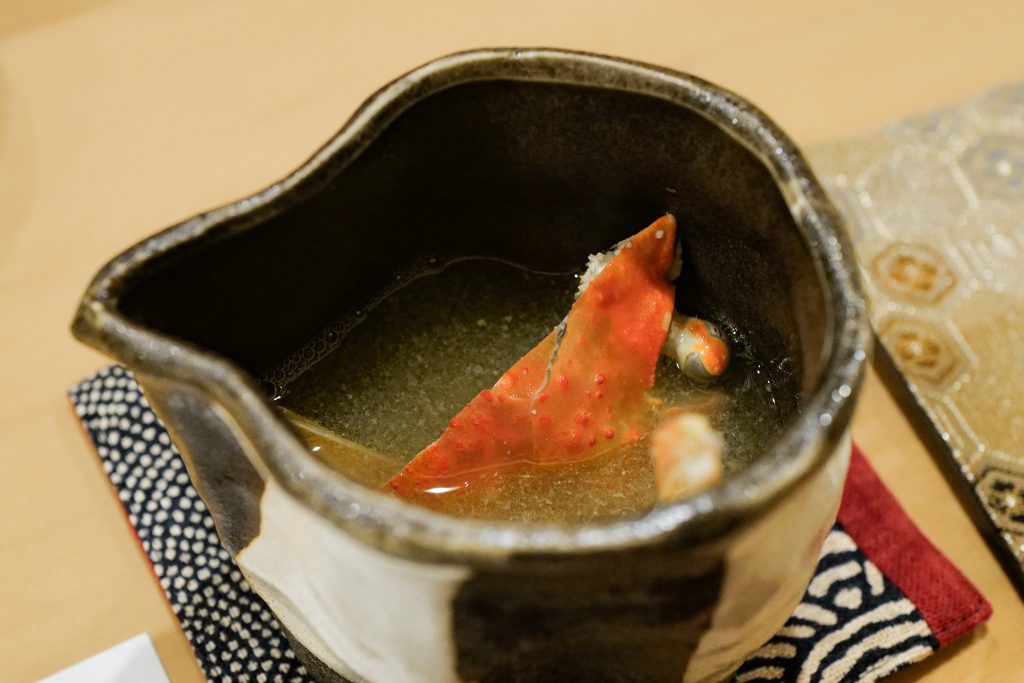
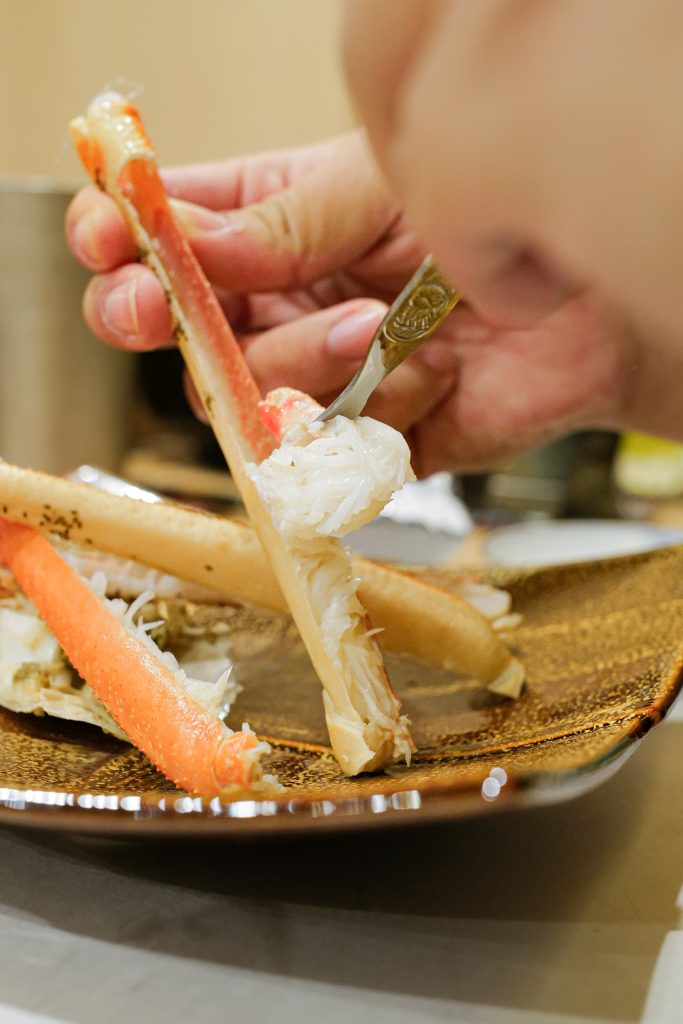
Each guest received a quarter of a large crab, served in three ways.
The legs and body were cooked in crab dashi and eaten with no extra seasoning. The legs were tender; the body more firm and dense. As simple as it was, the layered sweetness and umami were incredibly seductive.
The okami carefully picked the remaining meat from the edges and combined it with crab miso into a generous, overflowing crab-meat sushi. It was jelly-like in texture yet packed with umami, richness, and delicate fibers—pure happiness.
Finally came a cup of crab sake, where bold umami and savory depth were softened into a gentle sweetness.
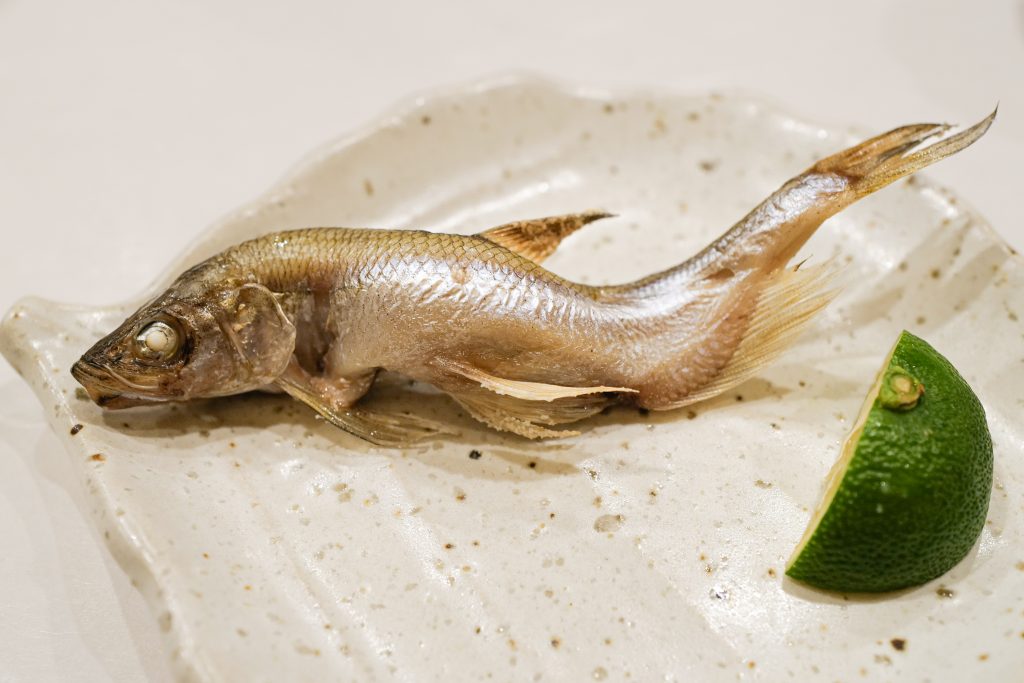
The sakana course ended with a whole grilled shishamo. Its season is extremely short—starting around mid-October and lasting less than a month. It’s a niche indulgence, and getting to eat it is partly luck.
It shares the same grilled + faintly bitter charm as summer ayu, but with slightly more fat. The fish is smaller, the skin thinner, and the experience is more about quick, explosive aroma and a soft, compact richness in the flesh.
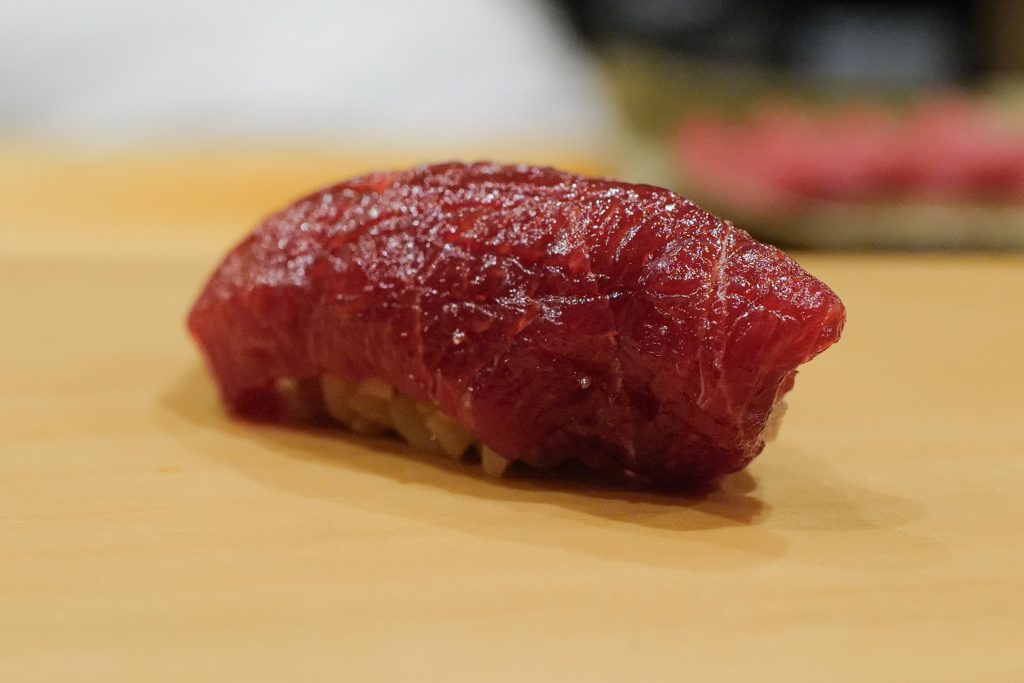
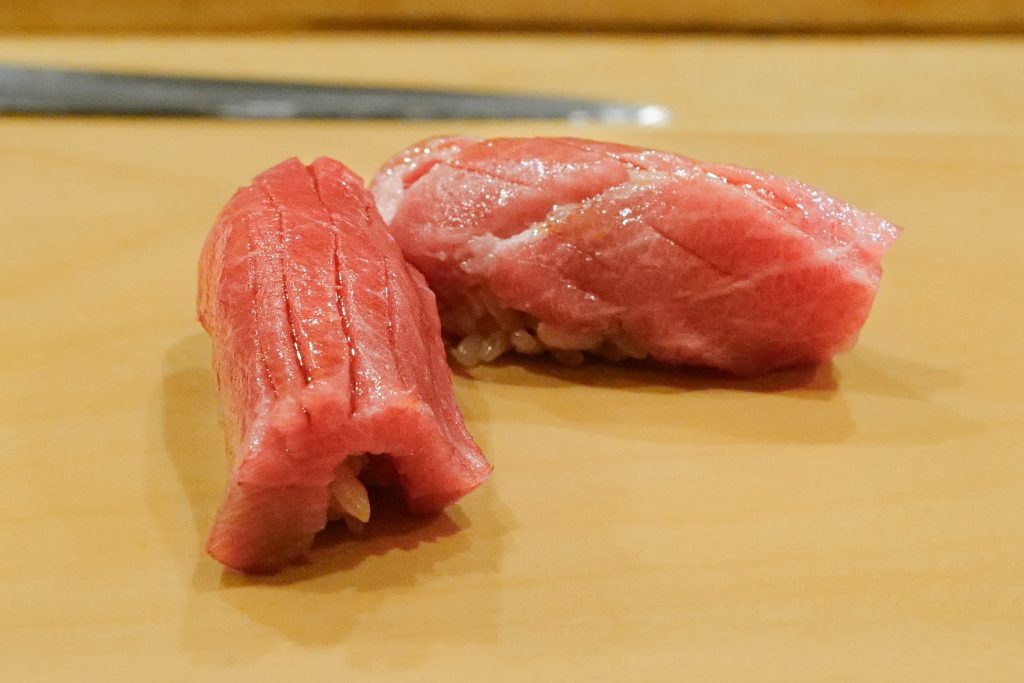
Then came a three-hit tuna sequence:
- Akami emphasized softness.
- Chūtoro balanced fat and structure.
- Ōtoro was served with cooler shari, boosting the lingering sweetness and aftertaste of the fat.
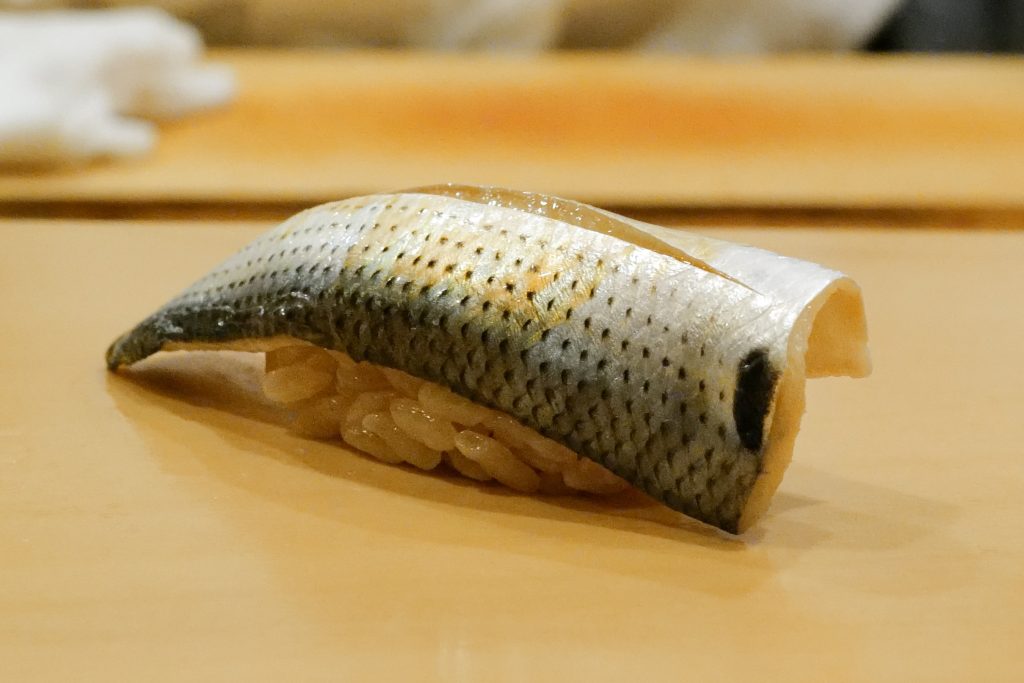
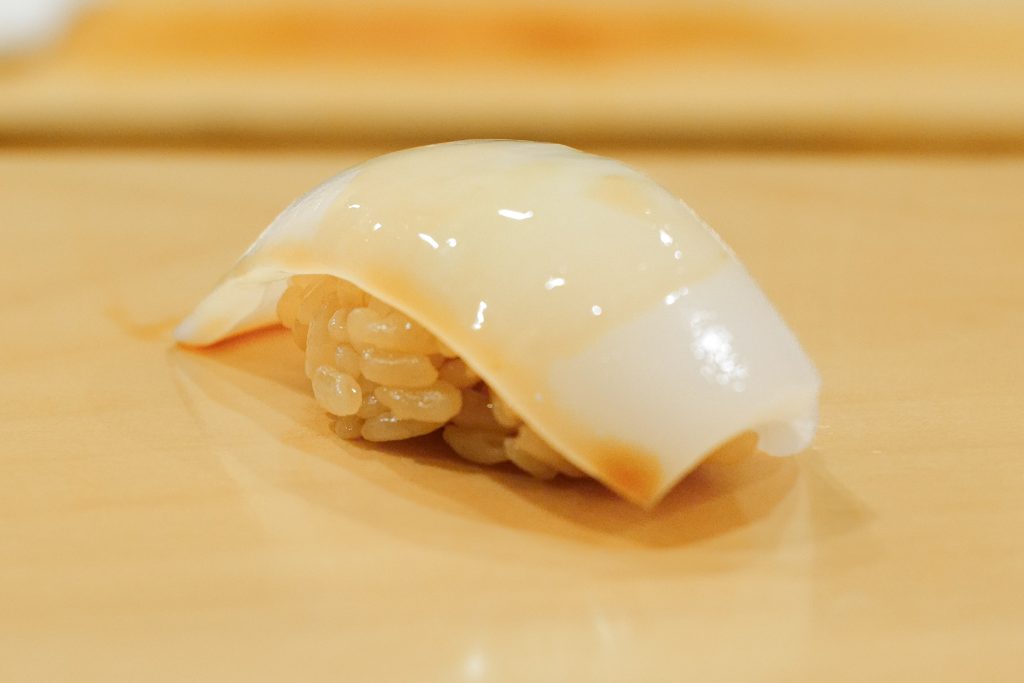
Yasumitsu’s sushi progression also breaks convention. Kawahagi and squid had already appeared in the earlier sakana segment, but only as light, elegant punctuation—showing off texture more than anything.
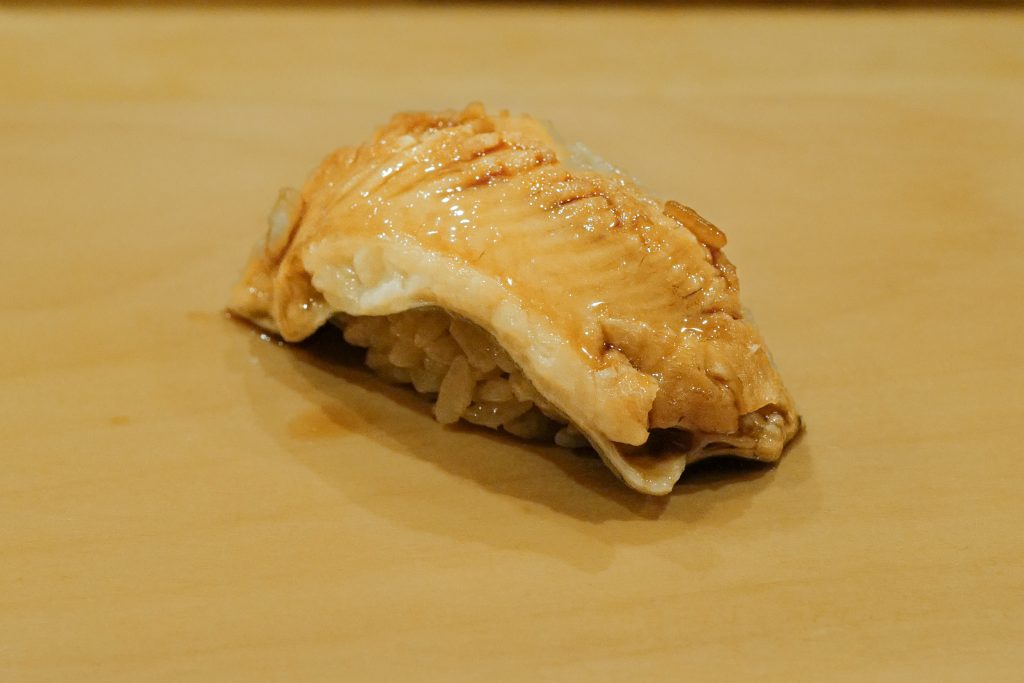
The shrimp sequence moved from cooked to raw. The kuruma ebi looked ordinary at first glance, but surprised with shrimp roe tucked into its soft tenderness. The glass shrimp, aged for a day, arrived in a milky white tone with a faint translucence—super crunchy.
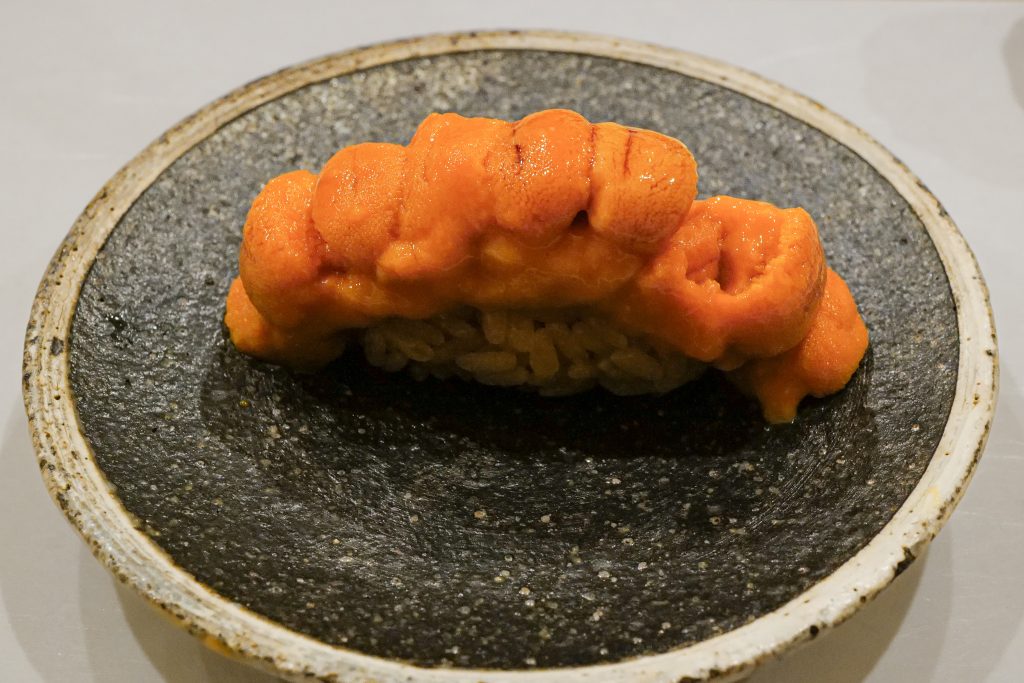
It was surprising to find such satisfying uni even in November. A full row of sea urchin was scooped generously over the rice—an explosion of sweetness and fresh umami.
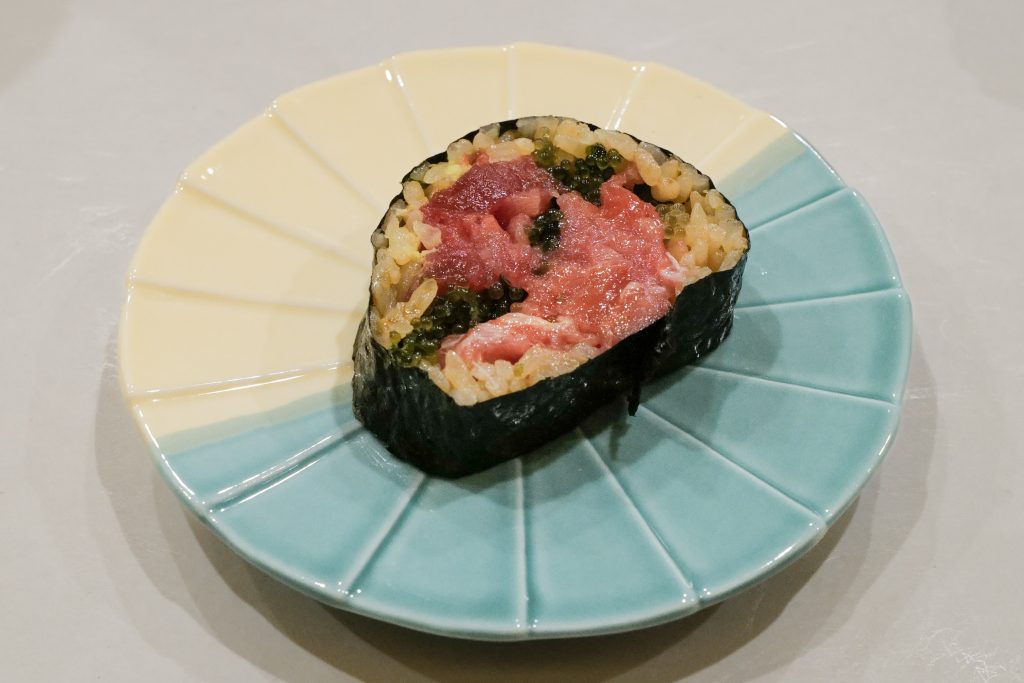
However, the restaurant’s famous otoro futomaki was a slight disappointment this time. Watanuki-san added sea grapes for a salty crunch, but paired with the stronger-aged tuna they currently use, it didn’t quite deliver the bright, fragrant freshness I was hoping for.
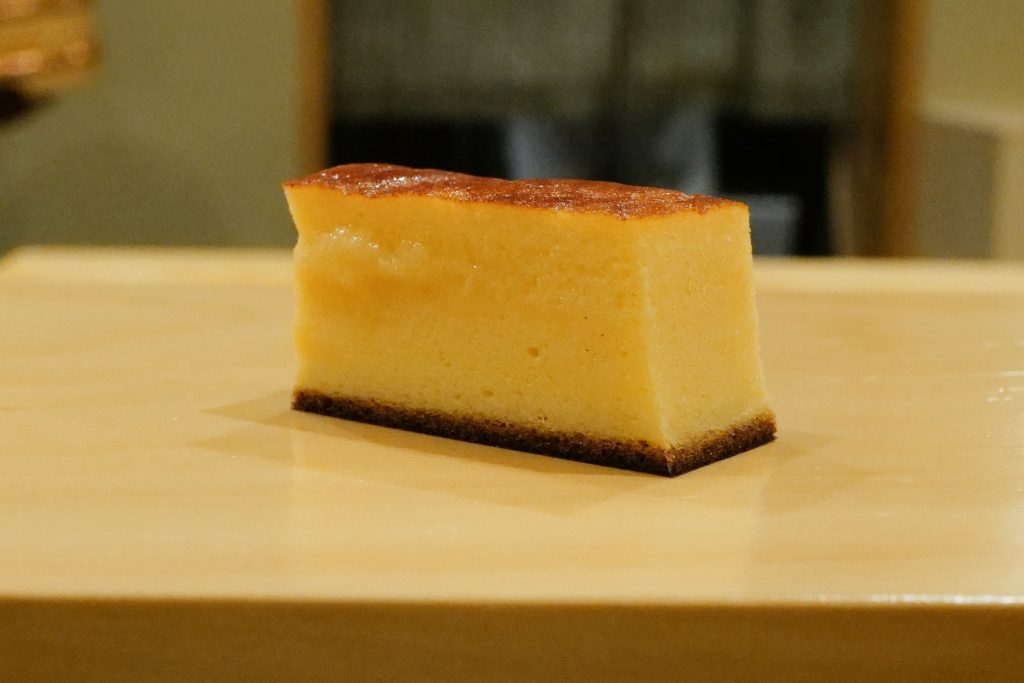
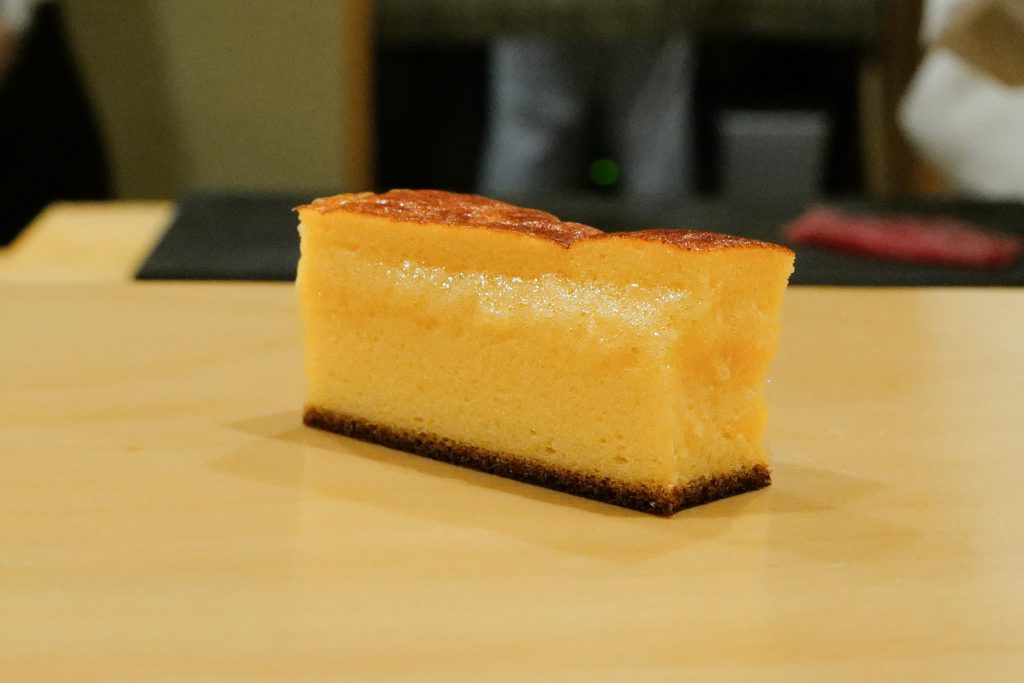
The final tamagoyaki was unexpectedly Basque-cheesecake-like: a caramelized crisp exterior with a cool, molten center. This might be the softest, most harmoniously balanced tamago I’ve had in Tokyo—where texture, sweetness, and freshness all meet in perfect unity.
If I were sitting even closer to the counter, I might have been tempted to steal the whole thing.
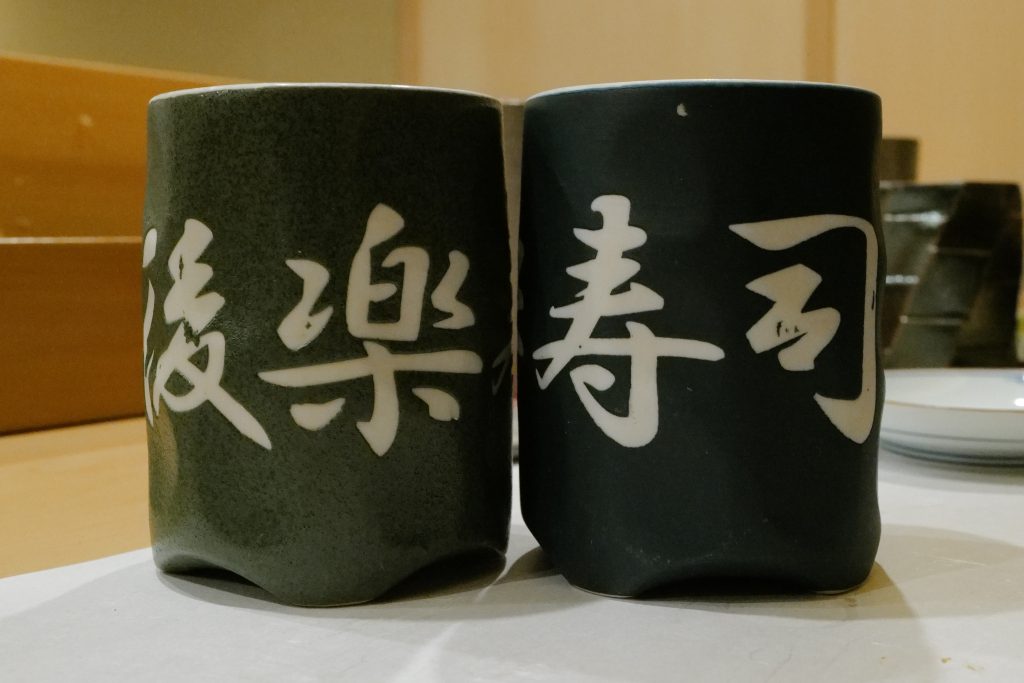
Watanuki-san’s expression is distinctive. Every dish—whether sakana, cooked items, or sushi—seems to carry two contrasting textures and two to three layers of flavor. Not too much, not too little—just enough to exceed expectations and leave you quietly thrilled.
The comfort of the hospitality is another powerful point. Unlike the more stern, traditional style of many Japanese sushi counters, Watanuki-san openly thanks his kitchen staff aloud. You often see gestures at the counter, but here I heard clear, spoken gratitude directed to the back of house—an unusually sincere, modern kind of authenticity. And of course, he’s equally polite and attentive to guests at the counter.
A self-effacing chef like this is always moving.
鮨 やすみつ (Sushi Yasumitsu)
東京都新宿区四谷三栄町5-2
Monday – Saturday
17:30 – 20:00 / 20:30 – 23:00Chef’s Menu ¥31,900++
Seasonal Menu ¥51,900++
When I asked about reservations at the end, the earliest availability was already next September. So all I can do is wish the chef great health—and hope I might get lucky with a cancellation before then.
Because honestly?
If I could, I’d come every month.
Leave a Reply