cherexp

passion with food and beverage


  • UOZEN | A Countryside Gem in Niigata, Grateful for Nature’s Gifts

    There’s arestaurant in the mountains of Niigata that I’d tried—and failed—to visit several times. Either the chef was out hunting, or he was away learning. This time, I finally made it… in the middle of a blizzard.

    This laid-back, almost mysterious “countryside” restaurant is, in reality, a Tabelog Silver and two-Michelin-star spot. The chef has also been recognized internationally on The Best Chef Awards. It’s a bit like discovering a world-famous French restaurant hidden in a tiny village out in Beijing’s Pinggu district.
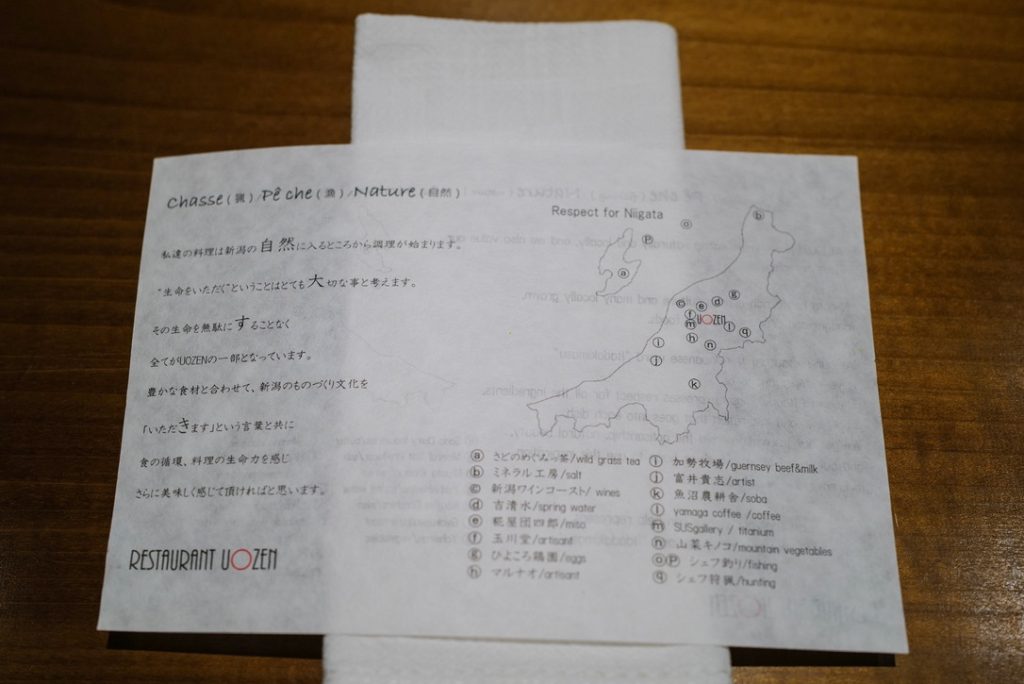
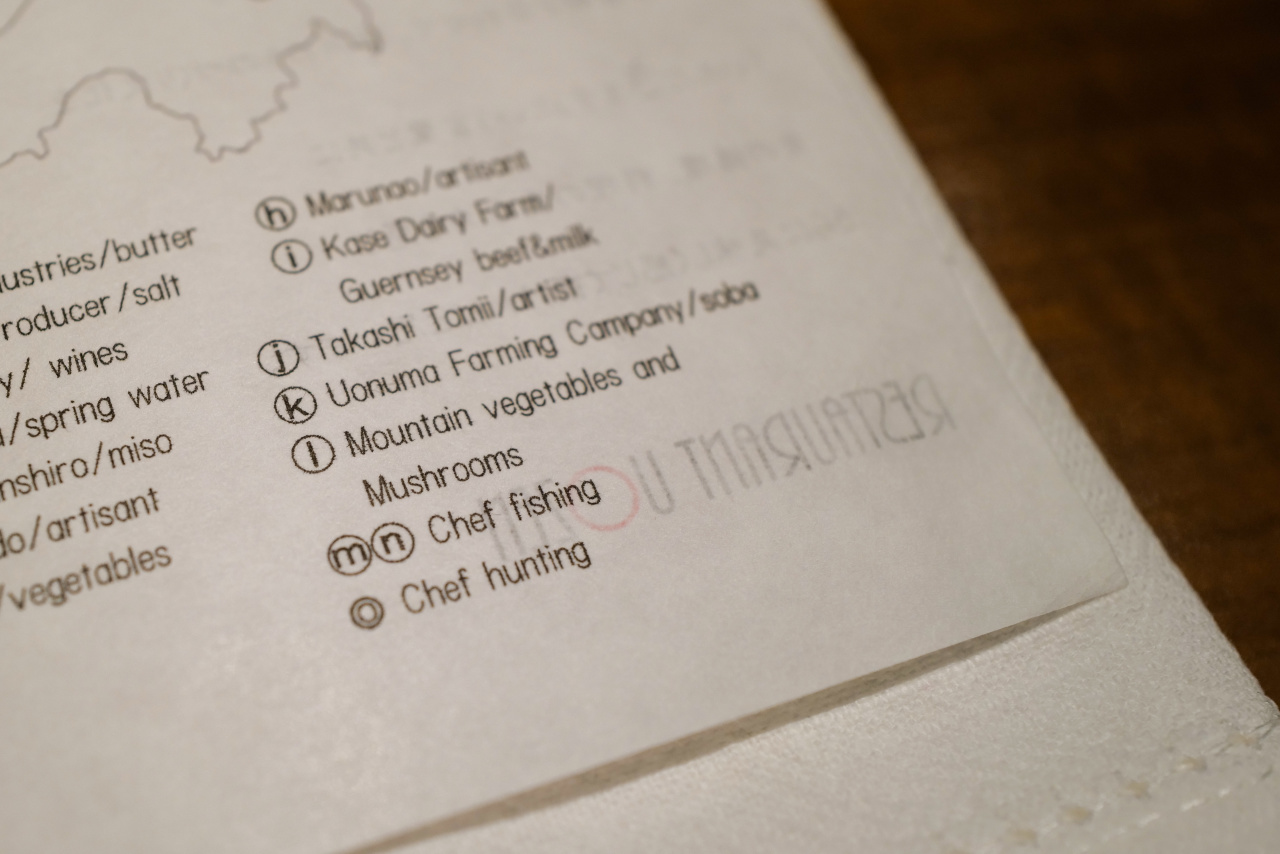
    UUOZEN’s chef, Kazuhiro Inoue, is originally from Kagawa. He trained in Japanese–French cuisine and at izakaya, and in 2013 moved to his wife’s hometown of Sanjo, Niigata. There, he transformed her family’s former ryotei, “Uozen”, into what is now RESTAURANT UOZEN, while keeping the old signage and name.

    Their philosophy is written in three words:
    Chasse / Pêche / Nature

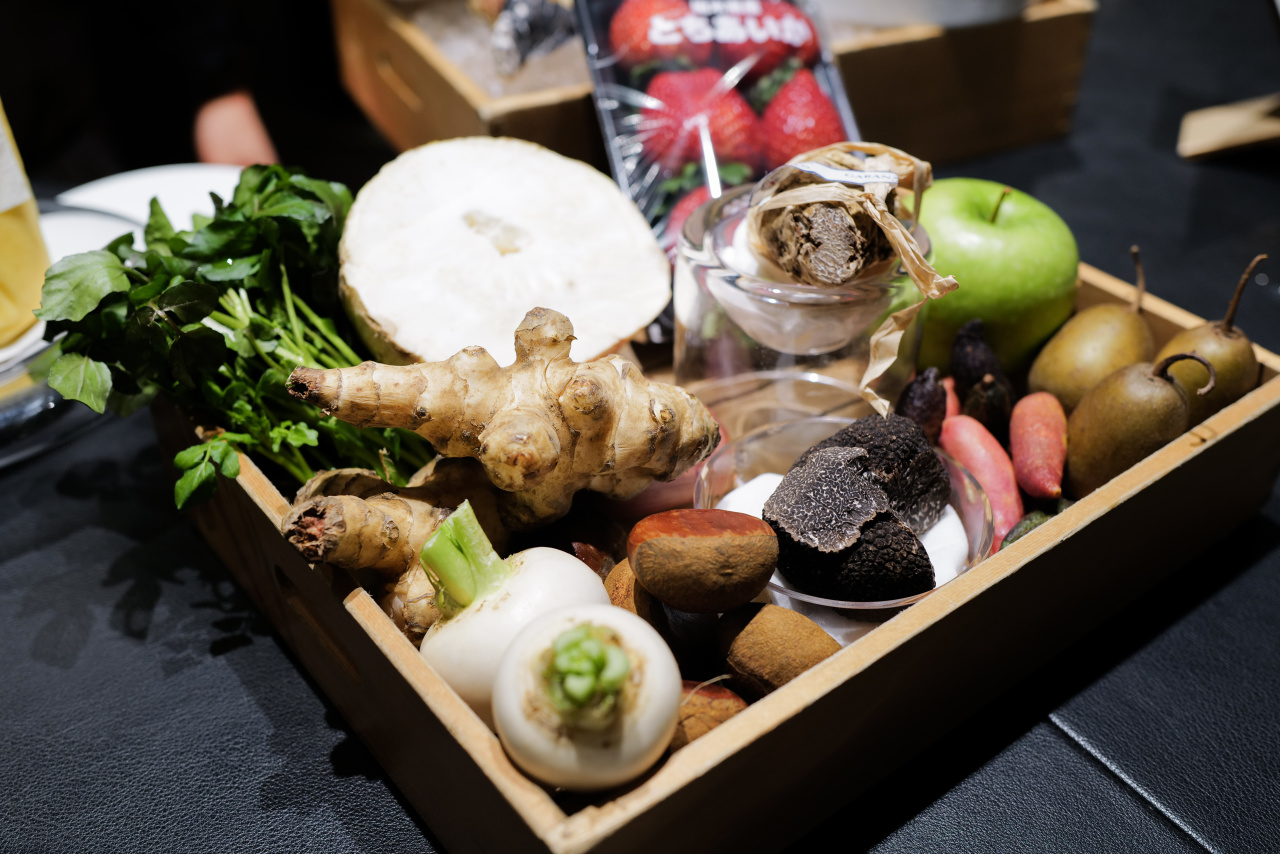
    The chef grows vegetables, fishes, hunts—treating these forays into nature as the starting point of his cooking. “Receiving life, and wasting as little as possible.” If you look closely at the Japanese menu, you’ll find a quietly hidden line: “自然大好き” – “We love nature.”

    Cooking every ingredient from nature deliciously is his way of honoring that promise not to waste. 
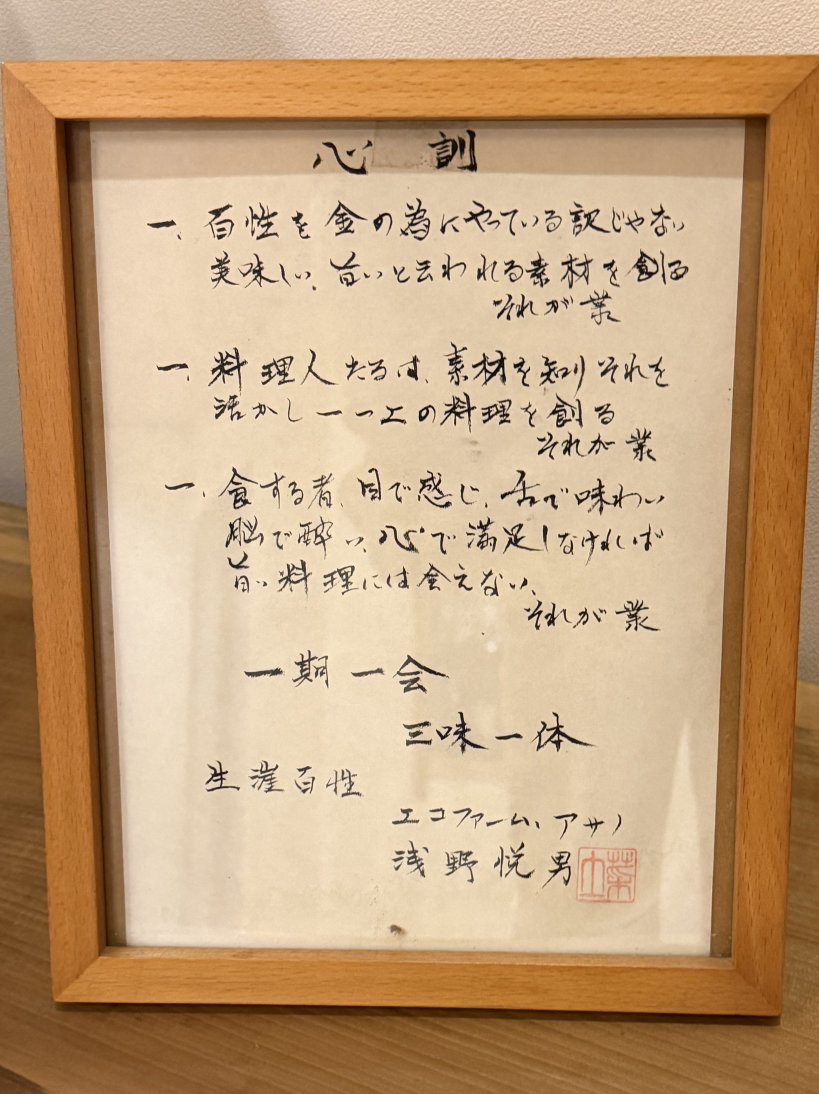
    By the entrance, there’s a small framed motto that sums it up:

    We don’t become “hyakushō” (old word for people who work with their hands and with nature) for the money.
    Our role is to create ingredients people will call “delicious, truly fragrant.”

    As cooks, our duty is to understand ingredients, use them well, and turn them into dishes.

    As guests, your role is to see, taste, let your mind sink into it and your heart be satisfied—otherwise you’ll never really meet what “delicious” is.

    You can feel this conviction in Inoue’s cooking. Under his hands, every ingredient arrives in its best possible state—even something as simple as a head of Chinese cabbage.
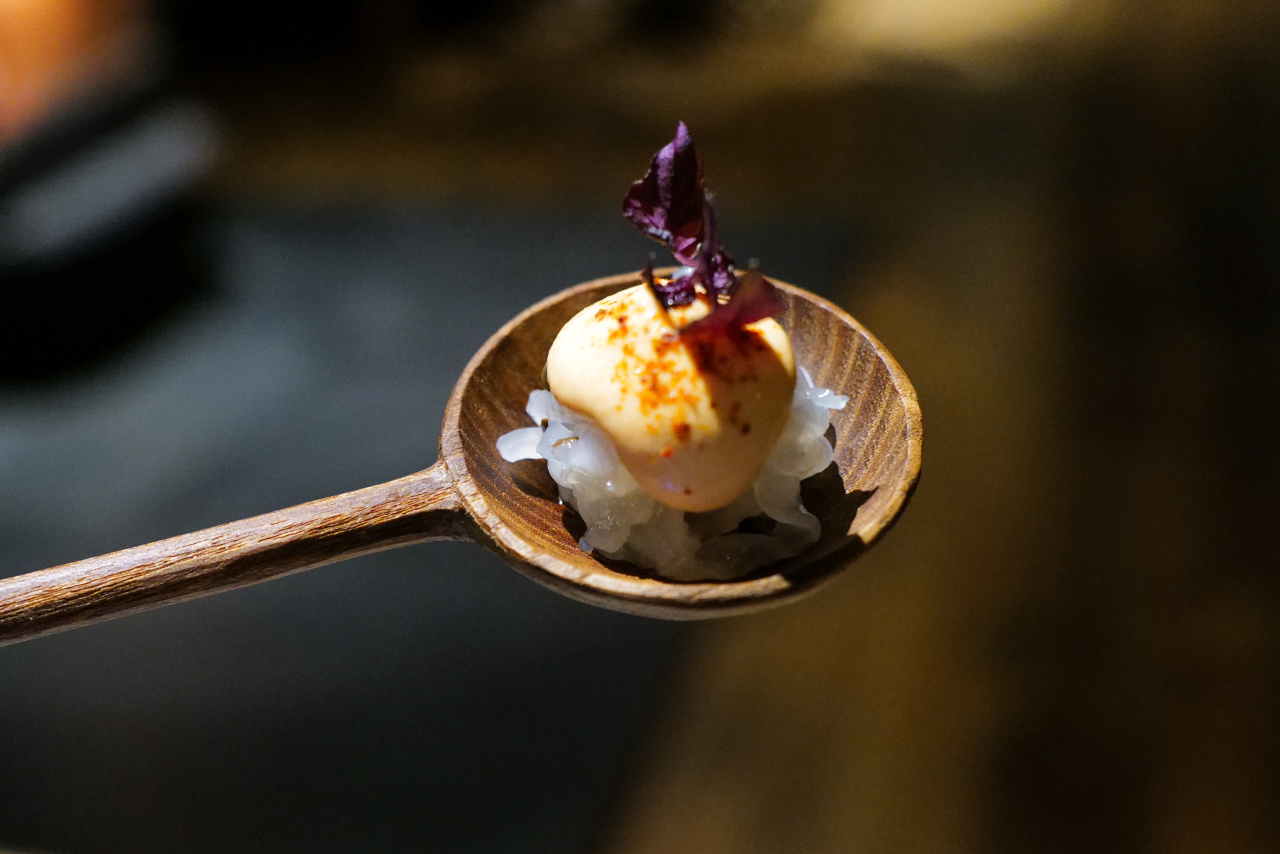
    Swordtip squid with bell pepper sauce
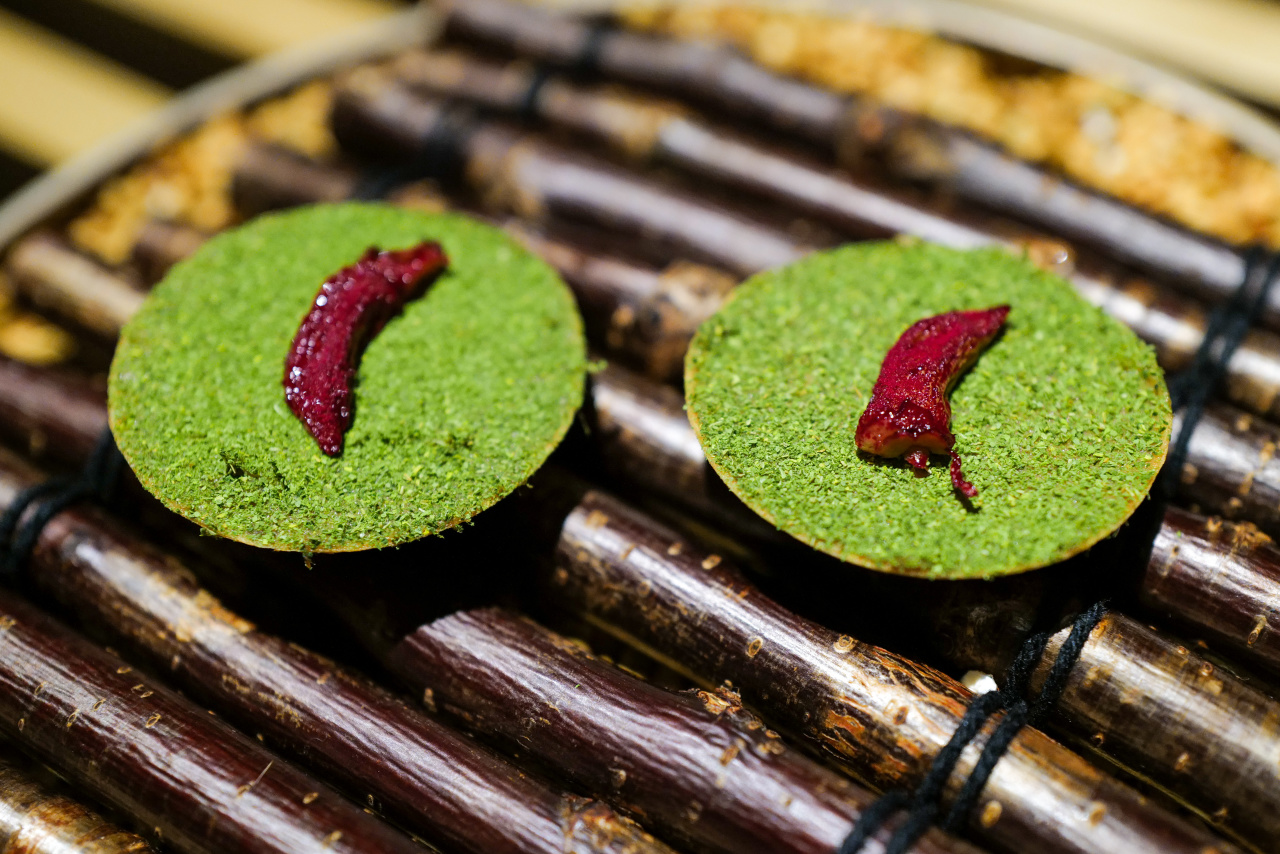
    Wild boar rillettes with celery

    The first few bites aren’t served at the table, but by the fireplace on a sofa. Outside, the snow is still falling heavily, making the room feel even warmer and more intimate—almost like visiting a friend’s home. The food that appears, though, is intense and high-saturation in flavor; the most comfortable setting used to snap your palate awake.

    The swordtip squid comes with a bell pepper sauce. One round spoonful goes straight into your mouth: rich, nutty, almost creamy sauce hits first, then the squid—fresh enough to be both soft and pleasantly elastic. It’s a surprising “sea flavor with warmth and depth” kind of dish.

    On the other side is a wild boar meat tartlet. Under its healthy green exterior is smoked wild boar, straightforward and powerful. A little acidic, crunchy pickled garnish cuts right through the richness.

    One from the mountains, one from the sea—two opening bites with wildly different directions, both carrying a real sense of impact. They flip on that feeling of, “Okay, dinner has truly begun.”
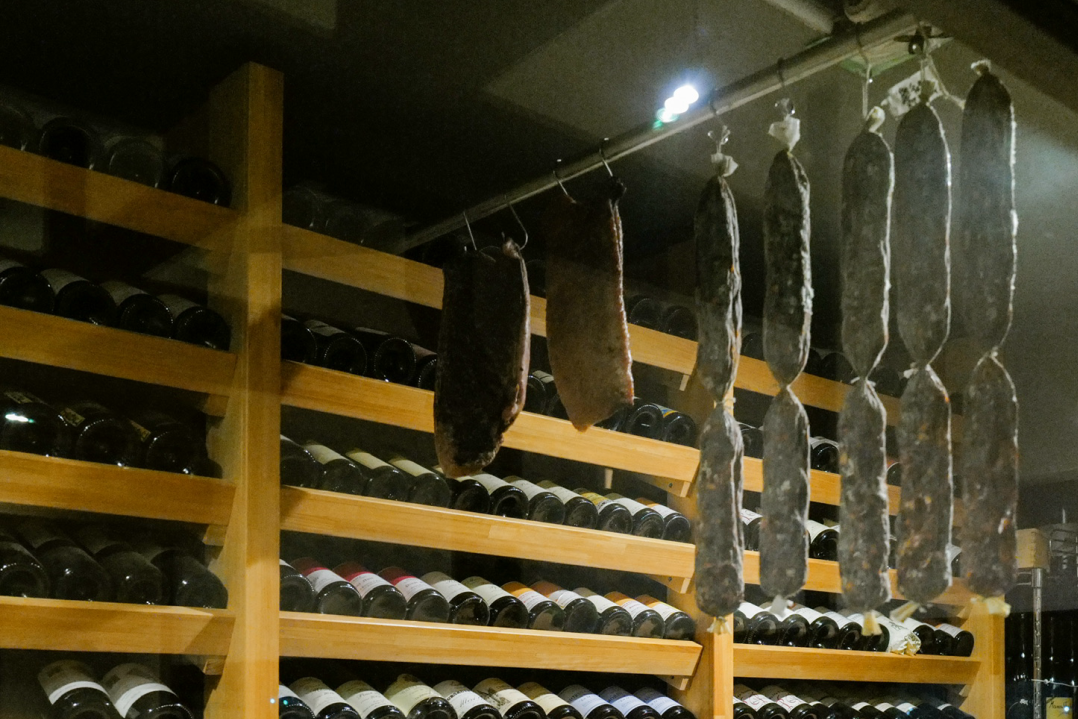
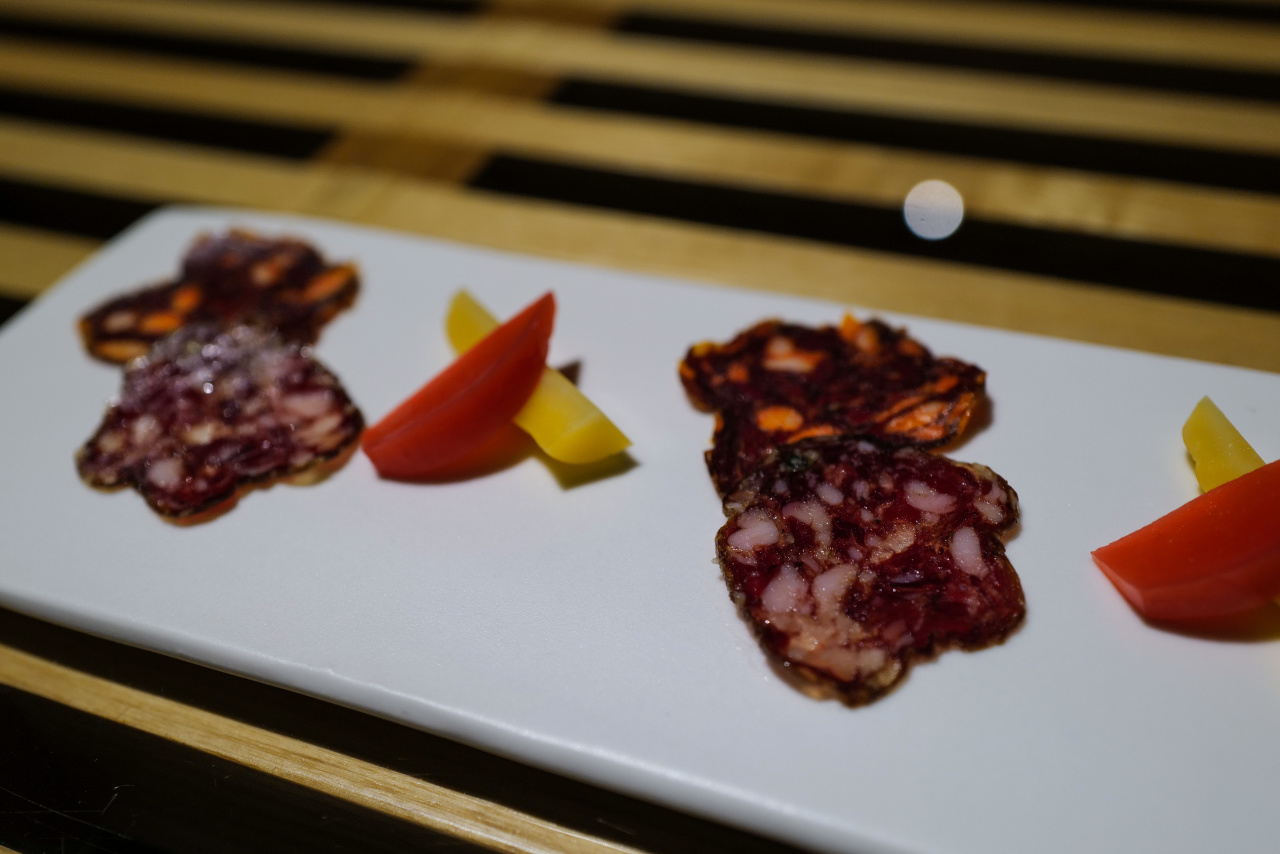
    House-cured game salami
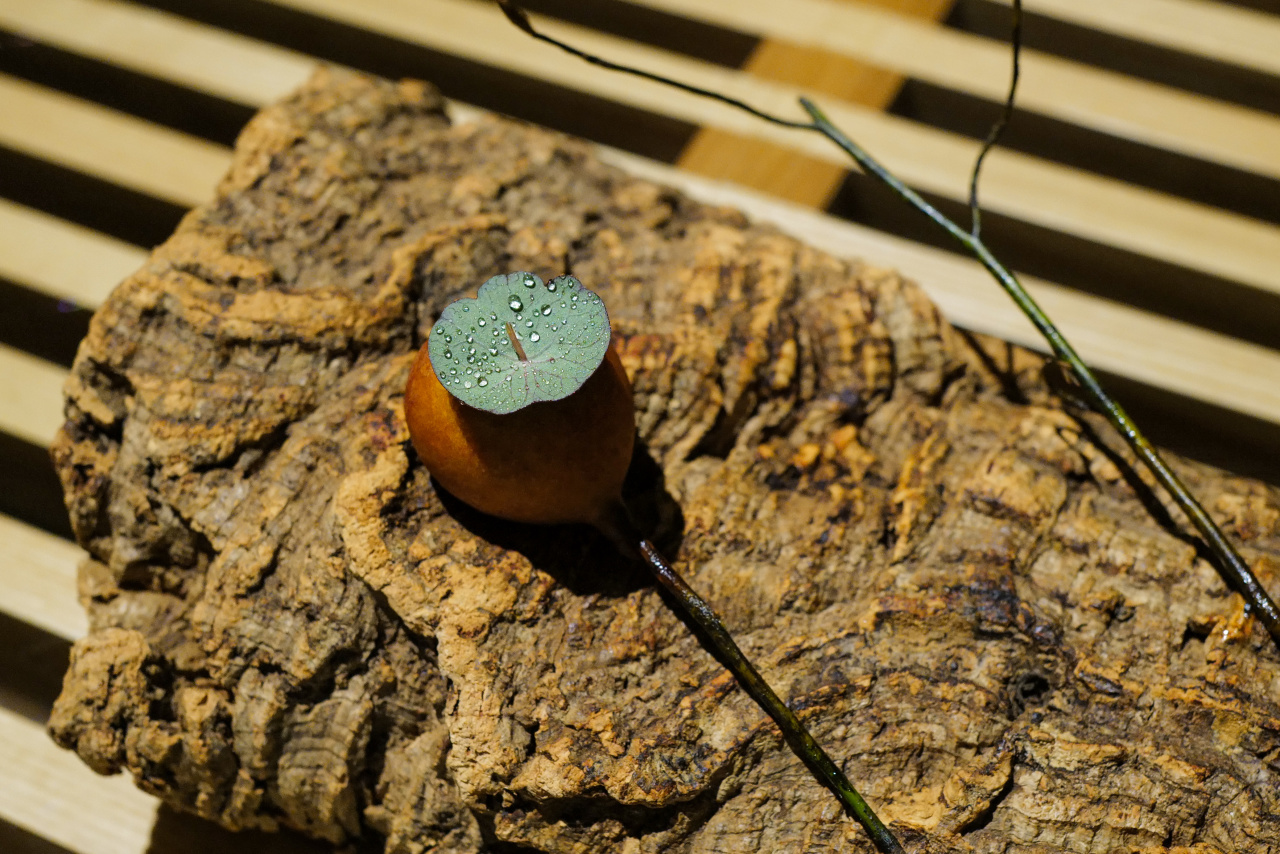
    Wild-game hot dog

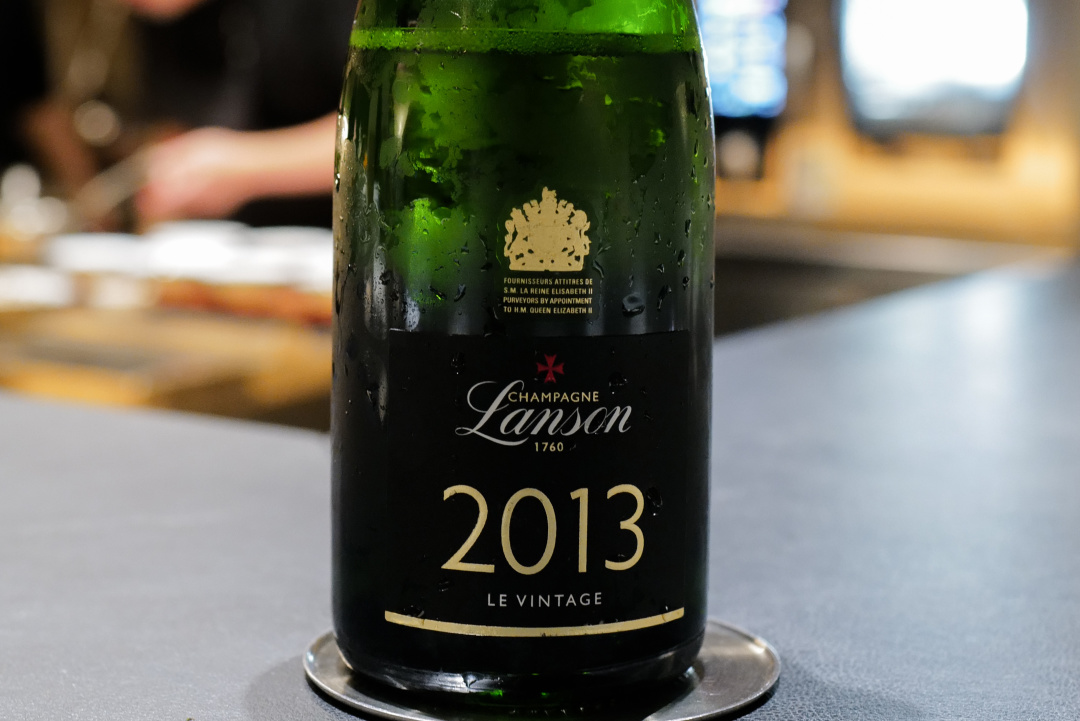
    Hanging in a cellar lined with wines worth millions of yen are their house-made salami, in sanshō and lightly spicy versions—great with pre-dinner Champagne.

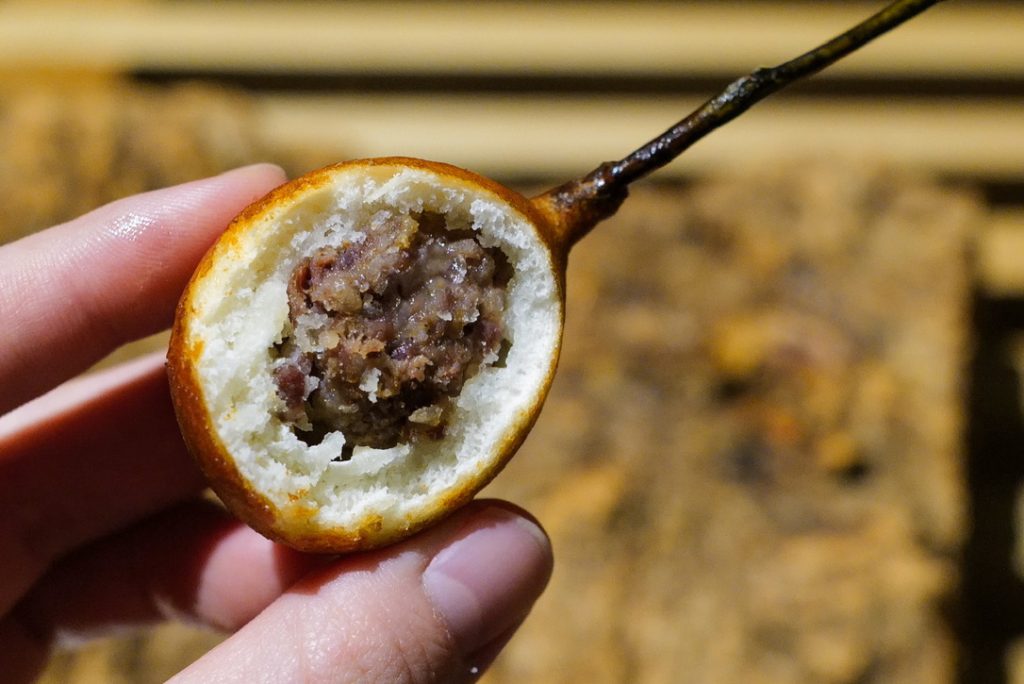
    The last bite in the sofa area is a wild-game corn dog.

    The frying is perfect: an ultra-crisp shell, and just inside it, a thin layer of soft, fluffy batter. The line between crisp and soft is drawn very cleanly.

    The filling is curious—it somehow evokes Yunnan ham mooncakes: a touch of sweetness, fat, and meatiness, but more layered. You get fine shreds of meat, little bursts of crispier bits, and a hint of gamey aroma, with a faint numbing tingle at the end. The tiny leaves and “dew-drop” dressing on top add just enough salinity and freshness to brighten all that fried richness.

    It’s one of those “this really shouldn’t be this good” moments.
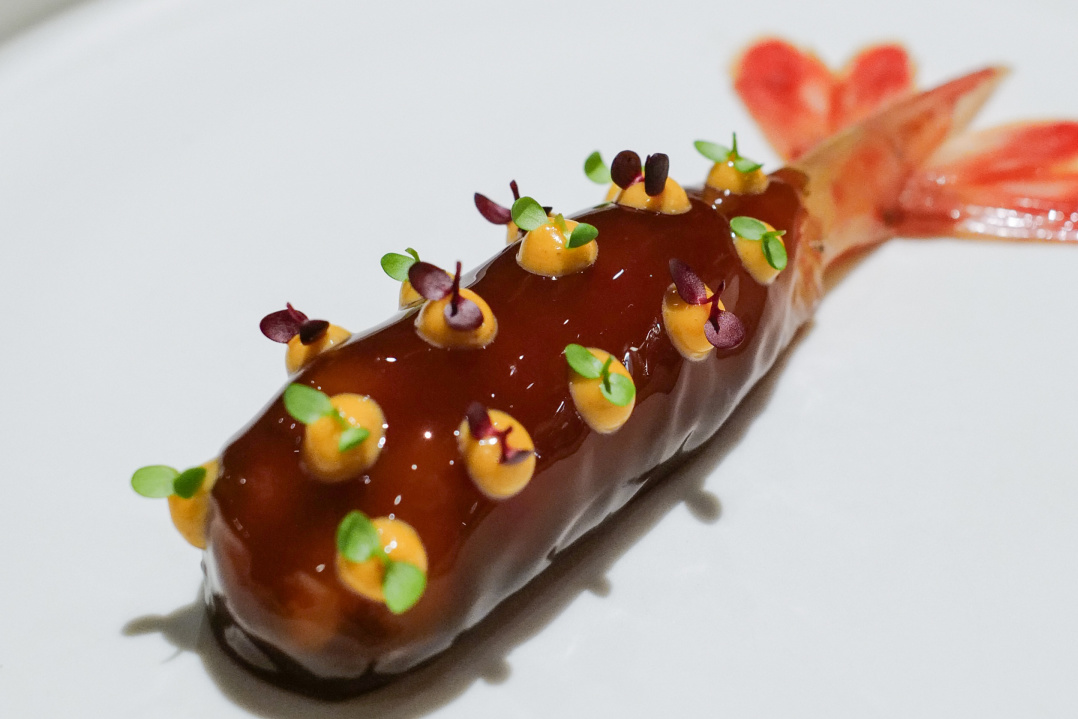
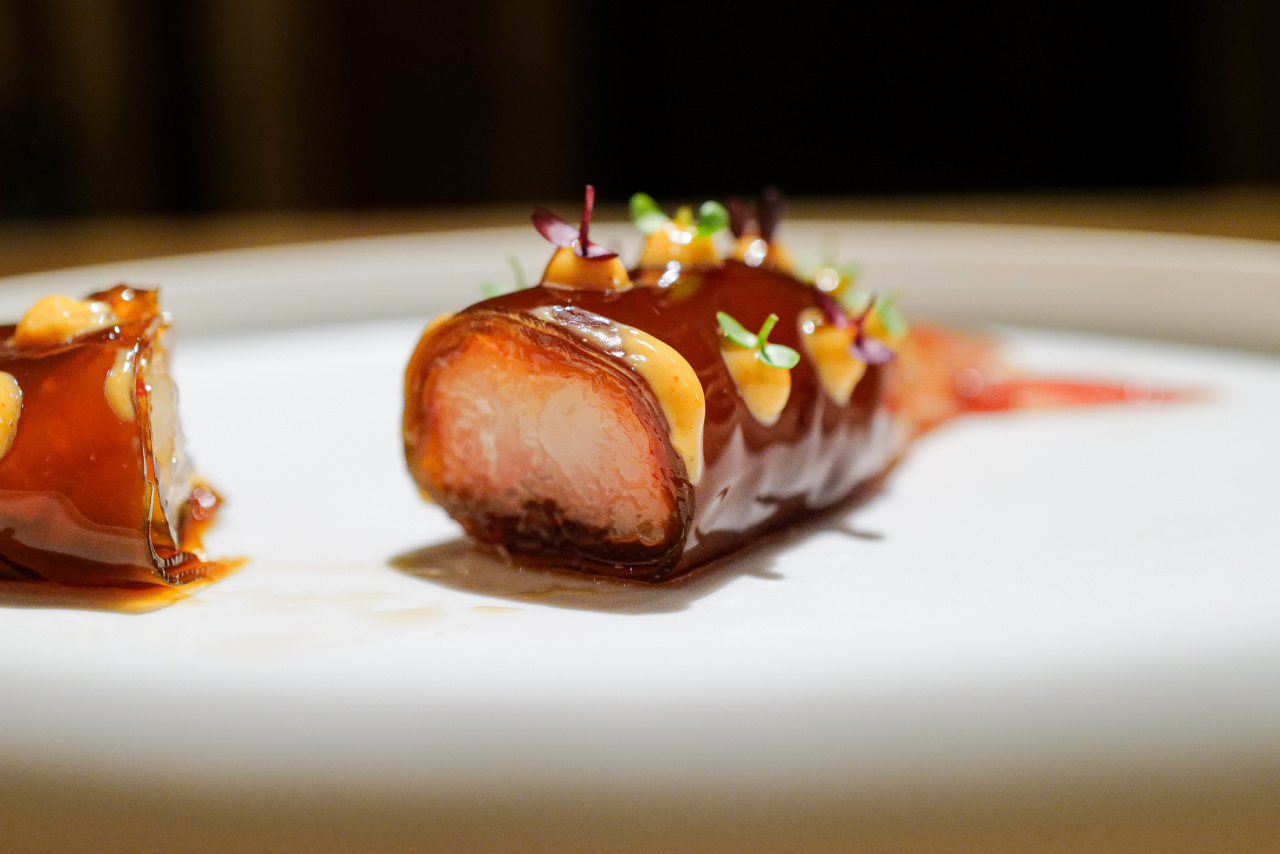
    Botan shrimp in bouillabaisse jelly

    At the counter, the first “formal” plate appears: a stunning botan shrimp dish.

    Niigata is a fishing region facing the Sea of Japan; beyond the famous Sado tuna, the general level of seafood is excellent. This is one of Niigata’s natural advantages over big cities.

    The jelly encasing the shrimp is a consommé made from shrimp shells, sealing in all the umami. Inside, the botan shrimp is firm yet softly sticky, so fresh it feels like it bursts in your mouth.

    On top is a tiny dab of rouille, the classic bouillabaisse accompaniment: an egg yolk emulsion with garlic, spice, and herbs, all in just the right abundance.

    It feels like:

    “A shrimp with a PhD.”

    A dish of perfect time, place, and people. So rich and so good that you instinctively slow down to savor it, not wanting to eat the last bite too quickly.
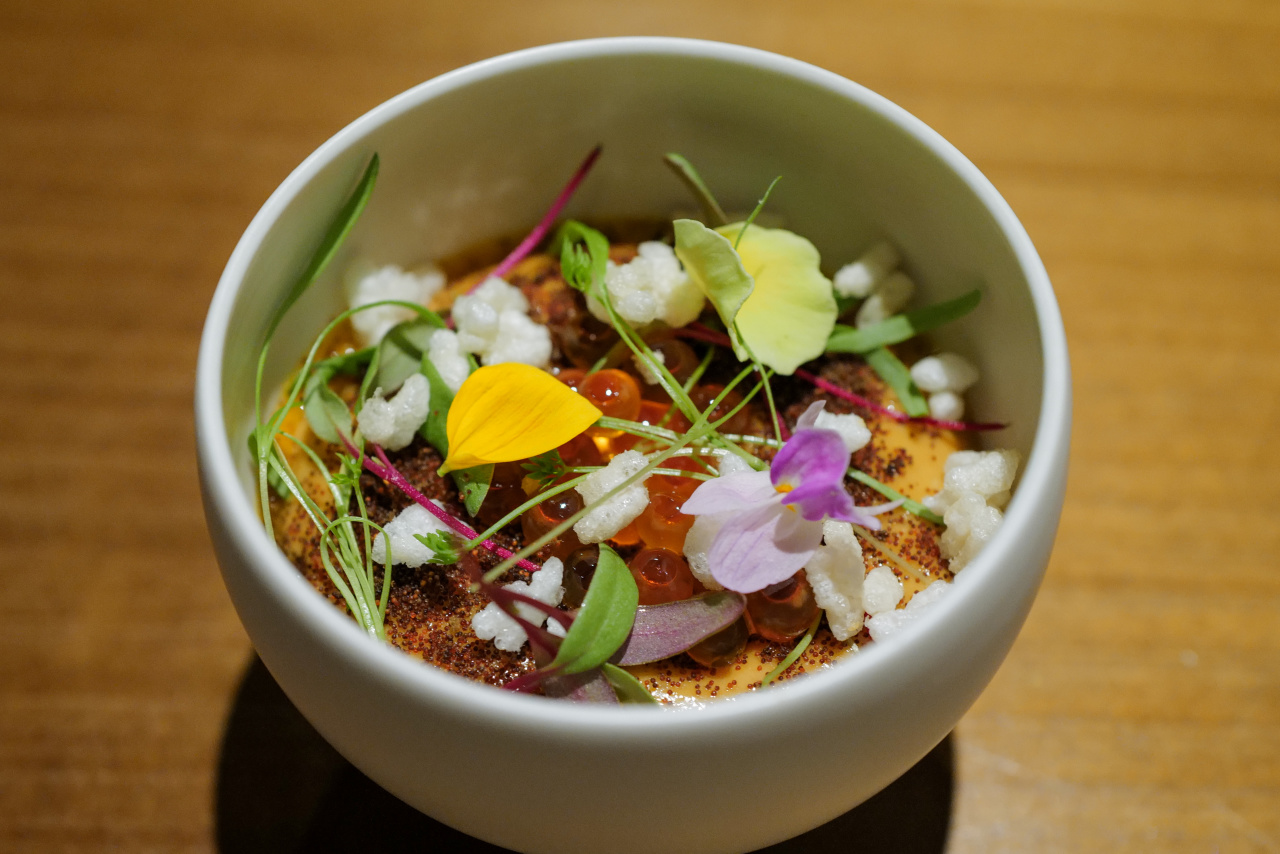
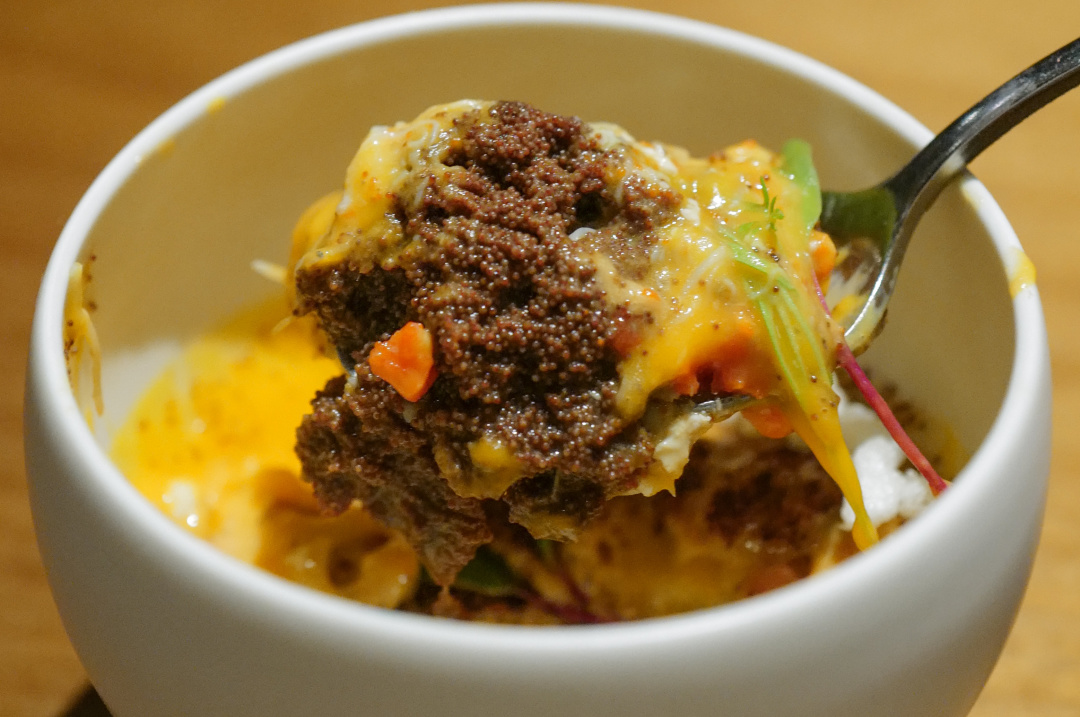
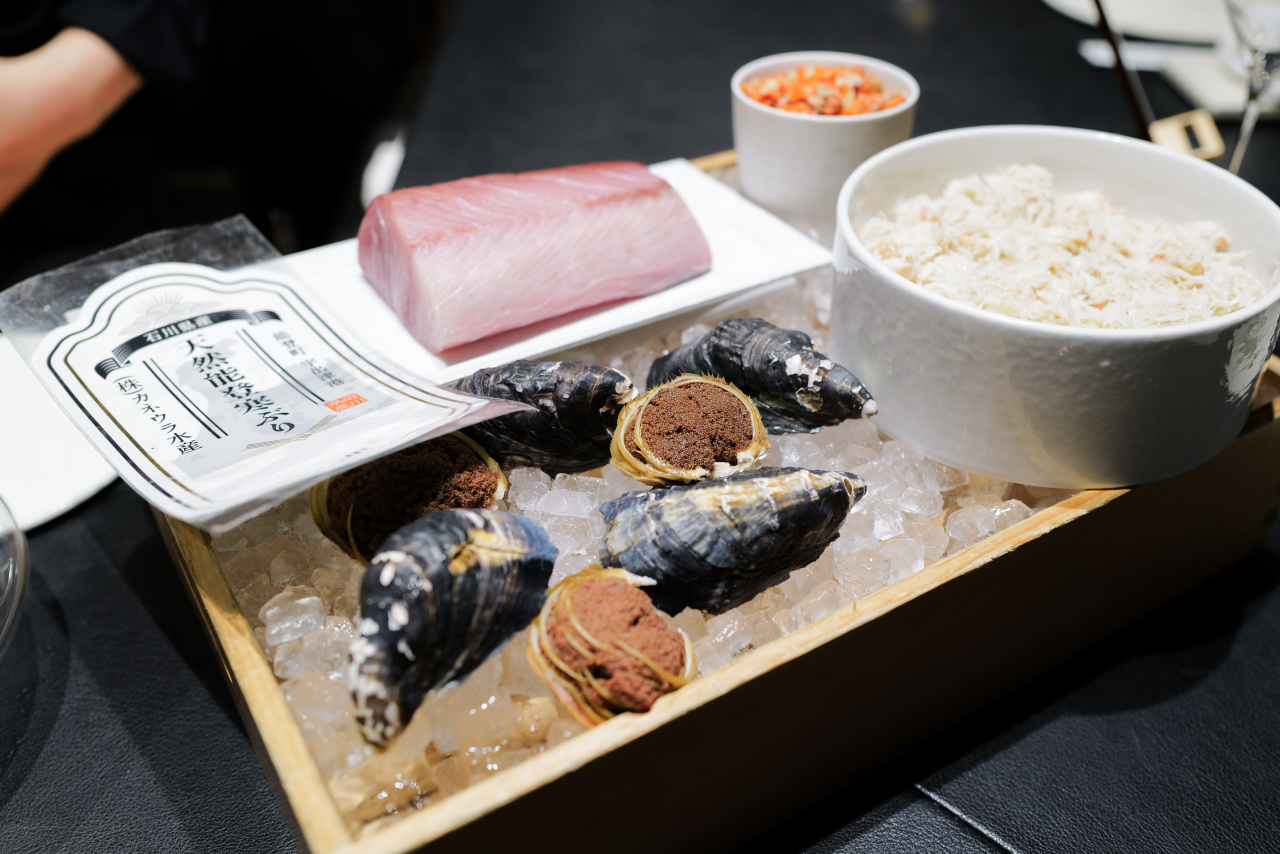
    Kobako crab, ikura, and a Koshihikari crisp

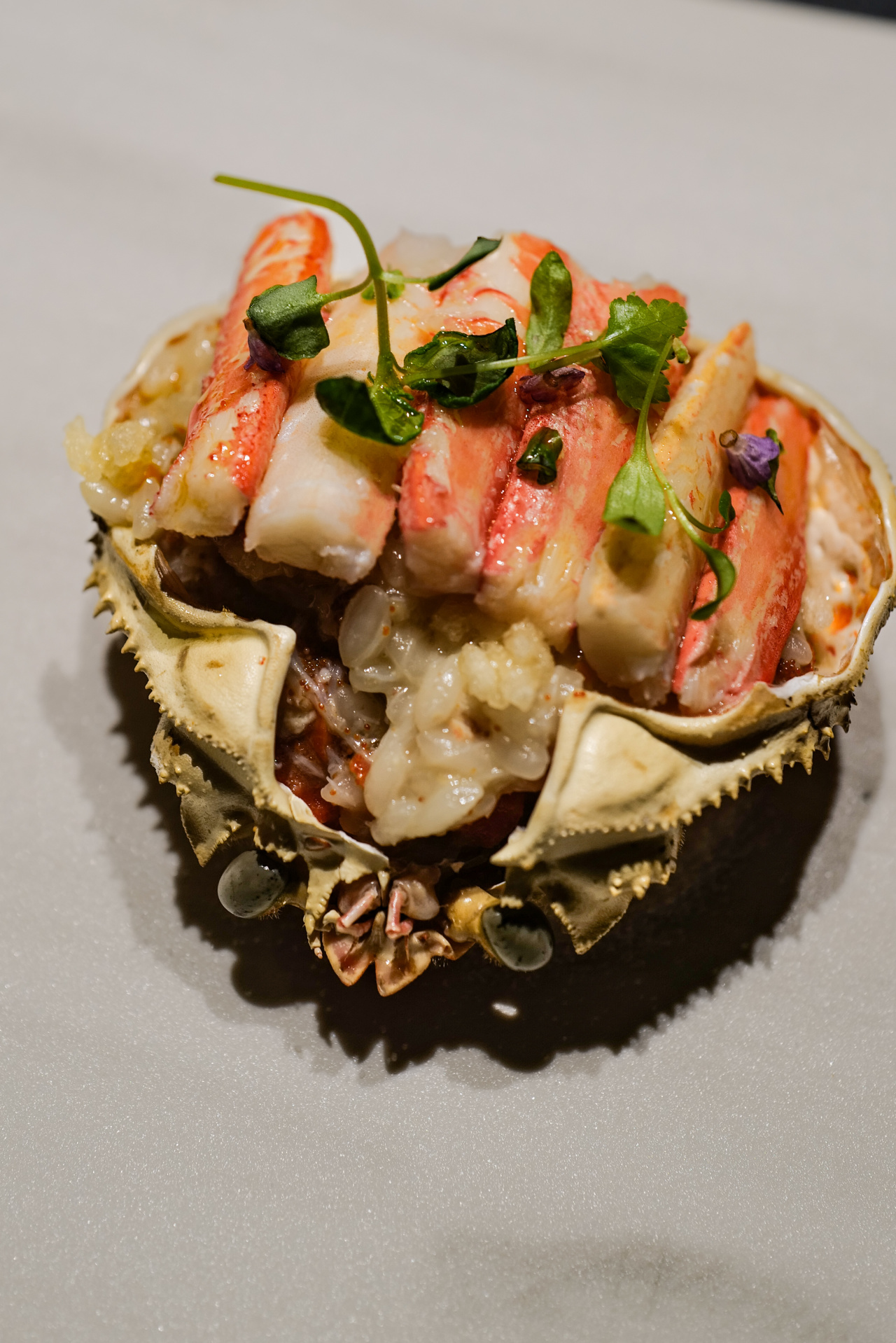
    Kobako crab, a staple of winter fine dining in Japan, is given a very memorable treatment here—running at full speed down the “high-umami” lane.

    The bowl is packed with information: thick, fatty kani miso; herbal notes; popping roe; sweetness from sweet potato; and that shellfish aroma that seems to rise straight into your nose. The “umami” isn’t one-note—every bite has a different mix.

    At the same time, the balance is spot on. Rich but not heavy. Deeply savory but never harsh. Sweetness and salinity both held precisely at the edge. It feels like a process of unlocking layer after layer, until you hit the bottom and dig up a final pocket of crab roe—a little treasure moment.
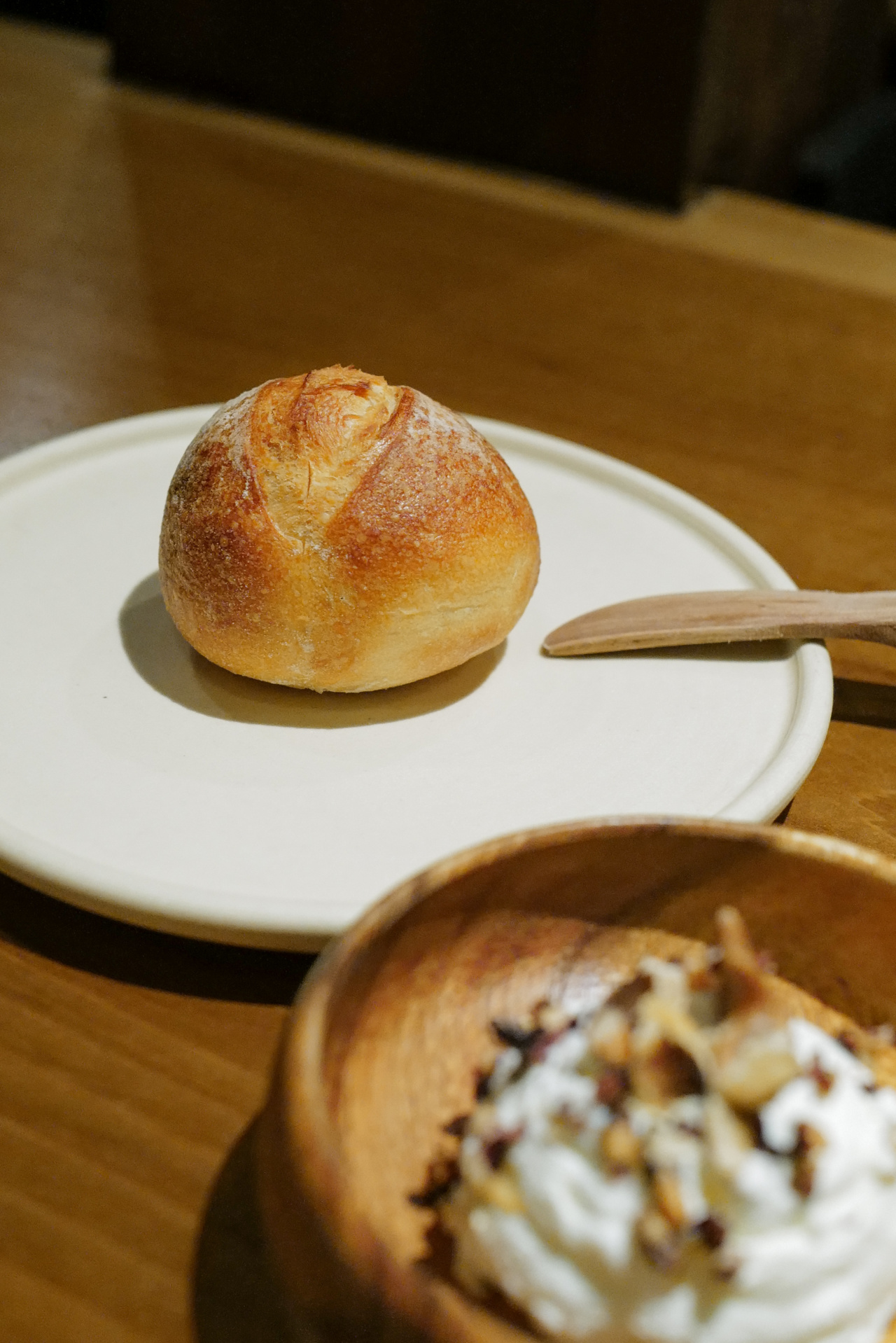
    Small bread rolls arrive right then, and it’s impossible not to drag them across every last streak of sauce. The crust is firm, the inside extremely soft, with a slight alkaline note that matches the sauce beautifully.

    “Would you like a second one?”
    “But do save some room for what’s coming.”
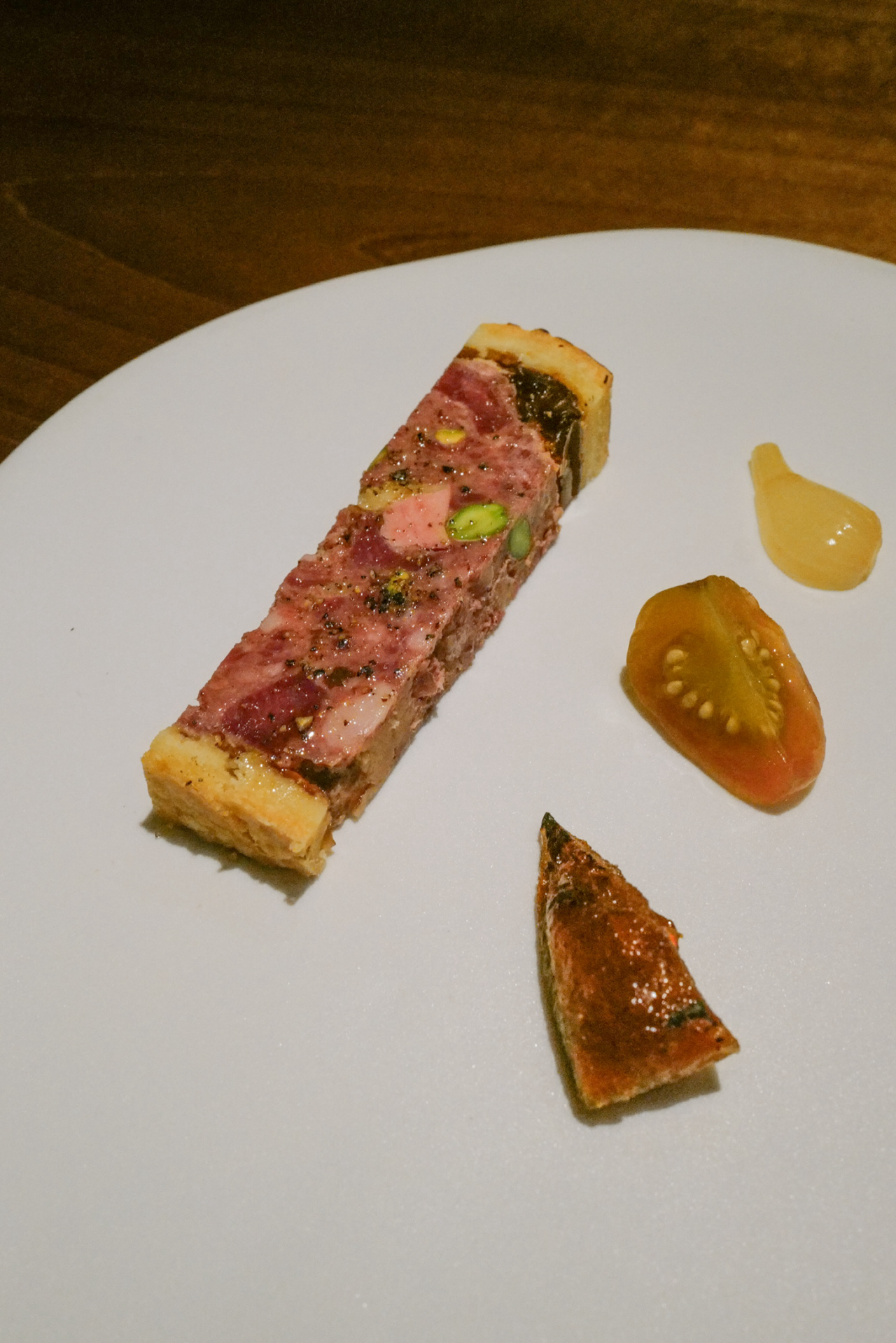
    Game pâté

    The game pâté en croûte feels like a pause before the heavier mains.

    On this visit, venison took the lead—full of flavor, the kind of dish that makes you slow down and chew. It’s delicious and very wine-friendly.

    The pickles on the side are fun: garlic, tomato, persimmon, corresponding to tangy saltiness, richness, and gentle sweetness. After each bite of pickles, the pâté seems to reveal something slightly new.
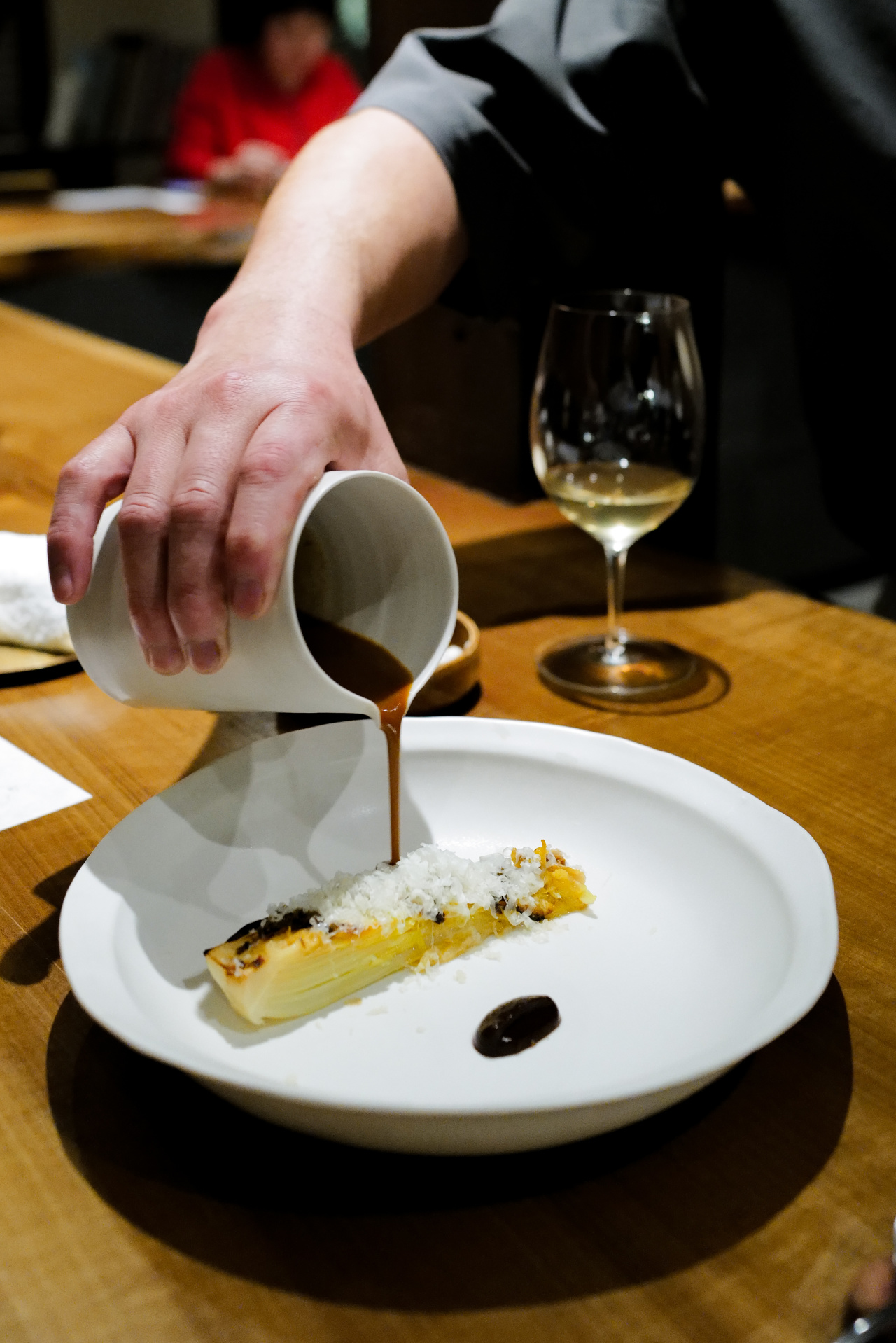
    Cabbage, black garlic, Comté

    A “life-changing cabbage”

    Between starters and mains comes something that looks humble but is one of UOZEN’s signature dishes: roast “snow-aged” cabbage.

    The whole cabbage is stored under snow outdoors, concentrating its sweetness. It starts roasting in the oven as soon as guests arrive. The sauce is built with Jura vin jaune, plus house-made black garlic paste and paper-thin Comté.

    One bite, and it blows far past anything you expect from “just a cabbage.” The vin jaune sauce presents the vegetable’s sweetness in its purest, clearest form. The black garlic adds a fermented depth. The Comté, set off by the sauce, splits into clean layers of dairy richness and nuttiness, opening up all those second- and third-level aromas that only time creates.

    Everything is balanced: clean sweetness, nuttiness, fermentation, and creaminess all checking and completing each other.

    Honestly? A life-changing cabbage.
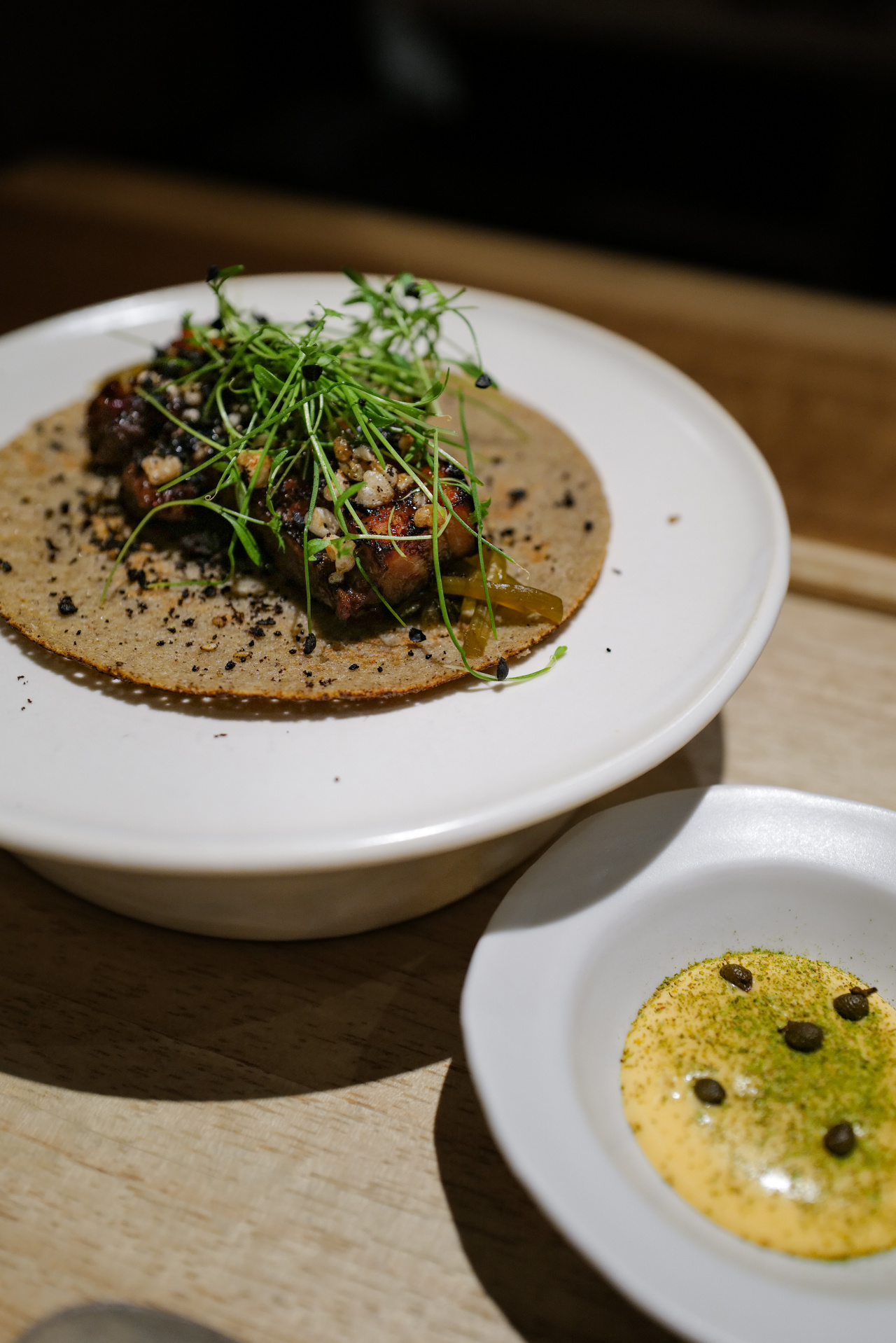
    Wild boar and buckwheat tortilla

    A few days before the meal, I saw Inoue post a fresh wild boar on Instagram. It felt like a quiet promise that something special might show up.

    The boar did appear—but wrapped in a buckwheat tortilla.

    Wild boar is thick, primal, with a gentle sweetness in its fat. Buckwheat is dry, cool-grain aroma. The sanshō sabayon on the side is airy and light, organizing the spice and tingling into fine, detailed lines.

    There’s fragrance, freshness, softness, fluffiness—it’s like transforming rough mountain flavors into something finely sifted. For a second, it even reminded me of Northeastern Chinese egg sauce rolled in flatbread.

    It’s one of those, “Don’t overthink it. It’s just ridiculously good.” dishes.
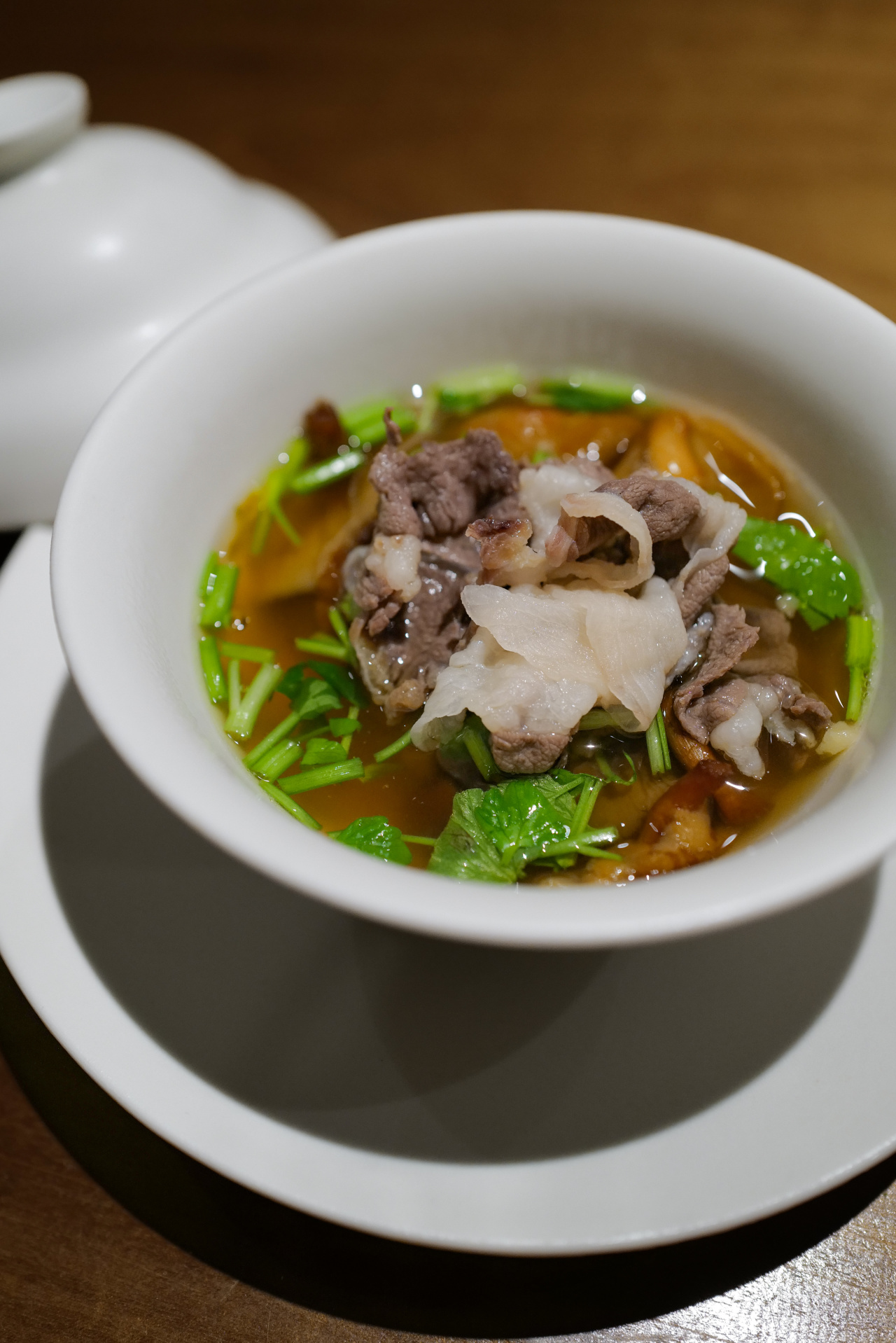
    Wild mushrooms, Asian black bear, and turtle consommé

    In a restaurant that works so much with game, bear is something you shouldn’t skip. But here, it’s presented with surprising clarity.

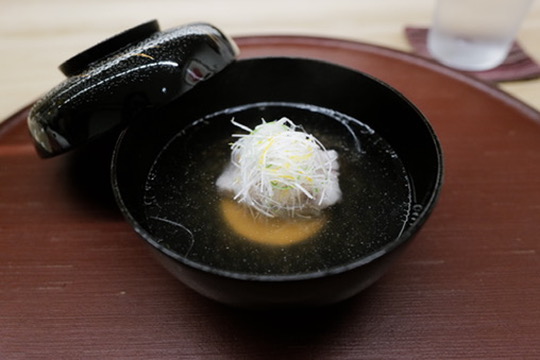
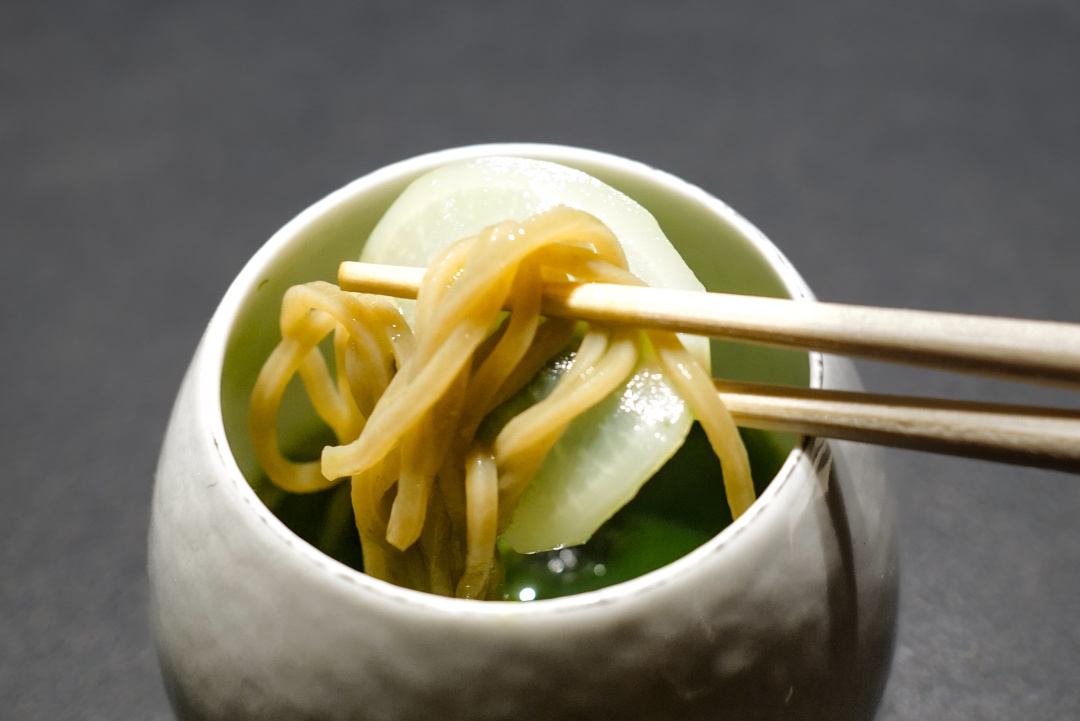
    A clear fish turtle (甲鱼) broth holds nameko and oyster mushrooms, plus a touch of celery leaf for green brightness. Even just smelling it, the aroma feels layered.

    On the palate, each component shines on its own. Nameko is juicy and sweet, with bounce and moisture. Moon bear carries balanced fat and game aroma. Hidden at the bottom are bits of turtle skin—soft and slightly sticky, tightening the umami even further.

    Clarity, savoriness, fat, and fungal depth all appear in distinct layers, then gather back into one warm bowl.
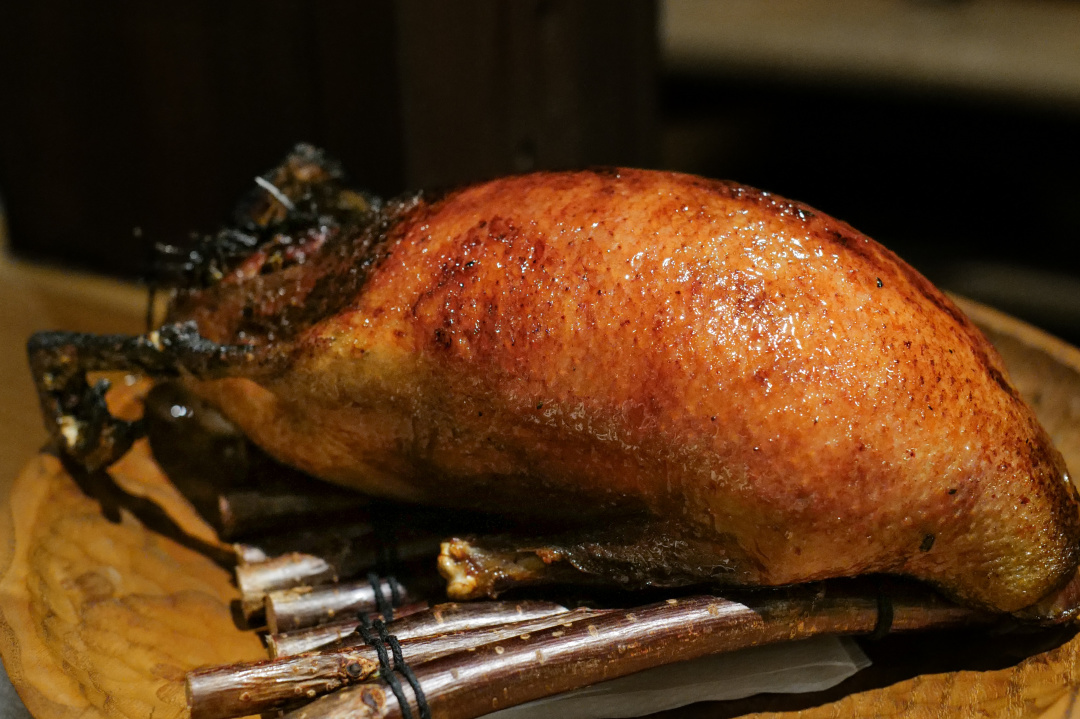
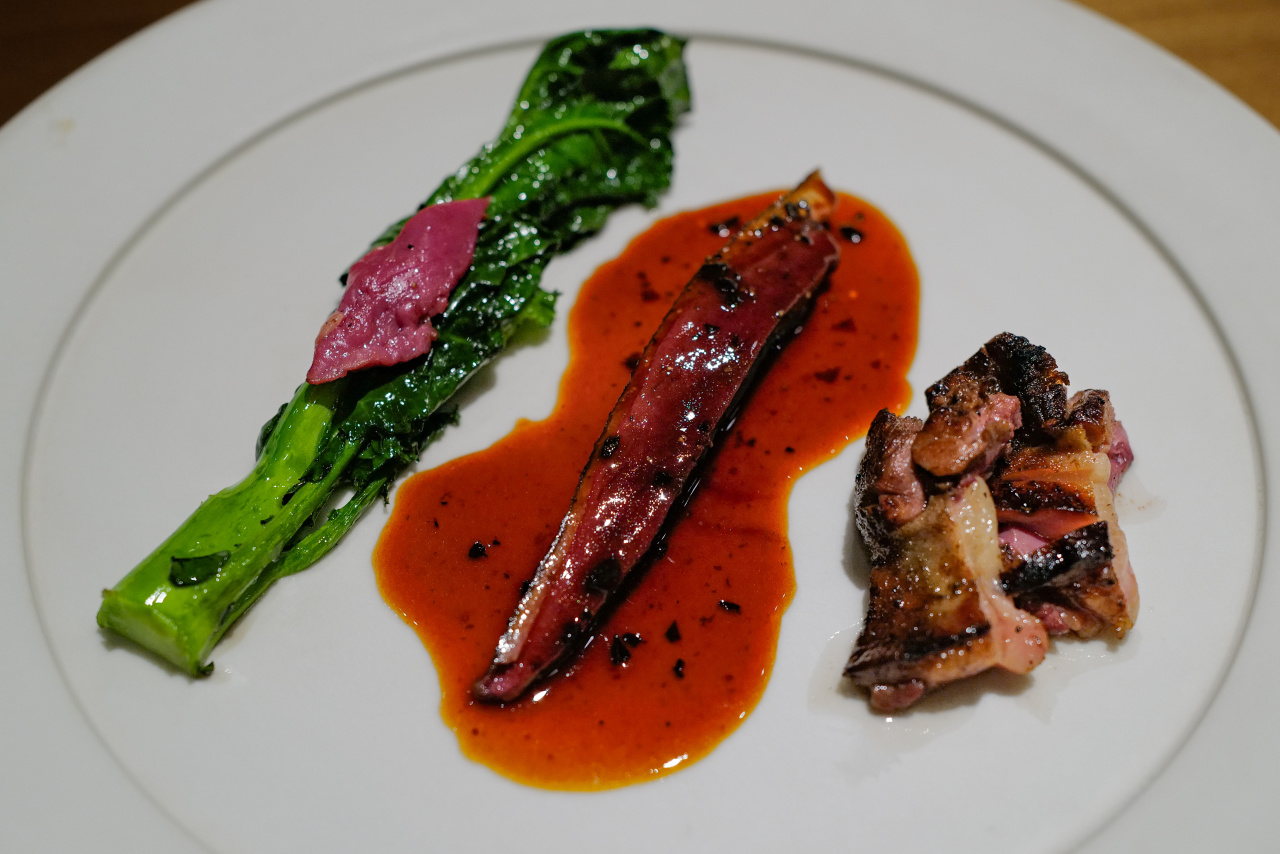
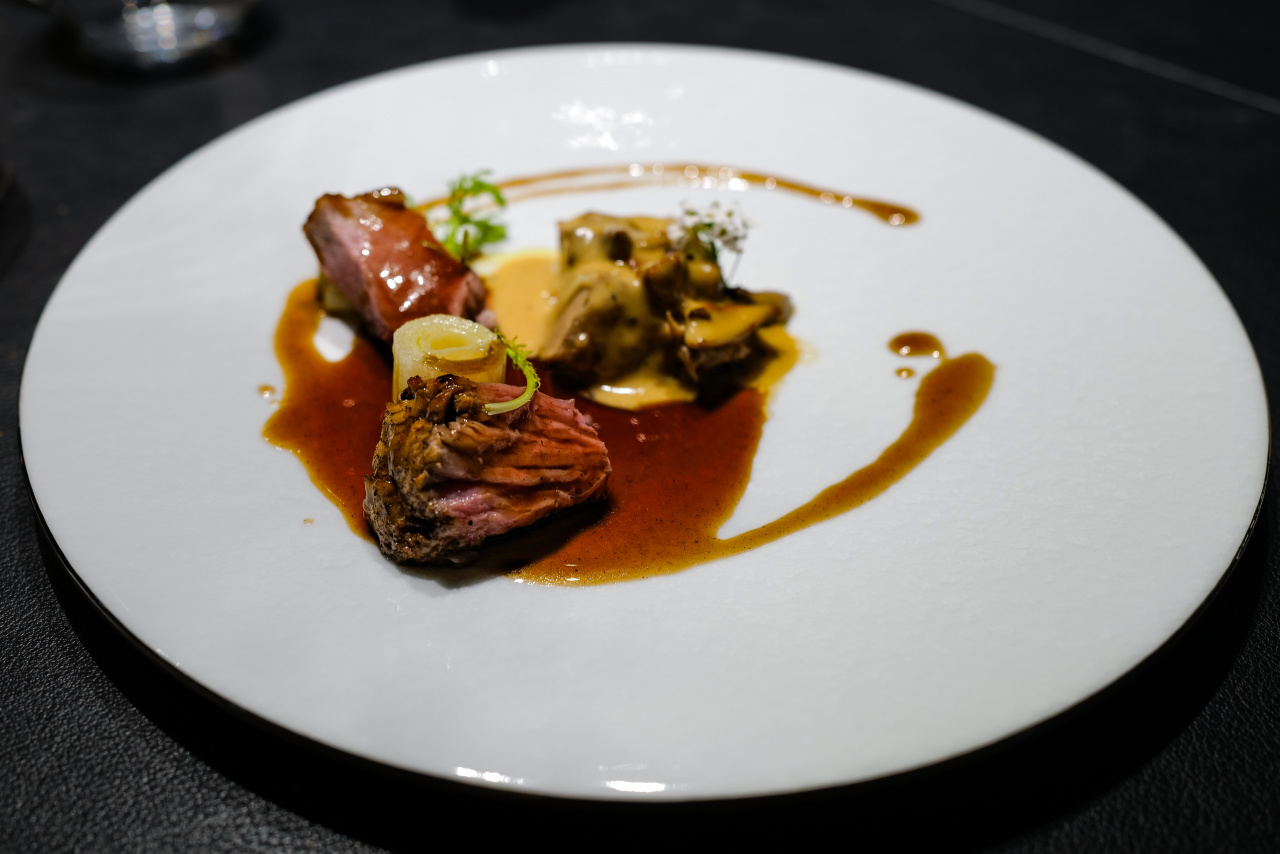
    Niigata wild duck

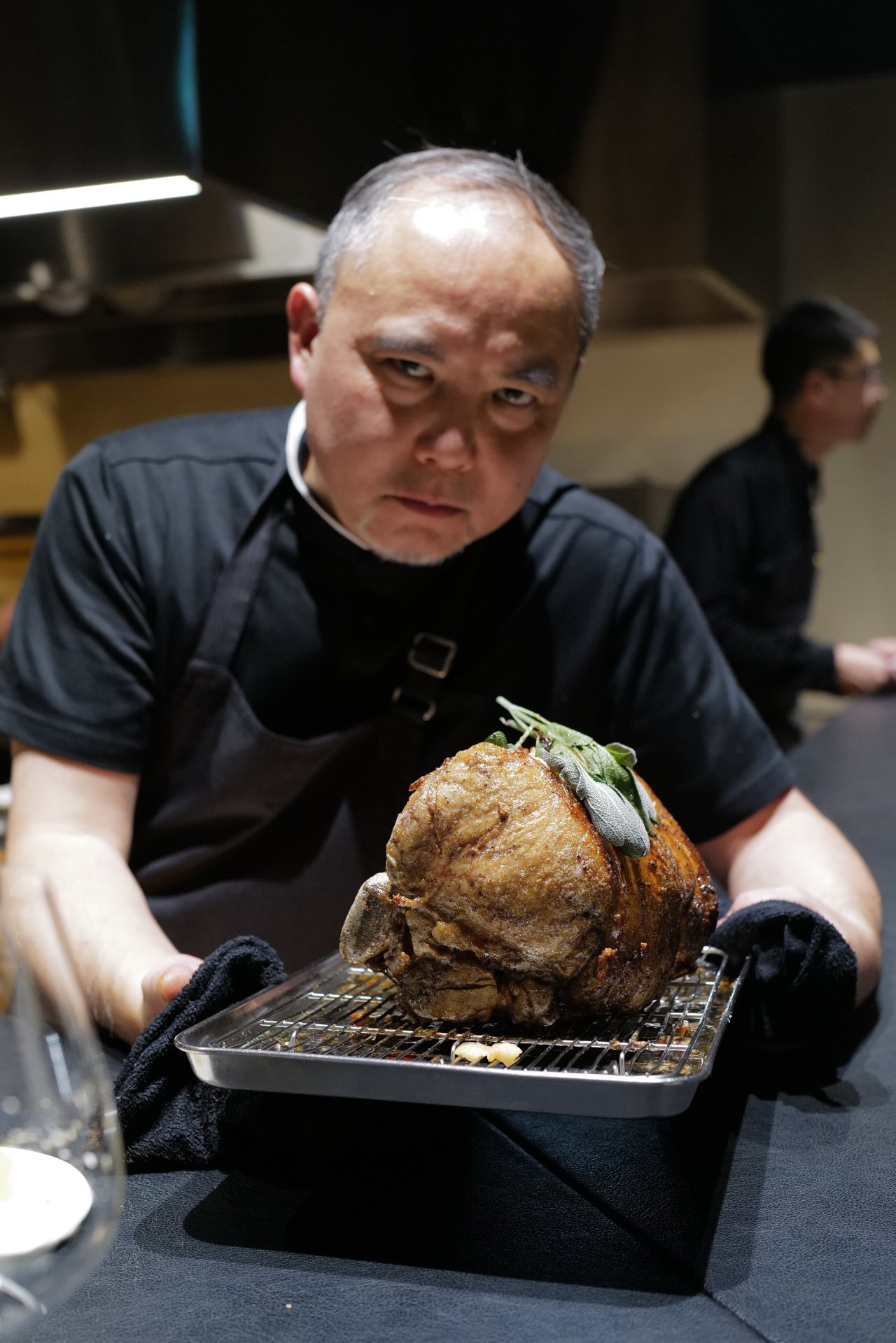
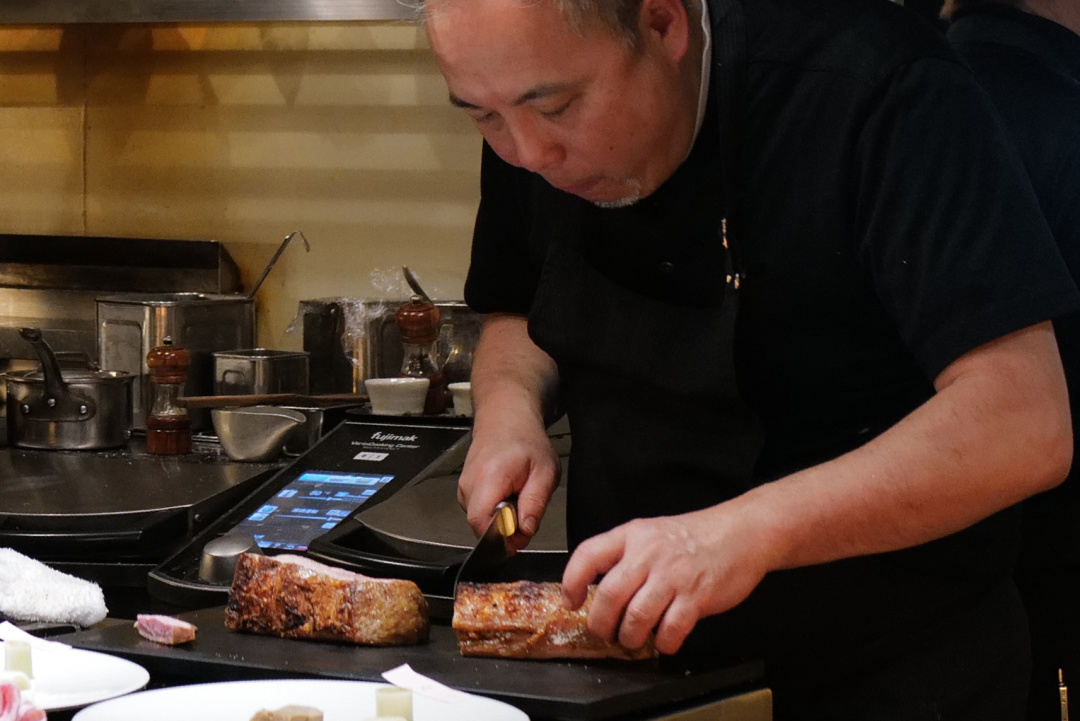
    The last main is wild Niigata duck roasted with wild honey. Three cuts are presented on the plate: skin-on breast, leg, and tenderloin.

    The seasoning is bold. The sauce has clear alcohol and acidity, the breast carries distinct liver notes, and the small tenderloin piece is beautifully soft.

    It’s very correct and well-executed, but in a lineup of dishes that kept climbing in surprise and dimension, this ending felt a touch more conventional by comparison.
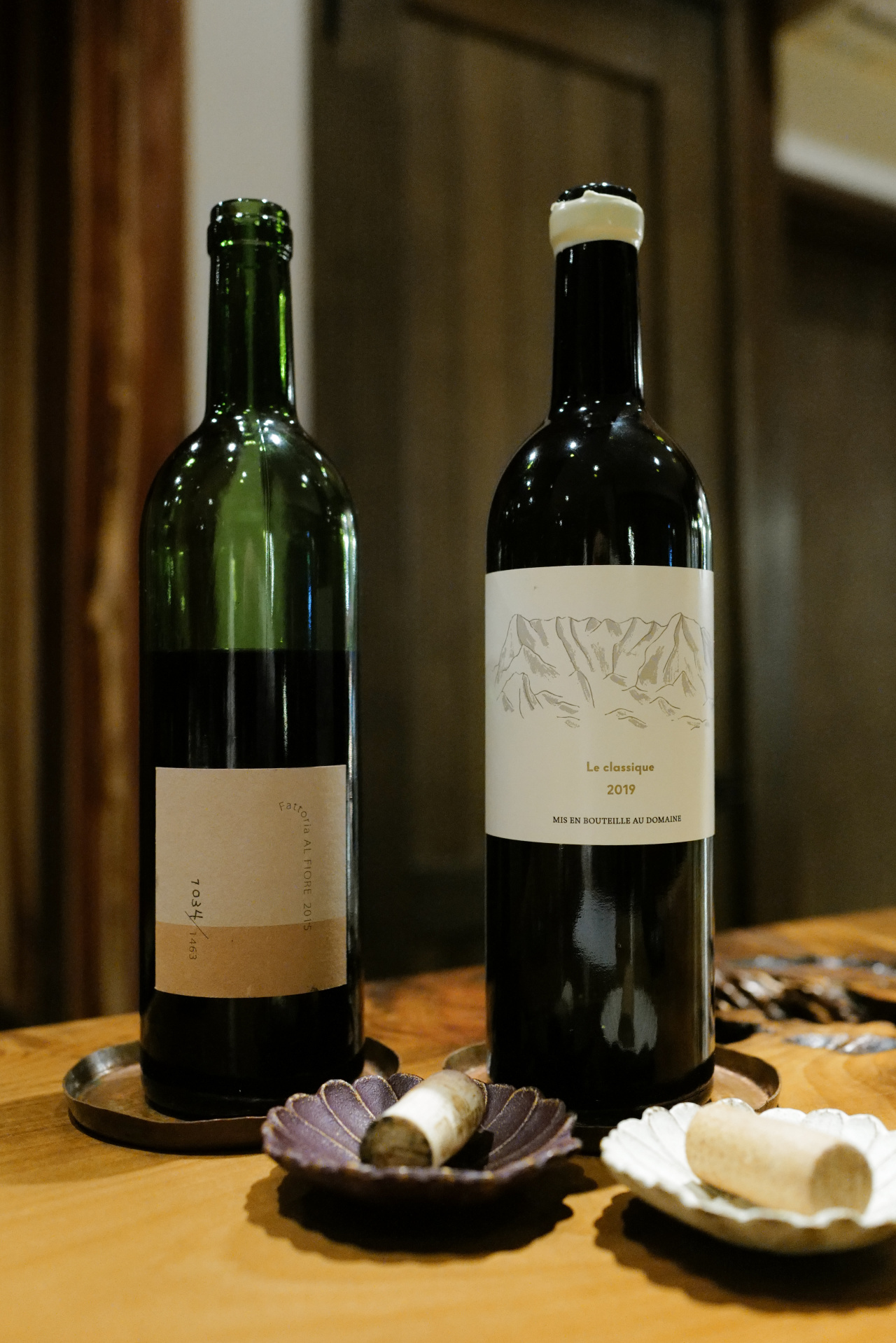
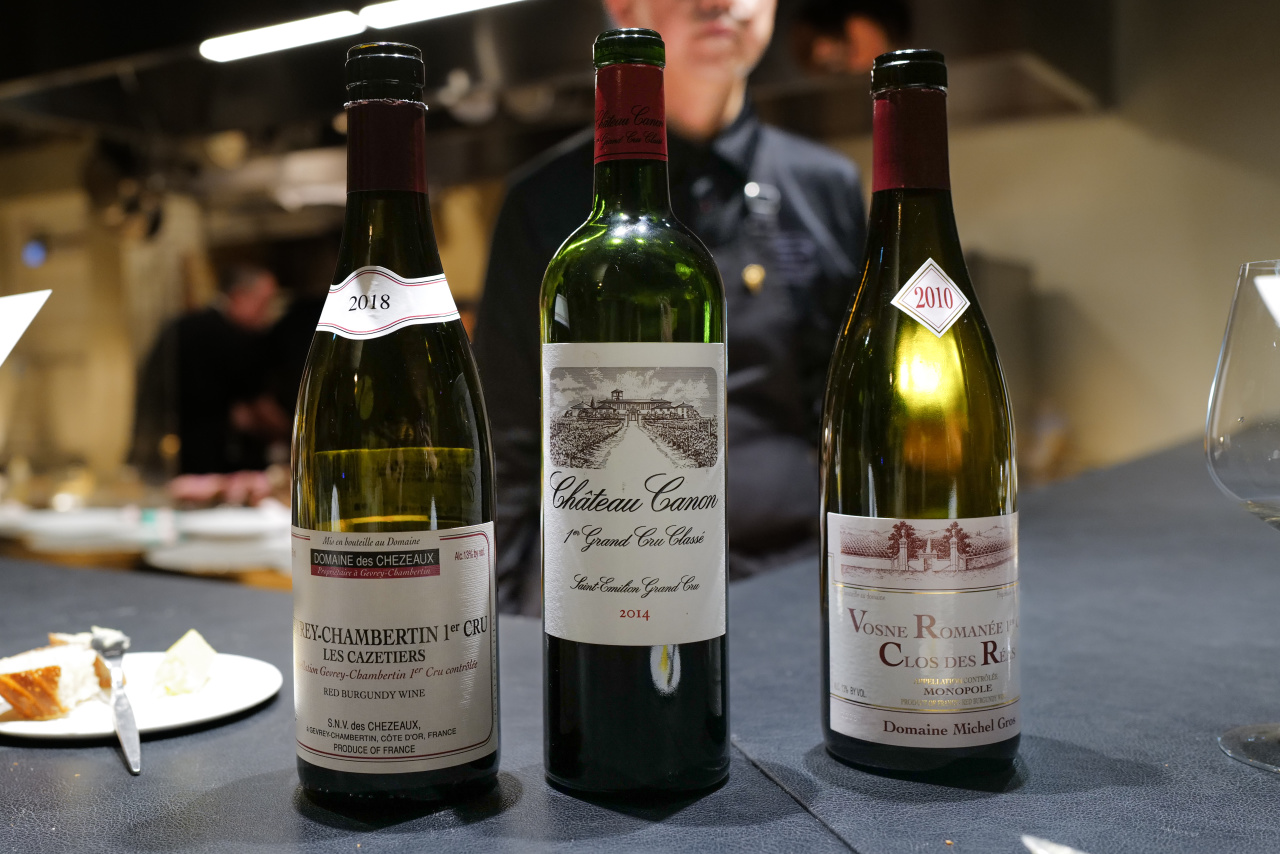
    t’s worth saying a bit more about UOZEN’s wine selection.

    The chef is a serious wine lover. For a restaurant that only seats six guests per service, having two full wine cellars is… quite something.

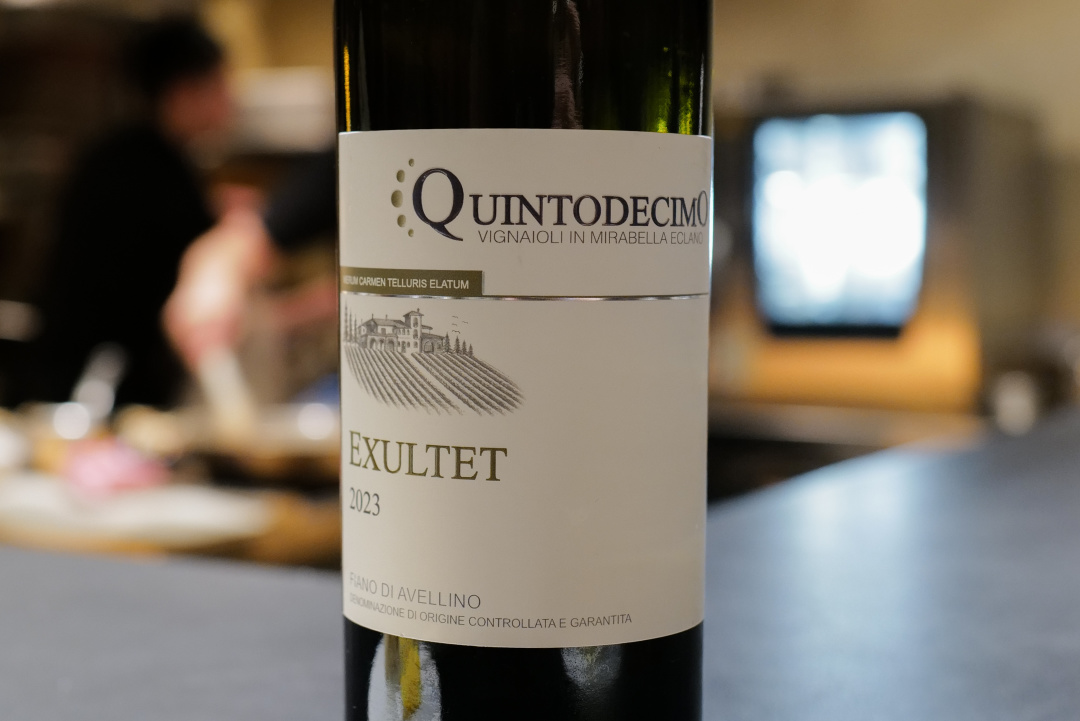
    The pairing is good, of course, but personally I’d lean toward ordering by the bottle—there are some rare vintages and exciting finds hiding in there.

    If you’re curious and open-minded, Japanese wine can be a fantastic option here. Many of the bottles you’ll see are hard to find anywhere else, and the food pairings are thoughtful and on point.
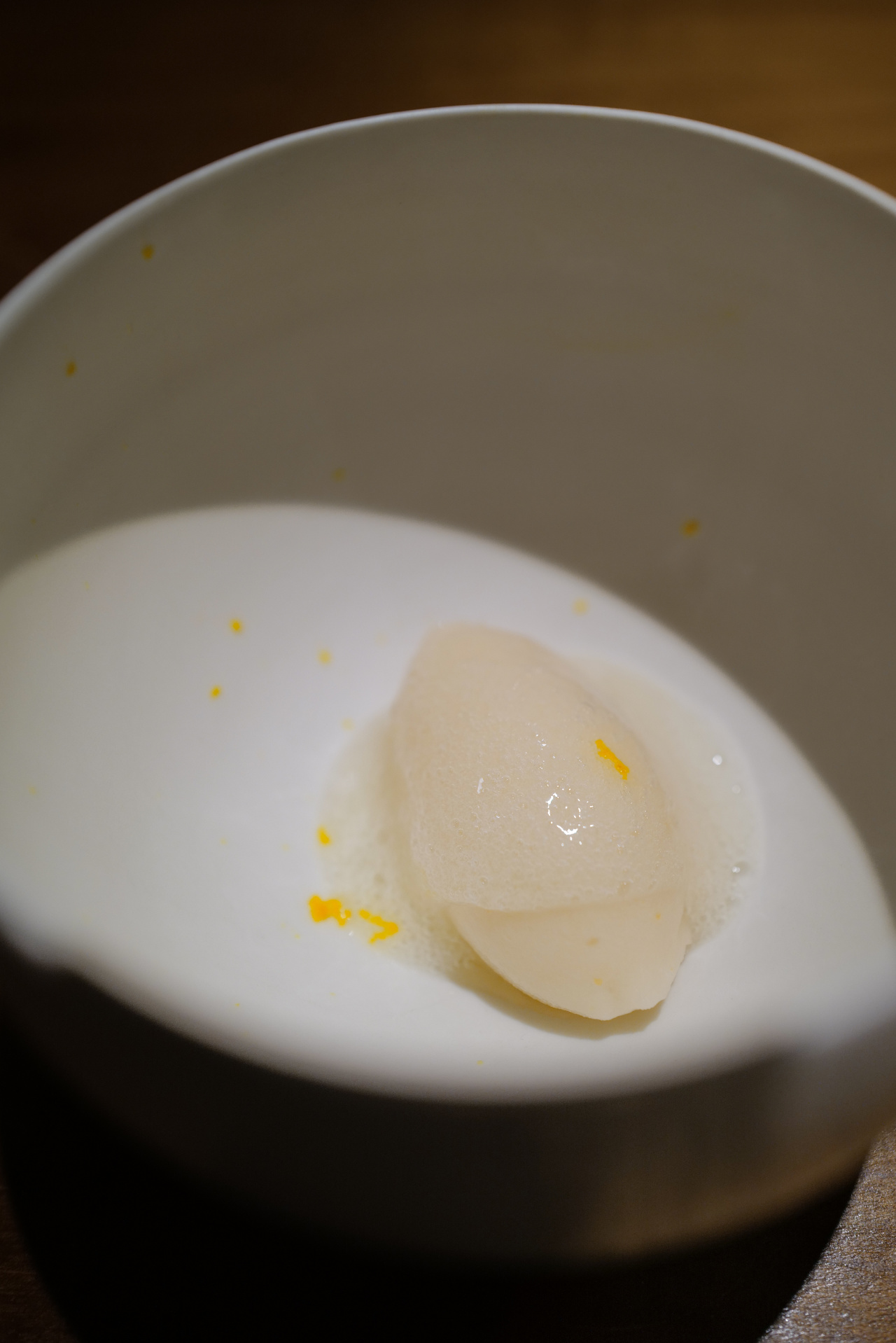
    Pear sorbet
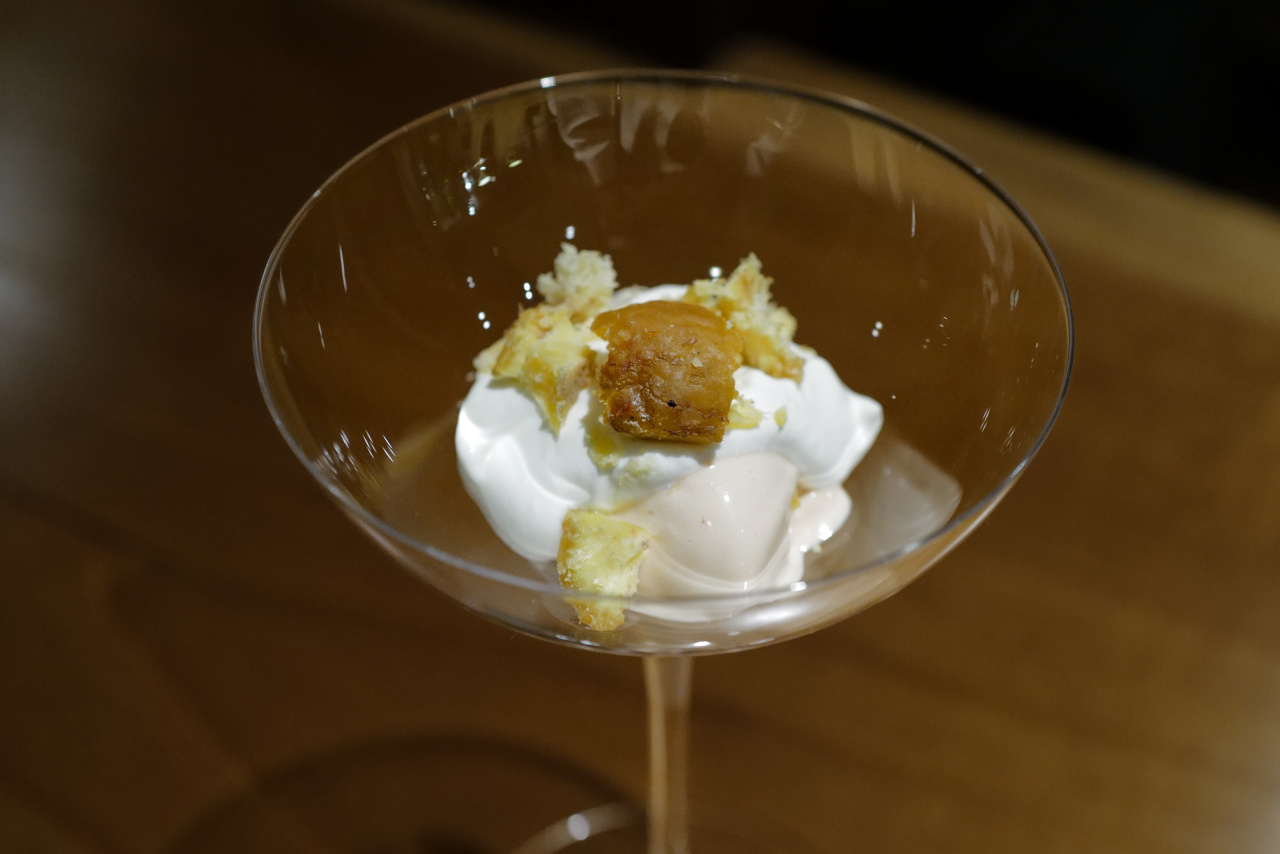
    Chestnut ice cream
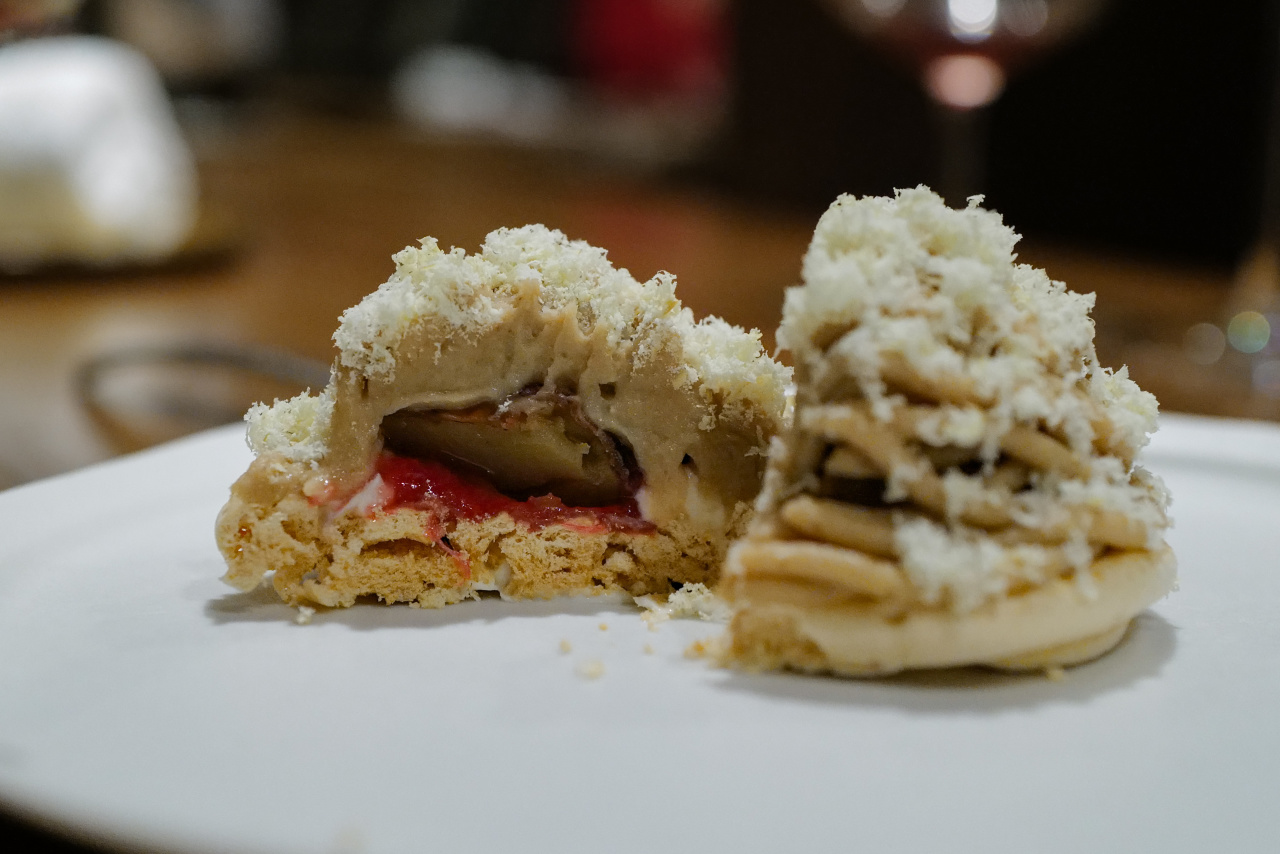
    Aged chestnut Mont Blanc

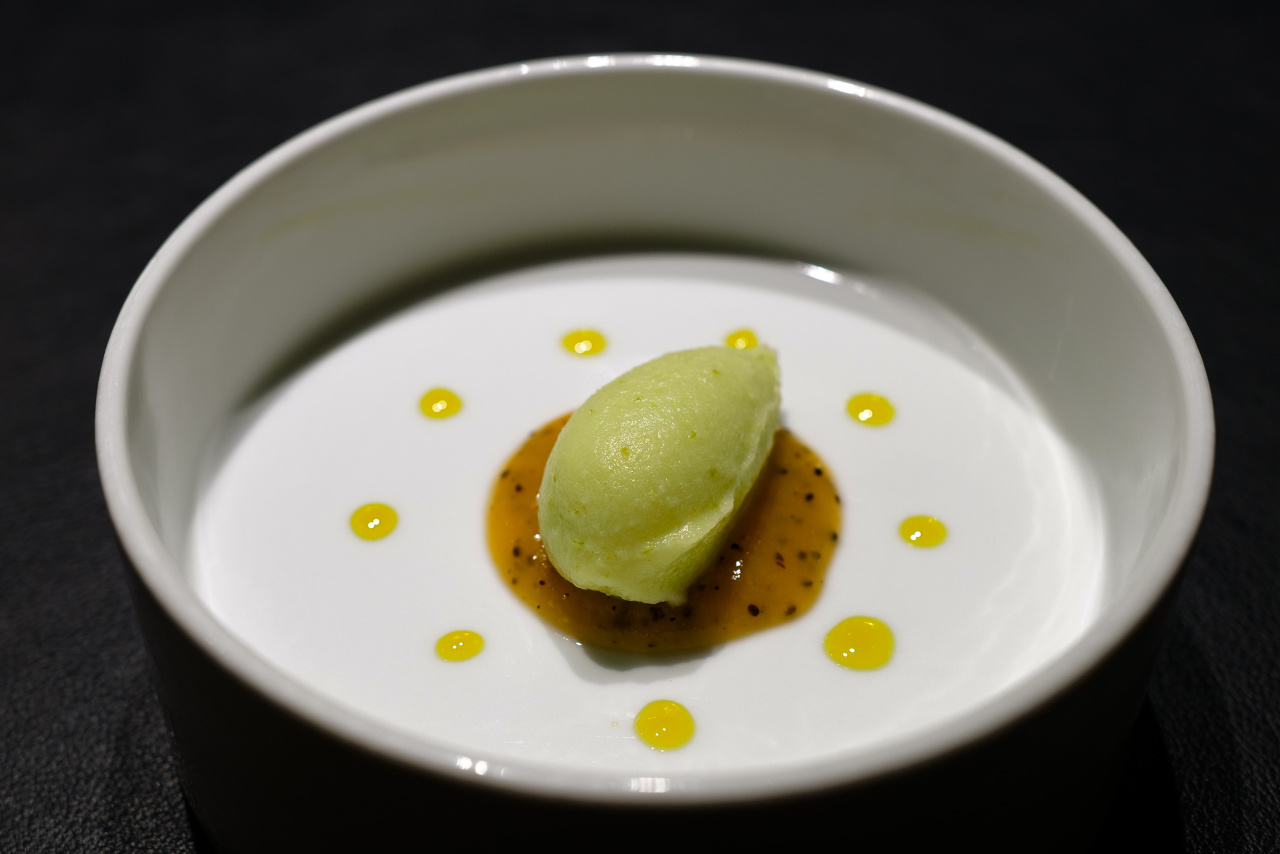
    Niigata is in peak pear season; the train station is full of pear snacks and sweets. The pre-dessert is a Japanese pear sorbet dusted with little flecks of yuzu zest. The combination of pear and yuzu scrubs your palate clean to “blue sky” clarity—intense aroma, very clean finish.

    The main dessert returns fully to winter: chestnut, two ways.

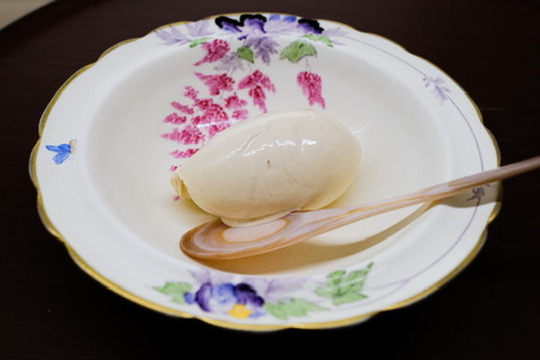
    On one side, chestnut ice cream served at a surprisingly “near-room” temperature—soft enough to feel more like gently opening up the scent of dairy and chestnut than eating something frozen.

    On the other side, a low-temperature aged chestnut Mont Blanc. The chestnut cream is light and soft, hiding a whole chestnut inside. The base is meringue, giving airy crispness, and the sweetness is carefully restrained. The most brilliant detail is the touch of rhubarb acidity, tightening and prolonging the chestnut’s sweetness.

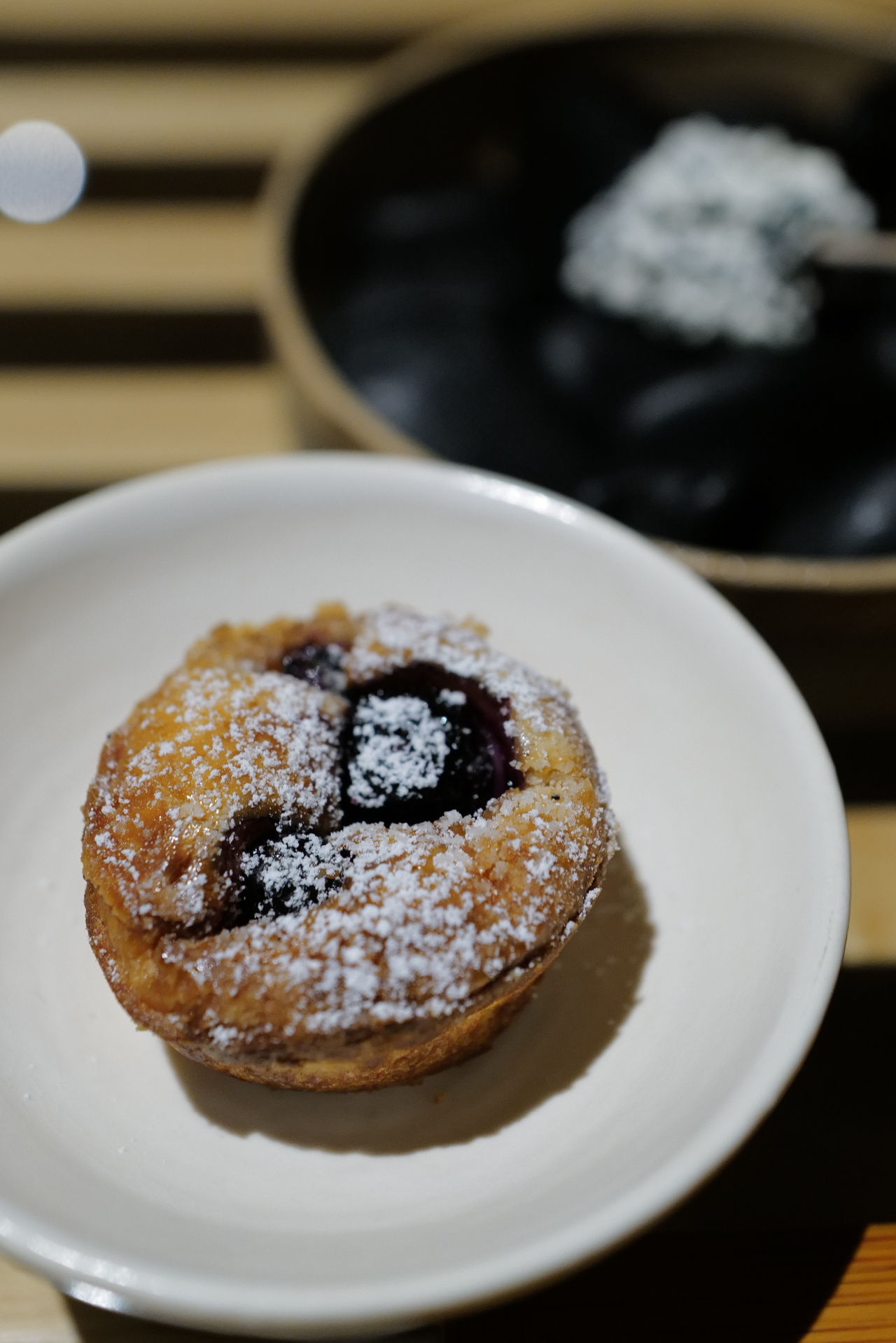
    To close, there’s a soft-set blueberry tart and a white chocolate–yomogi warabi mochi.
    A blizzard, a train, and a very worth-it detour

    In the middle of Niigata’s heavy snow, this meal felt especially complete and special. In a gentle, cozy space, the flavors were vivid and high-saturation—like translating the harsh, snowy landscape into something you can feel on the plate.

    Every dish took full advantage of Niigata’s local ingredients, wrote seasonality in bold, and still felt modern in structure and aesthetic.

    A chef who’s seen the wider world has returned to the mountains to strip things back down.
    His respect for nature is carried out through the simplest goal:

    Make everything delicious. Don’t waste the lives behind the ingredients.

    In terms of seasoning, his food isn’t “light” at all; the flavors often have real force. But what’s impressive is that every note comes from the ingredients themselves—plants, game, fermentation. Clean, natural, no one voice shouting over another. The richness never feels burdensome.

    It’s a kind of extreme mountain balance: game can be deep, herbs can be bright, fermentation can be serious—but in the end, everything is pulled back to that shared line of “just right.”

    The snow was so heavy that the buses stopped running. After dinner, I got back to the station a little after nine, just in time to catch an express train that had been delayed by an hour—37 minutes later I was back in the city.

    For such a short trip into the mountains, it felt more than worth it.
    Mountain ingredients change fast with the seasons; the menu will likely shift just as quickly.

    I’m already rubbing my hands, waiting for the next chance to go back.

    RESTAURANT UOZEN

    新潟県三条市東大崎1-10-69-8

    Chef’s Menu  ¥19,360++
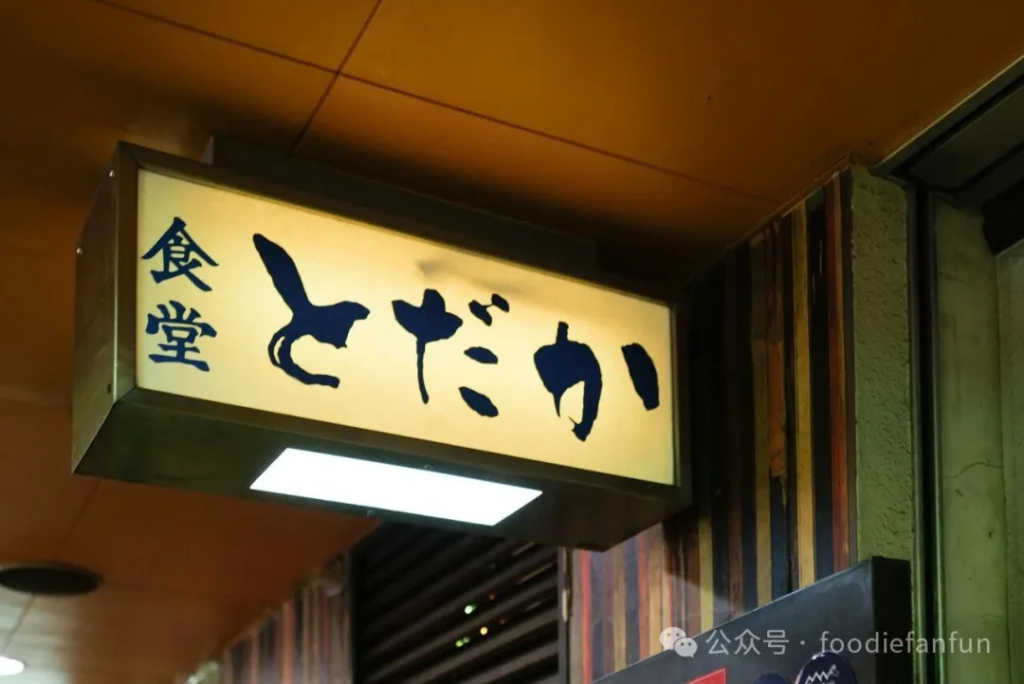
  • Shokudo Todaka|A Restaurant Straight Out of The Solitary Gourmet, Tokyo’s top “Shokudo”

    Tokyo has plenty of hard-to-book restaurants, but a place that’s fully booked out to 2030? Even in Tokyo—actually, even in all of Japan—that’s rare.

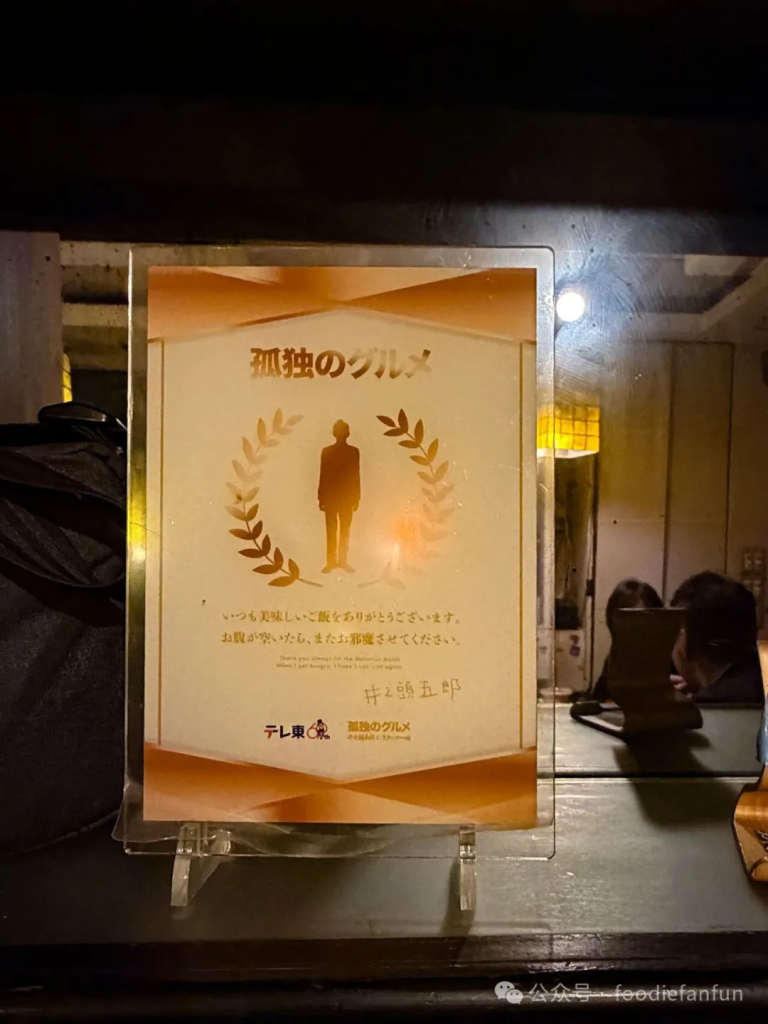
    In Gotanda, there’s Shokudo Todaka (食堂とだか), the little izakaya that once appeared in Season 6 of Kodoku no Gurume. It’s exactly that kind of impossible-to-book, somehow magical place.

    Chef Kohei Todaka is from Kagoshima. He was supposed to inherit the family business, but with his parents’ blessing, he went into the restaurant world that had captured his heart instead.

    In 2015, at 31, he opened his first restaurant in a semi-basement in Gotanda, using 3.5 million yen of his savings (less than 200,000 RMB at the time).

    The restaurant’s concept is simple and wild at the same time:

    “Create combinations no one expected, using everyday ingredients.”

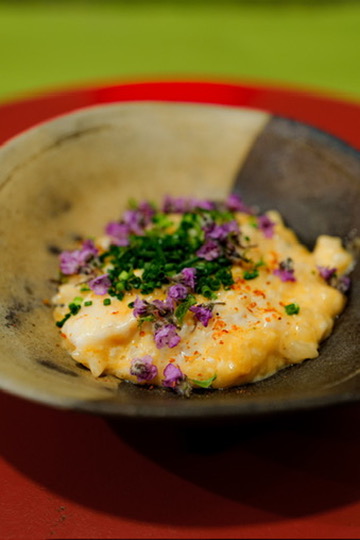
    Sea Urchin Soft-Boiled Egg

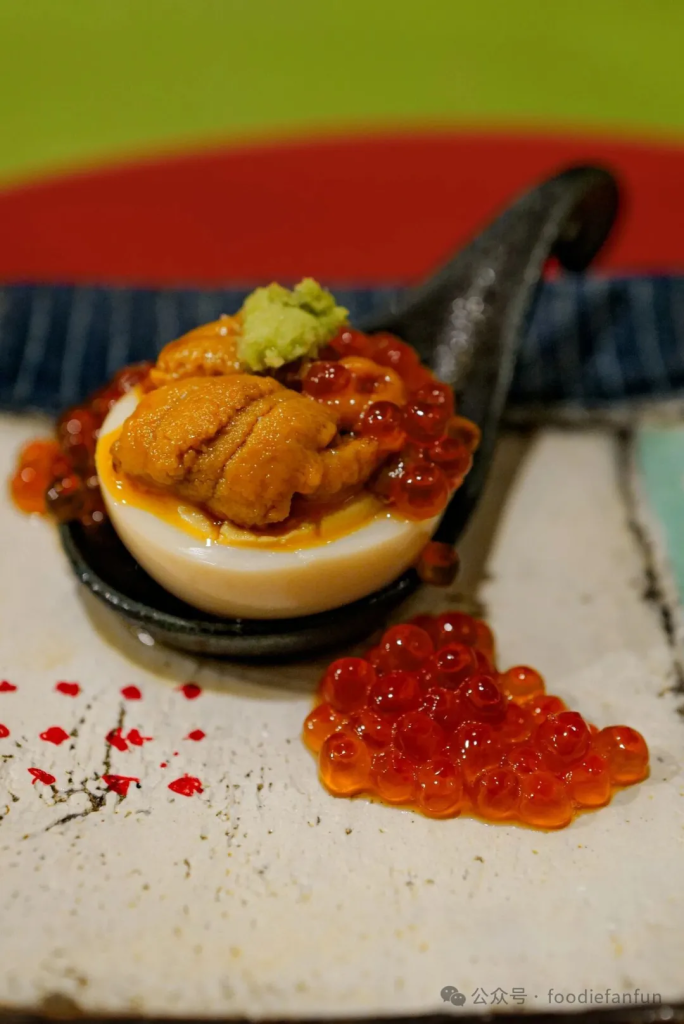
    The meal kicks off with the dish that’s now basically the Tabelog cover star of Shokudo Todaka: sea urchin soft-boiled egg with ikura.

    At first glance, it’s nothing but the most everyday Japanese ingredients: egg, salmon roe, uni.

    “Eat it all in one bite, okay? If any ikura falls into the dish, you can mix it into the next course.”

    It’s honestly hard not to fall for it. Familiar flavors, rearranged into something new.

    Slightly bouncy egg white wraps around a thick, sticky, sweet yolk. The salmon roe pops one by one, lighting up the whole bite with briny umami. The sea urchin lies across the top like a soft, salty-sweet blanket—rich but not cloying. Happiness arrives fast, but the layers keep unfolding.

    It feels like the chef is telling you very seriously, “Dinner starts now.”

    Shirako Rice Bowl

    For somewhere that calls itself a “shokudo” (diner/canteen), this shirako rice bowl is anything but casual. Using tiger puffer shirako on rice is basically cheating.

    The shirako melts the second it hits your tongue—rich, fine, creamy, with an almost milky salinity. Scallions and shiso stack aroma on top of aroma. Mix in the leftover ikura from the first dish, and the rice soaks up both sea and fat, while somehow staying lightly chewy. Right at the end, there’s a tiny, late-arriving prickle of heat.

    Compared to the “one bite and it’s gone” sea urchin egg, this is a bowl you want to eat slowly, spoonful by spoonful. The more you chew, the more satisfying it gets.

    Two opening dishes, back-to-back, both instant stunners.

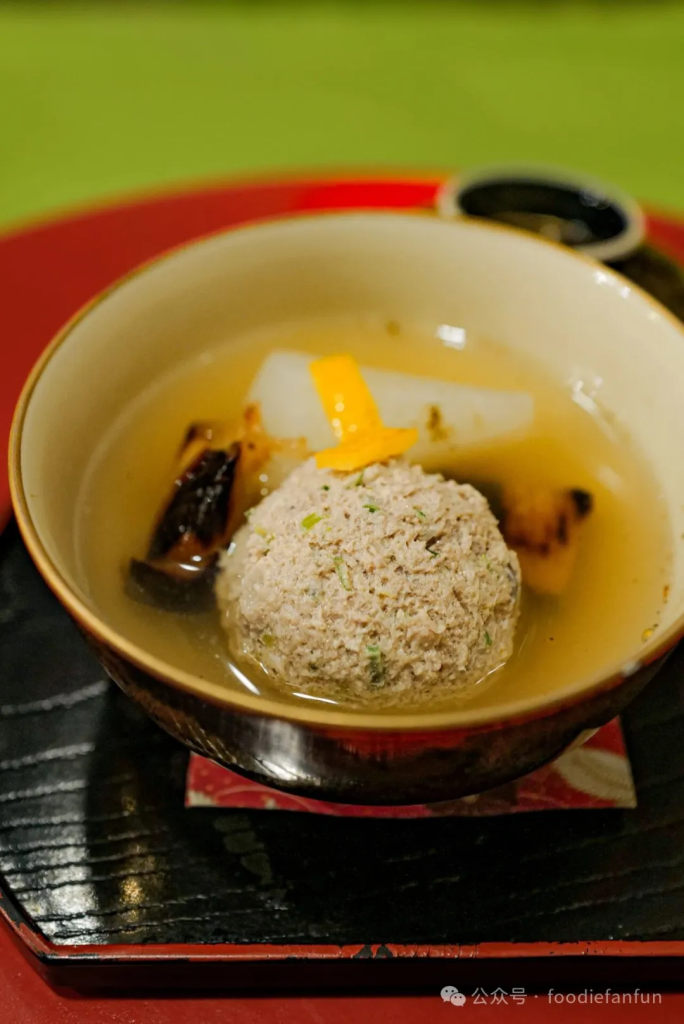
    Grilled Leek, Tuna-Bone Broth, Chicken Meatballs

    Charred, sweet leeks. A broth made from tuna bones. Chicken meatballs nestled among juicy leek pieces.

    Clean, focused, warm, and full of flavor.

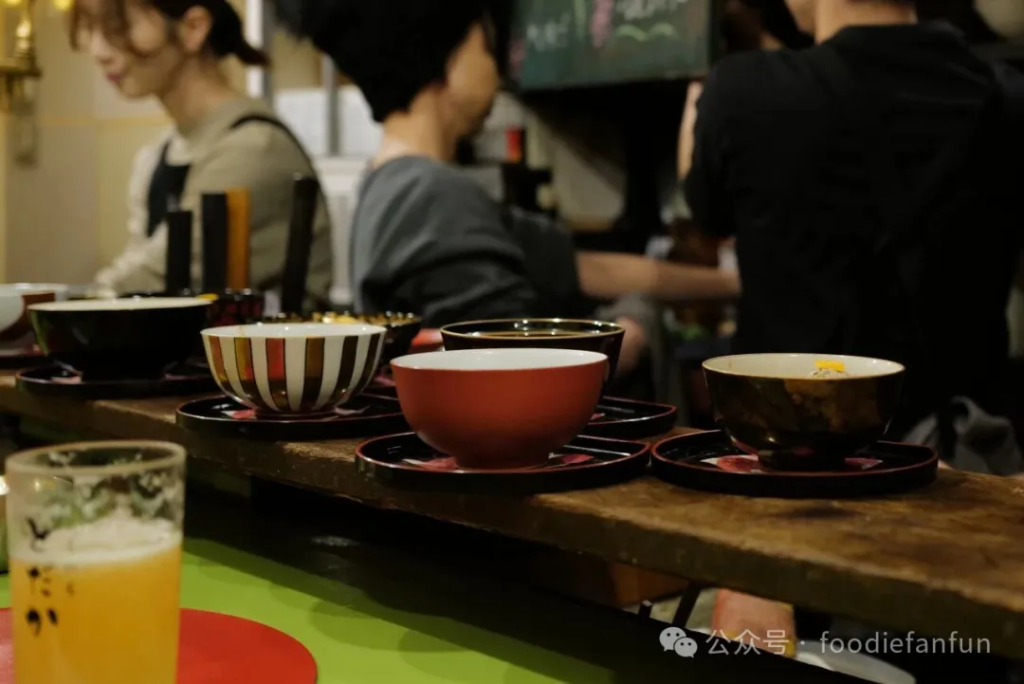
    For such a tiny izakaya, the tableware is surprisingly thoughtful—there’s a quiet sense of counter-style beauty in the details.

    The drink program is just as carefully considered, maybe something baked into Todaka’s Kagoshima roots.

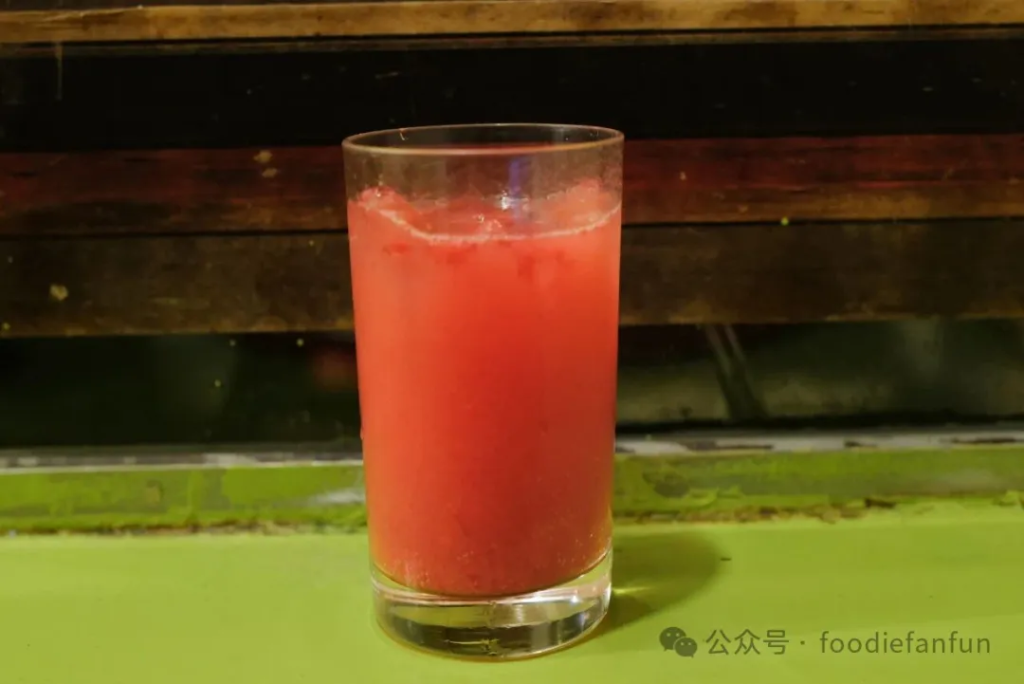
    The menu leans heavily on bubbles. Draft beer has a whole lineup of options. Then come highballs, and all kinds of vodka-based mixes with fresh ginger. But the most eye-catching line is definitely the series of “nama-oroshi sour” drinks: house lemon sour, mikan sour, vegetable sour, and even fresh strawberry sour. 🍓

    The strawberry version is bright and fresh, with gentle acidity and a clean finish. Pink and cute in the glass, but seriously good—and seriously drinkable.

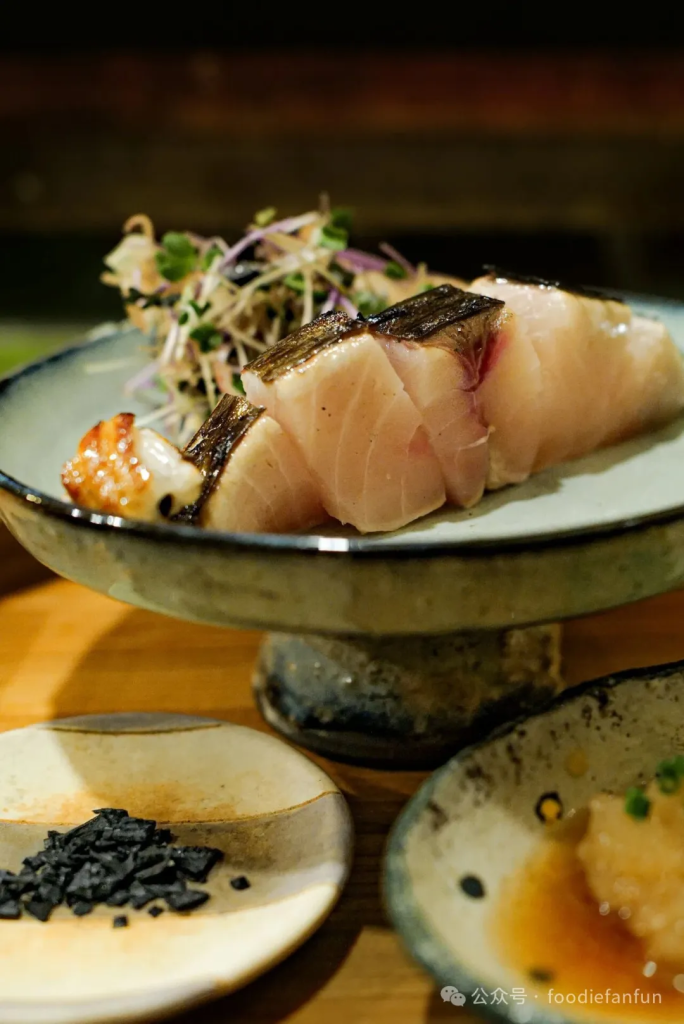
    Straw-Seared Mackerel with Charcoal Salt and Daikon Oroshi Ponzu

    The mackerel’s skin is charred pitch-black, like a thin layer of burnished shell. Underneath, the flesh is still half-translucent and blushing.

    The smoke is intense and three-dimensional, pulled into line by the charcoal salt. The smokiness and salinity are both held in a neat frame. As you chew, a buttery richness slowly surfaces—this is the season when mackerel carries more fat, and the lightly seared doneness lifts both sweetness of the fat and delicacy of the flesh.

    Layer after layer of flavor stacks upward. It’s beautiful.

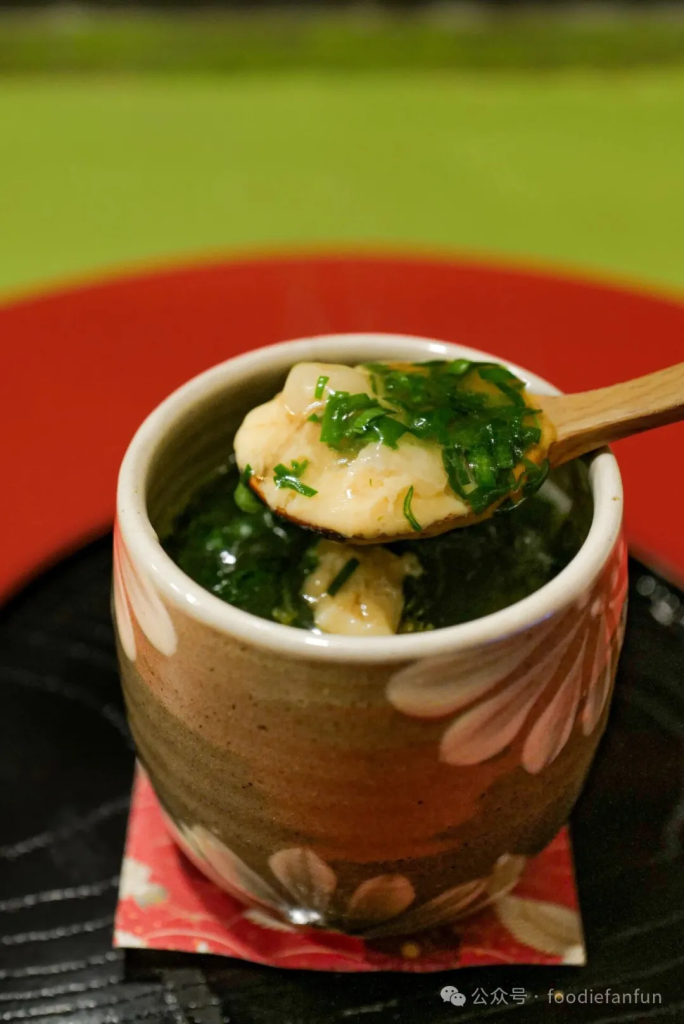
    Offal Hotpot Chawanmushi

    I’d read before that the dish that first led Todaka into the kitchen was a bowl of chawanmushi. What I absolutely did not expect was for him to put a motsu-nabe-style chawanmushi on the counter.

    “Please eat this like an offal hotpot.”

    And yes—it really does taste like one. Softly simmered garlic chives, rich offal carrying the aroma of fat; the flavors are direct and honest. The egg itself is soft and silky, wrapping the intensity of the offal and rounding its edges. Wood ear mushrooms bring a little crunch into the mix, so it’s not all just one smooth texture.

    Spoon after spoon, you get this weird, wonderful illusion: it feels like you’ve slipped into some cozy Kyushu izakaya, sharing hot food and drinks with friends. A very grounded, very real sort of happiness.

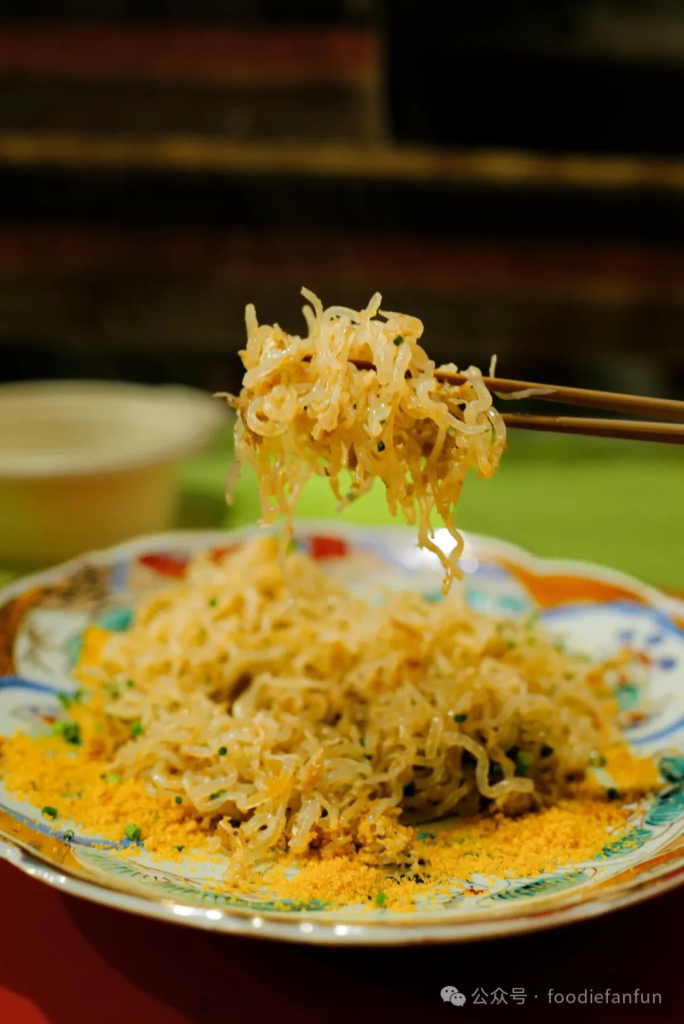
    Spaghetti Bottarga al Peperoncino

    Lift it with your chopsticks and—you can actually feel wok hei.

    This bottarga “spaghetti” is one of Todaka’s signature East-meets-West creations. On paper it’s bottarga peperoncino, but in the pan it’s pure Chinese-style dryness and heat. He uses glass noodles instead of pasta; they cling to the bottarga’s intense ocean umami and salinity, staying slick but never heavy or tiring. It goes perfectly with drinks—and with rice.

    Fragrant. Delicious.
    Honestly, those two words are already enough.

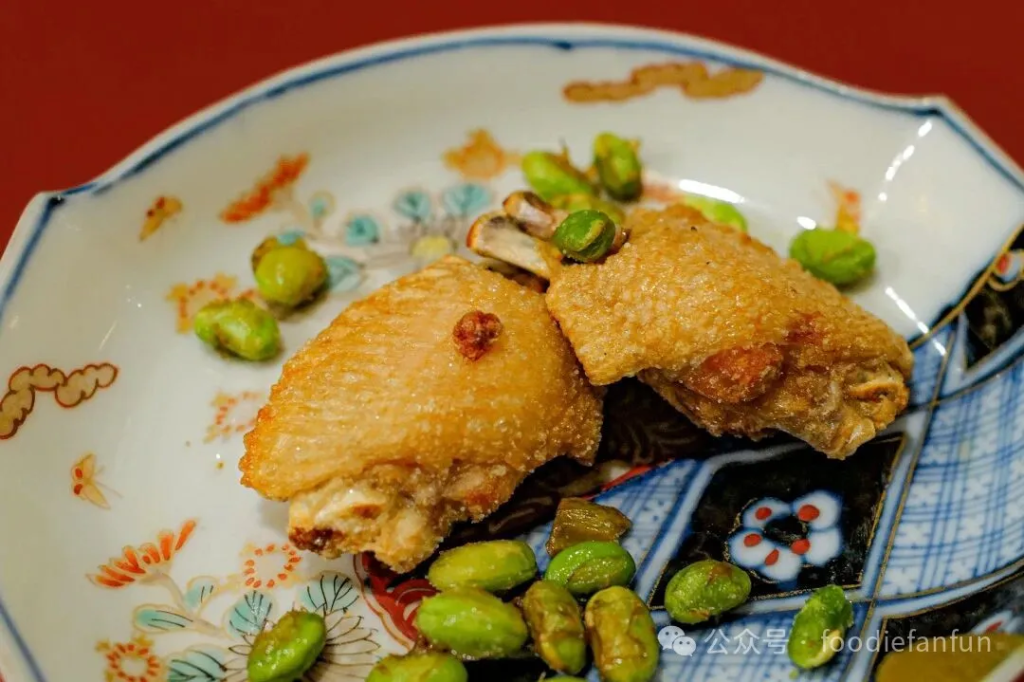
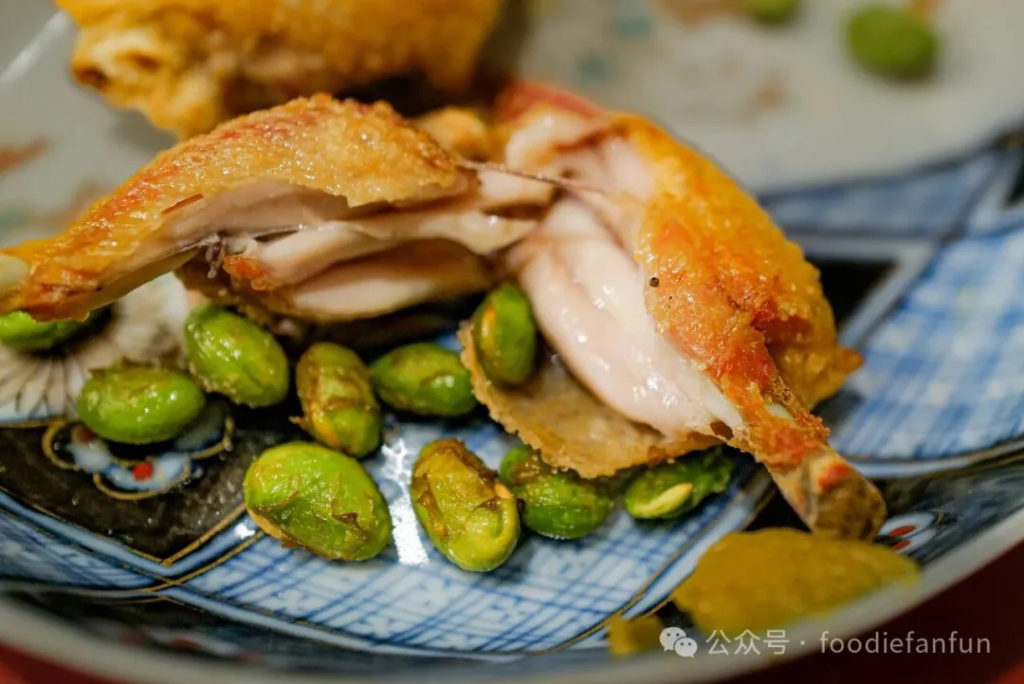
    Then comes a plate of karaage so good it almost deserves its own show: the crust is light and crisp, the meat bouncy and juicy, the seasoning precise, the skin tender but not greasy. This is the kind of fried chicken that absolutely has to be eaten hot; the coating holds the aroma, the meat stays springy. It’s a classic izakaya dish, but with a distinct “chef’s touch.” Even the little edamame on the side are full of aroma.

    Right then, the shop’s speakers start playing the FamilyMart entrance jingle:

    6 4 1 4 |5 1′ — |1′ 5 6 5 |1′ 4 —

    This is what I’d call a “fried-chicken culture reference”—pure local life. During FamilyMart’s brand refresh, their counter fried chicken was one of the big heroes.

    So when that simple, bright, slightly silly melody kicks in at the exact moment you’re eating hot fried chicken, the association is instant: convenience store, after work, late night, fried chicken, good mood.

    It’s almost Pavlovian.

    Shira-ae with Kumquat

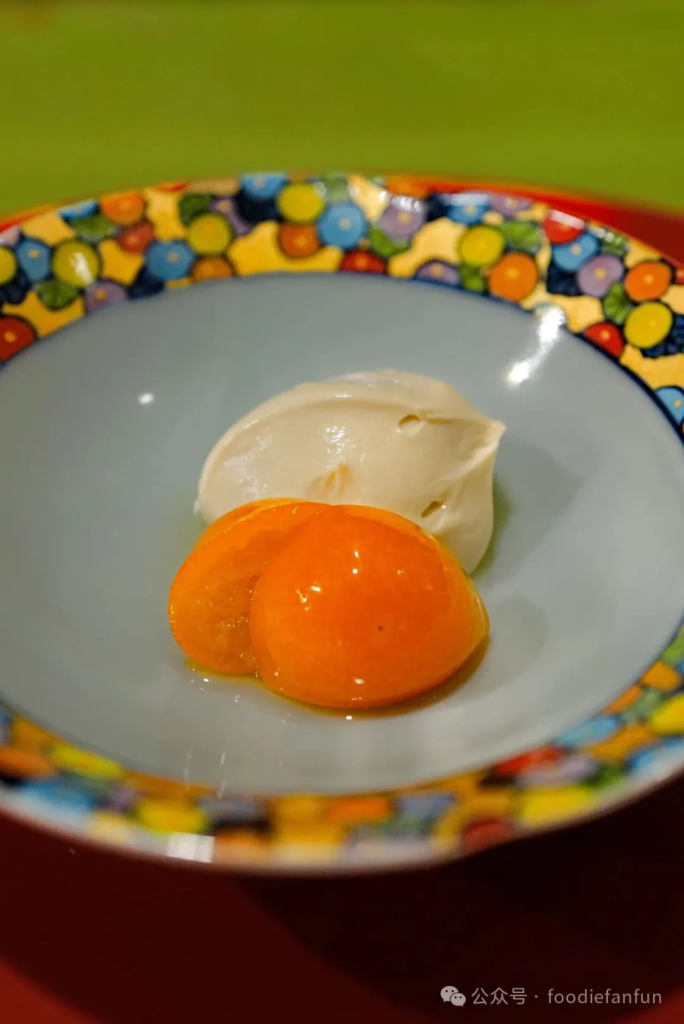
    This is “just” shira-ae, the classic tofu dressed salad—but here it’s made with an almost dairy-like smoothness. There’s a faint yogurt note, a dense, silky texture, and then the kumquat comes in with fresh acidity that lifts all the flavors. Soft, but not bland at all.

    The pairing is brilliant: Fukunishiki low-alcohol junmai, with a sake meter value of -53. On the palate it’s lightly sweet-tart, with a little umami and gentle bitterness on the finish. Put together with the kumquat shira-ae and it feels like both ends lock perfectly into place.

    This is not the type of sake I’d normally order on its own—but with this dish, it’s perfect.

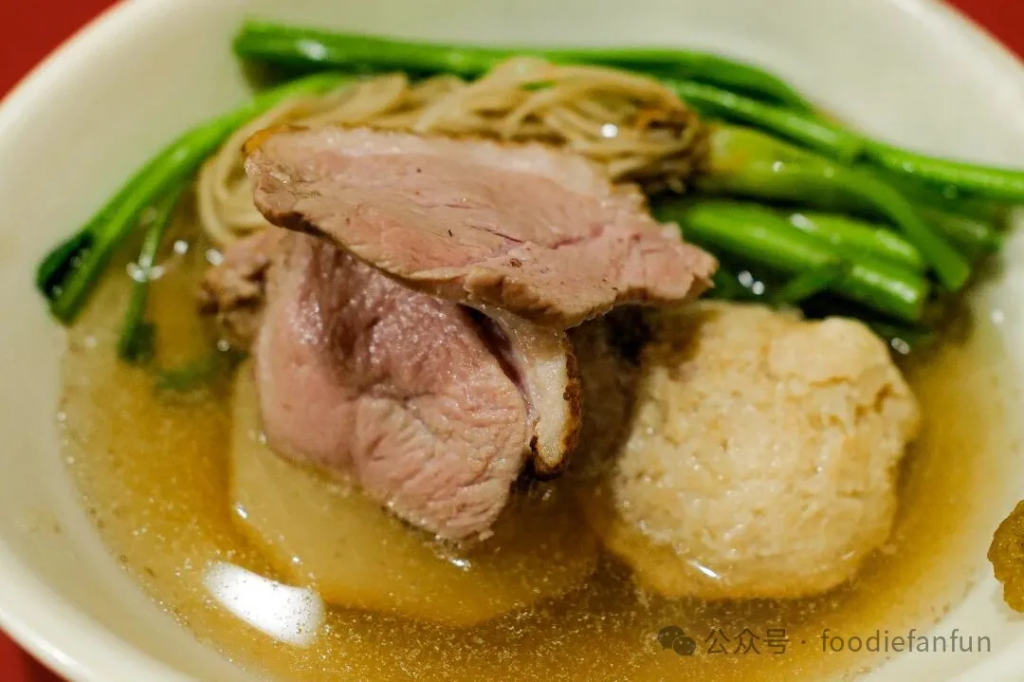
    Duck and Celery Hotpot

    Next drink: the shop’s signature imo-shōchū gin. It’s the first time I’ve tasted the “sweetness of sweet potato” expressed in such a restrained, transparent way in a gin—nothing sticky or cloying, just a clear, bright vegetal sweetness.

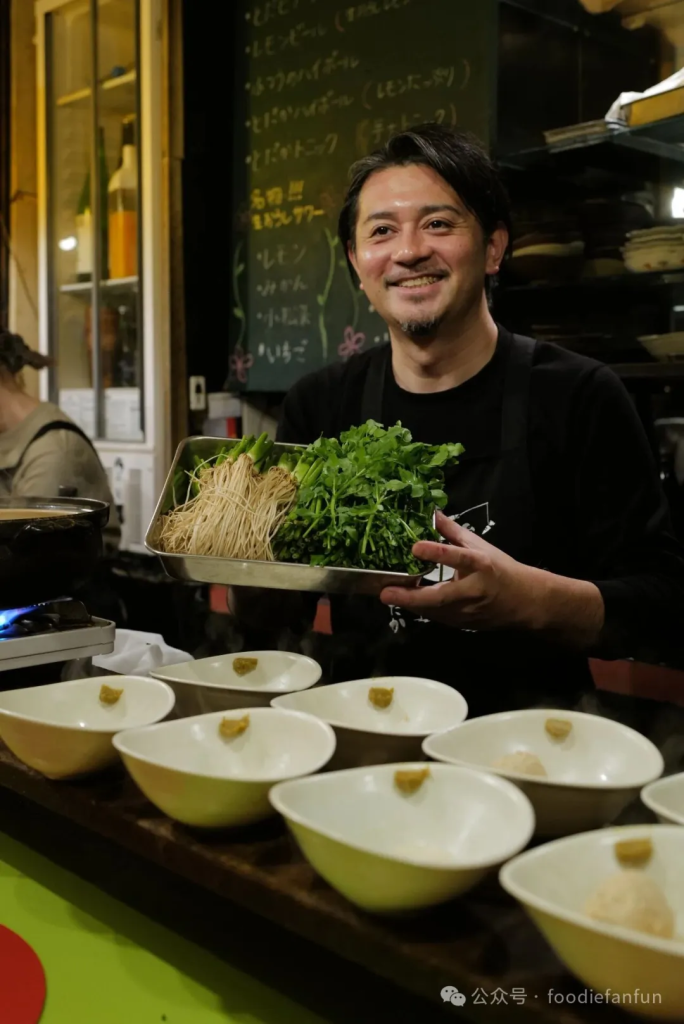
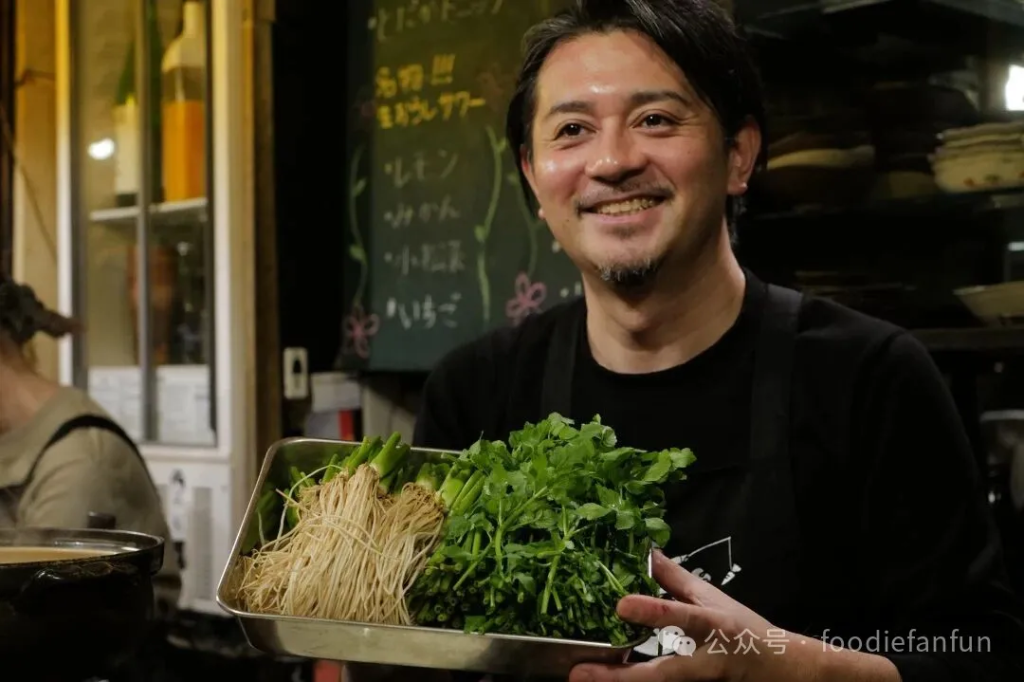
    The hotpot that night is duck and celery. The duck is fatty yet slightly chewy, with flavor that deepens as you chew, and the aroma from the skin is very clear. The celery root is the unexpected star—fresh and aromatic, but with a gentle, almost starchy sweetness. The broth ties everything together, like a soft mattress you fall into after all the earlier action.

    Lightness and richness run in parallel; both warmth and flavor are handled with real care.

    Sweet Natto Cheese Mochi

    Maitake & Chicken Rice

    Cold Noodles

    It’s hard to believe there are still three carb dishes at this point. Just then, “Makenaide” starts playing:

    「負けないで ほらそこに ゴールは近づいてる」
    Don’t give up, look— the finish line is just ahead.

    For the first time, I felt motivated by pure deadpan humor.
    Okay then. One more bite.

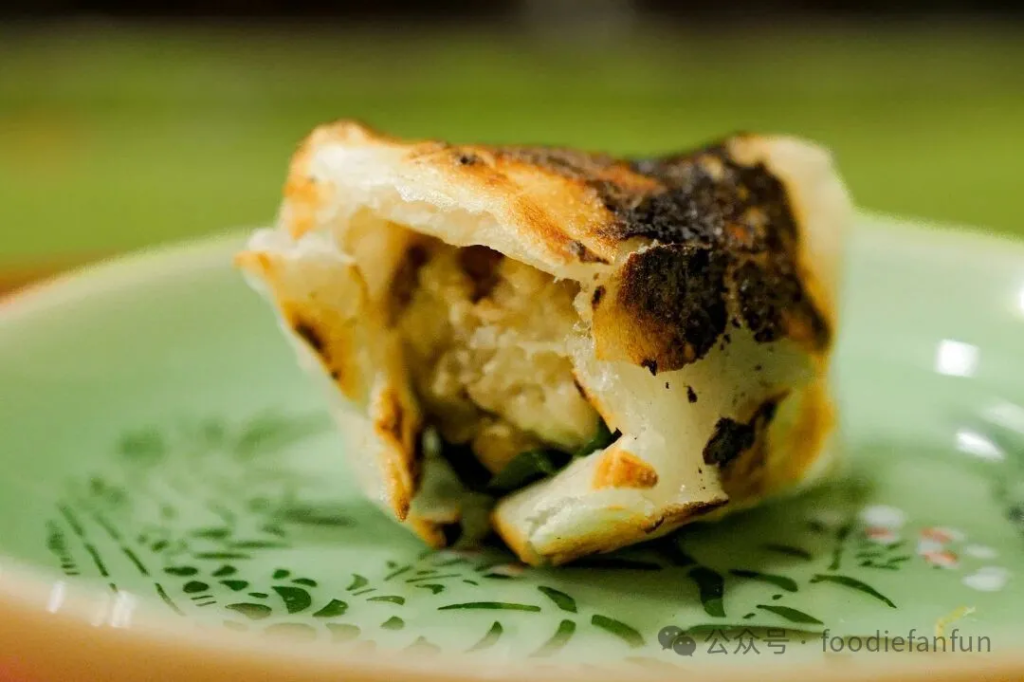
    First up is sweet natto cheese mochi. Toasted rice cake with sweet natto tucked inside—two small bites, fragrant, crisp, soft, and genuinely delicious.

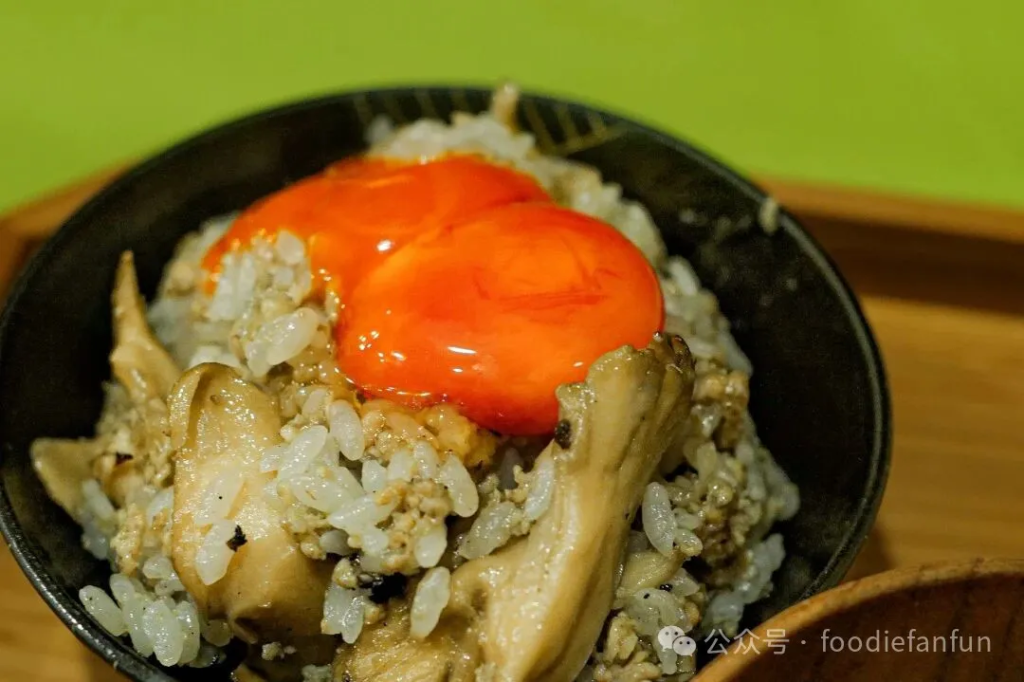
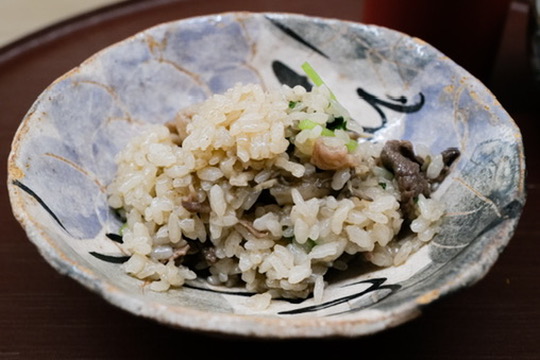
    Then a maitake and minced chicken rice. It arrives with a wave of charcoal aroma, and once you mix in the egg yolk on top, everything becomes even smoother and richer. The maitake is fried crisp, the chicken carries obvious smoke and fire.

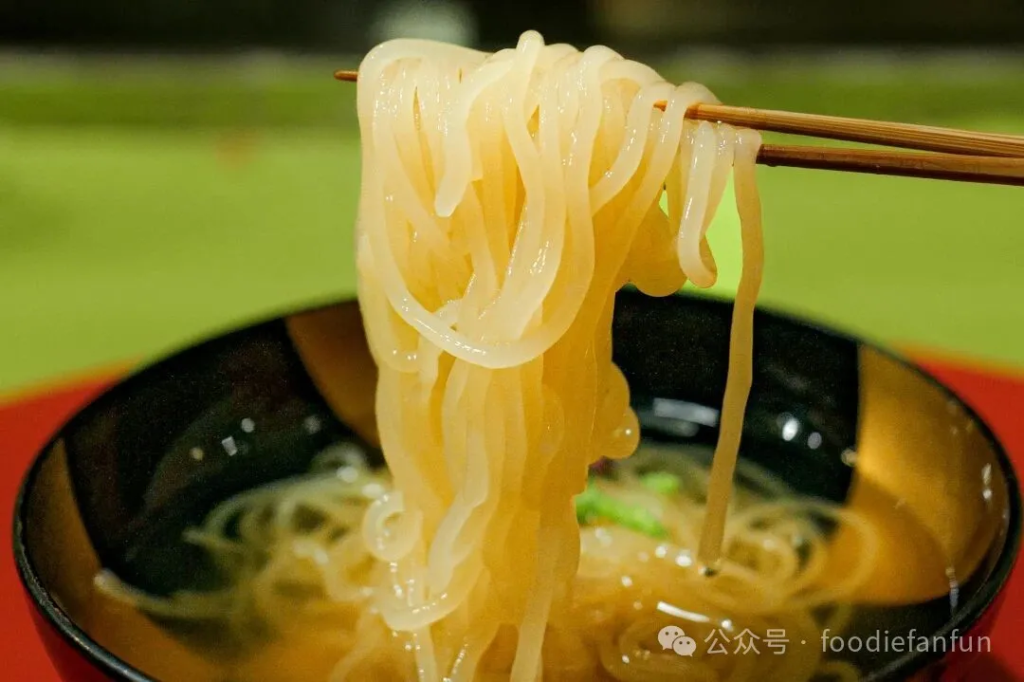
    Finally, cold noodles in beef broth. Based on the chef’s judgment, everyone gets a different portion size—very “those who can eat more get more” energy. The noodles are firm and bouncy, the beef flavor clings in thin layers. It’s both delicious and perfectly refreshing to finish with.

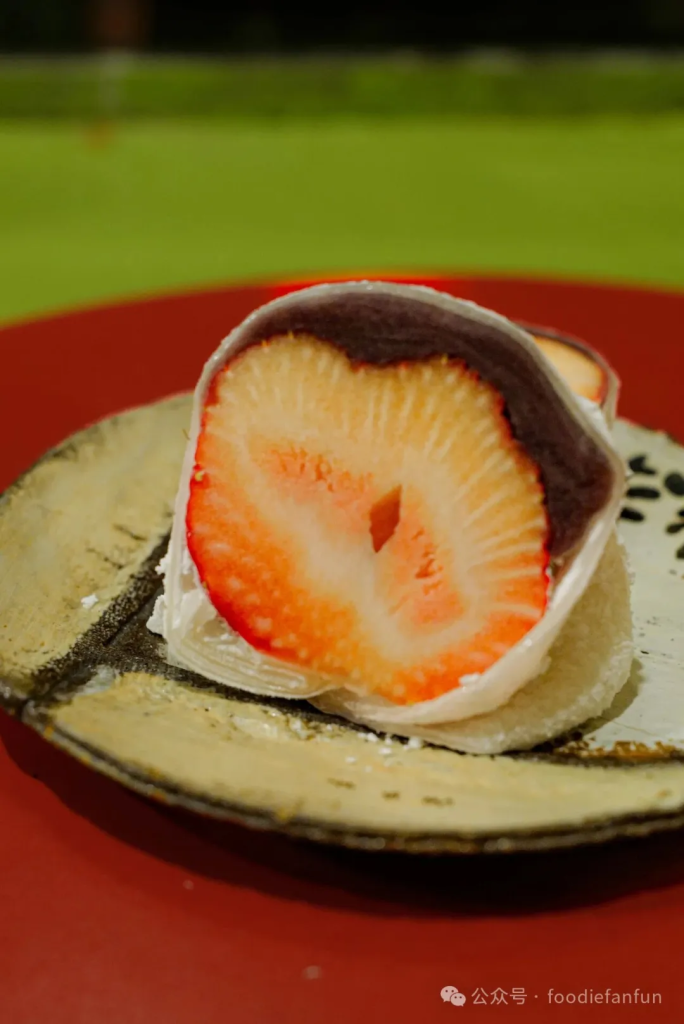
    Strawberry Daifuku

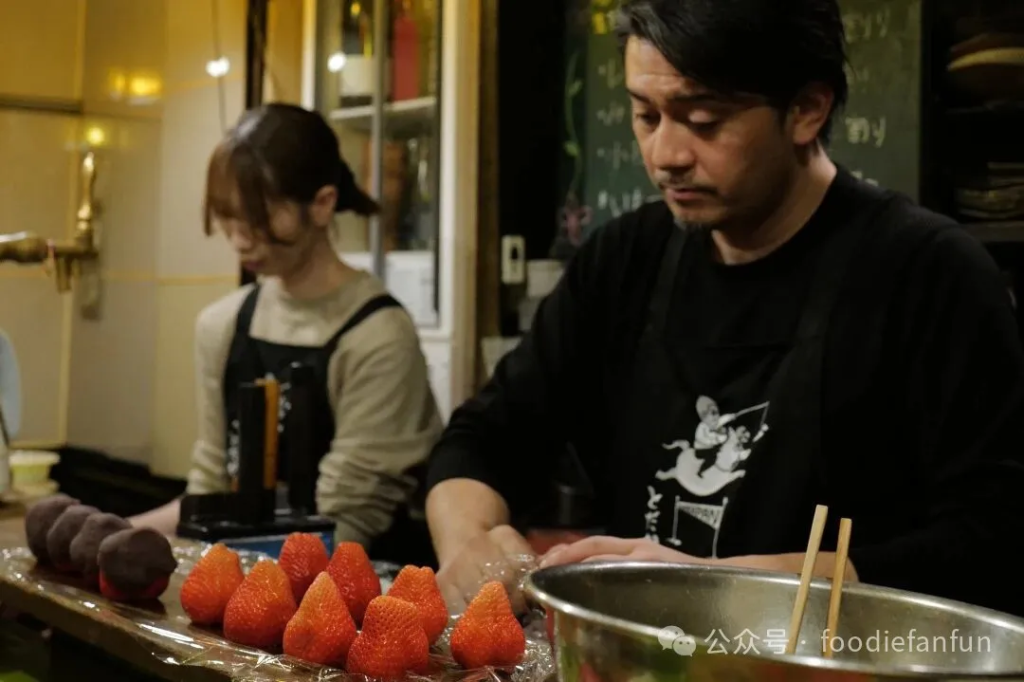
    Once everyone has cleared their plates, Todaka-san starts calmly wrapping the shop’s famous strawberry daifuku.

    “Will you eat this now or take it to go? Do you need extra to bring home?”

    We see the fist-sized daifuku and answer,
    “Let’s split one here and pack the other with the takeaway.”

    Winter really is the best season for strawberries. Juicy, fresh, a little sticky. One bite in and you get the bright, pure flavor of the fruit, followed by the sweetness of the bean paste and the soft, chewy mochi spreading through your mouth. People keep saying this year’s strawberries in Japan aren’t great, but this daifuku at Shokudo Todaka beats what you get at a lot of high-end restaurants.

    The bill comes to ¥16,000 per person—including 14 dishes with almost nothing to criticize, plus all the drinks.

    The value is honestly ridiculous.

    This is a seriously interesting restaurant.

    On paper it’s an izakaya, but it keeps the interaction of a counter restaurant and the aesthetic of plated dishes. The seats are close together, lively but not chaotic. The rhythm is relaxed, and you always feel included. Add in the background music and those perfectly timed, slightly evil jokes, and the mood of the whole evening is controlled with precision. Whatever stress you brought in from the day just… loosens.

    The cooking is, of course, delicious. But its strength isn’t about rare ingredients or flashy technique. The ingredients and methods are actually very everyday and easy to imagine—what’s special is how every bit of heat, seasoning, and pairing feels exactly right. Things are not only fragrant; some dishes even carry real wok hei.

    Todaka takes flavor profiles we all know and pushes them to a new level.
    That’s his real power, and his charm.

    The drinks are also a highlight. The highballs and sours may technically be pre-batched, but every glass is shockingly good. And whenever a dish really needs sake behind it, someone just casually asks, “Want a glass with this?” Eating and drinking become light and effortless. No heavy decisions, no getting knocked off rhythm by alcohol.

    Gotanda really does produce monster shops.

    With reservations already full through 2030, whether I’ll ever make it back is up to luck.

    Shokudo Todaka(食堂とだか)
    東京都品川区西五反田1-9-3 リバーライトビル B1F

    Tuesday – Saturday
    18:00 – 0:00

    Omakase Menu ¥16,000

    I walked home slowly, already thinking about when I’d finally finish that strawberry daifuku sitting in my fridge. 🍓

  • Kudan|A Two-Star, Tabelog Bronze Kaiseki with Unforgettable Lard Rice

    Kudan|A Two-Star, I actually haven’t done that many “proper” kaiseki meals in Tokyo (Yamazaki doesn’t count), so when a friend came to visit, we picked Kudan as our meetup spot. With two Michelin stars, a Tabelog Bronze and a spot on the Top 100 list, the overall experience ended up exceeding expectations.

    🧑‍🍳 The chef spent his early years training overseas, then came back to Tokyo and worked over ten years at a three-star restaurant, with time in sushi houses as well.
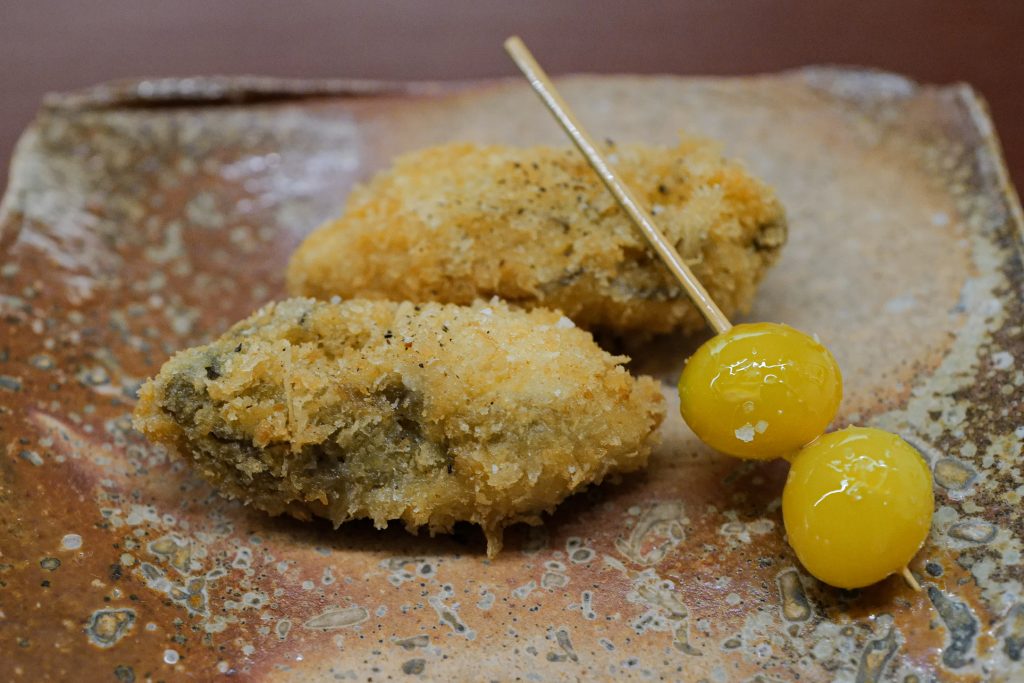
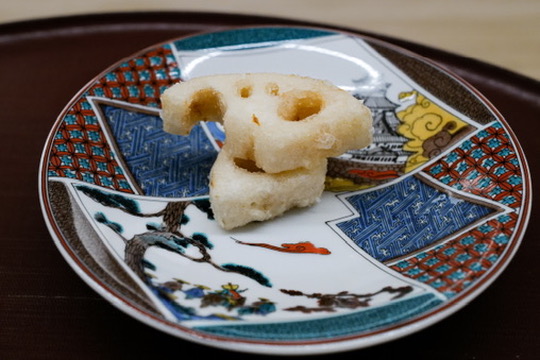
    🥢 The overall style is calm and understated. The techniques feel textbook-perfect, but the dish choices are surprisingly open-minded. For example, oyster and lotus root are both fried, but in completely different ways that highlight the essence of each ingredient. There’s even a tuna roll worked into the menu, using the “head side” cut of the fish—rich and satisfying without being over the top.

    ⭐️ A few favorites:

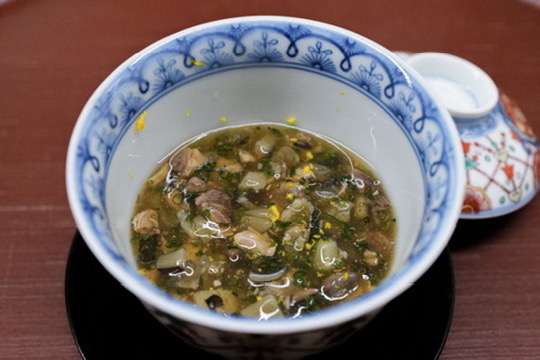
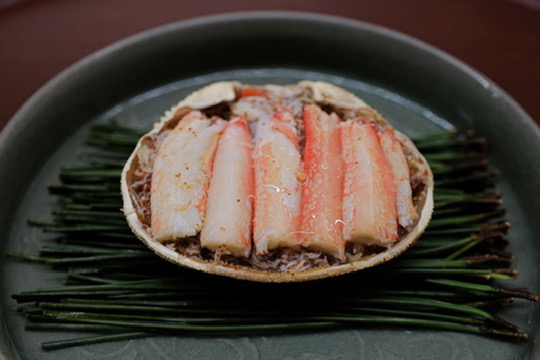
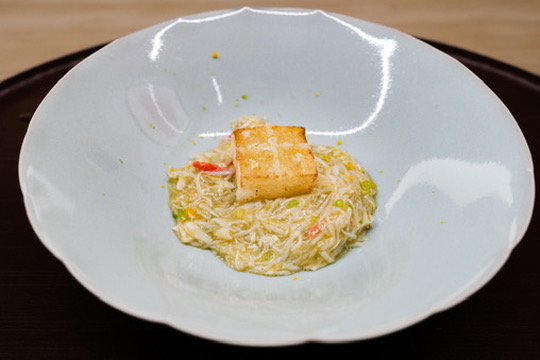
    • 🐢 Soft-shell turtle chawanmushi – the dashi was incredibly aromatic and concentrated, with pieces of gelatinous skin and meat woven in. All tender, nothing dry.
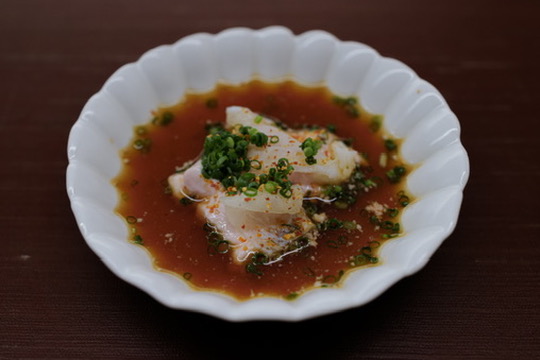
    • 🐠 Filefish with liver sauce – the liver sauce had fish skin mixed in, making it just right to eat on its own.
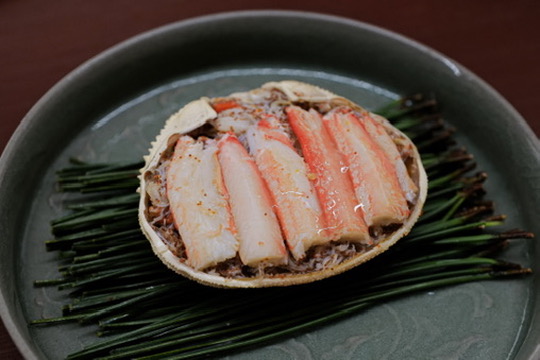
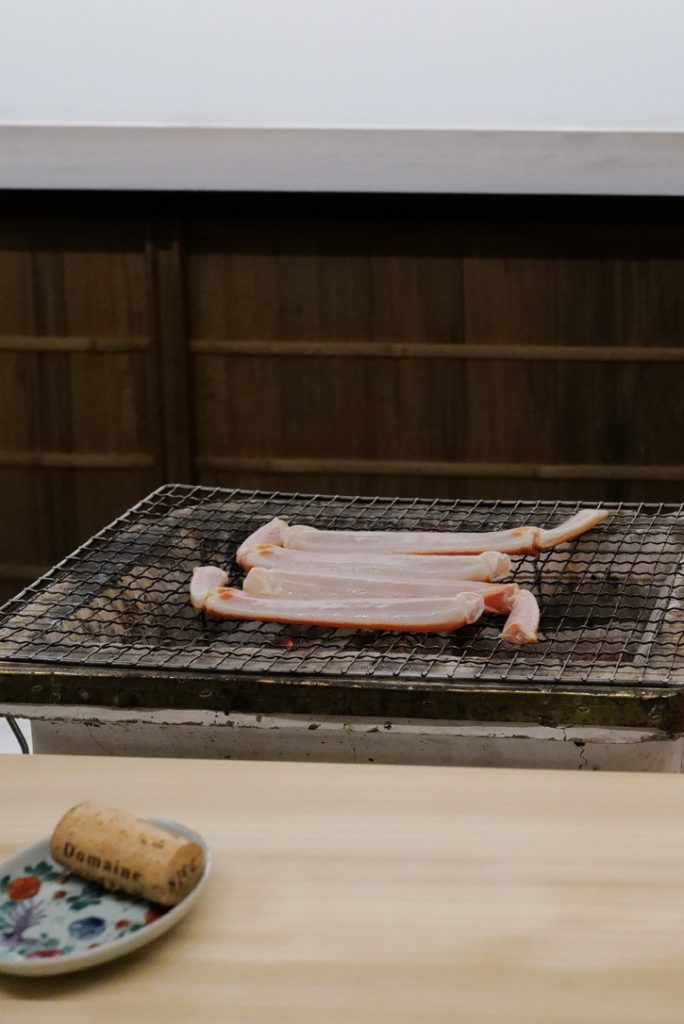
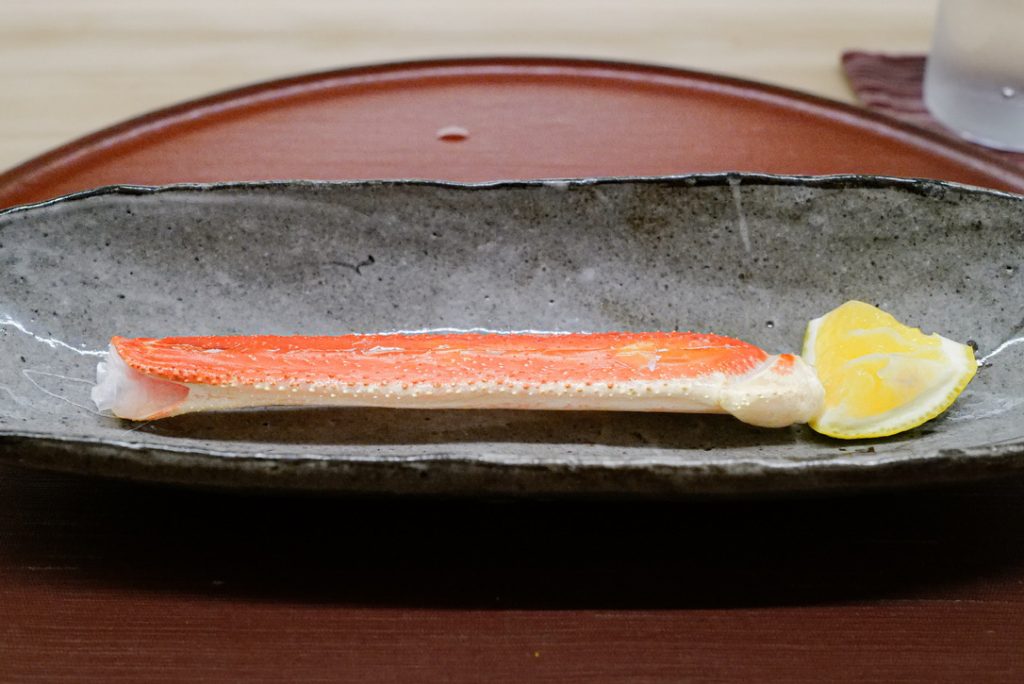
    • 🦀 Kobako crab and matsuba crab – both done beautifully; the grilled crab legs at the counter were so fragrant they practically cut through the air.
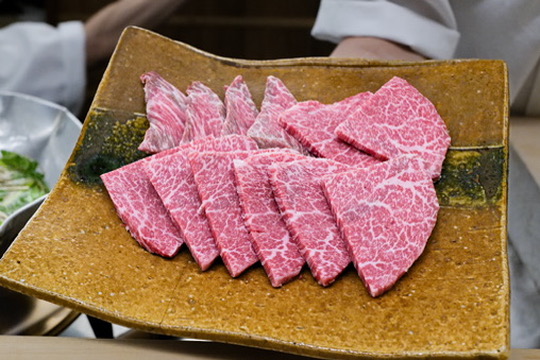
    • 🐮 Yamagata fillet shabu-shabu – crisp, clean beef fat aroma, but once cooked together with the vegetables it stayed light and never greasy. Absolutely outstanding.
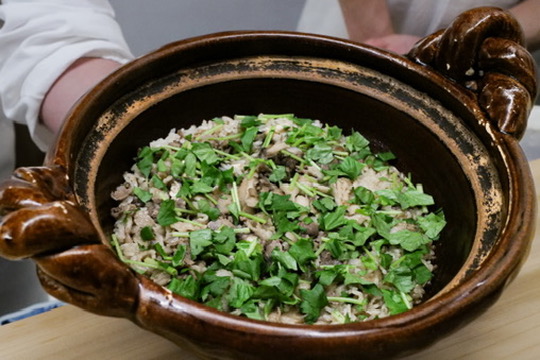
    • 🍚 And the finale: kama-meshi made with pork lard—insanely fragrant and comforting.

    💰 The crab-season menu was ¥44,000 per person + 10%. Portions were generous, and the level of satisfaction hit just right. The sake list isn’t huge, but there’s enough to drink and enjoy.

    ➕ There’s even a staff member at the counter who speaks Chinese, which feels very welcoming.
    For a kaiseki that’s relatively easy to book, it’s a great option to keep on the shortlist for those “I don’t know what to eat” days.Tabelog Bronze Kaiseki with Unforgettable Lard Rice

  • Kyoto | A Belated Autumn with 🥢Kyo-ryori and 🍶Fushimi Sake

    🍁

    I’d always wanted to experience autumn in Kyoto.

    To stand on the Kiyomizu-dera stage and look down at a valley of red; to see the sea of scarlet leaves spread beneath Tōfuku-ji’s Tsūtenbashi; to watch the mountains of Arashiyama turn into a single plane of fiery maples; and to walk past the giant ginkgo at Hongan-ji, its branches heavy with gold like lanterns or coins.

    Autumn in Kyoto really is “a view with every step.”

    When you look at the southern part of the Kyoto map, Fushimi is often introduced in travel guides as “the place with the photogenic ⛩️ thousand torii,” a spot to grab pictures and move on.

    But in reality, it’s a place that deserves a slower, more careful walk.
    It has a rare “water-town” feeling for Kyoto, is a historically rich residential area, and is also one of the most important sake-brewing districts around the city.

    Eating, drinking, wandering—and that quiet, deep sense of history—all naturally blend together here.

    To me, Fushimi is a place where it’s worth digging into products, history, and culture all at once. It holds on tightly to Kyoto’s “stubbornness”—even as the city becomes more and more touristic, this area protects its own sense of pride and backbone.

    Around Fushimi, you’ll notice old buildings marked by bullet holes and burn scars. This was once the power center on Kyoto’s southern flank, and a key water-transport hub linking Kyoto with Osaka. And because of its rich underground water, it also became the long-term foundation for a thriving local sake industry.

    Only places with both deep history and strong resources can consistently produce great sake.

    The fun thing is, Fushimi may be small, but it is home to 21 breweries. So it’s not just about water, sake, and history—it’s also a place that’s genuinely good to eat, drink, and play in.

    A full day in Fushimi feels just right.

    ✦ ············· • ············· ✦ ············· • ············· ✦ ············· • ············· ✦

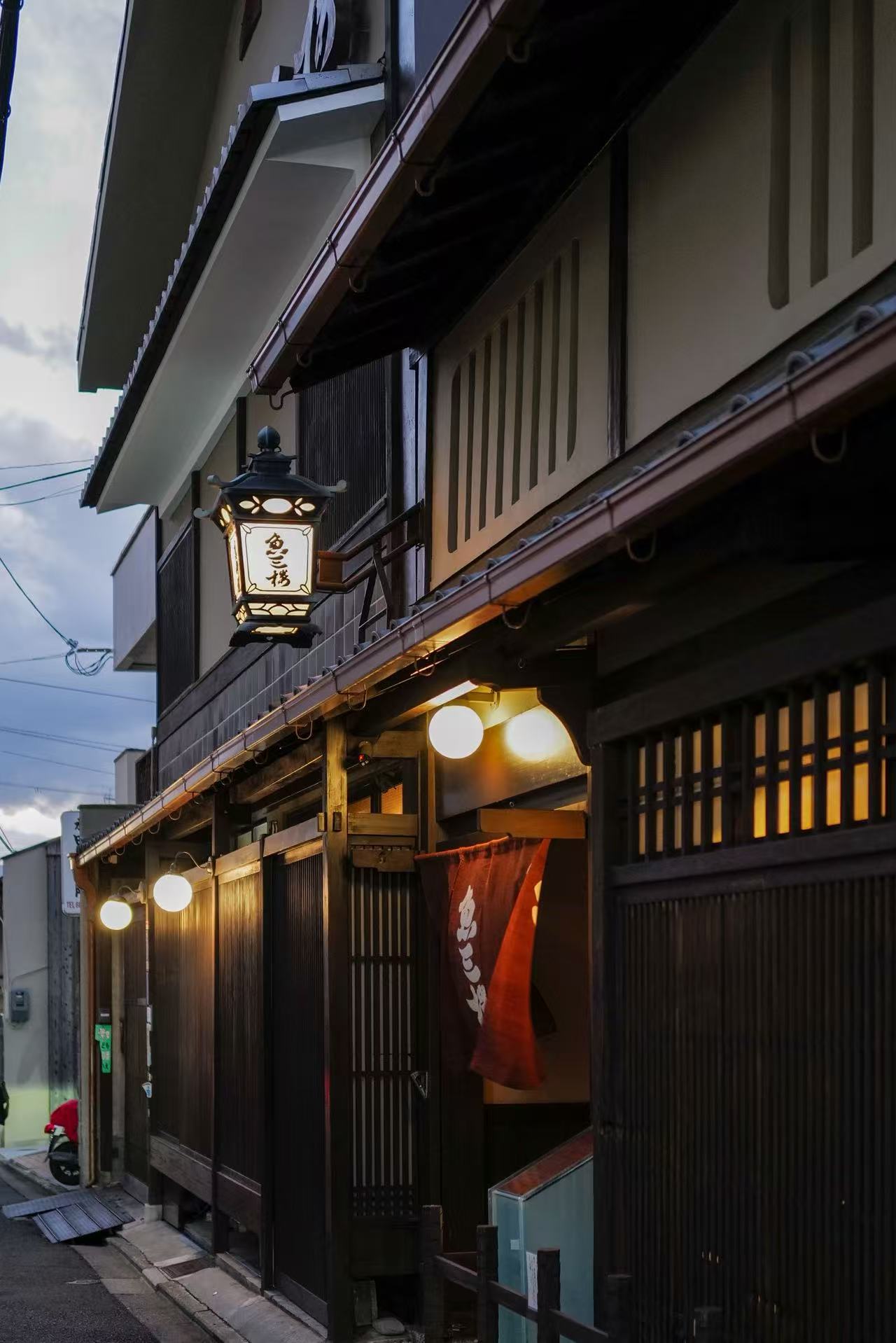
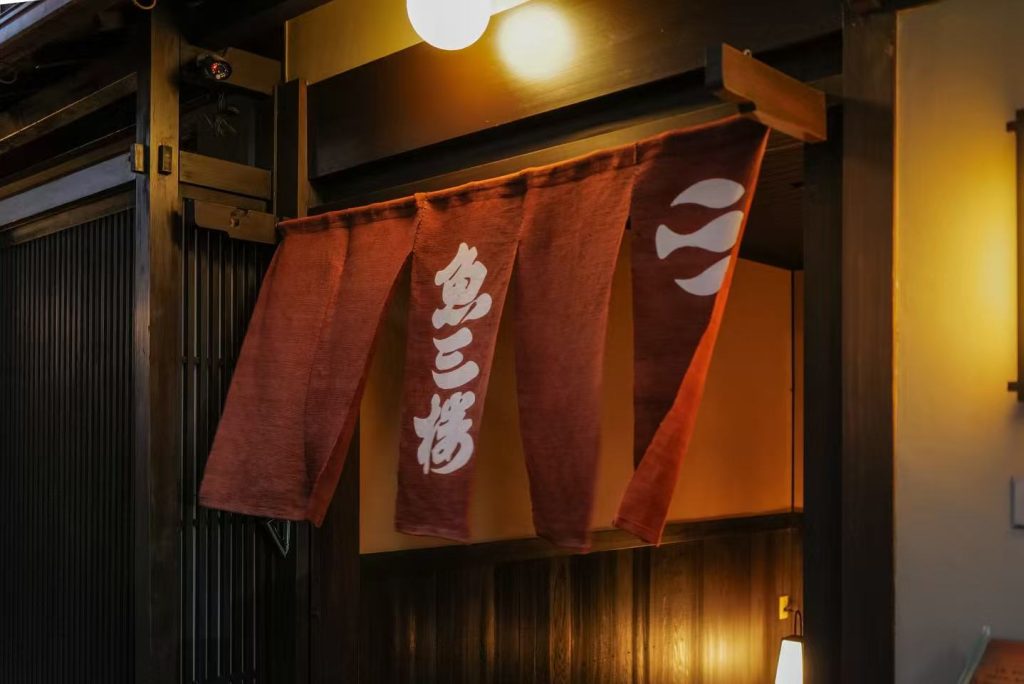
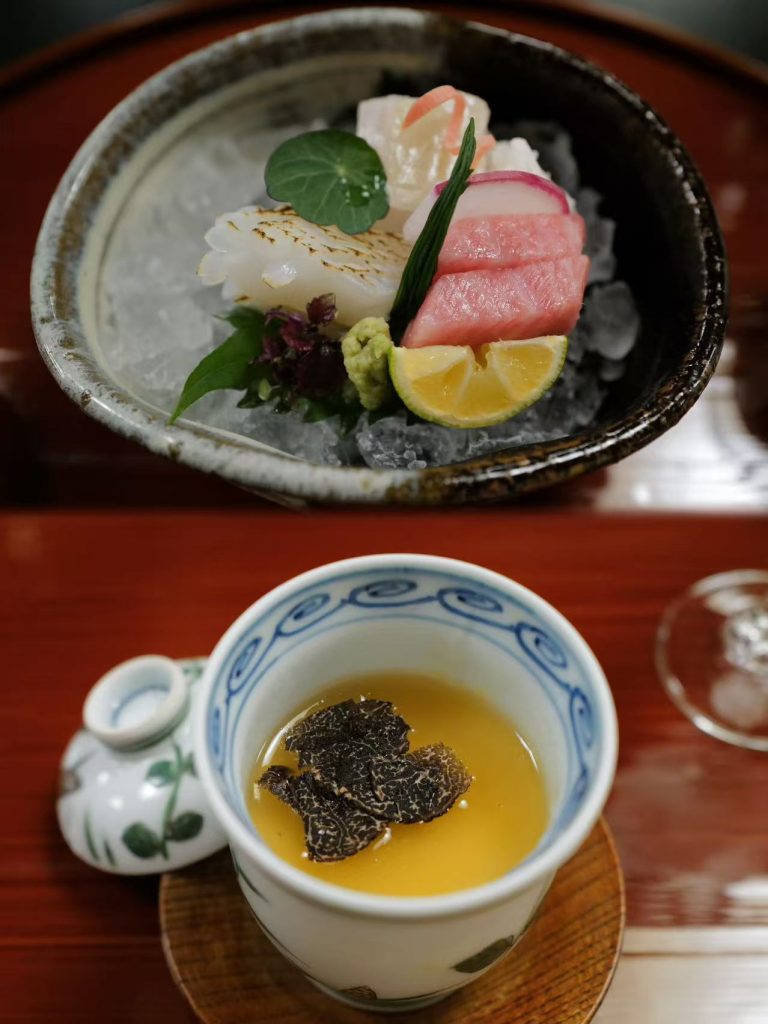
    🥢 Uosaburo(魚三楼)

    ☀️ 🌙 |💰 JPY 6,000++
    🧑‍🍳 A true Kyoto ryōtei with history and Fushimi character
    📍 187 Kyōmachi 3-chōme, Fushimi-ku, Kyoto

    If you’re following the “standard” Kyoto plan and visiting the thousand torii in the morning, Uosaburo, located on Fushimi’s main street, is the perfect lunch spot. If you’d rather sleep in, there are also direct routes from central Kyoto that drop you almost at the restaurant’s doorstep—an ideal starting point for a day in Fushimi.

    With over 260 years of history, Uosaburo has an irreplaceable geographical advantage.

    And the best part: it’s a large ryōtei with plenty of seating—easy to book.

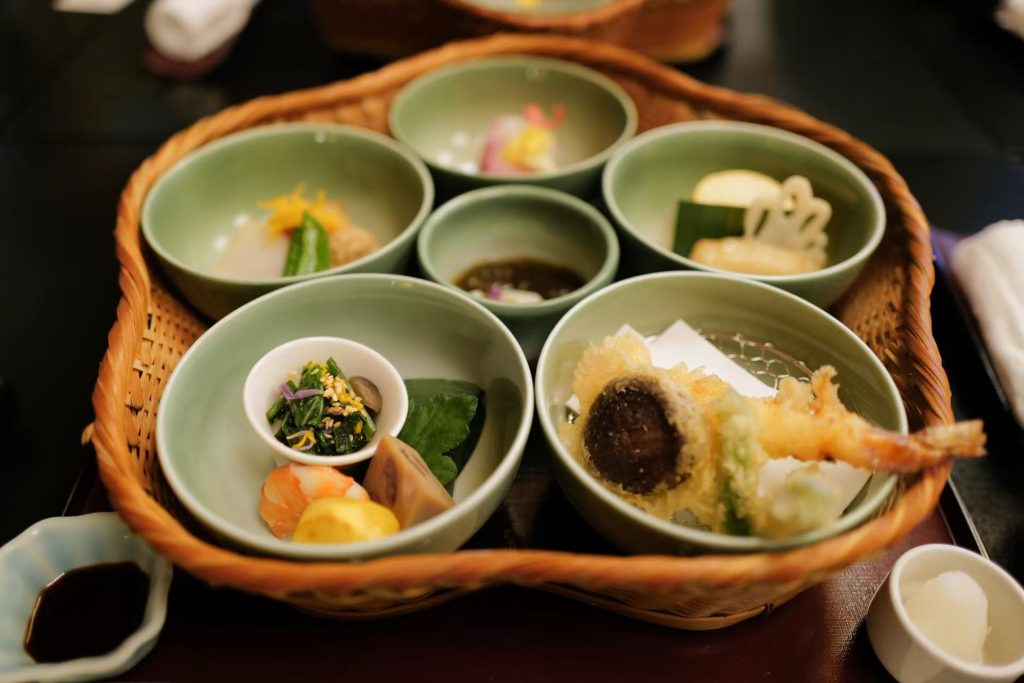
    I really love their lunch. It has the elegance, restraint, and satisfaction of Kyoto cuisine—offering the full experience and aesthetic of Kyo-ryori, without losing the finer details and essence of traditional cooking. It hits that sweet spot of being beautiful, thoughtful, and quietly filling.

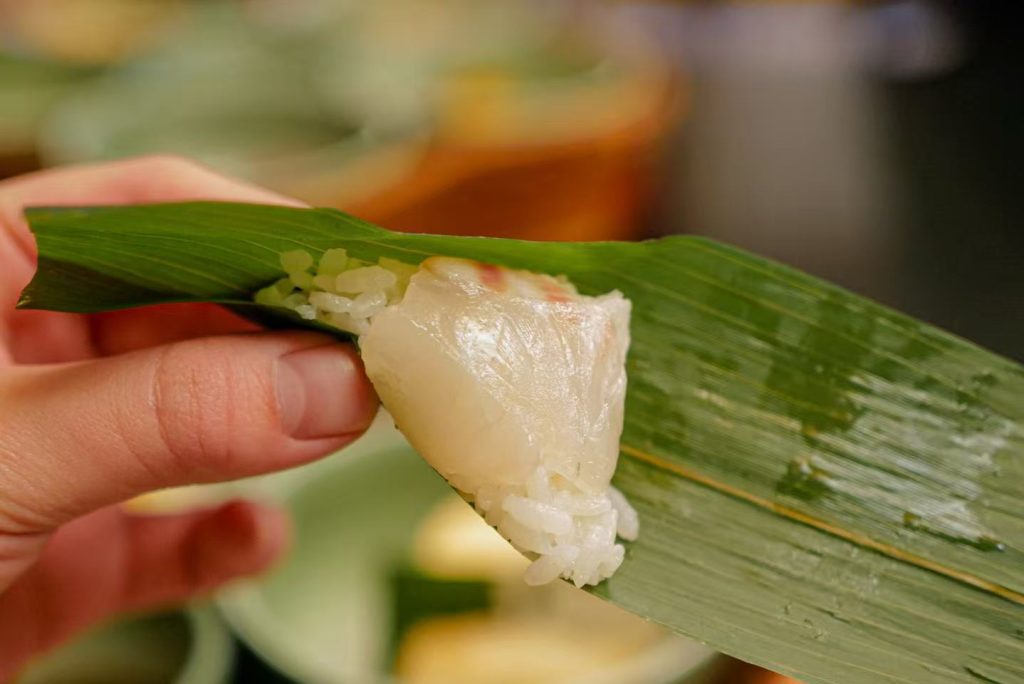
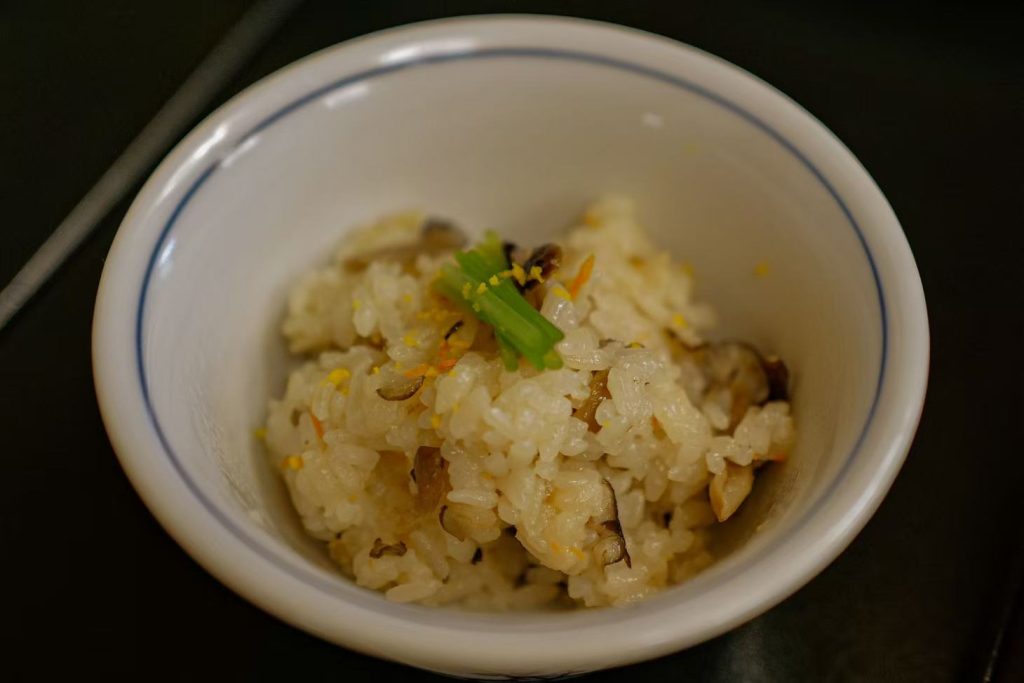
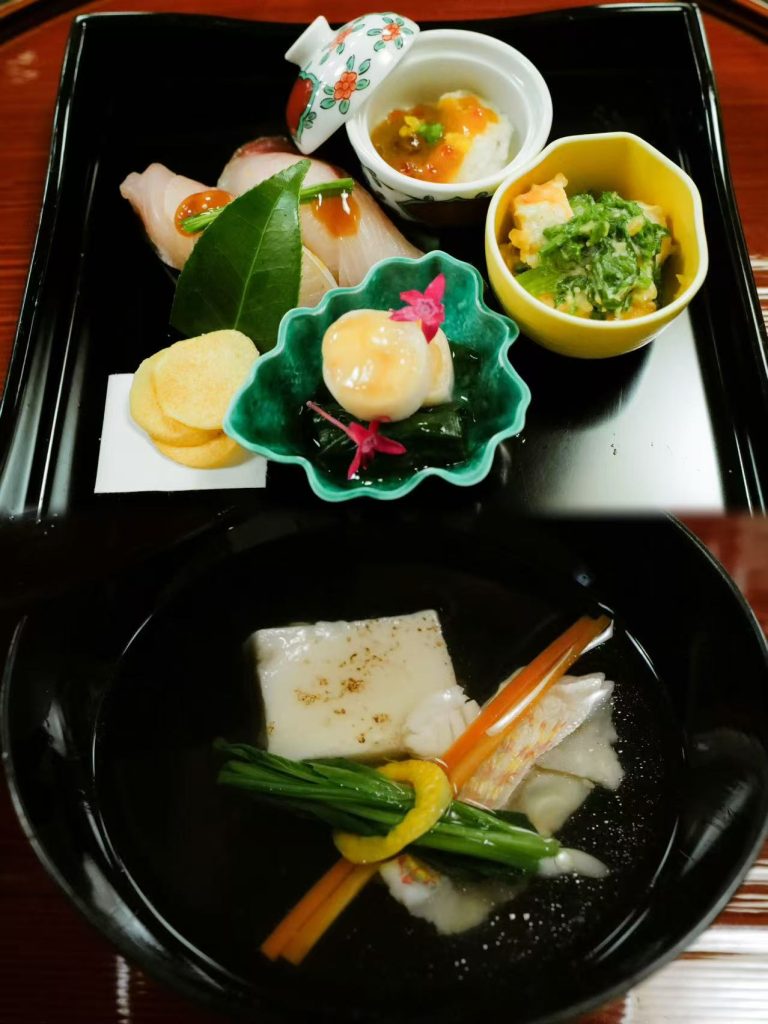
    The lunch set is called “Hanakago Gozen” (flower-basket set). Many of the courses you’d normally see in a full kaiseki meal are miniaturized and presented together in one woven “flower basket”: appetizers, dressed dishes, sashimi, simmered items, grilled fish, fried items—each one compressed into its essence.

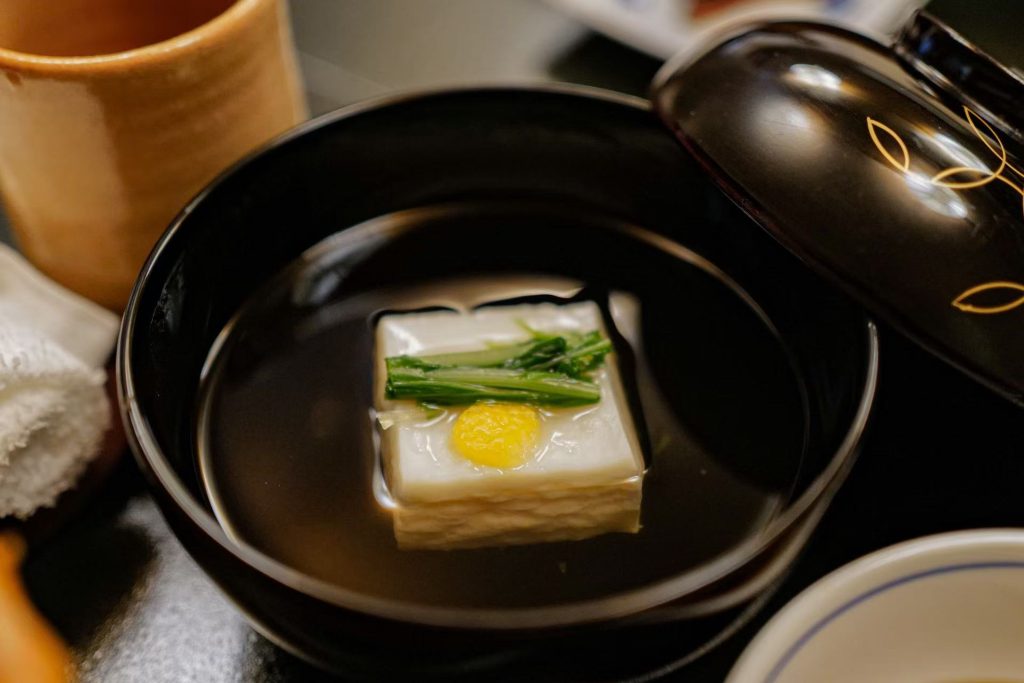
    It’s both traditional and intricate, with a clear sense of seasonality. In the appetizers, for example, there might be white fish and barely-cooked chestnut wrapped in sasa leaves; in the soup, sesame tofu with just the right amount of looseness and tension; and at the end, a modest-looking Japanese-style pudding that quietly reveals the kitchen’s skill.

    Every dish carries a small surprise, a small moment of satisfaction—and all of it lands gently and precisely where it should.

    It’s not as long or formal as a full dinner kaiseki, but it absolutely delivers the full ryōtei feeling.

    Of course, Uosaburo also offers a proper Kyo-ryori kaiseki at dinner.

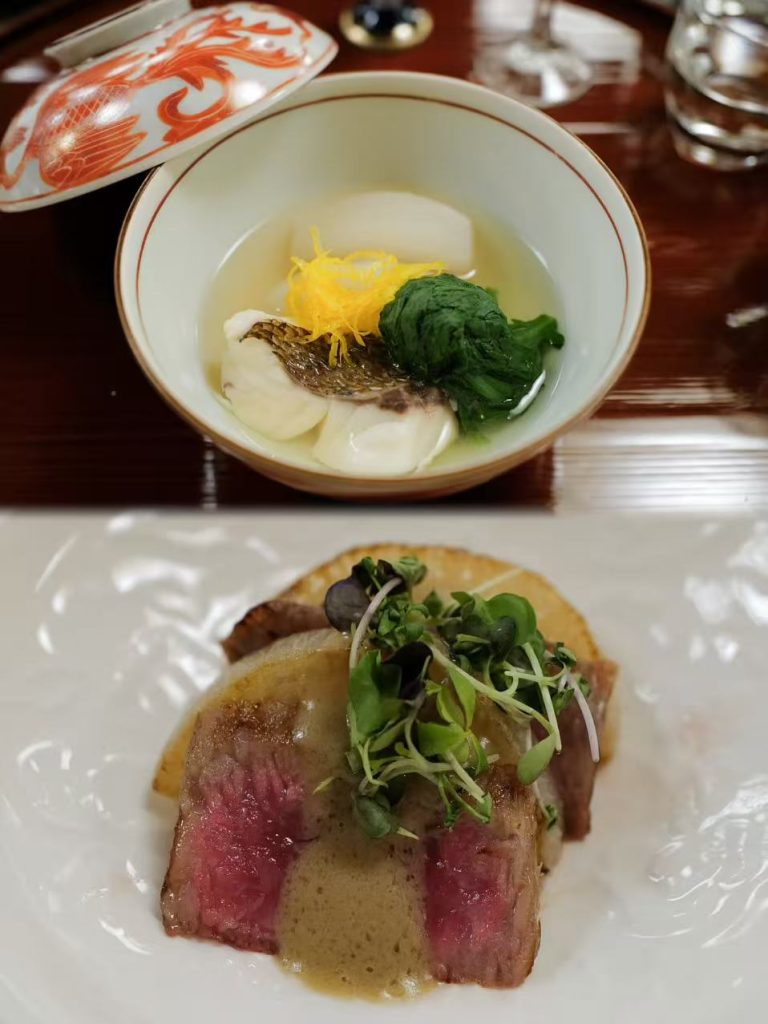
    In true Kyoto ryōtei fashion, they start from what matters most: beauty. From cutting to plating, the whole kaiseki feels like watching a work of art come together. At the same time, the menu emphasizes seasonal ingredients and the way Fushimi’s medium-hard “Fushimizu” water brings out umami in the dishes.

    The foundation is solid, and the restaurant is committed to tradition.
    Every dish is straightforwardly, reliably delicious.

    After a long day of travel, this is the kind of place where you sit down, exhale, and let yourself simply enjoy the food.

    ✦ ············· • ············· ✦ ············· • ············· ✦ ············· • ············· ✦

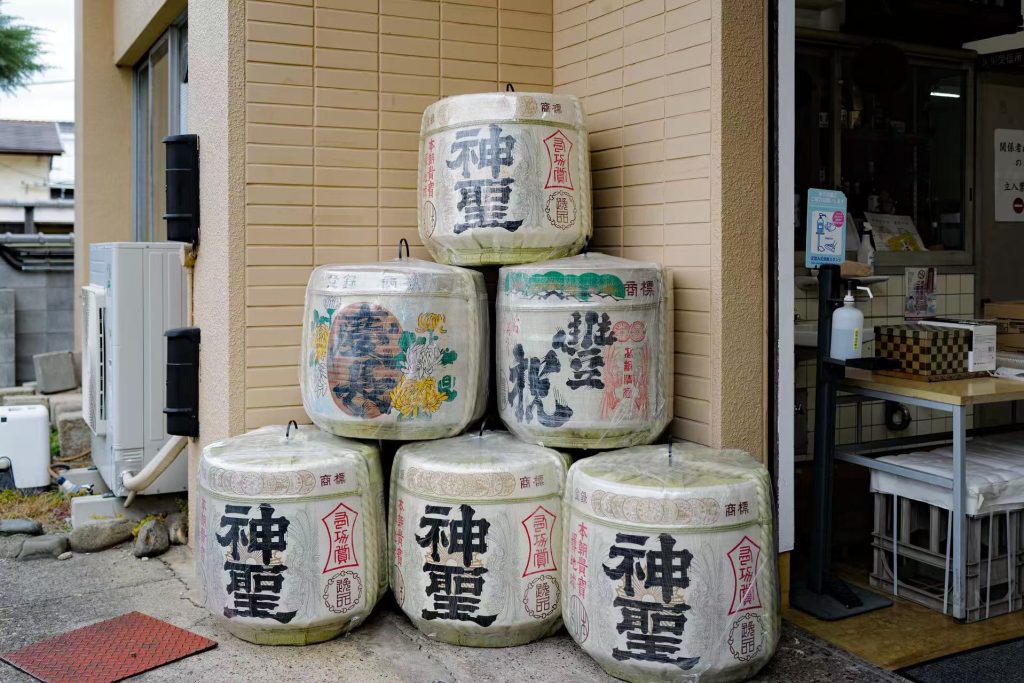
    🍶 山本本家

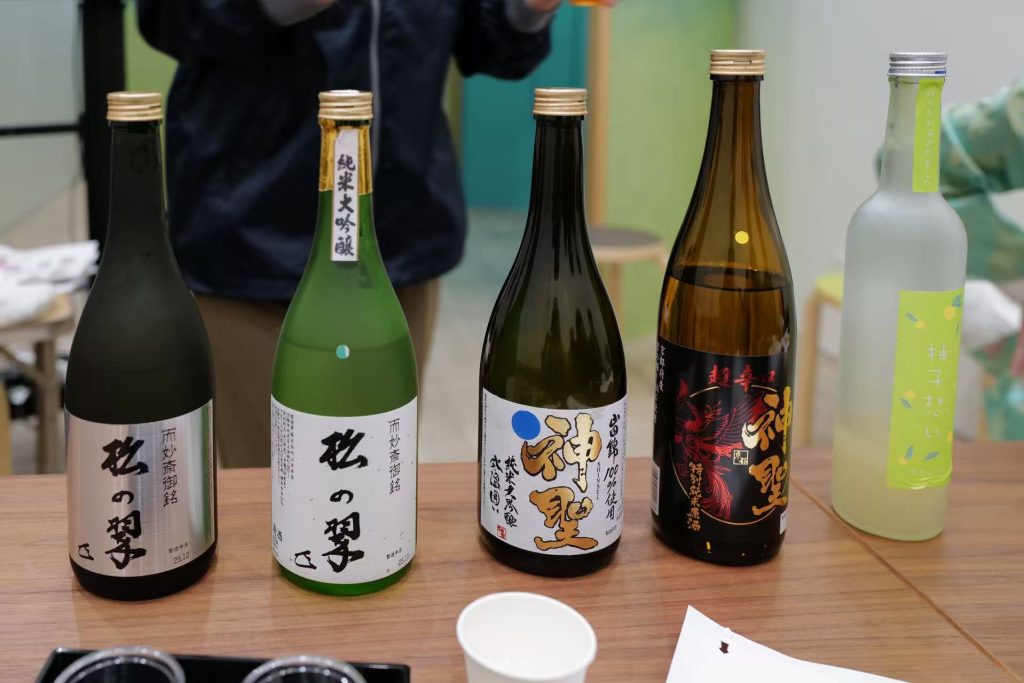
    Main brands: Shinsei (神聖), Matsu no Midori (松の翠)
    Founded: 1677 (Enpō 5)

    After lunch, a short walk from Uosaburo in the opposite direction from the shopping street takes you into Fushimi’s sake brewery district.

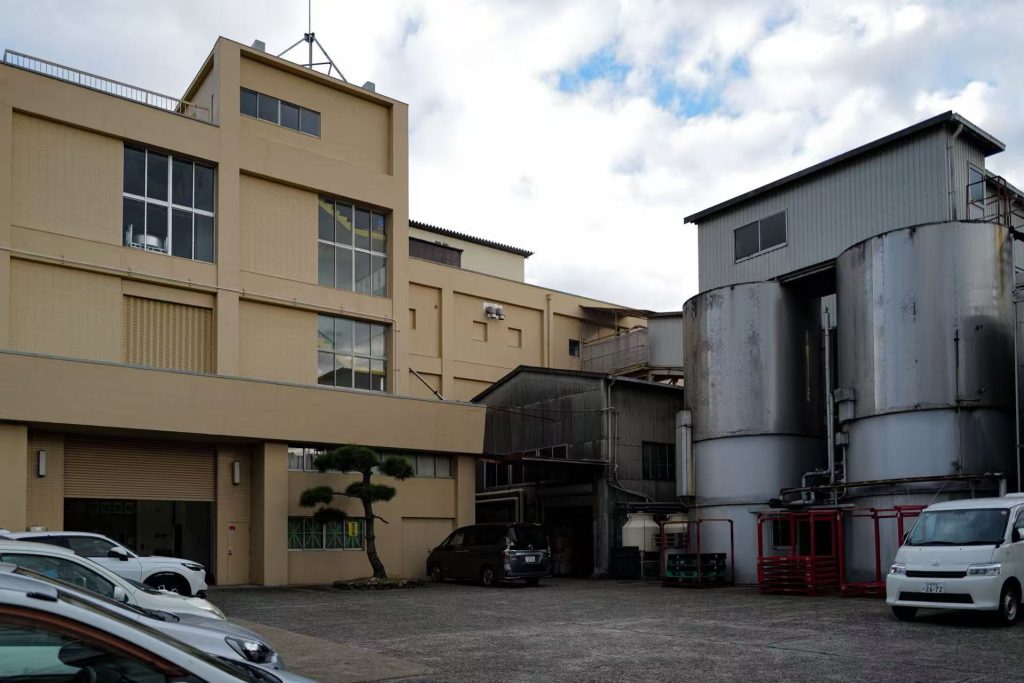
    The giant metal tanks outside? Those are actually oversized fermentation tanks.

    As many people know, Hyōgo Prefecture produces the largest volume of sake in Japan; Fushimi in Kyoto ranks second. Go back 600 years to the Muromachi period, and Kyoto and its surrounding region were home to more than 350 breweries.

    The most important shrine for Japanese brewers, Matsuo Taisha, is also here in Kyoto.

    Fushimi has many breweries and high production volumes, and several of them now use brewery tours and museums to share the appeal of sake with more people.

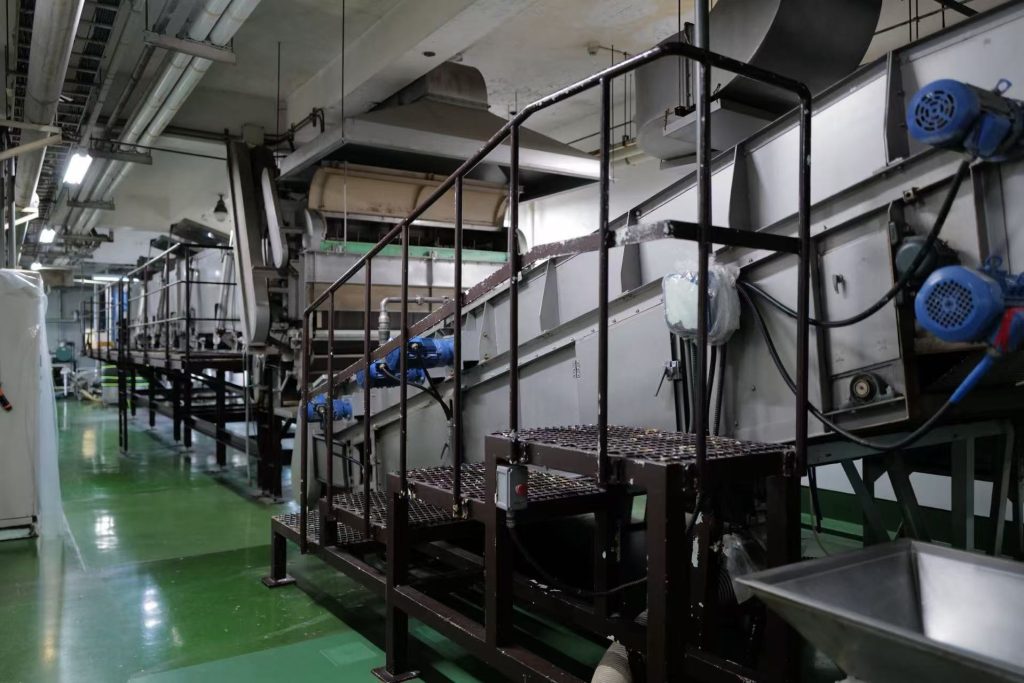
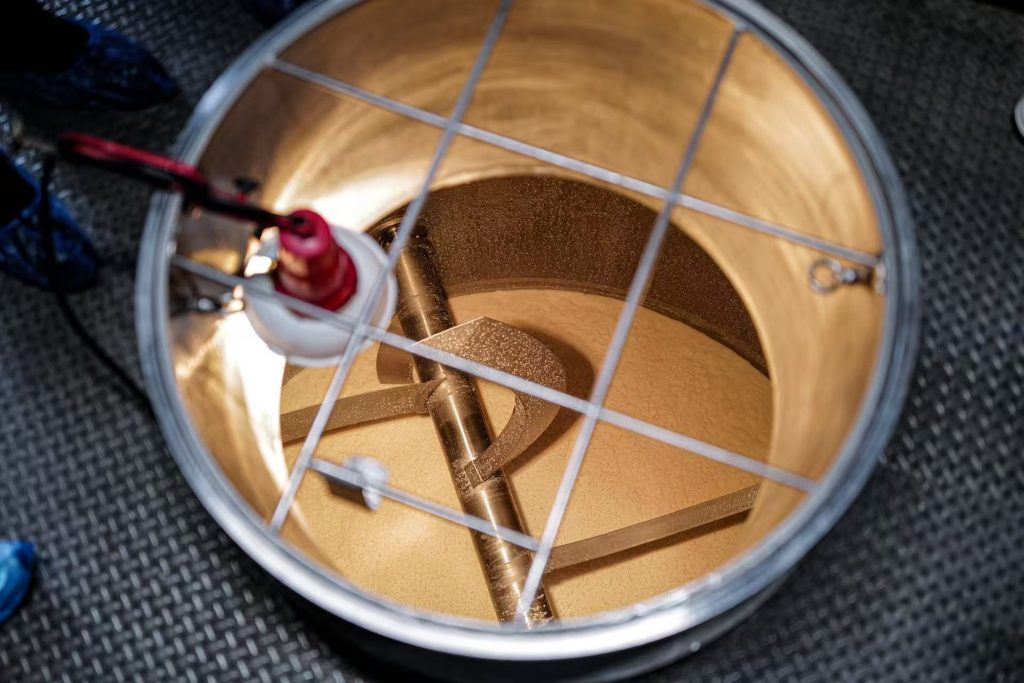
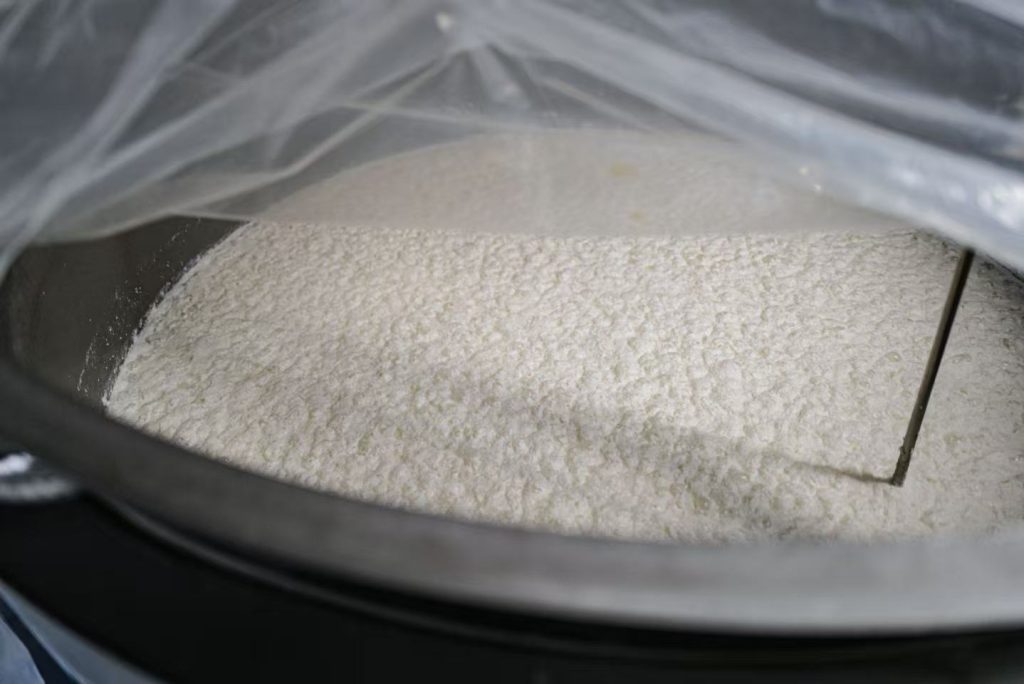
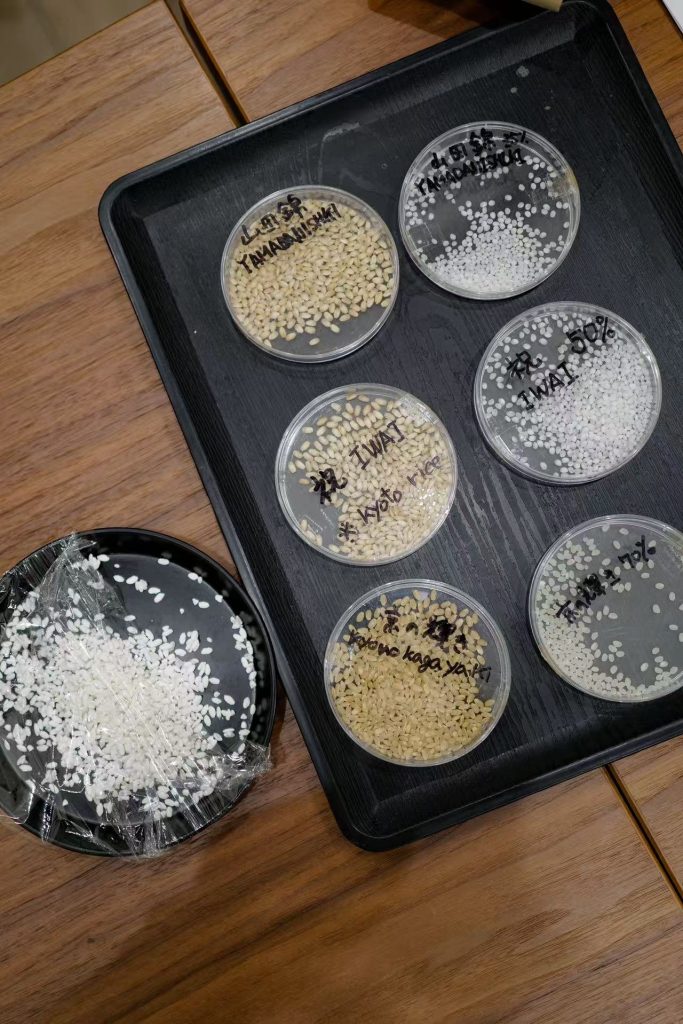
    Yamamoto Honke is a large-scale producer, so on their tour you can finally see, in real life, the things that usually only appear in textbooks: huge machines for rice polishing, steaming, and kōji-making; temperature-controlled rooms; and massive metal tanks filled with turning paddles and actively fermenting sake. The role of modern technology in sake brewing is displayed in a very direct way. When you step back and look at the entire building—from logistics and transport to each production step—you realize the whole structure was designed for one purpose: brewing.

    The impression a big brewery gives you is, unsurprisingly, overwhelming.

    For visitors, the brewery is divided into four main areas: the production building, a tasting and exhibition space, a retail area, and the well-known yakitori-and-sake restaurant “Torisei”, which Yamamoto Honke operates (and which now has seven locations across Kansai).

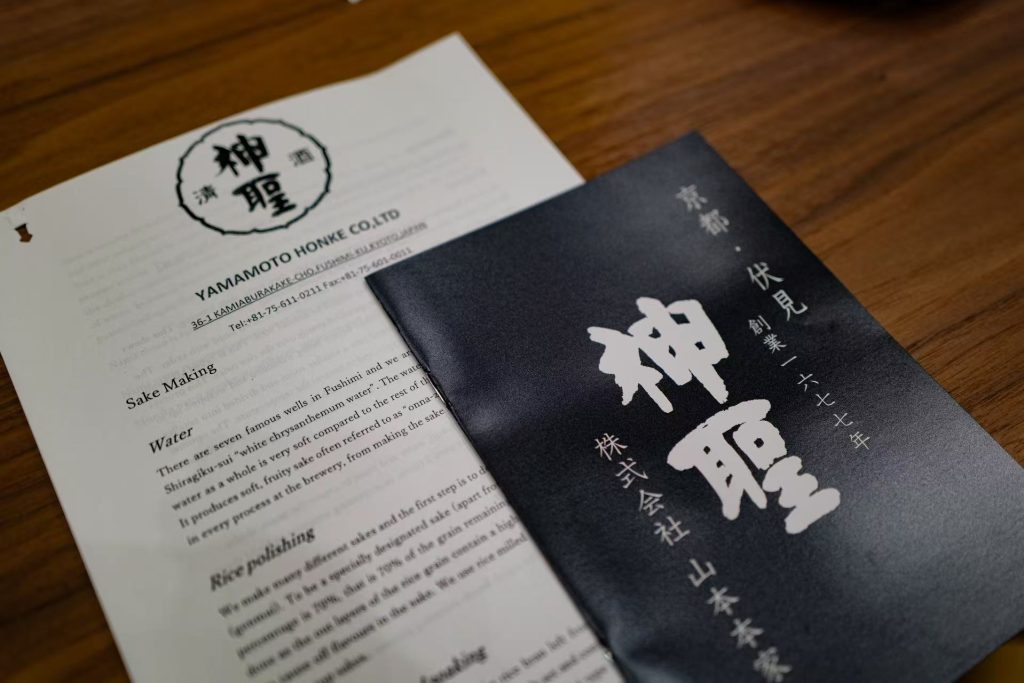
    Recently they’ve also started offering English tours, with full English materials and staff who can communicate in English during tastings. It instantly brings people much closer to the sake they’re drinking.

    Both Shinsei and Matsu no Midori belong to Yamamoto Honke, and the sake is a textbook example of Fushimi’s classic “onna-zake” style—soft and “feminine.”

    Brewed with Fushimi’s Shiragiku water, which is low in iron and moderate in minerals, the sake tastes round and smooth. It pairs beautifully with the nearby Kyoto cuisine—the same kind of gentle, elegant character you find at the table. These really are ideal food sakes.

    They’re also experimenting with new styles that stand out, like a yuzu liqueur tailored to younger drinkers—its acidity, sweetness, and just-right bitterness are all clean and balanced.

    ✦ ············· • ············· ✦ ············· • ············· ✦ ············· • ············· ✦

    🍶 Gekkeikan(Geikkeikan)

    Sake Museum | Founded: 1637

    Gekkeikan is basically the Coca-Cola of the sake world.

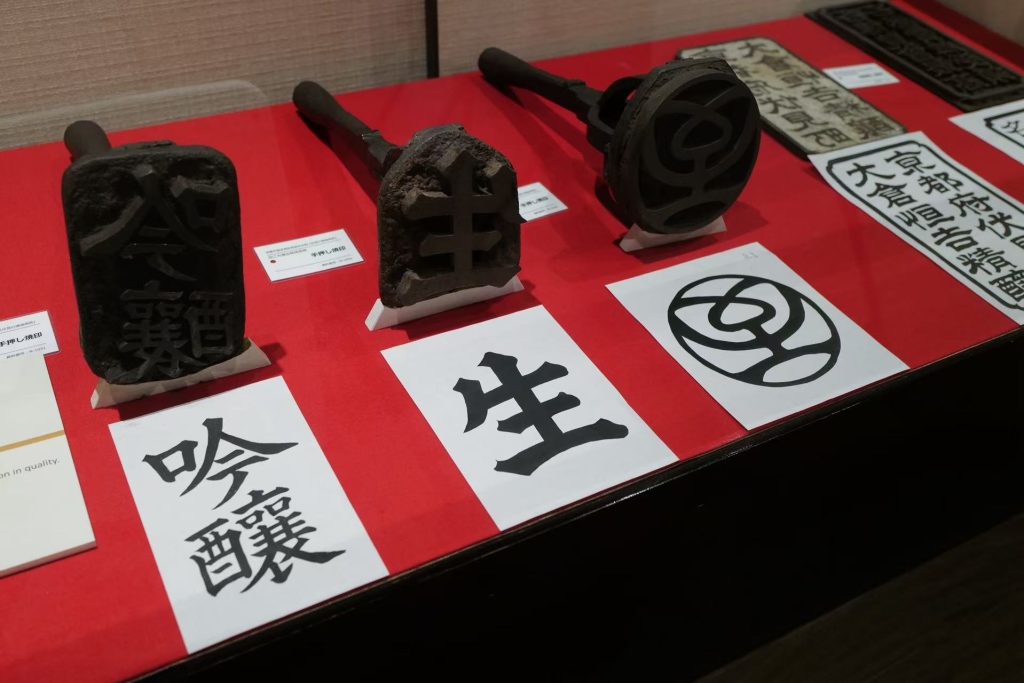
    As a brewery, it operates its own museum, the Ōkura Sake Museum. The building itself is a former brewery from 1909, converted and opened as a museum in 1982.

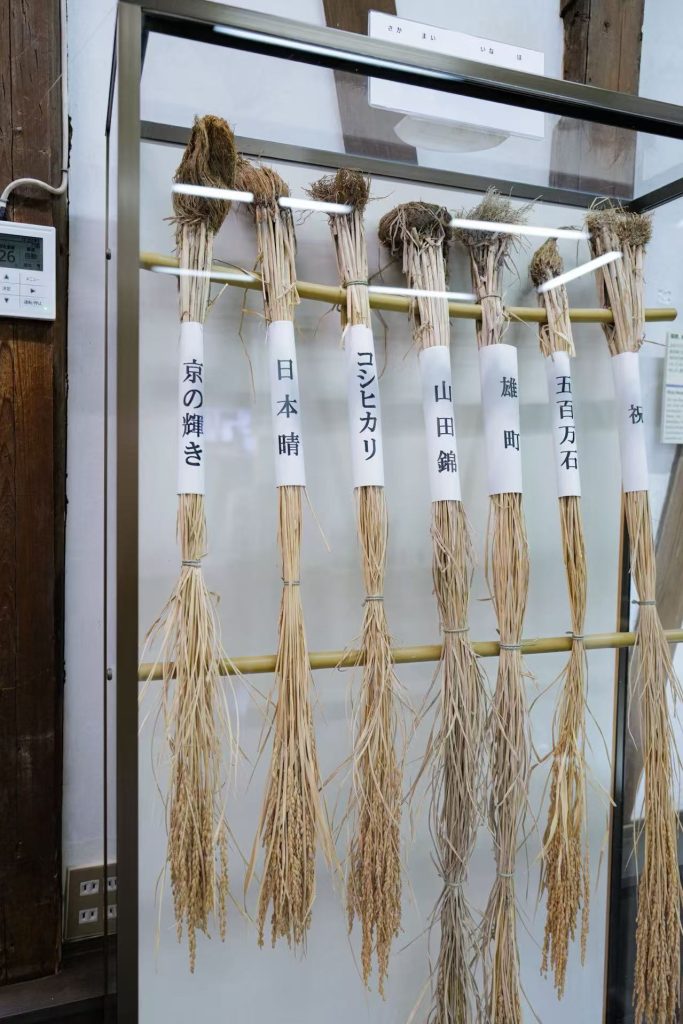
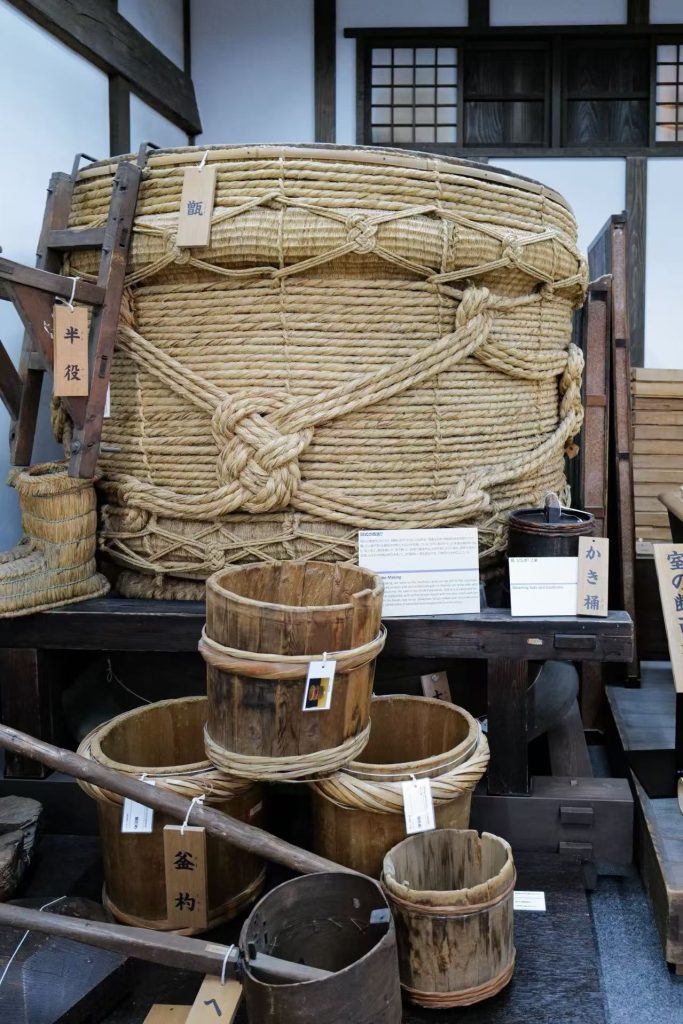
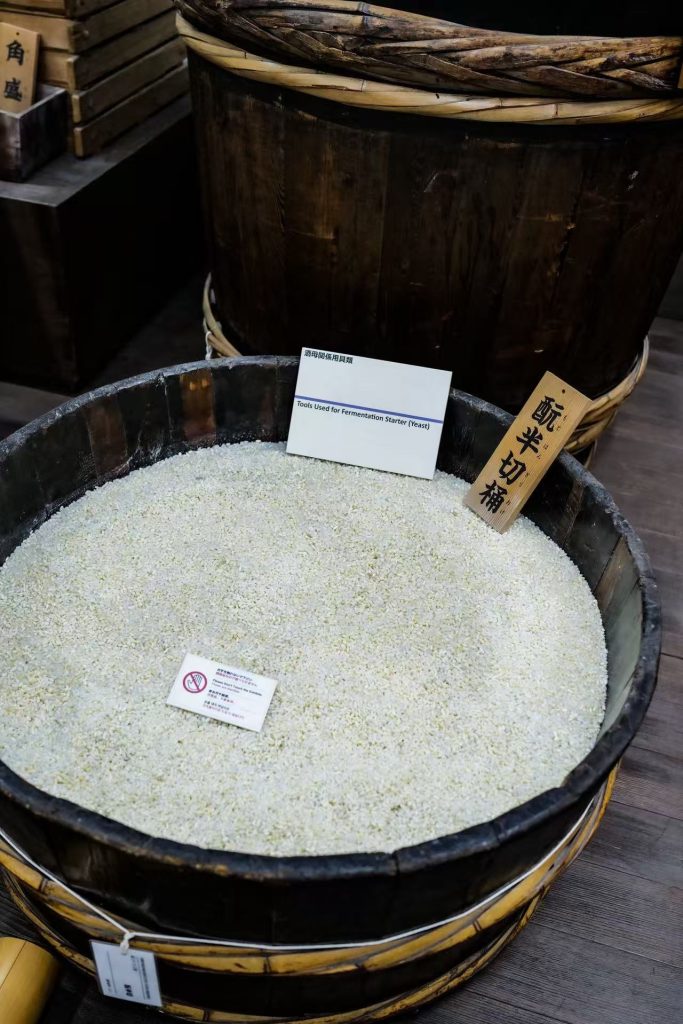
    The museum only has one floor, but the density of information is high. Inside are more than 6,000 historical items, and the museum has been designated by the city of Kyoto as an Intangible Folk Cultural Property. The exhibits cover old brewing tools, the brewery’s development, and early-era equipment, giving even total beginners a clear, intuitive understanding of how sake used to be made, step by step.

    There’s also an entire wall of sake-related documents: books on brewing techniques, experimental records, and more.

    There’s a very “Fushimi” detail in the grounds as well: outside, they’ve kept a well where visitors can sample Fushimizu (brewing water). It’s a straightforward reminder that the true protagonist of sake, at its root, is water.

    ✦ ············· • ············· ✦ ············· • ············· ✦ ············· • ············· ✦

    🍶 Fushimi Yume Hyakushu(伏見夢百衆)

    A collective shop featuring 80 labels from 16 Fushimi breweries

    The best stop for souvenirs

    Fushimi Yume Hyakushu feels like the “final station” of Fushimi sake—less about any single brewery’s story, more about presenting the entire area’s production in one place.

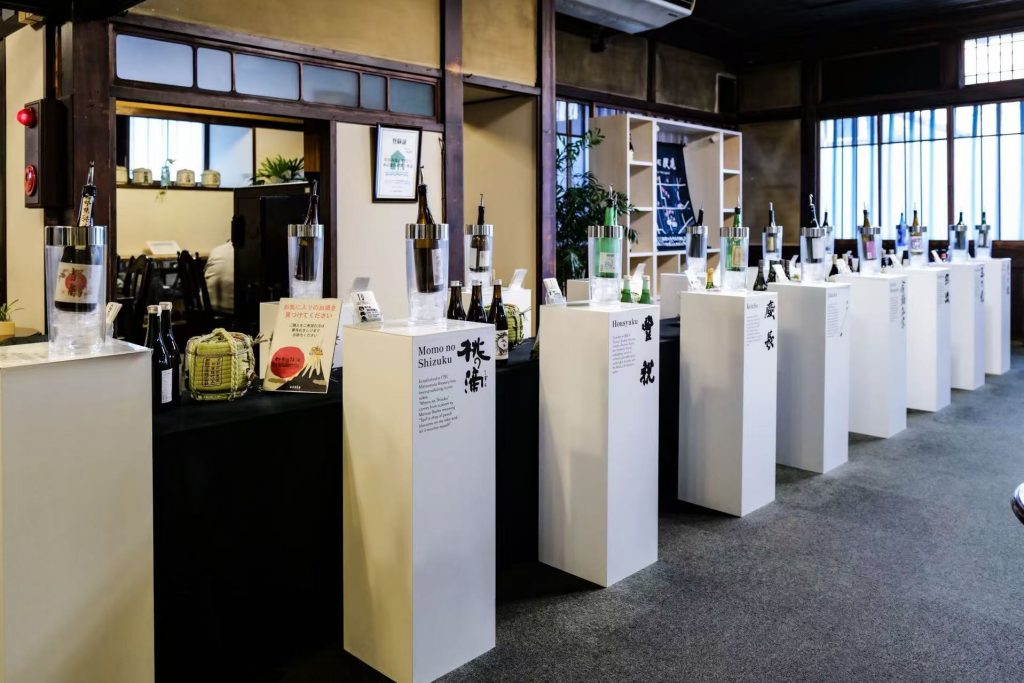
    This cozy space, half café and half shop, has a very fun sake-tasting game: they give you one mystery sake, and if you can identify it correctly from nearly 20 options at the tasting counter, you “win.”

    All the bottles come from the Fushimi area, but the selection clearly has thought behind it—each one highlights different aspects of style and technique. Even more fun, the lineup changes every day, and even within the same time slot, each table might be given a different set of blind-tasting sakes.

    After you’re done tasting, the souvenir area outside is genuinely practical. It brings together small goods and sake-related items from breweries all over Fushimi, so you can essentially get everything in one go.

    For me, this place is like the “Disney Store” of Fushimi sake—somewhere you can casually drop by every time you’re in the neighborhood. After visiting a few different breweries, coming to Yume Hyakushu lets you step back and look at “Fushimi sake” as a whole, then pick out some omiyage for friends before heading happily back into the city.

    Kyoto really is a city that’s hard to overstate—
    the more you walk it, the more impossible it feels to describe in full.

  • Tokyo’s Top Strawberry Cake & an Immersive Japanese-French Dining Experience | Naoto.K

    With so many restaurants in Tokyo, Naoto.K may not be the single jewel at the very tip of the pyramid, but it’s definitely one of those places that feel special, stay on your mind, and make you want to go back again and again. And the best part: it’s actually bookable—you can often get a seat just a week in advance.

    Dining at Naoto.K feels like watching a live show. It’s been a long time since I’ve sat at a counter and watched a chef personally sauté every sauce from start to finish. And the presence of a top-tier pastry chef pretty much holds up the “soul” of the restaurant as a French kitchen.

    Unlike many chefs who come to Tokyo to chase their dreams, Chef Naoto Kishimoto is actually from Tokyo. He fell in love with French cuisine through TV dramas, then went to train in Paris, the Loire Valley, and Burgundy before returning to Tokyo to build his own path.

    From Ostral in Ginza, to L’Embellir in Minami-Aoyama, to his current restaurant Naoto.K, this is already his third place as head chef. Rather than just a job, it feels more like the culmination of his 40-year career—a personal “greatest hits” in restaurant form.

    Reading past interviews with Kishimoto-san, you can tell his brain works a bit differently. At L’Embellir in Minami-Aoyama, he realized his dream of running a grand maison—but gradually felt out of sync with the layers of formality and distance created by the space and service.

    So in Kanda, the new restaurant was completely reimagined. Everything was stripped back to counter seats and an open kitchen, putting all the heat, smoke, and ingredient transformations right in front of the guests.

    Naoto.K doesn’t open with a flashy, show-stopping beginning (though thankfully, as the meal proves, this is very much a slow-burn, rising curve).

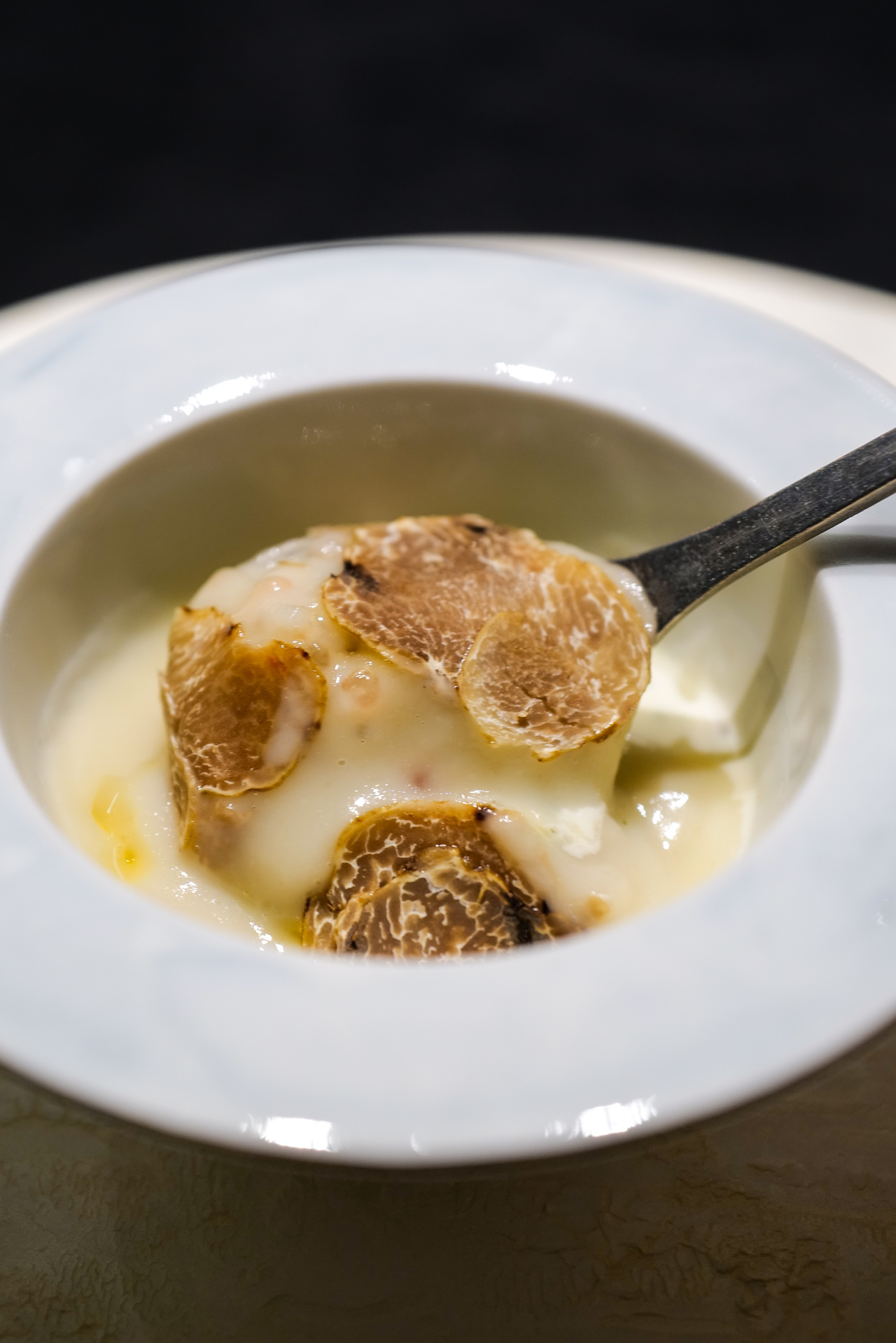
    The oyster with white truffle arrived first. The oyster was cooked to not even a third done—bright, tender, with a sharp freshness and acidity that really stood out. The truffle, however, despite being a seasonal luxury, showed mostly looks and almost no aroma.

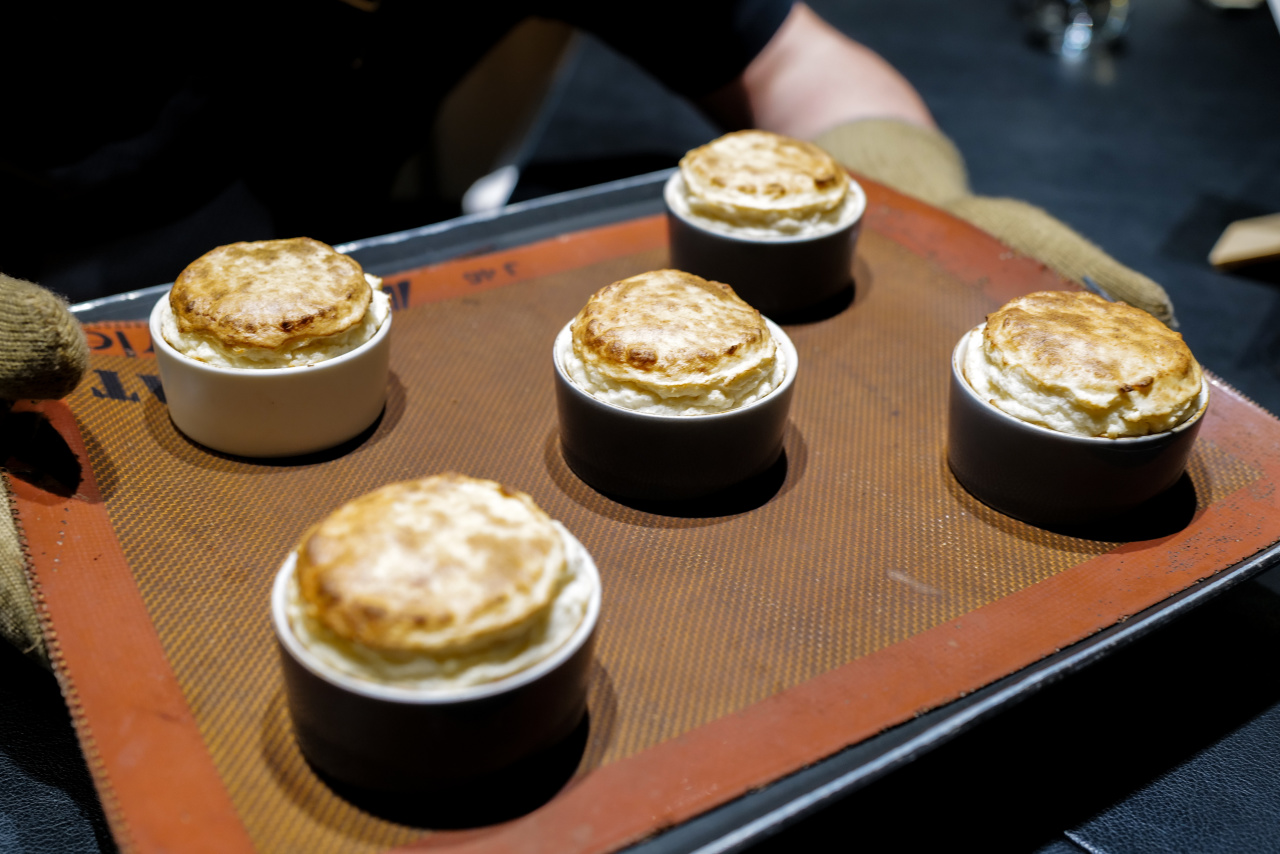
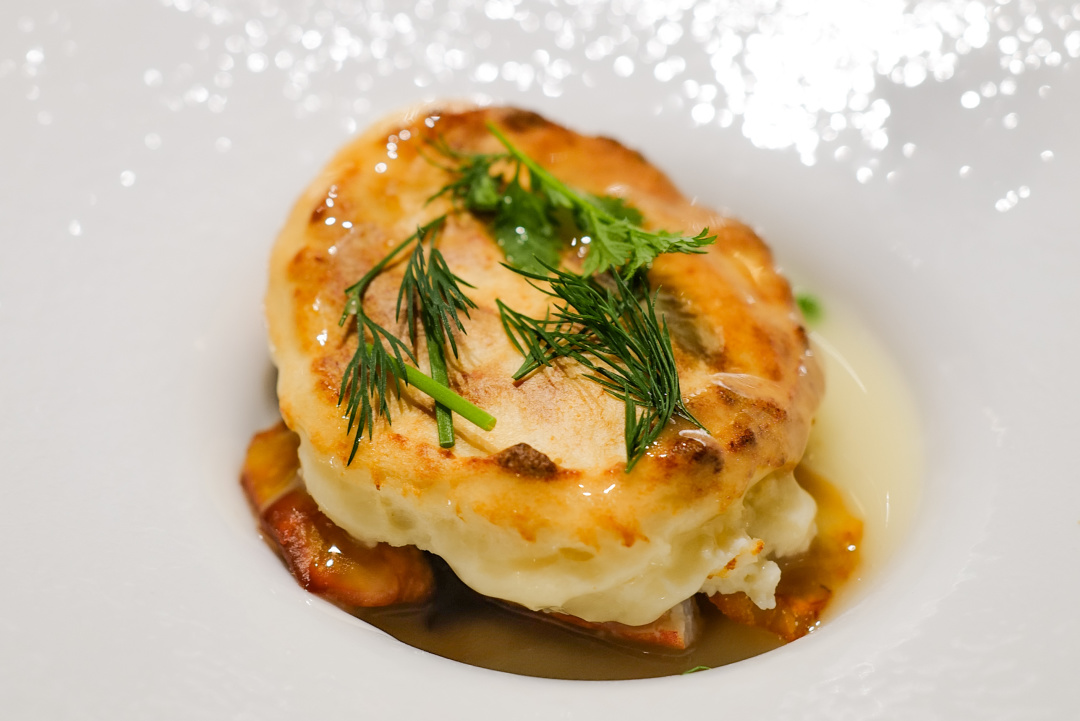
    The lobster soufflé was baked to incredible volume and softness, carrying just the right amount of sweetness and umami. The potato beneath was crisp on the outside and fluffy inside, aromatic and comforting. The only misstep was the lobster itself, which was a bit too salty.

    You could feel the quality of the ingredients and the skill—but it still felt like the kitchen hadn’t fully settled into its stride yet.

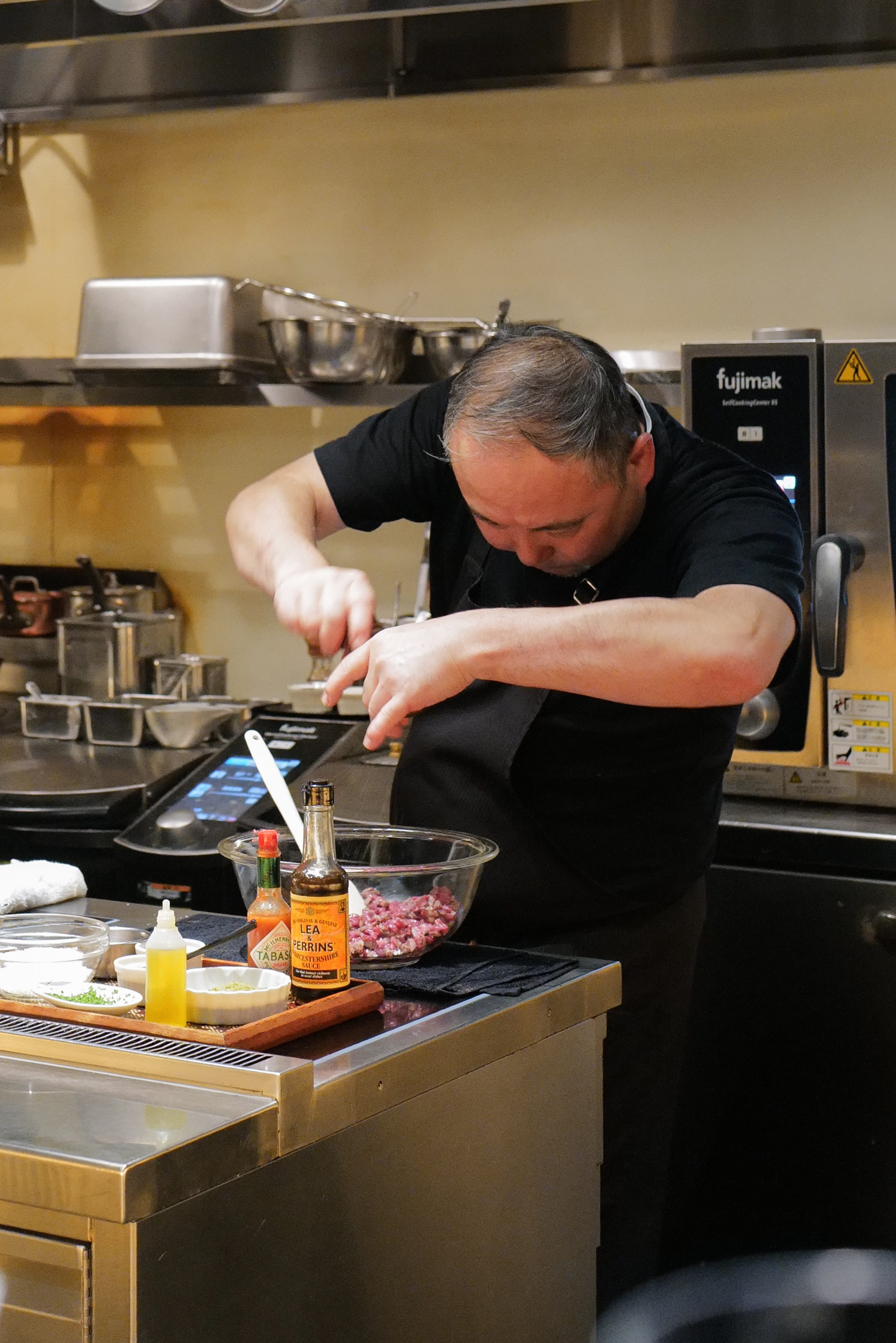
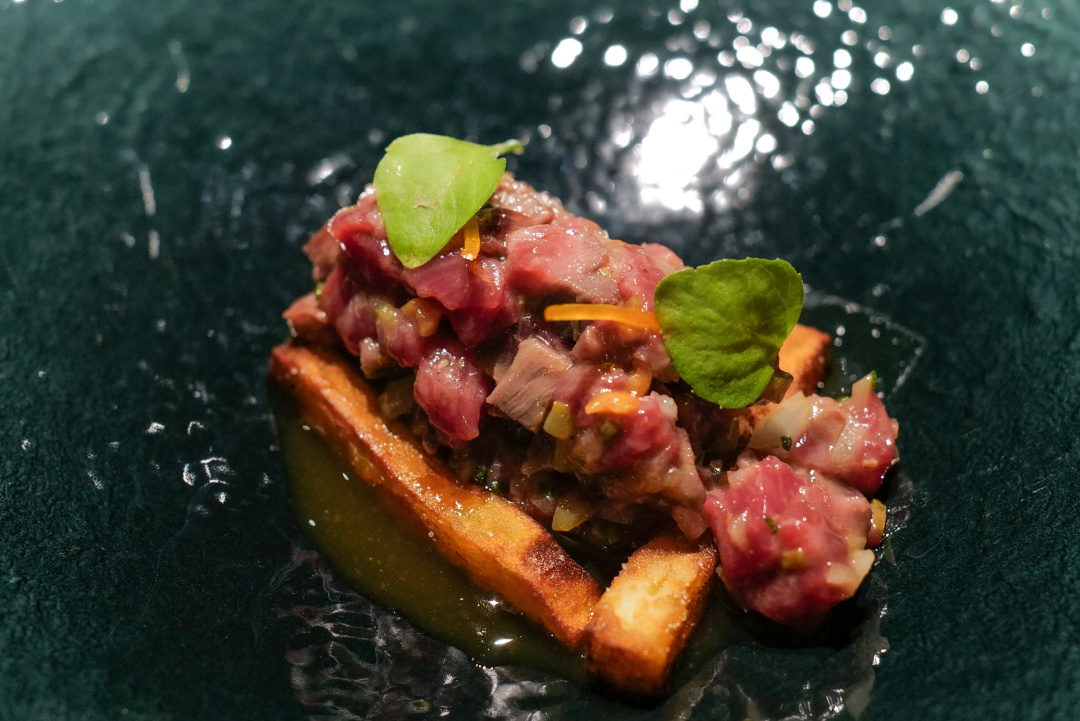
    The wagyu came from Nakasei in Kyoto, Tajima beef aged for 45 days, lightly seared and then turned into a tartare—tender with a slight crunch.

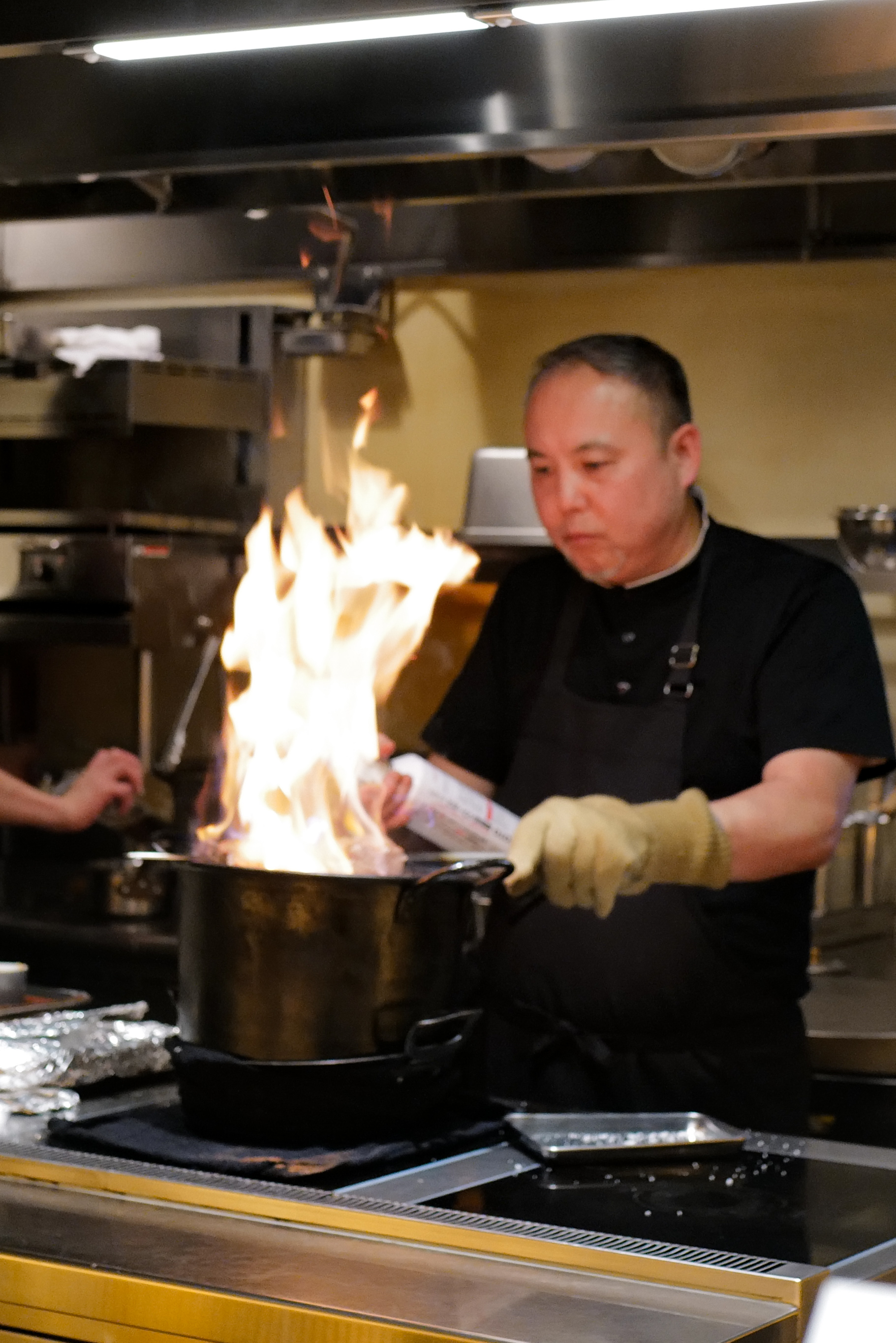
    From the moment the beef hit the pan, every step was done directly by the chef: seasoning, adding each ingredient, mixing again and again. Even the fries on the side felt like they had a clear idea behind them.

    Before this dish, I honestly couldn’t remember the last time I’d seen a head chef in a well-staffed kitchen keep this much of the work in his own hands.

    Winter is unmistakably shirako season, but this was my first time having shirako meunière.

    Large, snow-white lobes of shirako were pan-fried until golden. The acidity and fragrance from herbs and lemon balanced the richness perfectly. Cutting through the layered green onion and crisp tart shell was a bit messy, but the satisfaction on the palate made it easy to forget everything else.

    Rich yet fresh, assertive acidity, beautiful balance.

    I’d already heard from several friends that Naoto.K has a seriously talented pastry chef, and sure enough, the bread course already made that clear.

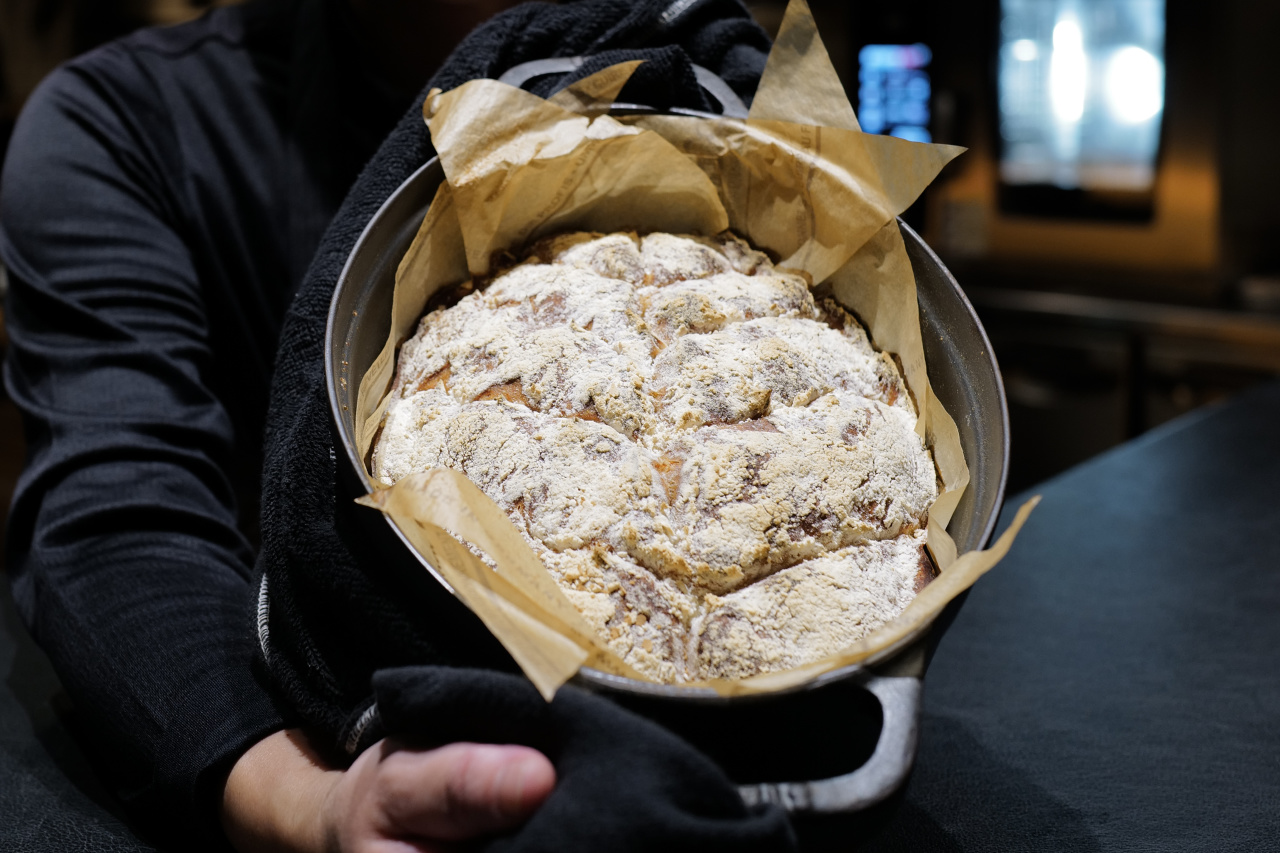
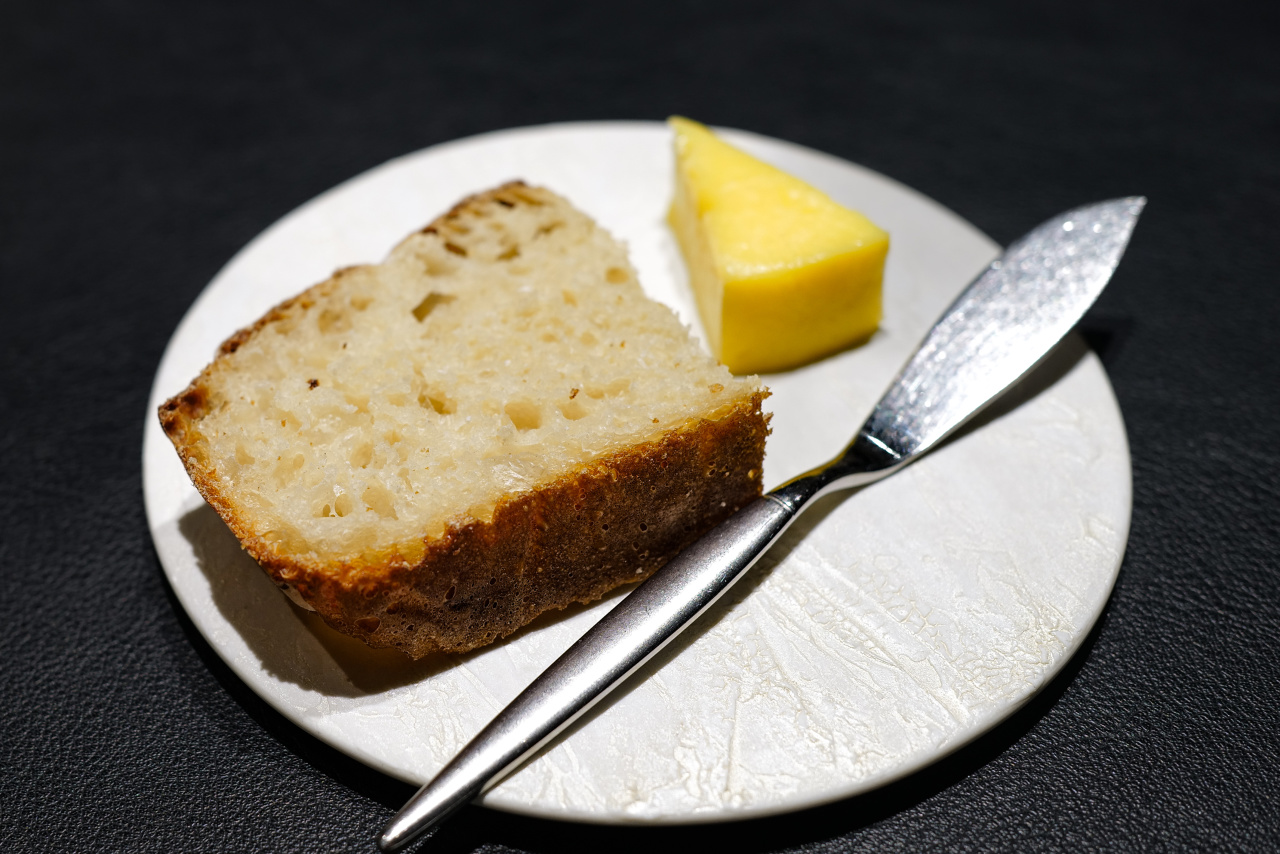
    Baked in a large cast-iron pot, the bread wasn’t trying to be a pure, aggressive sourdough like many restaurants aim for. Instead, some butter is worked into the dough, giving it a softer, more delicate texture that fits much better with Kishimoto-san’s high-satisfaction style of cooking.

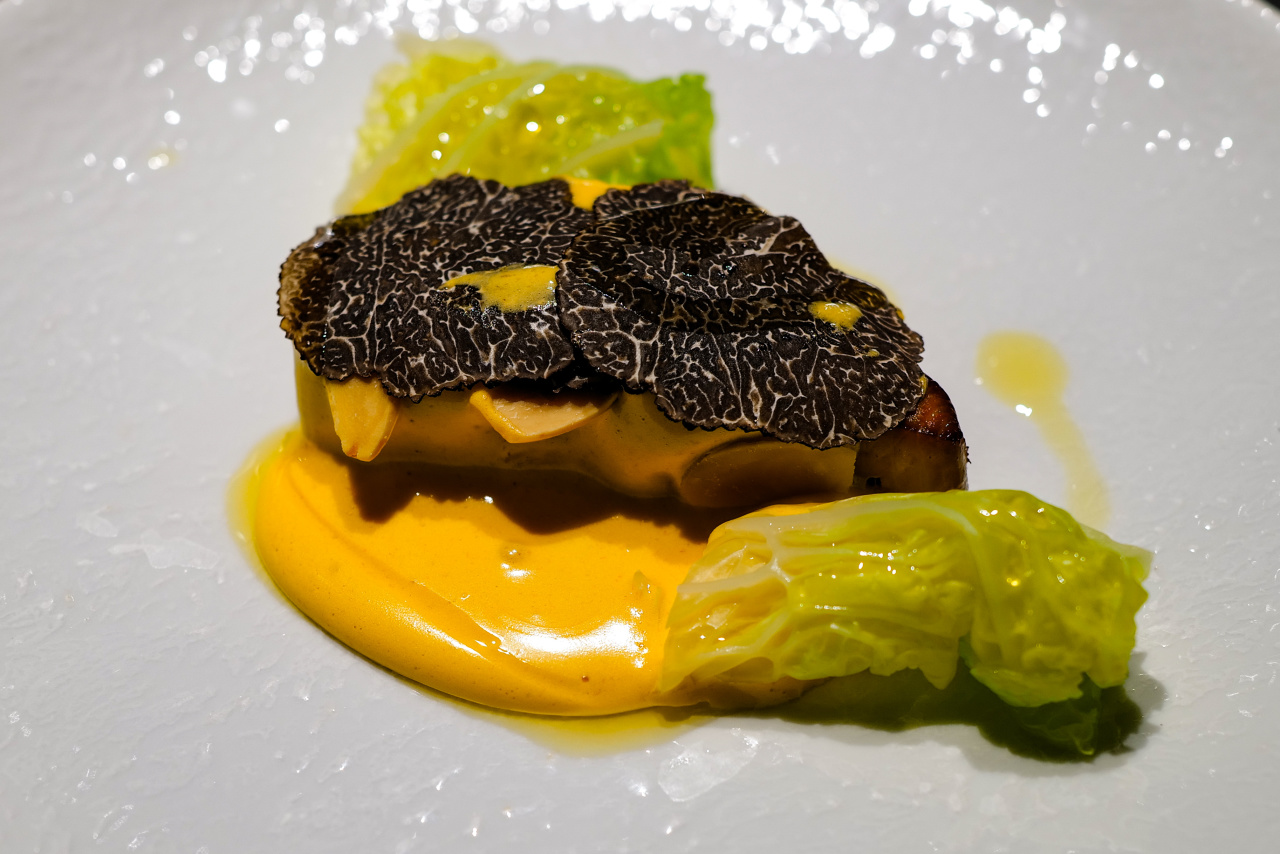
    The buri that followed was a touch overcooked, and the black truffle on top again didn’t really show much character.

    Kobako crab is one of those non-negotiable ingredients in a Japanese autumn–winter season. In more traditional settings, you usually see every part of the crab carefully picked and arranged so you can enjoy both meat and roe without lifting a finger.

    Kishimoto-san, however, turned it into a kobako crab risotto. Every bite was packed with deep umami, dairy richness, and a lingering sweetness. Soft crab meat, crunchy roe, rice that was firm outside and tender within—it was a full-on happiness combo.

    The only caveat: the seasoning leaned quite heavy.

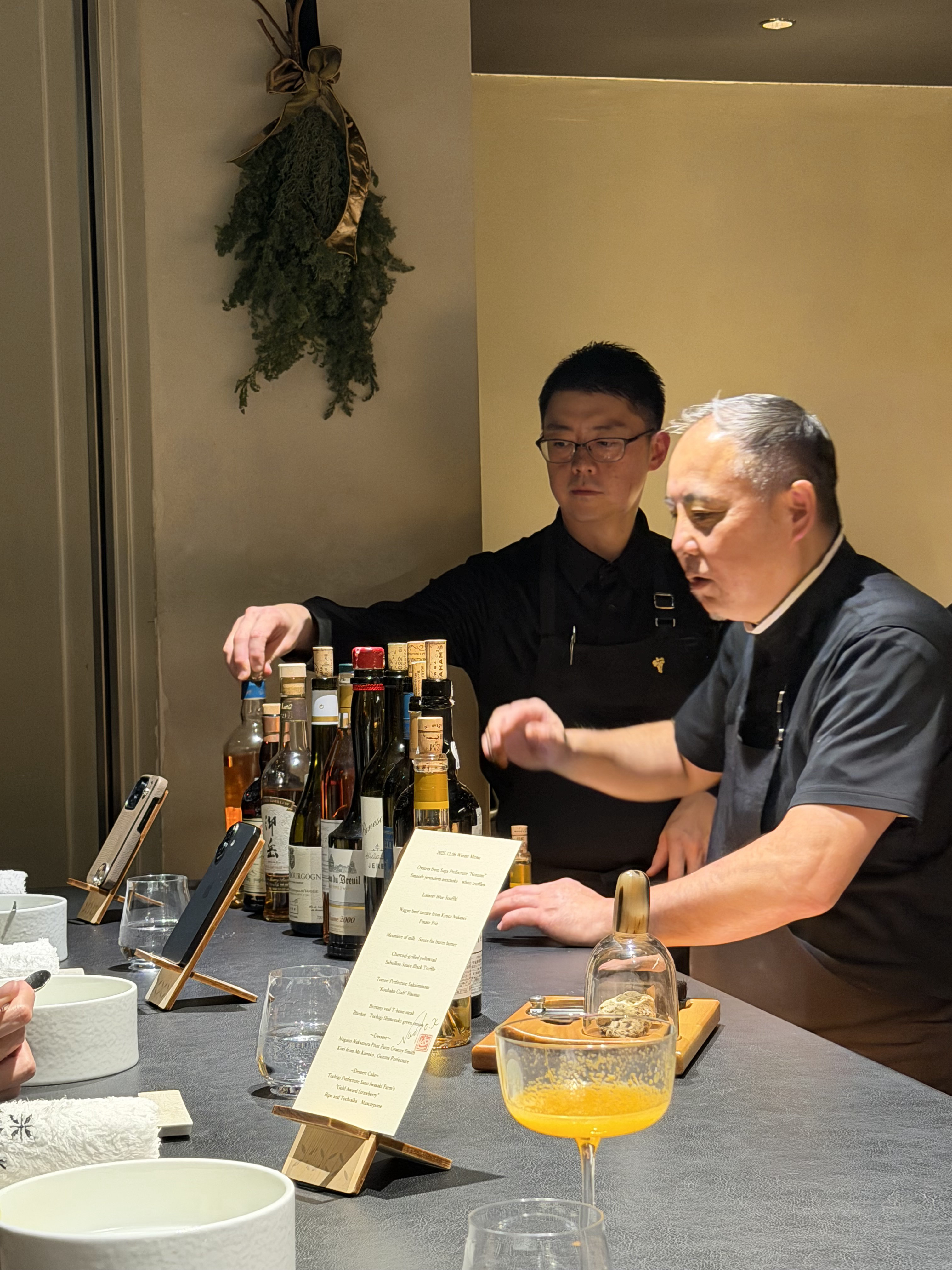
    The true main course of this seasonal menu was a veal T-bone from Brittany. From the very beginning of service, it had been going in and out of the oven three times. Every step—from seasoning to carving—was done personally by Kishimoto-san. Even when he introduced the dish at the counter, his explanation came with animated gestures.

    Super classic. Super tender.

    The extra course that followed was something I didn’t expect to see at Naoto.K: a very plant-forward burdock noodle dish. It wasn’t out of place, but it didn’t leave a particularly strong impression either.

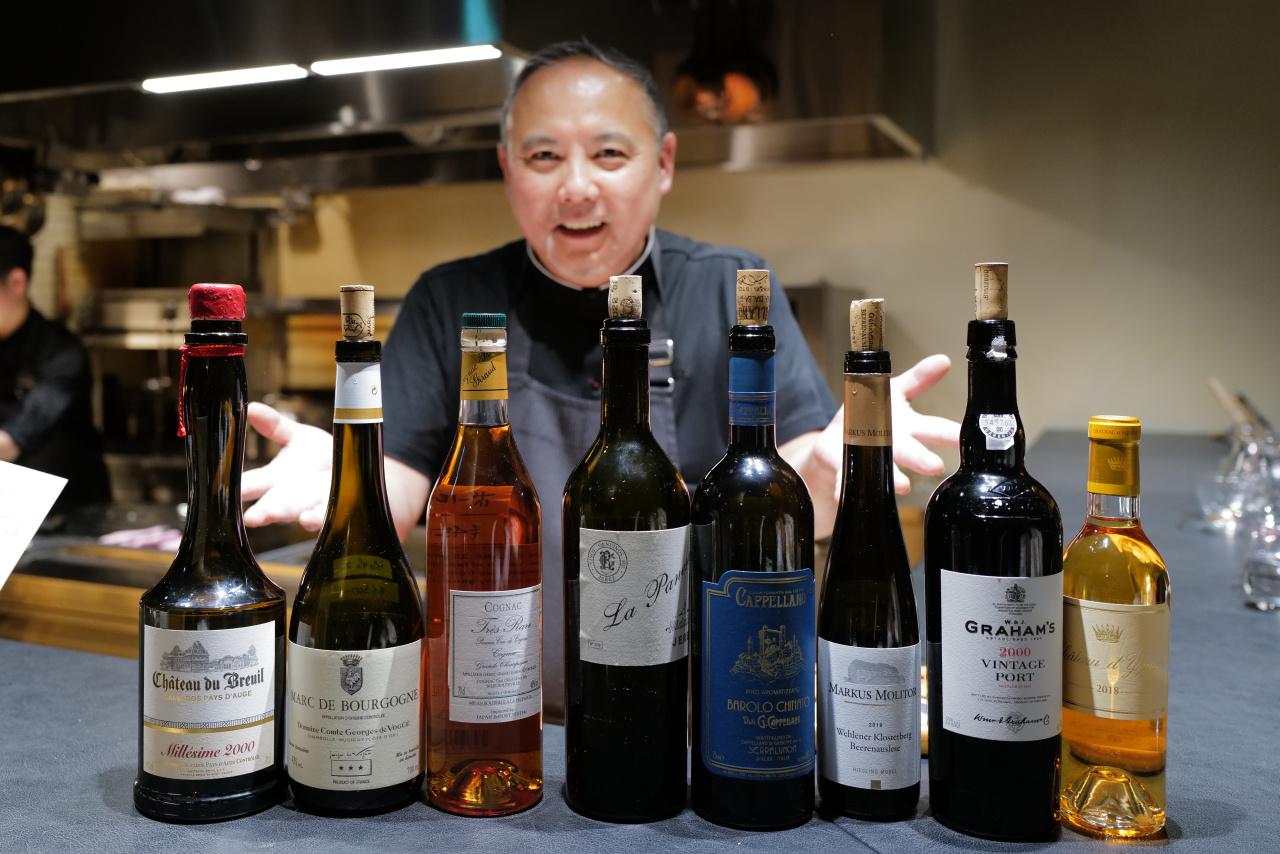
    Dessert came with more than ten different pairing options, and this was when Kishimoto-san finally seemed to relax, going around the counter to introduce each one.

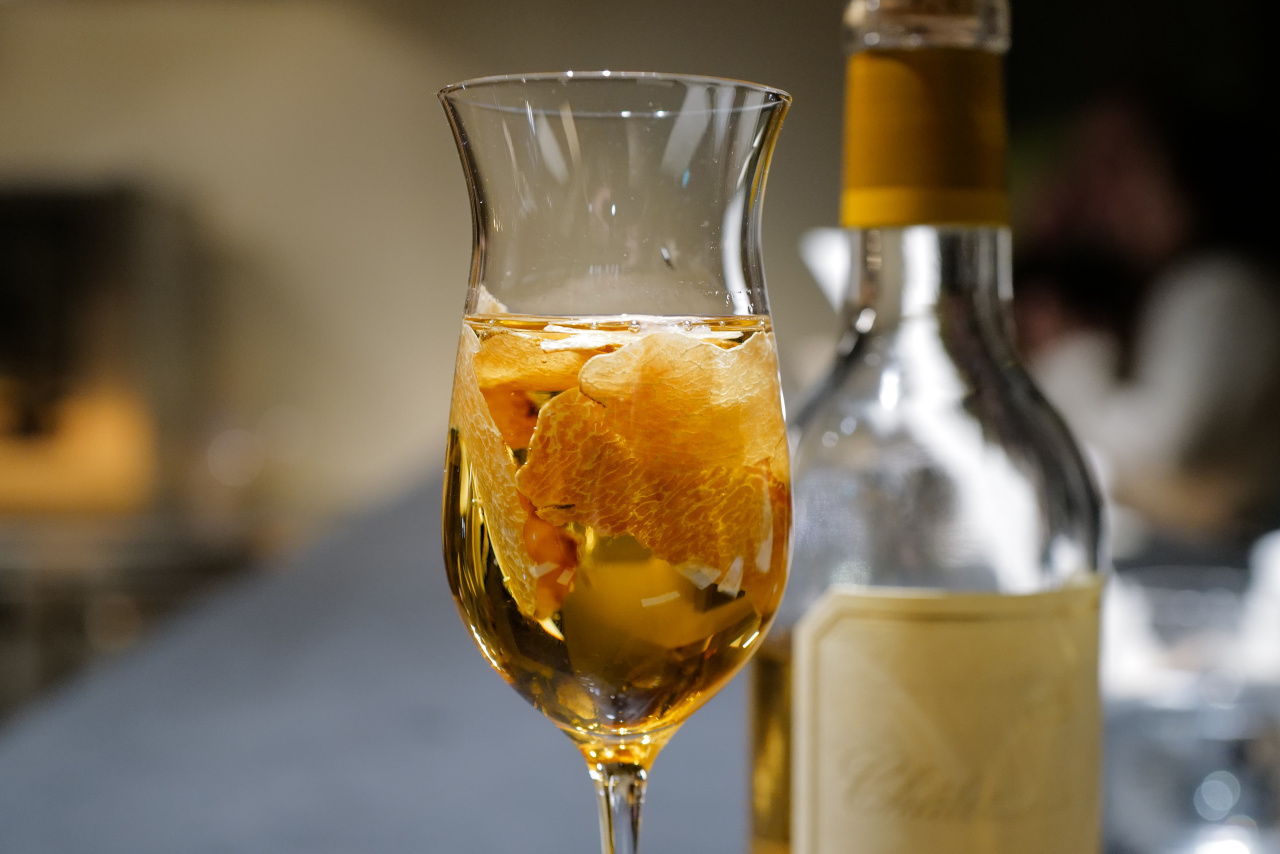
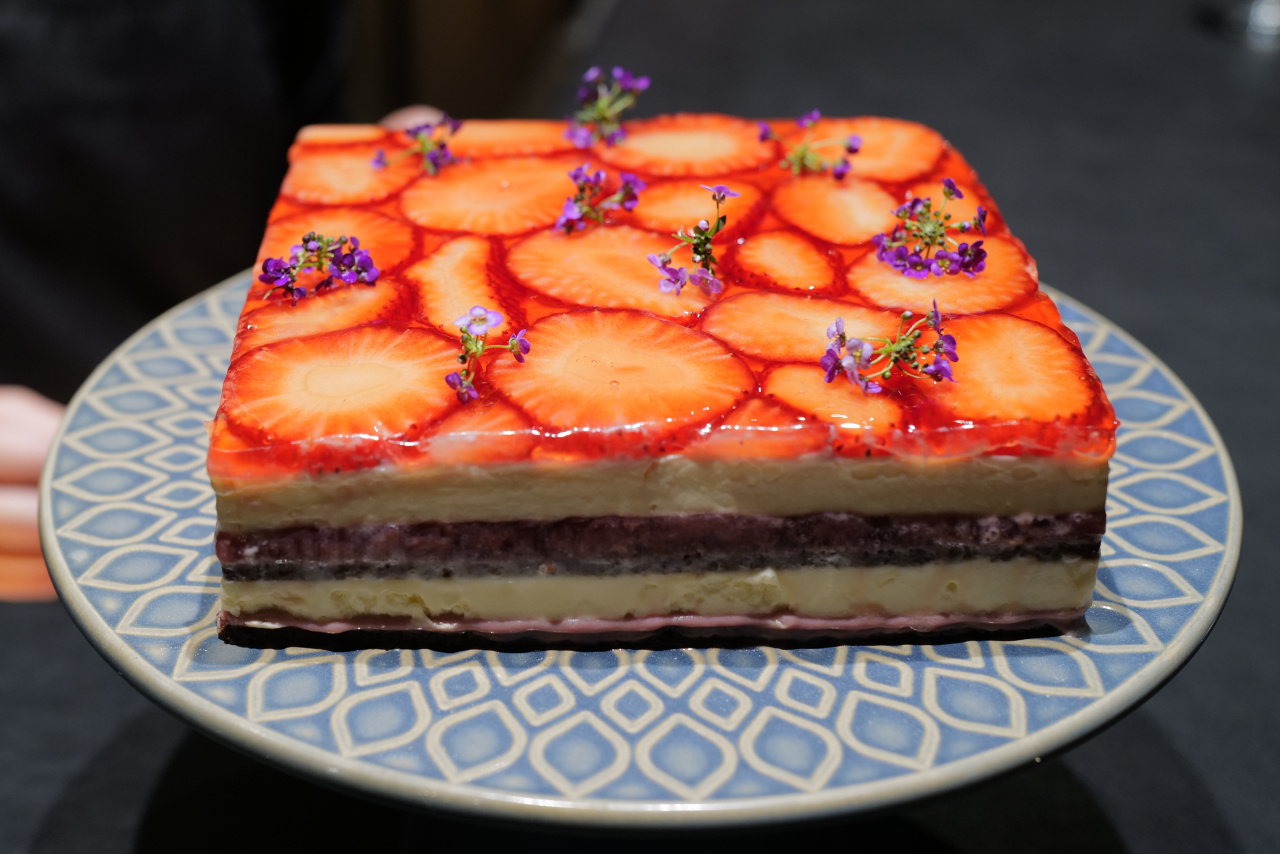
    If using Château d’Yquem-style sweet wine to shave fresh white truffle was the surprise move in the dessert lineup, then the seemingly simple strawberry cake was what truly blew the night open.

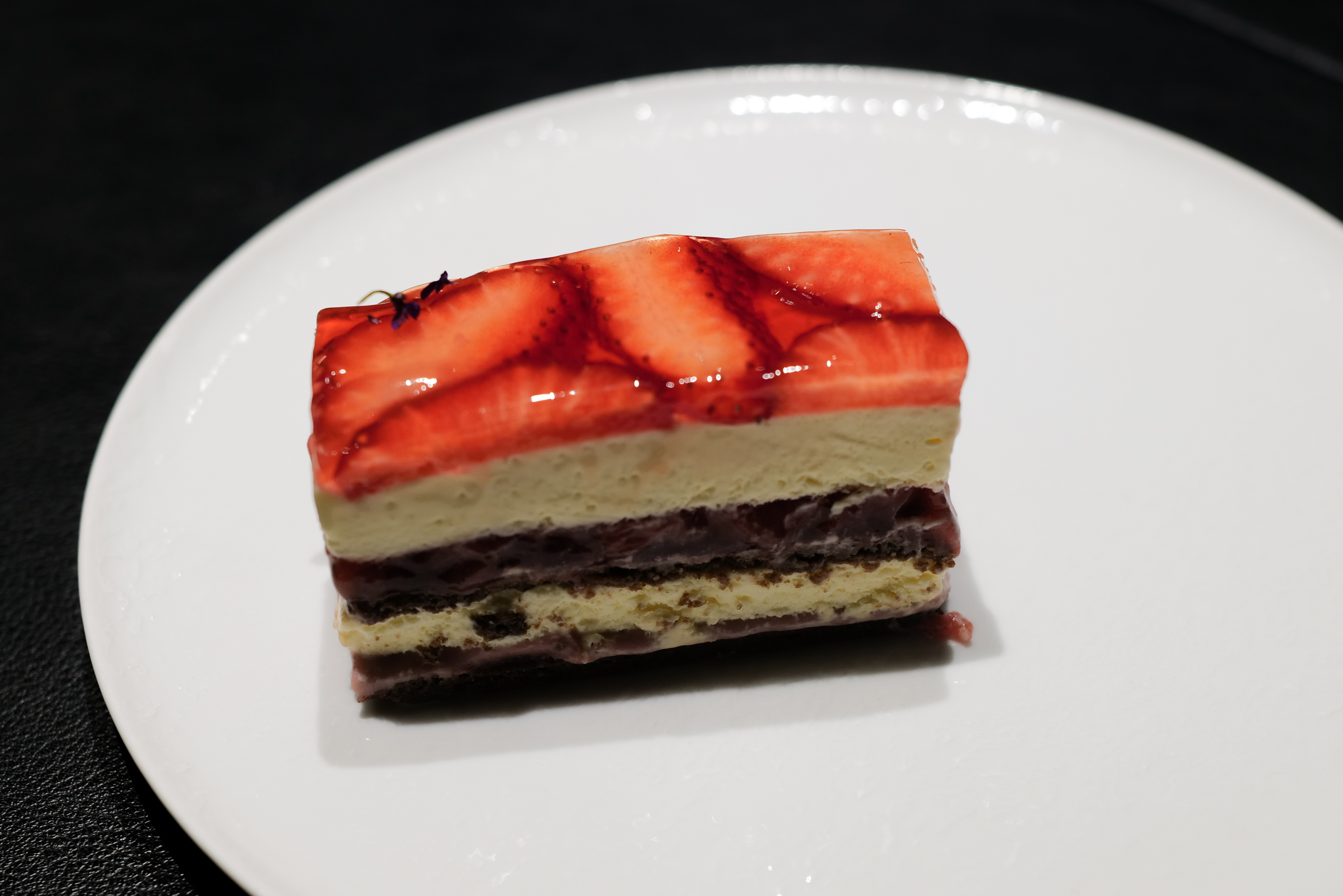
    The pink slice on top used award-winning strawberries from Iwasaki Farm in Sano, Tochigi—bright, sweet-tart, and somehow “cute” in personality, making the first impression especially light and charming. The mascarpone in the middle was close to ice cream temperature: silky, but not insubstantial—it brought a grounded richness and depth of dairy. The base was almost brownie-like: dense, high in cocoa, with a faint bitterness on the finish.

    The satisfaction from that slice of strawberry cake felt “just right”—sweetness, acidity, creaminess, and bitterness all held in a perfectly balanced line.

    Honestly? Absolutely brilliant.

    Looking back on the meal, I realized I was genuinely moved. It’s been a long time since I’ve seen a chef at a counter be this hands-on: making sauces, checking temperatures before sending plates, carving, sometimes even stepping in to mix drinks. In a big-city French restaurant, this kind of experience is still surprisingly rare.

    Beyond his interaction with ingredients at the counter, there was also a strong sense of care in how he spoke with foreign guests. You felt looked after, in a very real way.

    Compared to very modern French restaurants in Tokyo—like Sézanne—Naoto.K feels closer to “traditional × pure”, with a more immersive experience.

    From the food side, the techniques are rooted in classic French cuisine, but the flavors and composition feel distinctly Japanese—layered in texture and taste, with a strong emphasis on the character of the ingredients themselves. The one thing that occasionally nudges the balance is the tendency toward heavier seasoning.

    Another thing that’s impossible to ignore is the exceptional baking and pastry program. This part of the menu is led by Natsuko Takahashi, former head pastry chef at Pierre Gagnaire Tokyo. The desserts and cakes currently on the menu would stand out even among Tokyo’s top restaurants. Their cakes alone are reason enough to come back for the next seasonal menu.

    Naoto.K

    東京都千代田区神田錦町2-1-1

    Irregular rest | 18:30 Cooking starts simultaneously 

    Chef’s Menu  ¥38,500++
    As I was leaving, Kishimoto-san handed me a business card—with a small note scribbled on it, marking the date of the next menu change.

    So now I’m just counting down to seeing him again in two months.

  • Sushi Yasumitsu(鮨 やすみつ)|An Irreplaceable Sushi Counter

    Tokyo has no shortage of excellent sushi. The baseline is high, and once you start grouping shops by style and lineage, you begin to notice shared logic across many of them. So even if you can’t get into one place, you can usually find another that feels “close enough.”

    But if we’re talking about something truly special—somewhere you visit once and immediately start craving a return—Sushi Yasumitsu is one of those rare exceptions.

    This is a real-deal, extremely difficult reservation in Tokyo. They’ve basically stopped taking new bookings, and even trying to reserve on-site now can mean waiting a year or more.

    Their weekday course is usually around ¥20,000–¥30,000, but depending on the season, they also offer limited-time special menus just over ¥40,000—winter matsuba crab, summer shellfish, autumn matsutake. At that price point in Tokyo, it almost feels like charity.

    Don’t be fooled by Chef Watanuki-san’s modest, friendly presence—he’s something of a minor celebrity. In recent years, he has appeared as a judge on the well-known Japanese variety show Job Tune (there are even Chinese-subtitled clips floating around online).

    Unlike many Tokyo sushi chefs who emphasize hierarchy and lineage—where the shop you trained at becomes a cornerstone of your independent reputation—Watanuki-san originally stepped in simply to inherit the family business and continue his father’s sushi restaurant. But through years of traveling and researching catches across regions, he gradually built a style that’s unmistakably his own.

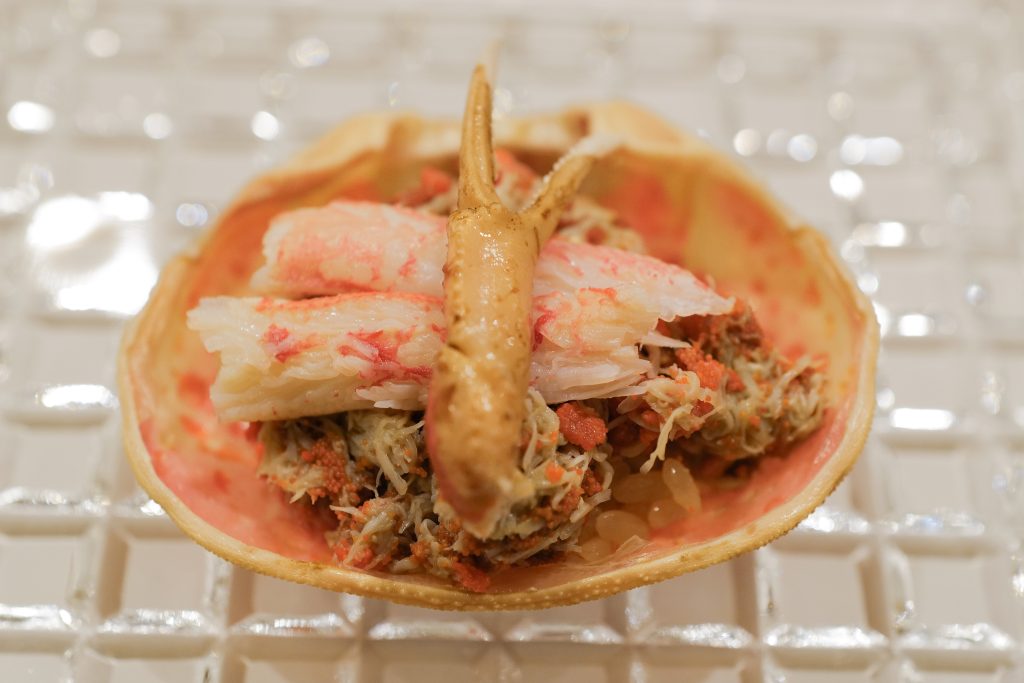
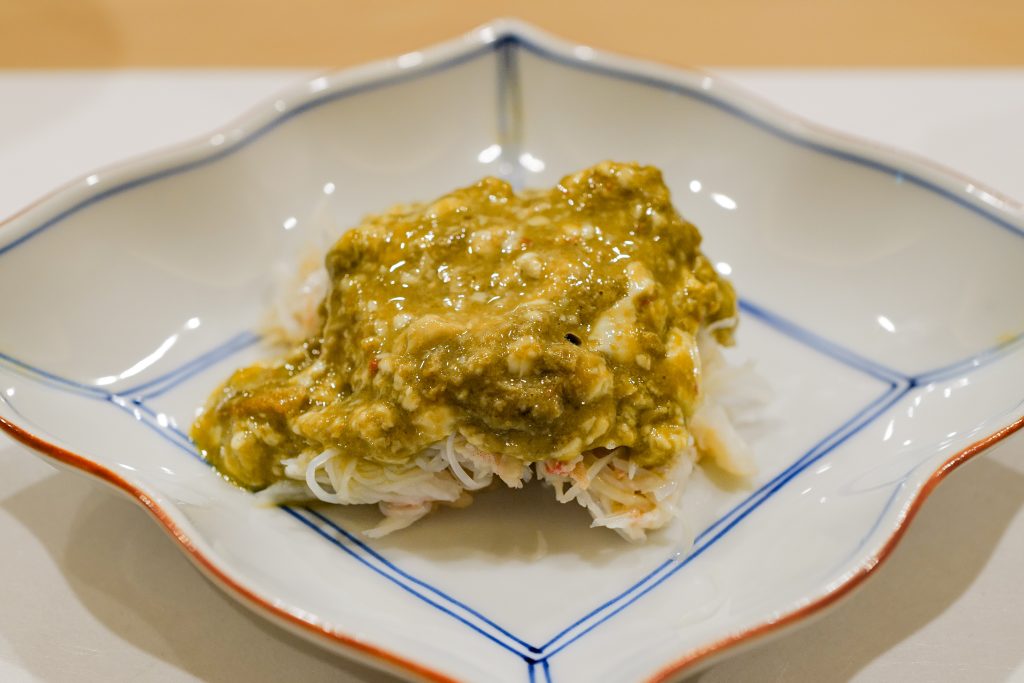
    November is peak crab season. The very first dish was an umami bomb from “Kōkō crab”—crispy crab roe paired with high-acidity vinegared rice. Pure crunch, pure satisfaction.

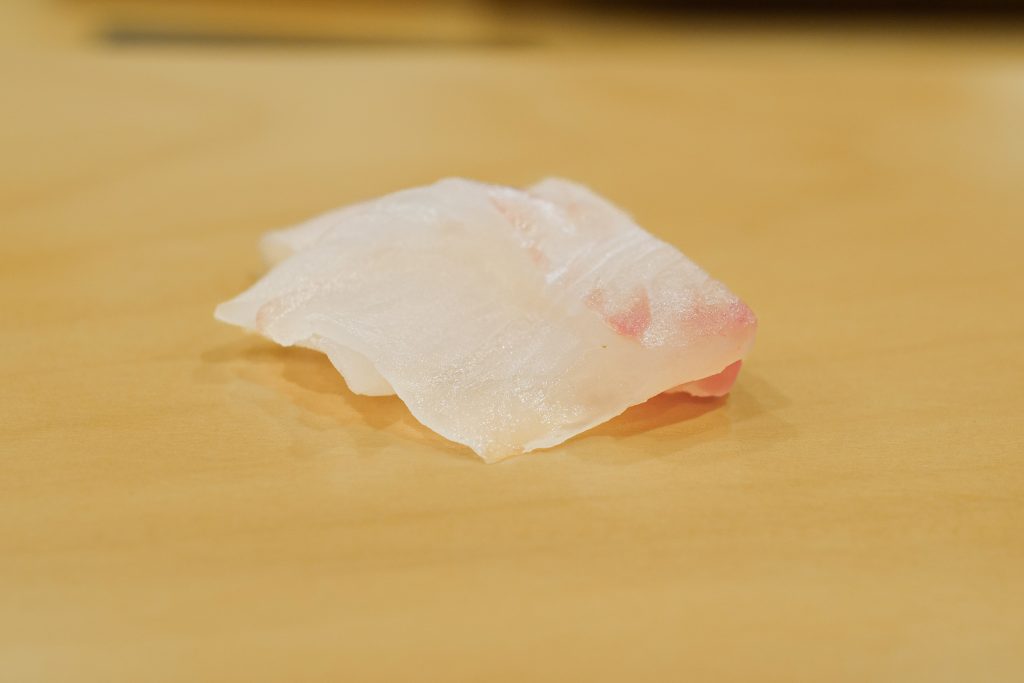
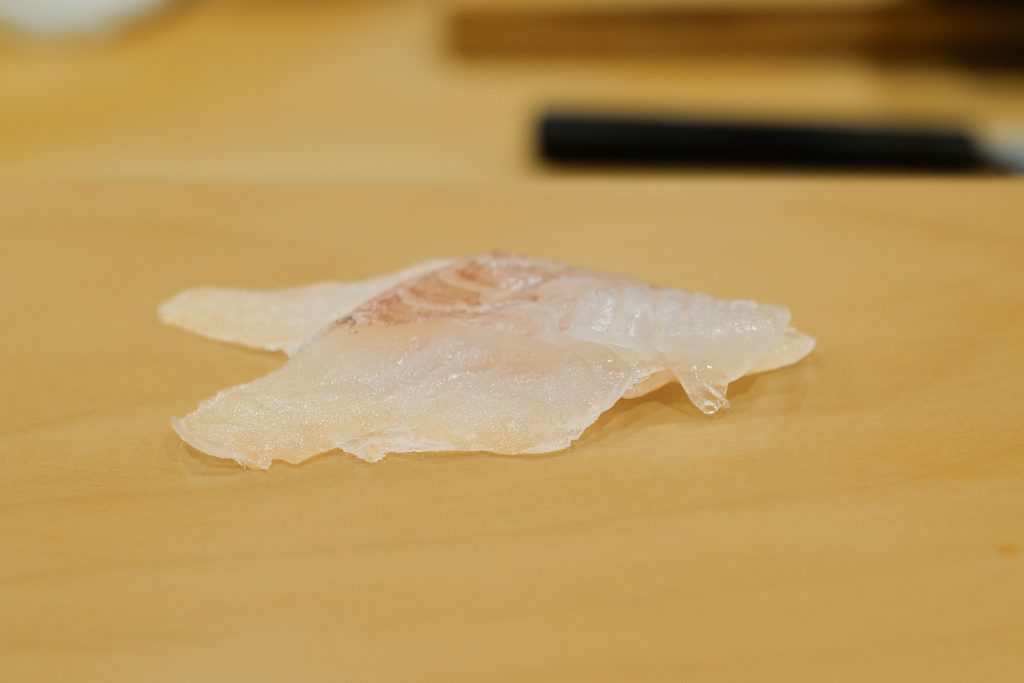
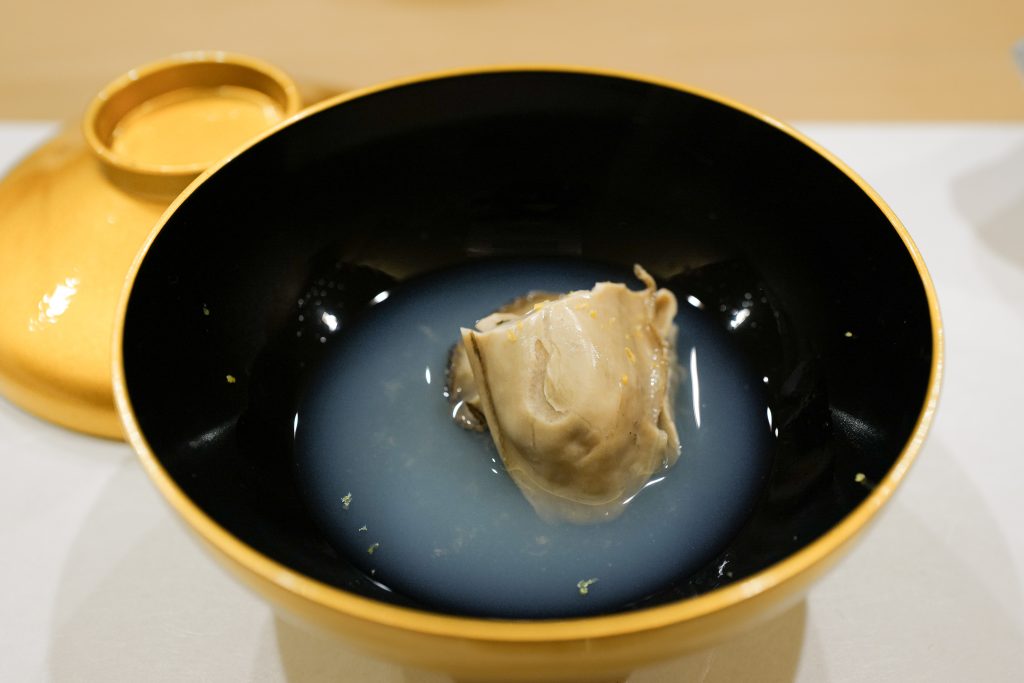
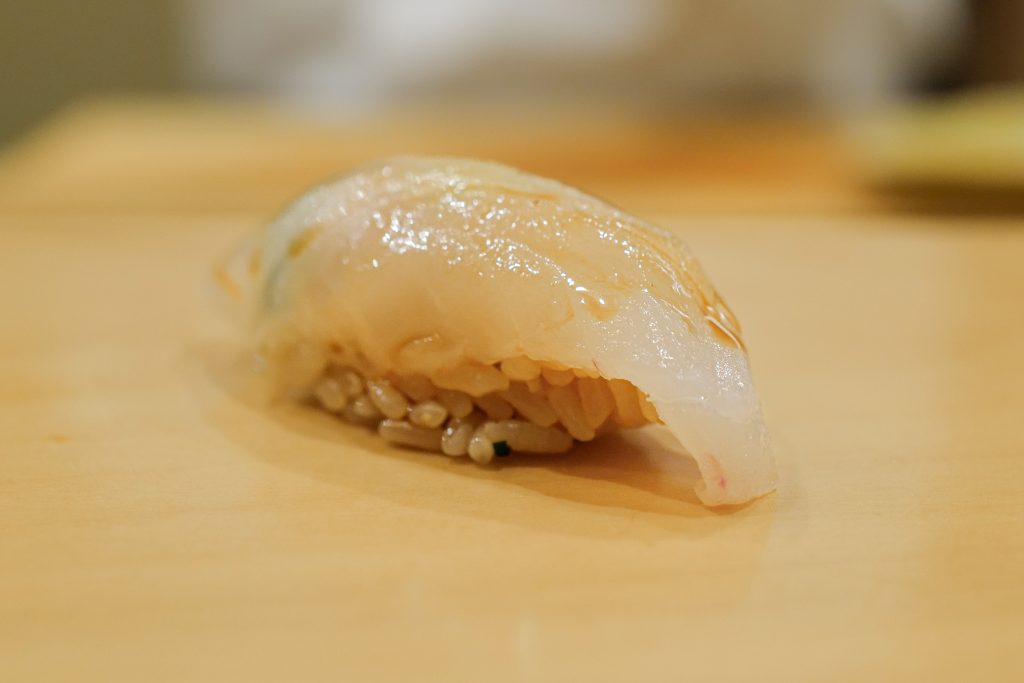
    Two white fish were presented in contrast, with different aging times to sharpen the textural difference. The oyster, meanwhile, won you over instantly with its fullness and presence.

    It was a straightforward opening: no excessive decoration, just clean, honest deliciousness—with impeccable control over texture and balance.

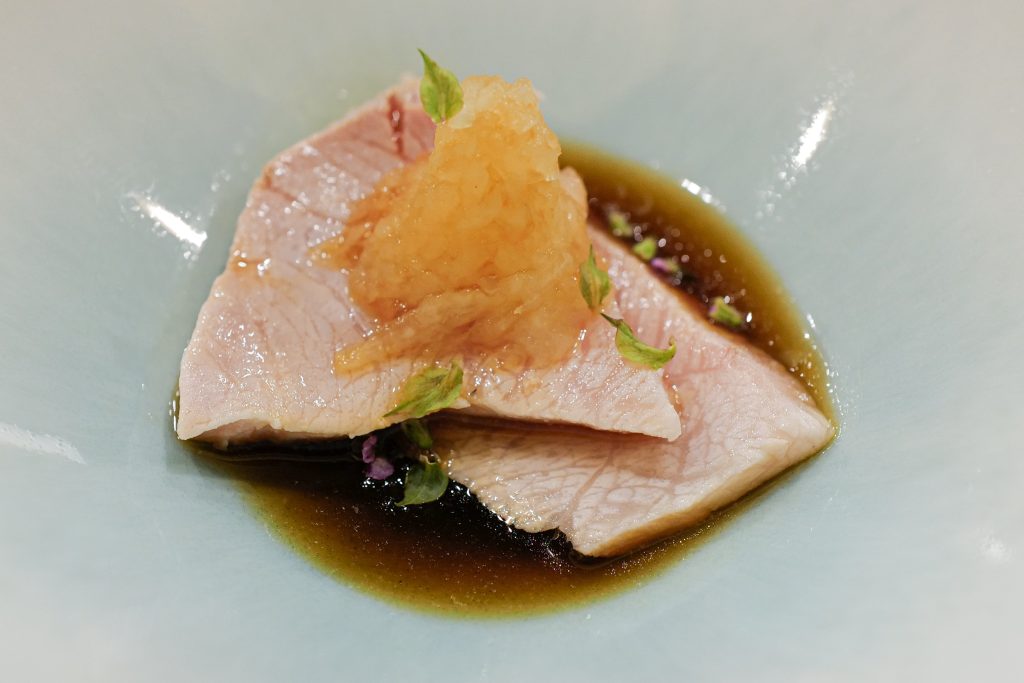
    The winter buri had just come into season. Instead of serving it as sashimi, it was lightly seared to about three-tenths doneness. You got that gorgeous fat aroma, plus a faint crispness in the bite. The seasoning was restrained but sharply acidic—simple, pure, deeply satisfying.

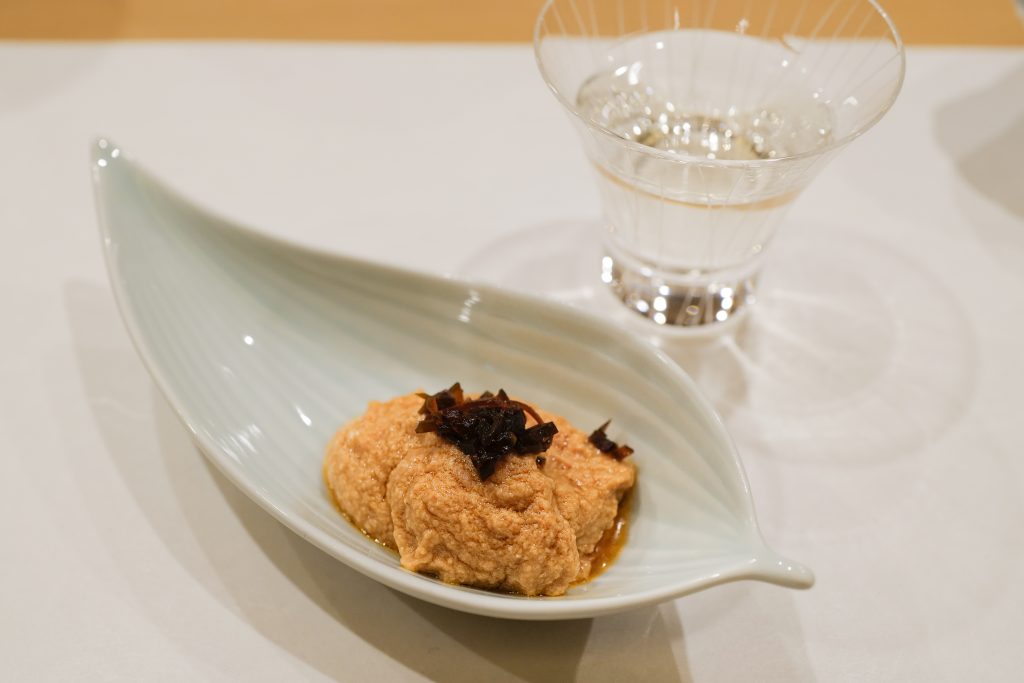
    The ankimo was mashed into a paste with zero graininess, landing somewhere between foie gras and thick cream. Like Sugita, Yasumitsu also proactively paired this with a glass of Aramasa “Hinotori”—a perfect match for the rich, rounded liver.

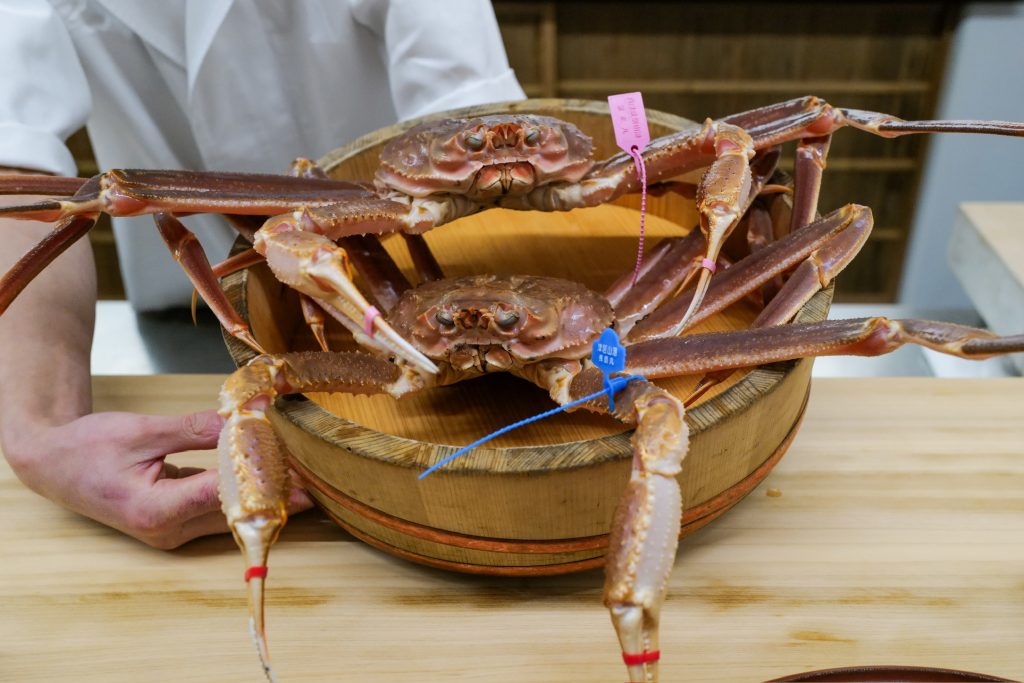
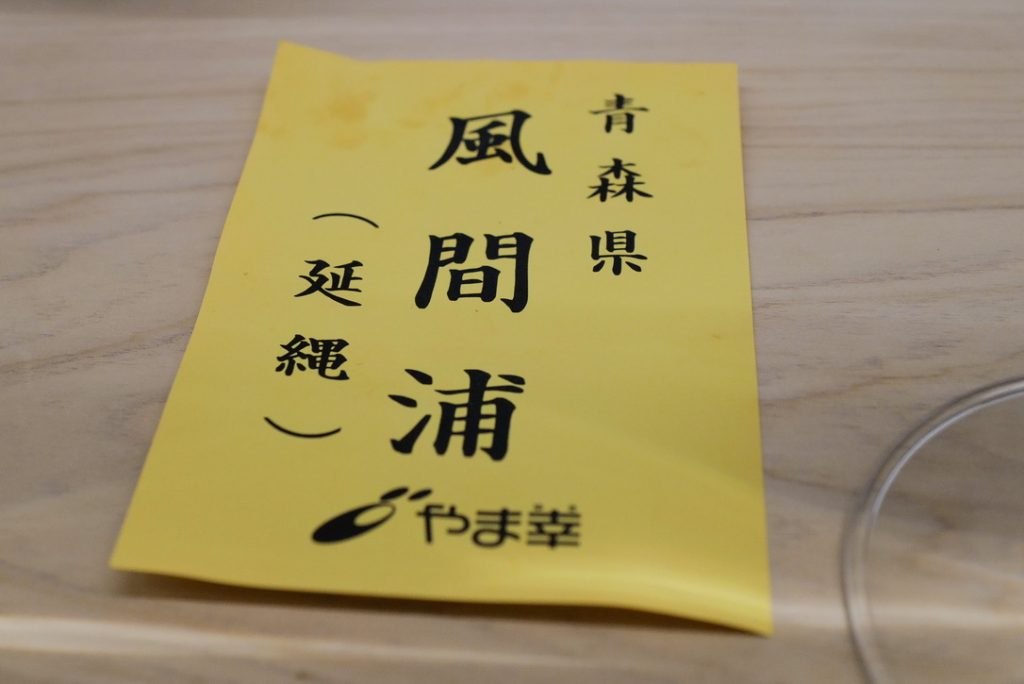
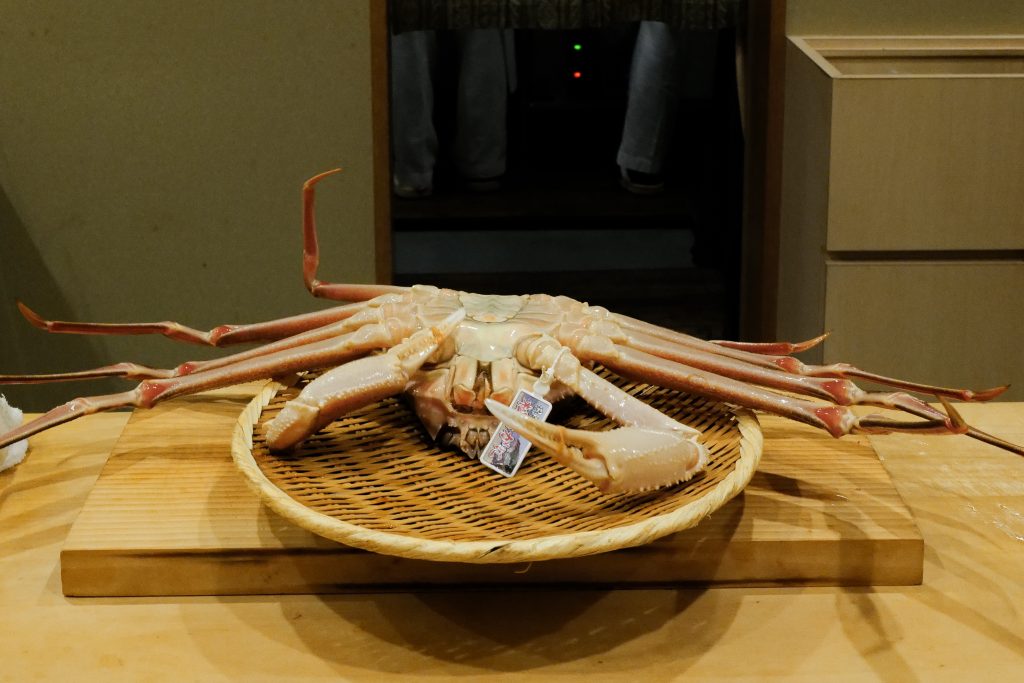
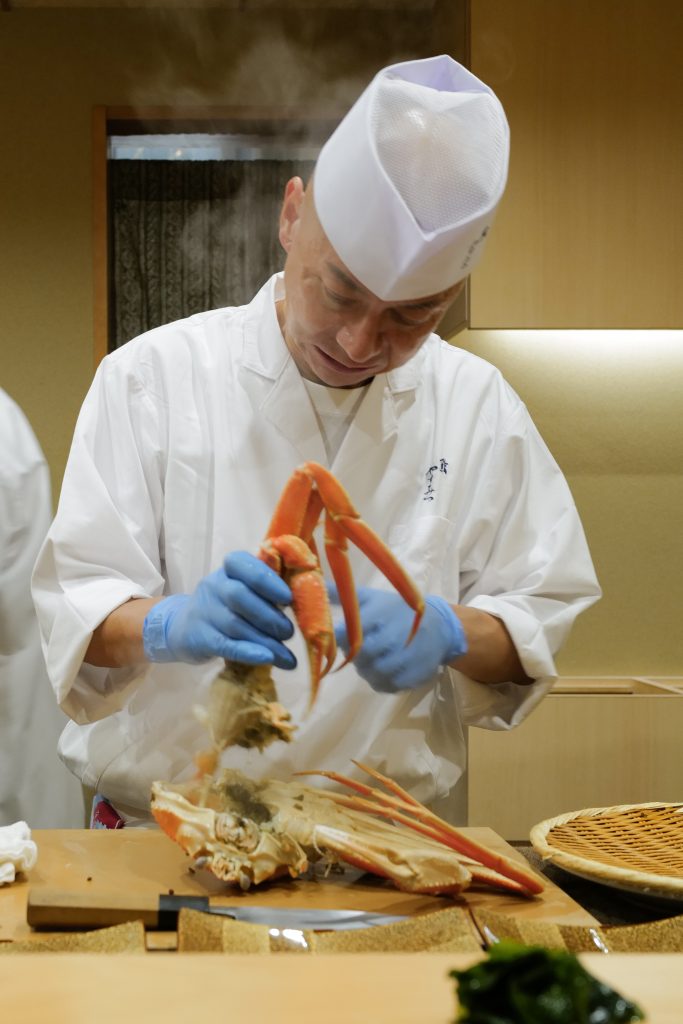
    For an eight-seat counter, they prepared two 1.1kg matsuba crabs from Hamaizumi Fishing Port in Hyogo. Once boiled and brought out, the crab fragrance practically overflowed the counter. Watanuki-san dismantled the crab with stunning efficiency, narrating as he worked:

    On a winter menu, the most heavyweight ingredient is of course crab.

    “In Fukui it’s called Echizen crab; in Kyoto it’s Taiza crab… and if it lands in Toyama, it’s Kano crab.”

    Suddenly, the counter gained an extra layer of performance charm.

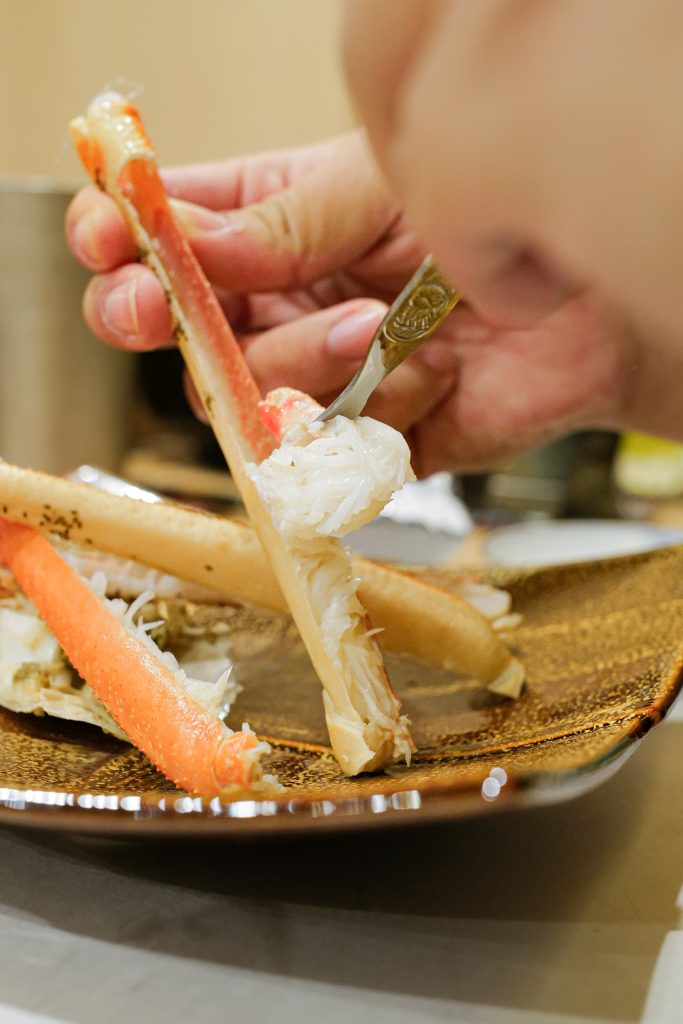
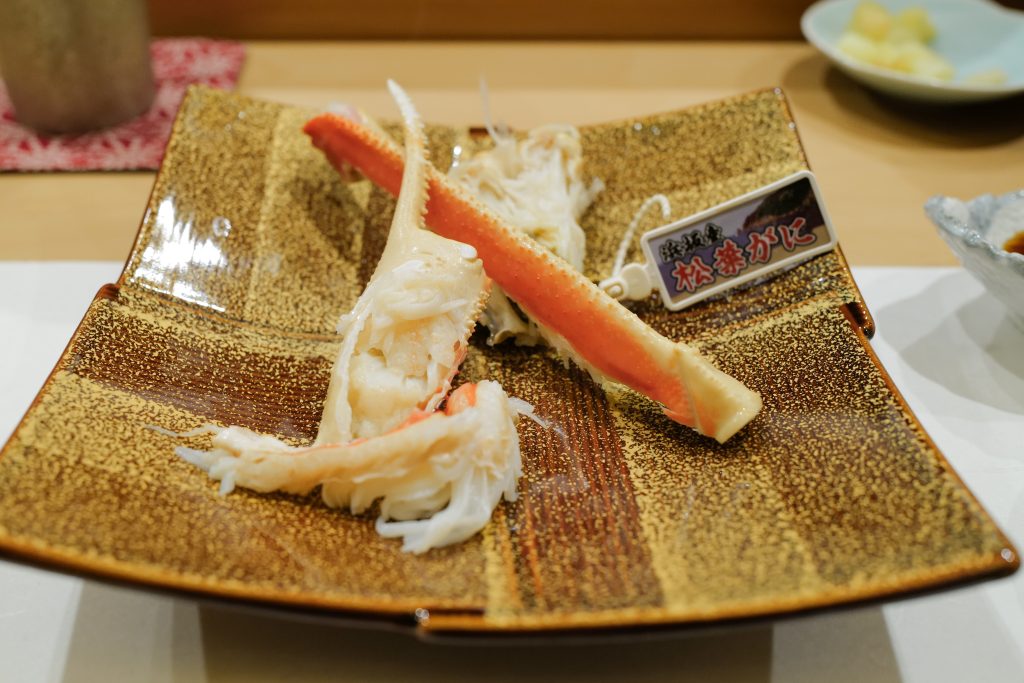
    Each guest received a quarter of a large crab, served in three ways.

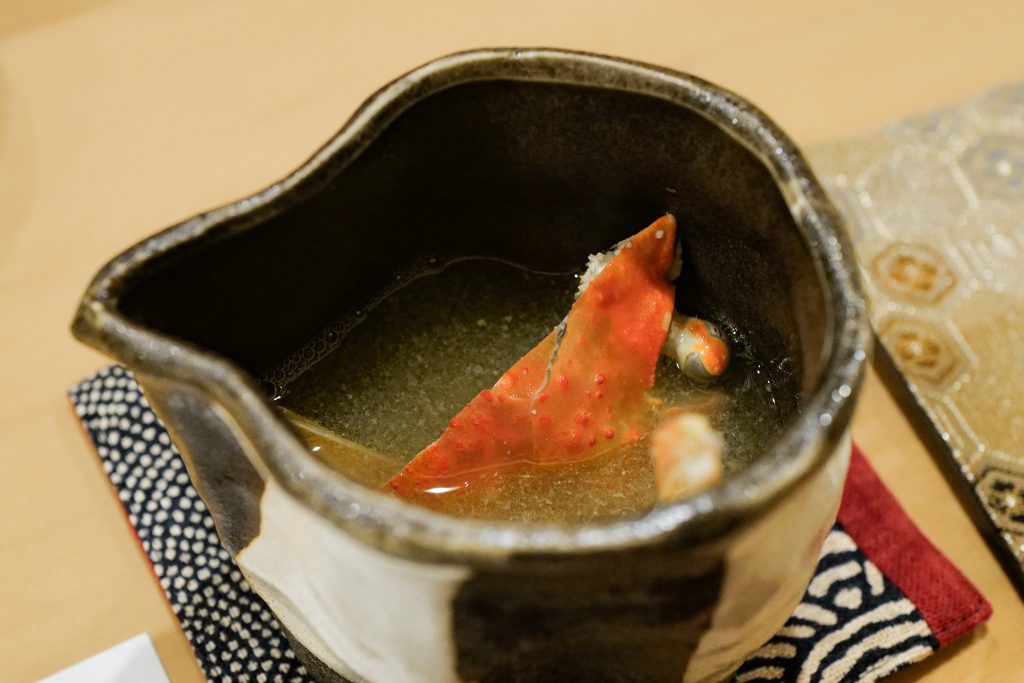
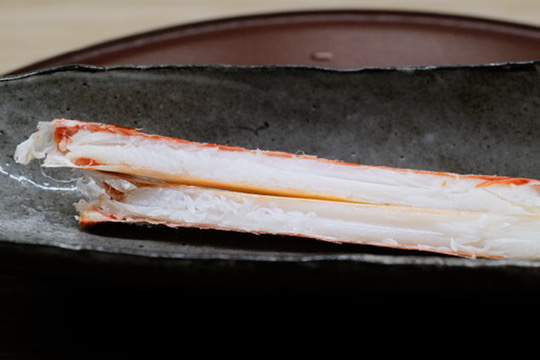
    The legs and body were cooked in crab dashi and eaten with no extra seasoning. The legs were tender; the body more firm and dense. As simple as it was, the layered sweetness and umami were incredibly seductive.

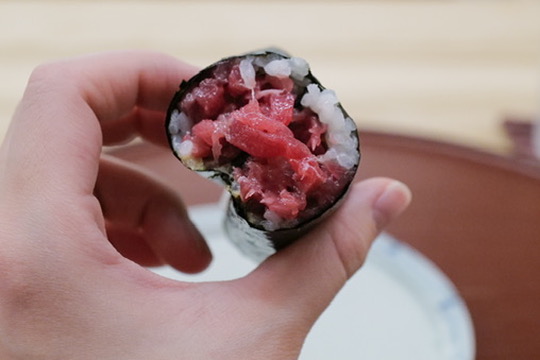
    The okami carefully picked the remaining meat from the edges and combined it with crab miso into a generous, overflowing crab-meat sushi. It was jelly-like in texture yet packed with umami, richness, and delicate fibers—pure happiness.

    Finally came a cup of crab sake, where bold umami and savory depth were softened into a gentle sweetness.

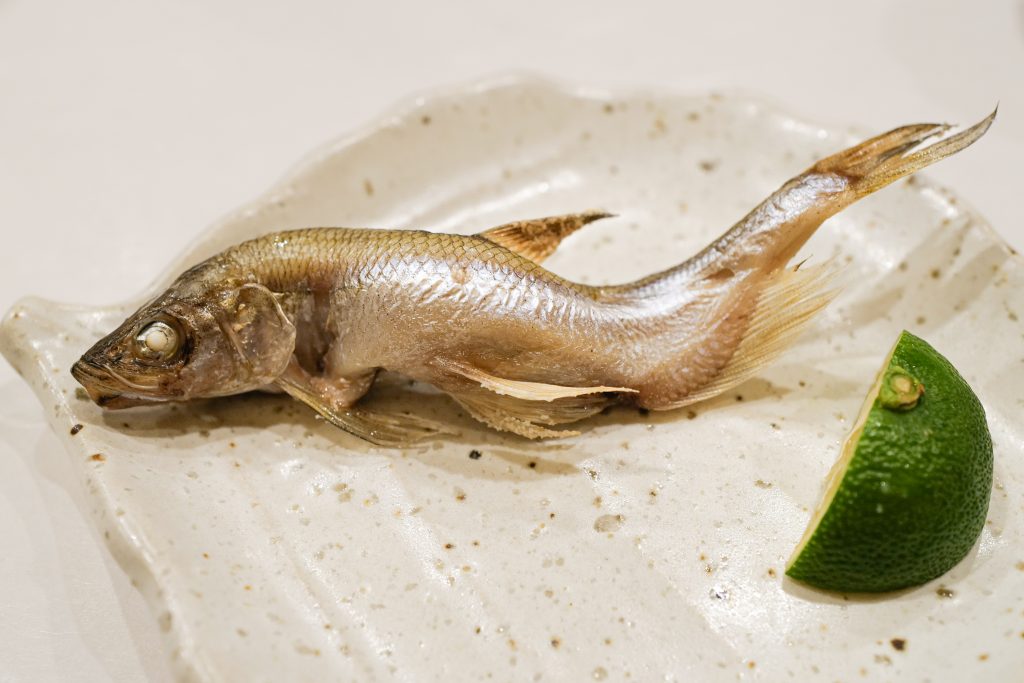
    The sakana course ended with a whole grilled shishamo. Its season is extremely short—starting around mid-October and lasting less than a month. It’s a niche indulgence, and getting to eat it is partly luck.

    It shares the same grilled + faintly bitter charm as summer ayu, but with slightly more fat. The fish is smaller, the skin thinner, and the experience is more about quick, explosive aroma and a soft, compact richness in the flesh.
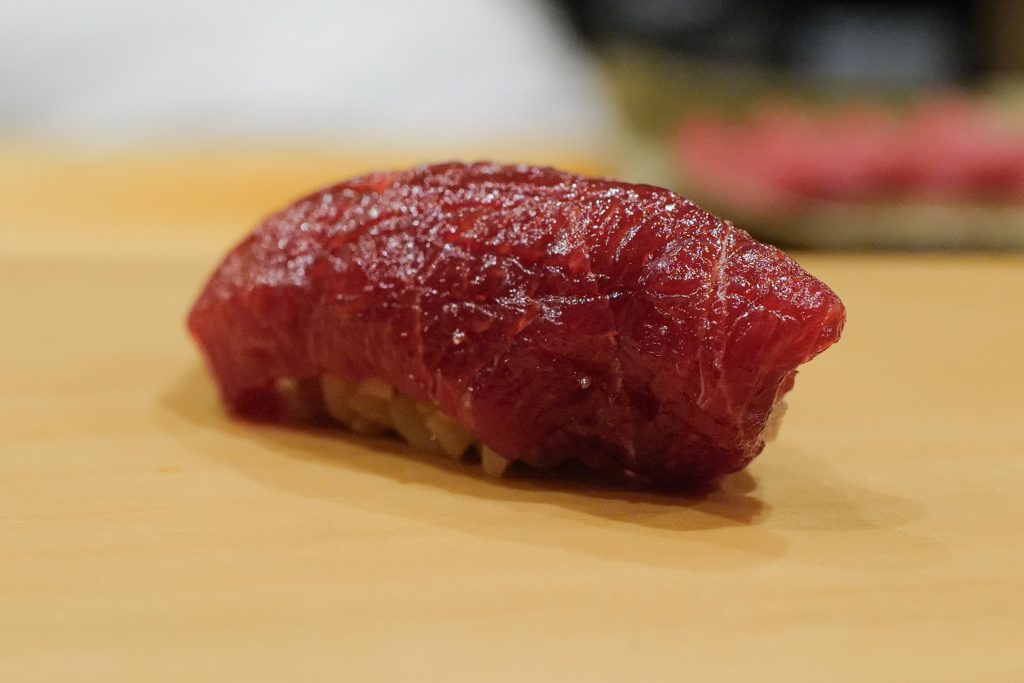
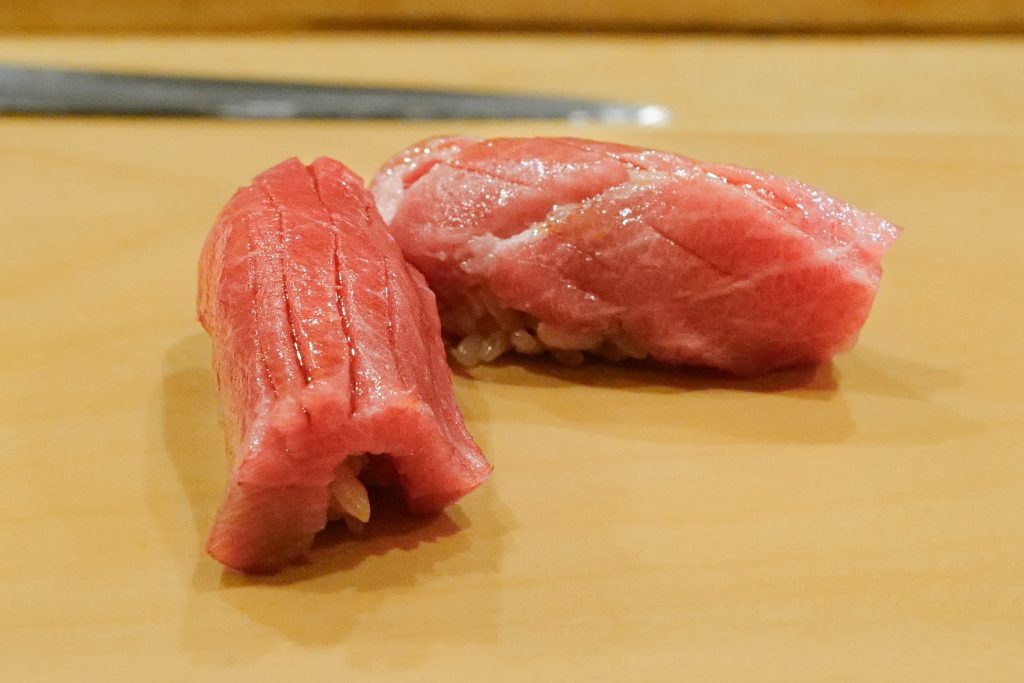
    Then came a three-hit tuna sequence:

    • Akami emphasized softness.
    • Chūtoro balanced fat and structure.
    • Ōtoro was served with cooler shari, boosting the lingering sweetness and aftertaste of the fat.

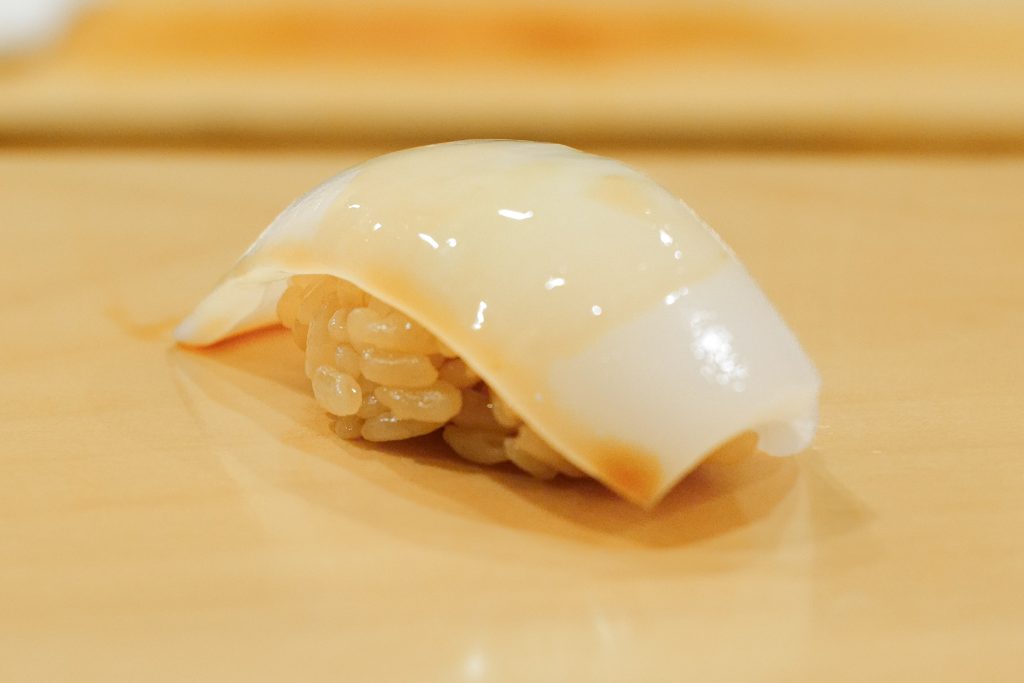
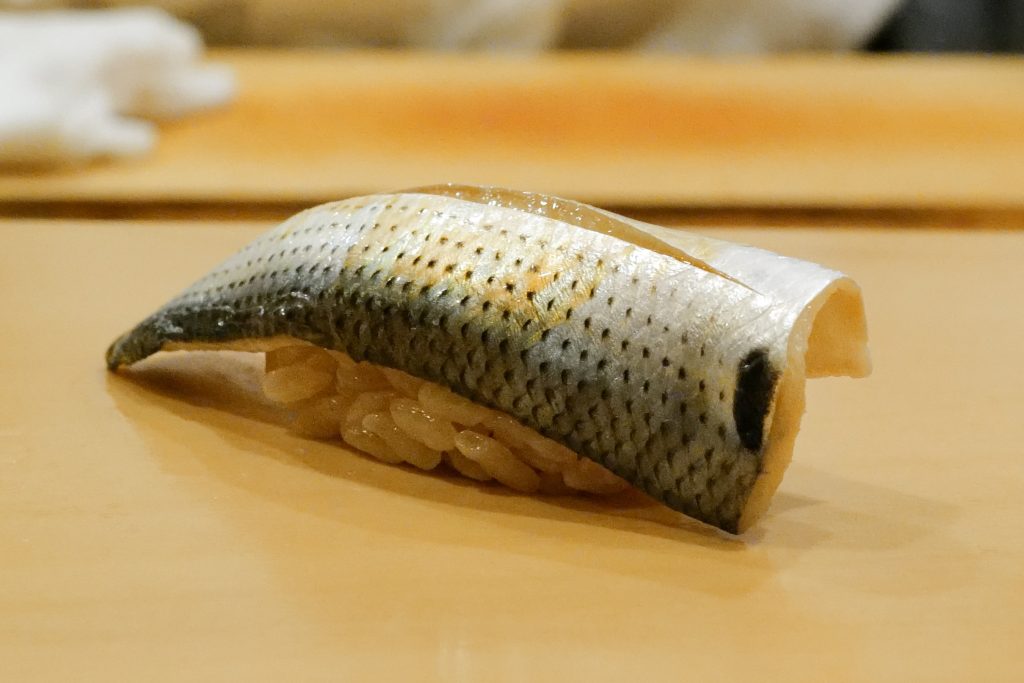
    Yasumitsu’s sushi progression also breaks convention. Kawahagi and squid had already appeared in the earlier sakana segment, but only as light, elegant punctuation—showing off texture more than anything.

    The shrimp sequence moved from cooked to raw. The kuruma ebi looked ordinary at first glance, but surprised with shrimp roe tucked into its soft tenderness. The glass shrimp, aged for a day, arrived in a milky white tone with a faint translucence—super crunchy.

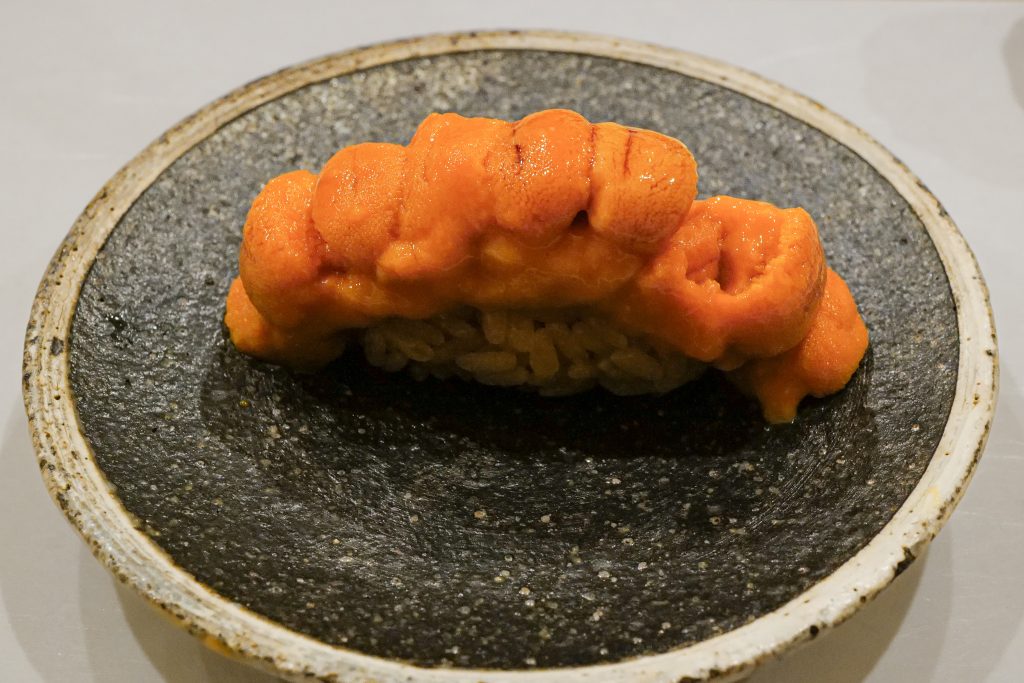
    It was surprising to find such satisfying uni even in November. A full row of sea urchin was scooped generously over the rice—an explosion of sweetness and fresh umami.

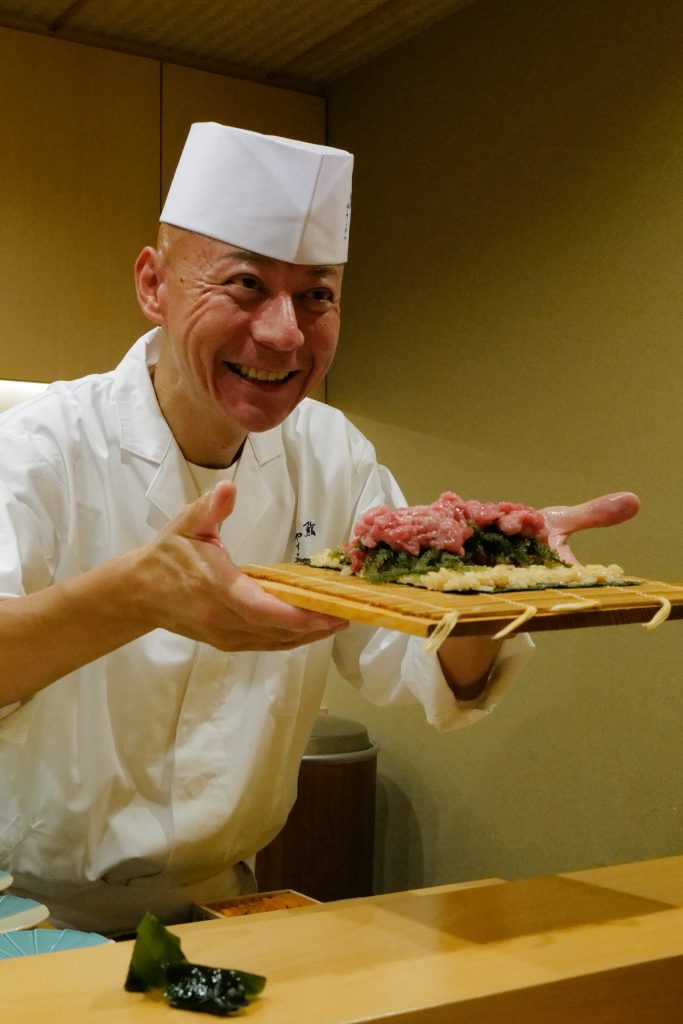
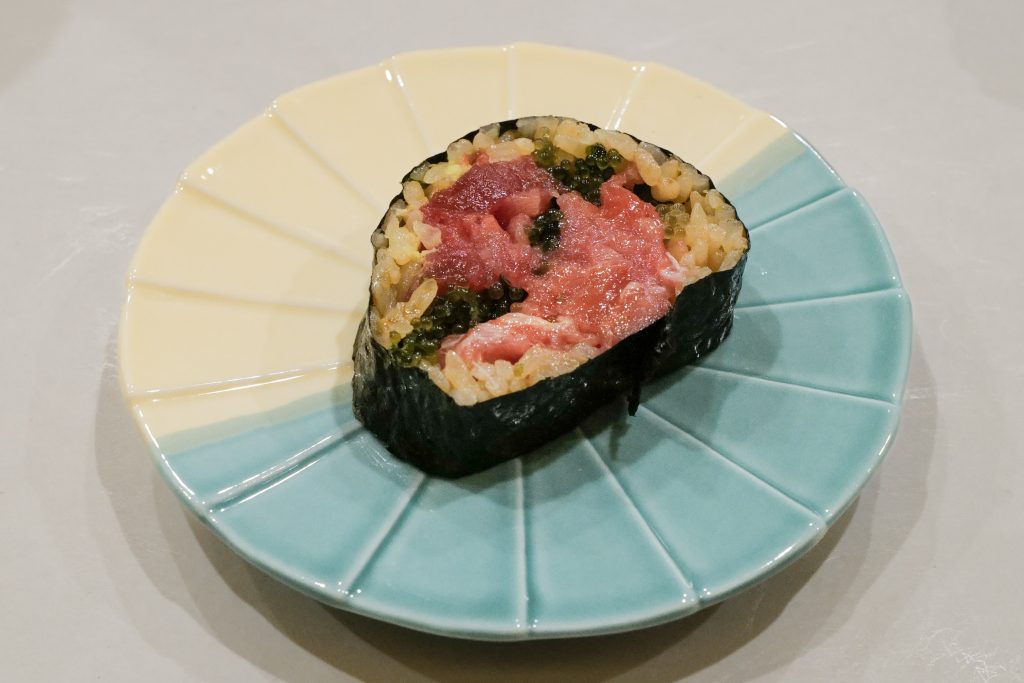
    However, the restaurant’s famous otoro futomaki was a slight disappointment this time. Watanuki-san added sea grapes for a salty crunch, but paired with the stronger-aged tuna they currently use, it didn’t quite deliver the bright, fragrant freshness I was hoping for.

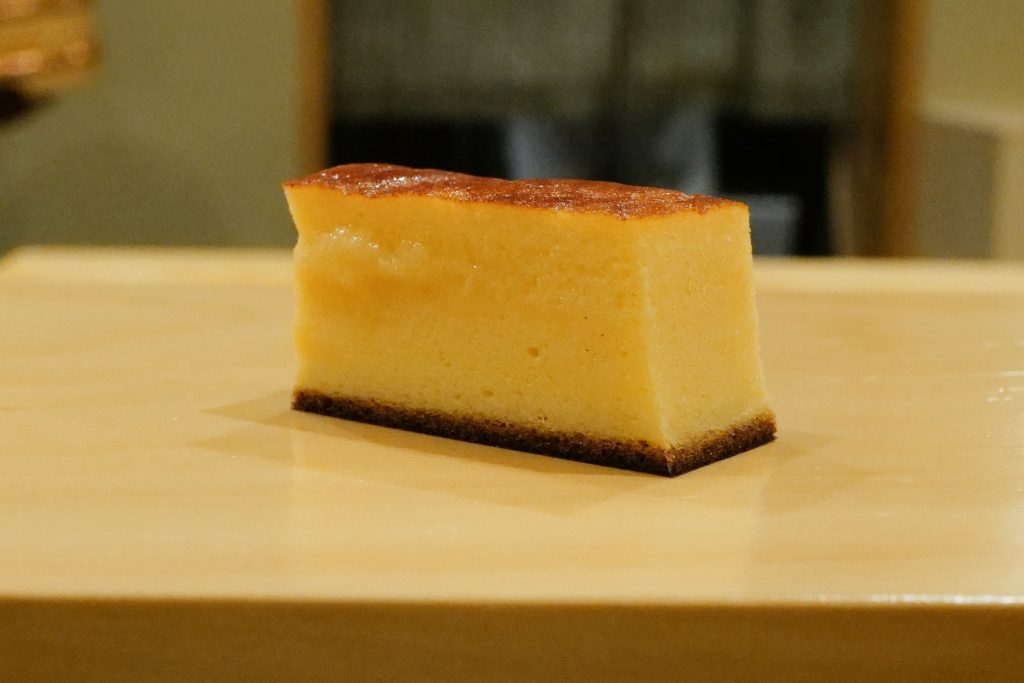
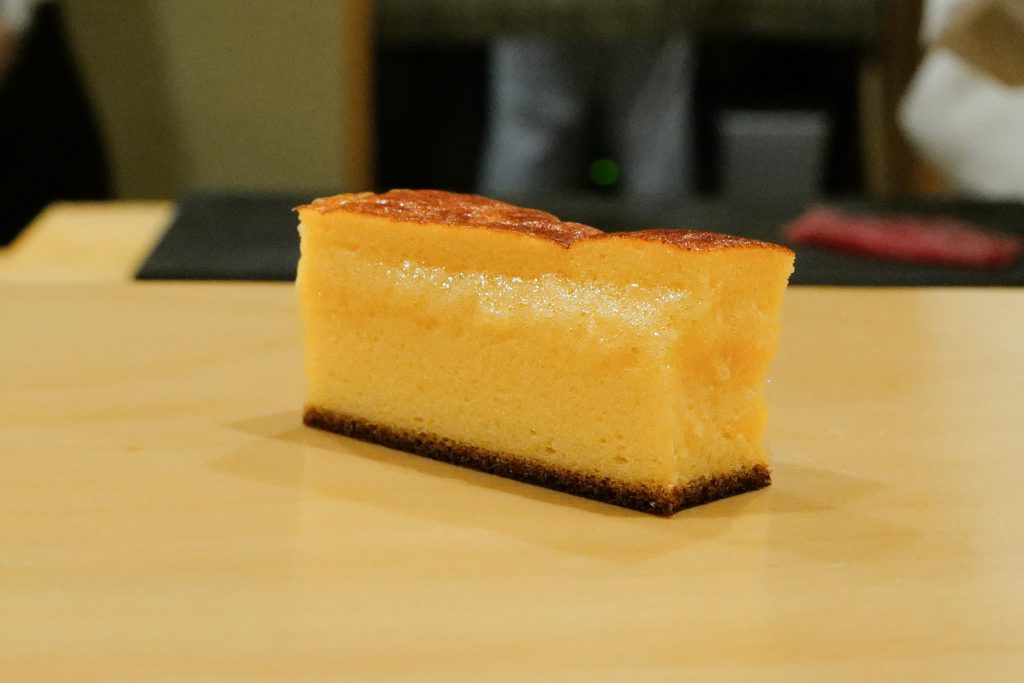
    The final tamagoyaki was unexpectedly Basque-cheesecake-like: a caramelized crisp exterior with a cool, molten center. This might be the softest, most harmoniously balanced tamago I’ve had in Tokyo—where texture, sweetness, and freshness all meet in perfect unity.

    If I were sitting even closer to the counter, I might have been tempted to steal the whole thing.

    Watanuki-san’s expression is distinctive. Every dish—whether sakana, cooked items, or sushi—seems to carry two contrasting textures and two to three layers of flavor. Not too much, not too little—just enough to exceed expectations and leave you quietly thrilled.

    The comfort of the hospitality is another powerful point. Unlike the more stern, traditional style of many Japanese sushi counters, Watanuki-san openly thanks his kitchen staff aloud. You often see gestures at the counter, but here I heard clear, spoken gratitude directed to the back of house—an unusually sincere, modern kind of authenticity. And of course, he’s equally polite and attentive to guests at the counter.

    A self-effacing chef like this is always moving.

    鮨 やすみつ (Sushi Yasumitsu)

    東京都新宿区四谷三栄町5-2

    Monday – Saturday
    17:30 – 20:00 / 20:30 – 23:00

    Chef’s Menu ¥31,900++
    Seasonal Menu ¥51,900++
    When I asked about reservations at the end, the earliest availability was already next September. So all I can do is wish the chef great health—and hope I might get lucky with a cancellation before then.

    Because honestly?
    If I could, I’d come every month.

  • Toriyone Kyoto(鳥米) |A Century-Old Restaurant at the Foot of Arashiyama, and the Most Heavenly Chicken-Fat Yuba

    On any Kyoto itinerary, Arashiyama is an unmissable stop. Mountains, water, gardens—everything you want in one place. And when autumn arrives and the maple leaves turn red, countless visitors come specifically for that scenery.

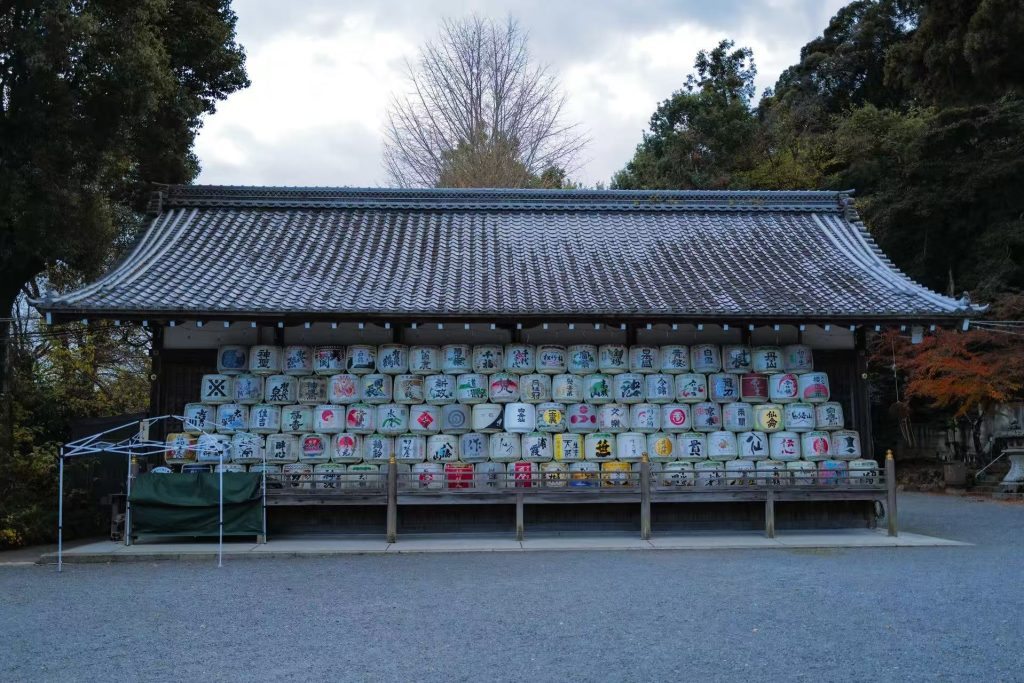
    Nearby stands Matsuo Taisha, founded in 701 and now with over 1,300 years of history. The shrine is home to Kame-no-i Sacred Spring, and a distinctive tradition of faith has grown around water and brewing. It is one of the most revered shrines for sake breweries across Japan, long honored as an important place of worship.

    Nearby stands Matsuo Taisha, founded in 701 and now with over 1,300 years of history. The shrine is home to Kame-no-i Sacred Spring, and a distinctive tradition of faith has grown around water and brewing. It is one of the most revered shrines for sake breweries across Japan, long honored as an important place of worship.

    If some of Kyoto’s ancient shrines feel defined by a grand sense of history, Matsuo Taisha feels more like a venerable name shrine that has grown alongside sake—breathing with it, and woven quietly into the city’s veins.

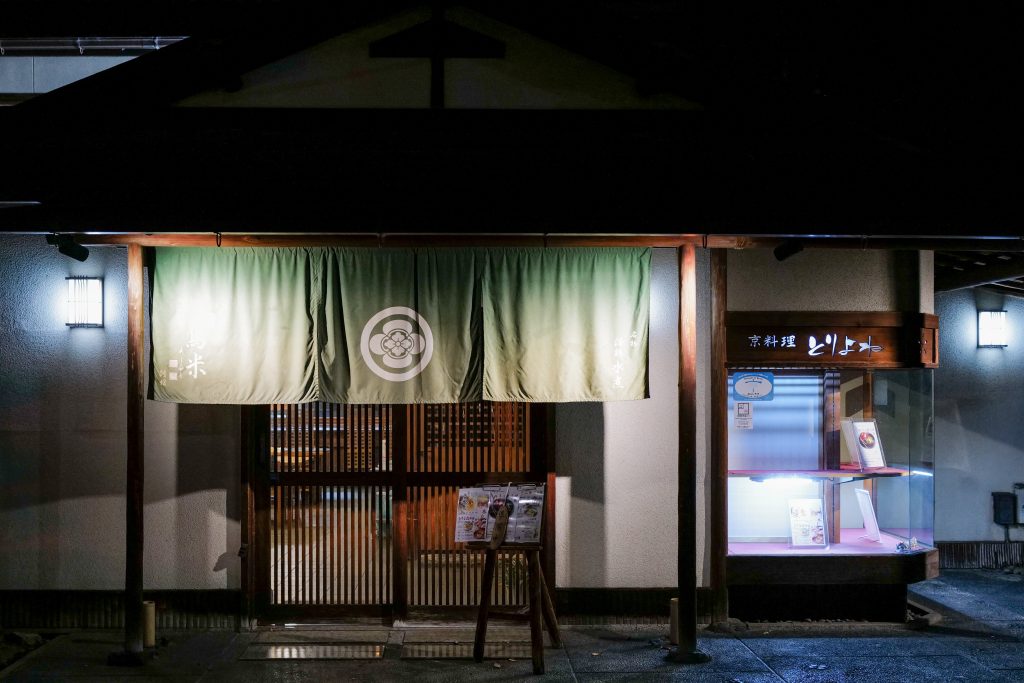
    Toriyone sits right at the gate of Matsuo Taisha. Founded in 1888, it has been passed down to the sixth generation as a Kyoto kaiseki restaurant.

    It almost feels like opening a restaurant on blessed ground at the foot of a sacred mountain.

    In its earliest days, the restaurant was essentially a chicken hot pot spot where brewery owners would rest after visiting the shrine. The focus was direct, hearty chicken cooking—the kind that fills you up and makes you happy. Over time, the restaurant gradually evolved. Under the sixth-generation owner Yoshinori Tanaka, it officially became a Kyoto-style kaiseki built around chicken.

    In other words, a classic storyline of a long-established Kyoto house modernizing with the times.

    Tanaka’s idea is that, especially after Kyo-ryori was registered as an intangible cultural heritage in 2022, the cuisine should continue to evolve—learning new techniques and changing with intention—so that its historical spirit can be carried forward.

    So while the restaurant preserves the traditional five-senses aesthetics of Kyoto dining—vessels, lacquerware, space, ingredients, and cooking—it also brings in modern elements through presentation, technique, and pairing.

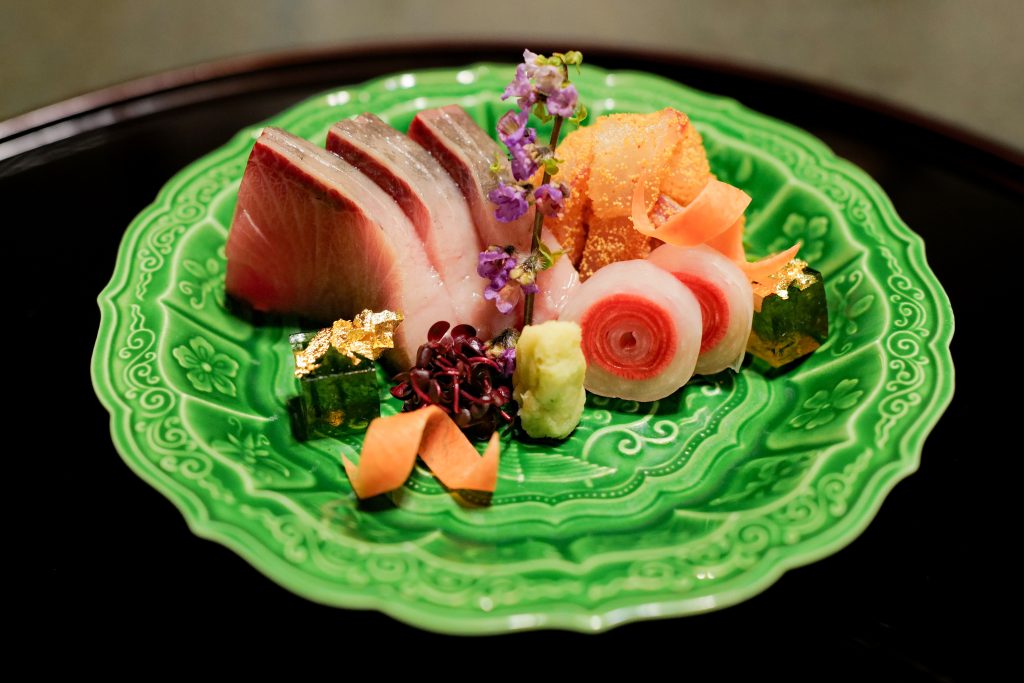
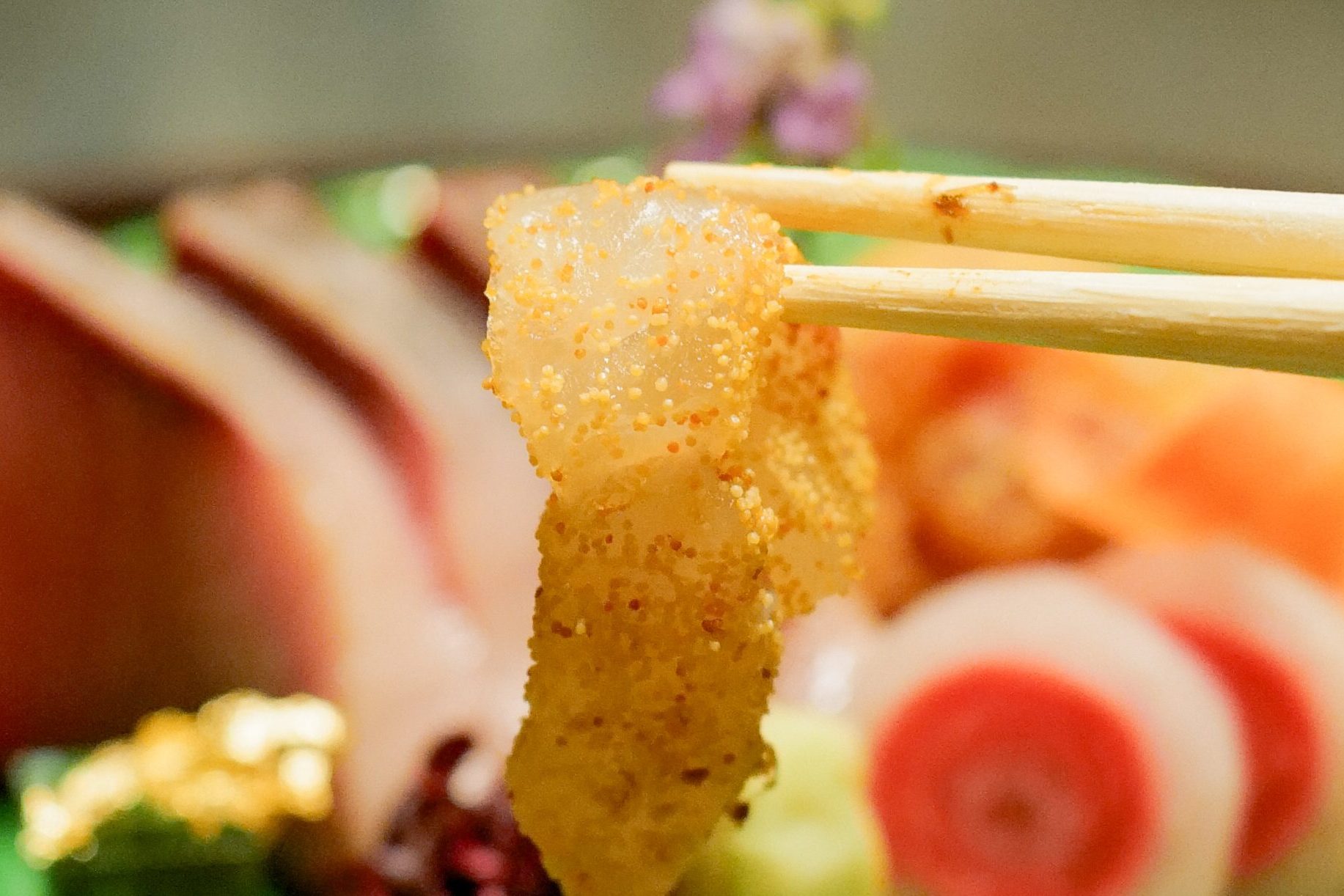
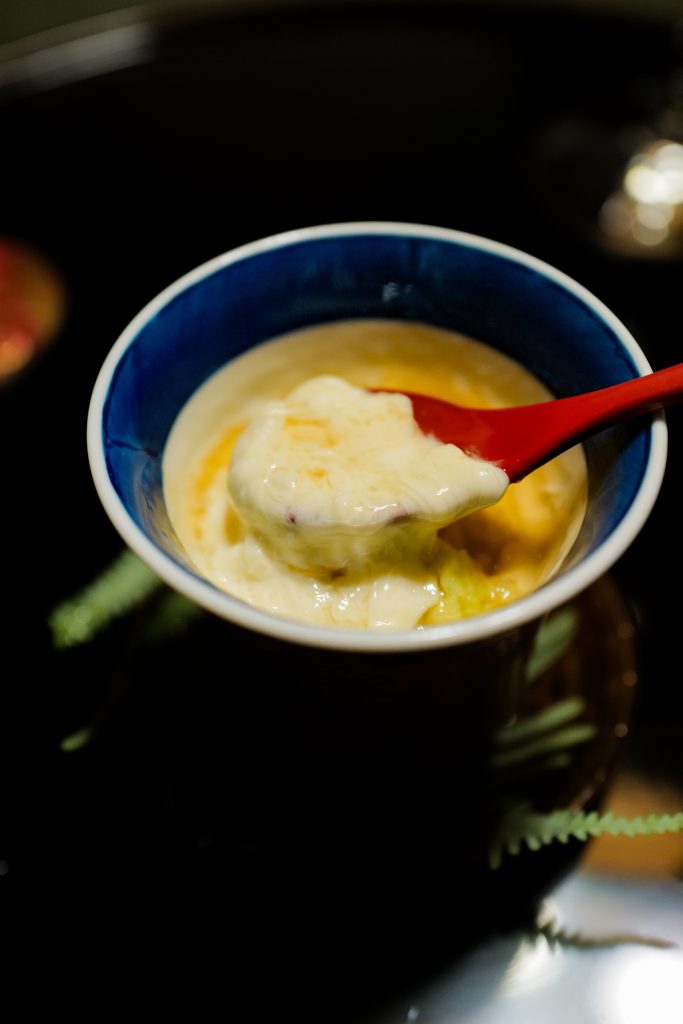
    For example: pairing courses with sake from across Japan, and even house mixed drinks; coating sashimi with bottarga; or replacing the familiar savory custard with an unexpected combination of yuba and chicken fat.

    A meal that keeps surprising you

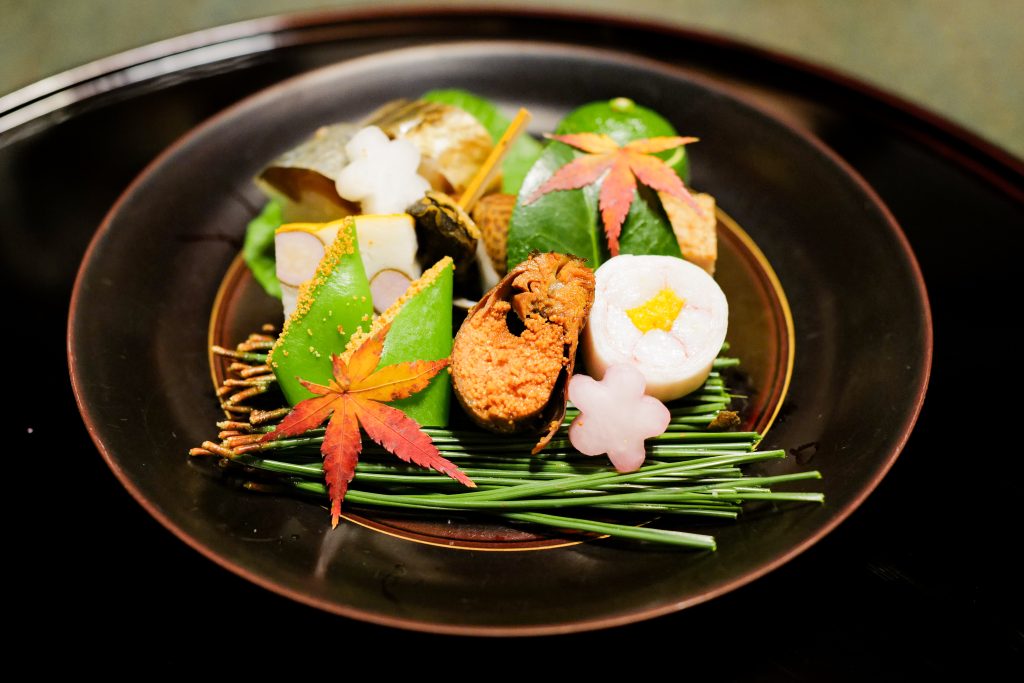
    From the very start, there was a small but delightful surprise. For a restaurant that began with chicken hot pot, the hassun was impressively classic and precise. The chicken patty hidden under a leaf proved its skill with softness and tenderness. Ayu lightly steeped in bancha was plump yet elegant. Salmon roe with grated daikon felt especially bright and refreshing. And the pressed mackerel sushi landed with perfectly balanced weight.

    The pairing was equally unexpected: a genshu from Kyoto’s local brewery Kintō Masamune, matured by the restaurant in a wooden cask for 25 days. The gentle wood notes and a standout milky aroma worked beautifully with every bite of the hassun.

    For the late-autumn-to-early-winter mukōzuke, they chose kan-buri and squid—both with a little quiet strategy behind them. The buri was not yet fully rich with fat, so it had been aged for a week, letting the softness of the flesh make the fat feel more delicate and elegant. The squid was wrapped in a thin layer of bottarga; the aged umami embraced a gentle sweetness—an exceptional match for sake.

    This course was paired with Bon Junmai 55—clean, umami-forward rice character that gave the fat and the ocean salinity a sharper, more dimensional shape.

    The “god-tier” chicken-fat yuba

    Chicken fat with yuba can only be described as extraordinary.

    Beneath that golden, glossy layer of chicken fat was a special yuba from Kyoto’s Yubashō (ゆば庄). The first bite had an almost cheese-like, lightly stretchy richness—not heavy, but bright and clean. The warmth slowly coaxed out the soy aroma. The chicken fat deepened both umami and sweetness, leaving a faint, pleasant finish of gentle bitterness.

    It’s the kind of “quietly delicious” Kyoto excels at—unshowy, but increasingly convincing the more you eat.

    This was paired with an autumn sake from Ishikawa, Chikuha. Its roundness and soft rice umami held the richness of the chicken fat perfectly, while its acidity and clean finish lifted the yuba’s bean aroma and aftertaste into something lighter and more refreshing.

    A sharp, daring pick. A perfect match. Respect +1.

    Grilled duck, and the return to origin

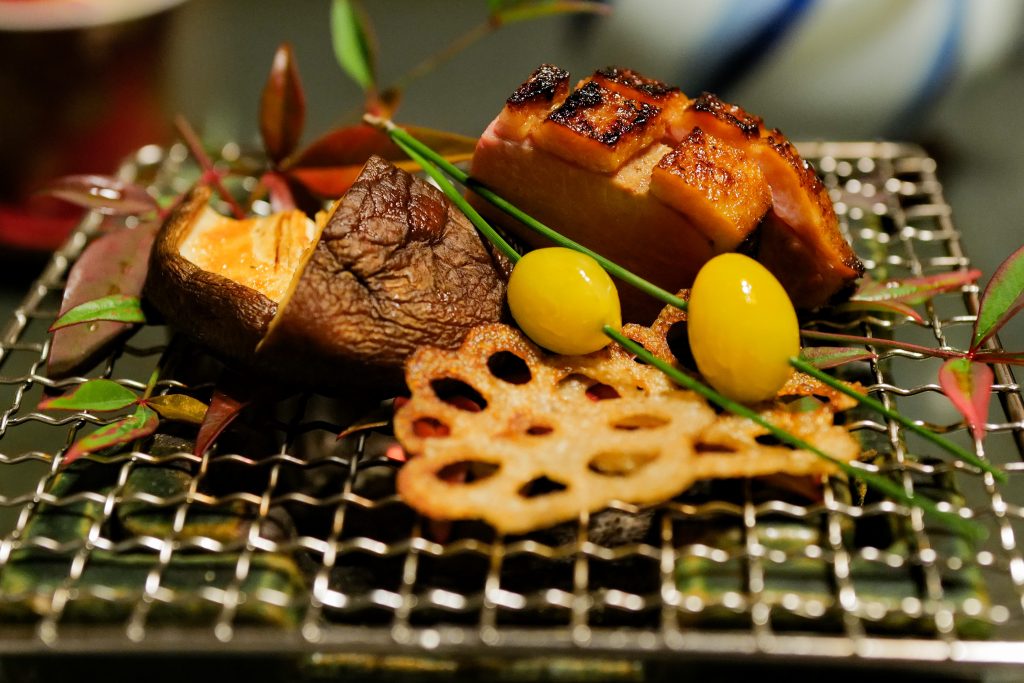
    The yakimono arrived as grilled duck. The color of the skin alone raised expectations; a beautiful smoky aroma drifted up. The meat had a subtle wild tension, but nothing rough. A delicate sweetness pulled the edges into focus, making the whole dish feel restrained and balanced. The flavor didn’t explode all at once—it unfolded like lingering warmth, steadily seeping through as you chewed.

    It was paired with Kinsui Masamune “Fujibakama.” This wasn’t a pairing built on impact, but on gentle, well-timed support—like a kimono and an obi: one defines the silhouette, the other completes the spirit. Each elevates the other.

    Back to the Roots: The Chicken Hot Pot

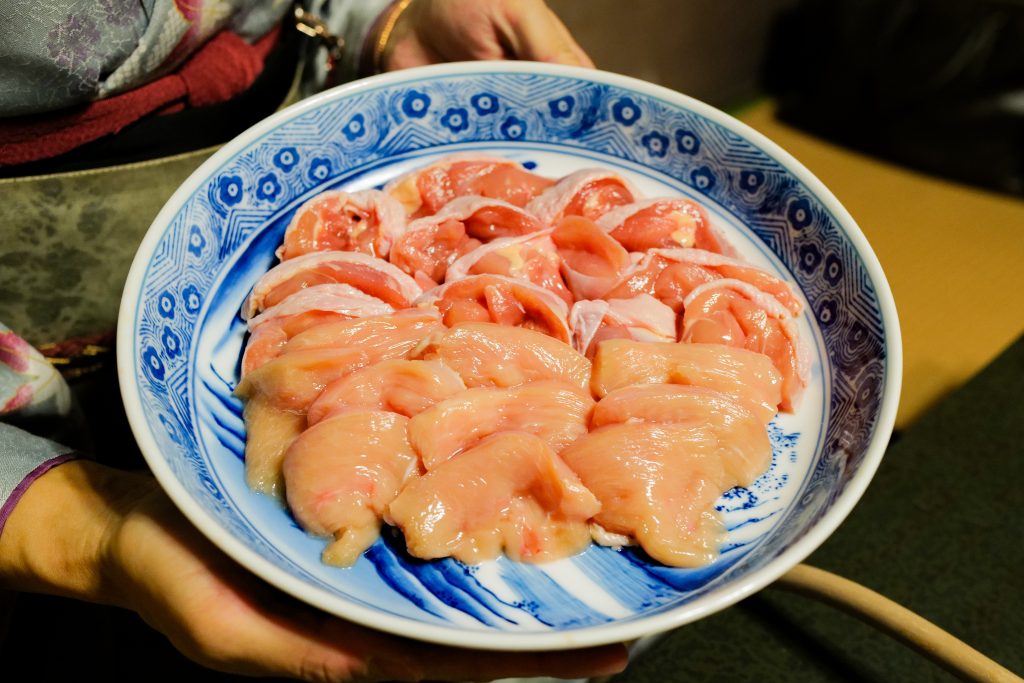
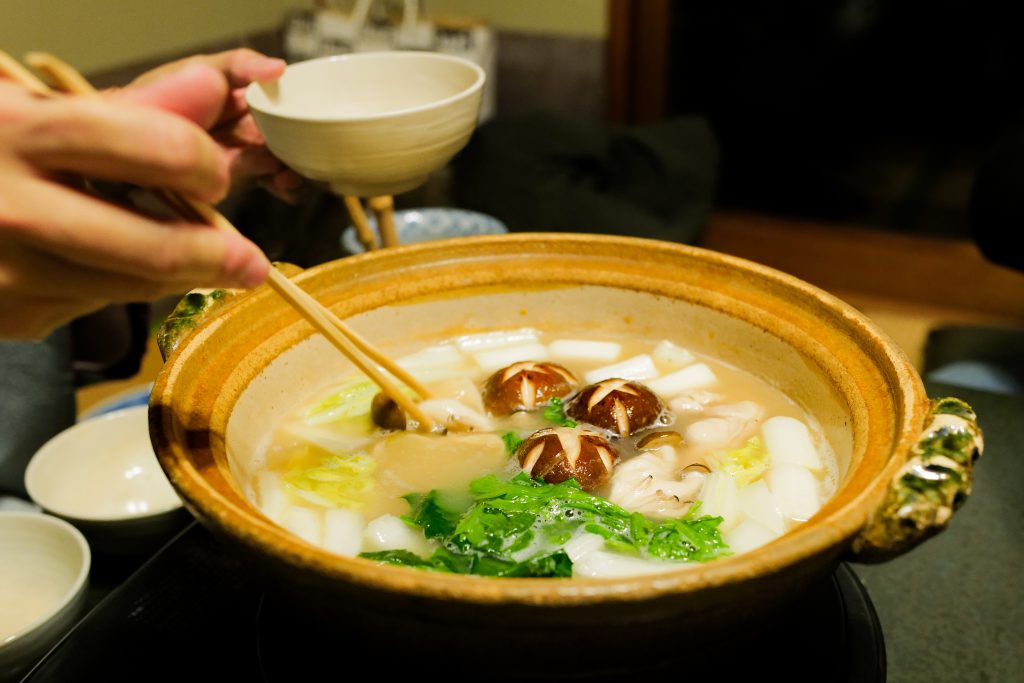
    The restaurant’s origin—chicken hot pot—begins with a bowl of chicken broth. Their own chickens are used; heads and feet are simmered into a stock that carries a milky note and a light, gelatinous body. The warmed pairing sake, Kinsui Masamune “Ginkaku,” came with a suggestion from the okami: pour a little into the soup. The layered umami and savoriness made the broth even richer and more expansive.

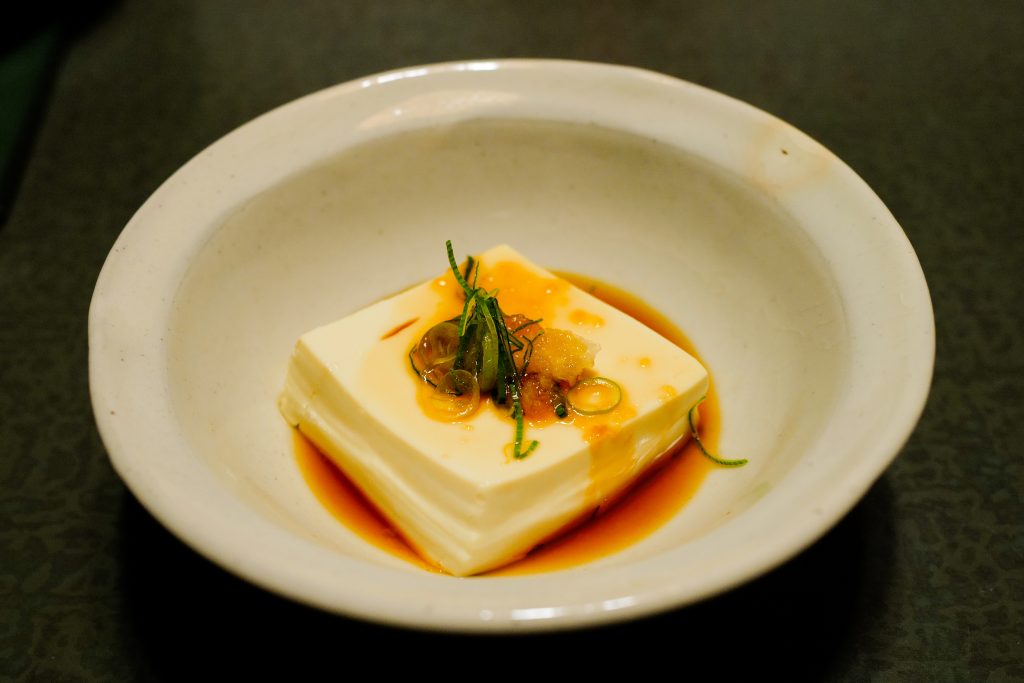
    The tofu in the pot was swapped for soft tofu from Saga’s long-established maker Morika. It felt almost weightless in the mouth, but with none of the aroma sacrificed.

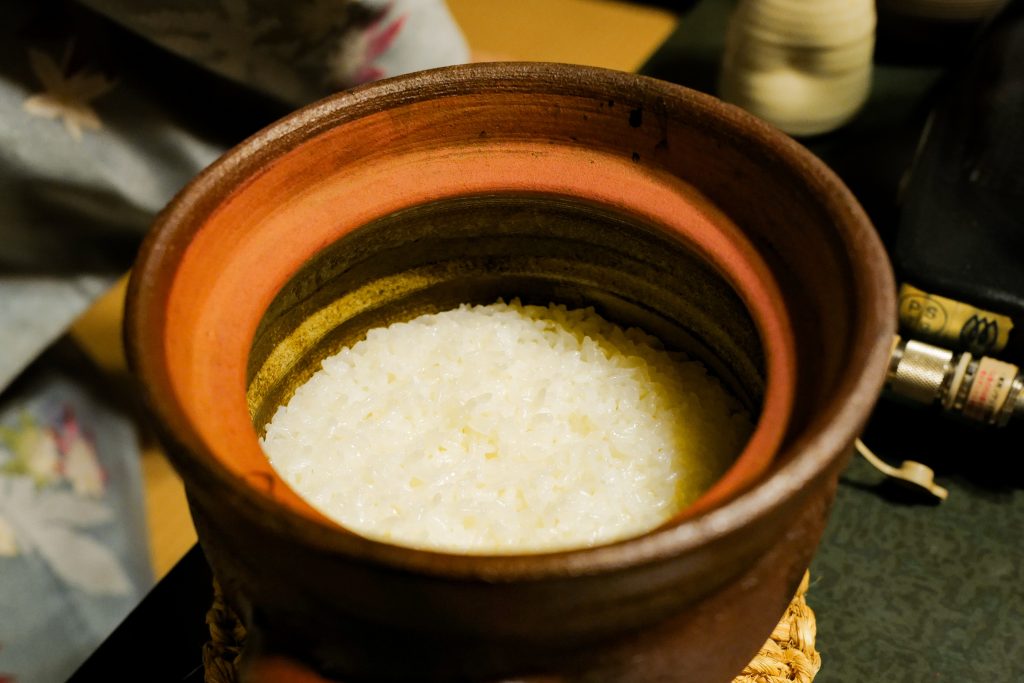
    Once the chicken was neatly finished in the pot—perfect timing—the kamameshi was ready too.

    The okami brought the pot back to a boil, added white rice to the broth, and gently pressed it apart with the back of a spoon. Then she whisked the egg, poured it in two or three thin rounds along the edge, and watched the egg ribbons bloom. The surface of the soup shifted from milky white to a soft golden color. When the lid was lifted again, steam rose in a rush; the fragrance of chicken broth wrapped around the sweetness of the rice and hit the nose immediately.

    For restaurants that truly care about pairing through the meal, zosui is the best possible staple.

    Rich, soft, warm—and deeply comforting.


    Final thoughts

    Looking back, this might not be the most textbook “formal” Kyoto kaiseki—but it was comfortable, interesting, and genuinely thrilling at points.

    I really admire how the chef balances tradition and modernity. With Kyoto vegetables and seasonal rhythm as the thread, each dish carries a clear idea, expressed with precision—sometimes through combinations you rarely see elsewhere.

    Add to that the context of being right in front of Matsuo Taisha: the chef has been steeped in sake culture since childhood. His style feels a touch “heavier” than typical Kyoto cooking, but that weight serves his goal of thoughtful food-and-sake pairing. The sake list extends from Kyoto to across Japan, including smaller, more niche breweries, and the pairing logic feels more flexible and expansive.

    It stays firmly within the framework of Kyoto cuisine, while offering a generous, open-minded stage for sake from all over Japan.

    The okami’s hospitality was another highlight you can’t ignore. She speaks with ease but never steals the spotlight, and she takes care of details with quiet precision. Gentle, elegant, poised—yet grounded in solid knowledge and impeccable sense of measure. Those small touches make you quietly marvel at the understated power of Kyoto women.

    “I hope I’ll have a chance to visit every time I’m in Kyoto.”

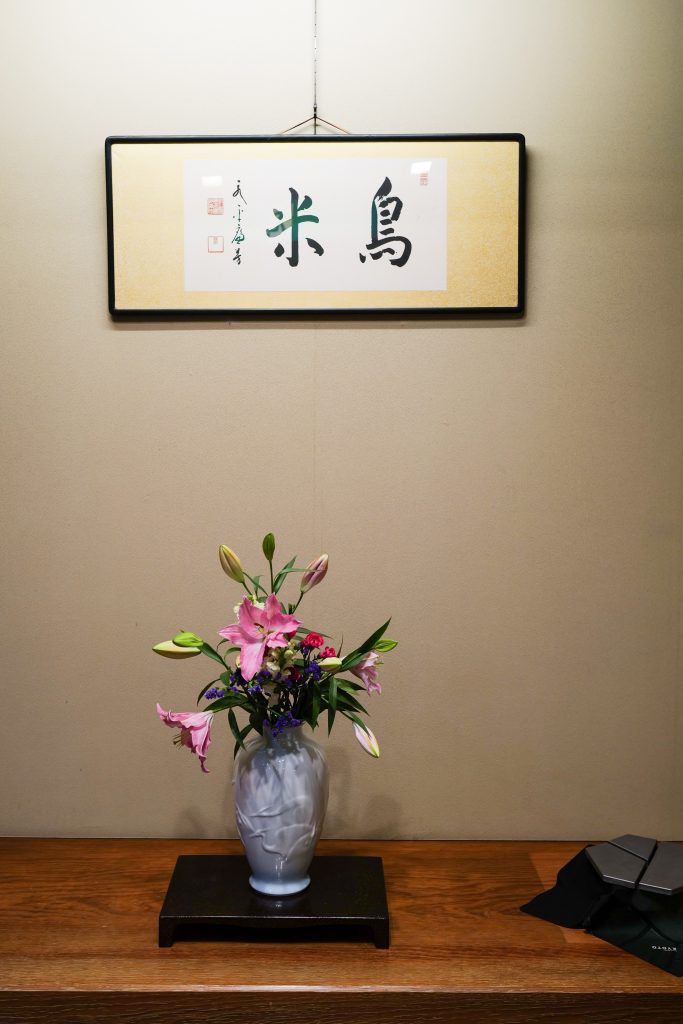
    Kyoto Toriyone (京料理 鳥米)

    Lunch: 11:00–15:00 (L.O. 15:00)
    Dinner: 17:00–22:00 (L.O. 21:00)

    Website: https://www.toriyone.com/